Overview

The Cinnkeyi S217 2.1 Computer Speaker System is a budget desktop audio setup that manages to stand out by combining a 9-inch subwoofer with a pair of 4.7-inch satellite speakers in a single, USB-powered package. Released in late 2024, it landed in the top 300 of Amazon computer speaker rankings fairly quickly — not a bad debut for a value-tier product. The RGB lighting cycles through colors automatically, adding some visual character to a gaming or streaming desk. It won't satisfy audiophiles, but for buyers stepping up from laptop speakers, this 2.1 speaker setup offers a noticeably fuller sound without requiring much space or setup effort.

Features & Benefits

This desktop speaker set draws power entirely from USB, which keeps cables tidy and removes the need for a separate adapter. The independent bass knob on the subwoofer is one of the more practical touches here — you adjust low-end levels without disturbing the main volume, which matters when you switch between music genres or late-night listening. One important setup detail: connect the USB before plugging in the 3.5mm audio cable. Skipping that order is a common source of confusion among new users. Bluetooth pairs quickly and remembers the last device, while AUX input and an SD card slot round out the connectivity options. Total output reaches 16W with a signal-to-noise ratio above 75dB.

Best For

The S217 system is a natural fit for students and remote workers who spend most of the day at a desk and want more than basic stereo audio without committing to an expensive setup. Casual gamers will appreciate the subwoofer's bass presence, and the RGB adds some personality to a battlestation on a tight budget. It also works well for small home offices or dorm rooms where space is limited but sound quality still matters. The dual input options — Bluetooth for your phone, AUX for your PC — make it flexible enough to handle different use cases throughout the day. Just don't expect studio-grade clarity from the satellites at high volumes.

User Feedback

Among buyers who reviewed this 2.1 speaker setup, bass output for the price comes up most often as a genuine surprise. Easy plug-and-play setup is another consistent positive. On the downside, the RGB lighting frustrates some users — it cycles automatically with no option to turn it off or lock it to a single color, which can feel intrusive during late-night sessions. A handful of reviewers also mention that the satellites start to sound thin at louder volumes, which is fairly typical at this price point. Bluetooth reliability is mostly positive, though the 16W power spec reads more optimistic than what you'd perceive at average desk listening levels. Overall, the value-to-performance ratio holds up well for everyday use.

Pros

  • Subwoofer delivers genuine bass presence that most competing budget desktop sets simply cannot match.
  • Getting Bluetooth, AUX input, and SD card playback together at this price is an unusually complete package.
  • USB power means no wall adapter to hunt for — just plug into any available PC port and go.
  • The independent bass knob lets you adjust low-end on the fly without touching the main volume.
  • Bluetooth memory saves your last paired device, so reconnecting each session is instant.
  • RGB lighting cycles smoothly and adds real visual character to a gaming or streaming desk setup.
  • Setup from unboxing to sound takes under five minutes for most users.
  • The S217 system holds its own for movies, podcasts, and background music at everyday desk volumes.
  • Compact satellite speakers leave desk space free alongside a standard or ultrawide monitor.
  • Plastic-and-wood hybrid construction gives the subwoofer a slightly more grounded feel than all-plastic rivals.

Cons

  • The RGB cannot be switched off or held on a single color — automatic cycling is the only mode available.
  • Satellite speakers thin out audibly when pushed past two-thirds volume, losing detail in the upper frequencies.
  • USB must be connected before the 3.5mm audio jack or the system may not initialize properly — this is easy to miss.
  • The 16W power rating reads more impressive on paper than it sounds in practice at a typical desk listening level.
  • No remote control is included, so adjusting bass or switching input modes means reaching behind your monitor.
  • Satellite housing feels noticeably hollow and lightweight, which undercuts confidence in long-term durability.
  • Bluetooth range is limited and dropout risk increases when other wireless devices are active nearby.
  • SD card slot caps at 32GB, which restricts users with larger local music libraries stored on card.
  • There is no USB audio input despite USB being present for power, which confuses buyers expecting digital audio.
  • Cable lengths connecting satellites to the main unit may run short on wider ultrawide desk configurations.

Ratings

The Cinnkeyi S217 2.1 Computer Speaker System earned its scores through AI analysis of verified global buyer reviews, with spam, bot-generated, and incentivized feedback actively filtered out before scoring. The ratings below reflect a balanced picture — where this desktop speaker set genuinely punches above its weight class, and where real users hit friction in everyday use. Strengths and shortcomings are both represented without bias.

Bass Performance
83%
The 9-inch subwoofer consistently surprises buyers at this price tier. Users streaming hip-hop, EDM, or action movie soundtracks report noticeably deeper low-end than competing compact setups. The dedicated bass knob makes it easy to tame or boost depending on content type.
At higher volume levels, the bass can bleed into the mids, making vocals sound slightly muddy. Users sensitive to boom-heavy audio may find the subwoofer needs dialing back to about 40-50% for balanced listening.
Satellite Speaker Clarity
67%
33%
For casual YouTube watching, podcast listening, and background music, the satellites hold their own. Mid-range frequencies come through clearly enough at moderate volumes, and most buyers felt vocals and dialogue were intelligible without strain.
Push the volume past two-thirds and the satellites reveal their budget roots — detail thins out and there is a trace of harshness in the upper-mids. Buyers expecting crisp highs for critical music listening will likely feel underwhelmed.
Value for Money
88%
This is arguably where the S217 system earns its strongest marks. Buyers repeatedly note that getting a subwoofer, Bluetooth, RGB lighting, and SD card support at this price point feels like an unusually good deal. The competition at this tier rarely bundles all four.
A small portion of reviewers felt the real-world audio output does not fully back up the 16W spec on the packaging, tempering expectations slightly. Those who purchased expecting near-premium sound based on the spec sheet were occasionally let down.
Setup & Ease of Use
79%
21%
Unboxing to audio takes under five minutes for most users. The USB power-only approach means no hunting for a wall adapter, and Bluetooth pairing is a single button press that saves automatically for next time. Controls on the main speaker are straightforward.
There is one consistent friction point: the USB cable must be connected before the 3.5mm audio jack or the system may not initialize correctly. This is not intuitive, and a notable share of early negative reviews stem entirely from this underdocumented step.
Build Quality
61%
39%
The wood-and-plastic hybrid construction gives the subwoofer a slightly more substantial feel than all-plastic competitors. The unit feels stable on a desk and does not rattle at moderate listening volumes, which matters for long daily use sessions.
The satellite housings feel noticeably lightweight and hollow, and the overall finish reads as budget-grade up close. A few users reported minor creaking in the satellite stands, and the plastic surface shows fingerprints and scuffs more readily than expected.
Bluetooth Reliability
74%
26%
Initial pairing is quick and the memory function means returning users are reconnected within seconds. For everyday desk use — switching between a laptop and a phone — the Bluetooth performs reliably within a normal indoor range.
A handful of buyers reported occasional dropouts when other wireless devices were active nearby, and the Bluetooth range does not extend meaningfully beyond one room. It is not suited for whole-room or multi-room wireless use cases.
RGB Lighting
58%
42%
The automatic color-cycling LEDs add genuine visual appeal to a gaming or streaming desk setup. The effect is smooth rather than flashy, and buyers who wanted ambient desk lighting got a functional secondary benefit from the purchase.
The inability to turn the RGB off or lock it to a single color is a recurring complaint. Users who work in low-light environments at night or prefer a clean minimal aesthetic find the constant cycling distracting with no workaround available.
Connectivity Options
82%
18%
Having Bluetooth, a 3.5mm AUX input, and an SD card slot in the same budget unit gives this desktop speaker set real daily flexibility. Switching from PC audio via AUX to phone music over Bluetooth requires just a single mode-button press.
There is no optical or RCA input, which limits compatibility with older televisions or certain stereo receivers. The SD card slot also caps at 32GB, which feels restrictive for users with large local music libraries stored on card.
Volume Output
71%
29%
For a small to mid-sized room or a typical desk environment, the volume ceiling is more than adequate. Buyers in dorm rooms and home offices consistently reported filling the space without pushing the system to its limits.
The rated 16W total does not translate to the kind of room-filling loudness some buyers anticipated. In open-plan spaces or louder environments, the system runs out of headroom faster than expected, and distortion appears before the volume knob reaches maximum.
Frequency Range & Tonal Balance
69%
31%
The 50Hz to 20KHz frequency response covers the practical listening range well for casual use. The system handles the transition between subwoofer and satellites reasonably cleanly at moderate volumes, avoiding an obvious gap in the mid-bass region.
The upper frequency extension sounds slightly rolled off in practice, meaning the system lacks the airiness that makes cymbals or acoustic strings feel natural. Tonal balance shifts depending on subwoofer knob position, requiring regular readjustment between content types.
Control Interface
73%
27%
The side-mounted volume knob responds smoothly, and the play/pause button doubles as a convenient quick-mute option during calls or interruptions. Track navigation buttons work as expected for SD card playback and offer long-press fine-tuning.
There is no remote control included, which is a small but noticeable inconvenience once the speakers are placed at the back of a deep desk. Reaching around to adjust bass or swap modes becomes a minor but repetitive annoyance over time.
Desk Footprint
81%
19%
The satellite speakers are compact enough to fit alongside a monitor without crowding the desk surface. The subwoofer tucks neatly under a desk or to one side, and the overall three-piece layout is easy to arrange in tight workspaces.
The subwoofer is larger than some buyers anticipate from product photos alone, measuring roughly 9 by 6.7 inches at the base. Users with very compact desks or under-desk cable management setups may need to plan placement more carefully than expected.
Cable Management
63%
37%
USB power consolidates one connection point, and the satellite cables are long enough to allow flexible positioning on most standard desks. The overall wiring is minimal compared to traditional 2.1 setups that require dedicated power bricks.
The cables connecting the satellites to the main speaker are fixed and not detachable, which complicates repositioning or storage. A few buyers also noted the cable lengths are borderline short for wider ultrawide monitor setups.
Compatibility
84%
The combination of Bluetooth, AUX, and SD card input covers virtually every common source device — PC, Mac, laptop, smartphone, and tablet all work out of the box. No drivers or software are needed, making it genuinely plug-and-play across platforms.
There is no USB audio input despite the USB connection being present for power. Buyers who assumed USB could carry audio signal — a reasonable assumption — were caught off guard. The manual could communicate this distinction more clearly upfront.

Suitable for:

The Cinnkeyi S217 2.1 Computer Speaker System is a strong pick for students, remote workers, and casual gamers who want a meaningful audio upgrade over built-in laptop or monitor speakers without spending serious money. If your daily routine involves streaming music, watching YouTube, or gaming for a few hours at a desk, this 2.1 speaker setup delivers noticeably fuller sound — particularly in the low-end — than anything in the same price range that skips a subwoofer entirely. Dorm rooms, small home offices, and compact battlestations are natural homes for this system, where the footprint stays manageable and the volume ceiling is more than enough. Buyers who want Bluetooth for casual phone listening and a wired AUX connection for their PC will appreciate having both options without needing to choose. The RGB lighting is a bonus for anyone building a visually cohesive desk setup on a tight budget.

Not suitable for:

The Cinnkeyi S217 2.1 Computer Speaker System is not the right call for anyone who prioritizes audio accuracy, high-volume performance, or critical listening. If you produce music, mix audio, or genuinely care about how individual instruments sound at louder levels, the satellite speakers will fall short — they start losing definition before the volume knob reaches its upper range, and the tonal balance shifts noticeably depending on how the bass knob is set. The RGB lighting cycles automatically with no way to turn it off or freeze it on a single color, which is a real drawback for minimalist setups or late-night work environments where ambient light matters. Users expecting a remote control, optical input, or USB audio input will also be disappointed — none of those are available on this system. And if you need speakers that fill a large room or open-plan space with consistent volume, the practical output here runs out of headroom sooner than the rated wattage might suggest.

Specifications

  • Model: This system is manufactured by Cinnkeyi under the model designation S217-US.
  • Configuration: The system uses a 2.1 stereo configuration consisting of one subwoofer and two satellite speakers.
  • Total Output: Combined amplifier output is 16W, split as 8W for the subwoofer and 4W per satellite speaker.
  • Frequency Response: The system covers a frequency range of 50Hz to 20KHz, suitable for general music, movies, and gaming.
  • Signal-to-Noise Ratio: The signal-to-noise ratio exceeds 75dB, keeping background hiss at an acceptable level for casual listening environments.
  • Subwoofer Size: The subwoofer driver measures 9 inches in diameter and is housed in a plastic-and-wood enclosure.
  • Satellite Size: Each satellite speaker measures 4.7 inches and handles mid-range and high-frequency audio reproduction.
  • Subwoofer Dimensions: The subwoofer unit measures approximately 9″ x 6.7″ x 6.7″ and is designed for tabletop or under-desk placement.
  • Satellite Dimensions: Each satellite speaker measures approximately 4.7″ x 2.75″ x 2.75″, keeping desk footprint minimal.
  • Weight: The complete three-piece system weighs 3.83 pounds in total.
  • Power Method: The system is powered entirely via USB, eliminating the need for a separate wall adapter or power brick.
  • Connectivity: Input options include Bluetooth (wireless), AUX via 3.5mm jack, SD card (up to 32GB), and USB for power.
  • Bluetooth: Bluetooth pairing is initiated with a single button press and the system retains the last connected device for future sessions.
  • RGB Lighting: Built-in RGB LEDs cycle through colors automatically; there is no option to disable the lighting or lock it to a single color.
  • Bass Control: A dedicated knob on the subwoofer allows independent bass level adjustment without affecting the main volume setting.
  • Controls: The main satellite speaker features a side-mounted volume knob, a play/pause button, and previous/next track buttons for input navigation.
  • Build Materials: The subwoofer enclosure combines wood and plastic construction, while the satellite housings are fully plastic.
  • Included Items: Each package includes the subwoofer unit, two satellite speakers, and a warranty card.
  • Warranty: The system ships with a limited manufacturer warranty; specific duration details should be confirmed with the seller at time of purchase.
  • Availability: The S217 was first made available in September 2024 and ranked among the top 300 products in the Amazon Computer Speakers category shortly after launch.

Related Reviews

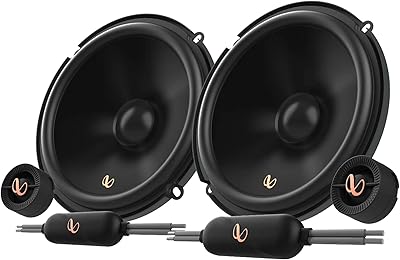
Infinity Primus 603CF 6-1/2″ 2-Way Component Speaker System
85%
88%
Sound Quality
82%
Bass Response
91%
Installation Ease
85%
Build Quality
84%
Durability
More
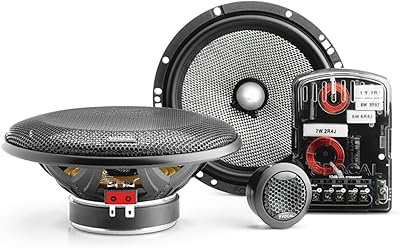
Focal 165AS Access Series 6-1/2″ 2-Way Component Speaker System
85%
92%
Sound Quality
88%
Bass Performance
85%
Installation Ease
91%
Value for Money
87%
Build Quality
More
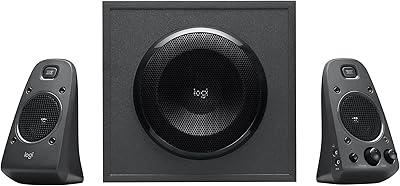
Logitech Z625
Logitech Z625
79%
88%
Bass Performance
79%
Overall Sound Quality
93%
Connectivity & Input Options
91%
Volume Output
71%
Build Quality
More
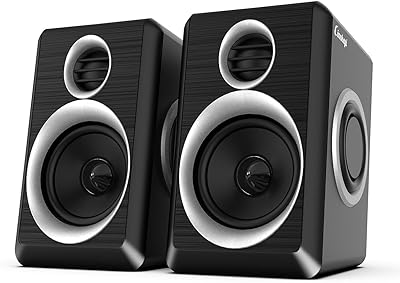
cinnkeyi C5202 PC Speakers
74%
94%
Ease of Setup
72%
Sound Quality
63%
Bass Performance
58%
Build Quality
67%
Volume Output
More
Edifier S351DB Bookshelf Speakers 2.1 System
85%
92%
Sound Quality
90%
Bass Performance
85%
Setup & Installation
88%
Build Quality
89%
Connectivity Options
More
Logitech Z313 2.1 Speaker System
82%
93%
Value for Money
96%
Ease of Setup
81%
Bass Performance
88%
Longevity & Reliability
84%
Control Pod Functionality
More
Logitech Z533
Logitech Z533
80%
86%
Bass Performance
67%
Satellite Speaker Clarity
82%
Value for Money
83%
Build Quality & Durability
78%
Control Pod Usability
More
Cyber Acoustics CA-3810 2.1 Speaker System
82%
87%
Sound Quality
90%
Bass Performance
92%
Ease of Setup
91%
Value for Money
88%
Compact Design
More
Cyber Acoustics CA-3908 2.1 Speaker System
84%
88%
Sound Quality
91%
Bass Performance
84%
Volume Control Ease
87%
Setup & Installation
76%
Connectivity Options
More
KEiiD KD-C02 2.1 Computer Speaker System
76%
86%
Bass Performance
91%
Wireless Subwoofer Flexibility
67%
Touchpad Controller
79%
Sound Clarity & Detail
74%
EQ Presets
More

FAQ

Yes, and this is worth paying attention to: connect the USB power cable before you plug in the 3.5mm audio jack. A good number of buyers who reported the system not working had simply connected the audio cable first. Once you follow the USB-first order, everything initializes correctly and you should get sound within seconds.

Unfortunately, no. The LEDs on the Cinnkeyi S217 2.1 Computer Speaker System cycle through colors automatically, and there is no button, switch, or app to disable them or hold a specific color. If constant ambient lighting is going to bother you — especially during late-night sessions in a dark room — that is worth factoring into your decision before buying.
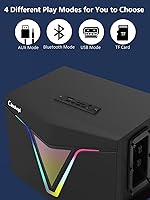
Pairing is straightforward: press the Mode button once and the system enters Bluetooth discovery mode. Once connected, it saves that device so future sessions reconnect automatically without going through the pairing process again. Switching to a different device requires manually putting the system back into pairing mode.

You can only use one input at a time. Pressing the Mode button cycles between Bluetooth and AUX modes. So if you want your PC connected via AUX and your phone connected via Bluetooth, you can have both physically plugged in but will need to switch modes manually depending on which source you want active.

The USB connection is for power only — it does not carry audio data. To get sound from your PC or laptop, you need to use the 3.5mm AUX input. This surprises a fair number of buyers who assume USB handles both, so it is worth clarifying before you set up your cable routing.

For a standard bedroom or dorm setup, the volume is more than enough for everyday use. It fills a small to medium room comfortably at around 60 to 70 percent volume. Where it runs into limits is in larger open spaces — the system does not project as far as the 16W spec might imply, and pushing it to maximum volume introduces some distortion before you get there.

At moderate volumes, dialogue and game audio come through clearly enough for everyday use. The satellites handle mid-range frequencies reasonably well, so voices and sound effects are intelligible. Where things get rough is at higher volumes — detail starts to soften and there is a hint of harshness in the upper frequencies, which matters more for music than for gaming or movie watching.

It works with any device that has a 3.5mm audio output or Bluetooth — Mac, Windows PC, Chromebook, smartphone, tablet, you name it. There are no drivers to install and no platform-specific software required. Just plug in the AUX cable or pair over Bluetooth and it works.

In a typical indoor environment with no major obstacles, Bluetooth holds up to about 30 feet or so. In practice, most users find it works well across a single room. If there are multiple wireless devices nearby — other Bluetooth devices, Wi-Fi routers — you may experience occasional brief dropouts, though day-to-day desktop use is generally stable.

The system shines most with bass-forward genres — electronic music, hip-hop, lo-fi, and movie soundtracks all benefit from the subwoofer. It is also solid for casual gaming and YouTube or streaming video. Where it is less convincing is with acoustic music, jazz, or classical content where detail and tonal accuracy matter more than low-end punch.