





Overview

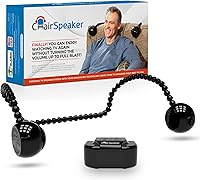
The ChairSpeaker CS3 Wireless TV Speaker System takes a genuinely different approach to the age-old problem of not being able to hear the TV clearly. Rather than asking you to wear headphones or crank the volume up for everyone in the room, this chair-mounted speaker positions audio right beside your ear — the source of the sound moves closer to you, not the other way around. Built in the USA with a mix of local and imported parts, it sits in a mid-to-premium price bracket that reflects serious intent. It uses infrared wireless technology to transmit audio from your TV to the speaker clipped onto your recliner. This is not a home theater upgrade; it is a focused clarity tool.

Features & Benefits

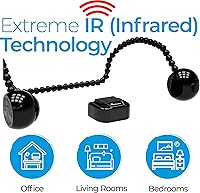
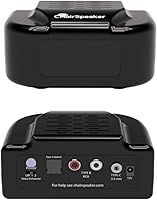
The design centers on a pair of ball-flex joints that clamp onto the back or side of your chair, then angle the speaker directly toward your ear. That adjustability matters more than it sounds — once positioned correctly, the difference in dialogue intelligibility can be striking. The system comes with both RCA and Digital Optical cables in the box, so most TVs are covered without hunting for adapters. Infrared transmission keeps the signal clean and interference-free within a 33-foot range, provided you maintain a clear line of sight to the transmitter. Voice enhancement processing is baked in, giving spoken words more presence without turning the overall volume into a distraction.

Best For

This near-ear TV speaker is built for a specific kind of frustration: you are watching a drama, the actors mumble, and the only options seem to be subtitles or waking up the neighbors. It is particularly well-suited for hearing-impaired viewers who have not yet taken the leap to hearing aids, or who find over-ear headphones uncomfortable after an hour. Households where TV habits clash — one person wants it louder, the other does not — will appreciate how the CS3 listening system keeps peace without compromise. If you have tried soundbars and still cannot catch what characters are saying, this is the kind of targeted solution worth considering.

User Feedback

Buyers consistently mention two things: voices are noticeably clearer, and setup took under fifteen minutes. The comfort angle comes up often too — people who gave up on TV headphones because of ear fatigue find that having the speaker beside them rather than on them makes a real difference for long viewing sessions. That said, the infrared technology does have a genuine limitation that reviewers flag: if you shift position or something blocks the path between speaker and transmitter, the audio can cut out. Chair compatibility is mostly positive, though a handful of users with unusually shaped furniture ran into fitment issues. Long-term owners generally report solid durability.

Pros

  • Dialogue clarity improves noticeably for hearing-impaired viewers without turning up the TV volume for everyone.
  • No headphones needed — the speaker sits beside your ear rather than on it, reducing fatigue during long sessions.
  • Setup is genuinely simple: plug in the cables, mount the speaker on your chair, and you are done.
  • Comes with both RCA and Digital Optical cables, so most TVs work out of the box with no extra purchases.
  • Infrared technology eliminates the wireless interference issues that plague Bluetooth alternatives in crowded signal environments.
  • The adjustable ball-flex joints give enough range of motion to find a comfortable, direct-ear position on most standard recliners.
  • Assembled in the USA, which gives some buyers added confidence in build quality oversight.
  • Works with streaming apps through the TV itself, so there is no separate pairing process for Netflix or Hulu content.
  • Offers a non-medical, accessible solution for mild-to-moderate hearing difficulty at a fraction of the cost of hearing aids.
  • Long-term owners generally report the unit holds up well with daily use over extended periods.

Cons

  • Infrared transmission requires line of sight — shifting position or leaning forward can interrupt the audio signal.
  • The corded transmitter base means you are permanently running a cable from your TV to wherever the transmitter sits.
  • Chair compatibility is not universal; unusually shaped or very modern furniture may not work well with the mounting system.
  • Designed for one listener only, so it cannot serve two people sitting together who both need audio assistance.
  • The ABS plastic construction feels functional rather than premium for a product at this price point.
  • IR range tops out at 33 feet, which may not be enough for large open-plan living spaces where the viewer sits far back.
  • Voice enhancement processing does not transform the overall audio quality — music and sound effects remain fairly flat.
  • No rechargeable battery component means the speaker unit depends on the transmitter connection rather than cordless freedom.
  • Limited utility for anyone who watches TV from multiple spots or rooms rather than a single dedicated chair.

Ratings

Our AI-generated scores for the ChairSpeaker CS3 Wireless TV Speaker System were produced by systematically analyzing verified global buyer reviews, with spam, bot activity, and incentivized feedback actively filtered out before scoring. Each category reflects the honest spread of real user experiences — strengths and frustrations alike — so you can make a confident, clear-eyed purchase decision. Where opinions were divided, the scores reflect that tension rather than smoothing it over.

Dialogue Clarity
88%
The most consistent praise across verified reviews centers on how much easier it becomes to follow spoken dialogue — particularly for news broadcasts and drama series where actors speak quickly or quietly. Viewers who previously relied on subtitles report being able to follow conversations naturally again, which for many users is the entire reason they bought it.
The clarity improvement is most dramatic for speech; background audio, music scores, and sound effects come through comparatively flat. A small number of users with more significant hearing loss found the enhancement alone was not enough without also raising the TV volume.
Ease of Setup
91%
Reviewers repeatedly describe the setup process as one of the fastest and least frustrating they have experienced with any TV audio accessory. The included cable bundle covers most TV output types, and there is no wireless pairing, no app download, and no account required — you plug it in, mount it, and it works.
A handful of users with older televisions encountered confusion identifying the correct audio output port, particularly on sets where the optical port is poorly labeled or recessed. The instruction manual could be more visual for buyers who are less comfortable with AV terminology.
Wearing Comfort
86%
Because this near-ear TV speaker mounts to the chair rather than the body, users who previously gave up on TV headphones due to ear pressure or heat buildup report being able to watch for two to three hours without any physical discomfort. That distinction — nothing touching your head — genuinely matters for older adults during long viewing sessions.
The speaker arm positioning can occasionally feel slightly intrusive on chairs with low or narrow backs, where the unit ends up closer to the shoulder than the ear. Some users needed several attempts to find the ideal flex-joint angle before the audio felt truly directed at their ear.
Chair Compatibility
71%
29%
The ball-flex joints handle a wide range of standard recliners and padded armchairs without issue, and most buyers report a secure, stable fit that stays in place through normal movement. For the majority of users with conventional recliner furniture, the mounting experience is straightforward.
Buyers with contemporary furniture — thin metal frames, deeply curved backs, or unusually thick cushioned armrests — report meaningful difficulty getting the clamp to grip securely. This is one of the more polarizing aspects of the product, with a visible minority of reviewers describing the mounting as a genuine dealbreaker for their specific chair.
Wireless Reliability
67%
33%
When the viewer stays settled in their chair and maintains a clear path to the transmitter, the IR signal is stable and free from the interference issues that affect Bluetooth alternatives in signal-heavy environments. Users in apartments with many competing wireless devices found this a notable advantage over earlier systems they had tried.
The line-of-sight dependency is the most commonly cited technical frustration in user reviews. Leaning forward to pick something up, turning to talk to someone, or placing an object between the chair and the transmitter can briefly cut the signal — and while it recovers quickly, it interrupts the viewing experience in a way Bluetooth devices typically do not.
Voice Enhancement Quality
79%
21%
The onboard processing does a credible job of pulling vocal frequencies forward without making the audio sound tinny or artificial. Reviewers specifically mention that news anchors and TV hosts come through with noticeably more presence, which is exactly the use case the technology is tuned for.
The enhancement profile is fixed — there are no user-adjustable modes or EQ settings — so buyers hoping to fine-tune the sound to their specific hearing profile will be disappointed. It works well as a general filter but cannot replicate the personalized amplification of a properly fitted hearing device.
Build Quality
68%
32%
Long-term reviewers who have used the CS3 listening system daily for a year or more generally report that it continues to function reliably, which suggests the internal components hold up better than the plastic housing might imply. The USA assembly origin gives some buyers added confidence in quality control consistency.
The ABS plastic construction feels noticeably budget in hand relative to the mid-to-premium price point, and a few reviewers note that the flex joint mechanism feels less precise after extended repeated repositioning. The gap between perceived material quality and price is one of the more common criticisms in longer reviews.
TV Compatibility
84%
Including both RCA and Digital Optical cables in the box is a practical decision that covers the vast majority of televisions sold in the last fifteen years without requiring any additional purchases. Most buyers connect successfully on the first attempt without needing to look anything up.
Televisions that have eliminated both RCA and optical outputs in favor of HDMI-only configurations — a growing trend in budget and mid-range sets — are not directly compatible. While adapters exist, that adds cost and complexity that buyers at this price point may not anticipate.
Streaming App Support
82%
18%
Because the system connects to the TV audio output rather than the streaming service directly, it is inherently compatible with any app the TV can run — Netflix, Hulu, Amazon Prime Video, and anything else. Buyers do not need to worry about future app updates breaking compatibility.
Audio routing on some smart TVs defaults to internal speakers rather than the optical or RCA output when streaming, which can confuse users during setup. This is a TV firmware issue rather than a product flaw, but it does generate support questions and occasional negative reviews from users who did not investigate their TV settings.
Value for Money
63%
37%
Compared to entry-level hearing aids or professional audiologist-fitted amplification devices, the CS3 represents a substantially lower upfront cost for a meaningful real-world improvement in TV dialogue clarity. For buyers exploring hearing assistance options for the first time, the value framing is reasonable.
At its price point, the plastic build and fixed audio enhancement settings make it a harder sell against competitors offering more tactile quality or user control. Buyers who do not have significant hearing difficulty — or who simply want louder TV audio rather than clearer dialogue — are likely to feel the price is difficult to justify.
Interference Resistance
83%
Infrared transmission is inherently immune to the Wi-Fi, Bluetooth, and radio frequency congestion that clutters most modern living rooms. Users in densely connected households report noticeably fewer dropout and interference events compared to wireless headphone systems they had previously owned.
The same technology that avoids RF interference makes the system uniquely vulnerable to physical obstructions — including direct sunlight in some living room configurations, which can occasionally disrupt the IR signal. This is a less commonly reported issue but worth noting for users with sun-facing furniture arrangements.
Range Performance
74%
26%
The 33-foot range comfortably covers most standard living room configurations, and users seated at typical TV-watching distances report consistent signal strength without needing to position the transmitter in any special way. For the intended use case, the range is more than adequate.
The 33-foot figure is a ceiling under ideal conditions, not a guaranteed operational range. Larger open-plan rooms or setups where the transmitter cannot be positioned with a direct angle to the chair will see effective range reduced, and a few buyers in larger spaces report this becoming a practical limitation.
Long-Term Durability
72%
28%
The majority of verified reviews from buyers who have owned the unit for twelve months or more describe it as still functioning as expected, which is a meaningful signal for a product used daily. The corded transmitter design eliminates battery degradation as a long-term concern.
The flex joint mechanism and plastic mounting components show the most wear over time according to longer-term reviewers, with some reporting the grip becoming slightly looser after many months of repeated repositioning. There is limited publicly available warranty information, which makes long-term ownership feel less protected.

Suitable for:

The ChairSpeaker CS3 Wireless TV Speaker System was clearly designed with a specific person in mind: someone who struggles to follow TV dialogue but is not yet ready — or willing — to commit to hearing aids or prescription amplification devices. It works especially well for older adults who spend meaningful time in a recliner watching news, dramas, or sports, and who find over-ear headphones uncomfortable or isolating after extended use. Adult children shopping for a parent in this situation will find it a practical, non-stigmatizing gift that addresses the problem without requiring technical know-how to operate. Households where viewing habits differ — one partner needs the volume higher, the other does not — will also get real value here, since this near-ear TV speaker lets one person hear clearly without making the room louder for everyone else. If the TV is in a fixed spot and the viewer tends to stay settled in one chair during a show, this system fits that routine almost perfectly.

Not suitable for:

The ChairSpeaker CS3 Wireless TV Speaker System is a poor fit for anyone expecting audiophile-grade sound or a rich, room-filling audio experience — that is simply not what it is built for. Because it relies on infrared transmission, it requires a clear, unobstructed path between the transmitter and the speaker unit; viewers who frequently get up, move around, or sit at angles that break line of sight will likely find the audio cutting out more often than they would like. People with highly unconventional furniture — very thick chair backs, unusual armrest shapes, or ultra-modern frames — may struggle to get the ball-flex mounting system to sit securely. This near-ear TV speaker is also not a good match for anyone hoping to share the enhanced audio with multiple people simultaneously, as it is engineered for individual, personal listening. Finally, buyers who are already satisfied with the audio from a quality soundbar and simply want a volume boost rather than dialogue clarity improvement may find the investment hard to justify.

Specifications

  • Brand: Manufactured and sold under the ChairSpeaker brand by KARE.
  • Model: The CS3 is the third iteration in the ChairSpeaker product line.
  • Dimensions: The full package measures 15.63″ x 7.4″ x 4.41″ when boxed.
  • Weight: The complete unit weighs 3.02 pounds including the transmitter base and speaker assembly.
  • Material: The speaker housing and mounting components are constructed from ABS plastic.
  • Color: Available in black only.
  • Wireless Technology: Audio is transmitted via Infrared (IR) technology, which requires a clear line of sight between transmitter and speaker.
  • Wireless Range: The IR signal reliably covers distances of up to 33 feet under line-of-sight conditions.
  • Chair Mount: Ball-flex joints allow the speaker arm to grip and pivot on most standard recliners and upholstered furniture.
  • Power Source: The transmitter base is corded and draws power from a standard electrical outlet.
  • Audio Inputs: The transmitter accepts both RCA analog and Digital Optical audio connections.
  • Voice Enhancement: Onboard voice enhancement processing is included to improve dialogue intelligibility over background audio.
  • TV Compatibility: Compatible with most televisions that feature an RCA or Digital Optical audio output.
  • Streaming Apps: Works with Netflix, Amazon Prime Video, Hulu, and other apps that route audio through the TV output.
  • Assembly Origin: Assembled in the United States using a combination of domestic and imported components.
  • ASIN: The Amazon product identifier for this item is B07RR1GF8V.

Related Reviews
SEREONIC BT-200 Wireless TV Speaker
79%
88%
Dialogue Clarity
91%
Ease of Setup
83%
Wireless Range & Stability
86%
Audio Latency
74%
Battery Life
More
Pyle PSUFM1035A Wireless Active PA Speaker System
85%
88%
Sound Quality
91%
Volume Output
83%
Portability
89%
Bluetooth Connectivity
80%
LED DJ Lights
More
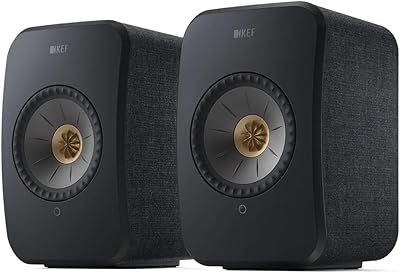
KEF LSX II Wireless HiFi Speaker System
86%
93%
Sound Quality
88%
Ease of Setup
91%
Connectivity Options
85%
Design & Build Quality
82%
App Control & Interface
More
HearSound Gold Digital Wireless Headset System for TV
86%
88%
Audio Clarity
91%
Comfort and Fit
86%
Battery Life
75%
Ease of Setup
82%
Range and Connectivity
More
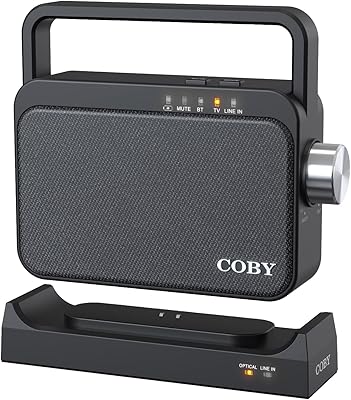
Coby CSTV130 Wireless TV Speaker
75%
88%
Wireless Range & Freedom
83%
Dialogue Clarity & Speech Intelligibility
79%
Setup & Ease of Use
74%
Battery Life & Charging
81%
Volume Control & Touch Interface
More
Avantree Harmony 2 Multi-Room Wireless Speaker System
76%
93%
Ease of Setup
89%
Audio Sync & Latency
86%
Voice & Speech Clarity
67%
Wireless Range
62%
Sound Volume & Output
More
Sony BRAVIA Theater U Wearable Speaker
71%
88%
Wearing Comfort
74%
Sound Quality
71%
Spatial Audio Performance
91%
Battery Life
83%
Bluetooth Stability
More
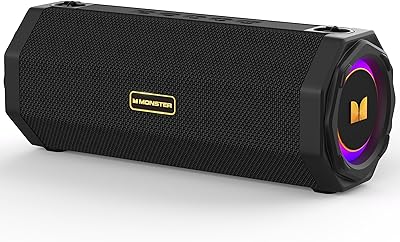
Monster S200 Portable Bluetooth Speaker
73%
82%
Bass & Low-End Output
61%
Sound Clarity & Midrange
79%
Volume & Loudness
86%
Bluetooth Connectivity
84%
Waterproof Performance
More
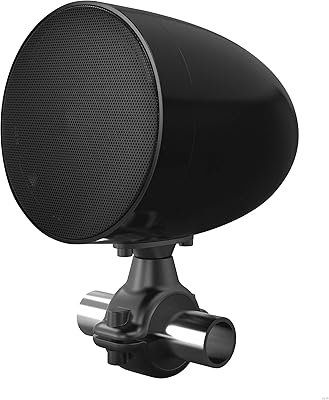
BOSS Audio MCBK625BA Motorcycle Speaker System
74%
88%
Ease of Installation
71%
Audio Volume & Output
63%
Sound Quality & Clarity
74%
Bluetooth Reliability
69%
Weatherproofing & Durability
More
RØDE Wireless GO II
RØDE Wireless GO II
84%
92%
Audio Clarity
86%
Signal Reliability
97%
Internal Backup Recording
94%
Portability & Weight
91%
Setup Speed & Ease of Use
More

FAQ

It works with most modern televisions as long as your TV has either an RCA audio output or a Digital Optical (Toslink) audio port. Both cable types are included in the box. If your TV only has an HDMI ARC port, you may need a separate adapter, so it is worth checking your TV model before purchasing.

That is one of the most honest things to flag about this system. Because it uses infrared rather than Bluetooth, it does require a reasonably clear path between the transmitter on or near your TV and the speaker on your chair. Leaning far forward or turning sideways can interrupt the signal. Most viewers who stay settled in one position find this is not a practical problem, but it is a real limitation worth knowing about upfront.

The ball-flex joints are designed to clamp onto a range of chair styles, but they do work best with standard recliner backs or armrests of moderate thickness. Very thick, rounded, or unusually shaped padding can make it tricky to get a secure grip. A few buyers with non-standard furniture have reported fitment challenges, so if the chair is particularly unusual in shape, it is worth keeping that in mind.

Setup is genuinely straightforward. You connect the included cable from your TV to the transmitter base, plug the transmitter into a wall outlet, attach the speaker arm to the chair using the flex joints, and you are essentially done. There is no app to install, no Bluetooth pairing, and no account to create. Most users report being up and running in under fifteen minutes.

Not quite. The ChairSpeaker CS3 Wireless TV Speaker System positions a small speaker next to your ear rather than placing anything on or over your head. For people who find headphones uncomfortable during long viewing sessions, or who feel isolated wearing them, this near-ear approach can be a meaningful difference in day-to-day comfort.

Unfortunately, no. The system is designed for a single listener. There is one speaker unit paired to the transmitter, so only one person can benefit from the amplified audio at a time. If two people in the household need hearing assistance while watching TV together, you would need two separate units.

Yes, as long as those apps are running through your TV and your TV routes their audio through the RCA or Digital Optical output. The CS3 listening system does not connect to your streaming accounts directly — it simply amplifies whatever audio your TV sends out, regardless of the source.

The housing is ABS plastic, which is functional and lightweight but not premium-feeling in hand. That said, long-term owners generally report that it holds up well with regular daily use. It is assembled in the USA, which tends to come with tighter quality oversight than fully offshore alternatives at this price range.

The voice enhancement processing is built into the speaker hardware rather than being a user-adjustable setting with distinct modes or levels. It applies a consistent audio filter designed to bring out spoken dialogue. You do get volume control, but the enhancement profile itself is fixed by design.

The transmitter does need to be placed where its IR signal can reach the speaker on your chair without obstruction, so positioning it near or on top of your TV cabinet is typically the most practical approach. Tucking it behind furniture or in an enclosed shelf would block the infrared beam and degrade reception significantly.