Overview

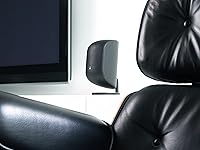
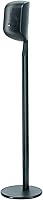
The Bowers & Wilkins M-1 Satellite Speaker is a compact, premium-grade speaker that punches well above its physical size, occupying a rare space in the market where serious audio performance meets a genuinely small footprint. Built around a sealed clamshell cabinet — two interlocking sections that lock together tightly — the M-1 keeps resonance in check without sacrificing the refinement you'd expect from a British audio house with real engineering credentials. Sold as a single unit, it gives buyers the freedom to build exactly the system they need, whether that's a stereo pair for a study or a full five-channel surround arrangement. Tabletop stand, wall bracket, and optional floor stands offer genuine flexibility across room types.

Features & Benefits

Start with the drivers. The 4-inch glass fiber cone handles midrange with notable control — there's very little cabinet coloration getting in the way of what the recording actually contains. Up top, the aluminum dome tweeter draws on tube-loading technology borrowed from the brand's high-end Nautilus line, which keeps high frequencies clean and free of the hardness you sometimes hear from metal tweeters in this size class. The crossover hands off at 4kHz, a sensible point that keeps both drivers in their comfort zones. Bass rolls off around 64 Hz, so pairing this compact satellite with a dedicated subwoofer is not optional — it's necessary. The 8Ω impedance and 85dB sensitivity mean you'll want an amplifier delivering at least 50 watts per channel to drive these properly.

Best For

This compact satellite is a natural fit for home theater enthusiasts who need high-quality sound from speakers that don't dominate the room visually. Apartments and smaller listening spaces benefit the most — the matte black cabinet is genuinely unobtrusive, whether mounted on a wall or placed on a shelf. Anyone building or expanding a B&W surround system will find the M-1 an easy choice for matching tonal character across all channels. That said, the subwoofer dependency is real, so buyers who aren't prepared to add a capable low-frequency unit will be left wanting more body in both music and film soundtracks. If the full system investment fits the plan, the B&W M-1 rewards the effort considerably.

User Feedback

Owners are largely positive, with clarity, imaging, and dialogue intelligibility coming up repeatedly as standout qualities. The build quality earns genuine praise too — for a speaker this size, the finish feels appropriately solid and premium. On the critical side, the single-unit pricing is a recurring frustration: equipping a full five-channel system represents a meaningful financial commitment that buyers should factor in before purchasing. A handful of users with modestly powered receivers report that the 85dB sensitivity leaves headroom feeling tight at lower volume settings. Wall-bracket installation is generally considered simple, though a few note the included mounting hardware feels underwhelming relative to the speaker's overall quality. Long-term reliability appears strong, with no notable driver degradation reported across years of use.

Pros

  • Midrange clarity is genuinely impressive for a speaker this size, making dialogue and vocals stand out cleanly.
  • The tube-loaded aluminum tweeter delivers smooth, fatigue-free highs without the edginess common in smaller metal-dome designs.
  • Sealed clamshell cabinet construction keeps vibration low and the sound floor surprisingly quiet.
  • Flexible mounting options — tabletop stand, wall bracket, or floor stand — make placement straightforward in most rooms.
  • The compact footprint and matte black finish integrate into a living space without looking like audio equipment.
  • Single-unit sales model lets buyers scale their system at their own pace rather than paying for channels they don't need yet.
  • Long-term reliability is strong, with owners reporting consistent performance after years of regular use.
  • Tonal character matches well across a multi-channel B&W setup, which matters more than most buyers initially expect.
  • Build quality and cabinet finish feel genuinely premium relative to the speaker's physical size.

Cons

  • Bass rolls off at 64 Hz, so a dedicated subwoofer is a required addition, not an optional one.
  • At 85dB sensitivity, this compact satellite needs a decent amplifier — budget receivers may not drive it confidently.
  • Buying enough units for a full five-channel system represents a significant total outlay that adds up quickly.
  • Supplied wall-bracket hardware feels underwhelming and does not match the quality level of the speaker itself.
  • No wireless connectivity means cable management is entirely on the buyer, which can be a challenge in some room layouts.
  • The low-frequency limitation means the M-1 alone will disappoint anyone who listens to bass-heavy music without a subwoofer.
  • Floor stands are sold separately, adding to the overall system cost if that mounting option is preferred.
  • The 85dB sensitivity figure leaves less headroom than competing satellites in the same price tier.

Ratings

The scores below were generated by AI after analyzing verified owner reviews from buyers worldwide, with spam, bot-submitted, and incentivized feedback actively filtered out before any scoring was applied. The Bowers & Wilkins M-1 Satellite Speaker earns strong marks in several critical areas, but the ratings also reflect real frustrations — particularly around bass limitations, sensitivity requirements, and total system cost — so buyers get an honest picture rather than a curated highlight reel.
Sound Clarity
91%
Owners consistently single out midrange detail and dialogue intelligibility as standout qualities, particularly when watching films or listening to vocal recordings. The tube-loaded tweeter keeps high frequencies smooth and fatigue-free across extended listening sessions, which is a meaningful advantage over similarly sized competitors.
At lower volume levels driven by modest receivers, some users notice the M-1 loses a little of that clarity and feels slightly compressed. It rewards good amplification, so the full sonic picture isn't always accessible to everyone who purchases it.
Bass Performance
48%
52%
Within its operating range — roughly 64 Hz and above — the compact satellite handles lower midrange frequencies with decent control and no obvious muddiness. For speech and acoustic music, the bass foundation it provides is adequate without a subwoofer in very small rooms.
Below 64 Hz, there simply is no output, and this is the single most common source of disappointment among new owners. Buyers who hook up the B&W M-1 without a subwoofer and expect full-range sound are in for a significant letdown, especially with cinematic soundtracks or bass-heavy music.
Build Quality
88%
The sealed clamshell enclosure feels solid and well-assembled, with no flex or rattle when handled firmly. Multiple owners specifically mention that the matte black finish and cabinet tolerances feel premium relative to the speaker's footprint, which helps justify the positioning in the market.
The included wall-bracket hardware is the one area where build perception drops noticeably — it feels noticeably cheaper than the speaker itself, and several owners opted to source their own mounting hardware before installation. It's a minor but recurring complaint.
Imaging & Soundstage
86%
Stereo imaging is one of the M-1's clearest strengths, with owners describing a well-defined, stable soundstage that holds up reliably across a range of listening positions. In surround configurations, the directional precision of dialogue and effects placement draws consistent praise.
The soundstage does narrow somewhat when the speaker is wall-mounted close to a surface rather than placed on the adjustable stand aimed at the listening position. Getting the best imaging requires deliberate placement, which isn't always possible in every room layout.
High-Frequency Detail
89%
The Nautilus-inspired tube-loaded tweeter handles transients — cymbal strikes, consonants in speech, string harmonics — with a level of refinement that stands out clearly at this cabinet size. Long-term listeners report no harshness or brightness fatigue even after hours of use.
A small number of users with very bright-sounding AV receivers describe the treble as slightly forward in certain frequency combinations, suggesting the M-1 is somewhat sensitive to what's upstream in the signal chain.
Sensitivity & Amplifier Compatibility
61%
39%
The 8Ω nominal impedance means the compact satellite is electrically safe to connect to virtually any standard AV receiver without risk of damage. Mid-range and higher-tier receivers in the 50–100W per channel range drive it confidently and unlock its full dynamic range.
At 85dB sensitivity, this speaker is harder to drive than most buyers expect. Entry-level receivers rated below 40W per channel struggle to give it adequate headroom, and several owners report that their system only truly came alive after upgrading their amplification.
Design & Aesthetics
92%
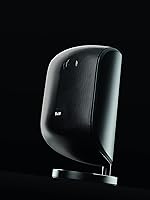
The rectangular cabinet with curved edges and low-profile matte black finish is one of the best-looking enclosures in the compact satellite category. Owners in design-conscious living spaces specifically mention that the M-1 blends into bookshelves and media walls without drawing visual attention.
The finish is only available in matte black, which suits most modern interiors but limits options for buyers with lighter decor or wood-toned furniture. A white or natural finish option would genuinely expand its appeal.
Mounting Flexibility
82%
18%
The ability to orient the speaker either vertically or horizontally, combined with the included wall bracket and adjustable tabletop stand, gives buyers real flexibility for a variety of room configurations. Horizontal center-channel use is well thought out and functions cleanly in practice.
Floor stands — arguably the most sonically optimal placement for reducing unwanted surface reflections — are sold separately at an additional cost. For buyers who want the best performance, that's an expense that needs to be factored into the budget upfront.
Value for Money
63%
37%
For buyers who understand what they are purchasing — a single premium-grade satellite unit — the engineering quality and longevity make the cost defensible. Long-term owners appreciate that performance holds up over years without degradation, which matters when calculating cost over time.
The per-unit pricing model means that equipping a complete 5.1 system, including a subwoofer, represents a total outlay that competes with significantly larger or more full-featured speaker systems. Budget-conscious buyers building from scratch may find the cumulative cost hard to rationalize.
Subwoofer Integration
74%
26%
When paired with a capable subwoofer — particularly B&W's own ASW608 or PV1D — the M-1 integrates naturally, with the crossover transition around 80–100 Hz feeling smooth rather than audibly disjointed. Owners who take this step consistently describe the resulting sound as genuinely cohesive and full-range.
The integration quality is highly dependent on the subwoofer chosen and how carefully the crossover point is configured on the receiver. Owners who pair it with a poorly matched or cheap subwoofer often report a disconnected, unbalanced sound that reflects badly on the satellite unfairly.
Installation Ease
78%
22%
The tabletop stand snaps on intuitively and the wall bracket is a simple two-screw affair that most owners complete in under 15 minutes without professional help. The option to flip the speaker horizontal for center-channel use requires no tools or modifications.
The supplied wall anchors and screws are the weak link — they're adequate for light drywall but feel marginal for heavier installations or plaster walls. Several owners recommend purchasing proper toggle anchors separately before attempting any wall installation.
Long-Term Durability
87%
Verified long-term owners — some with units running for five or more years — report no driver deterioration, cabinet joint failures, or finish degradation under normal indoor use. The sealed enclosure design appears to protect internal components effectively from dust and humidity.
There is limited data on performance at the extreme end of the recommended 100W amplifier ceiling over sustained high-volume use, so very hard-use scenarios are less well documented. The matte finish can show scuffs with rough handling, though this is purely cosmetic.
Dialogue Intelligibility
93%
This is arguably the single most praised real-world use case among verified owners, particularly those using the M-1 as a center channel in a home theater. Voices in films and television sit cleanly in the mix with none of the smearing or congestion that affects lesser satellite designs.
The dialogue advantage is most pronounced at moderate listening levels; at very low late-night volumes, some users note that detail slightly recedes, though this is partially a function of the receiver's volume control rather than the speaker itself.
Packaging & Out-of-Box Experience
71%
29%
The speaker arrives well-protected with a quality unboxing experience that feels consistent with the premium positioning. The included accessories — stand, wall bracket, and bracket cover — are all present and clearly laid out, making setup straightforward from the first moment.
The instruction documentation is minimal, and buyers less familiar with speaker setup may find the guidance on optimal crossover settings and subwoofer pairing insufficient. A more detailed quick-start guide would meaningfully reduce early setup frustration.

Suitable for:

The Bowers & Wilkins M-1 Satellite Speaker is purpose-built for listeners who refuse to compromise on audio quality just because their room or lifestyle demands a smaller form factor. It's an excellent choice for apartment dwellers, dedicated home theater builders, and anyone furnishing a living space where large floorstanding speakers simply aren't practical or aesthetically welcome. The single-unit sales model makes it easy to start with a stereo pair and expand incrementally into a full surround configuration, which suits buyers who prefer to invest gradually rather than all at once. Design-conscious listeners will appreciate how the matte black cabinet and compact profile allow the M-1 to sit on a shelf or mount flush to a wall without calling attention to itself. Existing B&W owners building out a multi-channel system will find the tonal consistency across channels to be a clear advantage, making the B&W M-1 a natural anchor for a timbre-matched surround setup.
Not suitable for:

The Bowers & Wilkins M-1 Satellite Speaker is not the right call for buyers expecting a full-range listening experience straight out of the box without additional equipment. Bass extension rolls off around 64 Hz, which means you will need a capable subwoofer — and a budget line for one — before this compact satellite truly performs as intended. Buyers working with an entry-level AV receiver should also take note: at 85dB sensitivity, the M-1 demands a reasonably powerful amplifier, and underpowered receivers will struggle to control it cleanly at higher listening levels. Anyone looking to outfit a larger room with significant cubic footage should also think carefully, as this speaker's output is calibrated for nearfield and medium-sized environments rather than cavernous spaces. Finally, buyers with a tight overall system budget may find that the per-unit cost, multiplied across five channels plus a subwoofer, adds up to a total investment that feels steep compared to all-in-one home theater bundles.

Specifications

  • Woofer Driver: A 4″ woven glass fiber cone handles bass and midrange frequencies, chosen for its stiffness-to-weight ratio and low coloration.
  • Tweeter Driver: A 1″ aluminum dome tweeter uses tube-loading technology derived from the brand's Nautilus engineering to reduce resonance at high frequencies.
  • Frequency Response: The speaker reproduces frequencies from 64 Hz upward, meaning a subwoofer is required to cover the lower bass range.
  • Sensitivity: Rated at 85dB SPL measured at 2.83V over 1 meter, which sits on the lower side and favors use with amplifiers of at least 50 watts per channel.
  • Impedance: Nominal impedance is 8Ω with a minimum dip to 4Ω, making it compatible with the majority of standard AV receivers.
  • Amplifier Power: Recommended amplifier output is between 20W and 100W into 8Ω on unclipped program, giving it a broad but not unlimited receiver compatibility range.
  • Crossover Frequency: The internal crossover hands off between the woofer and tweeter at 4kHz, keeping both drivers operating within their optimal ranges.
  • Cabinet Design: The enclosure is a sealed clamshell formed from two interlocking sections, which controls internal airflow and reduces resonance without a port or passive radiator.
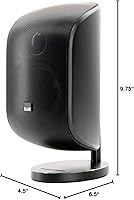
  • Dimensions: With the table stand fitted, the speaker measures 9.75″ high, 4.5″ wide, and 6.5″ deep.
  • Weight: Each unit weighs approximately 5.07 lb (around 2,300g) including the table stand.
  • Mounting Options: The speaker can be positioned vertically or horizontally and supports tabletop stand, wall bracket, or optional floor stand configurations.
  • Included Accessories: Each unit ships with a table stand, a wall bracket, and a wall bracket cover; floor stands are sold separately.
  • Connectivity: Connection is via standard wired speaker cable terminals; there is no wireless or powered input option.
  • Compatible Subwoofers: B&W recommends pairing the M-1 with the ASW608 or PV1D powered subwoofers for full-range bass coverage, though both are sold separately.
  • Cabinet Finish: Available in matte black, with a low-gloss surface designed to minimize visual prominence in a room setting.
  • Audio Driver Type: Both drivers use a dynamic (moving-coil) operating principle, which is standard for passive wired speakers in this category.
  • Surround Config: A single unit operates in mono; buyers need five units to fill all channels in a standard 5.1 surround configuration.
  • Warranty Type: The product carries a limited manufacturer warranty; buyers should confirm duration and coverage terms with the retailer at point of purchase.

Related Reviews

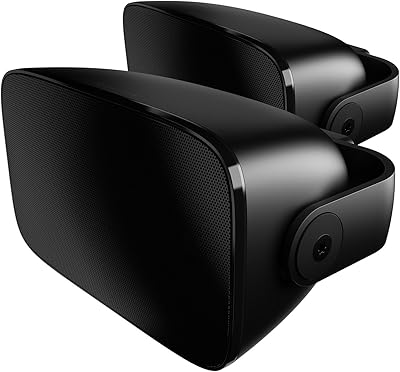
Bowers & Wilkins AM-1 Outdoor Speakers
81%
93%
Sound Quality
91%
Build Quality
89%
Weather Resistance
62%
Value for Money
74%
Installation Experience
More
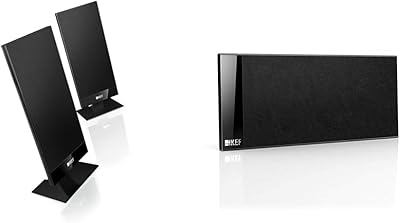
KEF T101 Satellite and Center Channel Speakers
80%
88%
Sound Clarity
91%
Build Quality
94%
Design & Aesthetics
89%
Dialogue Intelligibility
62%
Value for Money
More
HYWD Enterprises Perfume Spray M. CAREY ″M″ for Women, 1 oz
85%
88%
Fragrance Longevity
85%
Scent Quality
92%
Value for Money
91%
Travel-friendliness
82%
Packaging Quality
More
SVS Prime Satellite Surround Sound Speakers
80%
88%
Sound Clarity
54%
Bass Performance
91%
Build Quality
76%
Value for Money
89%
Surround Integration
More
Bowers & Wilkins Pi6 Wireless Earbuds
86%
92%
Sound Quality
89%
Active Noise Cancellation (ANC)
78%
Comfort and Fit
85%
Battery Life
90%
Build Quality
More
Monoprice 133833 Satellite Speakers Pair
73%
88%
Value for Money
71%
Atmos Height Effect
79%
Build Quality
47%
Bass Performance
82%
Tweeter Clarity
More
HusonoLife HFS-1 Ferrofluid Speaker
82%
92%
Visual Appeal
84%
Battery Life
88%
Usability/Setup
85%
Portability
78%
Build Quality
More
M Jiuyunmu Wireless Bluetooth Helmet Speakers
75%
78%
Sound Quality
83%
Bluetooth Connectivity
91%
Battery Life
61%
Helmet Compatibility
88%
Ease of Use & Controls
More
Bowers & Wilkins Px7 S3
82%
93%
Sound Quality
71%
Noise Cancellation
89%
Comfort & Fit
88%
Build Quality & Materials
91%
Battery Life
More
Bowers & Wilkins Pi8 Wireless Bluetooth Earbuds
87%
93%
Sound Quality
88%
Noise Cancellation
84%
Comfort and Fit
85%
Battery Life
90%
Ease of Use
More

FAQ

You will need a separate subwoofer. The M-1 rolls off below 64 Hz, which means a meaningful portion of bass in music and film soundtracks simply won't be reproduced without one. B&W's own ASW608 and PV1D are designed to integrate well with it, but any quality subwoofer with a suitable crossover point will work.

A standard 5.1 setup requires five of these compact satellites — two front, one center, and two surround — plus a separate subwoofer. Since each is sold individually, it's worth mapping out your full channel count before purchasing so you can budget accurately.

Most modern AV receivers will work fine, but pay attention to the 85dB sensitivity rating. That's on the lower side, so if your receiver is rated below about 50 watts per channel into 8Ω, you may find the speakers sound strained or lack dynamic headroom at higher volumes. Mid-range and above receivers from major brands should have no issues.

Yes, a wall bracket is included in the box. Most owners find the installation process fairly straightforward — it's a standard bracket-and-screw setup. The one consistent complaint is that the supplied mounting hardware feels budget relative to the speaker itself, so if you're mounting into drywall or want a more secure installation, picking up heavier-duty anchors separately is worth considering.

Yes, the Bowers & Wilkins M-1 Satellite Speaker is specifically designed to be used either vertically or horizontally, and B&W explicitly recommends it as a center channel option in a surround setup. The adjustable stand accommodates both orientations.

It handles music well, particularly in the midrange and treble where detail and imaging are strong. The caveat is always the bass rolloff — for music genres that depend heavily on low-end weight, like electronic or hip-hop, you'll want that subwoofer running alongside it. For jazz, acoustic, or vocal-heavy recordings it performs very naturally even without one.

The difference is most noticeable in midrange clarity and high-frequency refinement. Budget satellite speakers often sound congested in the mids or harsh in the treble at higher volumes. The tube-loaded tweeter in the B&W M-1 keeps the top end smooth in a way that cheaper aluminum domes typically don't. Whether that difference justifies the price gap depends entirely on how critical a listener you are.

Technically, yes — the M-1 connects via standard speaker cable and has no proprietary low-frequency integration system. Any subwoofer with a line-level input and a configurable crossover point can be matched to it. B&W recommends their own models for tonal consistency, but plenty of owners run it alongside subwoofers from other reputable brands without issue.

Long-term owners report that the drivers hold up well with no noticeable degradation in performance after several years of regular use. The sealed cabinet design helps protect internal components. Just treat the cabinet finish with reasonable care — the matte black surface can show scuffs if handled roughly.

It can catch buyers off guard if they assume they're getting a pair. You're purchasing one speaker, so for stereo listening you need to add two to your cart, and for a full surround system you'd need five. It's a frustration some reviewers mention, but the per-unit model does give you genuine flexibility to start small and expand when budget allows.

Where to Buy