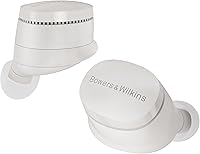
Bowers & Wilkins Pi6 Wireless Earbuds

Bowers & Wilkins Pi6 Wireless Earbuds — image 1
Bowers & Wilkins Pi6 Wireless Earbuds — image 2

Bowers & Wilkins Pi6 Wireless Earbuds — image 3

Bowers & Wilkins Pi6 Wireless Earbuds — image 4
Bowers & Wilkins Pi6 Wireless Earbuds — image 5

Bowers & Wilkins Pi6 Wireless Earbuds — image 6

Bowers & Wilkins Pi6 Wireless Earbuds — image 7
Bowers & Wilkins Pi6 Wireless Earbuds — image 8
76%
24%

Overview

The Bowers & Wilkins Pi6 Wireless Earbuds represent B&W's most deliberate push into the true wireless market, building on the Pi5 with improved driver tech and high-res codec support. The unboxing is restrained but considered — a compact charging case, four silicone ear tip sizes, and earbuds that feel solid without being heavy. At this price, they sit alongside the Sony WF-1000XM5, Sennheiser Momentum True Wireless 4, and Apple AirPods Pro 2 — rivals with years of user data behind them. The Pi6's core pitch is simple: sound quality first, extra features second. With fewer than 70 ratings so far, its public track record is still taking shape.

Features & Benefits

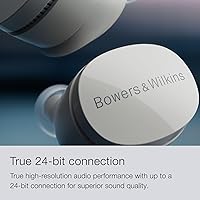
The headline spec is the 12mm bio-cellulose driver — the same material used in B&W's Px7 S2e over-ear headphones. Bio-cellulose is stiffer and lighter than most plastics, which cuts distortion in the higher frequencies where cheaper drivers typically lose definition. Pair that with aptX Adaptive over Bluetooth 5.2 and 24-bit DSP, and Android users on compatible hardware get high-resolution wireless audio that adjusts its bitrate on the fly. iPhone users will fall back to AAC — worth knowing before you buy. The adaptive ANC reads the environment through three microphones per earbud and calibrates automatically. Battery life runs to 8 hours from the earbuds, with the case adding another 16, and a 15-minute quick charge recovers 2 hours of playback.

Best For

The Pi6 makes most sense for listeners who want audiophile-grade sound in a genuinely portable form and are prepared to accept some trade-offs to get it. aptX Adaptive users — on Android or compatible laptops — will extract the full value from the codec, while iPhone owners should know they're limited to AAC. Commuters will appreciate ANC that adjusts itself without mode-switching. But if wireless charging, multi-device pairing, or touch controls are on your list, these B&W earbuds don't offer them. The single-button control has a learning curve, and the 8-hour battery trails some competitors in this bracket. For TIDAL or Qobuz subscribers, the direct app streaming is a practical differentiator worth factoring in.

User Feedback

With 68 ratings and a 3.8 out of 5 average, the Pi6's public feedback is too limited to treat as definitive — take it as an early read. What consistently surfaces in positive reviews is praise for sound clarity and natural imaging, with some users highlighting comfort during long listening sessions. On the flip side, the single-button control interface keeps appearing as a friction point, with buyers needing time to memorize its functions. ANC draws mixed marks — adequate for an office environment, but short of what dedicated noise-cancellers can do. The rounded ear tips aren't a universal fit, so testing them matters before committing. A handful of negative reviews trace issues back to app stability rather than the earbuds themselves.

Pros

  • The 12mm bio-cellulose drivers deliver noticeably low distortion and strong high-frequency detail compared to typical dynamic drivers.
  • aptX Adaptive support gives Android users access to high-resolution wireless audio that adjusts bitrate dynamically for consistent quality.
  • Adaptive ANC calibrates to ambient noise automatically, which is genuinely useful during commutes with unpredictable sound environments.
  • A 15-minute quick charge returns 2 full hours of playback — a practical safety net on busy days.
  • The total 24-hour battery system (earbuds plus case) is respectable for extended trips.
  • IP54 water and dust resistance makes the Pi6 a credible option for workouts and outdoor use.
  • Direct streaming from TIDAL, Qobuz, Deezer, and others via the companion app is a real convenience for subscribers.
  • Build quality and materials feel appropriately premium for the price tier.
  • Four ear tip sizes (XS through L) give a reasonable chance of finding a secure fit across different ear shapes.
  • Bluetooth 5.2 with NFC provides stable connectivity and quick pairing across a wide range of compatible devices.

Cons

  • iPhone users get no benefit from aptX Adaptive and are limited to AAC, making one of the key selling points irrelevant.
  • The single-button control per earbud requires memorizing multiple press combinations, which takes real adjustment time.
  • At 8 hours of earbud battery life, the Pi6 falls short of rivals like the Sony WF-1000XM5 in this price range.
  • Wireless charging is absent — an omission that feels noticeable at this price point.
  • ANC performance, while functional, does not match the noise cancellation depth of dedicated class leaders.
  • The rounded ear tip design does not suit all ear canal shapes, and fit issues have surfaced in early user feedback.
  • With under 70 ratings, the long-term reliability picture is still genuinely unclear.
  • No multi-device pairing means switching between a phone and laptop requires a manual reconnect.
  • App stability has been flagged in a subset of reviews, suggesting the software experience is not yet fully polished.
  • No wireless charging case is included, which competing options at this tier have started to normalize.

Ratings

Our AI-generated scores for the Bowers & Wilkins Pi6 Wireless Earbuds are derived from analyzing verified buyer reviews across global markets, with spam, incentivized, and bot-generated feedback actively filtered out before scoring. The ratings reflect the full picture — what these earbuds genuinely do well and where real users have run into frustration — giving you an honest baseline for your buying decision. Each category below is scored independently so you can weigh the factors that matter most for your specific listening habits and daily routine.

Sound Quality
88%
Bio-cellulose drivers resolve high-frequency detail cleanly without the harshness that plagues earbuds using cheaper driver materials — across jazz, classical, and well-mastered pop, the presentation stays open and natural. Listeners on long commutes consistently praised the non-fatiguing character of the sound over multi-hour sessions.
The neutral, accuracy-first tuning won't satisfy users who prefer a bass-heavy or V-shaped signature — genres like hip-hop and EDM can feel dry in comparison to warmer-tuned competitors. A portion of reviewers also noted the soundstage narrows when the device falls back to AAC on iOS.
ANC Performance
71%
29%
The adaptive system does a solid job in steady-noise environments — office HVAC systems, train interiors, and light cabin noise — adjusting cancellation without requiring the user to manually cycle through modes. Commuters moving between indoor and outdoor settings particularly appreciated not having to touch a button mid-journey.
Against class leaders like the Sony WF-1000XM5, the cancellation depth feels conservative, handling low-frequency hum well but struggling with transient noise like busy coffee shop chatter or construction. Several users described the result as noise reduction rather than full isolation, which is a meaningful distinction at this price point.
Battery Life
67%
33%
Eight hours of earbud life handles a full working day reliably, and the case's additional 16 hours means most users can travel for several days without hunting for a wall outlet every night. The combined 24-hour system is practical for routine use.
Eight hours per charge is a genuine gap compared to what rivals like the Sony WF-1000XM5 offer at a similar price — around 12 hours per earbud — which matters on long-haul flights or full travel days. Users who forget to charge the case overnight can find themselves short on playback by evening.
Comfort & Fit
73%
27%
Users who found the right ear tip size — most commonly M or L — reported genuine all-day comfort, with the rounded tip shape sitting without creating pressure points during extended listening sessions. Several reviewers specifically mentioned wearing these for three-plus hours without discomfort.
The rounded tip geometry does not suit all ear canal shapes, and loose fit has surfaced consistently in critical reviews. Buyers with narrower or shallower ear canals may find the seal breaks during physical activity, which degrades both passive isolation and bass response noticeably.
Controls & Usability
62%
38%
Once the button sequences are internalized, the single-button design eliminates accidental touch triggers that frustrate users of capacitive surfaces — and long-term owners who took the time to learn the interface generally stopped mentioning it as a friction point in their reviews.
The learning curve is steep and cited repeatedly in critical reviews — covering playback, calls, ANC, and voice assistant through double, triple, and hold combinations is a lot to memorize. Accidental skipped tracks and mis-triggered voice assistants are common early-ownership frustrations that new buyers should expect for the first week or two.
Driver Clarity
91%
The bio-cellulose material's stiffness-to-weight ratio translates directly into lower distortion at high frequencies, and this is where the Pi6 earns its most enthusiastic praise — detail retrieval on well-recorded tracks is noticeably cleaner than typical dynamic drivers in this segment. Audiophiles streaming lossless content via Qobuz or TIDAL cited this as the standout quality.
The clarity advantage is most apparent on well-mastered recordings; compressed or low-bitrate streams can actually highlight the driver's honesty in an unflattering way, making poor-quality audio sound worse than it might on a more forgiving, warmer-tuned earbud. This is a character trait more than a flaw, but worth knowing.
Codec Performance
78%
22%
Android users on aptX Adaptive-compatible devices benefit from a dynamically adjusting bitrate that sustains high-resolution audio quality even in congested wireless environments, which is meaningful for audiophiles streaming from TIDAL or Qobuz in busy urban areas. The 24-bit DSP processing adds measurable refinement to the output signal.
The codec advantage is entirely device-dependent — iPhone users receive no benefit from aptX Adaptive and fall back to AAC, which makes this a conditional selling point rather than a universal one. Buyers should be clear-eyed about whether their primary device actually supports the codec before treating it as a purchase justification.
Connectivity
83%
Bluetooth 5.2 with NFC delivered reliable, low-dropout connections across typical daily environments in user reports — office corridors, subway commutes, and gym floors. NFC tap-to-pair on Android meaningfully reduces the friction of initial setup and re-pairing after long periods of non-use.
The 10-metre range is standard rather than exceptional, and a subset of users in dense urban environments noted occasional brief dropouts in heavy wireless interference. Multi-device automatic switching is also absent, adding manual steps when moving between a phone and a laptop across a workday.
Call Quality
77%
23%
Three microphones per earbud provide useful redundancy for maintaining voice clarity in moderately noisy environments — open offices and train platforms included. Several buyers who use this wireless earbud set for daily work video calls noted that call recipients rarely flagged audio quality as a problem.
In high-wind conditions or loud outdoor settings, the microphones struggle to fully separate the caller's voice from background noise, with call recipients occasionally reporting muffled audio. The microphone performance lags behind earbuds with more sophisticated beamforming setups when ambient noise levels are at their worst.
App Experience
68%
32%
Direct streaming integration with TIDAL, Qobuz, and Deezer inside the B&W app is a genuinely useful feature for subscribers, consolidating discovery and playback without switching between multiple apps. For listeners already in those ecosystems, this integration adds meaningful daily convenience.
A consistent thread in early negative reviews points to app stability issues — settings failing to save, occasional UI freezes, and unexpected disconnections between the app and the earbuds. These appear to be software-side rather than hardware problems, but they add friction to setup and daily use that buyers should be aware of.
Quick Charge
82%
18%
A 15-minute charge returning 2 hours of playback is a practical and well-executed feature — users who forgot to charge overnight consistently mentioned this as the detail that saved them during morning commutes. In daily use it functions as a quiet but reliable safety net.
The case does not support wireless charging, which feels like an omission at this price tier where some competing cases have normalized the feature. Users who regularly drain the case reserve will also find the case-to-full recharge time adds up when they need a quick full system refresh.
Value for Money
74%
26%
For Android users who can leverage aptX Adaptive and want a sound-quality-first earbud from a specialist audio brand with adaptive ANC, the Pi6 offers a technically specific value case that mainstream options don't directly replicate. The driver quality relative to the asking price is where the argument holds firmest.
Compared to the Sony WF-1000XM5 and Sennheiser Momentum True Wireless 4, the Pi6 gives up feature count — no wireless charging, limited controls, shorter per-earbud battery life — without a price advantage substantial enough to justify those trade-offs for general buyers. iPhone users will find the value case harder to construct.
Water Resistance
79%
21%
IP54 certification covers the Pi6's core intended use cases confidently — gym workouts, runs in light rain, and sweaty commutes — and no reviewers reported moisture-related damage from those typical exposures. The rating adds genuine peace of mind for active daily use.
IP54 is a mid-tier protection rating and does not extend to submersion, heavy rain, or any water-sport scenario. Users who expect earbuds to handle more demanding exposure — swimming, showering, or cycling in downpours — should look toward options with IPX7 or higher certifications instead.

Suitable for:

The Bowers & Wilkins Pi6 Wireless Earbuds are best suited to listeners who treat sound quality as a non-negotiable and are willing to accept a leaner feature set in exchange for it. Android users with aptX Adaptive-compatible phones or laptops will get the most out of the hardware, unlocking genuinely high-resolution wireless audio that most earbuds in this bracket can't match. Daily commuters who want ANC that adapts to their environment automatically — without toggling between modes mid-journey — will find the hands-off approach a practical one. Audiophiles already invested in high-fidelity streaming services like TIDAL, Qobuz, or Deezer will appreciate direct app integration that cuts out extra steps. The IP54 rating makes these a reasonable companion for gym sessions and rainy commutes, and the quick-charge feature helps when battery anxiety is a factor.

Not suitable for:

Buyers who expect a full-featured package at this price point should look carefully before committing to the Bowers & Wilkins Pi6 Wireless Earbuds. iPhone users will not benefit from aptX Adaptive and will fall back to AAC, meaning the codec advantage — one of the Pi6's strongest technical arguments — simply does not apply to them. Anyone who relies on wireless charging, multi-device pairing, or intuitive touch controls will find this earbud set frustrating; none of those features are present. The 8-hour earbud battery is functional but noticeably shorter than what Sony and Sennheiser offer at a comparable price, which matters for long travel days. With only 68 ratings in circulation, buyers who prefer to lean on a large pool of real-world user feedback before purchasing may want to wait for a broader sample to develop.

Specifications

  • Driver Unit: Each earbud houses a 12mm bio-cellulose dynamic driver, the same material technology used in B&W's Px7 S2e over-ear headphones, chosen for its stiffness-to-weight ratio and low distortion characteristics.
  • Audio Codec: The Pi6 supports aptX Adaptive with 24-bit DSP processing, enabling high-resolution wireless audio with a dynamically adjusting bitrate; standard SBC and AAC are also supported as fallback codecs.
  • Bluetooth: Bluetooth 5.2 with NFC is included, providing stable wireless connectivity across a 10-metre range and fast pairing on NFC-compatible Android devices.
  • Noise Cancelling: A bespoke adaptive ANC system uses three microphones per earbud to continuously monitor ambient noise and automatically calibrate cancellation strength without requiring manual mode selection.
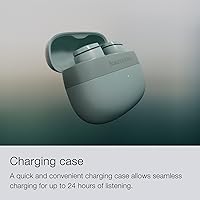
  • Battery Life: The earbuds deliver up to 8 hours of playback on a single charge, and the accompanying charging case provides an additional 16 hours, for a combined total of up to 24 hours.
  • Quick Charge: A 15-minute charge via the case returns approximately 2 hours of playback, and a full charge of the earbuds takes around 2 hours.
  • Water Resistance: The earbuds carry an IP54 rating, offering protection against sweat, light rain, and dust, though they are not rated for submersion or heavy water exposure.
  • Controls: Each earbud uses a single physical button that handles multiple functions through combinations of press patterns, covering playback, call management, and ANC toggling.
  • Microphones: Three microphones per earbud serve dual roles: supporting the adaptive ANC system and providing call clarity for voice calls and voice assistant interaction.
  • Ear Tips: Four sizes of silicone ear tips are included in the box — XS, S, M, and L — to accommodate a range of ear canal shapes and support a secure in-ear seal.
  • Companion App: The Bowers & Wilkins Music App is compatible with iOS and Android and enables direct streaming from services including TIDAL, Qobuz, Deezer, Pandora, and SoundCloud.
  • Bluetooth Range: The rated wireless range is 10 metres in open conditions, which is standard for Bluetooth 5.2 earbuds used in everyday environments.
  • Package Weight: The total package weight, including both earbuds and the charging case, is 0.29 kg (approximately 10.2 oz).
  • Materials: The earbuds and case are constructed from plastic with silicone ear tips, finished in a contemporary style available in Cloud Grey, Green, and Blue colorways.
  • Compatible Sources: The earbuds are designed to work with smartphones, tablets, laptops, TVs, and gaming consoles — any device with standard Bluetooth output and, where relevant, NFC pairing.

Related Reviews
Bowers & Wilkins Pi8 Wireless Earbuds
75%
93%
Sound Quality
51%
Battery Life
78%
Noise Cancellation
67%
Fit & Comfort
84%
Call Quality
More
Bowers & Wilkins Px8 McLaren Edition
82%
93%
Sound Quality
74%
Active Noise Cancellation
91%
Build Quality
71%
Comfort & Fit
89%
Battery Life
More
iLuv myBuds TB100 Wireless Earbuds
75%
88%
Value for Money
84%
Battery Life
83%
Bluetooth Connectivity
76%
Comfort & Fit
71%
Sound Quality
More
occiam T9 Wireless Sport Earbuds
75%
86%
Fit & Stability
83%
Battery Life
61%
ANC Performance
71%
Audio Quality
74%
Call Quality
More
Bose SoundSport Wireless Sport Earbuds
80%
91%
Fit & Stability
84%
Sound Quality
88%
Build Quality
78%
Battery Life
87%
Call Quality
More
occiam T17 Wireless Earbuds
77%
91%
Battery Life
88%
Fit & Stability
84%
Water & Sweat Resistance
67%
Sound Quality
58%
Microphone & Call Quality
More
VKROBAG V90
VKROBAG V90
82%
92%
Fit & Stability
89%
Battery Life
78%
Sound Quality
71%
Call Quality & Mic
86%
Water & Sweat Resistance
More
LEEMC S12 Sport Wireless Earbuds
79%
73%
Sound Quality
61%
Bass Performance
77%
Call Quality & Mic
84%
Battery Life
89%
Waterproofing
More
Nequga T21 Wireless Earbuds
73%
88%
Value for Money
86%
Battery Life
61%
ANC Performance
67%
Call Quality
74%
Sound Quality
More
DUCOCUB J59 Wireless Bluetooth Earbuds
76%
88%
Battery Life
76%
Call Quality
71%
Sound Quality
91%
Waterproofing
67%
Comfort & Fit
More

FAQ

They will connect to an iPhone without any issues, but iPhone users won't benefit from aptX Adaptive — Apple devices use AAC, which is the fallback codec. The sound quality on AAC is still decent, but one of the Pi6's main technical advantages simply doesn't apply in that setup. If you're on Android with an aptX Adaptive-compatible phone, that's where these earbuds really show their potential.

It does take time to get used to. The single button per earbud handles everything through a combination of single, double, and triple presses, plus press-and-hold actions — and that's a fair amount to commit to memory. Most users find it clicks after a few days of regular use, but if you're coming from earbuds with touch surfaces and dedicated gestures, expect a learning curve. It's a genuine trade-off, not a quirk.

It adjusts automatically. The adaptive ANC reads the environment through three microphones per earbud and recalibrates cancellation strength in response to what's around you — no mode switching needed. It's a more hands-off approach than the manual high/low/off toggles you find on many competitors, which makes it convenient for commuters moving through different noise environments.

Yes, the IP54 rating covers sweat and light moisture reliably, so gym sessions and runs in light rain are fine. What IP54 doesn't cover is submersion or heavy rain — they're not waterproof in the traditional sense. For typical workout conditions, though, they should hold up without issue.

For most commutes and workday listening sessions, 8 hours is enough — and the case carries another 16 hours in reserve, so the total is 24 hours before you need a wall outlet. The 15-minute quick charge returning 2 hours of playback also helps in a pinch. That said, compared to earbuds like the Sony WF-1000XM5 that offer more per-charge endurance, the Pi6 does fall slightly short, which is worth factoring in if you take long haul flights or go extended periods away from a charger.

The Bowers & Wilkins Music App supports direct streaming from TIDAL, Qobuz, Deezer, Pandora, and SoundCloud, among others. You search for and play music through the B&W app itself rather than switching between separate apps. For TIDAL and Qobuz subscribers in particular, this is a meaningful convenience, especially when combined with the codec support for high-resolution audio.

The Pi6 comes with four silicone ear tip sizes — XS, S, M, and L — so there's a reasonable range to work with. The rounded tip design works well for many people, but it's worth noting that some early reviewers with specific ear shapes have flagged fit as a variable. If possible, try the XS tips first if your ears tend to run small, and take time to seat the earbuds properly before writing them off.

Yes, the Pi6 supports single-earbud use, which is handy for calls or situations where you need to stay aware of your surroundings. The microphone system handles call clarity even in mono use. Just be aware that ANC will be limited in that configuration.

Based on early feedback, the complaints that do surface around the app point to software behaviour rather than hardware defects — things like connectivity glitches or app stability. That's actually an easier problem to resolve than a hardware fault, since it can be addressed through firmware and app updates. It's worth checking whether updates have been released since you're reading this, as the software picture can change over time.

Both are strong performers, but they approach sound differently. The B&W earbuds lean toward a more neutral, accurate sound signature with an emphasis on driver clarity and reduced distortion — an audiophile tuning. Sony's offering has stronger ANC, better battery life per charge, and a more consumer-friendly feature set, but some listeners find its sound tuning slightly warmer and processed. If raw acoustic accuracy and codec headroom on Android matter most to you, the Pi6 has a real case to make. If you want stronger noise cancellation and more convenience features, Sony holds an edge.