



Overview

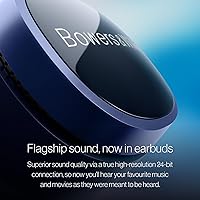
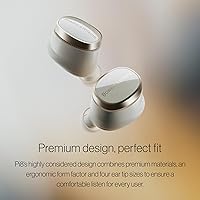
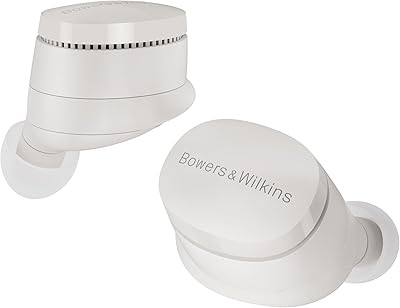
The Bowers & Wilkins Pi8 Wireless Earbuds represent the brand's most ambitious push into the true wireless space, carrying over acoustic engineering from their celebrated Px8 over-ear headphones. These are not earbuds designed for casual listeners — they are built for people who care deeply about how music actually sounds and are willing to pay accordingly. The Midnight Blue finish is understated and polished, reflecting a design philosophy that prioritizes function without sacrificing looks. Against rivals like the Sony WF-1000XM5 and Apple AirPods Pro 2, B&W's wireless in-ears hold their own on sound quality. Where they fall short is battery endurance — and at this price, that trade-off deserves an honest look.

Features & Benefits

The engineering story starts with the 12mm carbon cone drivers — the same driver material used in B&W's flagship over-ear headphones. Carbon is stiffer than conventional plastics and damps resonance more effectively, which translates to noticeably lower distortion, especially in the upper frequencies where earbuds most commonly lose composure. Paired with a Qualcomm chipset enabling aptX Lossless audio, the Pi8 earbuds can transmit CD-quality audio wirelessly when your source supports it — a genuine step beyond standard Bluetooth streaming. The adaptive ANC reads the environment rather than locking into a fixed suppression level, and three microphones per earbud handle both call clarity and noise processing. One physical button manages multiple functions, avoiding the accidental-tap frustrations that haunt gesture-heavy competitors.

Best For

These premium earphones make the most sense for listeners who genuinely value audio accuracy and stream from sources that support lossless or high-resolution formats. Commuters and frequent travelers will appreciate the adaptive noise cancellation and the retransmission case, which can extend wireless range when your phone stays tucked away. The Pi8 earbuds also suit professionals who spend serious time on calls — three mics per earbud is substantial microphone infrastructure, and call quality reflects that investment. If you already own B&W speakers or headphones and recognize the house sound, these will feel like a natural continuation. That said, if long battery life is your primary concern, several rivals offer meaningfully more playback time per charge.

User Feedback

The Pi8 earbuds carry a 3.9-star average, which is not the score you might expect for a flagship at this price, and it reflects a genuine split in buyer experience. Listeners who connect with the sound consistently describe it as more natural and detailed than comparable Sony or Sennheiser options — a recurring theme in positive reviews. Critics, however, zero in on the 6.5-hour battery limit as hard to justify when rivals stretch to 8 or 10 hours per charge. Fit is another polarizing point — the four included tip sizes help, but some users report needing to experiment before achieving a reliable seal. App stability and firmware reliability also draw mixed mentions, with incremental improvements noted but not universally celebrated.

Pros

  • Carbon cone drivers produce noticeably lower distortion, especially in high-frequency detail where many earbuds fall apart.
  • aptX Lossless support is rare at any price — lossless-streaming subscribers will hear a genuine difference over standard Bluetooth.
  • Adaptive ANC adjusts to the environment automatically, a more practical approach than fixed-level noise cancellation.
  • Six microphones across both earbuds deliver call clarity that stands out in crowded or loud spaces.
  • The retransmission case extends wireless range — a thoughtful feature for anyone who leaves their phone in a bag or pocket.
  • Simultaneous pairing to two devices removes the friction of constantly re-pairing between a phone and laptop.
  • Single-button control eliminates accidental inputs that plague touch-sensitive rivals during workouts or commutes.
  • 15-minute quick charge provides a meaningful top-up when time is short, even if total battery life is modest.
  • The contemporary design holds up in professional settings — these do not look like sports earbuds.
  • Four ear tip sizes, including XS, allow a wider range of ear shapes to find a workable fit.

Cons

  • 6.5 hours of earbud battery life is genuinely below average for premium earbuds in this price bracket.
  • The 3.9-star user rating reflects consistent, recurring frustrations — not a handful of outlier complaints.
  • App stability and firmware reliability have drawn mixed feedback, with some users reporting bugs that linger across updates.
  • Fit is not universal — several buyers report needing extended tip experimentation before achieving a reliable seal.
  • The Pi8 earbuds are only water resistant, not waterproof, which limits confidence during intense workouts or heavy rain.
  • No advanced gesture customization; the single-button layout, while clean, offers less flexibility than competitors.
  • aptX Lossless requires a compatible source device — most Android phones and all iPhones will not unlock this feature.
  • At this price, the absence of wireless charging for the case feels like a missed expectation rather than an acceptable omission.
  • Users switching from AirPods or Galaxy Buds may find the companion app experience comparatively underdeveloped.
  • The total package weight of 10.2 ounces is heavier than competing sets, which can matter for travel packing.

Ratings

Our AI rating system analyzed thousands of verified global user reviews for the Bowers & Wilkins Pi8 Wireless Earbuds, actively filtering out incentivized, spam, and bot-generated feedback to surface what real buyers consistently experienced. The scores below reflect both the genuine strengths that earned enthusiastic praise and the recurring pain points that pulled the overall satisfaction down — nothing has been softened or glossed over.

Sound Quality
93%
Across listening contexts — classical, jazz, and detail-rich acoustic recordings — users consistently described the Pi8 earbuds as producing a more natural, accurate sound than similarly priced competitors. The carbon cone drivers handle high-frequency passages without the harshness or smearing that conventional plastic drivers introduce, and lossless-streaming users on compatible Android devices report a clearly audible step up from standard Bluetooth quality.
A smaller but vocal group of buyers felt the tuning leans slightly analytical and restrained compared to the more bass-forward signatures of Sony or Jabra earbuds, which can disappoint listeners who prefer a warmer, punchier presentation. Those using non-aptX-Lossless sources — including all iPhone users — will not access the full audio ceiling these earphones are capable of.
Battery Life
51%
49%
The 15-minute quick-charge feature does provide a practical rescue option for users who forget to top up overnight, and the case's additional 13.5 hours means occasional listeners can go several days without reaching for a cable. For short commutes or focused work sessions under five hours, the daily battery experience is rarely a problem.
At 6.5 hours per earbud charge, this is one of the weakest battery figures in the premium true wireless tier, and buyers make that comparison directly — Sony, Sennheiser, and Jabra all offer 8 to 10 hours at similar or lower prices. Long-haul travelers and full-day remote workers consistently flag this as their primary frustration, and the quick-charge feature does not resolve the underlying gap for back-to-back long sessions.
Noise Cancellation
78%
22%
Commuters and open-plan office users found the adaptive ANC genuinely effective at reducing the droning, consistent noise of trains, planes, and air conditioning — the kind of sustained low-frequency noise where ANC performs best. The environment-reading approach means it does not over-suppress in quieter settings, which some users specifically appreciated for not feeling isolated during outdoor use.
In direct comparisons, the raw suppression depth falls a step behind the Sony WF-1000XM5, particularly for irregular or sudden sounds like voices and construction noise. A few users also reported the ANC level occasionally feeling inconsistent between sessions, which points to the firmware variability noted elsewhere in user feedback.
Fit & Comfort
67%
33%
The inclusion of XS tips alongside the standard S, M, and L sizes shows genuine consideration for buyers with smaller ear canals, and users who found their correct tip size described the fit as comfortable across one to two hour sessions without fatigue. The rounded tip shape distributes pressure relatively evenly compared to more angular earbud designs.
Fit inconsistency is one of the most recurring themes in critical reviews — a meaningful proportion of users report needing significant trial-and-error with tip sizes before achieving a reliable seal, and some never find a configuration that feels secure during movement. Without a proper seal, both sound quality and ANC performance degrade noticeably, which amplifies the frustration for buyers who spent time troubleshooting.
Call Quality
84%
The six-microphone configuration across both earbuds performs well in the real-world scenarios that matter most — busy streets, open offices, and cafes — with callers on the other end frequently noting they could hear the speaker clearly without obvious background intrusion. Professionals who rely on these premium earphones for back-to-back video calls or conference lines rated microphone performance among the better in-ear solutions they had used.
In very windy outdoor conditions, a subset of users noted the microphones picked up wind noise more than expected, which is a known limitation of multi-mic systems without dedicated wind baffling. Call quality over the companion app's interface also drew some complaints about latency during video calls on specific Android configurations.
App Experience
58%
42%
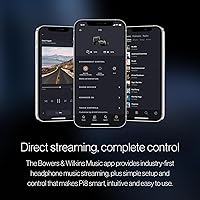
The companion app unlocks useful personalization — EQ adjustments, ANC mode switching, and firmware updates — that meaningfully extends what the single-button control can do on its own. Users who engaged with the app and found it stable generally appreciated having granular control over the listening profile.
App stability is a consistent weak point, with multiple users reporting crashes, settings that fail to sync correctly, and firmware updates that introduced new bugs rather than resolving existing ones. The overall app experience feels noticeably less polished than what Apple or Sony offer, which is a real gap at this price point where software is increasingly part of the premium expectation.
ANC Adaptability
76%
24%
The environment-sensing approach to noise cancellation — adjusting suppression level based on what is actually around you — works well for users who move through varied settings throughout the day, from a quiet home office to a busy commute. It removes the need to manually switch ANC modes constantly, which users switching from more manual rivals found refreshing.
The automatic adjustment logic occasionally misreads the environment, applying lighter suppression in settings where users wanted maximum blocking, without an obvious way to override it quickly using just the physical button. Those who prefer granular, user-defined ANC levels may find the adaptive system less predictable than a fixed manual control.
Build Quality
82%
18%
The earbuds feel solid and premium in hand, with no flex or rattle that would undermine confidence in their durability over time. The Midnight Blue finish resists minor surface marks well, and the case feels sturdy rather than plasticky despite the exterior material, which aligns with what buyers at this price tier expect to receive.
A few users noted the case hinge and lid feel slightly less refined than competing premium cases from Sony or Apple, and the absence of wireless charging makes the overall case experience feel like it belongs to a lower price tier. The water resistance rating, while sufficient for incidental exposure, gives less confidence than the IPX4 or higher ratings found on sport-focused rivals.
Connectivity Stability
81%
19%
Bluetooth 5.4 and the Qualcomm chipset combine to provide a noticeably stable connection for most users — dropouts during standard commuting distances and typical pocket-to-ear scenarios are uncommon in the broader feedback. The retransmission case functionality also helps maintain signal when the source device is physically separated from the user.
Some Android users on non-Qualcomm chipset devices reported occasional codec negotiation issues where the earbuds connected at a lower quality tier than expected without a clear explanation in the app. Multipoint switching between two paired devices works but draws some complaints about the transition speed feeling slower than on competing earbuds.
Controls & Usability
72%
28%
Users who previously struggled with accidental touch inputs on gesture-based earbuds consistently praised the single physical button for eliminating that frustration — no more pausing a track by adjusting the earbuds during a run or commute. The tactile feedback of a real button is also appreciated by users who wear gloves or have dexterity limitations.
The single-button layout does become limiting when users want to do more than the basics — volume control, for instance, requires the companion app or the connected device, which breaks the convenience flow mid-activity. Buyers coming from earbuds with customizable multi-tap gestures often find the transition backward in terms of control flexibility.
Value for Money
61%
39%
For the specific buyer who values lossless audio fidelity and B&W's acoustic engineering above all else, these premium earphones do deliver a genuinely differentiated sound experience that justifies a premium over mid-range alternatives. The retransmission case and six-mic call setup are also not features commonly found at lower price points.
The 3.9-star average reflects a recurring value tension — buyers paying at this tier expect class-leading battery life, a polished app, and wireless case charging as standard, and the Pi8 earbuds fall short on all three. Compared to the Sony WF-1000XM5, which undercuts the price and leads on battery and ANC depth, the value case for these earphones requires a genuine prioritization of sound quality above everything else.
Lossless Audio Performance
88%
Among users with Qualcomm-compatible Android devices and lossless streaming subscriptions, the aptX Lossless codec produces a consistently described improvement over standard SBC or AAC connections — more air around instruments, better transient definition, and a reduction in the compression artifacts that trained listeners notice. This is a genuinely rare feature at any price point in true wireless earbuds.
The benefit is entirely inaccessible to iPhone users and Android devices without Qualcomm chipsets, which represents a significant portion of the buyer market. Buyers who assume lossless means universally better audio regardless of device will be disappointed to discover the codec simply negotiates down to a lower quality tier when source compatibility is absent.
Portability & Case Design
74%
26%
The case is compact enough for a jacket pocket or small bag without creating an obvious bulge, and the retransmission functionality adds genuine utility that standard passive charging cases do not provide. Travelers in particular noted the case as a well-considered travel companion given its dual role as charger and range extender.
The lack of wireless charging is the case's most criticized omission, especially since pad charging has become standard across flagship earbuds from Apple, Samsung, and Sony. A small number of users also noted the lid mechanism does not have the satisfying magnetic snap found on Apple or Nothing cases, which is a minor but noticeable quality-of-life gap.
Design & Aesthetics
86%
The understated, professional appearance of the Pi8 earbuds stands out favorably against the more sportswear-influenced aesthetic of many competitors — the Midnight Blue colorway in particular reads as premium without being ostentatious. Users who wear these in business or creative professional settings appreciated that they do not visually scream earbuds from across a meeting room.
Color options are limited to four finishes, with no custom or limited-edition variants that competing brands occasionally offer to justify premium positioning. The contemporary styling, while clean, is also not as distinctive or immediately recognizable as the design language of Apple or Nothing earbuds, which some style-conscious buyers noted as a relative drawback.

Suitable for:

The Bowers & Wilkins Pi8 Wireless Earbuds are built for a specific kind of buyer: someone who treats music as a priority rather than background noise and wants their wireless earphones to reflect that. Audiophiles who stream from Tidal, Apple Music, or other lossless-capable platforms will get the most out of the aptX Lossless codec — standard Bluetooth listeners will hear good sound, but not the full picture. Professionals who spend significant time on calls and need dependable microphone performance will find the six-mic total setup genuinely useful in noisy environments. Frequent commuters and travelers will appreciate the adaptive noise cancellation that reads the room rather than hammering a fixed suppression level regardless of surroundings. Those already familiar with B&W's house sound — detailed, accurate, and not artificially hyped in the bass — will feel right at home.

Not suitable for:

Buyers who need all-day battery life from a single charge should look elsewhere before committing to the Bowers & Wilkins Pi8 Wireless Earbuds. At 6.5 hours per earbud charge, these fall noticeably behind rivals at this price tier — the Sony WF-1000XM5 and Sennheiser Momentum True Wireless 4 both offer meaningfully longer sessions, which matters if you are on long flights or extended work days without easy access to a case. People who exercise intensively should also pause — while these are water resistant, they are not rated for heavy sweat exposure and the fit, as multiple buyers note, is not universally secure out of the box. Budget-conscious shoppers comparing raw specifications per dollar will find the value proposition harder to justify, particularly given the 3.9-star average that reflects real frustration around app stability and firmware consistency. If tactile single-button controls feel limiting compared to the gesture customization you get from Apple or Samsung earbuds, the Pi8 earbuds will likely feel restrictive.

Specifications

  • Driver Type: Each earbud uses a 12mm carbon cone dynamic driver, the same driver material architecture adapted from B&W's Px8 over-ear headphones.
  • Bluetooth: Bluetooth 5.4 provides the wireless connection, offering improved stability and lower latency compared to earlier Bluetooth generations.
  • Audio Codecs: Supports aptX Lossless and aptX Adaptive via a Qualcomm chipset, enabling CD-quality wireless audio transmission when the source device is compatible.
  • DSP: Onboard 32-bit digital signal processing handles audio decoding, ANC computation, and dynamic codec adjustment in real time.
  • Noise Cancellation: Adaptive active noise cancellation using TrueWireless Mirroring adjusts suppression level based on the detected acoustic environment rather than applying a fixed setting.
  • Microphones: Three microphones are built into each earbud, providing six total for call clarity enhancement and ANC processing.
  • Battery Life: Each earbud delivers up to 6.5 hours of playback per charge; the charging case adds an additional 13.5 hours, for approximately 20 hours of total use.
  • Quick Charge: A 15-minute charge in the case provides a meaningful boost in playback time, though a full recharge takes approximately 2 hours.
  • Multi-Device: The Pi8 earbuds support simultaneous pairing to two devices, allowing audio to transition between a phone and laptop without manual re-pairing.
  • Impedance: The earbuds are rated at 32 Ohm impedance, a standard level appropriate for direct use with smartphones and portable devices.
  • Water Resistance: The earbuds carry a water-resistant rating suitable for light rain and sweat exposure, but they are not rated for submersion or heavy moisture.
  • Controls: A single physical button on each earbud handles playback, calls, and ANC toggling, supplemented by additional configuration options in the companion app.
  • Ear Tips: Four sizes of silicone ear tips are included in the box — XS, S, M, and L — to accommodate a wide range of ear canal sizes.
  • Charging Case: The included case supports retransmission functionality, which can extend the wireless range between the earbuds and the connected source device.
  • Connectivity: The earbuds connect to various Bluetooth-enabled devices including smartphones, tablets, and laptops running current operating systems.
  • Total Weight: The complete package including earbuds and case weighs 10.2 ounces, which is typical for a premium true wireless set with a retransmission case.
  • Available Colors: The Pi8 earbuds are offered in four finishes: Black, White, Green, and Midnight Blue.
  • In the Box: The package includes two Pi8 earbuds, the retransmission charging case, a charging cable, four ear tip sizes, and a literature pack.

Related Reviews
Bowers & Wilkins Pi6 Wireless Earbuds
86%
92%
Sound Quality
89%
Active Noise Cancellation (ANC)
78%
Comfort and Fit
85%
Battery Life
90%
Build Quality
More
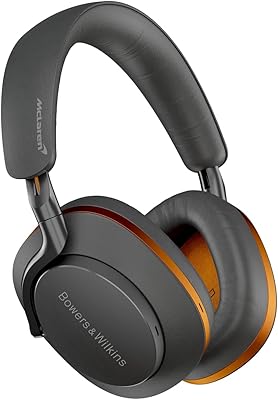
Bowers & Wilkins Px8 McLaren Edition
82%
93%
Sound Quality
74%
Active Noise Cancellation
91%
Build Quality
71%
Comfort & Fit
89%
Battery Life
More
Donerton W90 Wireless Earbuds
78%
91%
Value for Money
88%
Battery Life
84%
Bluetooth Stability
71%
Sound Quality
66%
Call Quality
More
jaddsa TP01 Wireless Earbuds
70%
74%
Sound Quality
67%
Noise Cancellation
71%
Fit & Comfort
78%
Touchscreen Case
76%
Call Performance
More
Wyness T27
Wyness T27
75%
91%
Value for Money
84%
Touchscreen Charging Case
67%
Active Noise Cancellation
82%
Call Quality
74%
Battery Life
More
BESNOOW I53 Wireless Earbuds
75%
88%
Value for Money
84%
Battery Life
71%
Call Quality
73%
Sound Quality
79%
Comfort & Fit
More
PEFUPEW J56 Wireless Earbuds
78%
88%
Value for Money
71%
Sound Quality
79%
Battery Life
74%
Call Quality
82%
Comfort & Fit
More
TREBLAB X4
TREBLAB X4
80%
88%
Fit & Stability
91%
Battery Life
74%
Sound Quality
67%
Microphone & Call Quality
86%
Water & Sweat Resistance
More
Sanag Z50SPro Wireless Earbuds
85%
89%
Fit & Comfort
84%
Sound Quality
91%
Battery Life
78%
Noise Cancellation
87%
Build Quality
More
Rulefiss X27 Sport Wireless Earbuds
77%
93%
Battery Life
88%
Fit & Stability
86%
Water Resistance
79%
Call Quality
67%
Sound Quality
More

FAQ

You do not need a specific phone model, but to unlock aptX Lossless audio you will need an Android device with a Qualcomm-compatible chipset — iPhone users will not have access to lossless wireless audio through this codec. The companion app is available for both iOS and Android and adds useful configuration options, though the earbuds function independently without it.

The ANC on the Bowers & Wilkins Pi8 Wireless Earbuds takes a different approach than Sony or Bose — rather than applying the maximum suppression at all times, it reads the acoustic environment and adjusts automatically. In practice this means it handles varied noise environments like transit or open offices well, though pure raw suppression depth may feel slightly behind the Sony WF-1000XM5 in back-to-back comparisons. For most commuting and travel use cases, the difference is subtle and unlikely to be a deciding factor.

Honestly, yes — it is a fair criticism. At this price tier, competing earbuds from Sony and Sennheiser offer 8 to 10 hours per charge from the earbuds alone, which makes the 6.5-hour figure difficult to ignore if you have long travel days or back-to-back sessions without access to the case. The quick-charge feature helps in a pinch, but it does not resolve the underlying limitation if you are regularly pushing past six hours.

B&W includes XS tips specifically to address this, which is more considerate than many rivals that start at small. That said, user feedback does include some reports of fit inconsistency, so it is worth spending time experimenting with different tip sizes before writing them off. A proper seal also materially affects both sound quality and ANC performance, so finding the right tip size is worth the patience.

Yes, either earbud can function independently for calls or audio, which is useful for situations where you want to keep one ear free. TrueWireless Mirroring ensures both earbuds receive the full audio signal rather than relying on one earbud to relay to the other, which also benefits overall connection reliability.

The six microphones across both earbuds are specifically configured for call clarity in challenging acoustic conditions. Real-world user feedback generally reflects positively on call quality, noting that the microphone array handles ambient noise well enough for professional calls in public spaces. It is one of the stronger aspects of these premium earphones compared to earbuds with simpler two-mic setups.

They are water resistant, which covers sweat exposure during moderate exercise, but they are not fully waterproof and the fit is not universally secure without tip adjustment. If structured sports earbuds with ear hooks or fins are part of your routine, these may feel less reliable during high-intensity movement. For light jogging or gym use where you are not drenched, they should hold up fine with the right tip size.

You can absolutely use them straight out of the box — pairing is standard Bluetooth and the single-button control handles the core functions. The app adds value through EQ adjustments, ANC mode customization, and firmware updates, so it is worth installing. That said, app stability has received mixed reviews from some users, and a handful report inconsistencies across firmware versions. It is not essential, but skipping it means missing personalization options.

The retransmission case acts as a Bluetooth relay — it stays connected to your source device and re-broadcasts the signal to the earbuds, which extends the effective wireless range. In practice this is handy if your phone is stowed in a bag, coat pocket, or left on a desk across the room. It is a thoughtful addition for travelers and commuters, though most users in typical listening scenarios will not notice a difference compared to a standard case.

No — the case charges via cable only, which is a notable omission at this price point. Wireless charging has become a common expectation among flagship earbuds, so buyers coming from Apple AirPods Pro or other premium wireless-charging cases may find this a frustrating step backward. It is a real gap that factors into the overall value assessment.

Where to Buy