
Overview

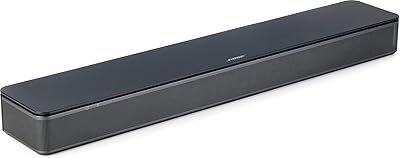
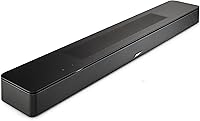
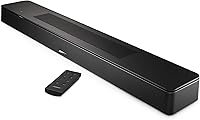
The Bose Smart Soundbar arrived in late 2024 as Bose's answer to a real question: can a single compact bar deliver genuinely immersive audio without a subwoofer or rear speakers cluttering your living room? At 27.34 inches wide and barely over two inches tall, it fits neatly under most TVs while packing five transducers — two of which fire upward to create height channels. It supports Dolby Atmos natively and uses Bose's TrueSpace technology to upmix standard stereo or 5.1 content. At its premium price, it sits squarely against strong competition from Sony, Samsung, and Sonos, so expectations are rightly high.

Features & Benefits

What makes this Bose soundbar stand out day-to-day is less about raw specs and more about how it handles the content you actually watch. TrueSpace upmixing does a creditable job widening stereo streams — Netflix shows, YouTube videos, even music — into something noticeably more spatial, though the effect varies by source. The A.I. Dialogue Mode is arguably the most practical feature here: it actively prioritizes vocal frequencies so dialogue stays intelligible even during action-heavy scenes. Streaming options are broad — AirPlay 2, Chromecast, Spotify Connect, and Bluetooth all coexist without conflict. Add Alexa voice control with TV integration via Voice4Video, and you have a surprisingly capable smart hub built into a single bar.

Best For

This compact Atmos bar is a strong fit for anyone living in an apartment or smaller space where wiring up a full surround system simply isn't realistic. Dialogue-heavy viewing — news, documentaries, prestige dramas — is where it genuinely earns its price. Apple users will appreciate AirPlay 2 working exactly as expected, with no pairing friction. It's also a natural upgrade for someone already using Alexa throughout the home. Where it's less ideal: bass enthusiasts and home-cinema purists who prioritize low-end punch will likely feel the absence of a dedicated subwoofer. You can add one wirelessly, but that pushes the total cost well beyond the bar's already premium asking price.

User Feedback

Owners consistently single out vocal clarity and how little setup effort is involved as the bar's two biggest wins — most are impressed within the first hour. The criticism that shows up most reliably is the bass response, or rather the lack of it, which feels thin on action films and hip-hop at higher volumes. Opinions on TrueSpace upmixing split fairly evenly: roughly half find the widened soundstage convincing, while others notice only a subtle difference. A handful of early buyers flagged occasional Alexa connectivity hiccups and inconsistent behavior in the Bose Music app, though many reported these improved after firmware updates. Compared to its predecessor, most agree the dialogue performance is a meaningful step forward.

Pros

  • Dialogue clarity is exceptional — voices stay intelligible even during loud, effects-heavy scenes.
  • Native Dolby Atmos support with upward-firing drivers creates genuine height dimension for a single-unit bar.
  • Setup is fast and nearly foolproof, with most buyers fully operational within 15 minutes of unboxing.
  • AirPlay 2, Chromecast, Spotify Connect, and Bluetooth coexist without requiring manual input switching.
  • TrueSpace upmixing adds noticeable width to everyday stereo content like streaming shows and music.
  • Alexa voice control extends to TV and cable box management via Voice4Video — genuinely useful.
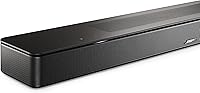
  • Build quality is premium and understated; it looks and feels more expensive than most competitor bars.
  • HDMI eARC and optical inputs ensure broad compatibility with both current and older TV models.
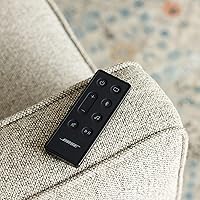
  • The included remote covers all key functions comfortably, reducing app dependency for casual users.

Cons

  • Bass response is thin without an optional subwoofer — a real limitation at this price point.
  • Adding the wireless subwoofer to fix the low-end gap significantly increases the total cost of ownership.
  • The Bose Music app has documented stability issues, including dropped connections and limited EQ customization.
  • Alexa integration shipped with connectivity hiccups on early firmware; some units still show occasional dropouts.
  • TrueSpace upmixing quality varies heavily by source — some content sounds notably more processed than natural.
  • No Google Assistant support makes this bar a poor fit for Google Home households.
  • The remote lacks a backlight, which is a surprisingly basic omission for dim-room evening viewing.
  • Rear surround expansion requires purchasing Bose Ultra Open Earbuds separately — a steep additional investment.
  • CEC conflicts with certain TV brands require manual troubleshooting to achieve clean volume passthrough.

Ratings

The Bose Smart Soundbar earns strong marks in several areas, but the scores below don't tell a simple story — our AI analyzed thousands of verified global reviews, actively filtering out incentivized, duplicate, and bot-generated submissions to surface what real buyers actually experience. Strengths in dialogue clarity and smart home integration stand out clearly, but recurring frustrations around bass depth and app reliability are reflected just as honestly in the numbers.

Dialogue Clarity
93%
This is the category where this Bose soundbar most consistently earns genuine praise. Buyers watching dense dialogue-driven content — court dramas, foreign-language series, evening news — report that voices cut through background scoring and effects with unusual precision. The A.I. Dialogue Mode isn't just marketing copy; users with older TV speakers notice an immediate and meaningful difference.
A small but vocal group of reviewers found the dialogue enhancement occasionally over-processed, making certain vocal tones sound slightly artificial or pushed-forward at higher volumes. It's a minor gripe, but purists watching high-quality Blu-ray audio sometimes preferred the mode switched off.
Dolby Atmos Performance
81%
19%
On native Atmos content — dedicated streaming titles on Netflix or Disney Plus — this compact Atmos bar produces a convincing sense of height and spatial width that genuinely surprises buyers given its single-unit form factor. Overhead sound effects in action sequences land with more dimension than most competing bars at similar dimensions.
The overhead effect is real but physically constrained. Without rear speakers, the surround impression collapses somewhat during complex multi-directional scenes, and listeners sitting off-axis or far from the bar notice the effect weakens noticeably. Atmos performance is solid for a bar its size, not solid in absolute terms.
TrueSpace Upmixing
71%
29%
For everyday content that isn't Atmos-encoded — cable broadcasts, YouTube videos, older streaming shows in stereo — TrueSpace does add a perceptible sense of width and air that flat stereo soundbars simply don't offer. Casual listeners upgrading from a basic TV speaker tend to find the upmixed result genuinely engaging.
Audio-aware buyers are more divided. A significant portion of reviewers describe the upmixing effect as subtle to the point of being unreliable, and some note it varies dramatically by source. It's not a lossless or transparent process — certain music and dialogue-heavy content sounds slightly colored or artificially widened in ways that can distract.
Bass & Low-End Response
54%
46%
For speech-centric content and lighter movie genres, the low-end response is adequate and well-integrated. Users watching news, documentaries, or comedy films rarely complain — the bar handles mid-bass frequencies with reasonable authority for its slim cabinet size.
At this price, the lack of meaningful bass extension is a recurring and legitimate complaint. Action films, bass-heavy music, and anything with deep cinematic rumble expose the bar's physical limits clearly. Buyers coming from a full soundbar-plus-subwoofer setup will find the low end thin and underwhelming — adding the optional wireless subwoofer significantly raises the total outlay.
Build Quality & Design
89%
The physical construction matches what buyers expect from a premium Bose product. The grille fabric is taut and well-fitted, the chassis feels solid without being heavy, and the understated rectangular profile sits cleanly below most modern TV stands without visual clutter. Several reviewers specifically noted it looks more expensive than comparable bars.
At 27.34 inches, it fits most setups but may overhang smaller TV consoles. A handful of buyers noted the power cable exits in a slightly awkward position for wall-mount installations, and there's no visible LED indicator for Atmos decoding status, which some technically-minded users found frustrating.
Setup & Ease of Use
91%
First-time soundbar buyers and tech-averse households consistently praise how quickly this compact Atmos bar gets up and running. HDMI eARC connection is detected reliably, the Bose Music app walks users through initial calibration clearly, and Alexa activation requires minimal effort. Most reviewers report full functionality within 15 minutes of unboxing.
A smaller subset of users experienced HDMI handshake issues with certain older TV models, requiring manual settings adjustments on the TV side. The Roku-specific setup insert in the box also confused a few buyers who don't use Roku, adding minor unnecessary friction.
Smart Home & Voice Control
78%
22%
For Alexa households, Voice4Video is a genuinely useful feature — controlling TV volume, switching inputs, and managing playback entirely by voice works reliably across major TV brands. Buyers who have built out an Echo ecosystem find this Bose soundbar slots in naturally as the room's audio anchor.
Early firmware versions shipped with Alexa connectivity inconsistencies that some buyers described as the assistant dropping offline unexpectedly. Google Assistant is absent entirely, which frustrates users in Google Home setups. Bose's ecosystem is also more closed than Amazon's own audio products, limiting some advanced Alexa routines.
Streaming Connectivity
88%
Having AirPlay 2, Chromecast, Spotify Connect, and Bluetooth available simultaneously — without needing to configure switching manually — makes this bar unusually flexible for multi-device households. iPhone users casting directly via AirPlay 2 report consistent, low-latency audio that holds up across rooms.
Bluetooth range is rated at 30 feet but real-world performance in concrete or heavily furnished apartments often falls short of that. A few Android users noted that Chromecast audio occasionally required a reconnect after the TV was powered down and restarted, which is a minor but repeatable annoyance.
Bose Music App Experience
67%
33%
The app provides meaningful control over EQ presets, Dialogue Mode toggling, and firmware updates, and its interface is cleaner than many competing manufacturer apps. For straightforward adjustments, most users find it functional and adequately responsive.
Stability complaints appear with enough frequency to matter. Buyers report the app occasionally losing connection to the bar and requiring a restart, and EQ customization options feel limited compared to what competitors offer at similar price points. App updates have addressed some bugs, but the experience remains inconsistent for a subset of users.
Value for Money
63%
37%
For buyers whose priority is dialogue clarity, smart integration, and compact form, the price is justifiable — the per-feature cost against brands like Sonos is roughly competitive, and build quality supports a long ownership lifespan. Buyers who treat it as an all-in upgrade from a basic TV speaker tend to feel satisfied.
For audio-first buyers, the price-to-performance math is harder to defend. The bass limitations mean that getting the full intended experience requires adding a separate subwoofer, which pushes the combined cost into full home theater system territory. At that point, several competing complete-package systems offer more total output for comparable spend.
Height Channel Effectiveness
74%
26%
The two upward-firing transducers do create a genuine sense of vertical space on well-mixed Atmos tracks — rain effects, aircraft overhead, and falling debris in blockbuster films produce a noticeable upward impression that flat soundbars can't replicate. For a single-unit bar, it's a credible achievement.
Room acoustics play a large role in how effective the height channels actually sound. Low ceilings, open-plan spaces, or rooms with heavily sound-absorbing furnishings significantly diminish the overhead effect. Buyers in rooms that aren't reasonably reflective may find the upward-firing driver contribution nearly imperceptible.
Remote Control
77%
23%
The included remote is compact, well-weighted, and covers all primary functions without requiring a smartphone. Volume control, input switching, and Dialogue Mode toggling are all accessible with one hand, which matters for buyers who prefer physical controls over app dependency.
The remote lacks a backlight, which is a real inconvenience for evening TV watching in dim rooms — a surprisingly basic omission at this price. Button labeling is also small and relies on iconography that takes a little time to internalize, particularly for older users.
Compatibility & TV Integration
82%
18%
HDMI eARC and optical inputs cover the vast majority of current and legacy TV setups, and Bose's CEC implementation for volume passthrough is reliable across Samsung, LG, and Sony TVs in most buyer-reported experiences. Roku-ready certification adds flexibility for Roku TV households.
A small number of buyers report CEC conflicts where the soundbar and TV volume controls interfere with each other, requiring CEC to be partially disabled on the TV. OLED TV owners with particular audio settings sometimes need to experiment before getting clean Atmos passthrough confirmed.
Surround Sound Expansion (Earbuds)
58%
42%
The concept of using Bose Ultra Open Earbuds as wireless rear speakers is genuinely inventive and solves a real apartment-living problem — true surround positioning without running cables or placing additional speakers. Users who already own the earbuds report the integration works as advertised.
This is an expensive proposition for the majority of buyers who don't already own the earbuds. Recommending a several-hundred-dollar accessory purchase to unlock a core surround feature on an already premium soundbar strikes many reviewers as a significant ask, and the overall rear-channel effect still can't match a dedicated physical speaker pair.

Suitable for:

The Bose Smart Soundbar is genuinely well-matched for anyone living in an apartment, condo, or smaller home where running cables to rear speakers or finding space for a subwoofer just isn't realistic. If you spend most of your TV time watching dialogue-heavy content — prestige dramas, documentaries, news, or foreign-language series — the A.I. Dialogue Mode alone is worth serious consideration, because it solves a problem that basic TV speakers handle poorly. Apple ecosystem households get a particularly smooth experience, with AirPlay 2 working reliably across iPhone, iPad, and Mac without any fussy configuration. Alexa-first smart home users will find the Voice4Video integration genuinely practical, especially once they realize they can control TV inputs and cable boxes without touching a remote. It's also a strong fit for buyers who are upgrading from an entry-level or mid-range soundbar and want a meaningful step up in build quality, smart features, and spatial audio — without committing to a full multi-component system.

Not suitable for:

If your primary reason for buying a soundbar is to feel movie bass in your chest during action films or concerts, this compact Atmos bar will leave you frustrated — and honestly, no single slim bar at this size can overcome basic physics. The Bose Smart Soundbar also asks a premium price that becomes harder to justify if you're planning to add a wireless subwoofer shortly after purchase, since the combined cost pushes into territory where complete surround packages from competing brands offer more total acoustic output. Google Home households are largely left out, as there's no Google Assistant support and Chromecast audio is the extent of the Google integration on offer. Serious audiophiles who want granular EQ control and a stable, feature-rich companion app will find the Bose Music app underwhelming compared to what Sonos or Denon offer at similar price points. Finally, anyone who watches most content in a large open-plan living space or a room with high, non-reflective ceilings may find the height-channel and upmixing effects largely inaudible — room acoustics matter a lot with this bar's design.

Specifications

  • Dimensions: The bar measures 4.09″ deep, 27.34″ wide, and 2.21″ tall, making it one of the slimmer options in the premium soundbar category.
  • Weight: At 6.91 pounds, it's light enough for easy shelf placement or wall mounting without requiring heavy-duty hardware.
  • Transducers: Five total drivers are housed inside the enclosure, including two upward-firing transducers dedicated to creating height-channel audio for Dolby Atmos content.
  • Surround Config: The bar is rated for a 5.1.4 channel surround configuration when paired with optional compatible Bose accessories.
  • Dolby Atmos: Dolby Atmos decoding is supported natively via HDMI eARC, enabling height and spatial audio on qualifying streaming and disc-based content.
  • TrueSpace: Bose TrueSpace technology upmixes non-Atmos sources — including standard stereo and 5.1 signals — into a wider, multi-channel soundstage in real time.
  • HDMI: One HDMI eARC port is included, enabling lossless audio passthrough and CEC-based volume control with compatible televisions.
  • Optical Input: A digital optical input is included for connecting older TVs or devices that lack HDMI eARC output.
  • Wireless Streaming: The bar supports Apple AirPlay 2, Google Chromecast built-in, Spotify Connect, and Bluetooth 5.0 for multi-platform wireless audio streaming.
  • Bluetooth Range: Bluetooth connectivity is rated to a maximum range of 30 feet under typical conditions.
  • Voice Assistant: Amazon Alexa is built in, with Bose Voice4Video extending voice control to connected TVs and cable or satellite boxes.
  • Control Options: The bar can be operated via the included infrared remote, the Bose Music app for iOS and Android, or direct voice commands through Alexa.
  • Dialogue Mode: A.I. Dialogue Mode uses onboard processing to dynamically balance vocal frequencies against background sound effects and music in real time.
  • Subwoofer: A wireless subwoofer is sold separately and connects to the bar without additional cables, expanding the low-frequency output.
  • Rear Speakers: Bose Ultra Open Earbuds, sold separately, can be paired to function as wireless rear surround channels for a more enveloping listening experience.
  • Power Source: The bar is powered by a corded AC adapter; no battery operation is available or intended.
  • Included Cables: The box includes one HDMI cable, one optical cable, and a power cord, providing the primary connection options out of the box.
  • Remote Control: A physical remote control with a pre-installed battery is included in the box, covering volume, input, playback, and mode functions.
  • Warranty: The Bose Smart Soundbar is covered by a manufacturer warranty; buyers should confirm current regional warranty terms directly with Bose at time of purchase.
  • Release Date: The product was first made available for purchase on September 18, 2024, positioning it as part of Bose's updated late-2024 smart audio lineup.

Related Reviews
Bose Portable Smart Speaker
85%
91%
Sound Quality
88%
Battery Life
90%
Portability
84%
Water Resistance
87%
Voice Control Integration
More
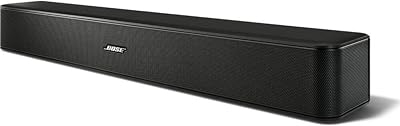
Bose Solo 5 TV Soundbar
85%
92%
Value for Money
88%
Sound Clarity
94%
Ease of Setup
70%
Bass Performance
85%
Bluetooth Connectivity
More
aaboRing Smart Ring
aaboRing Smart Ring
85%
88%
Heart Rate Monitoring
91%
Sleep Tracking Accuracy
92%
Build Quality (Titanium)
85%
Battery Life
90%
Waterproof Performance
More
OXS S5 Soundbar
OXS S5 Soundbar
85%
88%
Sound Quality
75%
Bass Performance
93%
Ease of Setup
84%
Build Quality
90%
Connectivity Options
More
Bose Music Amplifier
86%
91%
Sound Clarity & Performance
89%
Ease of Setup & Use
94%
Wireless Connectivity
90%
Integration with Bose Products
85%
Sound Balance & Custom EQ
More
TIAZUUX Smart Ring
TIAZUUX Smart Ring
87%
91%
Comfort and Fit
89%
Sleep Tracking Accuracy
85%
Battery Life
93%
Water Resistance
88%
Build Quality
More
MZEIBO Soundbar with Subwoofer
84%
88%
Sound Quality
91%
Bass Performance
85%
Bluetooth Connectivity
84%
Design Flexibility
90%
Ease of Setup
More
BlueAnt Soundblade Soundbar
86%
89%
Audio Quality
92%
Value for Money
87%
Setup & Installation
91%
Connectivity Options
84%
Build Quality
More
Bose TV Speaker
Bose TV Speaker
83%
93%
Dialogue Clarity
96%
Setup Simplicity
91%
Compact Design
88%
Build Quality
64%
Bass Performance
More
FKGZJF Smart Ring
FKGZJF Smart Ring
86%
91%
Value for Money
89%
Battery Life
85%
Health Monitoring Accuracy
92%
Design & Comfort
82%
App Experience
More

FAQ

It depends on what you watch. For dialogue-heavy content — dramas, news, talk shows — it holds up well on its own. Where it falls short is deep bass: action films and bass-driven music reveal the limits of its slim cabinet pretty quickly. If that matters to you, budget for the optional wireless sub from the start rather than treating it as an afterthought.

The easiest and best-sounding method is HDMI eARC — plug the included HDMI cable into the eARC-labeled port on your TV and you're done. If your TV only has an optical output, that cable is included too. Either way, setup usually takes under ten minutes, and the bar auto-detects volume control via CEC on most modern TVs.

Yes, it supports AirPlay 2 natively, so anything you can play on an iPhone, iPad, or Mac can be sent directly to the bar without pairing steps. It works the same way as casting to an Apple TV or HomePod — just tap the AirPlay icon in your app of choice.

Only Amazon Alexa is built in — there's no Google Assistant support. Chromecast audio is supported for streaming purposes, but if you run a Google Home ecosystem and rely on voice commands through Google, this bar won't integrate with that setup. It's an Alexa-first product.

It takes regular stereo or 5.1 audio — most of what you watch that isn't a premium Atmos title — and widens it into a more spacious, multi-directional sound. The effect is real but variable: some content sounds genuinely more open, while other sources sound subtly processed. It's not magic, but on everyday streaming content it's noticeably better than raw stereo output.

Yes. The included remote covers all core functions — volume, input switching, Dialogue Mode, and playback control — so the app isn't required for daily use. That said, firmware updates and EQ adjustments do require the app, so it's worth installing at least once during initial setup.

Better than most people expect. Through Bose Voice4Video, you can tell Alexa to change TV channels, switch inputs, adjust volume, or control a cable or satellite box — all without a remote. It works reliably with major TV brands once configured, though the initial setup through the Bose Music app takes a few minutes to link everything.

The bar is light enough for wall mounting and the profile is slim, but Bose sells the wall bracket separately — it's not in the box. The power cable exits in a position that some buyers find slightly awkward to conceal cleanly against a wall, so plan your cable management before drilling any holes.

Buyers upgrading from older Bose bars tend to notice the most improvement in dialogue clarity and the spatial width of the TrueSpace processing. The A.I. Dialogue Mode in particular is frequently cited as a meaningful upgrade over the previous generation's handling of vocals. If you're coming from a much older or entry-level bar, the jump will feel significant.

No — this compact Atmos bar isn't designed for stereo pairing in the way some smaller Bose speakers are. The intended expansion path is adding a compatible wireless subwoofer for bass or pairing Bose Ultra Open Earbuds as rear surround channels. For larger rooms requiring more output, a dedicated surround system with rear speakers would serve you better.