
Overview

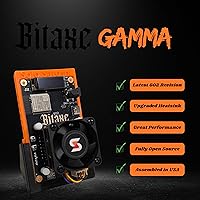
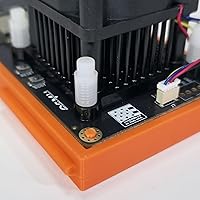
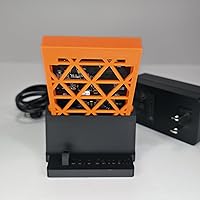
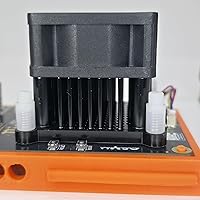
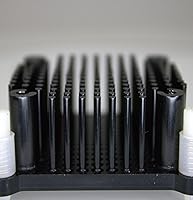
The Bitaxe Gamma 602 is a compact, plug-and-play solo Bitcoin miner built for hobbyists who want a real, physical connection to the Bitcoin network without a massive upfront commitment. It grows out of the open-source Bitaxe project, meaning hardware schematics and firmware are community-developed and freely available — a genuine rarity in a space dominated by closed, proprietary machines. This desktop Bitcoin miner ships fully assembled in the USA with pre-shipment testing already completed, so you are not piecing together a bare kit. The headline hardware upgrade is the Dark Horse heatsink, which adds thermal mass over the stock cooler. One thing to internalize early: this is lottery-style mining. Finding a block solo is a long shot, but the possibility is entirely real.

Features & Benefits

The engine inside the Bitaxe 602 is the BM1370 ASIC chip — the same die found in Bitmain's flagship Antminer S21 Pro — squeezed into a package that sips only 18 watts. That is roughly the draw of a bright desk lamp, so running it continuously adds almost nothing to your electricity bill. Connectivity is handled over 2.4 GHz Wi-Fi via the onboard ESP32-S3 module; there is no ethernet port, so factor that in if your router lives across the house. A genuinely useful touch is the 0.91-inch OLED screen that displays live hashrate, uptime, and pool data at a glance. The upgraded heatsink keeps temperatures stable and opens the door to modest overclocking without thermal anxiety.

Best For

This solo miner is a natural fit for anyone who wants to do more than just hold Bitcoin — they want to participate in the network at the hardware level. Crypto hobbyists will appreciate the open-source firmware, which is actively maintained and lets you tune settings well beyond factory defaults. It also makes a genuinely interesting gift for a tech-curious friend: functional, educational, and unlike most gadgets, actually connected to something real. Quieter than you might expect, the fan is unobtrusive enough for a home office desk. Just be clear-eyed about expectations — this is not a passive income device. It is a low-cost way to chase a rare prize while learning how Bitcoin mining works from the ground up.

User Feedback

Most buyers report that the initial Wi-Fi configuration is refreshingly quick, with the Bitaxe 602 hashing within minutes of unboxing. The OLED display earns consistent praise — there is something genuinely satisfying about watching live stats on a physical screen that no app-only miner can replicate. Thermal feedback on the upgraded heatsink is positive too, with owners noting cooler and quieter operation compared to standard community builds. On the downside, a handful of reviewers feel that the long odds of solo mining deserve clearer upfront communication; expectation management matters with a device like this. The Wi-Fi-only design surfaces occasionally as a frustration in larger homes. Build quality and included accessories, though, draw almost no complaints.

Pros

  • Plug-and-play setup gets most buyers hashing within fifteen minutes of opening the box.
  • The BM1370 chip delivers enterprise-grade silicon efficiency in a device the size of a paperback.
  • Running at 18 watts continuously costs less on your electricity bill than leaving a lamp on overnight.
  • The Dark Horse heatsink keeps thermals stable and quiet under normal desk operating conditions.
  • Open-source firmware means the community actively improves performance — no waiting on a manufacturer roadmap.
  • The live OLED display showing real-time stats adds genuine satisfaction that app-only miners cannot replicate.
  • USA assembly with pre-shipment testing reduces the out-of-box failure risk common in bare imported kits.
  • Everything needed to start mining ships in the box — no secondary parts order required.
  • Lightweight and compact enough to fit on any desk, shelf, or entertainment unit without dedicated space.

Cons

  • No ethernet port is a hard limitation — 2.4 GHz Wi-Fi only, with no wired fallback option.
  • Solo mining odds are extremely low; most owners will run the device for a long time without a block reward.
  • The exposed PCB form factor offers zero physical protection during storage, transport, or dusty environments.
  • Occasional firmware reflash needed out of the box has been reported by a small but consistent number of buyers.
  • International buyers may receive a US-only power adapter, requiring an immediate additional purchase.
  • OLED burn-in can develop after extended continuous use, a known limitation of this display technology.
  • Advanced users may find the experience plateaus quickly once initial setup and tuning are complete.
  • Community support is spread across Discord and GitHub rather than a unified, searchable help center.

Ratings

The Bitaxe Gamma 602 has been put through its paces by a global community of hobbyist miners, open-source tinkerers, and crypto enthusiasts — and our AI has analyzed verified buyer reviews worldwide, actively filtering out incentivized and bot-generated feedback to surface what real owners actually experience. Scores reflect both where this desktop Bitcoin miner genuinely earns its reputation and where it falls short of buyer expectations. Strengths and friction points are weighted equally, so you get a clear picture before committing.

Ease of Setup
88%
Most buyers are hashing within ten to fifteen minutes of unboxing. The Wi-Fi configuration through the browser-based interface is intuitive enough that users with no prior mining experience report zero confusion, and having all accessories included removes the usual first-boot scrambling for cables or adapters.
The Wi-Fi-only design occasionally causes headaches for users whose router operates on 5 GHz exclusively or sits far from their desk. A small number of buyers needed a firmware reflash out of the box before the device would connect reliably, which is frustrating for non-technical users.
Thermal Performance
84%
The upgraded Dark Horse heatsink makes a noticeable real-world difference — owners report lower steady-state temperatures compared to standard community Bitaxe builds, and the fan rarely ramps to an audible level during normal operation at a home desk or shelf.
Under sustained overclocking or in warm ambient environments above 80°F, temperatures climb faster than some users expect. A handful of reviewers noted the heatsink contact pressure felt inconsistent unit to unit, suggesting minor variance in the assembly process.
Hashrate & Mining Performance
79%
21%
The BM1370 chip punches well above what you would expect from a device this size, delivering 1.2 TH/s at factory settings — the same silicon architecture used in enterprise-grade miners. For a solo hobbyist unit, that efficiency ratio is hard to argue with.
Solo mining odds at this hashrate mean most owners will run the device for months or years without finding a block. Buyers who did not fully internalize that math before purchasing tend to leave disappointed, which is less a hardware flaw and more an expectation-management issue.
Power Efficiency
91%
At roughly 18 watts, this solo miner costs less to run continuously than most phone chargers left plugged in overnight. Owners in high-electricity-cost markets like California or Germany specifically call out the low draw as a key reason they feel comfortable leaving it on permanently.
Actual consumption varies slightly with firmware version and ambient temperature, and a few buyers measured closer to 20 to 22 watts at the wall including PSU losses. Not a dealbreaker, but worth accounting for if you are tracking costs carefully.
Build Quality
83%
USA assembly with pre-shipment functional testing gives this desktop Bitcoin miner a noticeably tighter feel than imported bare-board alternatives. PCB soldering quality draws consistent praise in community forums, and the overall component layout reflects genuine engineering care.
The enclosure is minimal — essentially an exposed PCB with heatsink and fan — so it does not feel premium in the way a consumer gadget would. Buyers expecting a polished housing are sometimes surprised by how utilitarian the physical form factor actually is.
OLED Display Quality
86%
The 0.91-inch screen is small but genuinely useful, showing live hashrate, best difficulty, uptime, and Wi-Fi signal in a readable format. Owners frequently mention the display as one of their favorite aspects — there is real satisfaction in watching your miner work without opening an app.
The display is tiny enough that reading it from more than a foot away requires leaning in. A few users report the OLED developing minor burn-in patterns after months of continuous use showing the same static layout, which is a known characteristic of this display technology.
Wi-Fi Connectivity
71%
29%
For most home setups, the ESP32-S3 module holds a stable 2.4 GHz connection without issue. Buyers who place the unit near a router or mesh node report rock-solid uptime over weeks of continuous operation with no drops.
The absence of an ethernet port is a recurring frustration, particularly for users who prefer wired connections for reliability or who run dedicated mining setups in a basement or garage with weak Wi-Fi coverage. There is no hardware workaround short of adding a separate Wi-Fi extender.
Software & Firmware
82%
18%
The open-source AxeOS firmware is actively maintained by the Bitaxe community, with regular updates adding pool compatibility, efficiency improvements, and overclock profiles. Advanced users genuinely appreciate being able to read, modify, and flash the firmware without restrictions or voided warranties.
For buyers who have never interacted with open-source firmware, the update process and configuration interface can feel rough around the edges compared to polished consumer products. Community support is available but scattered across Discord channels and GitHub threads rather than a single help center.
Noise Level
89%
Under normal operating conditions the cooling fan is barely perceptible from a few feet away, making this one of the few mining devices that can live on a desk in a shared office or bedroom without irritating everyone around it. At default settings, noise is a non-issue for the vast majority of buyers.
When temperatures spike — during summer heat waves or in poorly ventilated rooms — the fan does ramp up to a clearly audible level. It is not loud by any objective measure, but the change is noticeable enough that light sleepers would not want the device running on a nightstand.
Value for Money
77%
23%
Relative to other assembled, ready-to-run solo miners with equivalent chip specs, the pricing is competitive, especially factoring in the USA assembly, included accessories, and upgraded heatsink. Buyers who view it as a hobbyist gadget rather than an investment consistently feel they got fair value.
For buyers expecting any meaningful financial return, the value calculation falls apart quickly once they understand the probability of solo mining a block. The device is priced fairly for what it is, but what it is needs to be clearly understood before purchase to avoid buyer's remorse.
Accessories & Box Contents
87%
Everything needed to start mining arrives in the box — power supply, cables, and the OLED display module — so there is no secondary Amazon order standing between you and your first hash. Buyers consistently appreciate not being nickeled-and-dimed on accessories the way some competing kits require.
A small number of buyers reported that the power adapter included was sized for US outlets only, creating an immediate compatibility issue for international buyers. The accessories are functional but not premium — nothing about the included cables or PSU feels overbuilt.
Open-Source Ecosystem
93%
The Bitaxe project has a genuinely active and knowledgeable community behind it. Firmware is updated regularly, hardware schematics are publicly available, and the community around tools like AxeOS is responsive to bug reports and feature requests in a way that closed-source mining hardware simply cannot match.
The open-source nature is a strength only if you are willing to engage with it. Passive users who just want a device to work without community involvement will not extract the full benefit, and documentation quality varies depending on how recently a given guide was updated.
Portability & Form Factor
81%
19%
At just one pound and roughly the footprint of a thick paperback book, this desktop Bitcoin miner fits comfortably on a shelf, desk corner, or entertainment center without demanding dedicated space. It is easy to move between rooms or take to a friend's house to demonstrate.
The exposed board design means portability is limited by the lack of any protective enclosure. Transporting it without a case risks physical damage to the fan, OLED module, or heatsink fins, and no protective case is included in the box.
Educational & Hobbyist Appeal
94%
As an introduction to how Bitcoin mining actually works at the hardware level, few devices deliver as much hands-on learning per dollar. The combination of open firmware, real network participation, and visible stats makes it a genuinely engaging educational tool for curious buyers of any technical background.
The educational value is front-loaded — after the initial setup and learning curve, advanced hobbyists may find the experience plateaus unless they actively pursue overclocking, firmware modification, or building out additional units. It can feel static once the novelty settles.

Suitable for:

The Bitaxe Gamma 602 is purpose-built for a specific kind of buyer: someone who finds genuine satisfaction in participating in the Bitcoin network at the hardware level, even knowing the financial odds are long. Crypto hobbyists who want a tangible, always-on device connecting their home to the Bitcoin blockchain will get more out of this solo miner than almost any other product in its class. Tech enthusiasts who enjoy tinkering with open-source firmware, pushing efficiency through custom overclock profiles, or contributing to community-driven hardware development will find the Bitaxe ecosystem genuinely rewarding rather than limiting. It also works beautifully as an educational gift — for a curious teenager, a developer exploring how proof-of-work actually functions, or a Bitcoin-curious friend who learns better by doing than by reading. Running quietly at only 18 watts, this desktop Bitcoin miner fits naturally on a home office desk or bookshelf without demanding dedicated space, a ventilated rack, or a separate circuit.

Not suitable for:

Anyone approaching this purchase expecting a reliable passive income stream should stop and reconsider before buying. The Bitaxe Gamma 602 mines solo against the full Bitcoin network, which means the probability of finding a block — and collecting the reward — is astronomically low for a single device at 1.2 TH/s; you could run it for years without a payout, and that is not a malfunction, it is the math. Buyers who require a wired ethernet connection for reliability will also find the Wi-Fi-only design a hard constraint with no built-in workaround. Users in larger homes with weak 2.4 GHz coverage in their preferred room may face recurring connectivity frustrations. If you want serious, industrial-scale hashing or a device that contributes meaningfully to a mining pool operation, the hashrate here is simply too modest to compete. Finally, buyers who prefer polished consumer-grade hardware with a protective enclosure and premium finish will likely be underwhelmed by the utilitarian, exposed-board aesthetic.

Specifications

  • ASIC Chip: Powered by the BM1370 ASIC, the same chip architecture used in Bitmain's Antminer S21 Pro, optimized for SHA-256 Bitcoin mining.
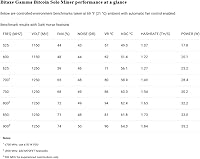
  • Hashrate: Delivers 1.2 TH/s at default firmware settings, with headroom for modest increases through community overclock profiles.
  • Power Draw: Consumes approximately 18W at the device level under default settings, though actual wall draw varies slightly with PSU efficiency and ambient temperature.
  • Efficiency: Operates at roughly 15 J/TH at default settings, placing it among the more efficient options available in the hobbyist solo miner category.
  • Wi-Fi Module: Uses an ESP32-S3-WROOM-1 microcontroller for 2.4 GHz Wi-Fi connectivity; no 5 GHz band support and no ethernet port are present.
  • Display: Includes a 0.91″ SSD1306 OLED I2C screen that shows live hashrate, uptime, best difficulty, and Wi-Fi signal in real time.
  • Heatsink: Fitted with the upgraded Dark Horse heatsink, which features increased mass and surface area compared to the standard community Bitaxe build.
  • Cooling Method: Air-cooled via an active fan combined with the Dark Horse heatsink; no liquid cooling or passive-only option is present.
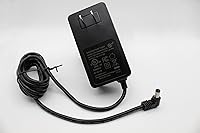
  • Power Connector: Accepts power via a standard barrel jack connector; a compatible power supply is included in the box.
  • Dimensions: Measures 4 x 2.5 x 1.5 inches, making it compact enough to sit flat on a desk or shelf without dedicated mounting hardware.
  • Weight: Weighs approximately 1 pound fully assembled, including the heatsink and OLED display module.
  • Firmware: Runs open-source AxeOS firmware, which is actively maintained by the Bitaxe community and supports over-the-air updates.
  • Assembly: Units are assembled in the United States and undergo pre-shipment quality and functional testing before dispatch.
  • Form Factor: Standalone desktop miner with an exposed PCB design; no protective enclosure or housing shell is included.
  • Connectivity: Wi-Fi only — there is no ethernet port, and the device cannot be connected via a wired network without external bridging hardware.
  • Box Contents: Ships with all accessories required for immediate operation, including power supply and display module, with no additional purchases needed to start mining.
  • Mining Algorithm: Mines exclusively on the SHA-256 algorithm, meaning it is compatible only with Bitcoin and other SHA-256-based proof-of-work coins.
  • Open-Source: Hardware schematics, PCB design files, and firmware source code are publicly available, allowing community contribution and third-party modifications.

Related Reviews
Wantek 602 Wired Headset
77%
83%
Microphone Clarity
79%
Comfort & Wearability
58%
Build Quality & Durability
94%
Plug-and-Play Setup
67%
Noise Cancellation (Mic-Side)
More
Gamma Clarity 40Hz Sound Player
83%
89%
Effectiveness for Focus & Memory
93%
Ease of Use
85%
Design & Build Quality
78%
Sound Quality
87%
Battery Life
More
Hifonics BG-1900.1D Brutus Gamma Mono Amplifier
86%
94%
Power Output
92%
Bass Performance
88%
Sound Clarity
78%
Thermals / Cooling
89%
Ease of Installation
More
JBL Stage 602 6-1/2″ 2-Way Coaxial Speakers
82%
88%
Sound Quality
85%
Bass Performance
83%
Treble Clarity
91%
Installation Ease
82%
Build Quality
More
ECOHERO Gamma Laptop, Celeron J4005, 8GB RAM, 256GB SSD, 14″ FHD
79%
92%
Portability & Weight
80%
Performance for Everyday Tasks
90%
Value for Money
85%
Battery Life
78%
Display Quality
More

FAQ

Honestly, it is one of the easier mining devices to get started with. You power it on, connect to its local Wi-Fi access point from your phone or laptop, enter your home network credentials and a pool address, and it starts hashing. Most first-time buyers report being up and running in under fifteen minutes.

No — once configured, this solo miner operates completely independently. It just needs power and a Wi-Fi connection. Your computer, phone, or tablet are only needed to access the browser-based dashboard if you want to check settings or monitor stats remotely.

Very low, and it is important to go in with that understanding. At 1.2 TH/s against the full Bitcoin network hash rate — which sits in the hundreds of exahashes per second — your probability of finding a block solo on any given day is extremely small. Think of it less like a salary and more like a lottery ticket that runs 24 hours a day. Some people have won; most run their device for a long time without a payout.

No. The Bitaxe Gamma 602 does not have an ethernet port — Wi-Fi is the only built-in connectivity option. If your router is far away or your 2.4 GHz signal is weak at your preferred location, a Wi-Fi extender or mesh node placed nearby is the most practical workaround.

At default settings in a normal room temperature environment, the fan is quiet enough that most people forget it is running. It sits closer to a background hum than a traditional mining rig. If temperatures spike significantly, the fan does ramp up audibly, but that is not the typical operating state for a well-ventilated desk setup.

Only coins that use the SHA-256 proof-of-work algorithm are compatible. In practice, that means Bitcoin and a handful of smaller SHA-256 coins. It cannot mine Ethereum, Litecoin, Monero, or any non-SHA-256 cryptocurrency.

Very little. At roughly 18 watts running continuously for a full month, you are looking at about 13 kilowatt-hours of consumption. At average US electricity rates, that works out to somewhere between one and two dollars per month — less than keeping a small lamp on all the time.

Yes, within limits. The upgraded Dark Horse heatsink was specifically chosen to provide more thermal headroom than the stock design, and the open-source firmware supports frequency and voltage adjustments. The Bitaxe community has documented stable overclock profiles, but how far you can push it depends on your unit, ambient temperature, and firmware version.

The most popular choice among Bitaxe owners is Solo CKPool, which is specifically designed for solo miners and pays the full block reward if you find one. Public Bitaxe community forums and the AxeOS documentation both cover configuration steps in detail, and the setup process is straightforward once you have your pool address and wallet details ready.

Because the firmware is open-source and community-maintained, updates are released regularly and can be applied over the air through the browser interface. If you encounter a bug, the Bitaxe GitHub repository and Discord community are active enough that issues are usually identified and patched quickly — a genuine advantage over closed-source mining hardware where you depend entirely on the manufacturer's update schedule.