Overview

The Barlus UW-S5-3PBX30 Underwater POE IP Camera is not the kind of camera you buy on impulse — it's a purpose-built tool designed for aquarium operators, fish farmers, and dedicated anglers who need reliable, permanent underwater visibility. What sets it apart from consumer-grade alternatives is its marine-grade stainless steel housing, engineered to resist saltwater corrosion over years of submersion. Powering it requires a POE switch or splitter, which is not included — something buyers should budget for before checkout. At its price point, this is firmly a prosumer investment. A mobile app does enable live-streaming, though getting it configured takes more than a plug-and-play effort.
Features & Benefits

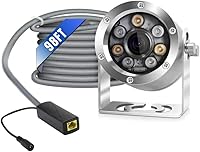
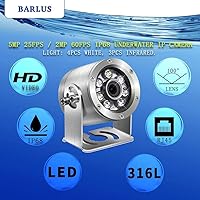
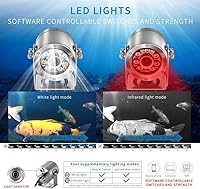
At the core of this underwater POE camera is a 5MP sensor delivering 2592×1944 resolution at 25 frames per second — enough detail to distinguish individual fish species or catch subtle equipment issues inside a large tank. The 100-degree wide-angle lens reduces blind spots across broader enclosures, and the hybrid lighting system — four infrared LEDs paired with three white LEDs — handles everything from pitch-black depths to dimly lit ponds, with 10 adjustable brightness levels giving you real control. The 98-foot cable is cold-, pressure-, and corrosion-resistant. Protocol support spanning ONVIF, RTSP, and DDNS makes NVR integration realistic for anyone already running an IP camera network.

Best For

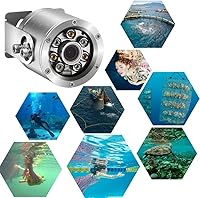
This submersible IP camera is genuinely well-matched to a specific kind of buyer. Aquarium hobbyists running large marine or reef tanks will find the permanent-install design and high resolution useful for monitoring livestock without disturbing the environment. Aquaculture operations and fish farmers benefit from the rugged stainless build and network integration capabilities that tie into existing NVR systems. Serious anglers using it for real-time fish observation will appreciate the long cable and night-vision lighting. That said, if you're after a casual drop-in fishing camera, this is overkill. It's squarely aimed at tech-comfortable buyers who don't mind configuring POE networking equipment before getting started.

User Feedback

With 61 ratings and a 4.1 out of 5 average, the Barlus aquarium camera has earned broadly positive marks — though the sample is still small enough that a handful of strong opinions can move the needle. Buyers regularly praise the low-light image clarity, noting the hybrid LED system performs well even in murky or tinted water, and several mention the cable feels noticeably more durable than expected. The most consistent complaint, however, centers on the missing POE switch — many buyers didn't realize they needed one until after unboxing. A few also flag the mobile app as unintuitive. Warranty support from Barlus is generally described as responsive within the one-year coverage window.

Pros

  • 5MP resolution delivers sharp, detailed footage even in low-visibility underwater conditions.
  • The 100-degree wide-angle lens covers large tanks or wide water areas with fewer blind spots.
  • Hybrid IR and white LED lighting with 10 adjustable levels handles both dark and murky environments effectively.
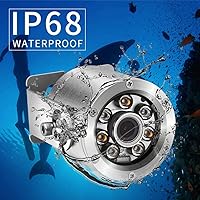
  • IP68-rated housing and 500 kPa pressure resistance make it genuinely built for long-term submersion.
  • The 98-foot cable is cold-resistant and corrosion-proof — noticeably sturdier than cables on budget alternatives.
  • Marine-grade stainless steel construction holds up in saltwater environments where cheaper plastics fail.
  • Broad protocol support (ONVIF, RTSP, DDNS) allows clean integration into professional NVR setups.
  • Compatible with iOS, Android, Windows, and NVR systems, giving flexibility across different workflows.
  • Barlus customer support is generally described by buyers as responsive within the one-year warranty window.
  • Live-streaming to a mobile app adds real convenience once the initial setup is complete.

Cons

  • A POE switch or splitter is required but not included — a hidden cost many buyers miss at checkout.
  • The mobile app setup process is unintuitive and steep for users unfamiliar with IP camera software.
  • At nearly 10 pounds packaged, this submersible IP camera is not practical for portable or handheld use.
  • Only 61 ratings to date, so the 4.1-star average reflects a limited pool of real-world feedback.
  • Live-streaming performance can suffer from latency when relying on Wi-Fi rather than a wired connection.
  • The total cost of entry rises noticeably once necessary POE accessories are factored in.
  • No POE switch bundled in the box means extra sourcing and compatibility research for first-time buyers.
  • The app learning curve can be a genuine barrier for non-technical users expecting immediate results.
  • Heavier build and fixed cable design limit flexibility for temporary or repositionable installations.
  • Limited online community or third-party guides make troubleshooting less straightforward than established CCTV brands.

Ratings

The scores below were generated by our AI system after analyzing verified global buyer reviews for the Barlus UW-S5-3PBX30 Underwater POE IP Camera, with spam, bot-submitted, and incentivized feedback actively filtered out to protect accuracy. The review pool is relatively small at around 61 verified ratings, so these scores reflect early but consistent patterns rather than a fully mature dataset. Both the genuine strengths that keep buyers satisfied and the recurring frustrations that lead to complaints are transparently weighted into every category.

Image Quality
83%
Buyers consistently report that the 5MP sensor delivers noticeably sharper detail than budget fishing cameras — especially useful for distinguishing coral health, fish species, or spotting tank equipment issues. The wide 100-degree field of view also means less repositioning is needed to cover a large aquarium or pond area.
In heavily murky or sediment-rich water, the effective resolution advantage shrinks considerably and the footage can look washed out. A small number of buyers noted mild color fringing near the edges of the frame, which may matter for detailed aquarium photography but is largely irrelevant for monitoring purposes.
Low-Light Performance
79%
21%
The hybrid lighting system — combining infrared and white LEDs with 10 brightness levels — gives users genuine flexibility for dark or murky conditions, such as nighttime pond monitoring or deep-tank observation. Buyers who fished at dawn or dusk specifically praised the ability to switch between color and infrared modes on the fly.
At maximum infrared range, some buyers found the illumination circle has a noticeably bright center that falls off quickly toward the edges, leaving corners of wide tanks dimmer than expected. White LED mode in very dark water can also cause reflective glare from suspended particles, which temporarily degrades visibility.
Build Quality
88%
The seawater-grade stainless steel housing is the feature buyers most frequently call out as a genuine differentiator — several users who had previously burned through plastic-bodied cameras in reef tanks noted zero corrosion after months of continuous submersion. The overall fit and finish feels noticeably more substantial than the price point of consumer alternatives.
The camera is heavy for its size, which can complicate bracket mounting in certain tank configurations or on boats. A handful of buyers noted minor surface discoloration on the stainless body after extended exposure to high-salinity saltwater, though none reported structural compromise.
Cable Durability
86%
The 98-foot cable draws consistent praise for feeling far more robust than what comes with cheaper underwater cameras — buyers describe it as stiff, well-sheathed, and resistant to kinking even after months of deployment in cold outdoor ponds. The length is more than adequate for most dock-to-depth or tank-to-monitor runs.
Because the cable is integrated and not user-replaceable, any damage to it — even near the surface end — effectively means replacing the entire unit. A few buyers also found the cable stiffness made routing it through tight spaces or around tank equipment corners more awkward than expected.
Waterproofing & Depth Rating
91%
IP68 certification with a 500 kPa pressure tolerance means this submersible IP camera is genuinely overbuilt for most aquarium and recreational fishing depths, giving buyers real confidence in permanent installations without constant anxiety about seal failure. No buyers in the current review pool reported water ingress under normal operating conditions.
The IP68 rating applies to the camera body itself, but the cable connector points and bracket hardware are worth inspecting periodically in saltwater environments, as long-term corrosion at those junctions is a common failure point in competing products and warrants precaution here too.
Setup & Installation
47%
53%
For buyers already familiar with IP camera ecosystems and POE networking, the setup process is logical and the broad protocol support — including ONVIF and RTSP — means it integrates cleanly into professional NVR systems without workarounds. The included USB drive with software and documentation is a helpful starting point.
This is the category that generates the most buyer frustration by far. The missing POE switch catches a significant portion of first-time buyers off guard at unboxing, requiring an unplanned purchase before the camera can even power on. The configuration software is also dated and non-intuitive, with several buyers reporting hours spent troubleshooting network discovery before achieving a stable connection.
Mobile App Experience
53%
47%
Once properly configured, the mobile app does deliver on its core promise — buyers managing fish farms or large aquariums appreciate being able to check in on their setup remotely without sitting in front of a monitor. Live-streaming over a stable wired network connection is described as reliable when the initial setup hurdles are cleared.
The app's interface is widely described as clunky and unintuitive, and live-streaming over Wi-Fi introduces noticeable latency that makes real-time fish monitoring frustrating. Several Android users reported connectivity drop issues that required restarting the app, and the iOS version has received fewer updates, leaving some features lagging behind.
NVR & Network Integration
81%
19%
The camera's comprehensive protocol support — spanning ONVIF, RTSP, DDNS, HTTPS, and more — is a genuine strength for professional buyers who need to fold it into an existing IP camera network or NVR recording system. Fish farmers and aquaculture operators running multi-camera setups found it compatible with most major NVR brands without needing custom configuration.
Out-of-the-box network discovery can be inconsistent depending on the buyer's router and POE switch brand, requiring manual IP assignment in some cases. SDK documentation, while included, is sparse and clearly aimed at developers rather than the technically proficient but non-developer end of the buyer spectrum.
Value for Money
62%
38%
Buyers who needed a permanent, professional-grade underwater camera for aquaculture or marine tank monitoring generally feel the build quality and feature set justify the investment, especially when factoring in the stainless steel housing and 50-meter depth rating that cheaper alternatives simply cannot match.
For casual buyers or those who did not realize a POE switch adds to the total cost, the overall value perception drops sharply. Compared to consumer-grade fishing cameras at a fraction of the price, the premium feels difficult to justify unless the use case genuinely demands IP68 permanence, network integration, and corrosion-resistant construction.
Lighting Control
76%
24%
The 10-level brightness adjustment is a genuinely practical feature — aquarium keepers in particular appreciate being able to set a low, consistent light level that does not disturb nocturnal fish or coral while still providing enough visibility to monitor behavior. The ability to toggle between infrared and white light modes adds real-world flexibility.
Some buyers found the lighting control interface — accessible through the app or software — unintuitive to adjust in the moment, especially during a live fishing session. The infrared range also falls off more steeply than the spec sheet implies in very deep or turbid water, limiting its usefulness below roughly 20 to 25 feet in poor visibility conditions.
Customer Support
67%
33%
Barlus has built a reasonable reputation for responsiveness within the one-year warranty window — buyers who contacted support about setup issues or defective units generally report receiving a reply within the stated 12-hour window, which is commendable for a smaller manufacturer.
Support quality beyond the initial acknowledgment is inconsistent, with some buyers describing follow-up responses as generic or copy-pasted rather than tailored to their specific issue. For complex network or software problems, the support team's technical depth appears limited, leaving some buyers to troubleshoot independently through community forums.
Physical Design
71%
29%
The cylindrical 70mm-diameter form factor mounts cleanly and unobtrusively in most aquarium or pond wall installations, and the included bracket provides a stable base without requiring custom hardware for standard setups. The compact footprint is appreciated by buyers with space constraints inside tank cabinetry.
At nearly 5 pounds for the camera unit alone, it is heavier than expected for its size, and the fixed cable makes repositioning after initial installation more cumbersome than modular alternatives. Buyers using it in portable dock or boat contexts found the weight and rigid cable a consistent inconvenience.
Compatibility Range
78%
22%
Support across iOS, Android, Windows, and NVR systems gives this underwater POE camera a broad compatibility footprint that most similarly priced competitors do not match. Buyers running mixed-device households or professional monitoring environments particularly appreciated not being locked into a single ecosystem.
Real-world compatibility testing reveals some inconsistencies — particularly with older Android versions and certain third-party NVR firmware builds — that require manual workarounds not documented in the included materials. The Windows client software also feels dated and lacks the polish of modern IP camera management tools.

Suitable for:

The Barlus UW-S5-3PBX30 Underwater POE IP Camera is built for buyers who need a permanent, high-performance underwater monitoring solution — not a weekend toy. Marine and reef aquarium hobbyists running large tanks will appreciate the 5MP resolution and wide-angle coverage for keeping a close eye on livestock behavior and equipment without disturbing the aquatic environment. Fish farmers and aquaculture professionals will find real value in the stainless steel housing's corrosion resistance and the camera's compatibility with NVR systems and standard IP protocols, making it easy to fold into an existing network. Serious anglers who want real-time underwater fish observation at meaningful depths will benefit from the 98-foot cable and hybrid night-vision lighting. Anyone already comfortable setting up POE networking gear — or willing to learn — will get the most out of what this camera offers.
Not suitable for:

If you're a casual buyer looking for a simple drop-in fishing camera or a portable action cam for snorkeling, the Barlus UW-S5-3PBX30 Underwater POE IP Camera is almost certainly not the right fit. The POE power requirement means you'll need a separate switch or splitter before the camera even powers on — an extra cost and a genuine setup hurdle that catches many first-time buyers off guard. The mobile app, while functional, has a learning curve that will frustrate anyone expecting plug-and-play simplicity. The camera is also physically hefty at nearly 10 pounds packaged, making it impractical for portable or handheld use. Budget-conscious shoppers should weigh the total cost of ownership carefully, since the accessories required to get it running add to the upfront investment.
Specifications

  • Resolution: The camera captures footage at 5MP (2592×1944) at 25 frames per second, delivering sharp detail suitable for identifying fish species or monitoring equipment inside large tanks.
  • Lens: A 2.8mm fixed lens provides a 100-degree horizontal field of view, minimizing blind spots across wide aquarium or pond environments.
  • Sensor: The 1/2.8″ CMOS sensor operates at 0.01 Lux (F1.2) in color mode and 0.001 Lux (F1.2) in black-and-white infrared mode, enabling usable footage in very low light.
  • Lighting: Four infrared LEDs and three white LEDs work together in a hybrid system with 10 adjustable brightness levels, allowing the user to switch between full-color and infrared imaging as conditions require.
  • Waterproofing: The camera carries an IP68 rating and is pressure-tested to a maximum of 500 kPa, making it safe for permanent installation at depths up to 50 meters (164 feet).
  • Cable: The integrated 98-foot (30m) cable is engineered to resist cold temperatures, physical pressure, and saltwater corrosion, and is not user-replaceable.
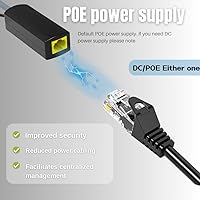
  • Power Supply: The camera supports DC 24V direct power or POE input at 48V–54V, fully compatible with the IEEE 802.3af/at standard; a POE switch or splitter is required and sold separately.
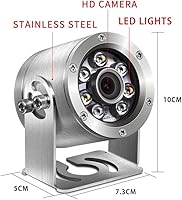
  • Housing Material: The outer shell is constructed from seawater-grade stainless steel, chosen for its resistance to corrosion in both freshwater and marine saltwater environments.
  • Protocols: Supported network protocols include IPv4/IPv6, ONVIF, RTSP, HTTPS, HTTP, TCP/IP, UDP, RTP, RTCP, UPnP, SMTP, NTP, DHCP, DNS, PPPoE, DDNS, and FTP, enabling broad NVR and SDK compatibility.
  • Compatibility: The camera is compatible with iOS and Android mobile devices, Windows computers, and standard NVR systems that support ONVIF or RTSP streams.
  • Operating Temp: Rated for continuous use between -20°C and 55°C, making it viable for outdoor installations in cold-weather climates or heated aquaculture environments.
  • Dimensions: The camera body measures 70mm in diameter and 100mm in length, with an overall packaged product dimension of approximately 3.94 × 2.76 × 3.54 inches.
  • Weight: The camera unit itself weighs approximately 4.8 pounds, with the full package including cable and accessories coming in at 9.83 pounds.
  • Storage: Local recording is supported via SD card (card not included), and the package includes a USB flash drive loaded with setup software and an instruction manual.
  • Warranty: Barlus provides a one-year limited warranty covering manufacturing defects, with customer support committed to responding within 12 hours of a reported issue.
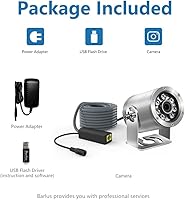
  • Package Contents: The box includes the camera, a mounting bracket, a power adapter, and a USB flash drive with software; a POE switch or splitter must be purchased separately.

Related Reviews

REVODATA I706-2-P 5MP POE Mini IP Camera
69%
83%
Image Quality
78%
Build Quality
86%
Value for Money
57%
Ease of Setup
52%
Software & App
More
Anpviz IPC-D240W-S 4MP PoE Dome Camera
76%
88%
Image Clarity (Daytime)
76%
Night Vision Performance
83%
Build Quality & Housing
85%
Weatherproofing (IP66)
91%
ONVIF & NVR Compatibility
More
ANNKE 12MP PoE IP Camera C1200
87%
93%
Image Quality
88%
Night Vision Performance
84%
Motion Detection Accuracy
91%
Setup Ease
89%
Build Quality
More
SV3C 4K POE IP Camera 8MP
86%
94%
Video Quality
89%
Night Vision Performance
87%
Ease of Setup
78%
Motion Detection Accuracy
83%
App Integration
More
Reolink RLC-1212A 12MP PoE IP Camera
84%
91%
Video Quality
85%
Night Vision Performance
94%
Ease of Installation
74%
Motion Detection Accuracy
89%
Storage Flexibility
More
Anpviz PTZIP204WX4IR 4MP PTZ PoE Dome Camera
71%
83%
Image Clarity
78%
PTZ Performance
71%
Night Vision
69%
Installation & Setup
61%
App & Remote Access
More
Reolink RLC-1224A 12MP PoE Dome Security Camera
80%
93%
Image Resolution & Detail
89%
Night Vision & Spotlight Performance
81%
Smart Detection Accuracy
86%
Value for Money
74%
Installation & Setup
More
VIKYLIN 4K 8MP PoE IP Dome Camera
82%
89%
Video Quality
87%
Night Vision Performance
74%
Ease of Setup
91%
Deterrent Features (LED & Siren)
85%
Build Quality
More
Anpviz IPC-D3053WD-S 5MP PoE IP Camera
86%
94%
Video Clarity
91%
Night Vision Performance
88%
AI Detection Accuracy
90%
Build Quality
92%
Weather Resistance
More
Inwerang 5MP PoE PTZ Dome Security Camera
76%
88%
Image Clarity (Daytime)
74%
Night Vision Performance
81%
Pan-Tilt Coverage & Accuracy
91%
PoE Installation Experience
77%
NVR Compatibility
More

FAQ

Yes, and this is the most important thing to know before ordering. The Barlus UW-S5-3PBX30 Underwater POE IP Camera requires a POE switch or POE splitter to power on, and neither is included in the box. Make sure you factor that into your total budget and have compatible networking equipment ready before the camera arrives.
It is specifically designed for that environment. The housing is made from seawater-grade stainless steel, which resists the kind of corrosion that quickly degrades cheaper materials in marine setups. That said, rinsing and inspecting the camera and cable connections periodically is still good practice for any saltwater installation.

The camera is rated IP68 with a maximum pressure resistance of 500 kPa, which corresponds to a depth of roughly 50 meters or 164 feet. For most aquarium, pond, or recreational fishing applications, that ceiling is far beyond what you will ever need.

The hybrid lighting system — four infrared LEDs plus three white LEDs — covers a reasonably wide area thanks to the 100-degree field of view of the lens. You also have 10 adjustable brightness levels, so you can dial down the intensity if you are worried about disturbing fish, or push it higher in very murky or deep water. Infrared mode switches the image to black-and-white, while the white LEDs keep color rendering intact.

For most recreational and semi-professional uses, 98 feet is quite generous. It gives you enough slack to run the cable over the edge of a dock, through a pond wall, or down into a sizeable aquarium enclosure without strain. If your specific installation requires more length, you would need to look at alternative solutions, as the cable is not user-extendable.

Yes, and that is one of its genuine strengths. The camera supports ONVIF and RTSP, which are the standard protocols most NVR systems use for IP camera integration. As long as your NVR supports those protocols — which most modern ones do — you should be able to add this submersible IP camera to your existing setup without too much trouble.

Straightforward it is not. Several buyers have noted that the app requires more configuration than a typical consumer camera — you will be entering IP addresses, setting up RTSP streams, or working through the Barlus software on the included USB drive. If you have set up an IP camera or NVR before, this will feel familiar. If this is your first time, budget an hour or two to work through it, and keep the manual handy.

You can, but with some caveats. The 98-foot cable gives you good depth reach from a dock, and the night-vision lighting works well in dark or murky water. The main limitation for mobile use is the power requirement — you need a POE switch or a DC 24V power source nearby, which is harder to manage on a boat than a fixed dock setup. It works best as a semi-permanent installation rather than a grab-and-go fishing camera.

Barlus offers a one-year warranty and states that their support team responds within 12 hours. Based on buyer feedback, the support experience has generally been described as reasonably responsive for a smaller manufacturer. If you receive a defective unit, reaching out directly to Barlus through the contact info in the manual is the recommended first step.

In good lighting conditions, yes — the 5MP sensor at 2592×1944 resolution is a meaningful step above the 1080p or lower-resolution sensors found on budget fishing cameras. The difference is most apparent when you need to identify specific fish, check on coral health, or monitor equipment details up close. In very murky water, the quality gap narrows since visibility becomes the limiting factor rather than the camera itself, but the superior low-light sensitivity still helps.

Where to Buy