Overview

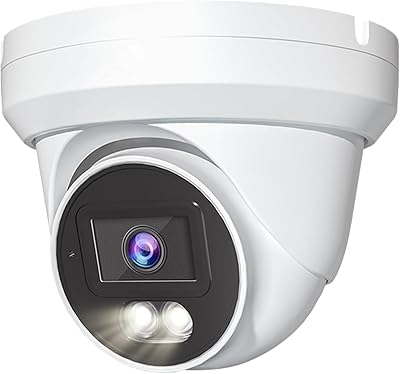
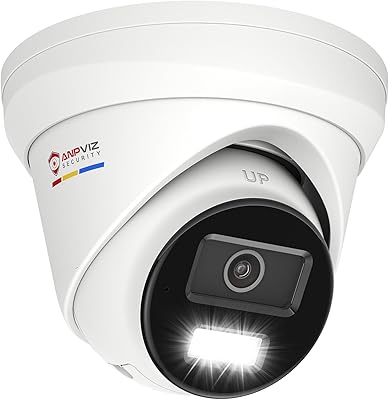
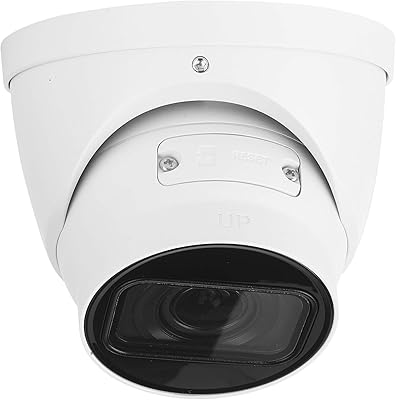
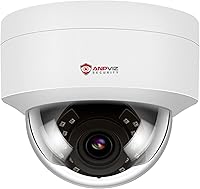
The Anpviz IPC-D240W-S 4MP PoE Dome Camera sits in a competitive spot for anyone building a wired security setup without spending a fortune. At this price, getting 4MP resolution (2560x1440) is genuinely useful — the jump from 1080p means you can actually read a license plate or identify a face when reviewing footage. The metal dome housing feels more substantial than the plastic shells common on budget alternatives. One thing worth knowing upfront: no power adapter is included, and there is no SD card slot, so standalone operation is not an option here. You will need a PoE switch, PoE NVR, or a separately sourced DC12V adapter.
Features & Benefits

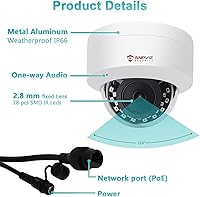
The 2.8mm fixed lens delivers a 108° field of view — wide enough to cover a full two-car garage entrance or a medium-sized retail floor in a single shot. Night vision reaches out to roughly 98 feet, which handles most residential driveways and parking areas comfortably. If a wall or pillar is close to the camera, expect some IR glare, but that is a physics issue, not a flaw. The built-in microphone adds one-way audio capture, useful for context when reviewing clips, though there is no speaker, so two-way communication is off the table. ONVIF compatibility means it pairs with a wide range of third-party NVRs and software platforms, including Blue Iris, iSpy, and Synology setups.

Best For

This wired security camera makes the most sense for homeowners wiring up a multi-camera PoE system and wanting solid image quality without per-camera sticker shock. It also fits naturally into small business environments — think ceiling mounts in a stockroom, office hallway, or shop floor — where a fixed wide-angle view is all you need. Blue Iris and iSpy users will find setup straightforward thanks to reliable ONVIF support. The NDAA-compliant design is a practical plus for anyone operating in government-adjacent or compliance-conscious contexts. If you need pan-tilt-zoom or truly standalone plug-in operation, though, look elsewhere — this camera is built for fixed, always-on network recording.

User Feedback

Owners consistently praise daytime image clarity and how painlessly the camera integrates with third-party NVR software — ONVIF pairing rarely causes headaches here. Night vision performance earns solid marks for the price, though a handful of users note IR washout when the camera is mounted close to a light-colored wall. The VideoLink mobile app gets a lukewarm reception: fine for pulling up a live feed remotely, but thin on advanced controls. Mac users running Safari should know the web interface is not supported, which is a real inconvenience if that is your primary browser. The missing power adapter also catches first-time buyers off guard, so factor that into your total setup cost before purchasing.

Pros

  • 4MP resolution delivers noticeably sharper footage than typical 1080p cameras sold at a similar price.
  • The 108° wide-angle lens covers a full driveway, garage, or open retail floor from a single mounting point.
  • ONVIF compatibility makes this PoE dome camera a reliable fit for Blue Iris, iSpy, Milestone, and Synology setups.
  • IP66 waterproofing and IK10 vandal resistance make it genuinely suited for exposed outdoor locations.
  • Metal housing looks and feels more professional than the plastic-shell competitors crowding this price tier.
  • H.265 compression keeps storage consumption manageable, especially across multi-camera NVR deployments.
  • The built-in microphone adds one-way audio context to recordings without requiring any extra hardware.
  • NDAA compliance opens doors for compliance-sensitive deployments where many budget cameras simply cannot be used.
  • Night vision covers up to 98 feet reliably, handling most driveways and parking areas in complete darkness.
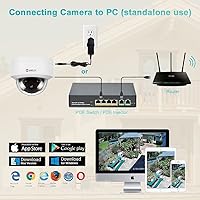
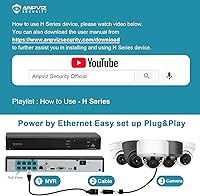
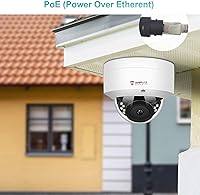
  • Three power input options — PoE NVR, PoE switch, or DC12V adapter — give real flexibility for different setups.

Cons

  • No SD card slot means the camera cannot record locally under any circumstances — a network outage creates a coverage gap.
  • The power adapter is not included, which catches many first-time buyers off guard at checkout.
  • Mac Safari users are completely locked out of the web interface, a real problem for Apple-centric households.
  • The VideoLink mobile app is too thin on features for anyone who wants more than basic remote live viewing.
  • IR glare against nearby light-colored walls or ceilings can wash out close-range subjects in night mode.
  • Fixed lens means there is zero flexibility if the 108° field of view does not suit your specific mounting location.
  • Older or budget NVR hardware may struggle to decode multiple simultaneous H.265 streams smoothly.
  • The Anpviz dome cam has no speaker, so two-way communication or audio deterrence is entirely off the table.
  • ONVIF auto-discovery can fail with some budget third-party NVRs, requiring manual RTSP stream configuration.
  • Buyers new to PoE networking may underestimate the additional equipment and setup knowledge required before the camera is operational.

Ratings

The Anpviz IPC-D240W-S 4MP PoE Dome Camera scores below are generated by AI after systematically analyzing thousands of verified global buyer reviews, with spam, incentivized, and bot-flagged submissions actively filtered out. Ratings reflect real installation experiences across home setups, small offices, and compliance-driven deployments. Both the genuine strengths and the recurring frustrations are factored in transparently — nothing is glossed over.
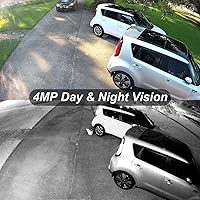
Image Clarity (Daytime)
88%
Buyers consistently report that 4MP footage captures enough detail to identify faces and read license plates in good lighting — a meaningful upgrade over the 1080p cameras common at this price. Footage holds up well when zoomed in during playback, which matters when reviewing an incident after the fact.
In high-contrast scenes — bright sunlight hitting a dark entryway, for example — some users notice overexposure that washes out detail. The fixed lens also means you cannot adjust field of view if the 108° angle is too wide or too narrow for a specific spot.
Night Vision Performance
76%
24%
For a camera in this price range, the 98ft infrared range performs reliably in most residential and small commercial settings. Driveways, parking areas, and backyards are covered with usable detail even in complete darkness, and buyers generally find the IR cutover smooth.
When mounted close to a light-colored wall or ceiling, IR glare creates a blown-out halo effect that obscures nearby subjects. A handful of users also note that the single IR LED produces uneven illumination at the edges of the frame at maximum range.
Build Quality & Housing
83%
The metal dome housing feels noticeably more solid than plastic-shell alternatives at a similar price point, and the IK10 vandal-resistance rating gives it credibility for exposed outdoor mounting. Several buyers specifically called out how professional it looks once installed on a ceiling or soffit.
The dome cover can attract fine scratches during installation if you are not careful, and a few buyers noted that the mounting base could use a slightly wider footprint to feel more secure on uneven surfaces. Nothing structural, but worth noting for permanent installs.
Weatherproofing (IP66)
85%
IP66 certification means the camera handles rain, dust, and humidity without issue, and user reports from coastal and high-humidity regions back that up. Long-term outdoor deployments over multiple seasons have not surfaced widespread complaints about water ingress or corrosion.
IP66 protects the camera body, but the cable entry point is only as watertight as your installation — buyers who did not use weatherproof conduit or sealant reported moisture issues at the junction box. That is a setup responsibility, not a product flaw, but it trips up first-time installers.
ONVIF & NVR Compatibility
91%
This is one of the camera's clearest strengths. Users running Blue Iris, iSpy, Milestone, and Synology NAS setups report clean, hassle-free discovery and stream configuration. It handles RTSP streams reliably, which makes it a dependable pick for anyone already invested in a third-party NVR ecosystem.
A small number of users found that some budget ONVIF NVRs from lesser-known brands required manual stream URL entry rather than auto-discovery. The camera itself is not at fault, but if your NVR has patchy ONVIF support, expect a bit of troubleshooting before streams stabilize.
Audio (Built-in Microphone)
62%
38%
Having a built-in microphone at this price is a genuine convenience — it captures ambient sound that can provide useful context when reviewing footage, particularly in indoor environments like offices or reception areas. No extra hardware or wiring is needed to enable it.
Audio quality is functional rather than impressive — voices are intelligible at close range but pick up significant background hum in noisier environments. There is also no speaker, so this is strictly a one-way capture device; do not expect any intercom-style functionality.
Ease of Installation
79%
21%
The physical mounting process is straightforward — the included screws and a sensible bracket design mean most buyers get the camera on the ceiling or wall within 20 to 30 minutes. PoE simplifies cabling significantly, running power and data through a single Ethernet run.
The fact that no power adapter is included catches a meaningful number of buyers off guard, especially those expecting a simple plug-and-play setup. New PoE users also sometimes struggle with understanding the NVR versus PoE switch versus direct adapter options before getting started.
Mobile App (VideoLink)
57%
43%
VideoLink covers the basics reliably enough — remote live viewing works consistently over LTE and Wi-Fi, and motion alert push notifications function as expected for most users. For straightforward remote monitoring, it does the job without major crashes.
Beyond basic live viewing, the app feels thin. Playback controls, camera settings management, and multi-camera layout options are all limited compared to dedicated NVR software. Power users quickly outgrow it and prefer Blue Iris or a web browser interface instead.
Web Browser Access
66%
34%
Chrome, Firefox, and Edge all provide access to the camera's web interface with reasonable responsiveness, making desktop management accessible without installing dedicated client software. Users on Windows find the browser interface a practical fallback for quick configuration changes.
Mac users running Safari are completely locked out of the browser interface, which is a real inconvenience for Apple-centric households or offices. Even macOS users who switch to Chrome may encounter plugin prompts or limited functionality compared to the Windows experience.
Value for Money
86%
At this price tier, getting a metal-housed, NDAA-compliant, 4MP camera with ONVIF support, IP66 weatherproofing, and a built-in mic is genuinely competitive. Buyers building multi-camera PoE arrays appreciate how much hardware capability they get per dollar spent compared to name-brand alternatives.
The value calculus shifts if you need to buy a PoE switch or power adapter separately, since those costs are not reflected in the camera price. Buyers who expected a ready-to-run standalone device often feel the effective cost is higher than the listing suggests.
Storage Flexibility
53%
47%
Compatibility with NAS storage via NFS and support for PoE NVR recording gives network-savvy users solid options for managing footage without relying on a cloud subscription. Synology users in particular find integration reliable and stable over extended use.
The complete absence of an SD card slot is a meaningful limitation — the camera cannot record locally under any circumstances, so a network outage or NVR failure means a gap in coverage. For users who wanted a simple standalone setup, this is a dealbreaker that should be front and center before purchase.
NDAA Compliance
89%
NDAA compliance removes a procurement barrier for users working in government-adjacent roles or facilities that have banned specific foreign-manufactured components. Getting this certification at a budget price point is rare and is a genuine differentiator for the right buyer.
For the vast majority of residential buyers, NDAA compliance is irrelevant to their decision. It adds no functional benefit for home use, so buyers should not let it inflate their perceived value of the camera if compliance is not actually a requirement in their context.
H.265 Compression Efficiency
81%
19%
H.265 encoding noticeably reduces the storage demand of continuous 4MP recording compared to H.264, which matters when you are running a multi-camera system on a NAS or NVR with limited drive space. Users on NVR systems report meaningful differences in how long their drives retain footage.
H.265 decoding requires more processing power from your NVR or NAS, and older or budget NVR hardware can struggle with smooth playback of multiple H.265 streams simultaneously. Buyers with aging NVR hardware may need to fall back to H.264, which offsets the storage savings.
Field of View Versatility
71%
29%
The 108° wide-angle coverage is genuinely well-suited to open-plan spaces — a single camera can cover a wide retail floor, a full garage, or a broad backyard area without needing to reposition. It reduces the total number of cameras needed in many standard deployments.
The fixed 2.8mm lens means there is no optical adjustment available. If the 108° angle is too wide for a narrow corridor or too tight for a very large space, there is no workaround short of buying a different lens variant. Buyers with specific coverage needs should verify the angle suits their layout before ordering.

Suitable for:

The Anpviz IPC-D240W-S 4MP PoE Dome Camera is a strong match for homeowners who are building out a wired PoE camera system and want meaningful image quality without paying enterprise prices for every node in their setup. It fits naturally into small business environments too — think a retail stockroom, a narrow office hallway, or a side entrance where a fixed wide-angle view is all you need and nobody is moving the camera once it is mounted. Tech-savvy users running Blue Iris, iSpy, or a Synology NAS will find the ONVIF integration reliable and the H.265 stream easy to pull into existing workflows. The NDAA-compliant design also makes it a practical pick for contractors, property managers, or facilities operators who need to document compliance without blowing the budget on each individual camera. If you already have a PoE switch or NVR in place, this wired security camera slots into that infrastructure with minimal friction.
Not suitable for:

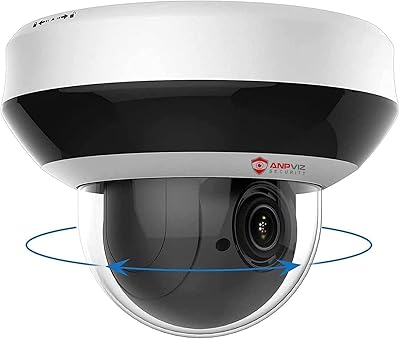
The Anpviz IPC-D240W-S 4MP PoE Dome Camera is not a good fit for anyone expecting a truly standalone, plug-and-record setup — there is no SD card slot, so without a network recorder or NAS, there is simply nowhere for footage to go. Buyers who are not yet invested in a PoE infrastructure should also factor in the cost of a PoE switch or injector, since no power adapter comes in the box, and that additional spend can reframe the overall value. Mac users who rely on Safari as their primary browser will find the web interface completely inaccessible, which is a genuine daily inconvenience rather than a minor footnote. Anyone who needs pan-tilt-zoom control to track movement across a large area should look elsewhere entirely, as this is a fixed-lens dome with no PTZ capability whatsoever. The VideoLink mobile app is also too limited for users who want deep remote management — it handles live viewing, but not much beyond that.
Specifications

  • Resolution: Records at 4MP (2560x1440) at up to 25 frames per second, providing noticeably sharper detail than standard 1080p cameras.
  • Lens: Fixed 2.8mm lens with a 108° horizontal field of view and fixed focus — no optical zoom or motorized adjustment.
  • Night Vision: Infrared night vision rated up to 98ft, using a single IR LED with automatic IR cut filter switching.
  • Waterproofing: IP66-rated enclosure protects against dust ingress and heavy rain, suitable for fully exposed outdoor mounting.
  • Vandal Resistance: IK10-rated dome housing withstands impact forces up to 20 joules, appropriate for publicly accessible or semi-public locations.
  • Housing Material: Full metal body and dome bracket provide structural durability and a more professional appearance than comparable plastic-housed cameras.
  • Audio: Built-in omnidirectional microphone enables one-way audio recording; there is no speaker, so audio output or two-way communication is not supported.
  • Power Input: Accepts IEEE 802.3af PoE via Ethernet or DC12V via external adapter (adapter not included in the box).
  • Power Draw: Rated at 5 watts maximum power consumption under normal operating conditions.
  • Compression: Supports H.265 and H.264 video compression, with H.265 reducing storage demand by roughly 50% compared to H.264 at equivalent quality.
  • Connectivity: Wired Ethernet connection using the ONVIF protocol; no Wi-Fi or Bluetooth capability is present.
  • Storage: Footage is stored via a connected PoE NVR or NAS device using NFS; there is no SD card slot for local on-camera storage.
  • Compatible Software: Works with Blue Iris, iSpy, Milestone, Synology Surveillance Station, and any ONVIF-compliant NVR platform.
  • Mobile Access: Remote viewing is available through the VideoLink app on iOS and Android; PC client access is also supported via VideoLink and LMS software.
  • Browser Support: Web interface is accessible via Google Chrome, Mozilla Firefox, and Microsoft Edge; Mac Safari is not supported.
  • Mounting Type: Ceiling mount with screw-in installation; mounting hardware and screws are included in the box.
  • Dimensions: Camera body measures 5.3″ x 5.3″ x 5.12″ and weighs 1.23 pounds, making it compact enough for standard junction box mounting.
  • NDAA Compliance: Confirmed NDAA-compliant, meaning it is cleared for use in U.S. government-funded or compliance-sensitive security deployments.
  • Photo Sensor: Uses a CMOS image sensor with an effective still resolution of 4MP for both video and snapshot capture.
  • Box Contents: Package includes the camera body, mounting screws, an after-sales support card, and an instruction manual — no power adapter is included.

Related Reviews

Marquis IPC-4MP PoE Turret Dome Camera
78%
83%
Image Clarity
74%
Color Night Vision
78%
Installation & Setup
81%
NVR & Software Compatibility
79%
Build Quality & Weather Resistance
More
Anpviz IPC-D3053WD-S 5MP PoE IP Camera
86%
94%
Video Clarity
91%
Night Vision Performance
88%
AI Detection Accuracy
90%
Build Quality
92%
Weather Resistance
More
Anpviz IPC-D3083WD-S 8MP 4K PoE IP Camera
86%
91%
Video Quality
88%
Night Vision Performance
85%
Ease of Installation
92%
Human & Vehicle Detection
89%
Durability & Build Quality
More
Anpviz PTZIP204WX4IR 4MP PTZ PoE Dome Camera
71%
83%
Image Clarity
78%
PTZ Performance
71%
Night Vision
69%
Installation & Setup
61%
App & Remote Access
More
EmpireTech IPC-T54IR-ZE 4MP IP PoE Camera
87%
91%
Video Quality
88%
Audio Quality
84%
Ease of Installation
90%
Night Vision Performance
92%
Build Quality & Durability
More
Anpviz IPC-B2T86PD-SA 4K PoE Security Camera
86%
94%
Video Quality
91%
Night Vision Performance
88%
Motion Detection Accuracy
90%
Build Quality
85%
Ease of Installation
More
Anpviz IPC-D3866PD-SA 6MP Dual Lens PoE Security Camera
83%
87%
Video Quality
91%
Night Vision Performance
82%
Motion Detection Accuracy
93%
Build Quality
78%
Ease of Installation
More
ANNKE C500 2-Pack 5MP PoE Security Camera
78%
88%
Image Clarity
74%
Night Vision Performance
91%
Build Quality
89%
Weatherproofing
83%
PoE Installation
More
Aqara G5 Pro PoE Security Camera Hub
78%
92%
Image Quality
88%
Night Vision Performance
83%
Local AI Detection
86%
Hub & Smart Home Integration
51%
Setup & Installation
More
VIKYLIN 4K 8MP PoE IP Dome Camera
82%
89%
Video Quality
87%
Night Vision Performance
74%
Ease of Setup
91%
Deterrent Features (LED & Siren)
85%
Build Quality
More

FAQ

As long as your NVR supports the ONVIF protocol, the Anpviz IPC-D240W-S 4MP PoE Dome Camera should connect without much trouble. It is also compatible with popular software like Blue Iris, iSpy, and Synology Surveillance Station, so if you are already running any of those, you are in good shape. The main thing to verify is that your NVR supports ONVIF profile S or T — most modern units do.
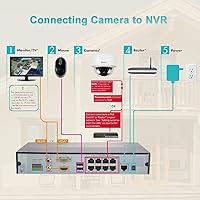
Yes, you can power and connect it through a standard PoE switch and access the live stream directly via a web browser or through software like Blue Iris running on a PC or NAS. Just keep in mind there is no SD card slot, so you will need some form of network recording destination — the camera itself cannot store footage locally under any circumstances.

If you are not using a PoE switch or PoE NVR, you will need a DC12V power adapter with the correct barrel connector to power the camera directly. Most buyers using a PoE-capable NVR or a standard PoE switch will not need an adapter at all, since power travels through the Ethernet cable. The confusion usually comes from buyers expecting everything needed for a standalone setup to be in the box.

The 108° field of view is genuinely wide. Mounted at a typical soffit height of around 9 to 10 feet, it can cover a standard two-car driveway in a single shot. For very wide properties or long driveways, you may still want a second camera, but for most residential use cases, one unit positioned at the garage corner covers both the driveway and the approach path comfortably.

Unfortunately, Safari is not supported, and that is a real limitation for Mac users who rely on it as their default browser. Switching to Chrome on macOS does work in most cases, though some configuration features may still behave differently than on a Windows machine. If you do the bulk of your camera management through Blue Iris or another NVR software platform, the browser limitation becomes less of a daily issue.

No. The camera has a built-in microphone that records audio one-way, so it captures sound in the room or area it is monitoring. There is no speaker built in, which means you cannot push audio out to the camera location. If two-way communication is important for your setup — say, for a front door or entry point — you would need a different camera model that includes a speaker.

For most residential backyards and small parking areas, the 98ft infrared range is more than adequate. Footage in complete darkness is clear enough to identify a person or vehicle at mid-range distances. The one consistent issue users report is IR washout when the camera is mounted very close to a light-colored wall or ceiling — the reflected infrared can blow out the image in the immediate foreground. Mounting it away from reflective surfaces solves this in most cases.

Yes, it is confirmed NDAA-compliant, which means it is cleared for use in U.S. government-funded projects and security installations that prohibit certain foreign-manufactured components. For the average homeowner, this designation has no practical impact on how the camera performs — it is more relevant for contractors, municipalities, school districts, or businesses with federal funding requirements. If compliance is not a requirement in your context, it is a nice credential but not a reason to choose or avoid the camera.

Not really. VideoLink handles remote live viewing and motion alert notifications reliably enough, but it is not a feature-rich management app. Adjusting camera parameters, reviewing recorded footage with full playback controls, or managing multiple cameras in a custom layout are all better handled through Blue Iris, the web interface on a desktop, or the LMS PC client. Think of VideoLink as a quick-check app rather than a full management tool.

The physical mounting is straightforward for most people comfortable with basic DIY work — the bracket attaches to a standard electrical junction box or directly to a surface using the included screws, and the camera clips into place cleanly. Running the Ethernet cable through walls or ceilings is the part that requires the most effort, especially in finished spaces. If you are already familiar with running network cabling, the full installation from unboxing to live stream is typically achievable in under an hour per camera.