Overview

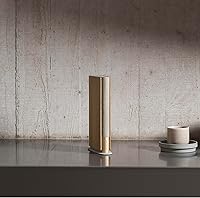
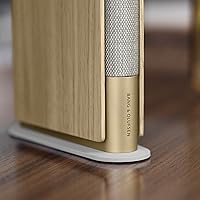
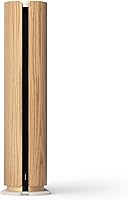
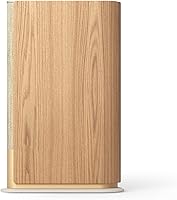
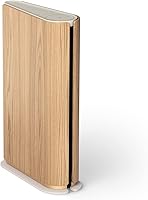
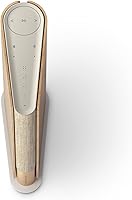
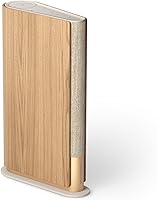
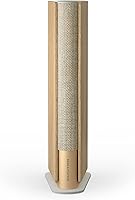
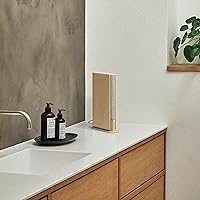
The Bang & Olufsen Beosound Emerge Bookshelf Speaker is one of the few audio products that genuinely stops people in their tracks before they even press play. Where most speakers are afterthoughts — black cylinders or chunky boxes shoved onto a shelf — the Beosound Emerge reads more like a considered piece of furniture. Its ultra-slim rectangular body, finished in aluminum, fabric, and warm oak wood, sits flat against a wall or on a narrow sideboard without dominating the room. It connects via both Bluetooth and Wi-Fi, supporting whole-home multiroom audio. But be clear-eyed: you are paying significantly for the design pedigree of a heritage Scandinavian brand, not just decibels.
Features & Benefits

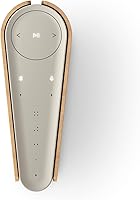
At just 2.6 inches wide, this slim B&O speaker pulls off something physics usually punishes. The rear-facing bass port redirects low frequencies toward the back wall, giving the sound more body than the cabinet size suggests — though expecting thumping bass would be unrealistic. In a typical home office or 15 m² living room, the 25W output fills the space comfortably without strain. Active Room Compensation quietly adjusts the sonic output based on placement, which is a genuinely useful feature for non-audiophiles who don't want to fiddle with EQ settings. Soft-touch controls on top keep the exterior clean, while the B&O app handles multiroom pairing — when it behaves, which isn't always guaranteed.

Best For

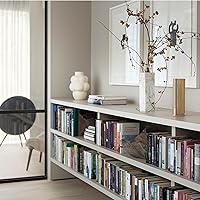
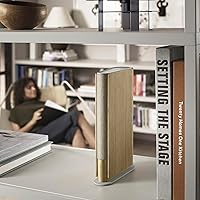
The Beosound Emerge makes the most sense for a specific kind of buyer. If you want a speaker that looks genuinely considered — something you'd be happy placing in plain sight on a reading nook shelf or a home office desk — it delivers that effortlessly. It suits small-to-medium rooms well; anything larger and you'll be pushing its limits. Existing B&O owners will find multiroom expansion refreshingly straightforward. It also works as an impressive gift: the packaging and physical presence carry real luxury weight. It's less suited to those who prioritize raw audio performance per dollar — at this price, pure audio-focused competitors return more output for less.

User Feedback

Across roughly 146 reviews, this bookshelf speaker holds a 4.1-out-of-5 rating — respectable, but the spread tells a nuanced story. Owners who bought it primarily for its design are largely satisfied, often noting how surprisingly full it sounds given the slim cabinet. Setup earns consistent praise too; getting it onto Wi-Fi is quick. The recurring complaint is value: audiophiles frequently point to alternatives like the Sonos Era 100 or Naim Mu-so Qb as delivering more raw output at comparable cost. App reliability is a legitimate grievance that surfaces repeatedly — dropouts, connection hiccups, and occasional unresponsiveness are real issues, not rare exceptions. Worth factoring in before committing.

Pros

  • The ultra-slim 2.6-inch profile fits on surfaces where conventional speakers simply cannot go.
  • Premium aluminum, oak wood, and fabric construction feels genuinely luxurious in person.
  • Active Room Compensation automatically adapts the sound output, removing the need for manual EQ adjustments.
  • Wi-Fi multiroom support integrates smoothly with other B&O devices for cohesive whole-home audio.
  • Setup is quick and accessible — most owners report being up and running within minutes.
  • The rear bass port delivers more low-end depth than the slim form factor would suggest.
  • Soft-touch top controls are discreet and intuitive, keeping the exterior completely uncluttered.
  • Bluetooth and Wi-Fi connectivity together cover both casual daily listening and structured multiroom use.

Cons

  • The B&O app has a documented reliability problem — connection drops and unresponsiveness are not rare.
  • At this price, dedicated audio brands offer noticeably more raw output and bass extension.
  • Bass is fundamentally constrained by the narrow cabinet; anyone expecting full-range sound will be disappointed.
  • A permanent power connection is required, limiting placement flexibility near wall outlets.
  • Multiroom features only reach their full potential within the B&O ecosystem, restricting mixed-brand setups.
  • No optical, auxiliary, or USB input means wired source connections are simply not an option.
  • The premium price reflects design heritage and brand prestige more than outright acoustic engineering.

Ratings

The scores below were generated by AI after analyzing verified buyer reviews from around the world, with spam, bot-submitted, and incentivized feedback actively filtered out. The Bang & Olufsen Beosound Emerge Bookshelf Speaker earns strong marks for its design and material quality, but receives more critical scores wherever real-world audio performance and app reliability are measured. Both the genuine strengths and the documented pain points are reflected transparently in each category below.
Sound Quality
76%
24%
For its physical dimensions, the Beosound Emerge produces a surprisingly coherent and well-balanced sound. Owners in small home offices consistently report that vocals and midrange instruments come through with genuine clarity, and there is enough presence in the sound to hold attention through a full workday.
At this price tier, audiophiles expecting performance that rivals dedicated bookshelf speakers from brands like KEF or Q Acoustics will come away disappointed. The slim cabinet imposes real sonic limits, and listeners moving from a traditional speaker setup often notice a compression in soundstage width that takes some adjustment to accept.
Design & Aesthetics
94%
The ultra-slim rectangular silhouette genuinely sets this speaker apart from anything else on the market at this size. Placed on a sideboard, shelf, or desk, it reads as a deliberate design object rather than a piece of consumer electronics — owners repeatedly describe it as the first speaker they have ever wanted displayed in plain sight.
Finish and color options are limited, which may not suit every interior palette. A small number of owners also note that the fabric grille, while visually attractive, requires careful maintenance to stay dust-free on open shelving — a demand that a traditional plastic-body speaker would simply never make.
Build Quality
88%
Handling this slim B&O speaker for the first time, the combination of anodized aluminum and natural oak wood communicates a level of construction quality that is rare at this size. The unit feels solid and precisely engineered, with no flex, rattle, or loose-fitting components that sometimes appear in competing smart speakers.
The speaker is not designed for outdoor or bathroom use, and the absence of any moisture resistance limits placement flexibility for buyers who want more options. A few long-term owners have also raised minor concerns about the fabric panel accumulating lint over time in high-traffic rooms, though this is largely a cosmetic issue.
Value for Money
57%
43%
For buyers who genuinely value design as part of the purchase — not just as a bonus feature — there is real worth here that pure spec-sheet comparisons miss. The premium materials, the B&O heritage, and the distinctive form factor together justify a portion of the asking price that audio performance alone cannot explain.
The most common complaint across user reviews is straightforward: competing speakers at a similar or lower price deliver more raw output, deeper bass, and a more stable app experience. If your benchmark is audio performance per dollar, alternatives like the Sonos Era 100 or Naim Mu-so Qb make the math difficult to ignore.
App Experience
51%
49%
When the B&O app is working as intended, it offers a genuinely polished interface for managing multiroom audio, adjusting sound profiles, and switching between sources without touching the speaker. First-time setup through the app is widely praised for being intuitive and well-guided, even for users with limited technical experience.
In everyday use beyond initial setup, reliability becomes a real problem. A disproportionate share of negative reviews cite the app as the single most frustrating part of ownership — with issues including dropped connections, delayed responses, and features that stop working after firmware updates without any obvious resolution path.
Bass Performance
63%
37%
The rear-facing bass port does real acoustic work — redirecting low frequencies toward the back wall adds a perceptible sense of depth that is uncommon in speakers of this width. For jazz, acoustic, vocal, and light electronic music at moderate listening levels, the low-end presence is genuinely satisfying rather than merely passable.
At high volumes or with bass-heavy genres like hip-hop or EDM, the 100 mm woofer inside a 2.6-inch enclosure simply runs out of room to breathe, and the limits become audible. Buyers expecting the kind of bass response a traditional ported bookshelf speaker delivers will need to recalibrate expectations before purchase.
Connectivity
83%
Having both Bluetooth and Wi-Fi available simultaneously means this bookshelf speaker covers daily use cases with real flexibility — a guest can pair via Bluetooth instantly while the household multiroom setup continues to run over the network. The 10-meter Bluetooth range is also sufficient for most room configurations without signal degradation.
The absence of any wired input — no optical port, no auxiliary jack, no USB audio — means the speaker is entirely dependent on wireless connectivity. For users who prefer a stable, zero-latency wired connection for TV audio or a turntable with a built-in preamp, this is a genuine functional limitation.
Setup Experience
86%
Getting the Beosound Emerge up and running is one of the genuinely smooth experiences it offers. The majority of reviewers note that connecting it to Wi-Fi and completing initial configuration through the app takes under ten minutes, and the speaker requires no manual acoustic adjustments or calibration tools out of the box.
The caveat is that re-setup after a router change or network reconfiguration can be considerably less smooth, with a small but notable group of users reporting frustrating reconnection loops. Occasional firmware updates have also temporarily disrupted setup for existing owners — a problem that should not exist at this price point.
Multiroom Integration
74%
26%
Within the B&O ecosystem, multiroom pairing is handled elegantly — adding a second compatible speaker and assigning rooms is a straightforward process that most owners complete without consulting documentation. Active Room Compensation also adapts each speaker independently once placed, removing the need for room-by-room manual tuning across the setup.
The multiroom experience collapses the moment you introduce a speaker from another brand — there is no cross-platform compatibility with Sonos, Bose, or other Wi-Fi audio ecosystems. Users who are not fully committed to the B&O product family will find this a significant limitation that restricts long-term expandability.
Volume & Output
71%
29%
In rooms up to around 25 m², the 25W output is more than capable of filling the space at comfortable listening volumes without pushing the speaker close to its limits. Home office workers who use it as a background companion for eight-hour workdays consistently report that volume headroom is sufficient for the intended context.
Push beyond medium-to-large room sizes and the 92 dB maximum SPL starts to feel constrained, particularly at a listening distance of more than a few meters. Party or social listening scenarios where the speaker needs to compete with ambient noise and conversation are simply not a realistic fit for this unit.
Control Interface
82%
18%
The soft-touch buttons on the top panel are one of the more thoughtful hardware decisions on this speaker — they keep the exterior uncluttered while remaining responsive and easy to locate by touch alone. Owners who rely on the physical controls daily praise their consistency and the fact that they work even when the app does not.
There is no remote control included, and the touch surface covers only basic playback and volume functions — more granular adjustments like EQ changes, input switching, or multiroom management all require the app. Given the documented app reliability issues, the absence of a dedicated remote leaves a noticeable gap in the control experience.
Room Adaptability
78%
22%
Active Room Compensation is more than a marketing label — users who have repositioned the speaker from a shelf to a desk to a corner report that the sound profile genuinely adjusts rather than playing the same output regardless of context. It makes placement decisions feel lower-stakes for buyers who are not acoustics experts.
The corded power requirement means placement is ultimately dictated by proximity to a wall outlet, which limits the free-positioning benefit that Active Room Compensation would otherwise offer. The speaker is also fully restricted to indoor use, ruling out bathrooms, laundry rooms, and any space with elevated ambient humidity.
Material Quality
91%
Few speakers at any size match the tactile quality of the Beosound Emerge's material composition. The anodized aluminum feels cool and precise, the oak wood trim adds warmth without feeling decorative, and the woven acoustic fabric resists sagging over time — details that owners notice and appreciate after months of daily use.
The oak wood element adds a sensitivity to environmental conditions — prolonged exposure to direct sunlight or significant humidity fluctuations can affect the wood finish over time. The woven fabric panel is also not straightforward to clean; adhesive lint rollers and rough cloths risk damaging the surface texture permanently.
Placement Flexibility
67%
33%
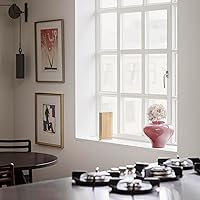
The ultra-slim 2.6-inch profile genuinely unlocks placement options that a conventional speaker cannot reach — narrow window sills, floating shelves with limited depth, and compact desks where anything wider would feel intrusive. This is one of the few speakers that can sit flush against a wall and still look intentional rather than compromised.
The corded power requirement at 230 volts ties the speaker permanently to a wall outlet, significantly reducing the free placement flexibility the slim form factor otherwise promises. There is no mounting hardware included, and B&O does not officially support wall mounting, removing a placement option that many buyers reasonably assume would be available.
Ecosystem Compatibility
59%
41%
For buyers already inside the B&O ecosystem, compatibility is genuinely cohesive — the Beosound Emerge discovers and integrates with other B&O devices on the same network without the troubleshooting that cross-brand audio setups often require. Stereo pairing between two units also works cleanly, with no noticeable synchronization lag reported by owners.
Outside the B&O family, the speaker becomes considerably less capable — there is no AirPlay 2 support, no Chromecast, and no integration with Alexa or Google Assistant. Buyers hoping to blend this speaker into an existing Sonos or Amazon Echo ecosystem will find the answer is simply: it does not work that way.

Suitable for:

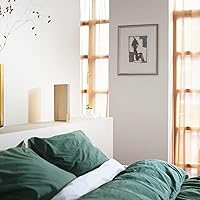
The Bang & Olufsen Beosound Emerge Bookshelf Speaker is purpose-built for buyers who treat audio equipment as part of their interior design rather than an afterthought shoved into a corner. It fits naturally into small-to-medium spaces — home offices, reading rooms, bedrooms, or compact living areas up to around 30 m² — where a full-size speaker would feel imposing but silence feels wrong. Remote workers who want rich background music during the day without cluttering their desk will find the 2.6-inch-wide profile genuinely practical and unobtrusive. Existing B&O ecosystem owners will get the most out of the multiroom capabilities, since pairing with other compatible devices is straightforward within that environment. Gift buyers will also find it hard to beat: the physical presentation, material quality, and brand recognition combine to make this one of the more genuinely impressive luxury audio gifts available.
Not suitable for:

If pure audio performance per dollar is your primary measure, the Bang & Olufsen Beosound Emerge Bookshelf Speaker will likely leave you questioning the math. At this price tier, dedicated audio brands offer speakers with considerably more headroom, stronger bass extension, and wider dynamic range in similarly sized packages — the Sonos Era 100 and Naim Mu-so Qb are worth comparing directly before committing. The laws of physics impose real limits on a 2.6-inch-wide cabinet; the rear bass port helps, but this is not a speaker that will satisfy anyone accustomed to full-range bookshelf audio. Buyers who need to fill a large open-plan room should look elsewhere, as the recommended listening area tops out at around 30 m² for a reason. If you are not already invested in the B&O ecosystem, you may also find the app experience frustrating — inconsistent connectivity is a recurring real-world complaint that deserves serious consideration before buying.
Specifications

  • Dimensions: The cabinet measures 6.5″ deep, 2.6″ wide, and 8.9″ tall — an unusually slim rectangular footprint for a bookshelf speaker in this class.
  • Weight: The unit weighs 1.35 kg (2.97 lbs), substantial enough to feel premium on a shelf but light enough to reposition without effort.
  • Output Power: Maximum amplified output is 25 watts, designed to perform optimally in small-to-medium indoor listening environments.
  • Max SPL: The speaker reaches a peak sound pressure level of 92 dB, adequate for close-to-mid-field listening at comfortable volumes.
  • Frequency Response: Audio reproduction extends up to 20,000 Hz, covering the full upper range of human hearing without a dedicated external tweeter array.
  • Woofer: A 100 mm dynamic driver handles mid and low-frequency reproduction inside the slim enclosure, assisted by a rear-facing bass port.
  • Tweeter: A 6 mm tweeter manages high-frequency detail, contributing to clarity and presence in the upper register of the audio spectrum.
  • Connectivity: The speaker supports both Bluetooth and Wi-Fi simultaneously, enabling direct device pairing alongside multiroom network streaming.
  • Bluetooth Range: Bluetooth connectivity operates reliably up to 10 meters from the paired source device under typical indoor conditions.
  • Controls: Soft-touch buttons sit discreetly on the top panel for on-device control, with full remote management available through the Bang & Olufsen app.
  • Special Features: Built-in Active Room Compensation, stereo pairing support, and multiroom audio expand the speaker well beyond single-room, single-unit use.
  • Materials: The cabinet combines anodized aluminum, woven acoustic fabric, natural oak wood, and polymer components selected for both structural and sonic properties.
  • Mounting: The speaker is designed exclusively for tabletop placement; no wall-mount bracket or official mounting hardware is included or supported.
  • Room Size: Bang & Olufsen specifies an optimal listening environment of 5 to 30 m², covering most home offices, bedrooms, and compact living spaces.
  • Power Source: The speaker is powered by corded electricity at 230 volts and does not offer any battery or portable power option.
  • Water Resistance: This unit carries no water or moisture resistance rating and is approved for indoor use only.

Related Reviews

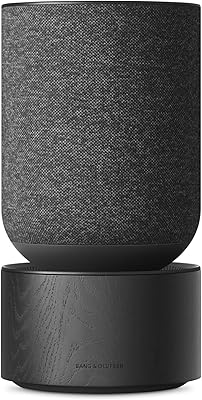
Bang & Olufsen Beosound Balance Multiroom Speaker
72%
96%
Build Quality
88%
Sound Quality
83%
Soundstage Control
97%
Design & Aesthetics
67%
App Experience
More
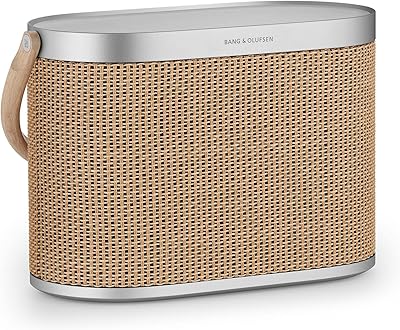
Bang & Olufsen Beosound A5 Portable Speaker
81%
91%
Sound Quality
94%
Build Quality
62%
Portability
78%
Battery Life
83%
Connectivity
More
Bang & Olufsen Beosound A1 2nd Gen Speaker
78%
91%
Sound Quality
94%
Build Quality
86%
Battery Life
88%
Portability & Size
92%
Waterproofing & Durability
More
Sanyun SW205
Sanyun SW205
78%
83%
Sound Quality
61%
Bass Performance
87%
Soundstage & Imaging
89%
Connectivity & Inputs
84%
Bluetooth Performance
More
Edifier S2000MKIII Active Bookshelf Speakers
80%
89%
Sound Quality
91%
Treble & Detail
88%
Build Quality
87%
Connectivity
76%
Value for Money
More
Probox BT16 Bookshelf Speakers
75%
78%
Sound Clarity
54%
Bass Performance
84%
Bluetooth Stability
82%
USB DAC Quality
63%
Build Quality
More
KEF Q150 Bookshelf Speakers
77%
93%
Sound Staging
91%
Vocal & Midrange Clarity
62%
Bass Performance
67%
Amplifier Compatibility
84%
Treble Smoothness
More
MEVOSTO DS19 Bookshelf Speakers
80%
83%
Sound Quality
79%
Bass Performance
91%
Connectivity & Input Options
86%
Bluetooth Performance
88%
USB Digital Audio
More
Fluance XL8SW Bookshelf Speakers
87%
90%
Sound Quality
84%
Bass Response
91%
Clarity of Midrange
87%
Ease of Installation
88%
Design & Build Quality
More
Micca MB42X Bookshelf Speakers
81%
88%
Sound Quality
71%
Bass Performance
86%
Treble Clarity
84%
Midrange Accuracy
91%
Crossover Engineering
More

FAQ

Bluetooth works completely independently — you can pair it directly to a phone, tablet, or laptop and start playing without any network connection. Wi-Fi is only needed if you want to use multiroom audio or control the speaker through the B&O app across your home network. For straightforward personal listening, Wi-Fi is entirely optional.

In a small-to-medium room up to around 25–30 m², it gets comfortably loud without audible distortion. A typical home office, bedroom, or compact sitting room is the ideal environment. If you have a large open-plan space, the 25W output may start to feel thin at higher volumes, so it is worth being realistic about the room you are buying it for.

Yes, stereo pairing is a supported feature. Two units can be linked through the B&O app, with one assigned as the left channel and one as the right. It works wirelessly, so there are no speaker cables to run between them — a clean solution if you want a dedicated stereo pair.

Via Bluetooth, it works with any app that streams audio from a phone or tablet — Spotify, Apple Music, Tidal, YouTube Music, and others all work without any extra configuration. Native Wi-Fi streaming integration depends on the B&O app and can vary by region or service, so it is worth checking current compatibility on the B&O website before purchasing if a specific platform matters to you.

Those complaints are legitimate and worth taking seriously. The app functions well most of the time, but a notable portion of real-world owners have reported dropped connections, sluggish responses, and occasional unresponsiveness — particularly following firmware updates. It is not a dealbreaker for the majority of users, but if app-based control is central to how you plan to use the speaker, go in with measured expectations rather than assuming it will be flawless.

Unfortunately, no. The multiroom feature is built around the B&O ecosystem and does not natively communicate with speakers from other manufacturers. If you have a mixed-brand setup, Bluetooth streaming from a phone is a workable alternative, but the seamless whole-home audio experience the product is marketed for only applies when all speakers in the network are B&O devices.

Most owners are genuinely surprised by how much low end the speaker produces given how narrow the cabinet is — the rear-facing bass port does meaningful work. That said, be realistic: this is not a speaker that will satisfy anyone accustomed to a dedicated subwoofer or a traditional ported bookshelf unit. For background listening, casual music, and podcast audio at moderate volumes, it sounds considerably fuller than it looks.

Setup is one of the areas where the Bang & Olufsen Beosound Emerge Bookshelf Speaker consistently earns genuine praise from owners. Unboxing and powering it up takes only a few minutes, and the app guides you through Wi-Fi configuration clearly. Most users describe the out-of-box experience as refreshingly simple compared to other smart speakers in this category.
None of the three are natively supported. The speaker has no built-in microphone, so hands-free voice commands are not possible at all. AirPlay 2 is not included either — Apple devices can stream via Bluetooth, but not through AirPlay. If voice assistant integration or AirPlay is important to your workflow, this is a meaningful gap that could influence your decision.

The Sonos Era 100 offers a more mature app ecosystem, broader streaming platform integration, and arguably stronger bass output for its size — it is the more rational choice if audio performance per dollar is your benchmark. The Beosound Emerge counters with superior materials, a far more distinctive visual design, and the prestige of a heritage Scandinavian audio brand. If you want a speaker that earns compliments as a design object while still sounding excellent, the B&O argument is easy to make; if you want the most capable smart speaker for the money, Sonos is the harder case to argue against.

Where to Buy