Overview

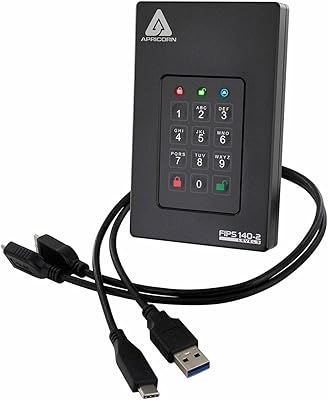
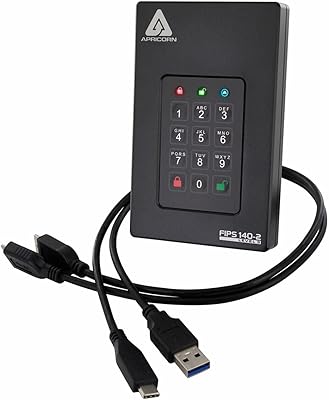
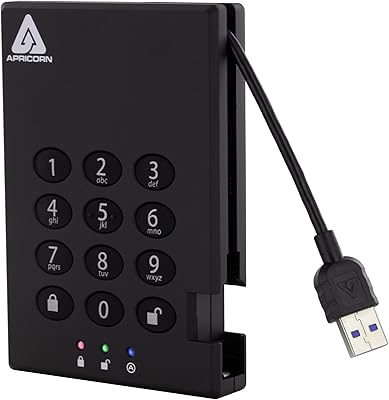
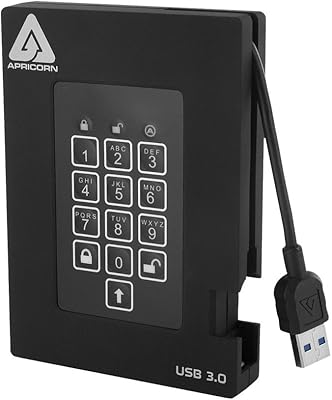
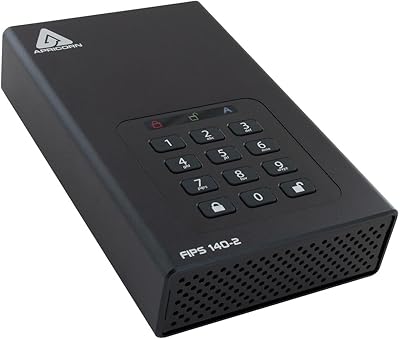
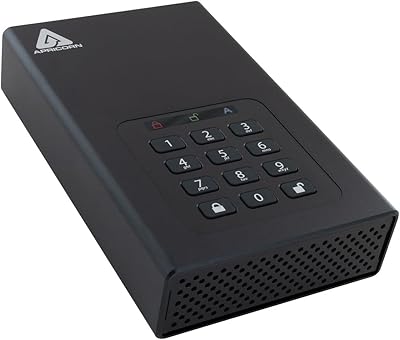
The Apricorn Aegis Fortress L3 4TB Encrypted Portable Drive is a professional-grade storage solution built from the ground up for one purpose: keeping sensitive data out of the wrong hands. Unlike software-based encryption tools that can be bypassed or disabled, this encrypted portable drive bakes protection directly into the hardware — meaning the drive is always encrypted, regardless of which operating system or machine you plug it into. The headline credential here is FIPS 140-2 Level 3 certification, a government-recognized standard that covers both cryptographic strength and physical tamper resistance. At 4TB, the capacity is genuinely substantial for a drive in this security class. Just know going in — this is a compliance tool first, a storage device second.
Features & Benefits

The security architecture behind the Aegis Fortress L3 is thorough in ways that matter for real-world use. 256-bit AES XTS encryption runs entirely in hardware, so there is no driver to install, no software that can be uninstalled or corrupted, and no OS dependency whatsoever. The FIPS Level 3 validation goes beyond encryption strength — it requires physical tamper-evidence mechanisms, meaning the drive is designed to show signs of interference or self-protect if someone tries to crack it open. Administrators get dedicated Admin and User modes, enabling precise access control across teams. Two Read-Only modes are genuinely useful in forensic or audit scenarios. And if someone attempts repeated wrong PIN entries, brute-force auto-wipe kicks in automatically to protect the data.

Best For

This FIPS-validated drive was designed with a specific buyer in mind, and that specificity is actually its strength. Government contractors, defense-sector employees, and anyone operating under ITAR or HIPAA requirements will find this drive fits directly into existing compliance frameworks without extra configuration. IT administrators managing shared sensitive data across multiple staff members benefit from the Admin and User mode separation — a practical feature that most encrypted drives skip entirely. Legal professionals, healthcare organizations, and financial firms that regularly move confidential data outside secure office environments are squarely in the target audience. Security-focused researchers and journalists round out the picture. If your storage needs are purely personal or casual, this drive is almost certainly more than you need.

User Feedback

With a 4.4-star average across 76 verified reviews, the Aegis Fortress L3 holds up well for a niche security product where buyers tend to be both demanding and technically informed. Users consistently praise the straightforward PIN setup and reliable cross-platform compatibility across PC, Mac, and Linux systems. Where criticism appears, it clusters around two areas: transfer speed and price. The 5400 RPM mechanical disk is noticeably slower than SSD-based alternatives at a comparable price tier, and users who prioritize throughput will feel that trade-off. The price is high, and buyers know it — but most frame it as a compliance investment rather than a commodity storage purchase. Against rivals like Kingston IronKey, durability feedback leans favorable.

Pros

  • Hardware encryption is always active — no software to install, forget, or accidentally disable.
  • FIPS 140-2 Level 3 certification is rare at this form factor and directly satisfies many government and enterprise compliance mandates.
  • Brute-force auto-wipe gives genuine peace of mind if the drive is ever lost or stolen.
  • Separate Admin and User modes make shared team deployments practical without sacrificing security control.
  • Two Read-Only modes are a thoughtful addition for forensic workflows and audit scenarios.
  • Works across PC, Mac, Linux, and embedded systems without any driver installation.
  • 4TB capacity is generous for an encrypted portable drive in this security class.
  • Solid 4.4-star rating from a technically demanding buyer base speaks to real-world reliability.
  • Users consistently report straightforward PIN setup despite the drive's advanced security architecture.
  • Favorably compared to rivals like Kingston IronKey in terms of build durability.

Cons

  • The 5400 RPM mechanical disk makes transfer speeds noticeably slower than SSD alternatives at a comparable price.
  • The price is a significant barrier — this is an investment that only makes sense when compliance is a hard requirement.
  • No SSD option in this model means speed-sensitive workflows will hit a ceiling regardless of the USB 3.0 interface.
  • The PIN-based access system adds a management layer that some users may find cumbersome day-to-day.
  • With 76 total ratings, the review pool is relatively small, making it harder to gauge long-term reliability trends.
  • Mechanical drives carry a higher risk of failure from drops or vibration compared to solid-state alternatives.
  • The Admin and User mode structure, while powerful, requires upfront configuration that casual users may find unintuitive.
  • Color and aesthetic options are essentially nonexistent — a minor gripe, but worth noting for branded deployments.

Ratings

The scores below reflect our AI-driven analysis of verified global buyer reviews for the Apricorn Aegis Fortress L3 4TB Encrypted Portable Drive, with spam, bot-generated, and incentivized feedback actively filtered out before scoring. Each category is weighted against real-world usage patterns reported by professionals in government, healthcare, legal, and IT environments. Both the standout strengths and the genuine frustrations are reflected honestly — nothing is glossed over.

Encryption Reliability
96%
Buyers who depend on this drive for regulated data transport consistently report zero encryption failures across extended daily use. The always-on hardware encryption gives professionals in defense and healthcare environments the confidence that protection is never accidentally disabled or bypassed — unlike software-based alternatives.
A small number of technically advanced users noted that the encryption implementation, while certified, is not independently auditable by end users, which matters in certain high-assurance environments. This is more of a philosophical limitation than a practical failure, but worth noting for the most security-critical deployments.
Security Certification
93%
The FIPS 140-2 Level 3 validation is the headline feature that most buyers specifically sought out, and reviewers confirm it satisfies compliance requirements for ITAR, HIPAA, and government contract work without additional configuration. For IT procurement teams, having a certified drive that clears compliance audits without extra documentation overhead is a meaningful time-saver.
Some buyers operating under newer or more stringent frameworks noted that FIPS 140-2 is beginning to show its age as the industry moves toward FIPS 140-3, and a future certification upgrade would extend the drive's compliance shelf life. This is not a current disqualifier, but forward-looking procurement teams should keep it on their radar.
Access Control & Admin Features
88%
IT administrators particularly appreciate the ability to set separate Admin and User PINs, which allows them to manage drive policies and recover user access without wiping data — a genuinely practical feature for team deployments. The two Read-Only modes add another layer of workflow control that reviewers in forensic and audit roles called indispensable.
Initial setup of Admin and User modes requires reading the manual carefully, and a handful of reviewers found the onboarding process less intuitive than expected for first-time users of hardware-encrypted drives. Organizations deploying multiple units at scale may want to build in extra setup time during rollout.
Brute-Force Protection
91%
Reviewers who specifically evaluated this drive against physical theft scenarios praised the auto-wipe mechanism as one of the most reliable they had tested, with the drive responding exactly as documented under repeated failed PIN attempts. Security professionals noted that this feature alone justifies the drive for fieldwork situations where physical loss is a realistic risk.
The irreversibility of the auto-wipe is a genuine double-edged sword — buyers who forgot their PIN and exceeded the attempt limit reported total data loss with no recovery path. A few users suggested a secondary recovery mechanism, though most security-minded reviewers acknowledged that any such backdoor would undermine the drive's core value.
Transfer Speed
54%
46%
For document-heavy workloads — transferring case files, compliance records, or database exports — the USB 3.0 interface provides adequate throughput for most day-to-day professional tasks. Users who are not regularly moving multi-gigabyte files report that the speed is acceptable for their workflows.
The 5,400 RPM mechanical disk is the drive's most consistently criticized aspect, with users comparing it unfavorably to SSD-based encrypted alternatives at a similar price point. Anyone regularly transferring large files — video archives, disk images, or bulk medical imaging data — will find the transfer times genuinely frustrating in a way that compounds over a full workday.
Cross-Platform Compatibility
89%
Reviewers across Windows, macOS, and Linux environments confirmed that the drive mounts and operates without any driver installation, which is a significant practical advantage in mixed-OS enterprise environments. Several IT administrators praised this specifically for deployments spanning multiple operating systems within the same organization.
A small number of Linux users on less common distributions reported minor mount inconsistencies that required manual configuration, though these cases appeared edge-case rather than systemic. Compatibility with older embedded systems was not universally confirmed by users, despite the manufacturer listing it as supported.
Build Quality & Durability
83%
Multiple reviewers drew direct favorable comparisons to the Kingston IronKey in terms of enclosure sturdiness, and the drive holds up well to the wear of daily transport in laptop bags and briefcases. The physical build inspires confidence in a category where the enclosure needs to deter tampering as much as it protects against drops.
The underlying mechanical hard disk remains a structural vulnerability regardless of how solid the enclosure feels — sustained vibration or an unlucky drop could cause internal platter damage that no enclosure design fully prevents. Users in genuinely rugged field environments may want to consider whether an SSD-based alternative offers better long-term physical resilience.
Portability
74%
26%
At roughly the size of a small paperback and weighing just over 11 ounces, the Aegis Fortress L3 fits comfortably in a coat pocket or laptop bag and travels well between office sites, court appearances, or government facilities. The compact footprint makes it practical for professionals who carry it as part of a daily kit.
At 11.2 ounces, it is noticeably heavier than portable SSD competitors, and users who prioritize minimal carry weight — particularly frequent travelers — mentioned the heft as a minor but real inconvenience over extended trips. The 2.5-inch form factor, while standard, means it is bulkier than the thumb-drive-style encrypted drives some buyers initially expected.
PIN Setup & Usability
79%
21%
Most reviewers described the initial PIN configuration as straightforward once they worked through the setup guide, and day-to-day use of the onboard keypad becomes second nature quickly. Users who regularly access the drive multiple times per day reported that the unlock routine adds only a few seconds to their workflow.
The keypad-based interface has a learning curve that a few less tech-savvy users found intimidating at first, particularly when configuring Admin versus User PINs for the first time. Some reviewers also noted that the keypad buttons feel slightly stiff compared to higher-end hardware security keys, though this did not affect functionality.
Value for Money
61%
39%
Buyers who purchased this drive specifically to satisfy a compliance mandate — government contract work, regulated healthcare data, or legal discovery workflows — generally view the price as justified given the FIPS certification and the cost of non-compliance in their industries. For those buyers, the price-to-certification ratio is difficult to match elsewhere.
For anyone outside a strict compliance context, the price is difficult to rationalize against SSD-based alternatives that offer both faster speeds and comparable encryption without the FIPS credential. Several reviewers candidly noted that the mechanical HDD internals feel incongruent with the premium price, and that a FIPS-certified SSD variant would dramatically improve the value proposition.
Storage Capacity
84%
Four terabytes is a genuinely substantial offering for a hardware-encrypted portable drive, and reviewers noted that it comfortably handles large compliance document archives, legal discovery sets, and multi-year database backups without requiring multiple drives. For organizations consolidating sensitive data onto a single portable unit, the capacity is a real advantage.
Given that the internal disk is mechanical, accessing 4TB worth of data sequentially takes meaningful time, and some users noted that the capacity advantage over smaller encrypted drives is partially offset by how long bulk transfers actually take at 5,400 RPM. A 4TB SSD alternative would make the capacity far more practical in daily use.
Software Independence
92%
Reviewers frequently highlighted the absence of any required companion software as a practical strength — there is no application to keep updated, no software license to manage, and no risk of the encryption layer failing because a software dependency broke during an OS update. This makes the drive genuinely plug-and-protect across any compliant system.
The flip side of software independence is that there is no companion app offering features like remote wipe, usage logs, or policy management — capabilities that some enterprise buyers expected and had to account for separately. Organizations wanting centralized drive management across a fleet of units will need to look at supplementary solutions.
Long-Term Reliability
77%
23%
The drive has been on the market since late 2018 and continues to maintain a strong rating, which suggests it holds up reasonably well over multi-year professional use. Reviewers who mentioned using the drive for several years reported consistent performance from the security features even as the drive aged.
Mechanical HDDs have a finite lifespan that is more predictable — and shorter — than solid-state alternatives, and a few long-term reviewers flagged concern about relying on a spinning-platter drive for mission-critical compliance storage beyond the three-to-five-year range. The encryption hardware may outlast the storage medium itself, which is a consideration for long-term deployments.

Suitable for:

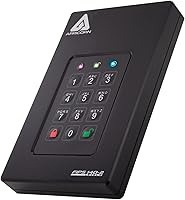
The Apricorn Aegis Fortress L3 4TB Encrypted Portable Drive was built for professionals who cannot afford to treat data security as an afterthought. Government contractors and defense-sector employees working under ITAR or similar regulatory frameworks will find it one of the few portable drives that actually meets their compliance requirements out of the box. IT administrators managing sensitive data across teams benefit from the layered Admin and User access structure, which removes the guesswork from controlling who can do what with stored data. Healthcare organizations, legal firms, and financial institutions that routinely transport confidential client files off-premises get hardware-level protection that does not depend on a user remembering to activate software. Security researchers and investigative journalists operating in high-risk environments will also appreciate a drive that protects its contents even if physically seized, thanks to tamper-evidence mechanisms built into the FIPS Level 3 standard.
Not suitable for:

If you are shopping for a general-purpose backup drive for home photos, media libraries, or everyday file transfers, the Apricorn Aegis Fortress L3 4TB Encrypted Portable Drive is almost certainly not the right fit. The price reflects a specialized compliance tool, not a commodity storage device, and paying for certifications you have no regulatory need for makes little practical sense. The mechanical hard disk spinning at 5400 RPM means transfer speeds will feel sluggish compared to portable SSDs, which makes this a poor choice for anyone moving large files frequently under time pressure. Users who want plug-and-play simplicity without any PIN management or access-tier setup may find the workflow more involved than expected. Small businesses or individual consumers without specific HIPAA, GDPR, or ITAR obligations would be better served by a simpler encrypted drive at a lower price point.
Specifications

  • Storage Capacity: The drive provides 4TB (4,000 GB) of usable storage, which is among the larger capacities available in hardware-encrypted portable drives.
  • Encryption Standard: Data is protected using 256-bit AES XTS hardware encryption, which operates at the hardware level and requires no software installation on the host system.
  • Security Certification: The drive holds FIPS 140-2 Level 3 validation, a U.S. government-recognized standard covering cryptographic strength, identity-based authentication, and physical tamper-evidence requirements.
  • Interface: Connectivity is handled via USB 3.0, providing backward compatibility with USB 2.0 ports while supporting faster transfer rates on USB 3.0-equipped systems.
  • Form Factor: The drive uses a 2.5-inch mechanical hard disk internally, housed in a compact and portable enclosure designed for field use.
  • Rotational Speed: The internal mechanical disk spins at 5,400 RPM, which is standard for portable HDDs but slower than solid-state alternatives.
  • Dimensions: The enclosure measures 4.75 x 3 x 0.9 inches, making it pocketable and easy to carry alongside a laptop or in a bag.
  • Weight: At 11.2 ounces, the drive is heavier than most portable SSDs but remains manageable for regular transport between work sites.
  • OS Compatibility: The drive works natively with Windows, macOS, Linux, and embedded operating systems without requiring any drivers or companion software.
  • Access Modes: Two distinct access tiers — Admin mode and User mode — allow IT administrators to set drive policies and manage user-level access independently.
  • Read-Only Modes: Two separate Read-Only modes are available, enabling data integrity protection during forensic analysis, audits, or controlled review workflows.
  • Brute-Force Defense: After a configurable number of consecutive incorrect PIN attempts, the drive automatically wipes its encryption key and all stored data to prevent unauthorized access.
  • Power Source: The drive is powered via the USB connection and requires one Lithium Ion battery as part of its internal security module.
  • User Rating: The drive holds a 4.4-out-of-5-star average based on 76 verified purchaser ratings on Amazon.
  • Market Rank: It ranks among the top 100 products in the External Hard Drives category on Amazon, a strong position for a specialized security device.
  • Release Date: The drive was first made available in December 2018 and has been actively sold as a compliance-grade storage solution since then.
  • Manufacturer: The drive is designed and sold by Apricorn, a U.S.-based company specializing exclusively in hardware-encrypted storage products for enterprise and government use.
  • Model Number: The official model identifier is AFL3-4TB, part of Apricorn's Aegis Fortress product line.

Related Reviews

Apricorn Aegis Fortress L3 5TB
81%
97%
Encryption Security
96%
FIPS 140-2 Level 3 Certification
89%
Build Quality & Durability
93%
Brute-Force Protection
84%
Admin & User Mode Functionality
More
Apricorn Aegis Fortress L3 1TB Encrypted Drive
79%
96%
Encryption Strength
97%
FIPS Compliance
88%
Build Quality
52%
Transfer Speed
61%
Ease of Setup
More
Apricorn Aegis Padlock 500GB USB 3.0 Encrypted Portable Hard Drive
88%
94%
Security Features
89%
Portability and Design
91%
Ease of Use
88%
Durability
95%
Encryption Setup
More
Apricorn Aegis Padlock Fortress 1TB Hard Drive
78%
96%
Hardware Encryption Strength
93%
FIPS Compliance Value
91%
Ease of Setup
89%
Physical Security Design
51%
Transfer Speed
More
Apricorn Aegis Padlock DT 10TB Hard Drive
73%
94%
Encryption Reliability
78%
PIN Authentication UX
88%
Build Quality
61%
Value for Money
59%
Transfer Speed
More
Apricorn Aegis Padlock DT 16TB Encrypted USB 3.0 Hard Drive
83%
88%
Performance
91%
Security Features
72%
Portability
89%
Ease of Setup
85%
Build Quality
More
Apricorn Aegis Secure Key 3NX 16GB Drive
80%
97%
Data Security
91%
Build Quality
83%
Ease of Setup
48%
Value for Money
78%
Authentication Experience
More
Apricorn Aegis Padlock DT 2TB Encrypted External Hard Drive
79%
96%
Hardware Encryption Strength
91%
Build Quality & Tamper Resistance
88%
PIN Access & Authentication
93%
Brute-Force Protection
84%
Admin & User Mode Flexibility
More
G-Technology G-DRIVE Mobile 4TB Portable Hard Drive
77%
93%
Build Quality
91%
Mac Compatibility
61%
Transfer Speed
88%
Portability
58%
Value for Money
More
WD 4TB Elements Portable External Hard Drive
87%
89%
Performance
94%
Portability/Size/Weight
95%
Ease of Setup
87%
Transfer Speed
92%
Value for Money
More

FAQ

Yes, completely. The encryption runs entirely within the drive's own hardware controller, so there is nothing to install on the host machine. You just plug it in, enter your PIN using the drive's onboard keypad, and it mounts like any normal external drive — on Windows, Mac, Linux, or even some embedded systems.

Once the maximum number of failed PIN attempts is reached, the Aegis Fortress L3 automatically destroys its own encryption key and wipes the drive. At that point, the stored data is unrecoverable — even by Apricorn. It is worth setting a PIN you will not forget and keeping an Admin-level backup configuration if deploying this in a team environment.

It depends on your workflow. The internal disk spins at 5,400 RPM, so sequential read and write speeds are typical of a portable HDD — workable for document access, database backups, and moderate file transfers, but noticeably slower than a portable SSD. If you are regularly moving very large files like video archives or disk images, the speed may become a frustration over time.

FIPS 140-2 is a U.S. federal standard for cryptographic hardware, and Level 3 is near the top of that scale. In practical terms, it means the drive has been independently tested to confirm both the strength of its encryption and its resistance to physical tampering — so if someone tries to crack the enclosure open to extract the storage chip, the drive is designed to detect that and protect the data accordingly. For organizations with government contracts or strict regulatory mandates, this certification is often a non-negotiable requirement.

Yes, that is one of the practical advantages of the dual Admin and User mode setup. An administrator with the Admin PIN can reset a User PIN without wiping the drive's data, which makes it far more manageable in team or enterprise deployments than single-mode encrypted drives.

The Apricorn Aegis Fortress L3 4TB Encrypted Portable Drive is widely used in environments governed by HIPAA, ITAR, GDPR, and similar frameworks, and the FIPS 140-2 Level 3 certification is a recognized qualifier under many of those mandates. That said, compliance is ultimately determined by your organization's specific policies and how the drive is deployed — so confirm with your compliance officer or legal team before treating any hardware as automatically compliant.
The drive offers two Read-Only modes that prevent any data from being written to or deleted from the drive while active. This is especially useful in forensic investigations, where evidence integrity must be preserved, or in audit scenarios where you need to share data with a third party without risking accidental modification. An administrator can set Read-Only mode at the Admin level, or a user can activate it independently within the User mode.

The enclosure is built to handle the rigors of daily professional transport, and buyer feedback generally reflects positive impressions of build quality — with several users comparing it favorably to drives like the Kingston IronKey in terms of sturdiness. That said, the internal mechanical disk is still a spinning-platter HDD, which is inherently more vulnerable to shock and vibration than a solid-state drive. If your work involves rough field conditions or frequent drops, an SSD-based encrypted drive may be a safer long-term investment.

Apricorn typically backs its Aegis product line with a manufacturer warranty — commonly three years for this class of drive — though you should confirm current warranty terms directly with Apricorn or the retailer at the time of purchase. As a company that focuses exclusively on encrypted storage, their support tends to be more technically informed than generalist hardware brands, which buyers in regulated industries tend to appreciate.

The drive uses a standard USB 3.0 Type-A connector, so you will need a USB-A to USB-C adapter if your laptop only has USB-C ports. These adapters are inexpensive and widely available, and they do not affect the drive's security or performance in any meaningful way. Just make sure the adapter supports data transfer, not just charging.

Where to Buy