Overview

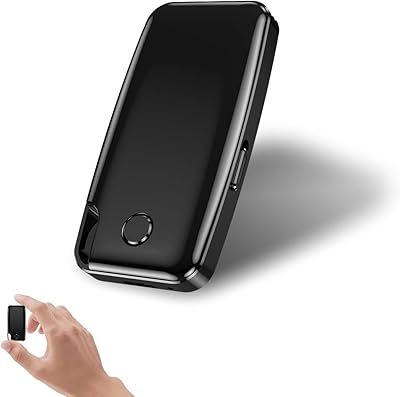
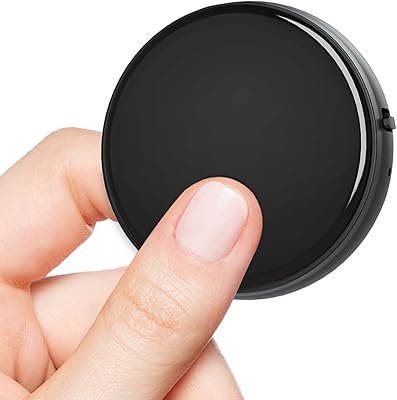
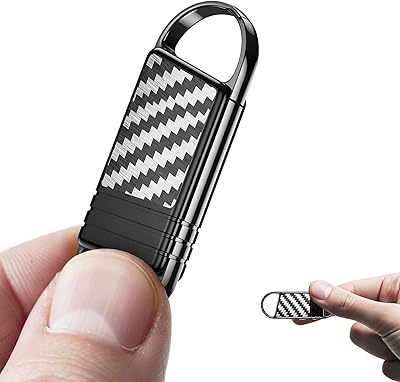
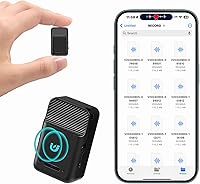
The AOTAOREC 64G Mini Voice Recorder 64GB arrived in early 2025 as a genuinely compact answer to a familiar problem: capturing audio discreetly without lugging around bulky equipment. About the size of a USB drive, it ships with a built-in magnet that lets you stick it to a car dash or metal surface in seconds. It targets students, commuters, and professionals who want reliable capture without a mid-range price tag. One thing worth knowing upfront — the packaging includes a reminder to check local recording consent laws before use, which is a responsible touch that any serious user should heed.
Features & Benefits

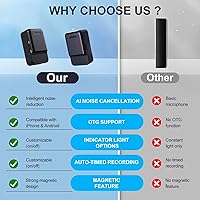
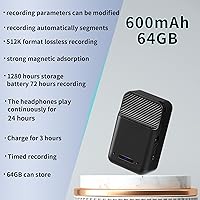
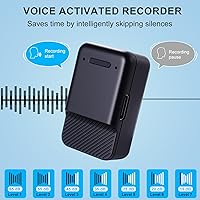
What makes this mini recorder genuinely useful day-to-day is how well its features work together rather than just looking good on a spec sheet. The voice-activated recording kicks in only when it detects sound, saving storage and sparing you from scrubbing hours of silence. Four DSP noise-reduction levels handle everything from a humming projector to a busy café. At 128kbps, the 64GB of onboard storage stretches to around 1,280 hours — months of recordings without ever needing to offload. The 72-hour battery is the headline claim, though real-world use at higher bitrates will trim that figure. USB-C recharging takes two to three hours.

Best For

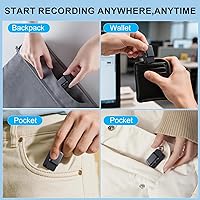
This pocket recorder makes most sense for people whose priority is capturing audio without drawing any attention. College students will find it particularly useful in large lecture halls where phones feel conspicuous and dedicated recorders look like overkill. Journalists doing field interviews benefit from the magnetic mounting — clip it to a nearby metal surface and forget about it. Commuters and sales reps can attach it to a car dash and let it run hands-free throughout the day. Remote workers who prefer an audio log over hasty typed notes will also appreciate the long runtime. Minimal setup, maximum convenience.

User Feedback

Buyers tend to agree on two things: the size is genuinely surprising, and the magnet holds firm during a full commute. Most people find file transfers over USB-C straightforward, with the device appearing as a plain drive on Windows, Mac, and Android without driver headaches. Where criticism shows up, it usually centers on microphone range in cavernous spaces — a crowded lecture hall or large conference room can push the built-in mic to its limits. A handful of users noted that voice-activation sensitivity tuning takes trial and error before it stops clipping the first word of a sentence. Battery life reports vary, with heavy users landing closer to 50 hours than 72.

Pros

  • Fits in a shirt pocket and weighs under an ounce — genuinely easy to carry everywhere without thinking about it.
  • The built-in magnet holds firmly to car dashboards and metal surfaces for truly hands-free recording.
  • Voice activation intelligently skips silent gaps, saving storage and hours of scrubbing during playback.
  • 64GB of storage means most users will go months without ever needing to offload files.
  • USB-C connectivity works with current laptops, Android phones, and adapters for iOS — no legacy cables needed.
  • DSP noise cancellation noticeably cleans up steady background hum like HVAC systems and road noise.
  • No drivers or proprietary software required — the device mounts as a plain storage drive on any major OS.
  • Recharges fully in two to three hours, making an overnight top-up more than enough for the next full day.
  • MP3 and WAV output files are universally compatible with transcription tools, media players, and editing software.
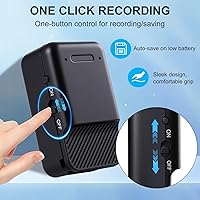
  • One-touch operation means anyone can hand it to a colleague and expect it to just work.

Cons

  • Voice-activation threshold clips the opening syllable of new utterances until sensitivity is manually fine-tuned.
  • Microphone range falls off noticeably in large or reverberant spaces beyond roughly 15 feet.
  • Actual battery runtime under continuous high-bitrate recording is closer to 45 to 55 hours, not the headline 72.
  • File naming is basic sequential numbering with no automatic date or timestamp applied to recordings.
  • No microSD expansion slot means you are permanently capped at the onboard 64GB.
  • The instruction manual is thin and poorly translated in some regional editions, making setup harder than it should be.
  • No water or splash resistance limits its usefulness for outdoor fieldwork or job-site environments.
  • The matte plastic shell picks up fine scratches quickly with daily pocket carry.
  • No companion app means there is no remote management, tagging, or cloud sync option available.
  • High noise-cancellation levels can make voices sound slightly hollow or over-processed in dynamic environments.

Ratings

The AOTAOREC 64G Mini Voice Recorder 64GB has been evaluated by our AI system after processing verified buyer reviews from global marketplaces, with spam, bot-submitted, and incentivized feedback actively filtered out. The scores below reflect a genuine cross-section of real-world experiences — from students dropping it into a shirt pocket before a morning lecture to field journalists clipping it to a dashboard for a full workday. Strengths and frustrations are weighted equally, so what you see is an honest picture, not a highlight reel.
Portability & Form Factor
94%
Buyers consistently describe genuine surprise at how small this pocket recorder is in hand. At 0.6 ounces and barely larger than a chunky USB stick, it disappears into a front pocket or slips onto a lanyard without adding any noticeable weight. For students and commuters, that near-invisible footprint is a real daily convenience.
A few users with larger hands found the controls slightly fiddly precisely because it is so compact. There is also no belt clip or lanyard hole included, so carry options beyond a pocket or bag require an optional accessory.
Magnetic Mounting
88%
The integrated magnet drew consistent praise from drivers and office workers who simply stick the recorder to a metal surface and walk away. It holds firmly on car dashboards, metal shelf brackets, and filing cabinets without any wobble during typical movement, which makes hands-free logging genuinely effortless.
It will not bond to aluminum laptop lids or non-ferrous surfaces, which caught some buyers off guard. A small number of users in colder climates also noted the magnet felt slightly weaker after extended outdoor use, though this was not a widespread complaint.
Battery Life
76%
24%
Under light to moderate use — voice-activation on, recording at 128kbps — many buyers reported multi-day runtime without needing to recharge, which covers a full week of daily commutes or several back-to-back lecture days with ease. The USB-C charging port is a welcome modern touch that keeps it compatible with most existing cable setups.
The advertised 72-hour ceiling applies to best-case conditions. Users recording continuously at 512kbps or with noise cancellation set to the highest level reported runtimes closer to 45 to 55 hours. That is still solid, but buyers should calibrate expectations against their actual usage pattern rather than the headline figure.
Audio Clarity & Microphone Quality
71%
29%
In office-sized rooms, smaller classrooms, and car interiors, the built-in microphone delivers clean, intelligible speech with noticeable reduction of steady background hum like air conditioning or projector fans. The DSP noise filtering makes a perceptible difference on levels 2 and 3 without introducing the muffling artifacts that cheaper processors often cause.
The 16kHz sampling rate is adequate for voice capture but noticeably limited if you compare it to higher-end recorders. Large lecture halls with poor acoustics or busy open-plan offices pushed the mic toward its limits, with some reviewers noting that voices at more than 15 feet sounded thin or slightly washed out.
Voice Activation Accuracy
69%
31%
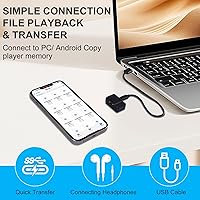
When the sensitivity is dialed in correctly, the voice-activation system works well for predictable environments like one-on-one interviews or classroom settings. It reliably ignores long pauses and saves meaningful storage, which is one of the genuinely practical differentiators of this mini recorder over basic always-on alternatives.
Getting the sensitivity threshold right takes trial and error. Multiple buyers noted that on the default setting, the recorder clipped the first syllable or two of each new utterance, which is frustrating during rapid back-and-forth conversation. Non-technical users found the adjustment process underdocumented in the included instructions.
Storage Capacity
92%
Sixty-four gigabytes of onboard storage is simply more than most buyers will ever fill under normal use. At the base bitrate, the recorder can hold over a thousand hours of audio, meaning students could record every class for an entire semester without once thinking about offloading files.
There is no microSD expansion slot, so you are locked to whatever headroom remains after your recordings accumulate. Users who record at the highest quality setting will eat through storage faster, though even at 512kbps the capacity is generous enough that this is rarely a pressing concern.
File Transfer & Connectivity
83%
USB-C connectivity makes this pocket recorder compatible with current laptops, Android phones, and desktop setups without hunting for a legacy micro-USB cable. Buyers appreciated that the device mounts as a standard storage drive across Windows, Mac, iOS via adapter, and Android, requiring no proprietary software or driver installation.
Transfer speeds are functional rather than fast — moving a large batch of WAV files took longer than some buyers expected. A handful of users on older Windows 7 machines also reported intermittent recognition issues, though this appeared to resolve itself after a reconnect.
Noise Cancellation Effectiveness
73%
27%
The four-level DSP system handles predictable, steady-state noise — HVAC systems, road noise during a commute, low-frequency hum — noticeably well. Buyers recording in cars or air-conditioned meeting rooms found levels 2 and 3 a practical sweet spot that cleaned up the audio without making voices sound processed.
Irregular or dynamic background noise — crowded cafeterias, construction nearby, overlapping conversations — exposed the limits of the processing. At level 4, some users described voices sounding slightly hollow or over-processed, suggesting the algorithm prioritizes noise reduction over tonal accuracy at its maximum setting.
Ease of Use
81%
19%
One-touch operation is legitimately simple: press to record, press to stop. No menus to navigate mid-meeting, no mode confusion. Buyers who are not particularly tech-savvy appreciated being able to hand it to a colleague or family member without any explanation needed for basic recording tasks.
The instruction manual is thin and not well translated in some regional versions, which created confusion around more nuanced settings like sensitivity adjustment and bitrate selection. A clearer quick-start guide or a downloadable PDF would address most of the early setup frustrations buyers mentioned.
Build Quality & Durability
78%
22%
The ABS plastic shell feels more solid than the price might suggest, and the magnet housing is well-integrated rather than feeling like an afterthought. Daily pocket carry for months did not produce reported cracking or button degradation in the majority of long-term reviews.
It is not water-resistant, and the matte finish picks up fine scratches relatively quickly. A few buyers noted that the single control button developed a slightly mushy feel after several months of frequent use, which is a durability concern worth tracking over a longer ownership period.
Value for Money
87%
Relative to its feature set — 64GB storage, USB-C, voice activation, DSP noise filtering, and a magnetic mount all under fifty dollars — the magnetic voice recorder lands in a strong position for buyers who need functional, no-frills audio capture. Students and occasional users in particular get an outsized return on the spend.
Power users comparing it against established brands in the eighty to one-hundred dollar range will notice real gaps in microphone fidelity and build refinement. It earns its price, but it does not punch above it, and buyers expecting near-professional audio quality may be disappointed.
Software & Playback Compatibility
79%
21%
MP3 and WAV output works natively with every major media player and transcription service buyers tested, including Otter.ai and Microsoft Word dictation. No proprietary app is required, which keeps the workflow clean and platform-agnostic regardless of whether files land on a PC, iPhone, or Android device.
There is no companion app for remote management, tagging, or cloud sync, which more organized users found limiting. File naming follows a basic sequential convention with no automatic date-stamping, meaning sorting a week of recordings requires manual renaming if you want any meaningful organization.
Heat Management
84%
Even during extended continuous recording sessions, the device stayed cool to the touch in reported use cases. Buyers who left it running in a warm car or attached to a sun-facing metal surface did not flag overheating as a concern, which speaks to the efficiency of the low-power chipset inside.
No significant heat complaints appeared in the reviewed feedback, though the sample of ultra-long-session users — think 20-plus continuous hours — was limited. This score reflects solid but not extensively stress-tested performance.
Packaging & Unboxing Experience
66%
34%
The recorder arrives ready to use with the battery partially charged, which buyers appreciated. Accessories are minimal but sufficient: a USB-C cable is included, and the unit is protected adequately for shipping without excessive plastic waste.
Several buyers felt the box and documentation looked budget-tier, which created a poor first impression that did not always match the actual device quality inside. The legal recording notice, while responsible, was also flagged by a few users as oddly prominent for what is otherwise a straightforward consumer product.

Suitable for:

The AOTAOREC 64G Mini Voice Recorder 64GB is a strong fit for anyone whose priority is discreet, low-effort audio capture in everyday environments. College students will get the most immediate value — it slips into a shirt pocket, sticks to a metal desk, and runs long enough to cover back-to-back classes without a recharge. Journalists and researchers doing field interviews will appreciate that the device draws zero attention, especially compared to propping up a phone or a larger recorder. Commuters and field sales reps can attach it magnetically to a car dashboard at the start of the day and let it handle the rest autonomously, with voice activation filtering out the quiet stretches automatically. Remote workers who need a reliable audio log of calls or brainstorming sessions — without relying on cloud recording tools — will find the 64GB of onboard storage more than sufficient for months of use. Basically, if your recording environment is a typical office, car, classroom, or meeting room and you want something that just works without a learning curve, this mini recorder covers the brief well.
Not suitable for:

The AOTAOREC 64G Mini Voice Recorder 64GB is not the right tool for buyers who need broadcast-quality or near-professional audio. The 16kHz sampling rate and built-in microphone are purpose-built for voice intelligibility, not for music, podcasting, or any scenario where tonal richness matters. Professionals who regularly record in large auditoriums, reverberant conference halls, or noisy outdoor environments may find that voices beyond roughly 15 feet sound thin and lose definition — the hardware simply was not designed for that scale. Users who want sophisticated file organization, automatic date-stamping, or a companion app for remote management will hit a wall quickly, as the device relies on basic sequential file naming with no software ecosystem around it. Anyone expecting the full advertised 72-hour runtime under heavy, continuous use at higher bitrates should also recalibrate — real-world heavy use lands noticeably shorter. And if water resistance is a requirement for outdoor fieldwork or job-site recording, this pocket recorder is not rated for that and should be passed over in favor of ruggedized alternatives.
Specifications

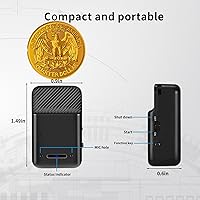
  • Dimensions: The recorder measures 1.49″ tall by 0.9″ wide by 0.6″ deep, making it roughly the size of a thick USB drive.
  • Weight: At 0.6 ounces, the unit is light enough to carry all day in a shirt pocket without any noticeable bulk.
  • Body Material: The housing is constructed from ABS plastic with an integrated ferromagnetic magnet embedded in the rear panel.
  • Battery: A built-in 600mAh lithium-ion cell powers the device, with a manufacturer-rated maximum runtime of up to 72 hours.
  • Charging: The recorder charges via USB-C and reaches a full charge in approximately 2 to 3 hours from a standard USB power source.
  • Storage: 64GB of onboard flash memory is built directly into the device, with no microSD expansion slot available.
  • Recording Capacity: At the lowest quality setting of 128kbps, the 64GB storage accommodates approximately 1,280 hours of recorded audio.
  • Audio Formats: The device records and plays back audio in both MP3 and WAV file formats, selectable before recording begins.
  • Bitrate Options: Users can choose from three recording quality levels: 128kbps, 256kbps, and 512kbps, depending on the clarity required.
  • Sampling Rate: The built-in microphone captures audio at a 16kHz sampling rate, which is optimized for speech intelligibility rather than musical fidelity.
  • Signal-to-Noise Ratio: The microphone circuit achieves a signal-to-noise ratio of 80dB or above under standard operating conditions.
  • Noise Reduction: A DSP-based noise cancellation system offers four adjustable levels, targeting steady background sounds such as HVAC hum, fan noise, and ambient crowd noise.
  • Voice Activation: The voice-activated recording feature starts and stops the recorder automatically when sound is detected, with sensitivity adjustable across multiple threshold settings.
  • Connectivity: Files are transferred to a computer or smartphone via a USB-C port, which also functions as the charging interface.
  • OS Compatibility: The device is compatible with Windows XP through Windows 10, iOS (via adapter), Linux, and Android operating systems without requiring driver installation.
  • Mounting: An integrated rear magnet allows the recorder to attach directly to ferromagnetic metal surfaces such as car dashboards, filing cabinets, and metal desk frames.
  • Headphone Output: A USB-C port doubles as the headphone output interface, so a USB-C to 3.5mm adapter is required for standard wired headphones.
  • Color: The recorder is available in matte black as the standard finish.

Related Reviews

Run_kkarrr 59-64 64GB Voice Recorder
73%
88%
Battery Life
91%
Storage Value
67%
Audio Clarity
63%
Voice-Activated Recording (VAR)
74%
Ease of Use
More
Yegolito U46 64GB Voice Recorder
80%
83%
Audio Clarity (Quiet Environments)
67%
Noise Reduction Performance
89%
Battery Life
71%
VOR (Voice Activated Recording) Reliability
86%
Storage & File Management
More
COHANA GL-37 128GB Voice Recorder
76%
74%
Audio Clarity
61%
Noise Cancellation Performance
88%
Magnetic Mount Usability
78%
Voice Activation Accuracy
93%
Storage & Capacity
More
Plaud NotePin
Plaud NotePin
78%
78%
Transcription Accuracy
82%
AI Summarization Quality
84%
Wearability & Form Factor
86%
Battery Life
61%
Value for Money
More
Amazebra AI Voice Recorder 64GB
86%
91%
Transcription Accuracy
88%
Real-Time Translation
93%
Battery Life
90%
Portability
92%
Data Security
More
WearHome 64GB Bluetooth Voice Recorder
73%
88%
Battery Life
91%
Storage Capacity
61%
Bluetooth Call Recording
74%
Audio Clarity
83%
Value for Money
More
EVIDA 64GB Digital Voice Recorder
84%
88%
Recording Quality
79%
Battery Life
91%
Ease of Use
70%
Voice Activation Functionality
85%
Noise Reduction Performance
More
ZIPCIDE 64GB Digital Voice Recorder
84%
85%
Audio Quality
92%
Battery Life
88%
Noise Reduction Effectiveness
90%
Portability
65%
Voice Activation Sensitivity
More
TTQ Chime Note AI Voice Recorder 64GB
74%
78%
Transcription Accuracy
91%
Battery Life
74%
AI Summary Quality
58%
App Stability & Reliability
82%
Audio Recording Quality
More
Xelarvex 64GB Voice Recorder
77%
83%
Audio Clarity
71%
Noise Cancellation
91%
Battery Life
78%
Voice-Activated Recording
94%
Storage & Capacity
More

FAQ

It depends on how you set the sensitivity. At lower sensitivity levels, the recorder waits for a reasonably clear sound before triggering, which works well in moderately quiet spaces like offices or smaller classrooms. In a genuinely noisy room — a busy café or a crowded hall — you may find it triggers almost continuously, effectively making it behave like a standard always-on recorder. Setting level 2 or 3 tends to be the practical sweet spot for most indoor environments.

Plug the recorder into your computer or Android phone using a USB-C cable and it will appear as a standard USB storage drive — no software installation needed. On a Mac or PC, just drag and drop the MP3 or WAV files to wherever you want them. For iPhone, you will need a USB-C to Lightning or USB-C adapter, and then a file manager app to access the drive contents.

Yes, for typical driving conditions it holds firmly on a metal dashboard surface or a metal bracket without sliding or dropping. That said, it will not bond to aluminum or plastic dash panels since the magnet needs a ferrous metal surface to grip. If your dashboard is plastic, a small metal plate or adhesive metal disc can solve that easily.

For a standard lecture in a small to medium classroom, clarity is good — voices come through cleanly and the noise cancellation handles projector hum or air conditioning without much trouble. In a large auditorium where you are more than 15 feet from the speaker, quality drops noticeably and voices can sound thin. It is perfectly adequate for note-taking purposes, but do not expect the kind of clarity you would get from a dedicated conference microphone.

Not directly with a standard 3.5mm headphone plug — the device uses USB-C for both data transfer and audio output, so you would need a USB-C to 3.5mm adapter. Most users find it simpler to transfer the files to their phone or laptop and listen there, which avoids the adapter step entirely.

The 72-hour ceiling applies to light use with voice activation enabled and recording at 128kbps — conditions that reduce how often and how hard the recorder is working. If you record continuously at 512kbps with noise cancellation on, expect somewhere closer to 45 to 55 hours. For daily commute or lecture use with voice activation doing its job, most people find a single charge comfortably covers a full week before needing to plug in.

That depends on where you are and the context. Recording laws vary significantly by country, state, and province — some require all parties in a conversation to consent, while others only require one party to be aware. The AOTAOREC 64G Mini Voice Recorder 64GB even includes a reminder about this in its packaging, which is worth taking seriously. When in doubt, checking your local laws or disclosing that you are recording is always the safer approach.
It is genuinely plug-and-play. When you connect it via USB-C, it appears as a removable storage drive on Windows, Mac, Linux, and Android with no drivers or apps required. The only exception is iOS, where you need both a USB-C adapter and a third-party file manager app to browse the drive contents.

Not directly — the recorder uses its built-in microphone, so it captures ambient sound in the room rather than audio from your device speakers or headphone output. For an in-person meeting or a speakerphone call played out loud, placing the recorder nearby works reasonably well. For capturing a video call where audio is playing through your laptop speakers, results are mixed and depend heavily on speaker volume and room acoustics.

The device has an LED indicator that signals low battery status — typically a flashing red light when the charge drops to a critical level. It is a good habit to check the indicator before a long session rather than relying on mid-session warnings, especially if you are using it in a bag or attached to a surface where the light is not visible. Charging it every few days during regular use essentially eliminates the risk of it dying unexpectedly.