Overview

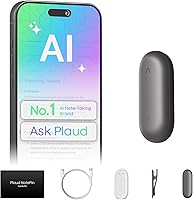
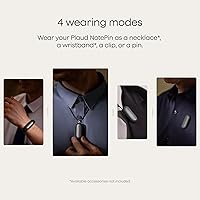
The Plaud NotePin is a wearable AI-powered voice recorder built for professionals and students who want to capture conversations without fumbling with a phone. It clips onto clothing or pins like a badge — two wearing modes that set it apart from any recorder sitting on a desk. At just 16.6 grams, you barely notice it is there, and one-press recording keeps things friction-free. The companion app handles transcription, summarization, and even mind maps via cloud-based AI. That said, the hardware is really just the entry point — how much value you extract depends heavily on how you engage with the subscription features.

Features & Benefits

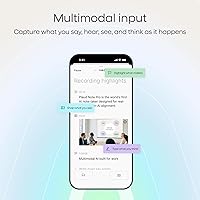
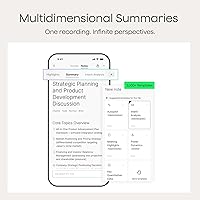
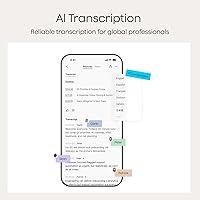
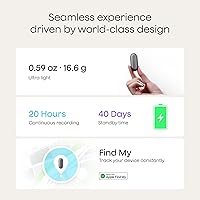
With 64GB of onboard storage and WAV recording, audio quality is solid enough that the transcription AI has plenty to work with. The battery runs up to 20 hours continuously — enough to cover a full day of lectures or back-to-back calls without a recharge. Transcription draws on multiple large language models including GPT-4o, Claude, and Gemini, supporting 112 languages. Beyond raw text, the app generates summaries, mind maps, and to-do lists automatically. Built-in noise cancellation helps in moderately noisy spaces, and Apple Find My support is a genuinely practical touch — small wearable clips have a habit of disappearing.

Best For

This AI recorder is a strong fit for professionals who sit through long meetings and need structured notes waiting for them afterward — no laptop required, no manual effort. Students covering dense lectures will appreciate the summarization output, which cuts review time considerably. It is also a reasonable option for multilingual teams; the cross-language transcription coverage is broad enough for most international use cases. That said, this wearable notetaker works best for people already comfortable in an app-driven workflow. If you prefer fully offline tools or resist cloud dependency, the value proposition narrows significantly.

User Feedback

Buyers using this AI recorder in controlled environments — offices, classrooms, small meeting rooms — are generally satisfied with transcription accuracy. The free tier's 300 minutes per month is enough to evaluate the tool honestly, but many users hit that ceiling fast and are caught off guard by the subscription cost layered on top of the hardware price. The magnetic pin holds reliably on thicker fabrics like blazers but reportedly loses grip on lightweight or silky materials. Some buyers also flag occasional Bluetooth pairing hiccups and app sync lags. Overall sentiment leans positive, though a recurring note is that the NotePin's total ownership cost runs higher than the box price implies.

Pros

  • Twenty hours of continuous recording handles even the longest conference days without a recharge stop.
  • WAV audio format ensures the source file quality is high enough to support accurate AI transcription.
  • Automatic summaries and to-do lists mean useful output is ready shortly after a meeting ends.
  • At under 17 grams, this wearable notetaker is light enough to forget you are wearing it.
  • One-press recording keeps operation simple — no menus to navigate mid-conversation.
  • Multi-model AI backend draws on GPT-4o, Claude, and Gemini for more robust transcription results.
  • Apple Find My support adds a practical safety net for a small device that is easy to misplace.
  • 64GB of onboard storage means local files accumulate without forcing frequent manual transfers.
  • The free 300-minute monthly plan lets new users properly evaluate the tool before committing to a subscription.
  • Mind map generation is a genuinely useful bonus for users who process information visually.

Cons

  • The subscription cost added to the hardware price makes total ownership significantly more expensive than it first appears.
  • Transcription accuracy drops in noisy rooms, with heavy accents, or when multiple speakers talk simultaneously.
  • The magnetic clip loses grip on thin or silky fabrics, which is a real reliability issue for a recording device.
  • Cloud-dependent AI processing is a non-starter for anyone working with confidential or regulated information.
  • Bluetooth pairing issues and app sync delays are recurring complaints that disrupt an otherwise smooth workflow.
  • The charging dock is a separate item to remember — there is no direct cable charging without it.
  • Android users get no location-tracking equivalent to the Apple Find My integration.
  • Advanced features like custom templates and Ask AI are locked behind the paid Pro tier.
  • App stability has been inconsistent across firmware updates, occasionally breaking features that previously worked.
  • Heavy daily users will likely exceed the free tier quickly, making the subscription effectively mandatory.

Ratings

The Plaud NotePin scores below are generated by our AI system after analyzing verified global buyer reviews, actively filtering out incentivized, bot-submitted, and low-quality feedback to surface what real users actually experience. From daily professional use to student lecture halls, both the standout strengths and the recurring frustrations are reflected honestly here. Scores are calibrated to show where this wearable notetaker genuinely earns its price — and where it falls short of expectations.

Transcription Accuracy
78%
22%
In quiet offices, small meeting rooms, and one-on-one conversations, users report impressively clean transcripts with minimal correction needed. The multi-model AI backend — drawing on GPT-4o, Claude, and Gemini — gives it a meaningful edge over single-engine competitors for structured speech.
Accuracy drops noticeably in louder environments like open-plan offices, cafeterias, or conference rooms with overlapping speakers. Heavy accents and fast-paced multilingual conversations also trip it up more than the marketing suggests, which frustrates users who bought it specifically for those scenarios.
AI Summarization Quality
82%
18%
The auto-generated summaries and to-do lists save real time for professionals who sit through hour-long meetings — most users say the output is actionable enough to use with light editing rather than a full rewrite. Mind map generation is a surprisingly useful bonus for visual thinkers.
Summaries occasionally miss nuanced context or conflate separate agenda items, particularly in long or wide-ranging discussions. Users who need verbatim precision alongside a summary sometimes find themselves cross-referencing the raw transcript more than they expected.
Wearability & Form Factor
84%
At just 16.6 grams, the NotePin is genuinely unobtrusive — most wearers report forgetting it is clipped on within minutes. The dual-mode design works well on structured garments like blazers, button-downs, and jacket lapels where the magnetic pin grips firmly.
The magnetic clip loses reliability on thin, silky, or loosely woven fabrics, and a few users report it detaching without noticing — which is a real problem for a recording device. Those who wear it primarily on casual clothing find the clip option more practical but less discreet.
Battery Life
86%
Twenty hours of continuous recording is a legitimate all-day claim — users covering full conference days or extended lecture blocks consistently report getting through without a mid-session recharge. The battery holds up well even after several months of regular use, according to longer-term reviewers.
The 270mAh cell is not user-replaceable, and there is no pass-through charging, meaning the device needs to be docked to charge rather than used simultaneously. Heavy daily users who forget to dock overnight occasionally find themselves starting the morning with a depleted recorder.
Value for Money
61%
39%
The hardware itself is well-built for the price tier, and the 300 free transcription minutes per month is enough to genuinely evaluate the product before committing to a paid tier. For users who stay within the free ceiling, the total cost picture looks reasonable.
Once you factor in the Pro subscription — needed for 1,200 minutes per month and advanced features — the annual cost climbs substantially on top of the hardware price. Many buyers report feeling the subscription was undersold at purchase, and the combined cost is hard to justify unless you are a very active daily user.
App Experience
69%
31%
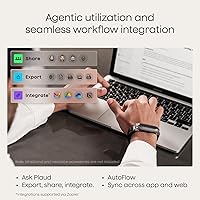
The companion app is clean and reasonably intuitive for first-time setup, and the cloud sync means transcripts are accessible across devices without manually transferring files. The web interface is a useful addition for users who prefer reviewing notes on a desktop.
Bluetooth pairing hiccups and occasional sync delays are recurring complaints — some users report the app failing to detect the device on the first connection attempt, requiring a restart. App update stability has also been inconsistent, with a few firmware pushes temporarily breaking features that worked fine before.
Audio Recording Quality
83%
WAV recording with built-in AI noise cancellation produces clean source audio in controlled environments, giving the transcription engine solid material to work from. Users recording solo speakers or small group conversations are generally pleased with the raw audio fidelity.
The single built-in microphone struggles with directional capture in larger spaces, and background noise that the cancellation does not fully suppress tends to compound transcription errors downstream. It is not a substitute for a dedicated multi-microphone recording setup in acoustically challenging rooms.
Language Support
81%
19%
112-language coverage is genuinely broad, and multilingual users in European and Asian markets report solid transcription quality for major languages including Spanish, French, German, Japanese, and Mandarin in standard speech conditions. This makes it a credible option for international teams.
Minority languages and regional dialects within supported languages show inconsistent accuracy, and mixing two languages within a single recording — common in multilingual workplaces — can confuse the model and produce garbled output. Users in those environments should test thoroughly before relying on it.
Setup & Ease of Use
88%
One-press operation is as straightforward as advertised — there is almost no learning curve for the recording hardware itself. Pairing with a smartphone and activating the account takes under ten minutes for most users, and the onboarding flow is clear enough for non-technical buyers.
Advanced features like custom templates and Ask AI require navigating deeper into the app, where the UX becomes less polished. New users sometimes struggle to find where specific settings or export options live, particularly on the first few uses.
Build Quality & Durability
79%
21%
The device feels premium for its size — the casing is solid without any flex or rattle, and the charging dock connection is snug and reliable. Users who have carried it daily for several months report no cosmetic degradation beyond normal wear.
There is no water or dust resistance rating, which is a notable gap for something worn on clothing in variable environments. A few users report the USB-C charging port becoming slightly loose over extended use, though this appears to be an outlier rather than a widespread issue.
Privacy & Data Security
77%
23%
Encrypted local and cloud storage with user-controlled processing authorization is a credible privacy posture, and the device does not transmit audio without explicit action. For users in professional environments with basic confidentiality requirements, the setup is adequate.
The reliance on cloud AI processing means sensitive conversations are leaving the device, which is a non-starter for legal, medical, or executive use cases with strict data governance requirements. The privacy policy language, while reasonable, is still subject to the terms of third-party AI providers.
Portability
91%
This is where the NotePin genuinely stands out from the competition — slipping it into a shirt pocket or attaching it before walking into a meeting takes seconds. It travels well and adds essentially no bulk to a laptop bag or jacket.
The charging dock is an additional item to pack when traveling, and unlike a device that charges over a standard cable without a proprietary cradle, forgetting the dock means the recorder is unusable once drained. A minor but real inconvenience for frequent travelers.
Subscription Model Transparency
53%
47%
The existence of a free tier with 300 minutes per month does give new users meaningful access before spending more, and the Pro plan's feature set — including custom templates and extended minutes — is clearly documented on the product page for those who look closely.
The subscription cost is consistently flagged by buyers as a surprise after purchase, suggesting it is not prominent enough in the pre-sale experience. The perception that you are paying premium hardware pricing for what is essentially a subscription-dependent service frustrates a meaningful portion of buyers.
Find My Integration
74%
26%
Apple Find My support is a thoughtful inclusion for a wearable accessory that is easy to leave behind after a long day of meetings. Users who already rely on Find My for AirTags and AirPods find the integration familiar and functional.
Find My is Apple-only, leaving Android users without any equivalent location fallback. Given that the device supports both iOS and Android, the absence of a Google Find My Device equivalent feels like an unfinished feature parity gap.

Suitable for:

The Plaud NotePin is a strong match for professionals who spend a meaningful chunk of their workday in meetings and want structured notes waiting for them afterward — without typing a word or opening a laptop. Consultants, managers, journalists, and researchers who regularly conduct interviews or sit through lengthy briefings will get the most consistent return from this AI recorder. Students in lecture-heavy programs — law, medicine, business — will also find real value in the automatic summarization, which can cut post-class review time significantly. Multilingual teams or anyone working across language barriers benefit from the 112-language transcription coverage, provided conversations happen in controlled acoustic environments. The free tier offers 300 transcription minutes per month, which is enough to run a genuine trial before deciding whether the Pro plan makes financial sense for your workflow. People who are already comfortable with cloud-based AI productivity tools will slot this wearable notetaker into their setup with minimal friction.

Not suitable for:

Buyers who work in legally sensitive, medically confidential, or executive-level environments where audio cannot leave a secured local device should be cautious — this AI recorder routes audio through cloud-based AI models for processing, which is a hard stop for many compliance-driven roles. Anyone expecting offline functionality or fully on-device transcription will be disappointed, as the smart features are entirely dependent on an internet connection and the companion app. The subscription cost layered on top of the hardware price makes the Plaud NotePin a harder sell for occasional users — if you record fewer than a few hours per week, the math simply does not work out well. Users who primarily wear lightweight, silky, or loosely woven clothing may find the magnetic clip unreliable in practice. And if your recording environment is noisy — open offices, busy cafes, large conference rooms with multiple overlapping speakers — the transcription accuracy will fall short of what the product page implies, making it a poor fit for those specific conditions.

Specifications

  • Dimensions: The device measures 6.38 x 5.55 x 0.75 inches, making it compact enough to clip onto a lapel without drawing attention.
  • Weight: At 16.6g (0.586 oz), the recorder is light enough to wear all day without noticeable discomfort.
  • Battery: A 270mAh built-in battery supports up to 20 hours of continuous audio recording on a single charge.
  • Storage: 64GB of onboard storage is included for local WAV file retention without relying solely on cloud backup.
  • Audio Format: All recordings are captured in WAV format, preserving high-fidelity source audio for accurate downstream transcription.
  • Connectivity: Bluetooth 5 is used to sync recordings and communicate with the companion smartphone app.
  • Wearing Modes: The device supports two attachment methods: a magnetic pin for badge-style wear and a clip for clothing attachment.
  • Microphone: A built-in microphone with AI-powered noise cancellation and audio enhancement is used for all recordings.
  • Languages: The transcription engine supports 112 languages, powered by a multi-model AI backend.
  • AI Models: Transcription and summarization draw on GPT-4o, Claude, Gemini 2.5 Pro, and o3-mini depending on the task.
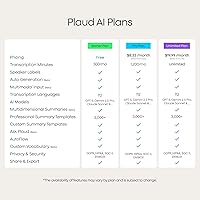
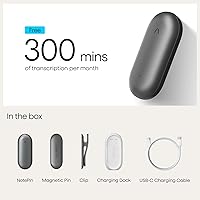
  • Free Plan: All activated devices receive 300 AI transcription minutes per month at no additional cost.
  • Pro Plan: The paid Pro tier provides 1,200 transcription minutes per month plus custom templates and Ask AI functionality, priced at $99 per year or $17.99 per month.
  • Charging: The device charges via USB-C using the included dock; direct cable charging without the dock is not supported.
  • Compatibility: The companion app is compatible with both iOS and Android smartphones via Bluetooth pairing.
  • Find My: Apple Find My is supported, allowing the device to be located through the standard Apple ecosystem tracking network.
  • Output Types: Beyond raw transcripts, the app generates summaries, mind maps, and to-do lists automatically from recorded audio.
  • In the Box: Each unit includes the NotePin recorder, a magnetic clip, a charging dock, and a USB-C charging cable.
  • Manufacturer: The device is manufactured by Shenzhen Smart Connect Technology Co., Ltd., based in China.

Related Reviews

FAQ

The hardware works out of the box for basic recording, but the AI features — transcription, summarization, mind maps — require the companion app and at least the free plan. Every activated device gets 300 transcription minutes per month at no charge, which is enough for light use. If you need more than that, the Pro plan is a separate ongoing cost on top of what you paid for the device, so factor that in before buying.

In a quiet room with one or two clear speakers, accuracy is genuinely impressive. Add more voices, background noise, or overlapping conversation and the quality drops — sometimes significantly. It handles standard accents in major languages well, but heavy regional accents or fast back-and-forth dialogue can produce errors that need manual correction. It is a useful tool, not a flawless stenographer.

On structured fabrics like blazer lapels, button-down collars, or jacket pockets, the magnetic pin holds reliably. The weak point is thin, silky, or loosely woven materials — several users have reported the device detaching unnoticed on those fabric types. If your typical work attire is on the lighter side, the clip attachment is the more secure option.

You can record audio locally without an internet connection — the 64GB of onboard storage will hold the files. However, all AI processing (transcription, summarization, mind maps) requires an internet connection because those features run on cloud-based models. There is no offline transcription mode available.

The 20-hour continuous recording claim holds up reasonably well in practice. Most users covering full conference days or long lecture sessions get through without needing a charge. The main thing to remember is that the device needs to be placed on the charging dock overnight — there is no direct cable charging, so forgetting the dock means starting the next day with a depleted recorder.

Recordings are stored with encryption both locally and in the cloud, and the company states that data is processed only with your authorization. That said, audio is sent to third-party AI models for processing, which means it does leave the device. For most professional use cases this is fine, but if your work involves legally privileged, medically confidential, or otherwise regulated conversations, this architecture may be a dealbreaker.

The companion app supports both iOS and Android via Bluetooth 5. The one feature that is Apple-only is Find My integration — Android users do not have an equivalent location-tracking fallback, which is a minor but real gap for a small wearable device.

Your previously transcribed content and stored files should remain accessible, but you would drop back to the free tier limits of 300 transcription minutes per month. New recordings beyond that limit would not be processed until the next monthly cycle. It is worth confirming current data retention policies with Plaud directly, as these details can change.

The dock connects via USB-C and the recorder snaps in magnetically — it takes a few seconds to seat correctly and charging is straightforward at home. The travel consideration is that you must pack the dock separately; unlike devices that charge directly via a cable, this AI recorder will not charge without its cradle. A small inconvenience, but one that catches frequent travelers off guard.

It supports 112 languages individually, but mixed-language recordings — where speakers switch between two languages mid-conversation — can confuse the transcription model and produce inconsistent output. If your meetings are consistently in one language at a time, even a non-English one, results are generally solid. Code-switching within a single session is where the technology currently has the most noticeable limitations.