Overview

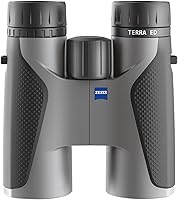
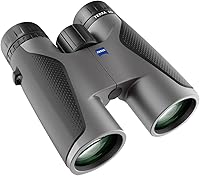
The ZEISS Terra ED 10x42 Binoculars sit at an interesting position in the ZEISS lineup — not the flagship, but far from a compromise. Built for serious birders, hunters, and naturalists who want genuine German optical engineering without spending into the stratosphere, the Terra ED relies on a Schmidt-Pechan prism design paired with ED glass as its optical foundation. Pick them up for the first time and the fiberglass-reinforced body feels reassuringly solid. That said, at nearly 700 grams, the weight is noticeable on long days out. The glass performs at a genuinely premium level for the price — just don't expect it to challenge ZEISS's own Victory line.
Features & Benefits

Where these ZEISS Terra binoculars make their case most convincingly is in low light. That 88% light transmission figure isn't marketing copy — it translates to noticeably brighter, crisper images at dawn or dusk when most wildlife is active. The hydrophobic coating does its job: rain doesn't cling to the lenses, and the glass stays usable in drizzle without constant wiping. The focus wheel deserves particular credit — it's large, well-positioned, and rotates smoothly enough that locking onto a moving bird takes a fraction of a second. Eyeglass wearers get a comfortable 18mm of eye relief, and the 330-foot field of view at 1,000 yards is wide enough to scan open terrain without constant repositioning.

Best For

The Terra ED makes the most sense for a specific kind of buyer. Birders who spend long mornings at the edge of a marsh or woodland will appreciate the fast focus and wide field of view for tracking birds mid-flight. Hunters glassing at first or last light benefit directly from the strong light transmission. Travelers and hikers get a rugged, waterproof optic that fits a daypack without drama — though the weight means it's better suited to those who don't mind carrying 695g. Eyeglass wearers specifically will find the 18mm eye relief genuinely accommodating. And if you're upgrading from a mid-range optic for the first time, this 10x42 glass offers a meaningful optical step up without crossing into ultra-premium territory.

User Feedback

With over 650 ratings averaging 4.6 out of 5, the overall sentiment around these ZEISS Terra binoculars is consistently positive — and the praise tends to cluster around things that matter: edge-to-edge sharpness, accurate color rendering, and a build quality that holds up after years of regular use. Long-term owners frequently note that the optics remain stable over time, which carries real weight at this price level. The more measured feedback points to the weight as a trade-off and some buyers feel the close focus distance is limiting. A handful of reviewers observe that rival brands offer comparable optics for less. ZEISS's warranty support, however, earns consistent approval across the feedback.

Pros

  • ED glass delivers noticeably brighter, sharper images in overcast conditions and low-light situations where cheaper optics fall short.
  • The focus wheel is large, ergonomically placed, and fast — locking onto a moving subject takes a fraction of a second.
  • Hydrophobic lens coating sheds rain and resists fogging, making this 10x42 glass genuinely reliable in wet, changeable weather.
  • Edge-to-edge sharpness is consistently praised by long-term owners, with no significant optical degradation reported after years of regular use.
  • Color rendering is accurate and natural — a clear step up from mid-range glass that can look washed out or artificially cool.
  • The fiberglass-reinforced waterproof housing feels confidence-inspiring without being bulky or delicate to handle in the field.
  • At 18mm, the eye relief is generous enough for eyeglass wearers to access the full field of view comfortably.
  • The 330-foot field of view at 1,000 yards is wide enough to scan open terrain and follow fast-moving subjects without constant repositioning.
  • ZEISS warranty support and customer service earn consistent positive mentions from long-term owners — a meaningful reassurance at this price level.
  • A 4.6-star average across more than 650 ratings reflects sustained buyer satisfaction rather than a cluster of early enthusiast reviews.

Cons

  • At 695 grams, the Terra ED is on the heavy end for a 42mm optic — noticeably so on all-day hikes or extended outings.
  • The minimum close focus distance is a known limitation, making these a poor choice for butterfly watchers or detailed nearfield observation.
  • Several buyers note that competing brands offer comparable optical performance at similar or lower prices, making the value case less automatic.
  • The 4.2mm exit pupil, adequate in typical field conditions, falls short of larger-aperture options for extreme low-light or casual stargazing use.
  • At 10x magnification, the lack of image stabilization makes extended hand-held viewing fatiguing, especially for less steady hands.
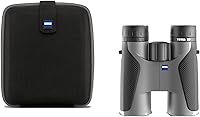
  • The included accessories — carry case, strap, and lens covers — are functional but feel unremarkable given the price bracket.
  • Buyers who glass primarily in strong midday light may not notice enough advantage over good mid-range alternatives to justify the outlay.
  • The investment only makes sense for frequent, purposeful field use — casual or infrequent users are unlikely to get full value from these optics.

Ratings

The ZEISS Terra ED 10x42 Binoculars earned a strong overall standing across hundreds of verified global buyer reviews, with our AI-driven scoring system actively filtering out incentivized, bot-generated, and low-credibility submissions to surface authentic field experience. Scores reflect the full spectrum of real ownership — where these binoculars genuinely excel and where documented trade-offs exist — giving you a transparent, balanced foundation for your buying decision.
Optical Clarity
93%
Users consistently describe the image as sharper and more defined than mid-range glass — the kind of micro-detail in feathers or terrain texture that genuinely surprises first-time premium buyers. Experienced birders note that on a pure optics basis, this 10x42 glass performs well above what most expect for the price.
At extreme viewing angles, a small number of users detect minor softness at the very edge of the frame — a known characteristic of Schmidt-Pechan prism designs at this price point. It rarely matters in typical field use, but critical opticians comparing directly to Abbe-Koenig prism alternatives may notice the difference.
Low-Light Performance
89%
The 88% light transmission rating has real-world backing — hunters glassing at last light and birders out at pre-dawn consistently report that images stay bright and usable well past the point where lesser optics turn muddy. The ED glass and coating combination produces a noticeably cleaner image in overcast or transitional light conditions.
The 4.2mm exit pupil, while adequate for most field scenarios, does limit performance in very dim conditions compared to binoculars with larger objectives. A few users focused primarily on nighttime wildlife observation or casual stargazing note that the Terra ED is not the ideal tool for those specific use cases.
Focus Speed & Ergonomics
91%
The focus wheel is one of the most consistently praised aspects across all user feedback — it is large, smooth, and naturally positioned so that the index finger finds it without any conscious grip adjustment. Birders in particular highlight how fast the focus pulls from close to distant subjects, which matters enormously when a bird moves unexpectedly.
A handful of users with smaller hands or shorter fingers find the focus wheel slightly awkward to reach without shifting their grip on the barrel. The diopter adjustment, while functional, is not lockable on this model — a minor frustration some users mention after carefully dialing in their individual prescription setting.
Value for Money
74%
26%
For buyers stepping up from mid-range glass, these ZEISS Terra binoculars represent a genuine and immediately noticeable optical upgrade. The ED glass, fast focus, and ZEISS brand warranty are difficult to replicate at this price point, and long-term owners tend to feel the investment holds its value compared to cheaper alternatives that degrade or need replacing.
A recurring theme in critical reviews is that competing brands — particularly Vortex and Nikon — offer comparable optical performance at a meaningfully lower price, making the value argument harder to sustain. Buyers who use binoculars infrequently are unlikely to justify the outlay, and the basic accessories do little to add perceived value at this price tier.
Weight & Portability
62%
38%
Despite the weight, these ZEISS Terra binoculars compress into a compact enough form factor to fit in a standard daypack without significant inconvenience. Buyers who switch to a binocular harness — distributing the load across the chest rather than the neck — consistently report that the weight becomes manageable for full-day outings.
At 695 grams, these are noticeably heavier than several competing 10x42 options, and buyers who hike serious distances consistently flag this as a genuine trade-off. Younger or lighter-framed users, and those with neck or shoulder sensitivities, find the weight particularly wearing by the end of a long day in the field.
Build Quality
88%
The fiberglass-reinforced housing feels solid and purposeful — the kind of build that makes you confident tossing it in a bag without a padded case between hides or hike segments. Long-term owners frequently report that the body shows no flex, rattle, or optical misalignment even after years of consistent outdoor use.
A small subset of reviewers find the rubber armor coating less grippy in cold or wet gloved-hand conditions compared to some rival designs. The build does not quite reach the tactile refinement of ZEISS's higher-end lines, and a few buyers report minor surface wear marks appearing after prolonged heavy daily use.
Eye Relief & Comfort
86%
The 18mm eye relief is genuinely accommodating for eyeglass wearers — not a marginal spec but a practical design decision that lets you access the full field of view without pressing the glass against your lenses. Users with corrective lenses consistently single this out as a deciding factor when choosing these ZEISS Terra binoculars over competing models.
Without glasses, some users find the eyecups slightly rigid and the intermediate click-stop positions less precise than rival binoculars in this price tier. Extended viewing sessions over several hours — particularly in cold weather — can also produce mild discomfort around the eyecup rim for users with narrower interpupillary distances.
Field of View
83%
The 330-foot field of view at 1,000 yards is wide enough to scan tree lines and open shorelines comfortably without constant barrel adjustment. Birders tracking small, fast species — warblers, waders, shorebirds — mention that this visual sweep gives them enough spatial context to reacquire a moving subject quickly after losing it.
At 10x magnification, the field of view is inherently narrower than 8x alternatives, and buyers transitioning from wider-angle binoculars sometimes take several outings to adjust. In dense forest environments where subjects move unpredictably between branches and canopy layers, some users feel a wider field option would serve them more effectively.
Weather Resistance
87%
The hydrophobic coating moves from spec to practical reality immediately in the field — water genuinely beads and rolls off the lens surface rather than spreading and degrading the image. Users who observe regularly in coastal or highland environments with frequent rain report that this coating eliminates the constant lens-wiping cycle that cheaper binoculars demand.
A small number of users note that the coating requires careful cleaning to maintain its water-repelling effectiveness, and aggressive wiping with rough cloths can degrade it over time. A few buyers in cold climates also report outer lens condensation when moving rapidly between temperature extremes, which the coating alone cannot prevent.
Color Fidelity
85%
ED glass is particularly effective at reducing chromatic aberration — the color fringing that appears at high-contrast edges like a bird silhouetted against a bright sky — and users regularly describe the color rendition as natural and accurate. This matters practically when trying to differentiate fine plumage details or habitat colors at distance in variable lighting.
A minority of users performing direct comparisons against ZEISS's higher-end glass notice a subtle color shift in certain light conditions — a minor characteristic of the coating formulation at this tier rather than a defect. This is essentially imperceptible in normal field use but does become observable under deliberate side-by-side testing conditions.
Image Stability
67%
33%
For users with steady hands or those who brace against a surface, the optics deliver a crisp and usable image for productive field work at 10x magnification. Hunters glassing from a fixed position or birders observing from a stable seated vantage point find that image stability rarely becomes a meaningful limitation in practice.
At 10x, any hand tremor or rhythmic breathing is amplified significantly compared to 8x alternatives, becoming particularly noticeable for users with less steady hands or those doing extended hand-held viewing. A number of buyers note that a tripod or monopod becomes effectively necessary for prolonged stationary observation sessions, adding setup complexity in the field.
Close Focus Distance
51%
49%
For standard wildlife observation — birds in trees, deer at field edges, raptors circling overhead — the close focus distance is rarely a limiting factor, and the majority of users never encounter it as a meaningful issue across typical outdoor use cases. Most practical birding and hunting distances fall well outside where this limitation becomes relevant.
Butterfly enthusiasts, insect observers, and botanical naturalists consistently flag the minimum focus distance as a deal-breaker that disqualifies these binoculars for their specific workflows. This is one of the most cited concrete criticisms in user feedback, reliably pushing close-range observers toward competing models with tighter minimum focus capabilities.
Long-Term Durability
92%
Long-term ownership data is where the Terra ED earns some of its strongest scores — users who have owned these for three or more years consistently report stable optics, maintained collimation, and no meaningful deterioration in image performance. This is a binocular that appears to age reliably well under genuine, repeated field conditions.
A very small number of users report rubber armor peeling or separating at the seams after extended heavy use in temperature extremes — though these cases appear to be outliers rather than a pattern. The external cosmetic condition is more vulnerable to wear than the internal optics, which remain a reliable long-term optical asset.
Warranty & Support
84%
ZEISS's limited lifetime warranty is one of the more reassuring ownership propositions in the premium optics space, and users who have actually engaged the service process report professional, efficient handling. For a purchase at this investment level, strong manufacturer backing adds meaningful peace of mind that you are not left managing an expensive problem alone.
A handful of international buyers note that ZEISS warranty service is primarily optimized for European and North American markets, with noticeably slower turnaround times reported in other regions. A minority of buyers are also surprised to learn the warranty does not cover accidental damage — a common source of disappointment at the point of claim.
Included Accessories
58%
42%
The carry case, neck strap, and lens covers in the box cover the functional basics without leaving anything out that would block immediate field use. The case offers adequate protection for day-to-day transport and storage, and the strap is perfectly usable for getting started right away.
At this price point, buyers reasonably expect more refined accessories, and the standard case and strap feel noticeably out of character with the optical quality of the binoculars themselves. Several users immediately replaced the neck strap with a third-party harness and the case with a padded alternative — an additional expense that feels unwarranted for a premium purchase.

Suitable for:

The ZEISS Terra ED 10x42 Binoculars are a strong match for anyone who spends serious time outdoors and needs optics that hold up when conditions get difficult. Dedicated birders are the most natural fit — the fast, intuitive focus wheel and wide 330-foot field of view make tracking birds in motion straightforward, while the 88% light transmission keeps images usably bright well into dusk. Hunters who glass open terrain at first or last light will notice an immediate, real-world difference over mid-range glass in color fidelity and edge clarity that ED optics provide. Eyeglass wearers will find the 18mm eye relief genuinely accommodating rather than a token spec — this is an area where the design clearly prioritized real-world comfort. Hikers and traveling naturalists benefit from a waterproof, fiberglass-reinforced build that handles rain without requiring any special care. For buyers stepping up from entry-level or mid-range glass for the first time, the optical improvement is obvious and immediately rewarding.
Not suitable for:

If weight is a serious concern on long outings, the ZEISS Terra ED 10x42 Binoculars may not be the right fit — at 695 grams, they sit on the heavier end of the 42mm category, and lighter alternatives from competing brands exist at comparable price points. Observers who frequently focus at close range — butterfly watchers, botanists, or anyone doing detailed nearfield work — will run into the minimum focus distance as a recurring frustration. Buyers chasing the absolute ceiling of optical performance should understand this glass sits clearly below ZEISS's own Victory HT and Swarovski's flagship offerings; comparing them head-to-head is an unfair and misleading test. Shoppers who pick up binoculars only a handful of times per year are unlikely to extract full value here — these optics reward frequent, demanding use, not the occasional weekend outing. Anyone planning to glass primarily in bright midday conditions may also find the premium optical advantages less pronounced relative to capable mid-range alternatives at a considerably lower price.
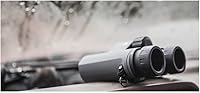
Specifications

  • Magnification: 10x magnification brings distant subjects ten times closer than the naked eye, suited to wildlife observation, birding, and hunting at typical field distances.
  • Objective Lens: The 42mm objective lens diameter provides a practical balance between light-gathering performance and overall portability.
  • Exit Pupil: A 4.2mm exit pupil delivers comfortable, bright viewing in daylight and overcast conditions, though it is not optimized for extreme low-light or nighttime use.
  • Eye Relief: 18mm of eye relief allows eyeglass wearers to access the full field of view without removing their glasses.
  • Field of View: The field of view spans 330 ft at 1,000 yards (approximately 6.3°), wide enough to scan open terrain comfortably and track fast-moving subjects.
  • Light Transmission: 88% light transmission is achieved through the combination of ED glass and multi-layer anti-reflective coatings, producing noticeably brighter images in low-contrast or fading light.
  • Prism Type: A Schmidt-Pechan roof prism system maintains a compact, straight-barrel form factor while preserving correct image orientation.
  • Lens Glass: Extra-low dispersion (ED) glass reduces chromatic aberration, delivering sharp, color-accurate images with minimal color fringing at high-contrast edges.
  • Lens Coating: A hydrophobic multi-layer anti-reflective coating repels water from lens surfaces and reduces reflective light loss for consistent performance in rain or humidity.
  • Housing: The body is constructed from fiberglass-reinforced polymer, providing structural rigidity and resistance to impact without adding unnecessary bulk.
  • Waterproofing: The fully sealed housing protects internal optics from moisture ingress during rain and exposure to wet conditions in the field.
  • Weight: Total weight is 24.5 oz (695g), which sits on the heavier end of the spectrum for a standard 10x42 roof prism binocular.
  • Dimensions: Folded dimensions measure 4.7 × 5.5 inches, compact enough to fit into a jacket pocket or the front compartment of a daypack.
  • Focus Wheel: The large-diameter central focus wheel is positioned for natural index-finger access, allowing fast, controlled subject acquisition without repositioning the hand.
  • Warranty: ZEISS provides a limited lifetime warranty against manufacturing defects for the original purchaser of the binoculars.

Related Reviews
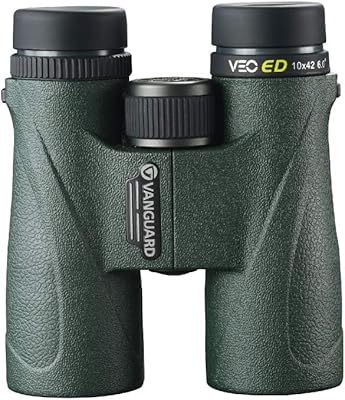
Vanguard VEO ED 10x42 Binoculars
85%
93%
Image Quality
88%
Build Quality & Durability
90%
Waterproof Performance
85%
Ease of Use
92%
Portability & Weight
More
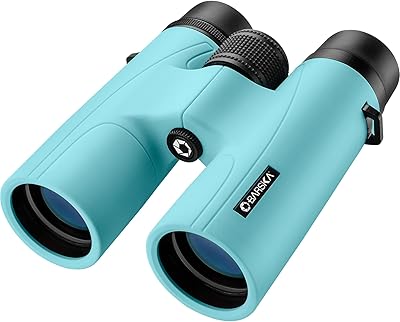
Barska Crush 10x42 Binoculars
79%
74%
Optical Clarity
81%
Build Quality
88%
Value for Money
86%
Ease of Use
58%
Eye Relief & Eyecup Comfort
More
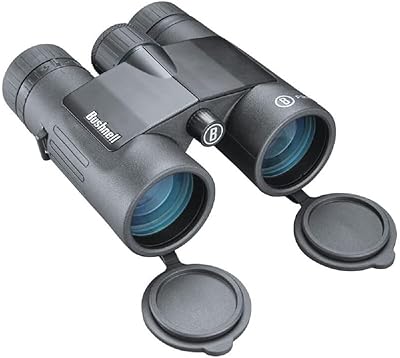
Bushnell Prime 10x42 Binoculars
76%
83%
Optical Clarity
61%
Low-Light Performance
79%
Build Quality
86%
Weather Resistance
72%
Comfort & Ergonomics
More
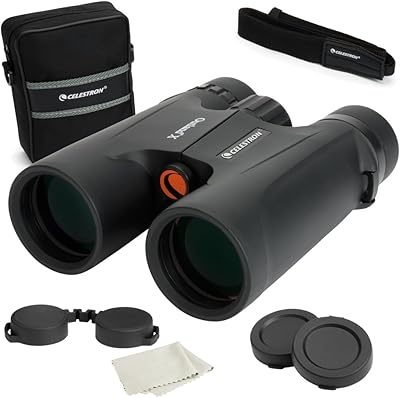
Celestron Outland X 10x42 Binoculars
81%
88%
Optical Clarity
91%
Build Quality & Durability
93%
Weatherproofing
89%
Value for Money
61%
Eye Relief & Eyeglass Compatibility
More
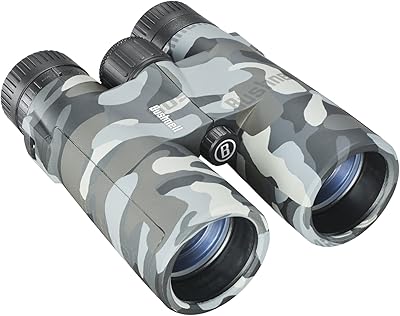
Bushnell Blackout Camo 10x42 Binoculars
77%
73%
Optical Clarity
84%
Build Quality
88%
Grip & Ergonomics
76%
Image Brightness
61%
Focus Wheel Feel
More
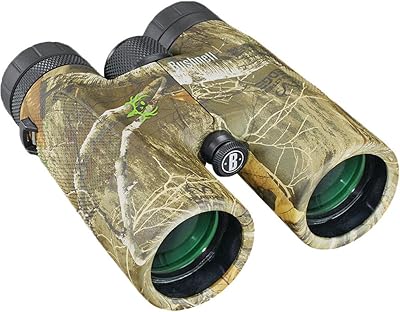
Bushnell BoneCollector Powerview 10x42
77%
74%
Optical Clarity
78%
Low-Light Performance
63%
Build Quality
86%
Grip & Ergonomics
84%
Focus Wheel Performance
More
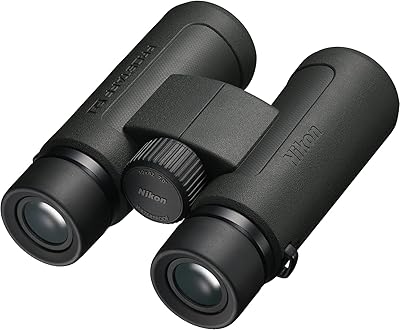
Nikon PROSTAFF P3 10x42 Binoculars
83%
91%
Optical Clarity
86%
Low-Light Performance
89%
Build Quality & Durability
88%
Waterproof & Fogproof Rating
87%
Eye Relief & Eyecup Design
More
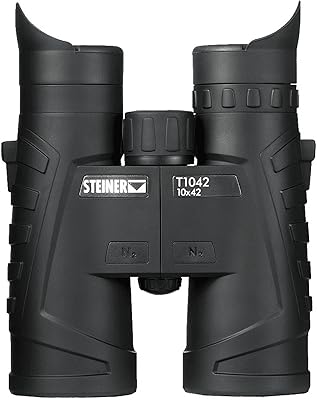
Steiner Tactical Series Binoculars 10x42
86%
93%
Image Clarity
90%
Build Quality
94%
Durability
88%
Low-Light Performance
85%
Portability & Weight
More
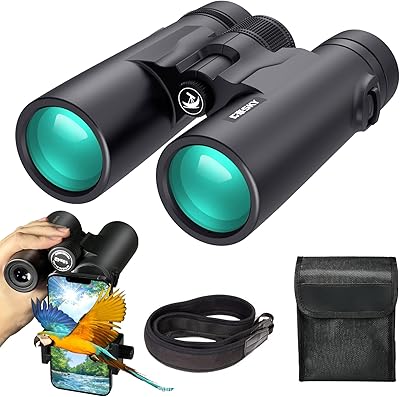
Gosky 10x42 Binoculars
74%
83%
Optical Clarity
78%
Build Quality
89%
Value for Money
74%
Comfort & Ergonomics
61%
Eye Relief & Eyeglass Compatibility
More
Celestron Nature DX 10x42 Binoculars
82%
86%
Optical Clarity
83%
Build Quality
89%
Weather Resistance
91%
Value for Money
88%
Ease of Focus
More

FAQ

They are one of the stronger options in this price tier for birding. The fast focus wheel is a genuine practical advantage — you can lock onto a bird as it lands in dense foliage or tracks across open sky without fumbling. The wide field of view and the ED glass clarity on overcast mornings make a noticeable difference compared to mid-range alternatives.

Yes, and this is one area where the Terra ED holds up well. The 18mm eye relief is enough that you can keep your glasses on and still access the full field of view. Just twist the eyecups to the lower position and you are good to go — no need to press the glass against your lenses.

This is where the 88% light transmission makes a practical, visible difference. At dawn or dusk, you will get a brighter and more usable image compared to binoculars with standard coatings or glass. For hunters glassing at last light or birders heading out before sunrise, that edge in image brightness is not just a spec — it translates directly to how long you can keep using the glass productively.

The housing is fully sealed and genuinely waterproof — rain is not going to damage the optics or allow moisture inside. On top of that, the hydrophobic lens coating causes water to bead and run off the glass rather than spreading across the surface. These are not designed for submersion, but for anything you would encounter in normal field conditions, they hold up well.

The Terra ED is ZEISS's entry into premium optics, not their flagship — and that distinction matters. The Victory HT and comparable top-tier models offer higher light transmission, better prism coatings, and superior edge-to-edge performance, but come at a significantly higher price. If you are stepping up from mid-range glass, the Terra ED represents a meaningful and noticeable improvement. Compared directly against the Victory HT, experienced users will see the gap.

At 695 grams, these are on the heavier side for a 10x42, and it is worth being honest about that. If you are spending a full day hiking with them around your neck, you will feel it by mid-afternoon. A binocular harness that distributes the load across your chest and shoulders helps considerably — many regular users make that switch. If weight is your top priority, lighter options exist in this price range, though often with trade-offs in build quality or optics.

The Terra ED ships with a carry case, neck strap, objective lens covers, and an eyepiece cover. Everything you need to get out into the field is there, but the included accessories are functional rather than impressive — the case in particular is adequate rather than premium. Some owners pick up a third-party padded case for added protection during transport.

ZEISS backs the Terra ED with a limited lifetime warranty covering manufacturing defects for the original purchaser. From a buyer-confidence standpoint, ZEISS's warranty support earns consistently positive mentions from long-term owners — it is one of the factors that makes buying into this brand feel less like a risk. For an optic at this price level, knowing the manufacturer stands behind it over the long term is meaningful.

This 10x42 glass is actually one of the better fits for first-time premium buyers. If you have been using entry-level or budget binoculars, the jump in sharpness, color fidelity, and low-light performance is immediately noticeable — not subtle. The ergonomics are intuitive from the first use, and the build quality gives you a clear sense of what you are getting for the investment.

This is a known limitation worth factoring in if close-range observation is part of your regular use. The minimum focus distance on the Terra ED is not suited to very close subjects like butterflies at arm's length or detailed botanical work. For standard wildlife observation, birding at typical distances, and hunting, it rarely comes up as a problem — but dedicated close-focus users should weigh this carefully before purchasing.

Where to Buy

Camera Land NY
In stock $399.99
Perfect 10 Outdoors
In stock $474.99
Kestrel Glassing Systems
In stock $499.95
Woodland Hills Camera & Telescopes
In stock $499.99