Overview
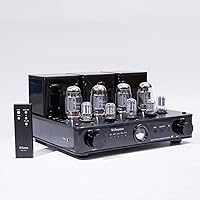
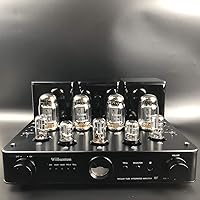
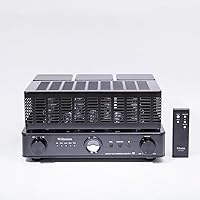
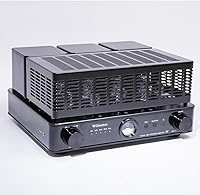
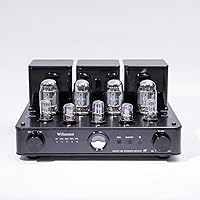
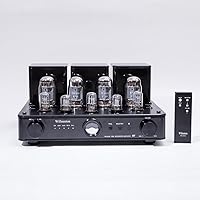
The Willsenton R8 is a handwired point-to-point tube integrated amplifier from China that holds its own against established Western and Japanese names at a fraction of their asking prices. What separates it at this tier is compatibility with three power tube types — KT88, EL34, and 6550 — letting owners explore genuinely different sonic characters without purchasing a second amp. It ships with KT88 tubes installed by default; the other sets are sold separately, so budget for those early if tube rolling is the goal. The December 2023 revision introduced internal upgrades over the earlier version, making this the most refined iteration to date.
Features & Benefits
This valve amplifier covers three operating modes — integrated, power, and headphone — a practical combination for anyone running speakers and high-impedance headphones from one box. The triode and ultra-linear switching is a genuine differentiator: triode mode runs warmer and softer, while ultra-linear unlocks the full 45W output for less sensitive speakers. A remote control ships in the box, which sounds unremarkable until you realize how rarely that appears at this build tier. The protective tube cage is a thoughtful safety addition. One honest caveat worth stating clearly: commit to a 100–300 hour break-in before drawing any firm conclusions about how this amp actually sounds.
Best For
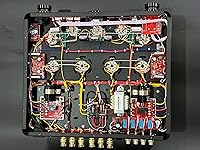
This tube amp suits listeners transitioning from solid-state who want to explore tube rolling without acquiring separate equipment for every experiment. Speaker efficiency matters here — 90dB sensitivity or higher is the practical threshold for getting the most from its output stage; pairing it with inefficient loads will leave performance on the table. It also works well for the less common scenario of someone running quality headphones and passive speakers in the same room, since both use cases are genuinely supported. Buyers who care about what is under the hood — real handwired construction, not a PCB dressed up to look like one — will find this amp satisfying on that count alone.
User Feedback
Owners consistently point to the chassis build quality as a standout — 57 pounds of steel and iron communicates seriousness in a way that photographs cannot. The headphone stage draws specific praise from listeners using high-impedance cans. The tube rolling community has logged real hours comparing KT88 and EL34 performance on this unit, and those forum threads are worth reading before committing. On the less positive side, a small number of buyers have flagged minor assembly variance between units, which is a known risk with hand-built gear at any price. First impressions can also mislead — owners who stayed patient through the break-in window report noticeably better results than those who judged it cold.
Pros
- Handwired point-to-point construction delivers long-term repairability that PCB-based competitors cannot match.
- Compatibility with KT88, EL34, and 6550 tubes gives this tube amp a genuinely broad sonic range.
- Three operating modes — integrated, power, and headphone — consolidate multiple use cases into one chassis.
- Triode and ultra-linear switching provides two meaningfully different tonal characters without buying a second amp.
- Remote control inclusion at this build tier is a practical convenience most rivals simply do not offer.
- Headphone output performs well above expectations, especially with high-impedance headphones in the 150 to 300 ohm range.
- 57-pound chassis and solid build quality signal a level of physical seriousness that buyers consistently notice.
- The December 2023 internal revision makes this the most refined production version available.
- Tube cage and fuse are included, reducing the immediate out-of-pocket cost for essential safety accessories.
- Offers handwired construction at a price point that equivalent Western or Japanese builds cannot approach.
Cons
- EL34 and 6550 tube sets are not included — factor in that additional cost before comparing prices against rivals.
- Break-in period of 100 to 300 hours is a real time commitment that catches first-time tube amp buyers off guard.
- Minor assembly variance between individual units has been reported by a small but consistent portion of buyers.
- Speaker pairings below 88dB sensitivity will expose output limitations, particularly at higher volumes.
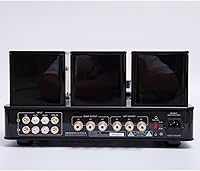
- Triode and ultra-linear mode switching requires a trip to the rear panel — not accessible from the front or remote.
- The headphone stage handles high-impedance cans well but is noticeably less suitable for sensitive, low-impedance earphones.
- At 57 pounds, placement and repositioning require real effort — this is not an amp you casually move around.
- Buyers unfamiliar with tube amplifier maintenance will face a learning curve around biasing and tube handling.
- No front-panel input switching means some routine adjustments require physically accessing the back of the unit.
Ratings
The Willsenton R8 has been assessed using AI analysis of verified global user reviews, with spam, bot activity, and incentivized feedback actively filtered out before scoring. Ratings reflect the real distribution of buyer experiences — the genuine strengths land where they deserve to, and the friction points are not softened. Both sides of the ownership picture are represented here.
Build Quality
Sound Quality
Value for Money
Tube Versatility
Headphone Amplifier Performance
Ease of Use
Break-In Requirement
Remote Control
Aesthetic Design
Tonal Flexibility
Speaker Compatibility
Packaging & Unboxing
Long-Term Reliability
Suitable for:
The Willsenton R8 is built for the kind of buyer who has done enough research to know what point-to-point handwiring means and why it matters. Audiophiles making the transition from solid-state who want to explore tube sound without assembling a rack of separate components will find this tube amp unusually well-equipped for that journey — the three compatible tube types alone make it a legitimate long-term platform for experimentation rather than a single-flavor purchase. It also fits naturally into a setup where both passive speakers and quality headphones share the same listening space, since the integrated headphone output genuinely holds up, particularly with high-impedance cans. Buyers with efficient speakers — 90dB sensitivity or higher — in a medium-sized room will get the most from the 45W output stage without pushing it into its limits. Anyone who values knowing that their amplifier was assembled by hand rather than populated by a machine will feel at home with this valve amplifier, and the December 2023 revision makes it the most polished version yet.
Not suitable for:
The Willsenton R8 is a poor match for buyers who want to plug in and immediately pass judgment — the 100 to 300 hour break-in requirement is not a suggestion, and anyone unwilling to invest that time before forming an opinion is likely to end up disappointed with an amp that has not yet settled into its stride. Listeners with low-sensitivity speakers, particularly those below 88dB, will find the 45W ceiling becomes a real constraint, especially in larger rooms or at higher listening levels. This valve amplifier also demands a budget beyond the unit itself if tube rolling is the goal — EL34 and 6550 sets are sold separately, and buyers who overlook that will feel the gap. People with no prior experience managing tube amplifiers, including understanding bias, operating mode differences, and basic maintenance, may find the learning curve frustrating without a willingness to self-educate. Finally, buyers who need precise build consistency and zero tolerance for unit-to-unit variance should approach with realistic expectations, as a small but real proportion of owners have encountered minor assembly differences.
Specifications
- Brand: Manufactured by Willsenton, a Chinese audio brand specializing in tube amplifier designs.
- Model: The R8 is the flagship integrated tube amplifier in the Willsenton lineup, updated in December 2023.
- Dimensions: The unit measures 15.35 x 15.75 x 7.87 inches (length x width x height).
- Weight: The amplifier weighs 57.32 pounds, reflecting its heavy-gauge steel and iron transformer construction.
- Output Power: Delivers 45 watts per channel in ultra-linear mode using KT88 power tubes.
- Compatible Tubes: Supports three power tube types — KT88 (included), EL34, and 6550 — selectable via a rear-panel switch.
- Tone Modes: Offers both triode and ultra-linear operating modes, switchable via a front-panel button.
- Amplifier Modes: Functions as an integrated amplifier, a pure power amplifier, or a headphone amplifier depending on configuration.
- Construction: Built using point-to-point handwiring throughout, with no printed circuit boards in the signal path.
- Headphone Output: Includes a dedicated headphone output suited for high-impedance headphones, typically in the 32 to 300 ohm range.
- Finish: Available in a black chassis finish with a metal tube protective cage included.
- Included Accessories: Ships with a remote control, vacuum tube protective cage, a spare fuse, and an English-language owner's manual.
- Default Tubes: KT88 tubes are factory-installed; EL34 and 6550 tube sets are sold separately and not included in the box.
- Break-In Period: Willsenton recommends a cumulative 100 to 300 hours of operation before the amplifier reaches its optimal sonic performance.
- Tube Selector: A dedicated red selection button on the rear panel switches the bias configuration between compatible tube types.
- Speaker Sensitivity: Best suited to speakers with a sensitivity rating of 90dB or higher for optimal output headroom.
- Revision Status: The current production version incorporates internal upgrades introduced in December 2023 over the original release.
Related Reviews