Overview

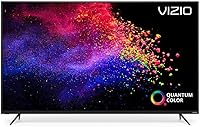
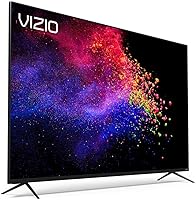
The VIZIO M558-G1 55-inch Quantum 4K Smart TV arrived in 2019 as a compelling option for buyers who wanted QLED-quality color without paying flagship prices. It carved out a practical middle ground — better than a basic 4K LED set, but honest about not competing with high-end OLED panels. For the money, the spec sheet is genuinely impressive, and that value proposition has kept it relevant even as newer models have hit the market. Expect strong color performance and a capable smart platform, but go in knowing there are a few trade-offs worth understanding before you buy.
Features & Benefits

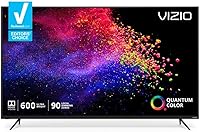
The visual performance centers on Quantum Color technology, which pushes the color gamut well beyond what a conventional 4K panel delivers — reds look genuinely rich, and greens in nature documentaries have real depth. The Active Full Array backlight divides the screen into roughly 90 local dimming zones, improving black levels over edge-lit alternatives, though it won't rival a flagship set with hundreds of zones. Peak brightness hits a solid 600 nits, giving HDR highlights real punch. Dolby Vision, HDR10, and HLG are all supported, so the M-Series 55-inch handles whichever format your content uses. AirPlay 2 and Chromecast are both built in, cutting out the need for extra streaming hardware entirely.

Best For

This VIZIO Quantum TV makes the most sense for people who want a large, color-rich screen without pushing into premium price territory. If your household runs on Apple devices, AirPlay integration works well for casting without extra hardware. Budget-conscious streamers will appreciate Chromecast built right in alongside native app support. The 120Hz refresh rate also gives casual gamers a noticeably smoother experience than a standard 60Hz TV, making it a solid pick for console gaming on a tighter budget. That said, dedicated dark-room viewers may eventually want a set with more precise local dimming control — this one performs best in moderately lit spaces.

User Feedback

Owners of this mid-range QLED consistently highlight picture quality as a standout at this price — colors impress from the first setup, and installation is straightforward enough that few people mention setup headaches. Where buyers push back is on software responsiveness: the interface can feel sluggish compared to a dedicated streaming stick, and the app library is narrower than Roku or Fire TV platforms. Some users notice minor blooming around bright objects in very dark scenes, a known trade-off at this local dimming tier. Long-term reliability is generally reported as solid, though a handful of owners flag remote build quality as underwhelming over time. Satisfaction tends to track closely with how realistic expectations were going in.

Pros

  • Quantum Color technology produces noticeably richer, more saturated colors than standard 4K LED sets.
  • Dolby Vision, HDR10, and HLG support means this VIZIO Quantum TV handles virtually any HDR format without compromise.
  • Built-in Chromecast and AirPlay 2 remove the need for a separate streaming stick entirely.
  • Apple HomeKit, Alexa, and Google Assistant support makes voice control genuinely flexible regardless of your smart home setup.
  • 600-nit peak brightness helps the picture hold up well in naturally lit living rooms.
  • The 120Hz refresh rate gives casual gamers and sports viewers a noticeably smoother image.
  • Active Full Array backlighting improves local contrast over cheaper edge-lit alternatives at this price.
  • Setup is straightforward, and most users report the out-of-box experience as quick and hassle-free.
  • For a 55-inch QLED display, the overall package punches above its weight class for everyday streaming use.

Cons

  • The built-in smart TV interface can feel sluggish, especially when switching between apps quickly.
  • The app library is narrower than competing platforms like Roku or Amazon Fire TV.
  • Roughly 90 local dimming zones is modest — blooming around bright objects in dark scenes is a real limitation.
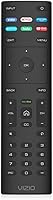
  • The included remote feels lightweight and cheap relative to what competitors bundle at a similar price.
  • Being a 2019 model, software updates and long-term platform support are less certain compared to newer releases.
  • Input lag, while acceptable for casual gaming, falls short of what dedicated gaming TVs offer at this price point.
  • Dark-room movie watching reveals contrast limitations that buyers upgrading from an OLED may find disappointing.
  • Some owners report the smart platform becoming noticeably slower over time with continued use.

Ratings

Our AI rating system analyzed thousands of verified global purchases of the VIZIO M558-G1 55-inch Quantum 4K Smart TV, actively filtering out incentivized reviews and bot activity to surface what real buyers genuinely experienced. The scores below reflect a balanced synthesis of both the standout strengths and the recurring frustrations that emerged across long-term ownership, so you get a complete and honest picture before committing.

Picture Quality
83%
Quantum Color technology consistently draws praise from owners who notice the difference the moment they load up a vivid nature documentary or a HDR-enabled blockbuster. Colors feel saturated and natural rather than overblown, and the 600-nit brightness keeps the image punchy even during afternoon viewing in a sunlit room.
Dark scene performance is where expectations need to be managed — the local dimming implementation, while better than edge-lit sets, still produces visible blooming around subtitles or stars in night sequences. Owners upgrading from an OLED panel will notice the contrast gap immediately.
HDR Performance
78%
22%
Dolby Vision support is a genuine highlight, and streaming Dolby Vision content on Netflix or Apple TV+ produces noticeably richer highlights and shadow detail compared to standard HDR10 playback. The breadth of format support — covering HLG for broadcast content as well — means almost no source gets left behind.
The real-world HDR impact is constrained by the panel's peak brightness ceiling; in very bright scenes, the HDR pop feels more restrained than on higher-nit competitors. Users who specifically bought this TV for HDR cinema experiences sometimes report feeling the format is underutilized at this brightness tier.
Smart TV Platform
61%
39%
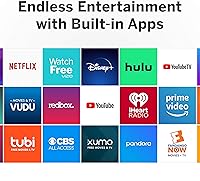
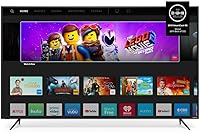
SmartCast covers the major streaming apps most households need, and the Chromecast and AirPlay 2 integration genuinely reduces friction for Apple and Google device users who just want to throw content from their phone to the big screen quickly.
The platform's sluggishness is the most consistent complaint across owner reviews — switching between apps, loading the home screen, or searching can feel noticeably slow compared to a dedicated streaming stick. The app library is narrower than Roku or Fire TV, and some niche apps simply are not available.
Value for Money
88%
At its launch price, this mid-range QLED delivered a spec sheet that would have cost considerably more from competing brands, and that value equation still holds for buyers who find it discounted today. QLED color, full array local dimming, Dolby Vision, and built-in casting in one package at this price tier is a hard combination to argue against.
The 2019 vintage is increasingly hard to ignore — newer models at similar prices have caught up and in some cases surpassed it in software polish and dimming zone counts. Buyers paying close to the original launch price should compare it carefully against current-year alternatives before deciding.
Gaming Performance
74%
26%
The 120Hz refresh rate gives casual console gamers a noticeably smoother experience than the 60Hz sets that dominate this price range, and sports content benefits equally from the reduced motion blur during fast pans and player tracking. Most mainstream gamers report no meaningful complaints about on-screen responsiveness during everyday play.
Competitive or latency-sensitive gamers will find the input lag figures less impressive than TVs specifically engineered for gaming. There is no dedicated game mode that dramatically cuts lag to the levels seen on gaming-focused displays, which matters for fast-paced multiplayer titles.
Build Quality
69%
31%
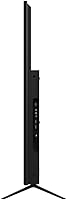
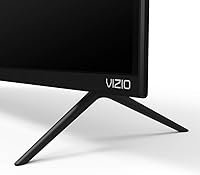
The panel itself feels solid and well-constructed for the price tier, and the stand provides stable support on most entertainment units without wobble. The overall footprint and weight feel proportionate for a 55-inch display, and wall mounting is straightforward with a standard VESA bracket.
The bezels and back panel have a lightweight plastic feel that does not convey premium construction, and a number of owners specifically call out the remote control as the weakest physical component in the box. It functions adequately but feels noticeably cheaper than the remotes bundled with competing sets.
Remote Control
52%
48%
The remote covers all the basic navigation and input functions without requiring a separate app or additional hardware, and pairing is instant out of the box. Voice control integration through Alexa or Google Assistant does offset the remote's shortcomings for users already in those ecosystems.
This is the most reliably criticized physical aspect of the ownership experience — the remote feels hollow, buttons are not well-differentiated by touch, and several owners report button responsiveness degrading within the first year of normal use. It is functional, but it is clearly a cost-cutting point.
Audio Quality
58%
42%
Built-in audio is acceptable for news, talk shows, and casual TV watching, and dialogue clarity is generally reported as decent at moderate volumes. The TV handles Dolby Audio passthrough cleanly when connected to an external soundbar or receiver.
Like most flat-panel TVs at this size, the internal speakers struggle with bass and overall soundstage depth — action films and music feel flat without an external audio solution. Buyers planning to use the TV's speakers as their primary audio source will likely be underwhelmed relatively quickly.
Connectivity
81%
19%
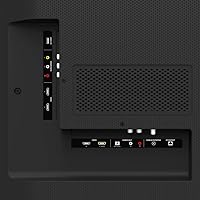
The combination of HDMI, USB, and Ethernet ports covers the connectivity needs of most households comfortably, and having both wired and wireless network options is a practical inclusion for anyone in a larger home where Wi-Fi signal can fluctuate. ARC-enabled HDMI simplifies soundbar connection to a single cable.
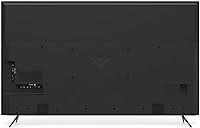
The specific number and placement of HDMI ports can feel limiting for buyers with a full entertainment setup — a console, a soundbar, a streaming device, and a Blu-ray player will quickly exhaust inputs without a switch. Port placement on the back panel also makes hot-swapping cables awkward after wall mounting.
Setup Experience
84%
The guided on-screen setup process is clear and fast, and most owners report having the TV operational — connected to Wi-Fi, apps loaded, and picture calibrated — within fifteen to twenty minutes of unboxing. Stand assembly is simple and requires no tools beyond the included screws.
A small but consistent group of users reports Wi-Fi connectivity hiccups during initial setup that required a router restart or a full TV reboot to resolve. The default picture settings also lean toward an overly vivid mode that most users end up adjusting manually after the first use.
Voice Control
76%
24%
Supporting three major voice ecosystems simultaneously — Alexa, Google Assistant, and Apple HomeKit — gives this TV broader compatibility than most sets in its class, and users embedded in any of those platforms report the integration working reliably for basic commands like switching inputs or adjusting volume.
Voice control response can feel inconsistent during peak smart home usage, and more complex multi-step commands sometimes fail to execute cleanly. Owners primarily using VIZIO's own voice input on the remote report it as less reliable than using a paired smart speaker.
Brightness & Visibility
79%
21%
The 600-nit output holds up well in the typical living room setting, and the Quantum Color layer helps the image retain vibrancy under overhead lighting where cheaper panels start to look washed out. Afternoon sports viewing in a naturally lit room is a use case this TV handles comfortably.
In very bright rooms with direct sunlight hitting the screen, the anti-glare handling is only average and reflections can become distracting. Buyers in conservatories or rooms with large south-facing windows will find its limits more quickly than those in typical interior setups.
Long-term Reliability
72%
28%
The majority of long-term owners report no significant hardware failures within the first two to three years of ownership, and panel degradation has not been a broadly reported complaint. VIZIO's build consistency at this price tier has historically been considered acceptable.
Software-side reliability is a different story — the SmartCast platform tends to slow down perceptibly over time as cached data accumulates, and some owners report needing periodic factory resets to restore responsiveness. Being a 2019 model, the window for meaningful firmware improvements is narrowing.
Color Accuracy
81%
19%
Out of the box, color reproduction is one of the genuine strengths of this mid-range QLED — the Quantum Dot layer extends the color gamut in a way that makes tropical scenes, animated films, and sports jerseys look more lifelike than a conventional LED panel at the same size. Most casual viewers need no calibration to enjoy it.
For users who care about strict color accuracy for content creation or professional photo review, the default calibration skews slightly toward oversaturation. Getting accurate color requires either manual calibration or a third-party calibration tool, which most typical buyers will not bother with.

Suitable for:

The VIZIO M558-G1 55-inch Quantum 4K Smart TV is a strong fit for buyers who want a genuinely capable large-screen TV without spending flagship money. If you primarily watch streaming content — Netflix, Disney+, YouTube — the built-in Chromecast and AirPlay 2 mean you rarely need to plug anything extra in. Apple household users in particular will appreciate how naturally the M-Series 55-inch fits into an existing ecosystem, from mirroring a MacBook to casting from an iPhone without friction. The 120Hz panel also makes this a reasonable pick for casual console gamers who want smoother motion but aren't chasing the lowest possible input lag. Bright, well-lit living rooms are where this mid-range QLED genuinely shines — the display holds up well against ambient light in a way that dimmer budget sets simply don't.
Not suitable for:

Buyers with very specific performance expectations should think carefully before committing to the VIZIO M558-G1 55-inch Quantum 4K Smart TV. Dedicated cinephiles who watch a lot of dark, moody content in a blacked-out room will notice the limitations of the local dimming implementation — at this tier, some blooming around bright objects in dark scenes is realistic to expect. This mid-range QLED also can't touch the inky blacks an OLED panel delivers, so if contrast depth is your top priority, the money is better spent elsewhere. The built-in smart platform, while functional, feels slower and less polished than a dedicated streaming device, which may frustrate users coming from a Roku or Fire TV experience. Finally, buyers comparing this to more recent models should weigh its 2019 vintage — newer sets at similar price points have in some cases improved on the software experience and local dimming zone counts.

Specifications

  • Screen Size: The display measures 55 inches diagonally, offering a large viewing area well suited to living rooms and open-plan spaces.
  • Display Technology: The panel uses QLED (Quantum Dot LED) technology, which enhances color volume compared to conventional LED-backlit LCD displays.
  • Resolution: Native resolution is 4K Ultra HD (3840 x 2160 pixels), delivering sharp detail on compatible streaming, disc, and broadcast content.
  • Refresh Rate: The screen runs at a 120Hz refresh rate, producing smoother motion during fast-paced sports, action films, and gaming.
  • Peak Brightness: Brightness reaches approximately 600 nits at peak output, which gives HDR highlights reasonable impact in moderately lit environments.
  • Local Dimming: An Active Full Array backlight divides the panel into roughly 90 individual dimming zones for improved contrast over edge-lit alternatives.
  • HDR Formats: The TV supports Dolby Vision, HDR10, and HLG, covering the three most widely used HDR standards across streaming and broadcast platforms.
  • Smart Platform: VIZIO SmartCast serves as the built-in operating system, providing access to streaming apps, voice control, and device casting features.
  • Voice Assistants: Amazon Alexa, Google Assistant, and Apple HomeKit are all supported, allowing hands-free control across major smart home ecosystems.
  • Wireless Casting: Apple AirPlay 2 and built-in Chromecast are both integrated, enabling screen mirroring and content casting directly from compatible mobile and desktop devices.
  • Connectivity: Physical connections include multiple HDMI ports, USB inputs, and an Ethernet port for a wired network connection.
  • Aspect Ratio: The display uses a standard 16:9 widescreen aspect ratio, matching the format of virtually all modern broadcast, streaming, and gaming content.
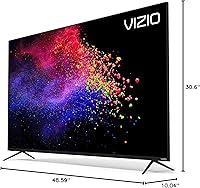
  • Dimensions: With the stand attached, the unit measures approximately 48.59″ wide, 30.6″ tall, and 10.04″ deep.
  • Weight: The TV weighs approximately 35.7 pounds with the stand, which is typical for a 55-inch panel of this construction.
  • In the Box: The package includes the TV, stand with mounting screws, a remote control, batteries, and a power cord.
  • Model Number: The official model identifier is M558-G1, which distinguishes this unit within the broader VIZIO M-Series Quantum lineup.
  • Release Year: This model was first made available in mid-2019, positioning it as a mid-generation entry in VIZIO's Quantum TV range.
  • Brand: Manufactured by VIZIO, a US-based consumer electronics company known for offering feature-rich displays at competitive price points.

Related Reviews
VIZIO V555-H11 55-inch 4K Smart TV
68%
73%
Picture Quality
84%
Value for Money
61%
Smart Platform
67%
Motion & Refresh Performance
89%
Setup & Installation
More
VIZIO M658-G1 M-Series Quantum 65” 4K HDR Smart TV
83%
91%
Display Quality
86%
Smart Features & Usability
88%
Gaming Performance
68%
Sound Quality
94%
Ease of Setup
More
Roku Select Series 55-Inch 4K Smart TV
79%
93%
Smart TV Interface
91%
Setup Experience
74%
Picture Quality
88%
Remote Control
86%
Value for Money
More
LG 55-Inch QNED85 4K Smart TV
82%
86%
Picture Quality
82%
Color Accuracy
74%
Contrast & Black Levels
89%
Motion Handling
81%
Gaming Performance
More
LG UQ7570 55-inch 4K Smart TV
75%
88%
Smart Platform
74%
Picture Quality
83%
Value for Money
61%
Gaming Performance
91%
Streaming Experience
More
Westinghouse 55-inch Xumo 4K Smart TV
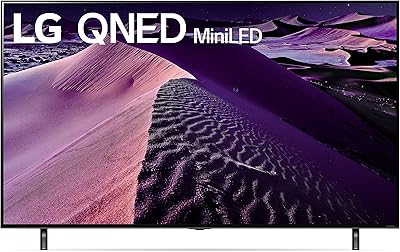
71%
78%
Picture Quality
74%
Smart Platform (Xumo TV)
88%
Value for Money
53%
Audio Performance
44%
Gaming Performance
More
FPD CG55-C1 55-inch Smart TV
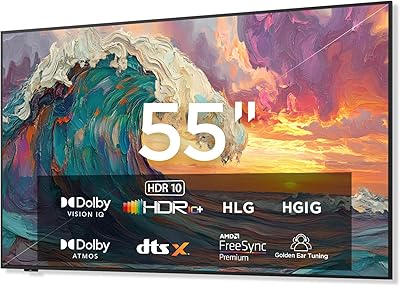
75%
83%
Picture Quality
91%
Value for Money
88%
Smart TV Platform (Google TV)
72%
Motion Handling (MEMC)
61%
Audio Performance
More
LG 55UM7300PUA 55-inch 4K Smart LED TV
74%
74%
Picture Quality
83%
Smart TV Experience
78%
Voice Control & AI
86%
Viewing Angles
62%
HDR Performance
More
LG NanoCell 90 55-inch 4K Smart TV
76%
78%
Picture Quality
82%
Color Accuracy
61%
Contrast & Black Levels
88%
Gaming Performance
81%
Motion Handling
More
iFFALCON 55F75 55-Inch QLED Smart TV
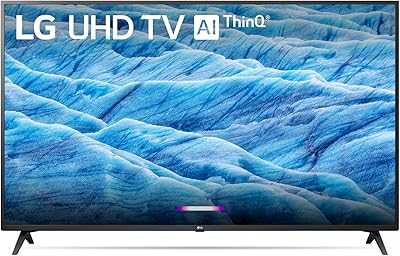
78%
83%
Picture Quality
78%
Art Mode & Aesthetics
86%
Gaming Performance
79%
Design & Build Quality
81%
Smart TV & Software
More

FAQ

You can get by with the built-in SmartCast platform for most major apps, and having Chromecast and AirPlay 2 already integrated is genuinely convenient. That said, if you are used to the speed and app depth of a Roku or Fire TV stick, you may notice the native interface feels a bit slower. For casual streaming it is perfectly fine; power users may eventually want to plug in an external device.

This is actually one of the stronger points of the M-Series 55-inch. The 600-nit brightness and Quantum Color processing help the image hold up reasonably well against ambient light, better than many budget TVs at a similar size. It is not designed for extreme high-ambient-light environments, but a standard living room with windows should be manageable.

For casual and console gaming it works well. The 120Hz refresh rate gives motion a noticeably smoother feel compared to 60Hz sets, and most players find it responsive enough for everyday play. Competitive gamers who prioritize ultra-low input lag may want to look at TVs marketed specifically for gaming, but for the majority of players this mid-range QLED is a solid option.

Yes, AirPlay 2 is built in, so you can mirror or cast directly from any compatible Apple device without needing an Apple TV or adapter. It works the way you would expect: find the TV on your iPhone or Mac, tap to connect, and you are good to go.

The M-Series 55-inch includes multiple HDMI inputs, so connecting a console, a soundbar via ARC, and an additional source simultaneously is not an issue. Check the specific port layout on the back panel before mounting, as one port typically carries the ARC function for audio passthrough.

Yes, when watching Dolby Vision-encoded content on a service like Netflix or Apple TV+, you will notice richer highlights and more nuanced color gradations compared to standard HDR10 content. The improvement is real, though how dramatic it looks depends on the quality of the source material and your room lighting.

Some owners do notice minor blooming — a soft halo of light around bright objects on a very dark background — in dimly lit scenes. With roughly 90 local dimming zones, this is an expected trade-off at this price tier; flagship sets with far more zones handle it better. For most content it is not distracting, but if you regularly watch dark sci-fi or thriller films in a pitch-black room, it is worth knowing about.

Most people find it straightforward. The on-screen setup wizard walks you through Wi-Fi connection, account login, and basic picture settings in under ten minutes. Attaching the stand is simple with the included hardware, and the remote is functional right out of the box with the included batteries.

As of the time of writing, VIZIO has continued to push SmartCast updates to M-Series sets, but because this is a 2019 model, long-term support is less guaranteed than with a current-year release. If ongoing software updates are important to you, it is worth checking VIZIO's current support status for this model number before purchasing.

It covers the basics and pairs easily, but it is one of the more frequently criticized aspects of ownership. The build feels lightweight, and the button layout is functional rather than refined. If the remote becomes a dealbreaker, third-party universal remotes and voice control via Alexa or Google Assistant are both viable alternatives.

Where to Buy