Overview

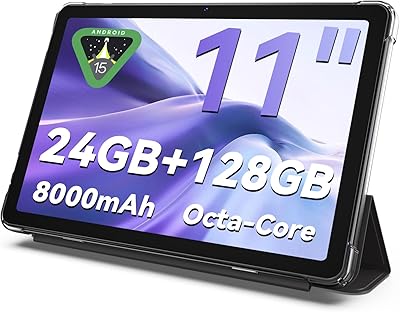
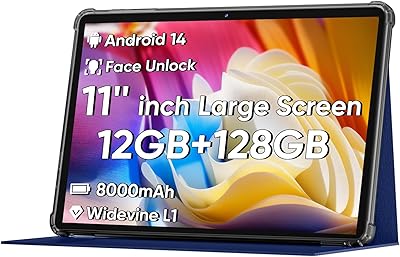
The UMIDIGI G9 Tab 11-inch Android Tablet is a budget-conscious large-screen device aimed at users who want cellular connectivity without spending flagship money. UMIDIGI has built its reputation on affordable hardware, and the G9 Tab fits that mold — it runs Android 14, ships with a stylus, case, and pre-applied screen protector right out of the box, and supports dual SIM cards, which is genuinely uncommon at this price tier. The Unisoc octa-core chip at 1.6GHz powers everything, so temper your expectations; this is not a performance machine. Launched in late 2024, long-term reliability data remains scarce, which is worth factoring into your decision.

Features & Benefits

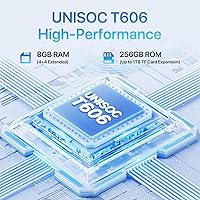
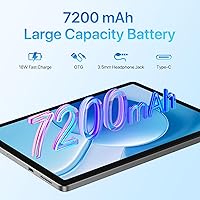
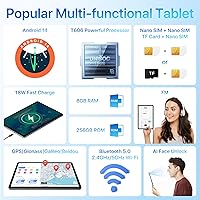
The G9 Tab's standout feature is its dual SIM slots — you can run two active cellular lines simultaneously, or swap one slot for a microSD card and push storage up to 1TB. The RAM deserves a caveat: of the advertised 8GB, only 4GB is physical; the remaining 4GB is software-extended virtual memory, which matters if you plan to multitask heavily. Battery life is a genuine strength — the 7200mAh cell handles a full day of streaming, browsing, and light work without complaint, and 18W fast charging via USB-C means you are not waiting all evening to top up. A 3.5mm headphone jack stays, which budget tablet buyers will appreciate.

Best For

This budget Android slate makes the most sense for light, everyday use: Netflix, e-books, and casual web browsing on a screen large enough to actually enjoy. Travelers and remote workers will find real value in the cellular connectivity — popping in a local SIM card abroad is a practical advantage few similarly priced tablets offer. Students and seniors who want a low-maintenance device will appreciate the straightforward Android 14 interface and generous storage headroom. Parents shopping for a kids' content device will like the expandable storage for offline videos and apps. Skip it if graphics-heavy gaming, video editing, or sharp display quality are priorities — the 1280×800 resolution shows its limits at 11 inches.

User Feedback

Buyers consistently highlight the accessories bundle as a standout value — getting a stylus, folding case, and pre-applied screen protector in the box at this price point is a genuinely pleasant surprise. The dual SIM capability earns particular praise from frequent travelers. Criticism tends to cluster around two areas: multitasking performance, where opening several apps simultaneously can produce noticeable lag, and display quality, with some buyers noting the screen looks washed out compared to pricier alternatives. Real-world battery life feedback is mostly favorable, with many users reporting a full day of use without reaching for the charger. Software update cadence and long-term after-sales support remain open questions given how recently this tablet launched.

Pros

  • Dual SIM support is a rare and practical feature at this price point, ideal for travel.
  • The in-box bundle — case, stylus, and pre-applied screen protector — adds real out-of-the-box value.
  • 256GB of internal storage is generous, and microSD expansion covers even the heaviest media collectors.
  • The 7200mAh battery reliably carries most users through a full day without needing a top-up.
  • 18W fast charging via USB-C means a meaningful power boost in under an hour.
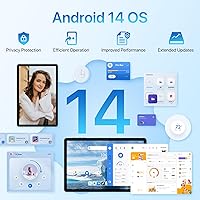
  • Android 14 brings modern privacy controls and a reasonably clean software experience.
  • The retained 3.5mm headphone jack is a small but appreciated touch that many tablet makers have dropped.
  • At roughly 1.27 pounds, the G9 Tab is light enough to hold comfortably during extended reading sessions.
  • Face unlock works quickly and reduces the friction of logging back in throughout the day.
  • GPS and FM radio support add genuine utility for users in areas with spotty data coverage.

Cons

  • Only 4GB of the advertised 8GB RAM is physical; the rest is software-extended virtual memory, which performs noticeably differently under load.
  • The 1280×800 screen resolution looks soft on an 11-inch panel — text and images lack the crispness many buyers expect.
  • The Unisoc processor struggles with multitasking, and app-switching lag is a recurring complaint from real buyers.
  • Display brightness and color accuracy fall short of what users accustomed to mid-range or premium tablets will expect.
  • Long-term software update support from UMIDIGI is unproven, and the brand has a mixed track record on post-launch patches.
  • After-sales support can be slow and inconsistent, which is a real risk if hardware issues surface later.
  • No 5G connectivity — only 4G LTE — which may matter for buyers in areas where 5G is now the baseline.
  • The microSD card is not included despite the 1TB expansion being heavily promoted in the listing.
  • Low pixel density makes extended reading of small print or fine-detail work genuinely uncomfortable over time.
  • As a late-2024 launch with limited owner history, long-term durability and reliability remain genuinely unknown.

Ratings

Our AI rating engine analyzed thousands of verified global user reviews for the UMIDIGI G9 Tab 11-inch Android Tablet, actively filtering out incentivized, duplicate, and bot-generated submissions to surface what real buyers genuinely think. The scores below reflect a balanced synthesis of recurring praise and persistent pain points across key performance categories. Nothing has been softened — where this budget Android slate falls short, the numbers say so plainly.

Value for Money
83%
Buyers consistently point to the bundled accessories — case, stylus, and pre-applied screen protector — as the clearest indicator of strong value at this price tier. Getting a functional 11-inch tablet with cellular capability and a ready-to-use accessory kit in one box is something few competitors offer without an upsell.
Some buyers feel the value calculation shifts once they factor in the virtual RAM marketing, the missing microSD card, and the uncertainty around long-term software support. The price looks attractive upfront, but the total cost of ownership picture is less clear than it first appears.
Battery Life
79%
21%
The 7200mAh cell earns genuine praise in day-to-day use — most users report a comfortable full day of mixed activity including streaming, browsing, and video calls without needing to recharge. For light users, two days between charges is achievable, which is a meaningful differentiator at this price point.
Under heavier workloads like extended navigation or running multiple apps simultaneously, the battery drains faster than the specs might suggest. A small number of users also reported the battery degrading noticeably after several months of daily use, though long-term data is still limited given the product's recent launch.
Performance
54%
46%
For core everyday tasks — loading web pages, playing YouTube videos, scrolling through social media, or running a single app at a time — the Unisoc octa-core chip handles things without major incident. Users who stick to light workloads generally do not find the performance distracting.
Multitasking is where the experience noticeably deteriorates. Switching between several open apps triggers lag and occasional stutter, and the software-extended virtual RAM does not compensate effectively under real pressure. Buyers coming from any mid-range device will find the step down in responsiveness hard to ignore.
Display Quality
51%
49%
The 11-inch screen size itself is appreciated — there is enough real estate to make streaming and casual reading comfortable, and the IPS panel maintains acceptable viewing angles for shared watching. At arm's length in a dimly lit room, most casual content looks fine.
The 1280×800 resolution across an 11-inch panel produces a pixel density that is hard to ignore once you notice it. Text looks soft, fine detail in images lacks sharpness, and users transitioning from higher-resolution devices consistently describe the screen as a disappointment. Outdoor brightness is also a common complaint.
Build Quality
66%
34%
The physical construction of the G9 Tab feels more solid than many buyers expect at this price. The slim 0.37-inch profile and 1.27-pound weight make it genuinely portable, and the chassis does not flex or creak in normal handling. First impressions in hand are generally positive.
Several users note that the plastic back scuffs and picks up light scratches relatively easily without the case on, and the overall material finish does not convey much durability confidence over time. Given the product is less than a year old, long-term structural resilience remains an open question.
Cellular Connectivity
77%
23%
The dual SIM functionality is one of the G9 Tab's most praised features, particularly among frequent travelers who use local SIM cards abroad to avoid roaming charges. Being able to maintain both a home number and a local data SIM simultaneously is a capability most budget tablets simply do not offer.
LTE band compatibility is not universal, and US carrier support in particular can be hit or miss depending on the network. Some buyers discovered after purchase that their primary carrier only had partial band overlap, resulting in weaker signal than expected. Checking band compatibility before buying is genuinely necessary.
Camera Quality
57%
43%
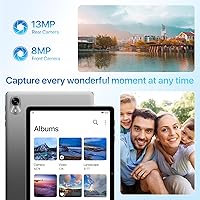
The front camera handles video calls well enough for daily use — faces are recognizable and the image is stable in decent lighting. The rear 13MP camera is serviceable for scanning documents, photographing whiteboards, or capturing quick reference shots.
In anything less than bright, natural light the image quality drops off quickly, with noticeable noise and loss of detail. Buyers expecting to take actual photos worth keeping will be let down; these cameras are utilitarian tools, not photography assets.
Software Experience
68%
32%
Android 14 brings a clean, reasonably uncluttered interface without excessive manufacturer bloatware, which users appreciate compared to some competitors in this segment. The privacy controls and permission management improvements in Android 14 are a genuine plus for security-conscious buyers.
UMIDIGI has not established a strong track record for consistent software updates on its budget devices, and buyers who rely on regular security patches will find this concerning. There is also no clear commitment from the brand about how many Android version upgrades this model will receive.
Accessories Bundle
84%
The out-of-box experience is one of the most consistently praised aspects of the G9 Tab. Arriving with a tri-fold case, a stylus, and a screen protector already applied means buyers can start using the device immediately without any additional spend, which genuinely sets this apart from bare-bones competitors.
The bundled stylus is a basic passive capacitive type with no pressure sensitivity or palm rejection — it works for simple navigation and casual sketching but should not be confused with an active stylus. The case, while functional, is not particularly rugged and may need replacing if the tablet is used in demanding environments.
Audio Quality
62%
38%
Having both dual speakers and a retained 3.5mm headphone jack is a combination many budget tablet buyers actively seek. The dual speakers produce enough volume for indoor use in quiet settings, and the headphone jack makes wired audio simple without dongles.
The speaker output at higher volumes is noticeably thin, with limited bass and a tendency toward harshness. They work for casual content but are not enjoyable for extended music listening. Overall audio fidelity is squarely in the budget tier.
Charging Speed
73%
27%
The 18W fast charging included in the box is a practical advantage — bringing the battery from low to a usable level in under an hour is achievable, and not having to buy a separate fast charger is appreciated. The USB-C connector is a modern and sensible choice.
Compared to the 30W or 45W fast charging now available on competing devices — even some budget ones — 18W feels slightly behind the curve. A full charge from flat still takes over two hours, which some users find inconvenient overnight.
Portability
76%
24%
At 1.27 pounds and under 0.4 inches thick, the G9 Tab slips easily into a bag and does not add noticeable weight to a daily carry. For an 11-inch device with a large battery inside, the weight is genuinely impressive and users frequently mention comfort during extended reading sessions.
At 11 inches, the device is simply too large to use one-handed in most scenarios, which limits its portability compared to smaller tablets. The case adds a bit more bulk, and without it the slippery back makes secure single-hand gripping tricky.
After-Sales Support
47%
53%
UMIDIGI does provide a formal 1-year warranty and offers a direct communication channel through their Amazon storefront, which at least gives buyers a documented support path. Response times from the brand are sometimes faster than expected for a smaller manufacturer.
User experiences with after-sales support are inconsistent — some report prompt resolutions while others describe slow responses and difficulty getting hardware issues acknowledged. As a brand without a broad service network, buyers outside Asia may find the support experience frustrating if a real problem arises.
Storage & Expandability
81%
19%
256GB of internal storage is a genuinely strong baseline for this price tier, leaving plenty of room for apps, offline media, and documents without immediately needing an SD card. The option to expand up to 1TB via microSD gives buyers flexibility to grow over time.
The dual SIM and microSD slot share the same physical tray, so using two SIM cards simultaneously means giving up physical storage expansion entirely. The microSD card is also not included in the box despite the 1TB expansion being prominently featured in the marketing.
Setup & Ease of Use
74%
26%
The standard Android 14 setup process is straightforward, and the face unlock feature works quickly enough to make daily login painless. Buyers new to Android — including seniors and first-time tablet users — generally find the initial setup intuitive without needing outside help.
Some users report that configuring dual SIM settings and mobile network parameters requires navigating menus that are not entirely beginner-friendly. A small number of buyers also encountered initial connectivity hiccups with Wi-Fi band selection that required manual intervention to resolve.

Suitable for:

The UMIDIGI G9 Tab 11-inch Android Tablet is a solid pick for anyone who wants a large-screen Android experience on a tight budget and does not need pro-level performance to get there. Travelers and remote workers stand to benefit most from the dual SIM support, which lets you slip in a local data SIM abroad and skip the cost of a separate mobile hotspot entirely. Students and seniors will appreciate the spacious screen, clean Android 14 interface, and the fact that a protective case, stylus, and screen protector are already in the box — there is nothing extra to hunt down before you can start using it. Parents shopping for a dedicated content device for kids will find the 256GB internal storage and microSD expansion particularly useful for loading up offline videos, audiobooks, and educational apps. If your daily needs revolve around streaming, light reading, video calls, and casual browsing, this budget Android slate checks all the relevant boxes without overcomplicating things.

Not suitable for:

The UMIDIGI G9 Tab 11-inch Android Tablet is not the right tool for buyers who demand consistent, responsive performance under pressure. The Unisoc octa-core chip is adequate for simple tasks, but users who multitask heavily — switching between several apps, running navigation alongside music and messaging — will hit lag walls more often than they would on a mid-range or premium device. The display resolution of 1280×800 across an 11-inch panel produces a noticeable lack of sharpness, which makes this a poor fit for anyone who reads small text for long stretches, streams high-definition video regularly, or edits photos and video. Mobile gamers who care about frame rates and visual fidelity should look elsewhere. The brand launched this model in late 2024, so buyers who prioritize long-term software support and proven after-sales reliability may want to wait for a more established track record before committing.

Specifications

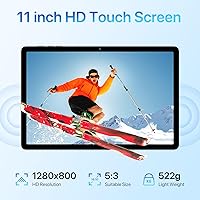
  • Screen Size: The tablet features an 11-inch IPS display panel suited for media consumption and general use.
  • Resolution: The screen renders at 1280×800 pixels, which delivers a pixel density that is adequate but noticeably soft at this screen size.
  • Processor: A Unisoc octa-core chip clocked at 1.6GHz handles all processing tasks, with the Mali-G57 GPU managing graphics output.
  • RAM: The device carries 4GB of physical RAM supplemented by 4GB of software-extended virtual memory, totaling an advertised 8GB.
  • Storage: Internal storage is 256GB, with microSD card expansion supported up to 1TB (card sold separately).
  • Operating System: The tablet ships with Android 14, offering updated privacy controls and a modern permission management framework.
  • Battery: A 7200mAh lithium polymer cell provides all-day battery life under typical light-to-moderate usage conditions.
  • Charging: The included USB-C charger supports 18W fast charging, which meaningfully reduces the time needed to recover a depleted battery.
  • Cellular: Dual nano-SIM slots support 4G LTE, 3G, and 2G networks, enabling voice calls and mobile data without a separate hotspot.
  • Wi-Fi: The tablet supports 802.11ac and 802.11n standards across both 2.4GHz and 5GHz frequency bands.
  • Bluetooth: Bluetooth 5.0 provides a stable and energy-efficient connection to wireless peripherals and audio devices.
  • Cameras: A 13MP rear camera and an 8MP front-facing camera handle photography, video calls, and basic document scanning.
  • Audio: Dual speakers and a 3.5mm headphone jack are both present, offering flexible audio output options.
  • Additional Features: Built-in GPS, FM radio, and face unlock functionality are included alongside the core tablet hardware.
  • Dimensions: The tablet measures 9.64 × 6.39 × 0.37 inches, making it slim enough to fit comfortably in a standard bag or portfolio.
  • Weight: At 1.27 pounds (approximately 522g), the device is light enough for extended handheld reading sessions.
  • In-Box Contents: The package includes the tablet, a tri-fold protective case, a stylus, a pre-applied screen protector, a USB-C cable, a power adapter, and a SIM tray ejector.
  • Warranty: UMIDIGI provides a 1-year after-sales support warranty, accessible directly through their storefront contact channel.

Related Reviews
ApoloSign EP1095T 11-inch Android Tablet
73%
84%
Value for Money
78%
Display Quality
61%
Performance
57%
RAM & Multitasking
81%
Battery Life
More
qunyiCO Y7 Kids Tablet 7-inch Android 11, 32GB
84%
92%
Value for Money
88%
Durability
85%
Ease of Use
80%
Performance
89%
Parental Controls
More
Callsky-Tab Ctab 12 12-inch Android Tablet
76%
83%
Display Quality
88%
Value for Money
61%
Performance
77%
Battery Life
91%
Storage
More
SZTPSLS SQ8 8-inch Android Tablet
69%
81%
Value for Money
74%
Display Quality
52%
Performance
58%
Build Quality
78%
Storage & Expandability
More
KELANYIS A5 11-inch Android Tablet
70%
81%
Value for Money
74%
Display Quality
78%
Battery Life
61%
Performance & Speed
54%
RAM & Multitasking
More
COLORROOM C5 11-inch 128GB Android Tablet
71%
82%
Value for Money
79%
Battery Life
57%
Performance & Speed
71%
Display Quality
78%
Streaming Experience
More
TUOHAITIME K10 11-inch Android Tablet
71%
84%
Value for Money
79%
Battery Life
61%
Display Quality
58%
Performance & Speed
56%
Build Quality
More
DMOAO D2 Tablet 11-inch, 128GB, 20GB RAM, Android 14
83%
88%
Performance
90%
Battery Life
75%
Display Quality
85%
Charging Speed
80%
Build Quality
More
YosaToo Y105 10-inch Android 11 Tablet, 64GB Storage, 3GB RAM
81%
91%
Value for Money
88%
Battery Life
74%
Display Quality
78%
Performance
85%
Ease of Use
More
SKYEGG K15 11-Inch Android Tablet
70%
83%
Value for Money
71%
Display Quality
81%
Battery Life
63%
Performance & Speed
86%
Streaming Capability
More

FAQ

It works for both. Once you insert a compatible 4G nano-SIM, you can make and receive voice calls directly on the G9 Tab, not just use it as a data connection. Whether you actually want to hold an 11-inch tablet up to your ear is a personal call — most people pair it with Bluetooth earbuds or use speakerphone instead.

There is a catch worth knowing about. Only 4GB is physical RAM; the other 4GB is software-extended virtual memory that pulls from internal storage. Virtual memory is slower and less responsive than real RAM, so under heavy multitasking you may still notice slowdowns despite the headline number. For casual use it is perfectly fine, but do not expect it to behave like a device with a true 8GB chip.

Unfortunately, no. The slot configuration requires a trade-off: you can use two nano-SIM cards simultaneously, or one nano-SIM card plus one microSD card — but not all three at once. If cellular connectivity is your priority, you would be giving up the physical card slot for expandable storage.

It is serviceable but not impressive. The 1280×800 resolution spread across an 11-inch panel results in a lower pixel density than most people are used to on modern devices, meaning text and images can look slightly soft or pixelated up close. For casual streaming of standard-definition content or general web browsing it holds up fine, but if you regularly watch HD video or read small print for long periods, the display may frustrate you.

Real-world feedback is generally positive here. Most users doing a mix of browsing, video playback, and light app use report comfortably getting through a full day on a single charge, with some managing closer to two days on lighter workloads. The 7200mAh capacity is genuinely large for this category, and the 18W fast charging helps you recover quickly when you do need to plug in.

It supports 4G LTE, but compatibility depends on which LTE bands your carrier uses. UMIDIGI products are typically optimized for Asian and European band configurations, so US carrier band support — particularly for AT&T, T-Mobile, or Verizon — may be partial rather than full. It is strongly recommended to check the specific LTE band list against your carrier before purchasing if you plan to use a US SIM.

It is a basic capacitive stylus — the kind that simply mimics a finger tap rather than offering pressure sensitivity or tilt detection. It works fine for basic note-taking, sketching rough outlines, or navigating the interface, but it is not comparable to an active stylus with palm rejection. For anything beyond light use, your expectations should be appropriately modest.

Honestly, the outlook is uncertain. UMIDIGI has historically been inconsistent with long-term software support on its budget devices, and the G9 Tab only launched in late 2024, so there is not yet a clear pattern to point to. Do not count on it reaching Android 15 or beyond, and if regular security patches are important to you, a brand with a stronger update commitment would be a safer choice.

Buyers generally describe it as a functional tri-fold folio case rather than a flimsy sleeve. It props the tablet up for typing or viewing and provides reasonable edge protection for everyday bumps and drops. It is not a rugged case by any stretch, but for regular indoor use it does the job and the fact that it is included at no extra cost is a genuine plus.

For both groups, it is a reasonable fit with some caveats. The large screen is easy to see, Android 14 allows you to set up simplified interfaces and parental controls, and the generous storage means you can pre-load plenty of content for offline use. The main concern for elderly users might be the slightly soft display and the learning curve of an unfamiliar brand. For kids, it is best suited to media consumption and light educational apps rather than anything that demands smooth, responsive performance.