
Overview

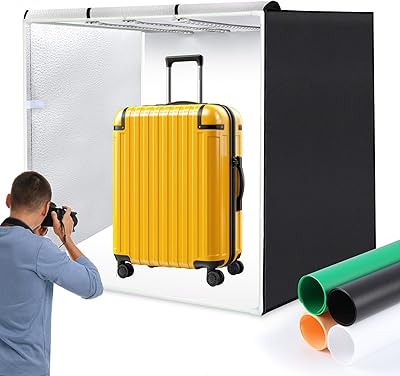
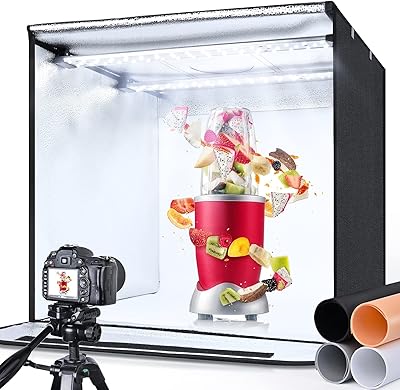
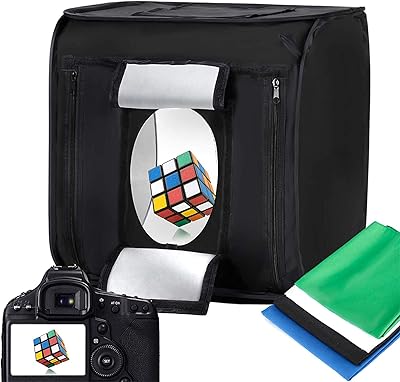
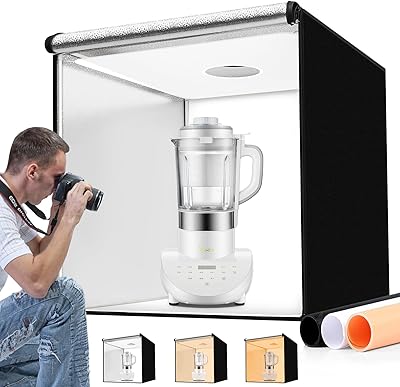
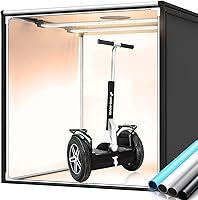
The Travor M100A 39″ Photo Light Box occupies a genuinely useful spot in the photography tent market — large enough to handle mid-sized products that smaller tents simply cannot fit, yet accessible enough for serious hobbyists and small business owners to commit to. The 39-inch cubic interior is the real story: shoes, handbags, electronics boxes, and tall bottles all fit without forcing awkward angles. Unlike most single-temperature rivals at this price tier, this light tent ships with a bi-color LED system, a practical upgrade that matters in daily shooting. Assembly uses a tube-and-corner frame — expect 15–20 minutes your first time. Worth stating upfront: this is a still-photography setup, not a video softbox solution.

Features & Benefits

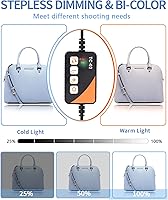
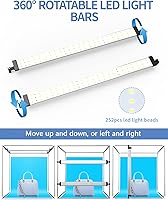
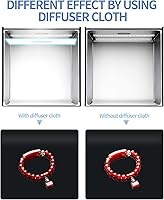
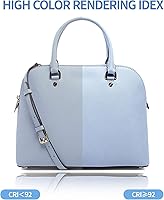
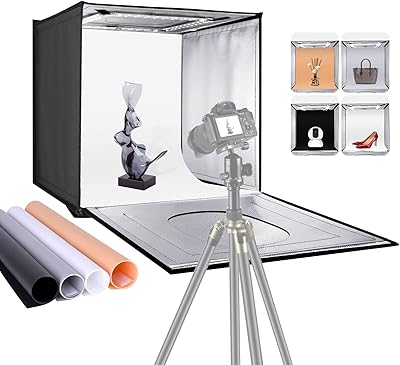
The lighting setup is where this photo studio box earns its keep. Those two repositionable LED bars span 2600K to 8500K with fully stepless dimming, meaning you can dial in warm, lifestyle-friendly tones for a cosmetics shoot, then shift to crisp daylight color for a tech product without touching your camera settings. With 252 LEDs pumping out 13,000 lumens at CRI 95+, colors render accurately — less time fiddling in Lightroom afterward. The reflective silver interior fabric diffuses light broadly, and an included diffuser panel handles reflective surfaces like glassware or jewelry. You can open the tent on four sides, reposition the light bars, and the four PVC backdrops — black, white, gray, and blue — swap out via velcro in under a minute.

Best For

This light tent is a natural fit for Etsy sellers and FBA vendors who photograph multiple products regularly and need consistent results without outsourcing to a studio. If you’ve been squeezing a shoe or a leather bag into a 60cm tent and cropping awkwardly, the jump to 39 inches makes a real difference. Beginners benefit from the fact that the lighting largely handles itself — accurate color temperature means less guesswork correcting hues in post. It also works well for photographers who shoot across different product categories; the backdrop variety and adjustable color temperature mean you’re not locked into one look. That said, at just under 17 lbs, this isn’t a grab-and-go setup — budget some desk or shelf space for it.

User Feedback

Across more than 1,500 ratings, the Travor light box holds a 4.4-star average — a score that reflects broad, genuine satisfaction rather than inflated reviews. The most consistent praise centers on light quality: buyers report that products photograph with even, shadow-free illumination straight out of the box, with very little post-processing needed. People upgrading from smaller tents frequently cite the size difference as the deciding factor. Where things get less tidy: the assembly manual leaves some steps underexplained, and first-time builds can involve a fair amount of trial and error. The velcro backdrop system is functional but can feel fiddly under time pressure. A smaller subset of buyers also notes that PVC backdrops scratch with repeated handling over time, so mindful storage is worth the habit.

Pros

  • Even, shadow-free lighting right out of the box means very little post-processing work is needed.
  • The 39-inch interior genuinely fits mid-sized products like shoes, bags, and boxed electronics without awkward cropping.
  • Bi-color LEDs spanning 2600K to 8500K let you match the mood of any product shoot without swapping hardware.
  • CRI 95+ ensures colors reproduce faithfully on camera, cutting down on heavy editing sessions afterward.
  • Four interchangeable PVC backdrops cover the most common product photography scenarios within a single kit.
  • The included diffuser panel makes shooting reflective surfaces like jewelry and glassware genuinely practical.
  • Repositionable light bars and four shooting angles add useful flexibility for products with tricky shapes.
  • The modular frame packs into a carry bag, making off-site shoots and trade show use realistic.
  • At 4.4 stars across more than 1,500 ratings, buyer satisfaction is well above average for this category.

Cons

  • The assembly manual is poorly written, and first-time builds often require guesswork or supplementary video tutorials.
  • At nearly 17 lbs, this light tent is not something you will move casually between rooms.
  • Velcro backdrop holders can feel fiddly under time pressure when you need to swap backgrounds quickly mid-shoot.
  • PVC backdrops develop surface scratches with regular handling and need careful storage to stay presentable long-term.
  • The assembled footprint is substantial — plan for a dedicated corner of your workspace before purchasing.
  • There is no remote control or companion app; all brightness and color temperature changes are manual on the dimmer unit.
  • The tube-and-corner frame is sturdy but takes noticeably longer to set up than pop-up competing models.
  • Still-photography-only design rules out video production or live-subject work entirely, narrowing its use cases.

Ratings

Our scores for the Travor M100A 39″ Photo Light Box were generated by AI after processing and filtering verified global user reviews — actively discarding incentivized, duplicate, and bot-generated feedback — so each rating reflects genuine, real-world ownership experience. The breakdown below covers the most decision-relevant dimensions of this light tent, from light quality and shooting flexibility to assembly friction and long-term backdrop durability. Where buyers are divided, both the praise and the pain points are scored and explained transparently, so you can judge suitability for your own workflow rather than relying on a single aggregate star count.

Light Quality
88%
Buyers consistently report shadow-free, evenly distributed illumination that fills the full 39-inch interior without obvious bright patches or dead zones. The CRI 95+ rating means product colors — fabric dyes, food packaging, cosmetic shades — photograph true to life, cutting down on the color-grading time that cheaper, lower-CRI setups typically demand.
Very dark or matte-black subjects can still absorb light in ways that require manual camera exposure compensation to recover detail. The light bars are top-mounted only, so users shooting objects with strong surface texture occasionally note they would benefit from a side-light option the tent does not natively offer.
Brightness Output
89%
At 13,000 lumens maximum across 252 LEDs, the output is strong enough to allow faster shutter speeds, tighter apertures, or lower ISO settings — all of which contribute to sharper, cleaner product images with less digital noise. Even at mid-range brightness, this photo studio box produces more usable light than most single-bar competitors in the same category.
For small, delicate subjects like translucent fabrics or fine dried florals, the maximum output at close range can be intense enough to wash out subtle tonal gradations, requiring the dimmer to be backed down significantly before shooting. There is no numeric display on the dimmer, so finding and reliably repeating an exact brightness level between sessions requires informal trial and error.
Color Temperature Range
86%
The stepless 2600K–8500K range gives photographers genuine shooting flexibility that a single-temperature tent simply cannot match. Sellers who photograph both warm-toned artisan goods and cool, clinical tech products can shift the look entirely without reshooting under different equipment or correcting white balance manually in post-processing.
A small group of users accustomed to studio flash gear note the warm end at 2600K can introduce a slight amber cast that requires careful dialing before it looks natural on camera. The dimmer unit lacks any numeric or positional readout, making it difficult to return to an exact color temperature across different shooting sessions with consistency.
Size & Shooting Space
91%
For sellers photographing mid-sized products — sneakers, leather handbags, wine bottles, boxed electronics — the 39-inch cubic interior is a practical upgrade that consistently earns praise from users graduating from 60cm tents. Objects that previously required awkward cropping or edge-blurring in post simply fit cleanly inside the frame with usable clearance on all sides.
The generous interior size demands real dedicated space: nearly a square meter of floor footprint when assembled, before accounting for the clearance needed to position a camera and step back to shoot. Users in small apartments or shared home office setups have noted this is not a keep-it-on-the-desk option and requires deliberate spatial planning to use regularly.
Value for Money
83%
At the mid-range price point, the combination of bi-color LEDs, a CRI above 95, four backdrop colors, a diffuser panel, and a full cubic meter of shooting space represents a genuinely strong bundle that would cost noticeably more if sourced as separate components. Buyers upgrading from budget light tents consistently flag the quality gap as immediately apparent in their first session.
Users who photograph exclusively small items — jewelry, coins, or flat art prints — may find the scale and price difficult to justify when lighter, cheaper tents handle those use cases adequately. The PVC backdrop durability concern also introduces a potential future replacement cost that somewhat dilutes the long-term value equation for heavy users.
Diffusion & Shadow Control
87%
The silver-lined interior fabric disperses light broadly across the shooting space, and most product categories photograph with very clean, soft shadows straight out of the box without any additional setup. The included diffuser panel extends this capability to reflective surfaces — glassware, chrome hardware, polished plastics — where unshielded LED output would otherwise produce distracting glare.
For flat-lay photography requiring dramatic directional shadows as a deliberate stylistic choice, the broad diffusion works against the effect and cannot be easily overridden without partially obstructing the interior. This is a conscious design trade-off well-suited to clean commercial product shots, but it places a ceiling on creative lighting setups for photographers who want more control.
Ease of Use
79%
21%
Once assembled and powered on, the shooting experience is genuinely accessible to beginners — the light is even enough that basic camera settings produce professional-looking results without extensive photography knowledge. Small business owners who photograph products on a weekly basis report that routine sessions become quick and repeatable after the initial learning curve flattens out.
The first-session experience is steeper than it should be, largely due to assembly ambiguity and the absence of any quick-start guide tailored to common product photography scenarios. Users transitioning from fully automatic portable setups may also find the manual dimmer control requires more experimentation than expected before yielding consistent, repeatable results across sessions.
Build Quality
74%
26%
The tube-and-corner frame clicks together with satisfying rigidity once correctly assembled, and the silver-lined interior fabric feels taut and durable rather than flimsy or loosely tensioned. Several users running regular weekly shooting sessions report no meaningful structural degradation after extended periods of consistent use.
The frame is constructed from PVC rather than aluminium or steel, which keeps the overall weight manageable but places a ceiling on how solid it feels compared to mid-level studio equipment. A handful of buyers have noted that corner connectors can loosen incrementally after repeated assembly and disassembly cycles sustained over several months.
Assembly & Setup
62%
38%
The modular design requires no tools at any point, and once a user is genuinely familiar with the tube-and-corner arrangement, repeat setups become noticeably faster and more intuitive than the first attempt suggests. The carry bag keeps all components organized between sessions, which reduces the real risk of misplacing small corner-connector pieces.
The printed instruction manual is widely cited as the weakest point in the ownership experience — unclear diagrams and missing orientation cues make first-time builds genuinely frustrating for many buyers. Most users report needing a supplementary online video tutorial before the frame arrangement makes intuitive sense, which adds unwanted friction to an initial shooting session.
Backdrop Quality
67%
33%
The four included PVC panels cover the most practical range of product photography backdrop colors, and swapping between them mid-session is quick enough to remain practical rather than disruptive. PVC also holds its color saturation more consistently than fabric alternatives and does not sag, wrinkle, or absorb moisture over time.
Surface scratches accumulate on PVC panels with regular folding or careless storage, and a notable subset of long-term users report panels that look visibly marked after several months of heavy use. The velcro attachment system is functional but imprecise under time pressure, occasionally allowing a backdrop edge to droop or misalign mid-shoot without an obvious quick fix.
Portability
71%
29%
The included carry bag transforms this from a fixed studio fixture into something that can realistically travel to trade shows, client locations, or seasonal pop-up retail setups. Users who photograph event-based or rotating inventory particularly value being able to break the entire setup down into one organized, carry-friendly package.
At nearly 17 lbs, this is firmly car-trunk portable rather than carry-on portable — public transport, flights, or multi-stop days make the weight impractical rather than merely inconvenient. The assembly time at destination also adds friction; if a shoot needs to begin within minutes of arrival, a lighter pop-up competitor would handle that scenario more comfortably.
Shooting Angle Flexibility
77%
23%
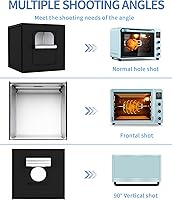
Four operable entry points — front, top, left, and right — combined with repositionable light bars give photographers a meaningful range of compositional approaches without having to reposition the entire tent. Tall products like wine bottles or aerosol cans benefit especially from the top-open option, which allows clean overhead shots without dismantling the light bar assembly.
The light bars can only be mounted along the top rail, so true side-lighting or low-angle rim effects require improvised external sources rather than anything the kit itself provides. Users photographing sculptural or asymmetric objects have noted that the angle options, while better than single-entry tents, still impose meaningful compositional constraints in practice.
Backdrop Variety
73%
27%
Black, white, gray, and blue cover the practical range most product sellers need for e-commerce listings, and having all four options included eliminates the need to source backgrounds separately or wait for additional shipments before a shoot. The selection works well for both high-contrast items on white and darker objects where gray or black reads more clearly.
Four colors will not satisfy photographers shooting lifestyle or editorially styled product imagery that calls for warmer neutrals, textured surfaces, or on-brand accent tones. PVC panels also show fingerprints and handling marks more visibly than matte fabric alternatives, requiring more attentive handling to keep surfaces reliably camera-ready across repeated sessions.
Instruction Quality
48%
52%
The kit does include a printed manual with an illustrated parts list that accounts for every component, reducing the chance of missing pieces going unnoticed before assembly begins. Users with prior experience assembling tube-frame products can often work through the build using the diagrams alone, even where the explanatory text falls short.
The instruction manual is the single most consistently criticized element across verified buyer feedback, with multiple reviewers describing it as confusing, incomplete, or visually inconsistent with the actual frame geometry included in the box. First-time builders almost universally recommend finding a third-party video tutorial before attempting assembly — a workaround that should not be necessary for a product at this price point.

Suitable for:

The Travor M100A 39″ Photo Light Box is built for people who photograph products seriously but aren’t ready to rent a studio — think Etsy shop owners, Amazon FBA sellers, and independent retailers who need repeatable, professional-looking shots on their own schedule. If your catalog includes shoes, handbags, electronics packaging, or bottles that have been awkwardly cropped inside a smaller 60cm tent, the cubic meter of interior space here is a genuine upgrade. The bi-color LED range means you can shift from warm, inviting tones for a lifestyle product to clean, neutral daylight for a tech item without swapping any equipment. Beginners especially benefit from the fact that the light output is strong and even enough to work well with minimal camera knowledge — point, shoot, and spend far less time correcting color in post. It’s also a reasonable choice for photographers who move between locations, since the tube-and-corner frame breaks down fully and travels in the included carry bag.

Not suitable for:

The Travor M100A 39″ Photo Light Box is not the right call for everyone, and being honest about its trade-offs saves real money and frustration. If you’re working in a small apartment or a cramped studio, the assembled footprint demands roughly a square meter of floor space — that’s before you account for the clearance you need to step back and actually shoot. Video creators and live streamers should look elsewhere entirely; the enclosed structure is designed for still photography only and does not accommodate the positional flexibility those workflows require. Anyone photographing oversized items — furniture, large plants, or bicycles — will find the interior limiting regardless of how generously it compares to smaller competing tents. And if you only need to photograph small objects occasionally, lighter and less expensive pop-up options will serve you without demanding dedicated storage space.

Specifications

  • Dimensions: The assembled tent measures 39″ x 39″ x 39″ (100 x 100 x 100 cm), providing approximately one cubic meter of enclosed shooting space.
  • Assembled Weight: The complete kit weighs 16.91 lb (approximately 7.7 kg) when all components are fully assembled.
  • LED Count: Two repositionable light bars house a combined total of 252 individual LED diodes.
  • Max Brightness: At full output, the light bars deliver a maximum of 13,000 lumens of total illumination.
  • Color Temperature: The bi-color LED system covers a stepless range from 2600K (warm amber) to 8500K (cool daylight).
  • CRI Rating: The LEDs carry a Color Rendering Index of 95 or above, ensuring accurate, true-to-life color reproduction on camera.
  • LED Lifespan: Travor rates the LED diodes for an approximate operational lifespan of 5,000 hours under normal use.
  • Interior Material: The inside walls are lined with a reflective silver particulate fabric designed to diffuse light evenly and minimize hot spots.
  • Frame Material: The structural frame is built from PVC tubes joined by rigid corner-connector pieces, requiring no tools to assemble or disassemble.
  • Backdrops: Four PVC backdrop panels are included in black, white, gray, and blue, each secured inside the tent via velcro strips.
  • Shooting Angles: The tent opens on four sides — front, top, left, and right — to accommodate different camera positions and compositional perspectives.
  • Light Bars: Both LED light bars are independently adjustable in angle and mounting position along the top of the frame.
  • Dimming Control: An external dimmer unit provides independent, stepless control over both brightness level and color temperature simultaneously.
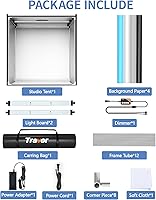
  • In the Box: The kit includes the tent shell, 2 light bars, 4 backdrop panels, 1 diffuser panel, 1 brightness dimmer, 1 power adapter, 8 corner pieces, 12 frame tubes, and a carry bag.
  • Model Number: This unit carries the model designation M100A, representing Travor’s 100cm bi-color flagship in the photo light box lineup.
  • Brand: Manufactured by Travor, a brand specializing in photography lighting equipment and studio accessories.
  • Category Rank: The M100A holds a Best Sellers Rank of #62 in the Photo Background Shooting Tents category on Amazon at time of publication.
  • Frame Assembly: The modular tube-and-corner construction allows full disassembly for transport, with all components fitting into the included carry bag.

Related Reviews
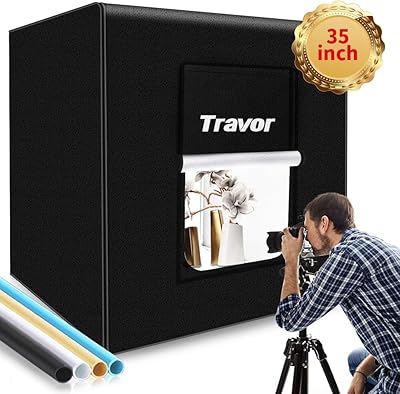
Travor 35″ Photography Light Box
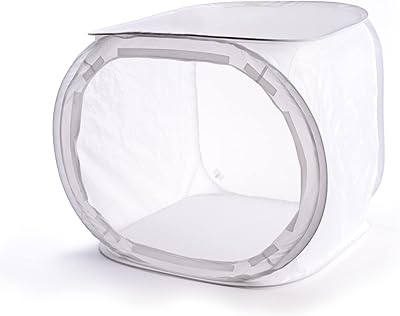
81%
88%
Lighting Brightness & Uniformity
91%
Color Accuracy (CRI)
84%
Dimmer Control
93%
Interior Size & Working Space
62%
Backdrop Quality & Variety
More
Photomyne Photo Studio Light Box
76%
83%
Light Diffusion Quality
91%
Ease of Setup
88%
Portability & Storage
61%
Interior Size & Subject Capacity
84%
Background Neutrality
More
FOSITAN T50 20-inch Photo Light Box
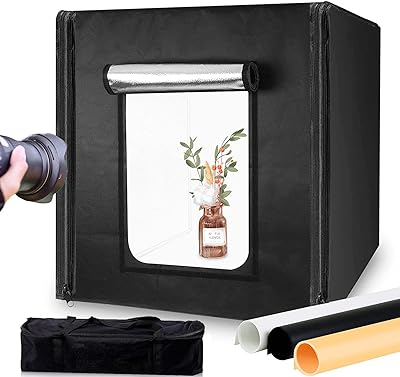
78%
88%
Light Quality
84%
Brightness Control
86%
Backdrop Variety
62%
Backdrop Material Quality
71%
Build Quality
More
LTRINGYS 16-inch Portable LED Photography Light Box
80%
81%
Lighting Quality
86%
Light Evenness & Distribution
72%
Build Quality & Durability
89%
Portability & Storage
91%
Ease of Assembly
More
Konseen 47×39×79-Inch LED Photography Light Box
67%
88%
Interior Size & Usability
81%
Light Quality & Color Accuracy
78%
Dimming & Lighting Control
51%
Assembly & Setup Experience
67%
LED Brightness Output
More
Yesker 24×24×24 Photo Light Box
77%
88%
Light Quality & Color Accuracy
91%
Working Space & Interior Size
84%
Brightness Control & Versatility
72%
Backdrop Quality & Variety
78%
Assembly & Setup Experience
More
Konseen 24x24x24″ Photo Studio Light Box
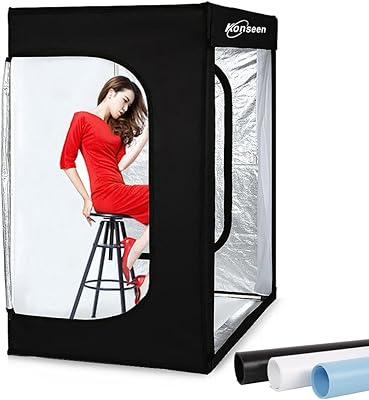
83%
94%
Ease of Setup
89%
Lighting Quality
91%
Portability
83%
Build Quality
70%
Size Suitability
More
NEEWER 16″ Photo Studio Light Box
75%
83%
Lighting Quality
61%
Interior Size & Shooting Space
91%
Ease of Setup
86%
Portability & Storage
72%
Backdrop Variety & Quality
More
Hongbang 40-Inch Photo Light Box
79%
91%
Light Quality & Accuracy
93%
Size & Interior Space
88%
Adjustability & Lighting Control
86%
LED Panel Mobility
89%
Assembly & Setup Ease
More
PULUZ 31x31 Inch Photo Light Box
80%
91%
Light Quality
84%
Size & Interior Space
88%
Ease of Assembly
82%
Dimming Control
73%
Backdrop Versatility
More

FAQ

Most people get through the initial build in about 15 to 20 minutes. The frame uses a tube-and-corner connector system that requires no tools, but the printed instruction sheet can be vague on a couple of steps. Watching a short assembly video online before your first attempt tends to save a fair amount of frustration and head-scratching.

This light tent is designed exclusively for still product photography. The enclosed structure and fixed light positioning do not accommodate the camera movement, multiple angles, or real-time adjustments that video work typically demands. If video is part of your regular workflow, a dedicated softbox or LED panel setup would serve you better.

The interior measures 39 inches on each side, which handles most mid-sized products comfortably — shoes, handbags, boxed electronics, wine bottles, small appliances, and similar items all work well. For anything wider than about 34 to 35 inches, you’ll start losing usable shooting clearance around the edges, and the results will feel cramped.

The silver-lined interior does a solid job of diffusing light broadly, which already reduces the harsh hot spots you’d get with a bare strobe or a poorly designed tent. For particularly glossy or metallic items, the included diffuser panel adds another layer of softening and is genuinely worth using — it makes a noticeable difference on chrome hardware, glass bottles, and polished jewelry.

Creasing is less of a concern with PVC than with fabric backdrops, but surface scratches can build up over time if the panels are folded sharply or stored carelessly. Rolling them loosely rather than folding extends their life considerably. A handful of long-term users have noted visible marks appearing after heavy use, so keeping the panels in a protective sleeve when not in use is a worthwhile habit.

Both can be adjusted independently through the single dimmer unit included in the kit. You can dial brightness from low output all the way up to the full 13,000-lumen maximum, and shift color temperature steplessly anywhere between 2600K warm amber and 8500K cool daylight. That level of independent control is notably more flexible than most single-temperature competitors in this price range.

The Travor M100A 39″ Photo Light Box does break down fully into its tubes and panels, all of which fit into the included carry bag. That said, the assembled kit weighs nearly 17 lbs, so it’s more realistic to think of it as car-trunk portable rather than something you’d carry on public transport or haul through an airport. For venues with vehicle access, it works well as a portable studio.

The difference is meaningful in practice, not just on paper. Products that would be wedged into a 60cm tent — or need heavy cropping to hide the background edges — typically fit cleanly inside this one. The bi-color LEDs and higher CRI also produce noticeably more accurate colors than budget single-temperature alternatives, which tends to cut down on correction work in post-processing.

No tools are needed at all — the frame clicks together using friction-fit tubes and corner connectors. The only real hurdle is that the included instruction sheet doesn’t always make the tube arrangement immediately obvious on a first read. Once you’ve assembled it once and understand how the pieces relate to each other, subsequent setups are considerably faster.

Travor rates the LEDs at approximately 5,000 hours of operational use. For a small business running several shooting sessions per week, that typically translates to several years of reliable service before any degradation becomes noticeable. Replacement light bars are not standardly listed as separate spare parts on the product page, so if a bar fails outside any applicable warranty period, reaching out to Travor’s support team directly is the recommended path to explore replacement options.