Overview

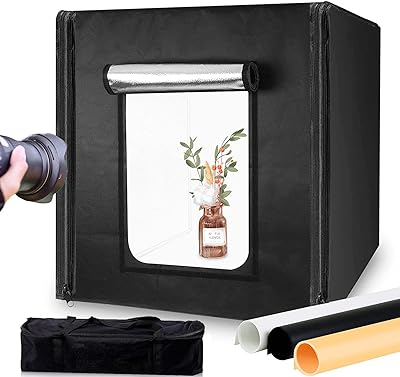
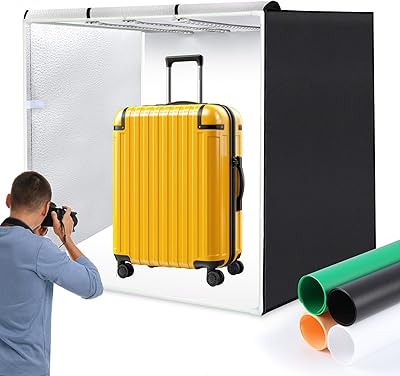
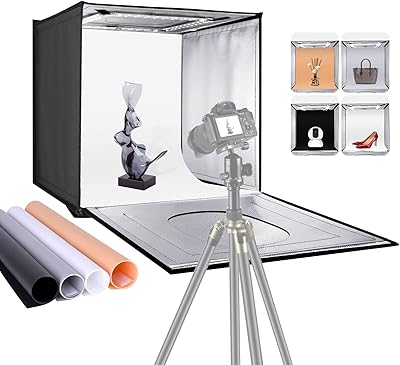
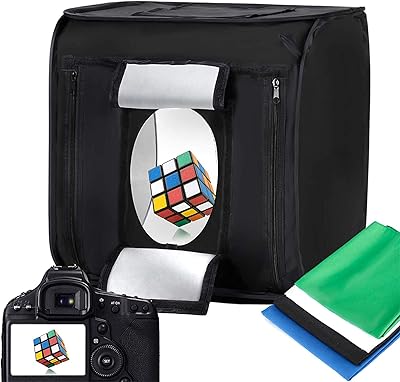
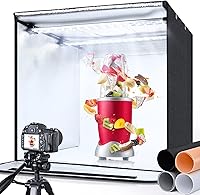
The Yesker 24×24×24 Photo Light Box sits in a practical middle ground — capable enough for serious product work, approachable enough for someone just getting started. Most compact lightboxes top out at 16 or 20 inches, which means a pair of boots, a kitchen appliance, or a larger handbag simply won't fit. This studio tent solves that without demanding a permanent corner of your home. It folds flat when you're done, sets up again without much fuss, and travels reasonably well given its 11-pound frame. Four backdrop options and a dual-tone LED system come included, so you're not hunting for accessories before your first shoot.
Features & Benefits

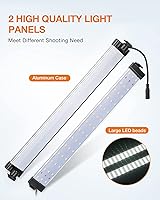
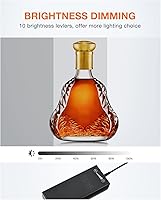
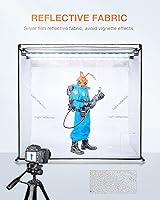
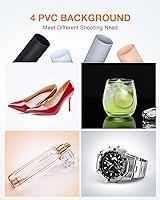
The 126 LED beads lining the interior panels aren't just there for raw brightness — their CRI95+ rating means colors photograph true to life, which matters when a buyer is deciding whether that leather wallet is brown or burgundy. Ten brightness levels let you dial in the right exposure for any subject, and flipping between warm and cool light takes only seconds. The PVC frame snaps together firmly and holds its shape across repeated setups without sagging. Diffusion panels spread light evenly across the subject, cutting the harsh shadows that tend to make product shots look flat. Four backdrops — white, gray, orange, and black — cover most shooting scenarios without extra purchases.

Best For

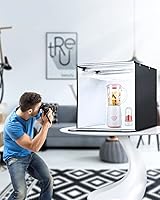
This light box earns its keep for anyone who has outgrown a smaller unit. Etsy sellers photographing boots, bags, or boxed goods will appreciate the full 24-inch interior — there is genuine room to style a shot rather than just squeeze the item in. Small business owners listing products on Amazon or their own storefronts benefit from the consistent, repeatable results the enclosed space naturally produces. Content creators shooting flat lays or product unboxings will find the neutral backdrop selection useful too. That said, if your catalog runs exclusively to small jewelry or cosmetics, the setup time and storage footprint here are more than the job requires.

User Feedback

Holding a 4.3-star average across more than 180 ratings, the Yesker box reflects solid satisfaction with a handful of honest caveats. Buyers frequently cite the even light distribution and straightforward assembly as standout positives, and the size-to-price ratio gets consistent praise from people upgrading from smaller tents. On the critical side, a recurring theme is that the backdrops can arrive with visible creases that need some patience to flatten properly. A smaller number of reviewers raise questions about zipper durability under heavy daily use. First-timers occasionally take a session or two to find their ideal brightness and color temperature balance, which is fairly normal when working with adjustable studio lighting for the first time.

Pros

  • The 24-inch interior comfortably fits larger products that smaller lightboxes simply cannot accommodate.
  • CRI95+ LEDs render product colors accurately, reducing the risk of buyer returns due to misleading photos.
  • Ten brightness levels give real control over exposure without touching camera or post-processing settings.
  • Switching between warm and cool light takes seconds, making it easy to adapt to different product types.
  • Four backdrops included out of the box — no immediate need to buy extras for basic shooting scenarios.
  • Diffusion panels wrap light around subjects evenly, noticeably cutting harsh shadows on glossy or reflective items.
  • Collapses flat for storage, so it does not permanently occupy space when not in use.
  • Works reliably with smartphones, making it accessible to sellers who shoot entirely on mobile.
  • Solid value relative to assembling a comparable multi-light diffusion setup from individual components.

Cons

  • Backdrops frequently arrive with storage creases that take time and effort to flatten before shooting.
  • Zipper on the front access panel shows wear faster than expected under regular daily use.
  • No carry bag or case is included, making transport to off-site locations more awkward than it should be.
  • LED brightness can feel slightly uneven near the side edges compared to the center of the shooting area.
  • Instruction sheet is minimal and unhelpful for first-time users, who often need to seek out video tutorials.
  • The warm and cool light modes lack a neutral midpoint, which limits natural-light blending options.
  • Assembly during the very first setup can be frustrating due to unlabeled frame components.
  • The full footprint when erected requires a dedicated table surface — not ideal for small shared spaces.
  • Fabric panels feel noticeably thin on handling, which can give an impression of fragility even when structurally sound.

Ratings

The scores below for the Yesker 24×24×24 Photo Light Box were generated by our AI system after analyzing verified purchase reviews from buyers worldwide, with spam, bot activity, and incentivized feedback actively filtered out. The result is an honest, data-driven breakdown that reflects both the aspects users genuinely praised and the friction points that surfaced repeatedly across real shooting workflows. Nothing has been smoothed over — the strengths and the shortcomings are represented as accurately as the review data allows.
Light Quality & Color Accuracy
88%
The CRI95+ rating translates noticeably in real photos — buyers who switched from cheaper alternatives consistently noted that product colors like fabric tones, leather shades, and food hues rendered far more accurately. For e-commerce sellers where a misleading photo leads to returns, this is the most practically valuable feature in the box.
A subset of reviewers observed that LED brightness can feel slightly uneven near the side panel edges compared to the center, which becomes visible when shooting very light-colored subjects like white ceramics or pale packaging. It is manageable with positioning but worth knowing upfront.
Working Space & Interior Size
91%
The 24-inch cube genuinely opens up subject options that a 16- or 20-inch box simply cannot accommodate. Buyers regularly mention fitting boots, DSLR camera bodies, small kitchen appliances, and layered flat-lay arrangements with room left to style the shot rather than just cram the item in.
At this size, the studio tent is not something you casually set up on a small desk — it needs a dedicated table surface of at least 24 inches deep. For apartment dwellers or shared-space users, the footprint during active use is something to plan around, not just during storage.
Brightness Control & Versatility
84%
Ten distinct brightness levels plus the ability to switch between warm and cool light gives users meaningful control over the mood and exposure of a shot without touching post-processing software. Sellers who photograph both reflective metal products and matte fabric items in the same session found the toggle particularly useful.
The warm-to-cool transition lacks a true mixed or neutral midpoint setting, which some users find limiting when trying to match ambient window light for a more natural look. There is also a brief learning curve for first-timers in finding the right combination of brightness and color temperature for their specific camera.
Backdrop Quality & Variety
72%
28%
Four included backdrops — white, gray, orange, and black — cover the most practical shooting scenarios without requiring additional purchases. The white and gray options in particular get heavy use from product sellers who need a clean, neutral base, and having both dark and warm options bundled in genuinely adds flexibility.
The most consistent complaint across reviews is that the backdrops arrive with storage creases that require time and effort to flatten. Unlike fabric backdrops that can be steamed quickly, these panels are less forgiving, and visible fold lines can show up in final photos if you do not allow adequate time to let them relax.
Assembly & Setup Experience
78%
22%
Most buyers describe the initial assembly as taking roughly 10 to 15 minutes, with subsequent setups going noticeably faster once the PVC frame logic clicks. The snap-together construction does not require tools, and the overall process is straightforward enough that even users with no prior studio equipment experience rarely report serious confusion.
The first assembly can feel slightly fiddly as the frame pieces are not labeled, and the instruction sheet is minimal. A handful of reviewers mention that one or two joints required more force than felt comfortable, raising questions about long-term stress points on the frame connectors.
Build Quality & Durability
69%
31%
The PVC frame holds its shape well across repeated setups and does not develop noticeable flex or wobble under normal use. For a collapsible unit at this price point, the structural integrity when erected is better than many competitors, and users who have owned it for several months generally report no frame failures.
Zipper durability is a recurring concern in longer-term reviews. Some buyers who use this studio tent daily for business photography noticed the zipper on the front access panel beginning to catch or lose smoothness after several weeks of regular use, which is a real quality control gap for a product aimed at working sellers.
Portability & Storage
74%
26%
The collapsible design means this studio tent can be broken down and stored in a closet or under a bed without dominating a room. At just over 11 pounds, it is light enough to carry between rooms or take to a temporary shooting location without assistance.
Calling it truly portable in the travel sense is a stretch — the folded dimensions are still substantial, and there is no dedicated carry bag included with the unit. Buyers who anticipated bringing it to markets or pop-up events found the lack of a purpose-built carrying case inconvenient.
Value for Money
83%
Relative to what buyers would spend assembling a comparable setup from separate light panels, backdrops, and a diffusion frame, this studio tent offers strong bundled value. Small business owners on tight budgets repeatedly describe it as punching above its price bracket when it comes to the quality of results it enables.
Buyers expecting professional studio-grade construction at this price point will find the material quality of the fabric panels and backdrop accessories a little underwhelming on close inspection. The value proposition is real, but it depends on having calibrated expectations for the category.
Diffusion & Shadow Control
81%
19%
The fabric diffusion walls spread light across the subject in a way that meaningfully reduces harsh shadows without any additional equipment. Product photographers shooting glossy items like perfume bottles, electronics, or lacquered goods noted that the soft, wrap-around light made a real difference compared to open-flash setups.
At the far corners of the interior, diffusion is slightly less even than at center, which matters most when shooting wide, flat subjects that occupy the full floor space. It is a minor issue for most use cases but worth noting for anyone planning to shoot large, uniform surface items.
Ease of Use for Beginners
76%
24%
The enclosed design removes most of the guesswork around lighting placement that frustrates beginners with open setups. Point a phone camera or entry-level DSLR at a product inside this tent at mid-brightness and the results are reliably clean without any technical lighting knowledge required.
New users sometimes default to maximum brightness, which can overexpose lighter subjects and create a washed-out look. Understanding that the warm and cool modes interact differently with various subject colors takes a session or two to internalize, and the included documentation does not walk beginners through this.
Fabric Panel & Material Quality
66%
34%
The white diffusion fabric does its functional job well — it is thin enough to allow light through evenly while opaque enough to block external ambient light from contaminating the shot. For regular home or studio use, the material holds up adequately.
Several reviewers noted that the fabric panels feel noticeably thin and a bit flimsy when handled, which contributes to a perception of fragility even when the unit is structurally sound. Over time, repeated packing and unpacking can introduce small surface marks on the white interior that become visible in high-contrast product shots.
Compatibility with Camera Types
86%
This studio tent works equally well with smartphones, mirrorless cameras, and DSLRs — the front opening is wide enough to accommodate a lens with a moderate focal length, and the interior depth gives enough working distance for a natural perspective. Mobile sellers using just a phone reported photo quality improvements that directly reduced buyer return rates.
Users shooting with longer telephoto lenses or wide-angle macro setups may find the front opening constraining. There is no overhead access panel, so top-down flat-lay shots require removing the unit from the surface or shooting through the front at a steep angle, which is not ideal.
Instruction Clarity
57%
43%
Once assembled, the logic of how the frame pieces connect becomes apparent and most users do not need to revisit the instructions. The physical setup is intuitive enough that buyers with any DIY experience can work through it independently within a reasonable timeframe.
The included instruction sheet is sparse and the diagrams lack detail for first-time lightbox buyers. Several reviewers turned to online video tutorials to complete the initial assembly with confidence, which suggests the documentation has room for meaningful improvement.

Suitable for:

The Yesker 24×24×24 Photo Light Box is purpose-built for anyone who has hit the ceiling of what a smaller lightbox can do. Etsy sellers, Amazon merchants, and independent shop owners photographing mid-to-large items — boots, handbags, boxed electronics, kitchenware, potted plants — will find the 24-inch interior genuinely roomy rather than just technically adequate. Amateur photographers who want clean, consistent product shots without building a lighting setup from scratch will appreciate how much the enclosed diffusion environment does the hard work for them. Content creators who shoot regular flat lays or product unboxings also benefit from the repeatable neutral background options, which keep a feed or catalog looking cohesive without restyling every session. If you have been squeezing oversized items into a 16-inch box and cropping aggressively in post, this studio tent is a practical and well-priced upgrade.
Not suitable for:

The Yesker 24×24×24 Photo Light Box is not the right tool for every photographer, and it is worth being direct about that. Professional commercial photographers or studio operators who shoot at high volume daily will likely find the zipper quality and fabric panel construction underwhelming for the wear and tear of intensive professional use. Jewelry makers, cosmetics sellers, or anyone whose entire catalog consists of very small items will get better results — and a much simpler workflow — from a compact 12- or 16-inch lightbox that is easier to set up and store. Users hoping to shoot top-down flat lays exclusively may also find the lack of an overhead access panel limiting, since achieving a true bird's-eye angle requires awkward workarounds. And if your living or working space is tight, keep in mind that this tent occupies a meaningful footprint when erected — it is not something you casually perch on a corner of a small desk.
Specifications

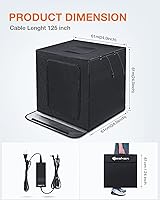
  • Working Dimensions: The interior shooting space measures 24″ deep × 24″ wide × 24″ high, accommodating mid-to-large products comfortably.
  • LED Count: The unit houses 126 large LED beads distributed across the interior lighting panels for broad, even coverage.
  • Color Rendering: LEDs carry a CRI95+ rating, meaning colors in photographs closely match how subjects appear under natural daylight conditions.
  • Brightness Levels: Brightness is adjustable across 10 discrete steps, spanning a range of 10% to 100% output.
  • Light Modes: Two selectable color temperature modes — warm and cool — allow the user to shift the light character to suit different subject materials.
  • Included Backdrops: Four backdrop panels are included in the box: white, gray, orange, and black.
  • Frame Material: The structural frame is constructed from PVC, which is lightweight, corrosion-resistant, and holds its shape across repeated assembly cycles.
  • Outer Casing: The enclosure fabric is a thin, semi-opaque polyvinyl chloride-based material that diffuses LED output while blocking most ambient light from entering the shooting space.
  • Product Weight: The complete unit weighs 11.37 pounds, making it manageable for a single person to move and reposition.
  • Product Dimensions: The exterior footprint when assembled measures 24 × 24 × 24 inches, requiring a dedicated flat surface of at least that depth to sit stably.
  • Design Type: The light box uses a collapsible fold-flat design, allowing it to be broken down and stored in a compact form when not in active use.
  • Assembly: Assembly is required; the PVC frame components connect manually without tools, with most users completing first-time setup in approximately 10 to 15 minutes.
  • Brand & Model: Manufactured by Yesker under model number 076, this unit has been available on the market since March 2021.
  • Flicker Control: The LED system is designed to operate without screen flicker, which helps maintain consistent exposure when shooting with electronic shutter cameras or video.
  • Access Opening: A zippered front panel provides the primary access point for placing subjects and positioning a camera lens during shooting.
  • Carry Solution: No dedicated carrying bag or case is included; users must source their own storage solution for transport beyond simple home storage.
  • Power Connection: The LED panels connect via a corded power supply; the unit is not battery-operated and requires proximity to a standard electrical outlet during use.
  • Best Sellers Rank: As of available data, this light box holds a rank of #66 in the Photo Background Shooting Tents category on Amazon.

Related Reviews
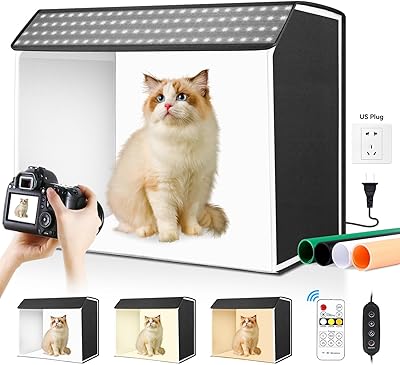
Takerers LB64 24″x16″ Photo Light Box
80%
88%
Lighting Quality
81%
Color Temperature Range
67%
Build Quality
83%
Backdrop Quality
91%
Ease of Setup
More
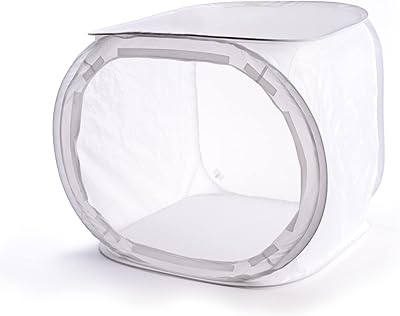
Photomyne Photo Studio Light Box
76%
83%
Light Diffusion Quality
91%
Ease of Setup
88%
Portability & Storage
61%
Interior Size & Subject Capacity
84%
Background Neutrality
More
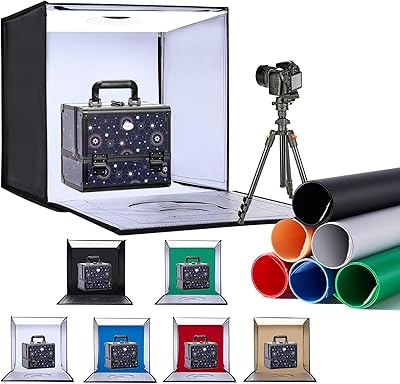
ZKEEZM 24×24 Photo Light Box
82%
88%
Lighting Quality
93%
Ease of Setup
82%
Backdrop Variety & Quality
74%
Build & Frame Durability
79%
Brightness Control
More
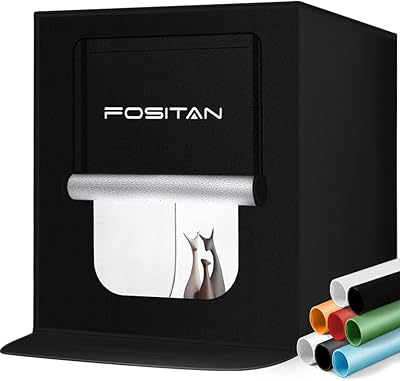
FOSITAN Photo Light Box T50
86%
91%
Ease of Use
93%
Portability
88%
Lighting Quality
90%
Setup & Storage Convenience
92%
Brightness Range Flexibility
More
LTRINGYS 16-inch Portable LED Photography Light Box
80%
81%
Lighting Quality
86%
Light Evenness & Distribution
72%
Build Quality & Durability
89%
Portability & Storage
91%
Ease of Assembly
More
Hongbang 40-Inch Photo Light Box
79%
91%
Light Quality & Accuracy
93%
Size & Interior Space
88%
Adjustability & Lighting Control
86%
LED Panel Mobility
89%
Assembly & Setup Ease
More
Konseen 24x24x24″ Photo Studio Light Box
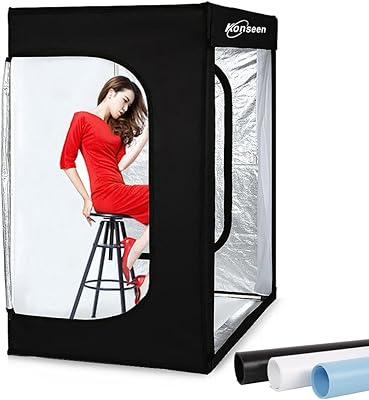
83%
94%
Ease of Setup
89%
Lighting Quality
91%
Portability
83%
Build Quality
70%
Size Suitability
More
NEEWER 16″ Photo Studio Light Box
75%
83%
Lighting Quality
61%
Interior Size & Shooting Space
91%
Ease of Setup
86%
Portability & Storage
72%
Backdrop Variety & Quality
More
PULUZ 31x31 Inch Photo Light Box
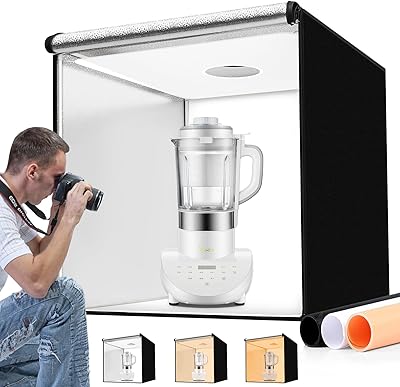
80%
91%
Light Quality
84%
Size & Interior Space
88%
Ease of Assembly
82%
Dimming Control
73%
Backdrop Versatility
More
Konseen 47x39x79 inch Photo Light Box
82%
88%
Ease of Setup
94%
Lighting Quality
86%
Size and Versatility
55%
Portability
80%
Build Quality
More

FAQ

Realistically, expect the first assembly to take around 15 to 20 minutes, especially if you take time to read through the instructions. After that first run, most people knock it down to under 10 minutes because the frame logic becomes intuitive. The PVC pieces connect without tools, but a few of the joints require a firm push that can feel uncertain the first time around.

Yes, and honestly this is one of its strongest use cases. The enclosed diffusion environment does most of the lighting work for you, so a modern smartphone on auto mode will produce clean, well-lit product shots without any additional settings. Many Etsy and small business sellers use this studio tent exclusively with their phones and are happy with the results.

They can, particularly on the white backdrop where contrast makes folds more visible. The good news is that most of the creasing relaxes on its own if you hang the backdrop flat for a day or two before use. Avoid steaming them directly, as the material is heat-sensitive; gentle tension and patience work better than heat.

Yes, comfortably. The 24-inch cube is specifically where this light box earns its value over smaller alternatives. Knee-high boots, large handbags, boxed electronics, and most kitchen appliances fit without having to angle or compress the item. You also have enough room left to style the shot rather than just barely fitting the subject.

It is quite noticeable, especially when shooting subjects where color tone matters — leather goods, food, fabrics, and wood surfaces all respond differently to warm versus cool light. The warm setting adds a slight golden quality that works well for lifestyle-style product shots, while cool light gives a cleaner, more clinical look suited to tech products or white-background catalog photos.

For most non-professional users, this studio tent is a more practical choice than building a DIY rig. A DIY setup with two softboxes, stands, and backdrop support can cost more and takes up significantly more space. The enclosed design also naturally removes variables like ceiling reflections and uneven ambient light that make DIY setups harder to control consistently.

This is a fair concern that comes up in real buyer feedback. For occasional or weekly use, the zipper holds up fine. If you are opening and closing this studio tent multiple times per day for a working business, some users have reported the zipper becoming stiff or catching after several weeks of heavy use. It is not a dealbreaker for most people, but worth knowing if intensive daily operation is your plan.

Not easily, since there is no top access panel. The only opening is the front zipper, so getting a true top-down angle requires either positioning the tent on its back — which changes how the lighting falls — or shooting at a steep downward angle through the front opening. For frequent flat-lay work, this design is a genuine limitation worth considering before buying.

The included instruction sheet covers assembly but does not offer much guidance on shooting technique, lighting settings, or how to match color temperature to different subjects. If you are new to lightboxes, a quick search for beginner product photography tips on YouTube will fill that gap far better than what comes in the box.

Yes. Standard lightbox backdrops of 24-inch width from other brands are generally compatible, since the attachment method relies on simple placement rather than a proprietary clip system. If you need a specific color that is not covered by the included white, gray, orange, and black options — a blue for jewelry, for example — sourcing a compatible aftermarket backdrop is a straightforward fix.