Overview

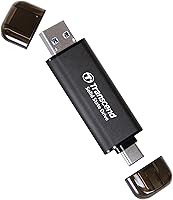
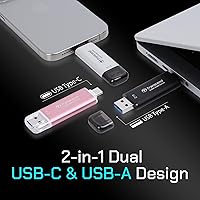
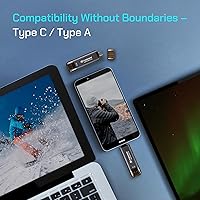
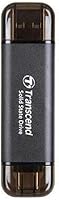
The Transcend ESD310 256GB External SSD is one of those rare storage devices that genuinely earns its place in everyday carry. Built around a dual-connector design — USB-C on one end, USB-A on the other — this pocket-sized drive removes the adapter headache that plagues most portable storage solutions. It ships pre-formatted as exFAT, so plugging into a Windows PC, Mac, or Android phone just works without setup fuss. One important caveat for iPhone owners: this only works with USB-C models, not Lightning-port devices. Transcend backs the ESD310 with a 5-year limited warranty, a genuine commitment in a category where budget flash drives rarely offer real protection.

Features & Benefits

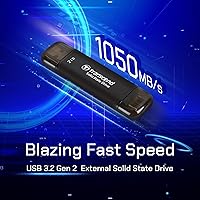
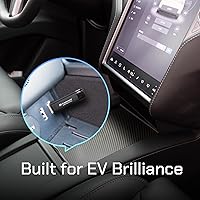
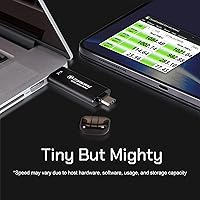
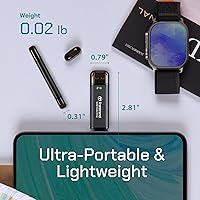
Speed is where the ESD310 makes its strongest case. Using USB 3.2 Gen 2, this dual-connector SSD delivers 1,050 MB/s reads and up to 950 MB/s writes — figures that put it firmly in SSD territory rather than flash drive territory. That said, these peaks rely on SLC Cache technology, so if you're copying a 200 GB video archive in one shot, speeds may taper off once that cache fills. Day-to-day transfers of photos, short clips, and documents feel genuinely fast. At just 11 grams and barely the length of a thumb, portability is a non-issue. The drive also connects to PS5, Xbox, Tesla dashcams, and smart TVs — a surprisingly broad range for something this compact.

Best For

This pocket-sized drive fits naturally into a few specific workflows. iPhone and iPad users with USB-C ports will find it particularly handy for offloading photos and video without relying on cloud storage — just remember, older Lightning-port iPhones are not compatible. Content creators who regularly move large RAW files or 4K footage between a camera and a laptop will appreciate how fast the transfers actually are. Gamers using a Steam Deck or ROG Ally get a tidy way to expand storage or carry game libraries. And for road warriors who bounce between a USB-C MacBook and a USB-A projector or hotel TV, the dual-connector format genuinely saves time and bag space.

User Feedback

With a 4.6-star average across roughly 1,800 ratings, buyer satisfaction here runs genuinely high. Most praise centers on two things: real-world transfer speeds that hold up in practice and the sheer convenience of not needing adapters. Some users specifically mention choosing this over Samsung and SanDisk alternatives, citing the dual connector as the deciding factor. On the critical side, a handful of buyers have noted that write speeds drop noticeably during large sustained transfers — a predictable trait of cache-dependent drives, but worth knowing upfront. The Transcend Elite software gets mixed marks; most find the OTP password recovery setup straightforward, though a few wished for a cleaner interface. The exFAT format works well across platforms, though direct iPhone file access requires the Files app.

Pros

  • The dual USB-C and USB-A connectors mean one drive works across virtually every modern device without hunting for adapters.
  • Real-world read speeds are fast enough to make transferring large photo or video collections feel noticeably quicker than a standard flash drive.
  • At just 11 grams, this pocket-sized drive barely registers in a bag or on a keychain.
  • The exFAT pre-formatting means it works straight out of the box on Windows, Mac, Linux, and Android with zero setup.
  • Broad device support — including Steam Deck, PS5, Xbox, and Tesla dashcams — makes it genuinely versatile beyond just computers.
  • A 5-year limited warranty is rare at this size and price point, and it adds real long-term value.
  • Password protection with OTP email recovery means a forgotten password does not mean lost data.
  • Available in multiple colors, so it is easy to distinguish from other drives in a crowded bag or desk.

Cons

  • Write speeds drop after the SLC Cache fills, so very large single-session transfers will slow down mid-copy.
  • Not compatible with Lightning-port iPhones or iPads, which cuts out a significant portion of Apple device owners.
  • The Transcend Elite software interface feels dated and less polished than what competitors offer.
  • 256 GB fills up faster than expected for users working with uncompressed video or large project files.
  • No hardware-level AES encryption — security relies entirely on software, which some users find less trustworthy.
  • Backward compatibility with USB 2.0 ports is technically there, but speeds become painfully slow and defeat the purpose of buying an SSD.
  • The drive has no cap or protective cover, so the exposed connectors could collect lint or debris over time in a pocket or bag.
  • Some buyers note that the exFAT format requires using the Files app for direct iPhone access, which is not as intuitive as expected.

Ratings

The Transcend ESD310 256GB External SSD scores here reflect AI-driven analysis of verified global buyer reviews, with spam, bot activity, and incentivized feedback actively filtered out before any scoring was applied. Across roughly 1,800 real-world ratings, this dual-connector SSD earns strong marks in portability and everyday speed, while a few recurring pain points around sustained write performance and software polish keep some categories from reaching their ceiling. Both strengths and genuine frustrations are transparently reflected below.

Transfer Speed
83%
For everyday tasks — offloading a camera roll, moving a folder of RAW files, or copying game data — users consistently report speeds that feel dramatically faster than any traditional flash drive. The USB 3.2 Gen 2 interface makes a real difference when transferring several gigabytes at once, and most buyers say the difference is immediately noticeable.
The SLC Cache dependency is a genuine limitation for heavy users. Once the cache fills during a sustained large transfer — typically somewhere past 20–30 GB depending on conditions — write speeds drop significantly, which frustrates users copying full video project folders or large archive backups in one session.
Dual Connector Design
94%
This is the feature buyers talk about most. Having both USB-C and USB-A on one tiny drive means it works natively on a MacBook, an Android phone, a Windows desktop, and a hotel TV without ever reaching for a dongle. Road warriors and creators switching between devices multiple times a day call it the drive's single biggest practical advantage.
The physical design means only one connector is in use at a time, and the unused end sticks out awkwardly from some thin laptop ports. A small number of users also report that the USB-A side feels slightly looser in older USB 3.0 ports, though this has not translated into widespread connection reliability issues.
Portability
97%
At 11 grams and barely larger than a standard thumb drive, the ESD310 disappears into any pocket, bag compartment, or keychain clip. Travelers and commuters specifically mention that it replaces a bulkier external drive without any meaningful sacrifice to capacity for typical daily use.
The exposed connector tips — both USB-C and USB-A — have no protective cap or cover, which means lint, pocket debris, and dust accumulate over time. A few buyers have noted minor cosmetic wear on the connectors after several months of daily carry, and the lack of any loop or attachment point limits keychain use without an add-on.
Device Compatibility
88%
The breadth of compatible devices genuinely surprises buyers who expect a typical flash drive experience. Steam Deck owners, Tesla drivers using it for dashcam footage, and PS5 users storing backward-compatible games all report it working exactly as expected with no configuration required.
The Lightning port exclusion is the most common compatibility complaint, catching some iPhone buyers off guard. A handful of older smart TVs and car stereos that only support FAT32 also cannot read the default exFAT format, requiring a reformat that erases all existing data before use.
Build Quality
76%
24%
The drive feels solid and purposeful in hand — not hollow or flimsy like budget flash drives. The casing holds up well to the bumps and pressure of daily bag carry, and the absence of moving parts gives it a durability edge over portable hard drives in the same price range.
The plastic casing, while functional, does not inspire the same confidence as the metal-bodied Samsung T7 or the rubberized SanDisk Extreme. Some buyers who have owned the drive for over a year note minor scuffing and surface wear, and the connector area shows no reinforcement that would suggest it was designed for repeated aggressive plug-in cycles.
Software Experience
58%
42%
The Transcend Elite software covers the basics: password setup, OTP recovery configuration, and drive health monitoring. For users who only need to set it up once and forget it, the process is manageable, and the OTP email recovery system has genuinely bailed out buyers who forgot their passwords.
The interface itself feels noticeably dated compared to what competitors like Samsung offer with their companion apps. Several users describe the setup process as unintuitive on first run, and a few report inconsistent behavior on macOS Ventura and later. For a feature that is optional but prominently marketed, the software falls short of the hardware quality.
Value for Money
86%
Buyers consistently rate this as strong value when they factor in the dual connector, the SSD-class speeds, and the 5-year warranty together. Most note that getting the same speed and capacity from a name-brand single-connector SSD would cost more, making the ESD310 feel like a genuinely smart purchase for its tier.
A small segment of buyers feel the pricing is harder to justify once they experience the sustained speed drop during large transfers, since that behavior is more typically associated with lower-cost flash drives. If your primary use case involves moving large archives regularly, the value equation shifts depending on how much that limitation affects your workflow.
Setup & Ease of Use
91%
Plug it in and it works — that is the experience the vast majority of buyers describe. The exFAT pre-formatting means no reformatting step on any major operating system, and most users are transferring files within seconds of unboxing. There is essentially no learning curve for the core function.
The one friction point is iPhone users who expect a Files app to automatically surface the drive without any setup steps. A few Android users on older devices also report needing to manually change USB preferences from charging-only to file transfer mode before the drive is recognized, which is a minor but recurring source of confusion.
Read Speed Consistency
81%
19%
Sequential read performance holds up reliably across devices and operating systems in real-world conditions. Users copying from the drive to a computer — restoring a photo library, loading game assets, or pulling 4K clips into an editing timeline — consistently experience speeds close to the advertised ceiling.
Read speeds do vary depending on the port and host device. On USB 2.0 ports or older USB 3.0 hosts, performance drops to a fraction of the rated maximum. Users who primarily connect through hub-based USB ports or docking stations occasionally report inconsistent throughput that does not reflect the direct-connection benchmark figures.
Write Speed Consistency
63%
37%
For shorter, typical transfers — photos from a shoot, a project folder, a game installation file — write speeds feel impressively fast and satisfy most buyers who upgraded from a standard flash drive. Day-to-day use cases are handled well within the SLC Cache window.
This is where buyer frustration concentrates. When write sessions exceed the SLC Cache capacity, speeds can fall dramatically — sometimes to flash drive territory — until the cache recovers. This is a known trait of cache-dependent portable SSDs, but the product marketing does not communicate it clearly, which leads to disappointed expectations for users with heavy workloads.
Gaming Device Performance
87%
Steam Deck and ROG Ally users who picked this up for portable game storage report that load times are genuinely better than with standard microSD solutions. The USB-C connection is clean and direct, and users running less demanding titles directly from the drive report smooth results.
Running the most demanding modern titles directly from the drive is hit or miss, and users expecting internal-SSD-level performance for AAA game launches will be disappointed. The drive is better suited as extended game storage or a transfer medium than as a primary fast-load solution for high-performance gaming.
Password & Security
67%
33%
The OTP recovery system is a practical and underappreciated feature — several buyers have directly credited it with recovering access to their drive after forgetting a password. For basic data privacy needs, the software-level protection covers the ground most personal users actually need.
Power users and IT professionals looking for enterprise-grade security will find the software-only approach lacking. There is no AES hardware encryption built into the drive itself, which means the protection depends entirely on the host system running Transcend Elite — an approach that does not hold up in scenarios where the software cannot be installed.
Warranty & Support
89%
A 5-year limited warranty stands out sharply in this product category, where one to three years is the norm. Buyers treat it as a genuine signal of Transcend's confidence in the hardware, and a few long-term users confirm that Transcend's support team handled replacement requests professionally and without friction.
The warranty covers manufacturing defects, not accidental physical damage, which limits its practical scope for users who carry the drive daily in demanding conditions. Some buyers outside North America report longer resolution times when navigating warranty claims through regional distribution channels.

Suitable for:

The Transcend ESD310 256GB External SSD is a strong pick for anyone who constantly juggles multiple devices and hates carrying a bag full of adapters. USB-C iPhone and iPad users will find it particularly useful for quickly offloading photos and videos without touching cloud storage or dealing with cable mismatches. Content creators who regularly move 4K footage or large RAW photo libraries between a camera, phone, and laptop will appreciate how the real-world speeds hold up compared to ordinary flash drives. Gamers running a Steam Deck, ROG Ally, or similar handheld will get a tidy portable storage boost that actually keeps pace with modern load times. Business travelers who split time between USB-C ultrabooks and USB-A projectors or shared workstations will find the dual-connector format quietly saves them more time than expected. The 5-year warranty adds a layer of confidence that makes this feel like a long-term purchase rather than a throwaway accessory.

Not suitable for:

The Transcend ESD310 256GB External SSD is not the right call for every buyer, and a few specific scenarios make that clear. If you own an older iPhone with a Lightning port, this drive simply will not connect — there is no workaround, and no adapter bridges that gap. Anyone planning to move very large archives — think multi-hundred-gigabyte video exports or full system backups — in a single session should know that SLC Cache-dependent speeds do not hold at their peak once the cache fills, which means sustained transfers slow down noticeably. The 256 GB capacity, while practical for most daily use, will feel limiting to professionals who work with large project files and need 1 TB or more on hand. Users who prefer a fully hardware-encrypted drive without relying on third-party software may find the Transcend Elite OTP system less reassuring than a drive with built-in AES hardware encryption. And if your ports are primarily USB 2.0 or older USB 3.0, you will not come close to the speeds this drive is built around.

Specifications

  • Storage Capacity: The drive offers 256 GB of usable flash storage, suitable for large photo libraries, 4K video projects, and game data.
  • Read Speed: Maximum sequential read speed reaches up to 1,050 MB/s under USB 3.2 Gen 2 conditions with SLC Cache active.
  • Write Speed: Maximum sequential write speed reaches up to 950 MB/s, though sustained large transfers may see reduced throughput once the SLC Cache is saturated.
  • Interface: Uses USB 3.2 Gen 2 (10 Gbps) for peak performance, with backward compatibility for USB 3.0 and USB 2.0 ports at reduced speeds.
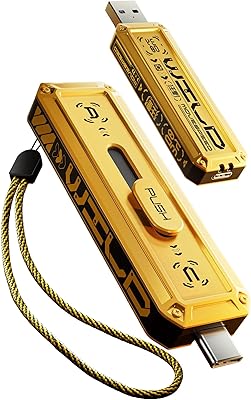
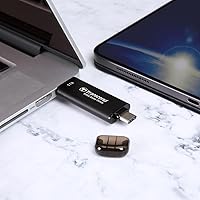
  • Connectors: Equipped with both a USB-C and a USB-A connector on a single unit, eliminating the need for a separate adapter in most situations.
  • Dimensions: The drive measures 71.3 × 20 × 7.8 mm, making it roughly thumb-sized and easy to pocket or attach to a keychain.
  • Weight: Weighs just 11 g (0.39 oz), among the lightest options in the portable external SSD category.
  • File System: Ships pre-formatted as exFAT, which allows plug-and-play compatibility across Windows, macOS, Linux, and Android without reformatting.
  • iOS Compatibility: Compatible with USB-C iPhones and iPads only; Lightning-port Apple devices are not supported and cannot be adapted.
  • Device Support: Works with a wide range of devices including Steam Deck, ROG Ally, MSI Claw, PS5, Xbox, Tesla dashcams, smart TVs, and car audio systems.
  • Security: Supports password protection via the Transcend Elite software, with a one-time password (OTP) email recovery option to prevent permanent lockouts.
  • Encryption Type: Security is software-based through Transcend Elite; the drive does not feature onboard AES hardware encryption.
  • Warranty: Covered by Transcend's 5-year limited warranty, which is notably longer than the typical 3-year coverage common among competing flash drives.
  • Model Number: The official model identifier is TS256GESD310C, part of Transcend's ESD310 series.
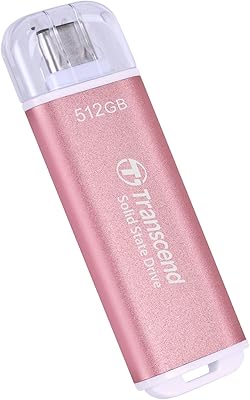
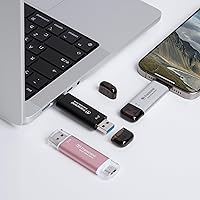
  • Color Options: Available in Black, Silver, and Pink, allowing easy visual identification when multiple drives are in use.
  • Cache Technology: Uses SLC (Single-Level Cell) Cache to achieve peak read and write speeds during shorter, typical transfer sessions.
  • OS Compatibility: Fully compatible with Windows, macOS, Linux, and Android; iOS access requires a USB-C port and the Apple Files app.
  • Form Factor: Designed as a thumb drive-style external SSD with no moving parts, making it more durable against everyday bumps than traditional portable hard drives.

Related Reviews
Transcend ESD310 1TB
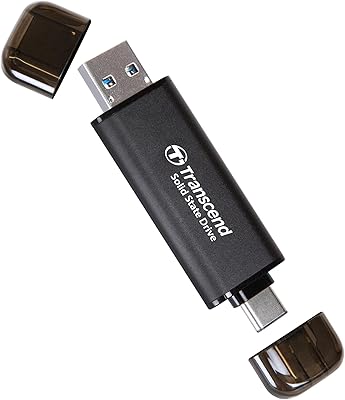
83%
96%
Portability & Form Factor
93%
Dual-Connector Design
81%
Read & Write Performance
88%
Compatibility & Plug-and-Play
62%
Thermal Management
More
Transcend ESD310 2TB External SSD
88%
94%
Performance (Read/Write Speed)
90%
Portability & Size
88%
Compatibility with Devices
87%
Durability & Build Quality
91%
Ease of Use & Setup
More
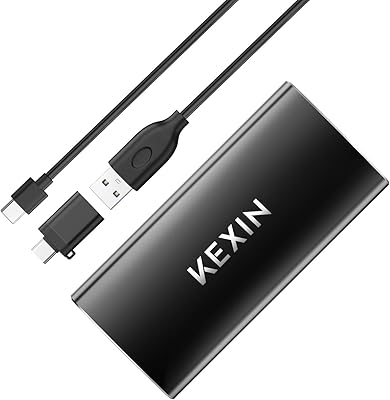
KEXIN 256GB USB-C Portable External SSD
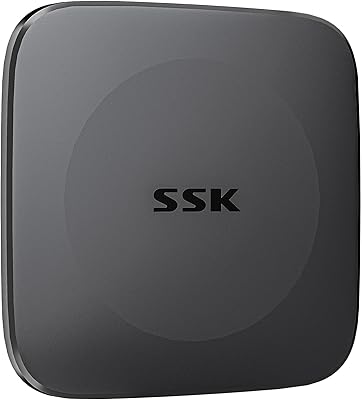
79%
74%
Transfer Speed
83%
Build Quality
89%
Value for Money
92%
Portability
81%
Device Compatibility
More
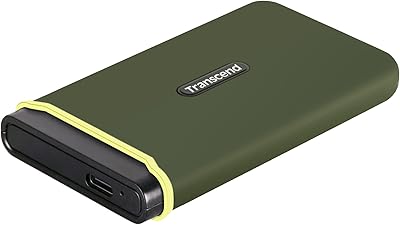
Transcend ESD380C 2TB External SSD
86%
93%
Performance (Speed)
89%
Build Quality (Durability)
90%
Compatibility
87%
Portability & Size
91%
Ease of Use (Setup)
More
Transcend ESD300 512GB Portable External SSD
78%
94%
Portability
83%
Transfer Speed
91%
Device Compatibility
68%
Build Quality
89%
Setup Ease
More
Fikwot FU388 256GB External SSD
85%
89%
Transfer Speed
91%
Build Quality
90%
Compatibility
87%
Durability
92%
Portability
More
SSK SD451 256GB External SSD
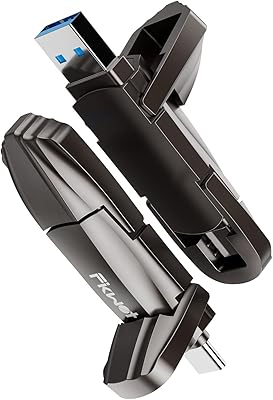
86%
91%
Performance
95%
Portability/Size/Weight
89%
Ease of Use
74%
Compatibility
88%
Build Quality/Durability
More
MOVE SPEED WID 10 256GB External SSD
88%
92%
Performance
88%
Build Quality
95%
Portability
90%
Transfer Speed
85%
Compatibility
More
Verbatim 256GB Portable SSD External Hard Drive
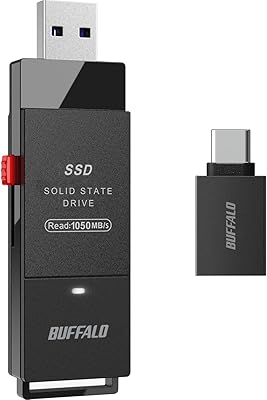
85%
93%
Data Transfer Speed
91%
Portability
88%
Build Quality
84%
Compatibility with Devices
89%
Ease of Use
More
Buffalo SSD-SCH250U3BA/N 250GB External SSD
85%
94%
Performance (Speed)
90%
Portability & Size
87%
Build Quality & Durability
78%
Compatibility with Devices
92%
Ease of Use
More

FAQ

It depends on which iPhone you have. The ESD310 works with USB-C iPhones — that means iPhone 15 and newer. If your iPhone has a Lightning port, this drive will not connect, and there is no adapter that bridges that gap. On a compatible iPhone, you access files through the Apple Files app rather than a dedicated app.

For shorter transfers — moving a folder of photos, a few videos, or game files — you will get speeds very close to the advertised figures. The catch is SLC Cache: once it fills up during a very large single transfer (think hundreds of gigabytes in one shot), write speeds drop noticeably. For typical day-to-day use, most people will not hit that ceiling.

No, you can use the Transcend ESD310 256GB External SSD straight out of the box without any software. It shows up as a regular drive on Windows, Mac, Linux, and Android. The Transcend Elite software is only needed if you want to set up password protection or use the OTP recovery feature.

Yes, both devices support it. The USB-C connector fits natively into the Steam Deck and ROG Ally, and the drive is fast enough to run games or store libraries without painful load time penalties. Just make sure the port is not occupied by a charger if you plan to transfer files while playing.

For most users, no. exFAT is readable and writable on Windows, macOS, Linux, and Android out of the box. The one scenario where it gets slightly awkward is on older smart TVs or car audio systems that only read FAT32 — in those cases, you may need to reformat, which means erasing everything on the drive first.

The ESD310 holds its own on speed and beats both on the dual-connector convenience factor, since neither Samsung nor SanDisk offers USB-C and USB-A in one body at this size. The Samsung T7 has a slightly more premium build feel and hardware AES encryption, which some security-conscious buyers prefer. The SanDisk Extreme Go is competitive on raw speed but also lacks the dual-connector design that makes the ESD310 stand out.

That is where the OTP system comes in. Through the Transcend Elite software, you can request a one-time password sent to your registered email address, which lets you reset access without losing your data. It is a practical safety net, though it does require an active email connection and a previously configured account.

It holds up well for everyday travel. With no moving parts, the drive handles being tossed in a bag or pocket without issue. The exposed connector tips are the one potential weak point — there is no cap or cover, so lint and debris can accumulate over time. A small silicone pouch or a spot in a zippered pocket goes a long way toward protecting it.

Yes, it works on both, though with an important distinction. On PS5, the drive functions as extended storage for PS4 games and media; PS5 native games require an internal M.2 SSD slot, not a USB drive. On Xbox, it works as external game storage for Xbox One titles and backward-compatible games, which covers a large portion of most players' libraries.

That depends on what you are storing. For photo backups, document archives, or a handful of large games, 256 GB is plenty. If you are a video editor regularly working with 4K or 8K raw footage, or you want to carry a large game library, you will likely hit the limit faster than expected. Transcend offers the ESD310 in larger capacities, so it is worth sizing up if storage needs are already pushing past 128 GB on your current drive.

Where to Buy