Overview

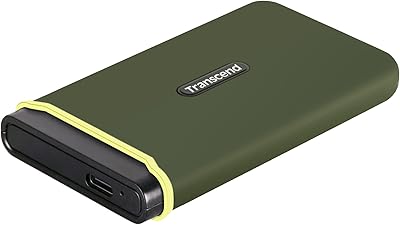
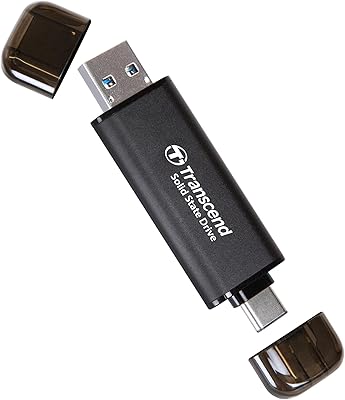
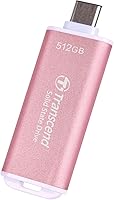
The Transcend ESD300 512GB Portable External SSD enters a crowded mid-range market with one genuinely unusual argument: it works with almost everything you already own. Transcend has been making reliable storage hardware for decades, and this pocket-sized SSD reflects that heritage — built for people who need fast, accessible storage across phones, laptops, gaming handhelds, and TVs rather than a single workstation. It is roughly the size of a standard USB flash drive, which sets honest expectations. This is a daily-carry drive, not a vault for your entire digital life. The pink colorway is a small but notable touch in a category where black and gunmetal gray dominate almost every shelf.
Features & Benefits

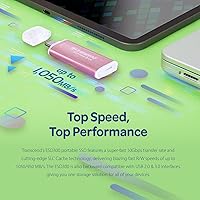
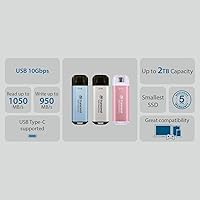
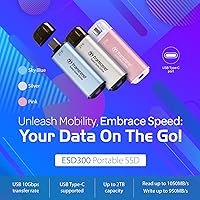
The ESD300 runs on a USB 3.2 Gen 2 interface, delivering read speeds up to 1,050 MB/s and writes up to 950 MB/s — fast enough to move a 20GB game in roughly 20 seconds under ideal conditions. Those peak numbers rely on SLC cache, so if you are writing very large files continuously, expect speeds to taper once the cache saturates. The USB-C connector handles everything from a MacBook to a Steam Deck without adapters. At under a third of an ounce and smaller than a pack of gum, this Transcend drive is genuinely pocketable and bus-powered. The 512GB capacity lands around 465GB after formatting — comfortable for photo archives or a mixed game library, though heavy users should seriously consider the 1TB or 2TB variants.

Best For

This pocket-sized SSD is an obvious fit for Steam Deck and ROG Ally owners who want more game storage without bolting a bulky drive onto their device. It is also a strong pick for content creators who regularly shuttle footage between a camera, a laptop, and a desktop workstation — the speed difference over a slow USB-A flash drive is immediate and tangible. iPhone 15 and iPad users with USB-C ports will find this Transcend drive a practical offline backup option. Travelers benefit from the single-cable, no-power-brick simplicity. That said, if you plan to fill the drive primarily with large console titles, the 512GB ceiling will feel restrictive sooner than you might expect.

User Feedback

Across roughly 370 ratings, the ESD300 holds a strong 4.5-star average, and the recurring themes are consistent: buyers love the compact footprint, appreciate plug-and-play compatibility with the Steam Deck, and report no friction during setup. The criticisms are practical rather than damning. Several users flag that there is no USB-A adapter included, which matters if your setup still relies on older ports. Others note the drive lacks the rubberized bumper or reinforced housing found on more rugged competitors — not a dealbreaker for desk use, but worth knowing. The pink finish earns warm mentions in gift-related reviews. Most buyers have no regrets; a recurring theme is simply wishing they had gone straight for the larger capacity.

Pros

  • Fits in any pocket at under a third of an ounce — genuinely the size of a flash drive.
  • USB 3.2 Gen 2 speeds make short-to-medium file transfers noticeably faster than typical flash drives.
  • Works plug-and-play with Steam Deck, ROG Ally, PS5, Xbox, and most USB-C laptops without extra software.
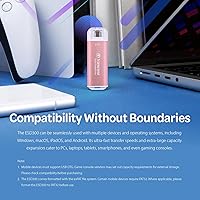
  • Compatible with Windows, macOS, iPadOS, and Android — one drive for an entire mixed-device household.
  • Bus-powered via USB-C means no power cable, no wall outlet, no hassle on the go.
  • The pink colorway stands out in a category overwhelmed by black and gray options.
  • Holds a strong 4.5-star rating across a meaningful number of real buyer reviews.
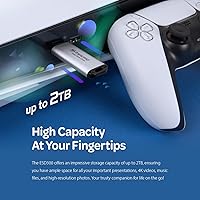
  • Available in larger capacities up to 2TB for users who need room to grow.
  • Well-regarded brand with a long track record in consumer and industrial storage products.

Cons

  • SLC cache is finite — sustained writes of large files will slow down once the cache fills.
  • No USB-A adapter included, which is a meaningful omission if any of your devices use older ports.
  • The 512GB capacity leaves less than 465GB usable after formatting — tight for heavy game library storage.
  • No rubber bumper or reinforced housing; a drop onto a hard surface offers little protection.
  • No IP dust or water resistance rating, limiting usefulness in outdoor or workshop environments.
  • Out-of-box filesystem may need reformatting depending on your primary device, adding a setup step for less technical users.
  • Peak read and write speeds require a host device with a full USB 3.2 Gen 2 port to be realized.
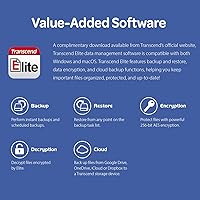
  • No bundled software for encryption or backup scheduling, unlike some competing drives in the same price range.

Ratings

The scores below reflect an AI-driven analysis of verified global buyer reviews for the Transcend ESD300 512GB Portable External SSD, with spam, incentivized, and bot-flagged submissions actively filtered out before scoring. Each category is assessed against real-world usage patterns reported by actual owners — not manufacturer claims — so both the highlights and the friction points are represented honestly. Where buyers consistently agreed, scores reflect that consensus; where opinions diverged, the rating lands in the middle and the explanation tells you why.

Portability
94%
Buyers repeatedly call out how surprisingly small and light this drive is — several noted they forgot it was in their pocket entirely. At under a third of an ounce, it is lighter than a house key, and the flash-drive form factor means it fits into a shirt pocket, a coin pouch, or clipped to a lanyard without any real planning.
The drive's very compactness means it protrudes noticeably from side-mounted USB-C ports on thinner laptops, which a handful of users flagged as an awkward angle when working on a desk. A short cable helps, but that adds something extra to carry.
Transfer Speed
83%
For everyday burst transfers — moving a folder of RAW photos, copying a few game installs, or offloading a day's worth of drone footage — the ESD300 feels genuinely fast. Users upgrading from USB-A flash drives or older portable hard drives described the speed difference as dramatic and immediate.
Sustained write performance drops once the SLC cache is saturated, which becomes noticeable when writing very large files like multi-gigabyte video projects or bulk game library migrations. Buyers who expected peak speeds to hold through a 200GB+ transfer were often disappointed by the slowdown mid-way through.
Device Compatibility
91%
The breadth of compatible devices is genuinely one of the ESD300's standout qualities — Steam Deck, ROG Ally, PS5, Xbox, USB-C iPhones, iPads, Android phones, Smart TVs, and laptops across all major operating systems. Buyers who own a mixed-device household consistently praised not needing separate drives for separate gadgets.
A small number of users ran into filesystem mismatches — particularly on Linux-based devices like the Steam Deck — where the default exFAT formatting needed to be changed before the drive worked as expected for game installs. This is a solvable problem, but it catches less technical buyers off guard.
Build Quality
68%
32%
The drive feels solid for its size and price tier — there is no flex or creaking in the shell, and the integrated USB-C connector feels well-seated rather than cheap or wobbly. For casual daily carry in a bag or pocket, most buyers found it more than adequate.
The absence of a rubberized bumper or any drop-resistance rating is a recurring concern in reviews, especially when buyers compare it to the SanDisk Extreme or Samsung T7 Shield. Several users reported cosmetic scuffing after a short period in a bag with keys or coins, and the shell offers no meaningful protection against hard drops.
Setup Ease
89%
The vast majority of buyers described setup as truly plug-and-play — connect the drive, and the device recognizes it within seconds. Steam Deck owners, iPhone users, and Windows laptop users all reported zero driver installation required, which is a meaningful convenience for non-technical buyers.
The experience is not universally frictionless: users who connected the drive to a Mac or an Android device for the first time occasionally encountered permission prompts or filesystem initialization dialogs that caused brief confusion. Nothing that a quick web search could not solve, but slightly rough for complete beginners.
Value for Money
78%
22%
At its price point, the ESD300 competes credibly against better-known brands like Samsung and SanDisk, particularly because of its multi-device compatibility story. Buyers who needed one drive that works across a gaming handheld, a laptop, and a phone felt the value proposition was clear and justified.
Buyers who prioritized raw sustained performance or ruggedness over portability felt they could get more for a similar budget by choosing a competing drive with a stronger durability rating or more consistent write speeds. The 512GB capacity also limits long-term value for heavy users who fill it within a few months.
Gaming Console Use
82%
18%
Steam Deck compatibility is one of the most frequently verified use cases in user reviews, with multiple buyers confirming game installs and launches work without issues after a quick reformat. Xbox users also reported solid performance for game storage and direct play, making this a practical console companion.
PS5 users noted the important limitation that the drive can only store and run PS4 titles — PS5 native games require internal storage or a certified M.2 drive. This is a PlayStation platform restriction rather than a flaw in the ESD300, but buyers who did not research this in advance expressed frustration.
Cable & Accessories
57%
43%
A short USB-C to USB-C cable is included in the box, which covers the most common connection scenario for modern laptops, tablets, and handhelds. The built-in connector also means you can skip the cable entirely for direct port connections, which many buyers appreciated for desk use.
The omission of a USB-A adapter is the single most common complaint in negative reviews. A meaningful portion of buyers still use USB-A ports daily — on older laptops, desktop PCs, or car multimedia systems — and having to purchase a separate adapter felt like an avoidable inconvenience for a drive marketed as universally compatible.
Thermal Performance
73%
27%
Under typical workloads — intermittent file access, short transfer bursts, or use as expanded storage on a handheld console — the drive stays cool and shows no signs of thermal throttling. Most buyers who use it for daily carry storage reported no warmth issues whatsoever.
During extended, continuous large-file transfers, the outer shell becomes noticeably warm, and a small number of buyers observed speed throttling during prolonged write sessions. The drive has no active cooling and no venting, so heat is purely dissipated through the shell, which has limits under sustained workloads.
Capacity Satisfaction
66%
34%
For photo libraries, document archives, lightweight game collections, or mixed-media storage, 512GB lands in a comfortable range. Buyers who used it as a secondary overflow drive rather than a primary storage hub were generally satisfied with the available space.
Heavy users — those carrying full game libraries, storing 4K video projects, or using the drive as a daily backup destination — frequently wished they had bought the 1TB model instead. Several reviewers explicitly recommended skipping the 512GB variant if game storage is the primary use case, as modern titles consume space quickly.
Design & Aesthetics
86%
The pink colorway earned consistent positive mentions, particularly in gift-related reviews and from buyers who appreciate standing out from the sea of black and silver storage devices. The minimalist, flash-drive silhouette is clean and understated enough to work in professional settings while still feeling distinctive.
There are no color variants available beyond pink for this particular model listing, which means buyers who want the same form factor in a more neutral finish may need to look at a different SKU or brand. The gloss-like finish also picks up fingerprints and light scratches more visibly than a matte surface would.
Cross-Platform File Sharing
80%
20%
The exFAT default formatting means files copy freely between Windows, macOS, and Android without any conversion headaches, which buyers who regularly move content between different ecosystems found genuinely useful. A travel photographer moving files from a Windows editing laptop to a Mac for client delivery cited this as a key reason for choosing the drive.
iOS and iPadOS file access through the Files app can be inconsistent depending on the app being used to read the drive, and some media formats require specific third-party apps to play back directly from external storage on Apple devices. This is more of a platform limitation than a drive flaw, but it affects the experience for Apple-first users.
Durability Under Daily Carry
63%
37%
As an SSD with no moving parts, the ESD300 is inherently more resilient to vibration, movement, and incidental knocks than any spinning hard drive. Buyers who carry it loose in a bag reported no data corruption or connection issues from daily jostling over several months of use.
The lack of a protective case, rubber bumper, or any official drop or shock rating means the drive depends entirely on its bare plastic shell for physical protection. A few buyers reported cracking or connector damage after drops onto hard floors, and Transcend does not market this as a rugged product in any meaningful way.
Brand Reliability
84%
Transcend has a long-standing reputation in the storage industry, particularly among technically informed buyers who have used their products in cameras, industrial equipment, and embedded systems. Several reviewers specifically cited trust in the Transcend brand as a deciding factor over lesser-known competitors at a similar price.
Transcend carries less mainstream consumer recognition than Samsung or SanDisk, which means some buyers feel less confident about long-term after-sales support or warranty claims compared to brands with a stronger retail presence. RMA and support experiences are less frequently documented in public reviews, making it harder to gauge post-purchase service quality.

Suitable for:

The Transcend ESD300 512GB Portable External SSD is a strong fit for anyone whose storage needs span multiple devices rather than a single desktop setup. Steam Deck, ROG Ally, and MSI Claw owners will appreciate how effortlessly the ESD300 plugs in and expands their game library without adding any meaningful weight to a bag. Content creators who work across locations — shooting on a mirrorless camera, editing on a laptop, and delivering to a desktop — will find the transfer speeds genuinely practical for day-to-day workflows. USB-C iPhone and iPad users who prefer keeping backups local rather than paying for expanding cloud storage will find this Transcend drive a refreshingly straightforward solution. Students and frequent travelers who carry multiple devices and want one drive that just works across all of them, without hunting for adapters or external power bricks, are exactly the audience this drive was designed for.
Not suitable for:

The Transcend ESD300 512GB Portable External SSD is not the right call for buyers who need to store and access a large library of modern PC or console games, since 512GB fills up faster than most people anticipate — two or three AAA titles and a handful of extras can consume the usable space quickly. Users who regularly move very large files, such as uncompressed RAW video footage or multi-gigabyte disk images, should be aware that sustained write performance drops once the SLC cache is exhausted, which can make those transfers noticeably slower than the peak specs suggest. Anyone who needs a rugged drive for outdoor or high-impact environments will find this pocket-sized SSD underpowered for that job — it lacks rubber bumpers, an IP rating, or the hardened shell found on purpose-built rugged competitors like the SanDisk Extreme or Samsung T7 Shield. If your ports are primarily USB-A, you will also need to budget for an adapter separately, as none is included in the box.
Specifications

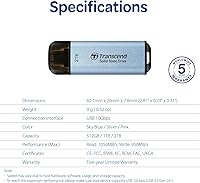
  • Capacity: The drive offers 512GB of raw storage, which formats to approximately 465GB of usable space across most operating systems.
  • Interface: It uses a USB 3.2 Gen 2 (10Gbps) interface for high-speed data transfers between the drive and compatible host devices.
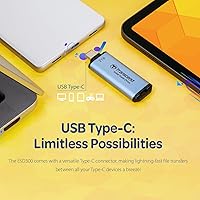
  • Connector: A built-in USB Type-C connector is integrated directly into the drive body, eliminating the need for a separate cable during most transfers.
  • Read Speed: Sequential read speeds reach up to 1,050 MB/s under optimal conditions with a compatible USB 3.2 Gen 2 host port.
  • Write Speed: Sequential write speeds reach up to 950 MB/s, though these peak figures depend on SLC cache availability and may decrease during prolonged large-file transfers.
  • Cache Type: SLC (Single-Level Cell) cache technology is used to achieve peak transfer speeds for burst workloads such as copying photos or moderate-sized video files.
  • Dimensions: The drive measures 2.36 x 0.79 x 0.31 inches, making it comparable in footprint to a standard USB flash drive.
  • Weight: It weighs approximately 0.32 oz (around 9g), light enough to carry on a keychain or in a shirt pocket without noticeable bulk.
  • Power Source: The ESD300 is entirely bus-powered via its USB-C connection, requiring no external power cable or wall adapter to operate.
  • Compatible OS: It is compatible with Windows, macOS, iPadOS, and Android operating systems, though the default filesystem may require reformatting for certain platforms.
  • Device Support: Supported devices include Steam Deck, ROG Ally, MSI Claw, PS5, Xbox consoles, Smart TVs, USB-C iPhones, iPads, and a broad range of laptops and tablets.
  • Model Number: The official Transcend model identifier for this variant is TS512GESD300P.
  • Manufacturer: The ESD300 is designed and manufactured by Transcend Information, a Taiwan-based company with over three decades of experience in flash storage products.
  • Color: This variant is offered in pink, a notably uncommon finish in a product category where black and dark gray are the near-universal standard.
  • Market Rank: As of its listing data, the drive holds a Best Sellers Rank of #207 in the External Solid State Drives category on Amazon.
  • Cable Included: Transcend includes a short USB-C to USB-C cable in the box, but no USB-A adapter is provided for use with older host devices.
  • Drive Type: This is a portable external SSD, not a spinning hard drive, meaning it has no moving parts and is more tolerant of incidental movement during use.
  • Encryption: The ESD300 does not ship with proprietary encryption software bundled in the box; hardware-level encryption support should be verified against the official Transcend product page for this model.

Related Reviews

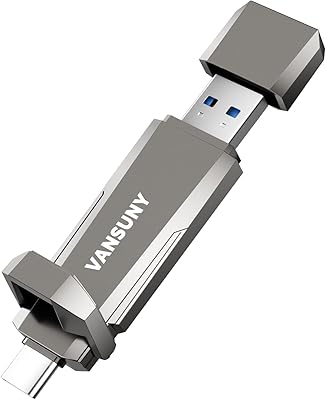
Vansuny 512GB Portable External SSD USB 3.2 Gen 2
84%
93%
Cross-Device Compatibility
78%
Transfer Speed Performance
81%
Build Quality & Materials
94%
Portability & Form Factor
82%
Connector Protection
More
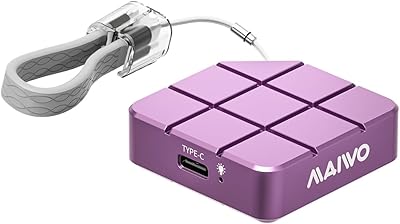
MAIWO 512GB Portable External SSD
85%
94%
Transfer Speed
90%
Portability & Size
88%
Build Quality & Durability
89%
Compatibility
75%
Price vs Competitors
More
VAVA Portable SSD Pro 512GB External Drive
78%
83%
Transfer Speed
88%
Build Quality
71%
Encryption & Security
93%
Portability
79%
Compatibility
More
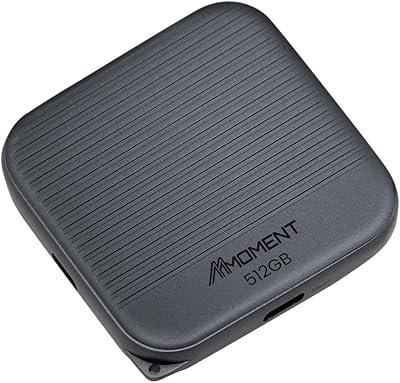
MMOMENT MU P100 512GB Magnetic External Portable SSD
87%
92%
Performance
89%
Portability
91%
Compatibility
86%
Durability
88%
Ease of Use
More
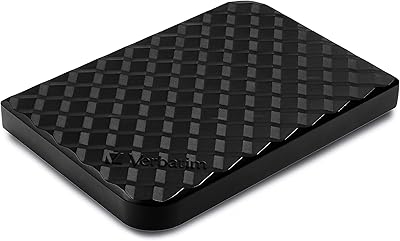
Verbatim Store 'n' Go 512GB Portable SSD
80%
78%
Transfer Speed
83%
Build Quality
91%
Portability
93%
Plug-and-Play Ease
81%
Cable & Adapter Bundle
More
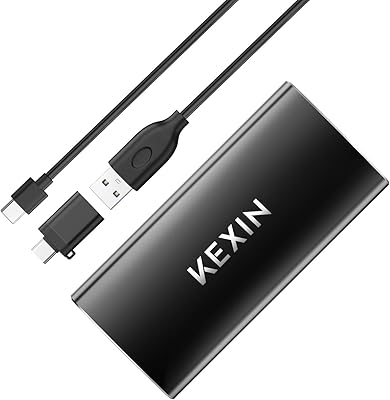
KEXIN 512GB Portable External SSD
79%
88%
Value for Money
74%
Transfer Speed
83%
Build Quality
93%
Portability
86%
Device Compatibility
More
Transcend ESD265C 500GB Portable SSD
82%
88%
Transfer Speed
94%
Portability & Size
91%
Build Quality
83%
Multi-Device Compatibility
86%
Value for Money
More
KingSpec MemoStone 512GB External SSD
75%
88%
Transfer Speed
83%
Build Quality
79%
Heat Management
62%
Apple Compatibility
94%
Portability
More
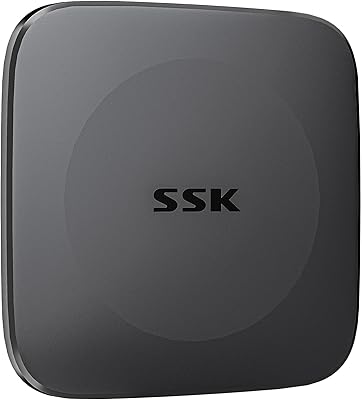
SSK SD451 512GB External SSD
87%
91%
Transfer Speed
94%
Portability/Size
95%
Setup/Installation
88%
Durability/Reliability
75%
Compatibility/Connectivity
More
Transcend ESD380C 2TB External SSD
86%
93%
Performance (Speed)
89%
Build Quality (Durability)
90%
Compatibility
87%
Portability & Size
91%
Ease of Use (Setup)
More

FAQ

Yes, the ESD300 is one of the more reliably plug-and-play options for the Steam Deck. You connect it via the USB-C port and the Deck recognizes it without any driver installation. Most users format it to ext4 through the Steam Deck's desktop mode to get the best compatibility with game installations.

It does, as long as your iPhone or iPad has a USB-C port rather than Lightning. USB-C iPhones and iPads can access the drive directly for importing photos and videos or storing files through compatible apps. Keep in mind that Apple devices may ask you to initialize the drive when you first connect it, which is normal.

For most everyday tasks — copying a few dozen photos, moving some game files, backing up a project folder — you will hit the peak speeds advertised and the cache will never be an issue. Where it matters is if you are transferring very large files, like a 200GB video project or a bulk game library migration. Once the SLC cache fills, write speeds drop to the drive's native NAND speeds, which are still functional but noticeably slower than the headline numbers.

It depends entirely on your use case. For photo storage, document backup, or carrying a curated selection of games on a handheld console, 512GB is genuinely workable. If you plan to use it as your primary game library on a Steam Deck, or if you shoot a lot of high-bitrate video, you will likely fill it faster than expected. In that case, stepping up to the 1TB model is a smarter long-term investment.

The Transcend ESD300 512GB Portable External SSD has a built-in USB-C connector, so it plugs directly into any USB-C port with no cable required. A short USB-C to USB-C cable is also included in the box for situations where a direct connection is awkward, such as when your laptop port is on the wrong side or recessed.
You can use it with both consoles, though with some caveats. On PS5, external USB drives can store and launch PS4 games, but PS5 games must be played from internal storage or a compatible M.2 expansion slot. On Xbox, the ESD300 can store and run Xbox games directly, which makes it more straightforward for that platform. In both cases, transfer speeds from the drive are fast enough to avoid long load times for most titles.

The drive typically ships formatted as exFAT, which offers broad compatibility across Windows, macOS, and Android without reformatting. However, Linux-based systems like the Steam Deck work better with ext4, and some Mac-only workflows prefer APFS or HFS+. If you are using the drive exclusively on one platform, reformatting for that system is worth the five-minute setup.

Being a solid-state drive, it tolerates incidental movement, vibration, and jostling far better than a traditional hard drive. That said, the ESD300 has a relatively slim plastic shell with no rubberized bumper or drop-resistance rating. It is not fragile, but it is not built for rough outdoor conditions either. If you need something that survives falls or exposure to dust and moisture, a ruggedized drive with an IP rating would be a safer choice.

Like most compact SSDs, this pocket-sized SSD can become slightly warm to the touch during prolonged, intensive transfers — especially if you are writing large amounts of data continuously. Under normal use, such as occasional file access or short bursts of copying, thermal buildup is not a meaningful concern. The drive does not have active cooling, so it relies on passive heat dissipation through its outer shell.

Transcend does not bundle dedicated backup or encryption software with the ESD300 in the box. Transcend does offer its own free software utilities on its website, including backup tools, if you want to add that layer. For warranty coverage, Transcend typically backs its portable SSDs with a three-year limited warranty, but you should confirm current terms directly on the Transcend website for your region, as these details can vary.