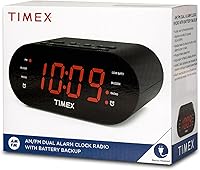
Overview

The Timex T231 Dual Alarm Clock Radio is a no-frills bedside companion from a brand that has been making timepieces long enough to earn genuine trust. It combines AM/FM radio, two independent alarms, and a line-in jack in a compact rectangular unit that fits neatly on most nightstands. The gunmetal plastic body houses a 1.2-inch LED display and runs on standard AC power, with AAA batteries keeping the time if the power cuts out. Clock radios occupy a shrinking corner of the market, but this bedside radio makes a sensible case for a dedicated device that keeps your phone away from the pillow entirely.
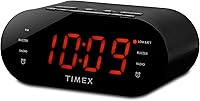
Features & Benefits

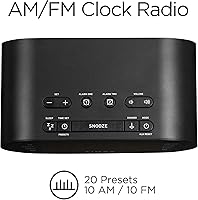
The dual independent alarms are the standout practical feature here — one can be set for weekday mornings, the other for weekends, with each waking you via radio or a gradual buzzer that starts quietly and builds in volume rather than shocking you awake. Digital AM/FM tuning supports up to 20 preset stations, which covers most casual listeners without hassle. The line-in jack lets you connect a phone or older MP3 player through the 2-inch built-in speaker, which is perfectly fine for quiet background audio. A sleep timer runs from 10 to 90 minutes, and the manual volume control is a simple physical switch — no buried menus to wrestle with.

Best For

This clock radio makes the most sense for people who want a reliable bedside alarm that does not involve a smartphone. Couples keeping different schedules benefit most from the two-alarm setup, and the radio-wake option suits anyone who prefers easing into the morning with local news or music. Older adults and minimalists who find smart devices unnecessarily complicated will appreciate the physical controls and direct layout. It also works well in a dorm or guest room where a no-setup device is more practical than a connected gadget. For occasional gifting, it covers a genuine everyday need without overcomplicating things.

User Feedback

With a 3.7-star average from over 3,000 ratings, the Timex T231 lands squarely in split-opinion territory. Buyers who love it consistently highlight how easy it is to set up and operate from day one — no manual required. The criticisms, though, are frequent enough to take seriously. Display brightness comes up constantly; several users found the LED too intense for a pitch-dark room and resorted to covering it. Radio reception also varies noticeably by location. Some long-term owners report alarm reliability declining after a year or two of daily use. The aux speaker handles soft background listening adequately, but expecting anything beyond that will lead to disappointment.

Pros

  • Two fully independent alarms make it genuinely useful for couples or split-schedule households.
  • Setup takes minutes with no app, no account, and no manual required.
  • The gradual buzzer ramp-up is a thoughtful touch that avoids a harsh, startling wake.
  • AM/FM digital tuning with 20 presets covers casual radio listeners without any hassle.
  • The sleep timer runs up to 90 minutes, making it practical for falling asleep to audio.
  • A line-in jack lets you connect older devices that lack Bluetooth without any workarounds.
  • Physical volume and control buttons work reliably in the dark without needing to look down.
  • The compact footprint fits neatly on small nightstands without crowding other items.
  • Battery backup preserves the clock time during brief power outages — a genuinely useful safety net.
  • For a guest room or dorm setup, this bedside radio requires zero configuration from scratch.

Cons

  • No display dimmer at all — the LED is fixed brightness and can disrupt sleep in dark rooms.
  • Alarm reliability has been reported to decline after a year or more of daily use.
  • Radio reception is location-dependent and struggles in rural or signal-weak environments.
  • The speaker distorts noticeably at higher volumes and sounds thin for anything beyond background audio.
  • Backup batteries are not included, which is a small but unnecessary inconvenience at unboxing.
  • The battery backup only preserves the time display, not alarm function, during power outages.
  • Button labels can be unclear, and the small key spacing causes accidental presses for some users.
  • No snooze duration adjustment and no persistent memory for sleep timer settings between uses.
  • The plastic housing scratches and scuffs easily, showing wear faster than expected for a bedside staple.
  • No USB charging port means the nightstand still needs a separate charger for your phone.

Ratings

The scores below for the Timex T231 Dual Alarm Clock Radio were generated by our AI review engine after processing verified buyer feedback from global markets, with spam, incentivized posts, and bot-generated content actively filtered out. The analysis covers everything from daily alarm reliability to long-term durability, giving equal weight to what users loved and what frustrated them. Expect an honest picture — this bedside radio has clear strengths and just as real shortcomings.
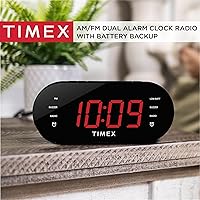
Ease of Setup
88%
Most buyers had this clock radio running within minutes straight out of the box. The physical button layout is intuitive enough that the manual rarely needs consulting, which is a genuine advantage for older adults or anyone who just wants a device that works immediately.
A small number of users found the preset station scanning process slightly fiddly, particularly when trying to lock in weaker AM signals. The instructions included in the box are described as minimal, which can be frustrating if something goes wrong.
Alarm Reliability
61%
39%
Out of the box, both independent alarms generally perform as expected, and the ability to set separate weekday and weekend wake times works well for couples with different schedules. Short-term users tend to report no issues at all during the first several months.
A meaningful share of long-term reviewers report that one or both alarms become unreliable after a year or more of daily use — failing to trigger or cutting off prematurely. For a product whose core job is waking you up on time, this pattern is a serious concern that pulls the score down significantly.
Display Readability
71%
29%
The 1.2-inch LED display is crisp and legible from across a typical bedroom, and the digit size is large enough to read without glasses in most lighting conditions. Daytime readability is not an issue at all.
Brightness control is the persistent complaint here. The display has no dimmer adjustment, and in a fully dark room it can be genuinely disruptive to sleep — enough that many buyers resort to covering it with tape or fabric. This is a design oversight that competitors at a similar price point have addressed.
Radio Performance
67%
33%
Digital tuning with 20 presets covers the needs of casual AM/FM listeners well, and in areas with strong broadcast signals the reception is clean and consistent. The auto-scan feature makes initial station setup quick.
Reception quality drops noticeably in rural areas or rooms with thick walls, and the internal antenna offers no adjustment for optimizing signal. Several users in urban apartment buildings also report interference issues, which limits the radio experience to location-dependent reliability.
Dual Alarm Functionality
79%
21%
Having two fully independent alarms is a practical feature that many competing units in this category skip. Couples who wake at different times, or anyone managing a weekday versus weekend schedule, will find this genuinely useful on a day-to-day basis.
Neither alarm offers a snooze duration setting or a one-time override without disabling the alarm entirely, which some users find limiting. The wake-to-radio option also depends on reception quality, so in low-signal areas it is less dependable than the buzzer.
Speaker Quality
54%
46%
The 2-inch built-in speaker handles soft background audio adequately — quiet morning radio or low-volume sleep music from a connected phone is perfectly acceptable. For a bedside device meant for ambient listening, it fulfills a basic functional role.
Anyone expecting decent audio quality for music will be disappointed. At higher volumes the speaker distorts noticeably, the bass is essentially absent, and the overall sound is thin. This is not a speaker to enjoy music through; it is purely a utility output for alarm and background purposes.
Line-In Jack Usability
72%
28%
The aux input is a useful addition that lets users connect older devices without Bluetooth — an MP3 player, a basic phone, or even a laptop. It extends the practical use of the speaker beyond radio alone, which adds meaningful flexibility for a device at this price.
The jack placement can be awkward depending on where the unit sits on a nightstand, and there is no dedicated volume memory for the aux input versus the radio. Switching between sources requires manual re-adjustment each time.
Sleep Timer
76%
24%
The 10-to-90-minute sleep timer is a well-implemented feature for anyone who likes falling asleep to radio or connected audio. The range of increments covers most use cases, and setting it takes only a couple of button presses.
The timer does not remember your last-used setting, so you have to re-enter it every night. It also cannot be paired with a wake alarm that turns the radio back on in the morning without a separate manual step, which some users found less convenient than expected.
Build Quality
58%
42%
The unit feels reasonably solid for its price tier, and the combined plastic-and-metal-frame construction keeps it from feeling entirely cheap on the nightstand. The buttons have a satisfying click and do not feel loose out of the box.
The plastic housing shows scratches and scuffs relatively easily, and a few long-term owners note that button responsiveness degrades over time. At under two years of use, some units start to feel worn in a way that does not inspire confidence in multi-year durability.
Value for Money
74%
26%
For a device that replaces a phone alarm, provides AM/FM radio, and includes a sleep timer and aux input, the asking price is fair. Buyers who simply want a functional bedside clock radio without paying for smart features they will never use tend to feel satisfied with the trade-off.
The alarm reliability concerns reported by longer-term owners put a real dent in the value calculation. If the core alarm function degrades within a year or two, the cost-per-use equation shifts unfavorably, especially when more durable competitors exist nearby in price.
Display Brightness Control
41%
59%
The LED numerals are sharp and consistent in brightness, which works well during daylight hours or in rooms where some ambient light is always present. The display never flickers or dims unexpectedly.
The complete absence of a brightness dimmer is the single most-mentioned frustration across thousands of reviews. There is no low setting, no auto-dim, and no off mode for the display — a significant oversight for a device intended specifically for bedroom use at night.
Size & Footprint
82%
18%
At 6.9 inches wide and under 3 inches tall, this bedside radio fits comfortably on even a small nightstand without dominating the surface. The rectangular profile keeps it stable and easy to position next to a lamp or book.
The corded power design means cable management is a minor but real consideration in tighter spaces. The cord length is adequate but not generous, and repositioning the unit is constrained by outlet placement.
Button & Control Layout
77%
23%
Physical buttons with clear tactile feedback make operating this clock radio straightforward in a dark room without needing to look directly at it. The manual volume switch in particular is appreciated by users who dislike software-controlled audio levels.
The buttons are small and closely spaced, which some users — particularly those with larger hands or limited dexterity — find frustrating when trying to quickly adjust an alarm in a half-awake state. Labeling on some units has also been noted as slightly unclear.
Power & Battery Backup
69%
31%
AC operation keeps the clock consistently powered without battery drain concerns, and the AAA battery backup is a sensible inclusion for preserving the time setting during brief outages. Most users appreciate not having to reset the clock after a power blip.
The backup batteries are not included, which is a minor but unnecessary inconvenience at unboxing. More importantly, the backup only preserves the time display — it does not power the alarm, so a power outage overnight means you may wake late regardless.
Long-Term Durability
53%
47%
Buyers who use this bedside radio lightly — occasional weekend listening, simple daily alarms — tend to report trouble-free use for the first year or so. Under low-stress conditions, the unit performs without issue for a reasonable initial period.
Patterns across reviews suggest meaningful quality degradation past the one-to-two-year mark, including alarm failures, button stiffness, and display flicker on some units. For a daily-use device, this durability ceiling is a legitimate concern that prospective buyers should weigh carefully.

Suitable for:

The Timex T231 Dual Alarm Clock Radio is a strong fit for anyone who wants a dedicated bedside device that keeps the smartphone off the nightstand entirely. Couples with different wake schedules get genuine utility from the two fully independent alarms — one for the early riser, one for the late sleeper, no compromises. Older adults or anyone who finds modern smart speakers and app-controlled gadgets unnecessarily complicated will appreciate the physical buttons, direct controls, and zero setup beyond plugging it in. It also works well in a guest room, college dorm, or vacation rental where a no-frills, ready-to-use clock is more practical than pairing a Bluetooth device. If you are a habitual AM/FM radio listener who likes waking to local stations or falling asleep to overnight programming, this bedside radio covers that routine without any fuss. For a modest budget, it does a reasonable job replacing multiple single-purpose devices with one compact unit.
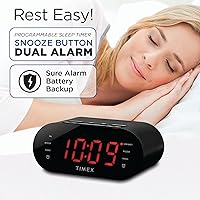
Not suitable for:

Buyers who need an alarm clock they can depend on for years without any degradation should think carefully before committing to this one. A noticeable pattern in long-term user feedback points to alarm reliability declining after sustained daily use — and for a device whose primary job is waking you up on time, that is not a minor quibble. Anyone who sleeps in a fully darkened room will almost certainly be bothered by the display, since the Timex T231 Dual Alarm Clock Radio offers no brightness dimmer and no way to reduce the LED intensity short of physically covering it. If audio quality matters to you — even at a modest level — the 2-inch speaker will frustrate; it handles soft background listening but distorts at higher volumes and lacks any real bass. Listeners in rural areas or buildings with thick walls may also find radio reception inconsistent enough to undermine the radio-wake feature. And if you are hoping for any modern connectivity — Bluetooth streaming, USB charging, or Wi-Fi — this clock radio simply does not go there.
Specifications

  • Brand & Model: Manufactured by Sound Design, Inc. under the Timex brand, model number T231.
  • Display: 1.2-inch LED-backlit display with fixed brightness and no dimmer adjustment.
  • Dimensions: The unit measures 6.9″ wide by 2.96″ tall with a rectangular tabletop footprint.
  • Weight: The clock radio weighs 14.9 ounces, making it lightweight enough to reposition easily on a nightstand.
  • Power Source: Operates on 120V AC corded electric power; requires a standard North American wall outlet.
  • Battery Backup: Accepts 2 AAA batteries (not included) to preserve the time display during brief power outages.
  • Alarm Count: Equipped with 2 fully independent alarms, each configurable separately for time and wake mode.
  • Wake Modes: Each alarm can be set to wake via AM/FM radio or a gradual-ramp buzzer that starts softly and increases in volume.
  • Radio Tuning: AM/FM radio with digital tuning and both auto-scan and manual station scanning modes.
  • Presets: Stores up to 20 preset radio stations, split evenly between 10 AM and 10 FM slots.
  • Sleep Timer: Built-in sleep timer is adjustable in increments between 10 and 90 minutes for radio or aux audio.
  • Line-In Jack: Includes a 3.5mm auxiliary line-in jack for connecting external audio devices such as phones or MP3 players.
  • Speaker: Features a single built-in 2-inch speaker described as suitable for background and ambient listening.
  • Volume Control: Manual physical volume switch allows direct level adjustment without navigating on-screen menus.
  • Material: Housing is constructed from plastic with a metal frame element in a gunmetal/black colorway.
  • Mounting Type: Designed exclusively for tabletop placement; no wall-mount hardware or bracket is included.
  • Warranty: Covered by a limited manufacturer warranty; specific duration should be confirmed with Timex directly at time of purchase.
  • Availability: First listed for sale on February 26, 2014, and confirmed as not discontinued by the manufacturer.

Related Reviews
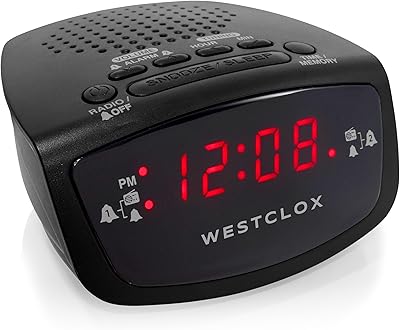
Westclox 80209 Dual Alarm FM Clock Radio
77%
91%
Ease of Setup
88%
Alarm Reliability
83%
Display Readability
86%
Dual Alarm Function
61%
FM Reception Quality
More
uscce Dual Alarm Clock Radio
80%
94%
Display Brightness Control
88%
Alarm Customization
91%
Ease of Setup & Use
83%
Wake-Up Sound Quality
67%
FM Radio Performance
More
Jensen JCR-210 Dual-Alarm Clock Radio
72%
91%
Ease of Setup
84%
Display Readability
88%
Alarm Reliability
79%
Dual Alarm Functionality
58%
AM/FM Reception
More
Jensen JCR390 CD Clock Radio
67%
88%
Ease of Setup
83%
Alarm Reliability
54%
Sound Quality
51%
Volume Output
58%
FM Reception
More
iHome iM29SC Color Changing Dual Alarm FM Clock Radio
82%
89%
Customizable Alarm Modes
92%
Color Changing Feature
85%
Ease of Use
81%
Build Quality
75%
FM Radio Reception
More
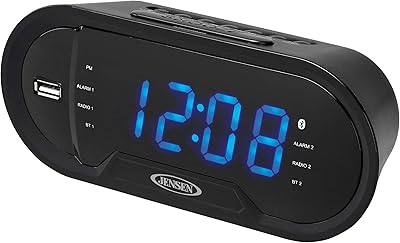
Jensen JCR-298 Bluetooth Dual-Alarm Clock Radio
75%
88%
Ease of Setup
91%
Alarm Reliability
67%
Bluetooth Performance
58%
Audio Quality
83%
Display & Dimmer
More
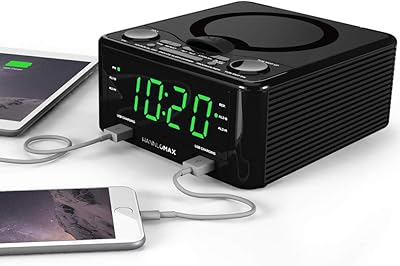
HANNLOMAX HX-300CD CD Player Alarm Clock
72%
83%
Ease of Setup
79%
Display Clarity
76%
Alarm Reliability
71%
CD Playback
58%
Sound Quality
More
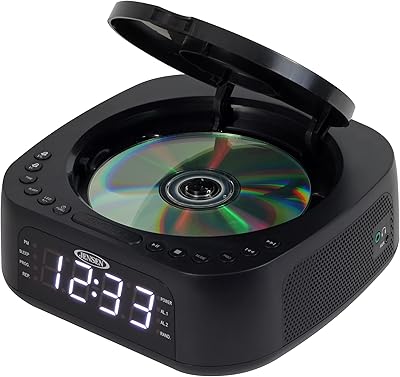
Jensen JCR-375 CD Alarm Clock Radio
70%
84%
Ease of Setup
73%
CD Playback Performance
58%
FM Radio Reception
78%
Alarm Reliability
81%
Display Readability
More
VAUNO EN8837 Alarm Clock Radio
76%
88%
Display Clarity
83%
Brightness Control
86%
Alarm Reliability
61%
FM Radio Performance
84%
Ease of Use
More
Sony ICF-C1 Alarm Clock Radio
77%
88%
Ease of Setup
91%
Display Readability
74%
Alarm Effectiveness
58%
Radio Reception
61%
Audio Quality
More

FAQ

They are fully independent — you set each one separately with its own time and wake mode. One can be radio at 6:30 AM and the other a buzzer at 7:45 AM, with no connection between them at all. This is particularly useful for couples or anyone managing different weekday and weekend schedules.

Unfortunately, no. The LED display runs at a fixed brightness with no dimmer setting, no auto-dim feature, and no off mode. This is one of the most frequently mentioned frustrations in buyer reviews. If you sleep in a very dark room, you may want to keep a small piece of opaque tape handy — a lot of owners go that route.

You need a standard 3.5mm stereo auxiliary cable, which is widely available. It will work with any device that has a headphone jack — older smartphones, MP3 players, tablets, and laptops all connect without any pairing or setup required. Keep in mind that devices without a headphone jack will need a separate adapter.

The batteries only preserve the time display during a power outage — they do not power the alarm function. So if the power goes out overnight, the clock will remember what time it is when power returns, but the alarm will not trigger during the outage itself. If reliable overnight alarm function during outages is critical for you, this is worth knowing upfront.

It really depends on where you live. In areas with strong broadcast signals, the digital tuning works cleanly and the 20 presets are easy to store. In rural areas, older buildings with thick walls, or locations far from transmitters, reception can be inconsistent and occasionally frustrating. There is no external antenna to adjust, which limits your options if the built-in reception is weak.

The buzzer alarm starts at a low volume and gradually increases, which is a thoughtful design choice for lighter sleepers who do not want a sudden jolt. At full volume it is reasonably loud for a bedroom-sized space. That said, very heavy sleepers may find the gradual ramp less effective than an instant-loud alarm — the radio wake option at higher volume may work better for them.

No, it is rated for 120V AC only, which is the standard North American wall voltage. Using it in a 220V country without a proper voltage converter would damage the unit. It is not designed for international travel use without additional equipment.

Most buyers set it up without ever opening the manual, which is a good sign. The button layout is straightforward, and the basic functions — setting the time, programming alarms, scanning for stations — are handled through clearly labeled physical controls. If you get stuck, the manual is basic but covers the essentials.

The sleep timer fades out and cuts the audio after your chosen interval, whether you are listening via radio or the aux input. The display stays on, but the sound stops. It is a simple and effective feature for falling asleep to music or late-night programming without leaving audio running all night.

Short-term, most users report no issues in the first year. The concern that shows up in longer-term reviews involves alarm reliability and button responsiveness degrading after sustained daily use, with some owners noting problems emerging in the one-to-two-year range. It is not marketed or priced as a long-haul device, and the feedback reflects that honestly — it performs well as a budget bedside radio but may not be a decade-long investment.

Where to Buy