Overview
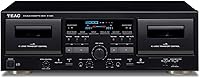
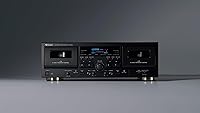
The TEAC W-1200 marks a rare return to the dual-deck format for a new generation of listeners. It provides a clean, balanced design that feels right at home sitting atop a standard hi-fi rack. Unlike vintage gear that often requires a technician’s touch just to function, this analog deck offers the peace of mind that comes with modern manufacturing. It bridges the gap between old-school playback and digital connectivity by including a USB port for quick archiving. Having two independent mechanisms means you can record on one side while playing another or even dub tapes with mechanical precision. It is a straightforward, no-nonsense piece of hardware for anyone who still values physical media in an increasingly digital world.
Features & Benefits
Beyond simple playback, this TEAC recorder excels at preserving aging collections through its built-in USB output. It allows you to create digital archives at CD quality without needing complex external interfaces. To keep the audio clean, the integrated noise reduction system does a solid job of cutting down that classic tape hiss during quiet passages. Musicians will appreciate the pitch control on the primary deck, which allows for subtle tuning adjustments or creative effects. If you are in a rush to share your latest mixtape, the parallel recording feature lets you burn the same audio onto two tapes at once. It also handles various tape formulations, including Chrome and Metal, ensuring your older high-end tapes sound exactly as intended.
Best For
This dual cassette deck is an ideal solution for collectors who want to rescue their legacy libraries from the degradation of time. It is particularly valuable for analog enthusiasts who are tired of the reliability risks associated with the used vintage market. Instead of scouring forums for replacement belts, you get a fresh machine with a full warranty. Home studio owners might find the tape saturation of this recorder adds a unique warmth to digital tracks that software can’t quite replicate. Additionally, the mic input and mixing capabilities make it a handy tool for karaoke fans or anyone needing a simple, all-in-one system for announcements. It occupies a unique niche for those who want the charm of tape without the maintenance headaches.
User Feedback
Community sentiment remains largely positive, with many praising the stable tape speed and the sturdy feel of the transport controls. Most owners find the USB setup to be remarkably easy to get running right out of the box. However, some seasoned audiophiles have pointed out that the noise reduction system, while effective, lacks the official Dolby branding found on high-end vintage units. There are also mentions that the build feels lighter than the heavy steel components of the seventies, yet the modern convenience tends to outweigh these aesthetic gripes. Overall, the consensus frames this analog deck as one of the few reliable paths for anyone seeking a brand-new, high-quality deck in the current market. It simply does what it promises without unnecessary fluff.
Pros
- The built-in USB output makes archiving your old tapes to a digital format exceptionally simple and effective.
- Having two independent mechanisms allows for versatile playback and dubbing options that vintage single-deck units cannot match.
- The 12% pitch control on the primary deck is invaluable for correcting speed issues in older recordings.
- Parallel recording allows you to create two identical tapes at once, saving significant time for those making mixtapes.
- Automatic tape type detection ensures that Chrome and Normal bias cassettes are always played with the correct settings.
- A dedicated front-panel microphone input with level control offers a convenient way to record vocals over music.
- The digital tape counters provide a much more accurate way to navigate tracks than traditional mechanical wheels.
- Return-to-Zero functionality allows for quick, one-touch resets to the start of a specific section.
Cons
- The absence of official Dolby noise reduction branding may lead to compatibility issues with tapes recorded on high-end vintage systems.
- Both decks lack an auto-reverse feature, requiring you to manually eject and flip the tape at the end of every side.
- The chassis is significantly lighter than older high-end gear, leading to a less substantial and somewhat plasticky feel.
- Pitch control is only available on one of the two decks, which limits its utility during certain dubbing processes.
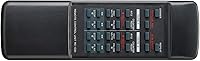
- The included remote control requires a very direct line of sight to the sensor to function reliably from a distance.
- The headphone output lacks a dedicated volume knob, as it is unfortunately tied to the main line-level output.
- Its microphone preamp is prone to picking up some background hum when using high-gain microphones in sensitive environments.
Ratings
Our evaluation of the TEAC W-1200 is based on a rigorous AI-driven analysis of verified user reviews and global performance data, filtering out incentivized noise to ensure a transparent look at real-world reliability. This scoring system reflects both the nostalgic charm and the modern functional limits of the hardware, providing an honest assessment of its strengths and recurring pain points.
Digital Archiving Quality
Motor Stability & Pitch Control
Noise Reduction Performance
Build Quality & Chassis
Recording Versatility
Mic Mixing & Karaoke Utility
Tape Counter Accuracy
Remote Control Functionality
Value for Money
Headphone Output Drive
Suitable for:
The TEAC W-1200 is an ideal choice for archivists and hobbyists who need a reliable, factory-new solution for digitizing legacy cassette collections without the mechanical risks of vintage gear. It serves music collectors who prioritize a hassle-free setup, offering integrated USB connectivity that works seamlessly with modern computers for high-quality audio transfers. Musicians seeking the unique analog saturation of tape for home recordings will also find this deck to be a valuable creative tool. Additionally, it fits well in environments like small venues or community centers where basic mic-mixing and karaoke functions are required for announcements or entertainment.
Not suitable for:
This analog deck is likely to disappoint hardcore audiophiles who are searching for the pinnacle of hi-fi performance or the specialized Dolby C and S noise reduction systems found on premium 1980s units. Because the TEAC W-1200 lacks auto-reverse functionality, it is not the best fit for listeners who want uninterrupted, multi-hour playback without having to manually flip the tape. Buyers on a tight budget might find the price hard to justify given its relatively lightweight construction compared to heavy-duty vintage tanks. Furthermore, professional studio engineers might find the basic microphone preamp and one-way mechanisms too limiting for complex production workflows.
Specifications
- Tape Mechanisms: This unit features dual one-way cassette decks designed for independent playback and recording.
- Digital Output: The USB 2.0 port provides CD-quality digital audio at 48kHz and 16-bit PCM resolution.
- Tape Compatibility: It supports recording on Normal (Type I) and Chrome (Type II) tapes, with playback support for Metal (Type IV).
- Pitch Control: Deck 1 includes a dedicated knob to adjust the playback speed by up to 12% in either direction.
- Noise Reduction: The integrated electronic system effectively reduces high-frequency hiss during playback for a cleaner signal.
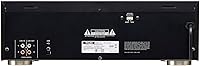
- Audio Inputs: The rear panel is equipped with standard RCA analog input jacks for connecting external sources.
- Audio Outputs: Connectivity includes one pair of RCA analog output jacks and a 6.3mm stereo headphone jack on the front.
- Microphone Input: A 6.3mm (1/4″) mono microphone jack is provided on the front panel with its own level control.
- Recording Modes: The system allows for parallel recording to both decks simultaneously for instant duplicates.
- Tape Counter: Both decks feature four-digit digital counters with a Return to Zero (RTZ) function for easy navigation.
- Auto Detect: The deck automatically detects the tape type (Type I, II, or IV) to optimize playback settings.
- Muting Function: A dedicated REC Mute button creates four-second silences between tracks with a single touch.
- Display Type: The high-contrast fluorescent display includes level meters for monitoring input and output signals.
- Accessories: A dedicated wireless remote control is included in the box for managing transport functions.
- Power Requirement: The unit is designed to operate on standard AC power suitable for home hi-fi systems.
Related Reviews

FULMINARE HS02-W Bluetooth Speaker
W-KING X20 Portable Bluetooth Party Speaker

W-KING D10 Portable Bluetooth Speaker
W-KING D8 Portable Bluetooth Speaker
Infinity Primus 1200 12″ Car Subwoofer
Cloud-W Wireless Keyboard Mouse Combo

elizabeth W Vetiver Hand Wash 8oz
Jameco Valuepro GRP-1200 Benchtop Isolation Transformer
Senal SMH-1200 Studio Monitor Headphones