Overview

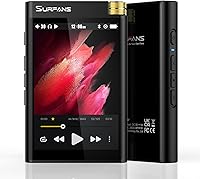
The Surfans F28 Hi-Res Digital Audio Player arrived in mid-2023 as a serious challenger for listeners who have grown tired of letting their smartphone handle audio duties. At this price point, it sits squarely between entry-level DAPs and true flagship territory — closer to FiiO M11 country than Astell&Kern. Powering the audio engine is an Ingenic X1000E processor paired with dual ESS9018 DAC chips, a combination you would typically expect from pricier hardware. The 3.5-inch IPS touchscreen and zinc alloy chassis give it a premium feel in hand. One thing to be clear about upfront: this is a dedicated music player. No Spotify, no YouTube — just your local library, played back properly.
Features & Benefits

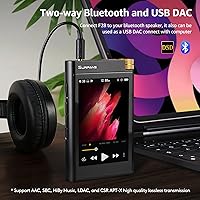
The F28's audio credentials are harder to dismiss once you understand what is under the hood. Both DAC chips run natively, meaning DSD256 and 24-bit/384kHz PCM tracks are decoded in hardware rather than converted on the fly by software — and that distinction matters for detail and dynamics. On the output side, you get a standard 3.5mm jack alongside a 4.4mm balanced output; balanced connections reduce channel crosstalk and can noticeably improve headphone separation with compatible cables. Bluetooth works both ways: stream from this DAP to wireless headphones, or run it as a Bluetooth DAC for an external source, with LDAC available when conditions support it. Storage stretches to 512GB via microSD, and battery life comfortably covers a long flight.

Best For

This DAP makes the most sense for someone already curious about high-resolution audio who does not want to spend flagship money to explore it. If you own headphones with a balanced 4.4mm cable, the F28 gives you an immediate, tangible reason to use it. Commuters relying on LDAC Bluetooth for wireless listening will find it capable, though real-world performance depends heavily on headphone pairing and source file quality — compressed audio will not suddenly sound pristine. Large library collectors will value the 512GB microSD ceiling. And listeners who have heard about DSD playback but never experienced it on dedicated hardware will find this a reasonable, lower-risk entry point before committing to pricier options.

User Feedback

Across nearly 500 ratings, the Surfans player sits at 3.9 out of 5 — respectable, but honest. Buyers upgrading from phone audio frequently note a clear sound quality improvement, and several praise the build quality as punching above its price. The criticism is worth reading carefully. Software maturity is a recurring concern: playlist management feels underdeveloped, and some users report occasional UI lag that disrupts the otherwise smooth experience. Bluetooth reliability, particularly LDAC stability in crowded environments, draws mixed feedback. None of this is catastrophic for a patient listener who primarily uses offline libraries, and Surfans backs the player with a one-year return policy, which meaningfully reduces the risk for hesitant buyers.

Pros

  • Dual ESS9018 DAC chips deliver native DSD256 and high-resolution PCM playback without software conversion shortcuts.
  • Both 3.5mm single-ended and 4.4mm balanced outputs are included, offering real flexibility for different headphone cables.
  • LDAC Bluetooth support lets you stream high-quality wireless audio to compatible headphones without a separate dongle.
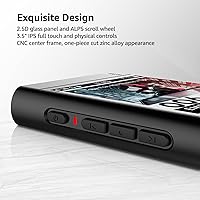
  • The zinc alloy chassis and curved glass back feel noticeably more premium than typical plastic-bodied competitors at this price.
  • MicroSD expansion up to 512GB means even large lossless libraries can live entirely on the device.
  • Format support is genuinely broad, covering DSD, FLAC, APE, WAV, AIFF, and all common lossy formats without conversion.
  • Up to 12 hours of playback is enough for long travel days without hunting for a power outlet.
  • The ALPS scroll wheel adds a tactile, physical control option that touchscreen-only players cannot offer.
  • Bidirectional Bluetooth means the F28 can also act as a DAC and amp for an external audio source.
  • A one-year return and exchange guarantee provides meaningful reassurance for buyers trying the brand for the first time.

Cons

  • Playlist management is underdeveloped and frustrating for users with large, carefully organised music libraries.
  • UI lag has been reported by multiple buyers, disrupting what should be a smooth daily listening experience.
  • LDAC performance is inconsistent in real-world conditions and heavily dependent on environment and headphone pairing.
  • No streaming app support at all — buyers locked into Spotify or Tidal will find this DAP essentially unusable.
  • Firmware maturity lags behind more established brands like FiiO, and software updates have been slow to address known issues.
  • At roughly 4.9 ounces in a metal body, it is noticeably heavier than ultra-portable alternatives for gym or running use.
  • No internal storage is included — without a microSD card purchased separately, the device holds nothing out of the box.
  • The 3.9-star average across nearly 500 ratings reflects a product that satisfies most buyers but falls short for a meaningful minority.
  • Limited brand recognition compared to FiiO or HiBy means fewer third-party accessories, cases, and community support resources.

Ratings

The scores below for the Surfans F28 Hi-Res Digital Audio Player were generated by our AI engine after analyzing verified global buyer reviews, actively filtering out incentivized, bot-generated, and duplicate feedback to surface what real users consistently experienced. Each category reflects an honest synthesis of both the genuine strengths and the recurring frustrations reported across hundreds of independent purchases. Nothing has been softened — the numbers tell the full story.

Sound Quality
88%
The dual ESS9018 DAC setup earns consistent praise from buyers who compare it directly against smartphone audio — the difference is described as immediately noticeable, particularly on well-recorded FLAC and DSD files. Listeners using quality over-ear headphones report a noticeably wider, more layered presentation than they expected at this price tier.
A handful of more experienced audiophiles note that the sound signature leans slightly warm, which not everyone prefers, and the amplification headroom can feel limited when driving harder-to-power planar headphones. The gap versus true flagship DAPs from FiiO or Astell&Kern remains real and audible to trained ears.
Build Quality
83%
The zinc alloy body and curved glass back consistently impress buyers who expect plasticky construction at this price point — it feels genuinely solid and sits confidently in hand. The ALPS scroll wheel adds a satisfying mechanical feedback that elevates the overall tactile experience compared to touch-only competitors.
Some users report that the glass back is a fingerprint magnet and scratches more easily than expected without a case. A few buyers also noted minor fit-and-finish inconsistencies around the scroll wheel and port edges, suggesting quality control is good but not perfectly uniform across every unit.
Software & UI
58%
42%
Basic playback navigation — browsing by artist, album, or folder — works reliably and is intuitive enough for most users to pick up without reading the manual. The touchscreen response is generally smooth during straightforward listening sessions, and the layout is clean enough not to get in the way.
Playlist management is the software's most consistently criticised weakness, with buyers describing the process as clunky and counterintuitive compared to mature DAP operating systems. UI lag during library scanning or menu transitions has been reported often enough to be considered a systemic issue rather than isolated bad luck, and firmware updates have been slow to address it.
Bluetooth Performance
67%
33%
LDAC support at this price is genuinely useful, and buyers using compatible wireless headphones in calm environments — a home office, a park, a quiet commute — report noticeably better wireless audio than a standard SBC or AAC connection would deliver. The bidirectional capability, allowing the device to act as a Bluetooth DAC for a phone, is a feature buyers regularly call out as unexpectedly handy.
In high-interference environments like packed public transit or busy offices, LDAC stability drops and users report dropouts and reconnection delays. Several buyers also noted that initial Bluetooth pairing with certain headphone models was inconsistent, requiring multiple attempts before establishing a reliable connection.
Format & Codec Support
91%
The breadth of supported formats is one of the F28's least-contested strengths — covering everything from DSD256 and FLAC to OGG and WMA means virtually no buyer has reported running into a file type the device refuses to play. For collectors with mixed or legacy libraries, this flexibility removes a common headache entirely.
A small number of users with unusual or edge-case file tagging encountered library display issues where tracks were misidentified or not surfaced correctly. This is an uncommon scenario but worth noting for those with very large, carefully curated libraries using non-standard metadata.
Battery Life
76%
24%
Most buyers using the device primarily with wired headphones and the screen off for extended periods find that the real-world battery performance comes close to the 12-hour figure, which is enough for a full travel day without anxiety. Charging via USB-C is convenient and widely compatible with existing cables.
Enabling LDAC Bluetooth or relying heavily on the balanced output cuts playback time meaningfully, and some users who listened intensively through a full shift reported needing to top up by evening. The battery is non-replaceable, which is a long-term durability consideration worth factoring in.
Balanced Output
84%
Buyers who own headphones with 4.4mm balanced cables consistently report that the balanced output delivers a cleaner, more separated stereo image compared to the single-ended jack — a tangible real-world improvement on demanding tracks with complex arrangements. Having both outputs independently amplified means users are not forced to compromise based on which cable they own.
The advantage of the balanced output is most apparent with high-quality headphones and well-recorded source material — buyers using budget earphones or compressed files may notice little practical difference. There is also no adapter included in the box for users wanting to try the 4.4mm output with standard 3.5mm headphone cables.
Storage & Expandability
87%
Support for microSD cards up to 512GB gives library collectors genuine breathing room, and buyers with extensive lossless collections appreciate not having to constantly manage which albums live on the device. Most standard high-capacity microSD cards from reputable brands are reported to be recognised and read correctly without issues.
The absence of any built-in internal storage means the device is completely unusable out of the box until a memory card is purchased separately, which catches some first-time buyers off guard. Card slot durability over repeated insertions has not been flagged widely yet, but it remains a watch point for heavy users.
Portability & Size
72%
28%
The physical footprint is manageable for a jacket pocket or bag, and most buyers describe it as comfortable to carry daily without feeling like they are lugging around a piece of equipment. The dimensions are in line with mid-range DAPs rather than the brick-like flagship units from competing premium brands.
At 4.9 ounces in a metal body, it is noticeably heavier than smartphone-sized or ultra-compact DAPs, and buyers who intended to use it at the gym found the weight and size slightly impractical for active use. It is not a device you clip onto a waistband or drop in a small running armband.
Value for Money
74%
26%
For buyers whose primary goal is a significant audio quality upgrade over a smartphone without paying for a flagship DAP, the F28 delivers meaningful hardware credentials — dual DACs, balanced output, native DSD — at a price where those features are uncommon. Most satisfied buyers feel the sound quality alone justifies the purchase.
Buyers who factor in the software frustrations, the separately purchased memory card, and the relatively unproven brand compared to FiiO or HiBy sometimes feel the value equation is less clear-cut than the spec sheet suggests. The 3.9-star average reflects a product that is not universally satisfying for the money.
DSD Playback
82%
18%
Native DSD256 hardware decoding without software conversion is a genuine technical differentiator at this price, and buyers who have invested in DSD-format recordings report that the F28 handles them accurately and without the artefacts that software-based DSD-to-PCM conversion can introduce.
DSD performance is only as good as the rest of the signal chain, and a few buyers noted that the improvement over a well-implemented PCM playback was subtle rather than dramatic — meaning DSD alone should not be the sole reason to purchase this device. Library management for large DSD collections also inherits the same software limitations as the rest of the UI.
Ease of Setup
69%
31%
Loading music onto the device via a microSD card is straightforward for anyone familiar with file management, and the included USB-C cable means initial charging is simple. Most buyers report being up and running within a few minutes of unboxing.
Users less familiar with file-based music players — especially those coming from streaming-only backgrounds — find the initial setup less intuitive, and the user manual is described as thin on practical guidance. Setting up Bluetooth pairing, particularly with LDAC, can also require patience and multiple attempts on first use.
Warranty & Support
71%
29%
The one-year return and exchange guarantee is a meaningful commitment for a newer brand entering a competitive market, and buyers who have needed to invoke it generally report a cooperative resolution process. This policy meaningfully reduces the financial risk for hesitant first-time buyers.
Surfans does not yet have the established customer support infrastructure or community knowledge base that FiiO or HiBy have built over years, meaning firmware bugs and niche compatibility questions can take longer to resolve. Support responsiveness has been inconsistent in some reported buyer experiences.

Suitable for:

The Surfans F28 Hi-Res Digital Audio Player is a strong fit for listeners who have outgrown smartphone audio and want a dedicated device built specifically around sound quality, without spending flagship-tier money. If you already own a pair of headphones with a 4.4mm balanced cable — or have been meaning to upgrade to one — this DAP gives you a real hardware reason to make that switch, since the balanced output genuinely improves channel separation in a way that software tricks cannot replicate. Lossless library collectors will appreciate the microSD expansion ceiling, which comfortably holds a serious FLAC or DSD collection without constant file juggling. Commuters and travellers who want LDAC Bluetooth on a compact, pocketable device will find the F28 a practical companion, provided they understand that LDAC's advantage is most noticeable with high-quality source files and compatible headphones. Anyone curious about native DSD playback who is not ready to commit to a Sony or Astell&Kern price bracket will find this a reasonable, lower-risk way to hear what the format actually sounds like on proper hardware.
Not suitable for:

The Surfans F28 Hi-Res Digital Audio Player is a poor choice for anyone expecting a smart media device — there is no Spotify, Apple Music, Tidal, or any streaming app support whatsoever, and that will not change with a firmware update. If your listening habit relies entirely on streaming rather than a locally stored library, this DAP offers you almost nothing useful. Buyers who prioritise a polished, intuitive software experience similar to what they get from an iPhone or a mature Android DAP should be cautious, as the firmware has drawn consistent criticism around playlist handling and occasional interface lag. Those planning to use LDAC Bluetooth as their primary listening method in busy, radio-frequency-heavy environments like subway carriages or crowded gyms may find the connection less stable than expected. Finally, anyone looking for a versatile all-in-one pocket device that also handles calls, navigation, or apps should look elsewhere entirely — this is a single-purpose machine, and that is by design, not by accident.
Specifications

  • Chipset: Powered by an Ingenic X1000E processor designed to handle high-resolution audio decoding with low latency.
  • DAC Chips: Uses two ESS9018 DAC chips running in parallel to convert digital audio files into an analog signal natively.
  • Max PCM: Supports native PCM playback up to 24-bit depth at 384kHz sampling rate without software upsampling.
  • Max DSD: Handles native hard DSD256 decoding, covering DSF and DFF file formats without converting them to PCM first.
  • Audio Outputs: Includes an independent 3.5mm single-ended headphone jack and a 4.4mm balanced output, each with its own amplification circuit.
  • Bluetooth: Supports bidirectional Bluetooth with LDAC, aptX, AAC, and SBC codecs, functioning as either a playback source or a receiving DAC and amp.
  • File Formats: Compatible with FLAC, APE, DSF, DFF, WAV, AIFF, OGG, M4A, AAC, WMA, and MP3 without requiring transcoding.
  • Screen: Features a 3.5-inch IPS panel with full touch input for navigation and playback control.
  • Scroll Wheel: Includes a physical ALPS scroll wheel on the body for tactile volume and navigation control without touching the screen.
  • Storage: Accepts a microSD card up to 512GB in capacity; no internal storage is built into the device.
  • Battery Life: Rated for up to 12 hours of continuous playback on a full charge under standard listening conditions.
  • Charging: Charges via a USB-C port, with a USB-C cable included in the box.
  • Body Material: Chassis is constructed from zinc alloy with a 2.5D curved tempered glass back panel.
  • Dimensions: Measures 4.72 x 2.60 x 0.79 inches, making it pocketable but slightly larger than entry-level DAPs.
  • Weight: Weighs 4.9 ounces, which reflects the metal construction and is heavier than plastic-bodied alternatives.
  • In the Box: Package includes the player itself, a USB-C charging cable, and a printed user manual.
  • Warranty: Covered by a one-year hassle-free return and exchange guarantee provided directly by Surfans.

Related Reviews

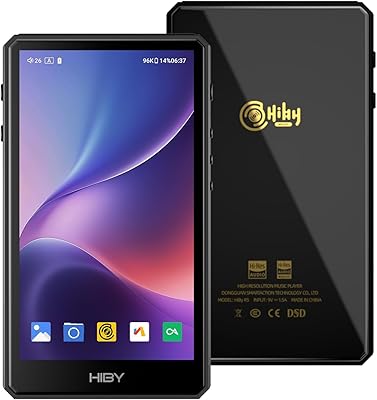
HiBy R5 Gen 2 Digital Audio Player
72%
88%
Sound Quality
91%
Hi-Res & Format Support
84%
Balanced Output Performance
47%
Software & App Compatibility
69%
Battery Life
More
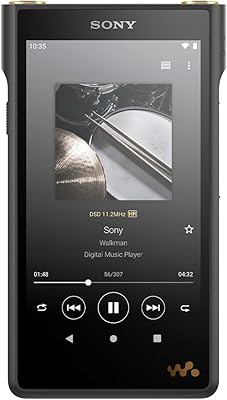
Sony NW-WM1AM2 128GB Hi-Res Walkman
80%
94%
Sound Quality
91%
Build Quality
93%
Hi-Res & DSD Playback
88%
Battery Life
79%
DSEE Ultimate Upscaling
More
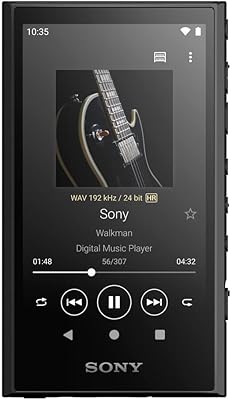
Sony NW-A306 Walkman 32GB Hi-Res Portable Digital Music Player
87%
94%
Audio Quality
92%
Battery Life
89%
Portability
90%
Build Quality
85%
Ease of Use
More
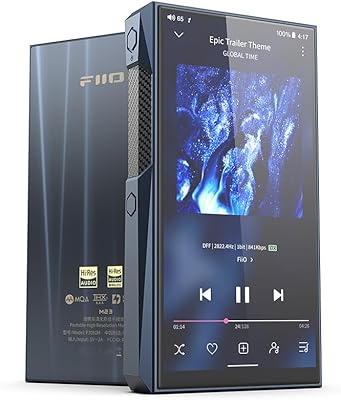
FiiO M23 Hi-Res Portable Music Player
81%
93%
Sound Quality
89%
Streaming App Compatibility
88%
Build Quality
61%
Portability
67%
Battery Life
More
Image Audio SXP Message and Music On Hold Digital Player
86%
92%
Value for Money
88%
Sound Quality for Cell Phones
90%
Setup & Installation
85%
Reliability & Durability
80%
Preloaded Audio Files
More
JadeAudio JM21 Hi-Res Android Music Player
79%
91%
Sound Quality
93%
Balanced Output Power
78%
Android OS Experience
82%
Build Quality & Design
74%
Battery Life
More
Sony NW-ZX707 64GB Hi-Res Walkman
77%
93%
Sound Quality
91%
Balanced Output Performance
88%
Battery Life
89%
Build Quality & Feel
67%
Android App Compatibility
More
HiBy R3 II 2025 Hi-Fi Lossless Audio Player 2TB
86%
94%
Sound Quality
88%
Build Quality
60%
Battery Life
75%
User Interface
90%
App Integration (Tidal/Qobuz)
More
Cambridge Audio CXN100 Network Audio Player
86%
94%
Sound Quality
88%
Multiroom Compatibility
85%
Ease of Use
90%
Connectivity Options
92%
Build Quality
More
Cambridge Audio AXC35
80%
93%
Sound Quality
91%
Build Quality
89%
DAC Performance
78%
Value for Money
61%
Connectivity & Outputs
More

FAQ

No, and this is important to know before buying. The F28 does not run Android or any app store, so streaming services are not available on the device. It is built exclusively for playing audio files stored on a microSD card.

It does not. The Surfans F28 Hi-Res Digital Audio Player ships without a microSD card, so you will need to purchase one separately. It supports cards up to 512GB, and most standard microSD cards in that range work without issue.

The 3.5mm jack is a standard single-ended output that works with virtually any headphone. The 4.4mm output is a balanced connection, which uses a separate signal path for each audio channel, reducing crosstalk and often producing a cleaner, wider soundstage. If your headphones support a balanced cable, the 4.4mm output is worth using — if not, the 3.5mm jack still sounds very good.

LDAC can transmit significantly more audio data than standard Bluetooth codecs, but real-world results depend on a few things: your wireless headphones need to support LDAC, your source files should ideally be lossless or high-bitrate, and the connection quality drops in environments with heavy wireless interference. In a quiet home or office, LDAC on the F28 performs well. On a packed subway, expect some inconsistency.

Yes, that is one of its more useful features. The F28 can receive Bluetooth audio from your phone or computer and decode it through its own DAC chips, effectively acting as a wireless DAC and headphone amp. This works with supported Bluetooth codecs including LDAC and aptX.

The interface is functional but not the most polished experience on the market. Navigating basic playback and albums is straightforward, but managing playlists and more complex library organisation has frustrated some users. If you are coming from a well-designed smartphone music app, expect an adjustment period. That said, many buyers find it perfectly usable once they get familiar with the layout.

It decodes DSD natively in hardware, which means the dual ESS9018 chips handle DSD256 files directly without converting them to PCM first. This is a meaningful distinction — native decoding typically preserves more of the original recording's character compared to software-based conversion.

The zinc alloy body and curved glass back give the Surfans player a noticeably premium feel compared to plastic-bodied competitors in this range. It feels dense and well-assembled in hand. The ALPS scroll wheel adds a satisfying tactile element that cheap alternatives often skip. It is not quite at the fit-and-finish level of a flagship FiiO or Astell&Kern, but it holds its own comfortably.

Surfans offers a one-year return and exchange policy, which is a reasonable safety net for a newer brand. If you encounter a hardware defect within that window, you can contact them for a resolution. As with any smaller audio brand, it is worth keeping your purchase documentation handy.

The 12-hour figure is achievable under moderate conditions — typically with the screen off, balanced output not in use, and Bluetooth disabled. Enabling LDAC Bluetooth or using the balanced output will draw more power and reduce playback time. For most commuters or travellers, a single daily charge should be sufficient.

Where to Buy

Shenzhen Hengmaolong Technology Co.
In stock $179.99