Overview

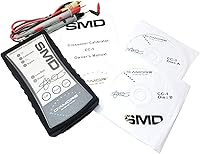
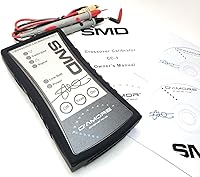
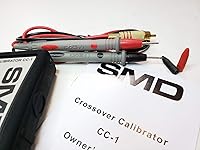
The SMD CC-1 Crossover Calibrator is one of those tools that addresses a very specific need in a professional installer's kit — and does it well. Getting active crossover points dialed in accurately has traditionally meant either trusting a head unit's display readout (which can be overly optimistic) or hauling out expensive measurement rigs. This calibrator offers a portable, purpose-built way to verify actual crossover frequency in the field. D'amore Engineering has earned a reputation in the car audio community for no-nonsense gear that serious builders actually trust, and the CC-1 reflects that same philosophy — precise, focused, and built for people who know what they're doing.

Features & Benefits

What sets this calibrator apart from guesswork is digital microprocessor control — the circuitry isn't analog approximation, it's a repeatable, consistent measurement platform. The standout spec is crossover accuracy within +/- 0.25dB at the -3dB point, which is genuinely tight tolerance for a handheld battery-powered device used in real shop conditions. Two practical details that often get overlooked: the low battery LED alert kicks in when voltage drops below 6.5V, which matters because a weak battery can skew readings, and the auto-shutoff after 8 to 10 minutes protects you from dead batteries mid-install. At under 14 ounces, the CC-1 is easy to handle inside a vehicle.

Best For

The CC-1 is a natural fit for professional installers who build active multi-way systems regularly and can't afford to guess at crossover accuracy — one wrong setting affects the entire acoustic balance of a build. Competition builders will find it particularly valuable since judges don't overlook tonal imbalances caused by sloppy crossover points. It's also well suited to shop owners who want a documented verification step in their workflow, or DSP-focused tuners who need to confirm that a processor's output actually matches the target frequency they've programmed. If you're still running passive crossovers, this crossover tool simply isn't aimed at you.

User Feedback

Installers who rely on the CC-1 regularly praise its measurement repeatability — readings stay consistent across multiple tests, which is exactly what you need when a client build is on the line. Build quality gets solid marks; it feels sturdy in the hand without being unnecessarily bulky. On the downside, a few buyers point out that the documentation could be more thorough, especially for those new to active crossover calibration. The learning curve can be steeper than expected without additional reference material. Most professional buyers ultimately view the price as justified for a tool this specialized, and long-term durability feedback has been largely positive.

Pros

  • Crossover accuracy held to within +/- 0.25dB at the -3dB point — tight enough for serious professional work.
  • Digital microprocessor control means measurements stay repeatable across multiple sessions and conditions.
  • The low battery LED alert prevents inaccurate readings caused by a weakening power supply mid-job.
  • Auto-shutoff after 8 to 10 minutes is a genuinely useful feature that keeps batteries lasting across a full workday.
  • At under 14 ounces, the CC-1 is easy to maneuver inside a vehicle during an active install.
  • D'amore Engineering has a strong reputation among competition and professional builders, and the brand trust is well earned.
  • Installers report consistent real-world accuracy that matches the spec sheet, which isn't always a given with niche measurement tools.
  • Purpose-built for crossover calibration rather than a general-purpose tool repurposed for the job.
  • Durable enough for regular shop use, with long-term owners reporting it holds up well over time.

Cons

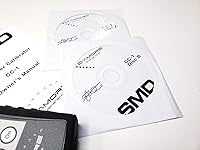
  • Documentation and included instructional material are thin, which creates a frustrating start for users new to the tool.
  • No carrying case or protective storage solution is included for a device built for field use.
  • Battery-powered operation means you need to keep spares on hand for longer install sessions.
  • The price point is a significant commitment for a single-function calibration device with no broader measurement capabilities.
  • There is no digital display or readout, which can make the workflow feel less intuitive compared to modern analyzer software.
  • The tool's narrow use case means it sits idle on builds that don't involve active crossover tuning.
  • Buyers working without a mentor or reference guide may need to invest extra time finding reliable usage instructions online.
  • No Bluetooth or PC connectivity limits integration with modern DSP software workflows.

Ratings

The SMD CC-1 Crossover Calibrator has been scored by our AI system after analyzing verified buyer reviews from professional installers and serious enthusiasts worldwide — spam, bot activity, and incentivized feedback were actively filtered out before scoring. The results reflect both the genuine strengths that keep this calibrator on shop benches year after year and the friction points that real users encounter in practice. Nothing has been glossed over.

Measurement Accuracy
93%
This is where the CC-1 earns its reputation without argument. Installers running competition builds and high-end active systems consistently report that measured crossover points match target frequencies within the stated +/- 0.25dB tolerance, even across repeated sessions. For professionals where a misaligned crossover can unravel an entire acoustic build, that reliability is not a small thing.
A small number of users note that readings can drift slightly when battery voltage gets close to the 6.5Vdc warning threshold but hasn't yet triggered the LED. It's a narrow window of concern, but it reinforces the need to always start a session with fresh batteries rather than assuming a partially depleted set is fine.
Measurement Repeatability
88%
Users consistently praise how stable the CC-1 is across multiple measurement passes on the same output. Installers who take three or four readings in succession during a complex tune report that the numbers hold steady, which builds genuine confidence when locking in crossover points before wrapping a build.
Repeatability can be slightly affected by external electrical noise in a vehicle environment, particularly in builds with unresolved grounding issues. This isn't a flaw unique to this calibrator, but it means the tool performs best when the system's electrical foundation is already clean.
Build Quality
79%
21%
The CC-1 feels solid and intentional in the hand — not flashy, but not fragile either. Long-term owners working in professional shop environments report no significant durability issues after years of regular use, which matters for a tool that gets tossed in a kit bag and pulled out on every active build.
The housing design is functional rather than refined, and a few users feel the overall construction doesn't quite match the price tier when compared to other professional measurement tools. There's no rubberized grip or impact protection, which is a noticeable omission for a field-use device.
Ease of Use
67%
33%
For installers who already understand active crossover systems well, the CC-1 is reasonably straightforward once the workflow clicks. Experienced tuners report that after a few sessions it becomes second nature, and the compact form factor makes it easy to work with inside tight vehicle interiors.
New users consistently flag the learning curve as steeper than expected, largely due to sparse documentation. Without a mentor or reliable online reference, understanding exactly how to connect and interpret results can take longer than it should — and the manufacturer's included materials don't close that gap adequately.
Documentation & Support
47%
53%
Users who sought out community forums, particularly SMD-affiliated groups and car audio enthusiast boards, report finding helpful guidance from experienced members willing to walk through proper usage technique. Once that knowledge is in hand, operation becomes much more intuitive.
The included documentation is the most consistently criticized aspect of the CC-1 across buyer feedback. For a tool at this price point and complexity level, the lack of a thorough printed or digital manual is a genuine friction point that leaves first-time users relying entirely on third-party resources to get started.
Battery Performance
71%
29%
The auto-shutoff timer proves genuinely useful during real install sessions, preventing the dead-battery scenario that plagues other handheld tools left powered on between measurement passes. Installers who develop the habit of powering it back on only when measuring report solid battery longevity across a working week.
The 8 to 10 minute auto-shutoff window can feel restrictive when working through a complex multi-driver active system that requires careful setup between each reading. Some users would prefer a longer timeout option or a manual override, especially during extended calibration sessions on competition builds.
Portability
84%
At under 14 ounces and with a footprint small enough to fit in most tool bags, the CC-1 travels well between jobs. Installers who move between shop and client locations appreciate not needing to haul a cart of equipment just to verify a crossover point during a mobile install.
There is no purpose-built carrying case or pouch included, which is a minor but recurring complaint from users who want to protect the device during transport. A basic protective sleeve would have been a welcome addition for a professional-grade instrument at this price.
Value for Money
63%
37%
Professional installers and competition builders who use the CC-1 on a regular basis largely agree that the tool justifies its cost over time, particularly when it prevents a single expensive callback or rework caused by an inaccurate crossover setting. In that framing, it pays for itself relatively quickly in a working shop.
For buyers who only tune systems occasionally, or who are purchasing it for a one-time personal build, the cost is a difficult pill to swallow for a single-function instrument. Several reviewers explicitly mention that the value equation only makes sense if the tool becomes a regular part of the workflow rather than a shelf item.
Compatibility
81%
19%
Because it measures the actual audio signal output rather than interfacing digitally with any specific processor or head unit, the CC-1 works across brands without restriction. Tuners using everything from budget DSP units to flagship processors report no compatibility issues when connecting to the output stage.
Depending on the specific outputs available on a given head unit or processor, users may need additional adapter cables or connectors that are not included in the package. A handful of buyers were caught off guard by this requirement and had to source hardware before completing their first session.
Accessory Inclusion
38%
62%
The core unit itself arrives intact and functional, and buyers who come prepared with their own connection hardware report no significant issues getting up and running in a familiar setup environment. The device itself needs no accessories to operate in a standard active crossover configuration.
Across reviews, the lack of included accessories — specifically connection cables — is a recurring frustration. For a professional-tier instrument, arriving without the hardware needed to actually connect it to a system is an oversight that generates legitimate irritation, particularly for first-time buyers who weren't warned in advance.
Longevity & Durability
82%
18%
The track record here is encouraging — users who have owned the CC-1 for several years and used it across dozens of builds report no functional degradation. For a battery-powered measurement device used in a physically demanding environment, that kind of staying power is a real vote of confidence.
There is limited publicly available data on what happens to calibration accuracy over a very long service life, and SMD doesn't publish formal recalibration guidance or intervals. Users who rely on the tool for critical competition builds may want to periodically cross-check its output against a reference standard.
Brand Reputation
89%
D'amore Engineering carries real credibility in the car audio world, and that reputation extends directly to this calibrator. Buyers who are already familiar with the SMD brand come into the purchase with a level of trust that holds up — the CC-1 does what it says it does, and that consistency reinforces loyalty.
The brand's niche positioning means that customer support infrastructure is not as robust as larger consumer electronics companies. If something goes wrong outside of warranty, resolution paths can be harder to navigate than buyers accustomed to mainstream brands might expect.
Workflow Integration
74%
26%
Once installers build the CC-1 into their standard calibration routine, it adds a clear and repeatable verification step that many describe as essential for active builds. Shop owners who standardize around it report a measurable improvement in post-install consistency across their team.
The tool doesn't integrate with any software ecosystem, meaning all data interpretation is manual and in-session. In an era where many tuners work with laptop-based DSP software and want a connected measurement environment, the CC-1's fully analog workflow can feel isolated from the rest of a modern tuning setup.

Suitable for:

The SMD CC-1 Crossover Calibrator is built for a specific kind of buyer — one who already understands active crossover systems and needs a reliable way to verify that their settings are actually doing what the processor or head unit claims. Professional installers running high-end builds with dedicated amplifier channels for each driver will get the most value from this tool, since guessing at crossover points on a four- or five-way active system isn't a real option when a client is paying for precision. Competition car audio builders are another obvious fit; at that level, crossover accuracy isn't just a preference, it's a scoring variable. Shop owners who want to standardize their calibration process and document verified crossover settings for every client build will find the CC-1 earns its place in the workflow quickly. DSP tuners — particularly those working with processors that offer fine frequency control — will appreciate having an independent hardware check to confirm the digital output matches the intended target, rather than relying solely on software readouts.

Not suitable for:

If you're running a passive crossover setup in your vehicle, the SMD CC-1 Crossover Calibrator simply has no role to play in your system — it's designed specifically for active configurations where amplifier-level crossover tuning is part of the build. Casual listeners who installed a basic aftermarket head unit and want better sound without deeper technical involvement should look elsewhere; this is a professional measurement device, not a plug-and-play tuning aid. The learning curve is real, and buyers who aren't already comfortable working with active systems may struggle to get meaningful results without additional reference materials or hands-on guidance. At its price point, the tool also doesn't make economic sense for someone who only tunes systems occasionally or as a one-time personal project. If your goal is general audio improvement rather than verified crossover calibration, the investment is difficult to justify.

Specifications

  • Brand: Manufactured by SMD, operating under D'amore Engineering, a brand respected in the professional and competition car audio community.
  • Model: The model designation is CC-1, a purpose-built crossover calibration instrument with no consumer-grade equivalent in the SMD lineup.
  • Control Type: Circuitry is governed by digital microprocessor control, which enables consistent and repeatable measurement results across sessions.
  • Crossover Accuracy: The device holds crossover -3dB point accuracy to within +/- 0.25dB, a tight tolerance well suited to professional active system calibration.
  • Battery Alert: A low battery LED indicator activates when supply voltage drops below 6.5Vdc, alerting the user before readings can be compromised.
  • Auto-Shutoff: An automatic shutoff timer powers down the unit 8 to 10 minutes after the ON button is pressed to preserve battery charge.
  • Power Source: The CC-1 runs on battery power, making it fully portable and independent of any vehicle or bench power supply during use.
  • Dimensions: Package dimensions measure 7.87 x 5.83 x 2.28 inches, keeping the device compact enough for use in confined vehicle install environments.
  • Weight: The unit weighs 13.76 ounces, light enough to handle comfortably with one hand during an active installation session.
  • Primary Function: Designed specifically to verify and calibrate crossover frequency settings on active systems, including head units, DSP processors, and amplifier-level crossovers.
  • Measurement Target: Targets the -3dB crossover point, the standard reference used in professional audio to define the actual rolloff frequency of a filter.
  • Use Environment: Intended for field use in professional car audio installation shops and competition build environments, not laboratory or studio settings.
  • Market Rank: Holds a Best Sellers Rank of #83 in the Audio and Video Crossover Parts category on Amazon at time of listing.
  • Availability: First made available in May 2012 and confirmed as not discontinued by the manufacturer, indicating ongoing production and support.
  • Item Number: The official item model number is CC-1, consistent across retailer listings and manufacturer documentation.

Related Reviews
Summer Fridays CC Me Serum 1oz
81%
83%
Brightening Efficacy
74%
Dark Spot Reduction
91%
Texture & Absorption
88%
Skin Tolerance & Sensitivity
86%
Ingredient Quality
More
Erborian CC Cream Color Correcting SPF 25, 1.5oz
85%
87%
Effectiveness in Color Correction
83%
SPF Protection Performance
89%
Hydration and Moisturization
92%
Lightweight Feel and Texture
85%
Finish and Skin Appearance
More
IT Cosmetics CC+ Cream 1.08 fl oz
76%
91%
Redness Coverage
88%
Texture & Blendability
73%
SPF Performance
67%
Wear Longevity
86%
Hydration & Skin Feel
More
IT Cosmetics CC+ Cream Illumination SPF 50+ - 1.08 fl oz
87%
91%
Overall Coverage & Effectiveness
87%
Hydration & Skin Feel
92%
SPF Protection & Sun Safety
89%
Radiance & Illuminating Finish
95%
Suitability for Dry Skin
More
IT Cosmetics CC+ Cream Natural Matte Foundation SPF 40 - 1.08 fl oz

87%
89%
Oil Control
91%
Longevity of Coverage
84%
Texture and Feel
88%
SPF Protection
90%
Suitability for Oily Skin
More
IT Cosmetics CC+ Nude Glow Foundation, Medium Coverage, SPF 40, 1.08 fl oz

85%
89%
Hydration & Moisture
91%
SPF Protection
84%
Coverage & Finish
90%
Lightweight Feel
88%
Skin Compatibility (Normal to Dry)
More
Olay Total Effects Tone Correcting CC Cream SPF 15, 1.7 fl oz

84%
89%
Hydration & Moisturizing Power
84%
SPF Protection & Sun Defense
78%
Light Coverage & Finish
91%
Texture & Feel
90%
Absorption & Non-Greasy Formula
More
PürLisse Youth Glow Vitamin C CC Cream with SPF 50 - Light Medium (1.4 oz)

87%
94%
SPF Protection
88%
Hydration
91%
Buildable Coverage
85%
Skin Compatibility
87%
Texture and Feel
More
My Perfect Goatee v1.1 Shaving Template
75%
83%
Shaping Accuracy
61%
Face Shape Compatibility
68%
Ease of Use
81%
Time Savings
77%
Build & Durability
More
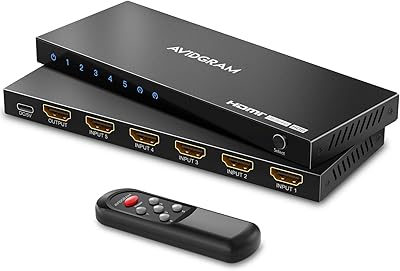
AVIDGRAM AG5SW51X 5-Port HDMI 2.1 Switch
80%
91%
Signal Integrity
86%
Build Quality
72%
Auto-Switching Reliability
63%
IR Remote Performance
89%
HDR & Format Compatibility
More

FAQ

The CC-1 works independently of any particular brand or processor. It measures the actual audio signal output, so as long as your processor has an output you can tap into, this crossover tool can verify the crossover point regardless of who made the DSP.

The exact battery type isn't listed in the official specs, but given the 6.5Vdc low-voltage alert threshold, it almost certainly runs on a common 9V configuration. Battery life in practice depends on session frequency, but the auto-shutoff feature helps prevent accidental drain between uses — keep a spare on hand for longer install days just in case.

Honestly, no. This crossover tool is designed specifically for active crossover calibration, where the filter is applied at the amplifier or processor level. Passive crossovers are a different animal entirely, and the CC-1 won't add anything to that workflow.

The timer starts counting from when you press the ON button and shuts the unit off after 8 to 10 minutes. If you're working methodically or troubleshooting a tricky crossover point, that window can go by faster than expected. Just be ready to power it back on for each measurement pass rather than treating it as a set-it-and-forget-it situation.

If you already have a solid understanding of active crossover systems, the device itself isn't overly complicated. The challenge most buyers run into is that the included documentation is minimal, so there's a bit of a self-directed learning curve. Community forums and SMD's own online resources are where most users fill in the gaps.

The CC-1 is focused on identifying and verifying the -3dB crossover point — that's its core function. It isn't a full spectrum analyzer and doesn't visually map slopes the way an RTA or measurement software would. Think of it as a precision confirmation tool, not a comprehensive audio analysis platform.

Feedback from long-term owners is largely positive on this front. It isn't flashy, but it feels purposeful and sturdy in the hand. Most professional users who rely on it regularly report that it holds up well without any significant durability issues.

No accessories are confirmed in the listing, and several buyers have noted that additional connection hardware may need to be sourced separately depending on your specific setup. Factor that into your preparation before your first session.

According to the manufacturer, the CC-1 has not been discontinued, so supply shouldn't be an issue through authorized channels. It's been in production since 2012, which speaks to its staying power in a niche market.

It depends on your commitment level. If you're serious about getting your crossover points dialed in accurately and plan to build or tune active systems beyond just a one-off project, this calibrator is worth the investment. If it's truly a one-time build, the cost may be harder to justify unless you're already spending heavily on the rest of the system.

Where to Buy

Showtime Electronics
In stock $195.99
Down4soundshop
In stock $197.98