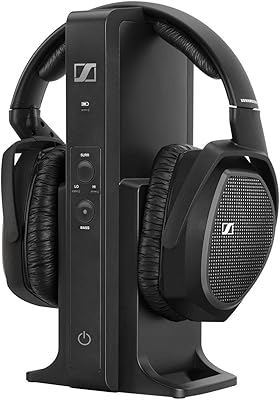
Sennheiser RS 135-9 Wireless Over-Ear Headphones
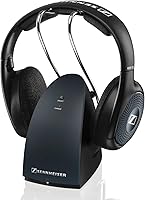
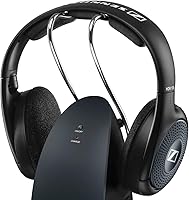
Sennheiser RS 135-9 Wireless Over-Ear Headphones — image 1
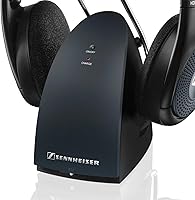
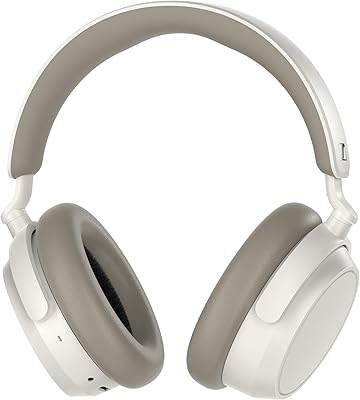
Sennheiser RS 135-9 Wireless Over-Ear Headphones — image 2
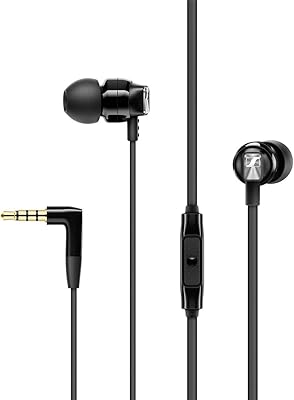
Sennheiser RS 135-9 Wireless Over-Ear Headphones — image 3
76%
24%

Overview

The Sennheiser RS 135-9 Wireless Over-Ear Headphones sit squarely in Sennheiser's tradition of building dependable home audio gear at a sensible price point. What separates this RF home headphone from the Bluetooth crowd is its use of radio frequency transmission — no pairing menus, no dropouts hunting for a connection, and critically, no noticeable audio lag when dialogue needs to sync with what's on screen. The open-back ear cup design gives sound an airy, natural quality you simply won't get from closed headphones, though it lets ambient room noise in rather than blocking it out. The dock charges and stores the headphones together, and running on AAA batteries means no built-in cell will ever degrade over years of use.

Features & Benefits

The open-aire ear cups create a soundstage that feels wider and less compressed than most closed TV headphones — dialogue sounds clear, orchestral tracks breathe, and extended listening never feels suffocating. RF wireless keeps the connection rock-solid within a room; there's no wrestling with Bluetooth device lists every time you settle in for the evening. All the controls you actually need — volume, power, and a tuning dial for the RF channel — sit directly on the headphone, so no remote is required. The replaceable earpads are a genuinely practical touch that can easily double the usable lifespan of the set. The RCA transmitter connection is a real advantage for anyone still running older home theater or stereo equipment.

Best For

These Sennheiser wireless headphones are built around one core scenario: listening at your own volume in a shared living space without the TV blasting for the whole household. That makes them especially well-suited for older adults or anyone who finds themselves pushing the TV louder than those around them are comfortable with. The RCA-only transmitter limits compatibility to older TVs and receivers — if your setup only has optical or HDMI outputs, you will need a separate adapter. Anyone frustrated with Bluetooth's tendency to reconnect slowly or drop mid-episode will find the plug-and-play RF approach a genuine relief. Those who prefer to stay aware of the room around them, rather than be fully isolated, will also feel right at home.

User Feedback

The most consistent praise around the RS 135-9 centers on all-day wearing comfort and the sheer ease of getting started — most users report having audio up and running within minutes of unboxing. TV dialogue comes through cleanly, and the volume range suits a wide variety of hearing needs. On the flip side, some buyers note that RF range through walls is more limited than expected; in an open room performance is solid, but denser construction can cause occasional signal drop. AAA battery life draws mixed reactions — adequate for many, but those used to rechargeable headphones may find the routine inconvenient. Listeners migrating from closed-back designs often need a brief adjustment period before fully appreciating the open, naturally airy sound character.

Pros

  • RF wireless delivers a stable, low-latency connection that stays locked in without the reconnection hassles of Bluetooth.
  • Setup is genuinely straightforward — plug the transmitter into the RCA output and the headphones are ready to go.
  • The open-back design produces a wide, natural soundstage that makes long TV sessions feel relaxed rather than fatiguing.
  • On-ear controls for volume, power, and channel tuning mean no fumbling for a remote mid-show.
  • Replaceable earpads give this RF home headphone a longer usable lifespan than competitors with fixed cushions.
  • Lightweight construction keeps pressure on the head minimal, which matters a lot after an hour or two of wear.
  • The charging stand doubles as a tidy storage dock, so the headphones always have a home on a shelf or side table.
  • RCA connectivity makes the RS 135-9 genuinely compatible with older AV equipment that newer wireless headphones often ignore.
  • AAA batteries are easy to source anywhere, so running out mid-evening is a quick fix rather than a multi-hour charge wait.
  • Backed by Sennheiser's established reputation in audio engineering, which gives buyers confidence in build quality and brand support.

Cons

  • RCA-only transmitter connection excludes modern TVs that have dropped analog audio outputs entirely.
  • The open-back design lets in all surrounding room noise, making these headphones useless in louder or shared environments.
  • RF range through walls or across floors is noticeably shorter than marketing language implies — expect real limits in larger homes.
  • No Bluetooth means zero compatibility with phones, tablets, streaming sticks, or any device without an analog output.
  • Ongoing AAA battery purchases add a running cost that rechargeable alternatives do not carry.
  • The transmitter base must remain plugged in at all times to function as a charger, which means a permanent cable presence near the TV.
  • No carrying case or travel-friendly design whatsoever — this is a fixed, single-room product by nature.
  • Channel tuning via the on-ear dial can occasionally require adjustment if RF interference is present in the home.
  • The headphone fit may feel loose for users with smaller heads, which can affect both comfort and audio quality.
  • No support for multi-device use — the transmitter serves one source only, limiting flexibility in mixed-device setups.

Ratings

Our scores for the Sennheiser RS 135-9 Wireless Over-Ear Headphones were produced by an AI model trained to analyze verified global buyer feedback, actively filtering out incentivized, bot-submitted, and duplicate reviews before any scoring takes place. The result reflects a realistic, unvarnished picture of how this RF home headphone performs in everyday living-room use — covering everything from nightly TV sessions to long-term ownership. Genuine strengths and recurring frustrations are weighted equally across every category below.

TV Dialogue Clarity
86%
Delivering clear, intelligible speech directly into the ears is what the RS 135-9 was built for, and buyers confirm it delivers on that promise. Users with mild hearing difficulty report being able to follow fast dialogue and quiet scenes without reaching for the remote, even when the TV volume stays low for everyone else in the room.
While dialogue is handled well, audio at higher volumes can introduce a subtle harshness on sharp consonants or high-pitched sounds that some users find tiring after extended sessions. It is optimized for voice rather than full-spectrum audio, and that trade-off becomes more obvious when switching between talk shows and action-heavy content.
Audio Latency
88%
RF transmission has a clear practical advantage over Bluetooth here, and buyers who switched from Bluetooth TV headphones frequently comment on how much of a relief it is to watch without lip-sync drift. The signal stays tight enough that even subtitled content feels natural, and no software calibration is required to achieve it.
A small number of users report occasional slight sync drift, most often when the RF channel experiences interference from other wireless devices in the home. Switching to a different RF channel via the tuning dial typically resolves it, but it can be disorienting when it first appears mid-show.
Comfort & Fit
83%
The lightweight construction earns genuine appreciation from users who wear these headphones for two to three hours at a stretch during evening TV sessions. The open-back cups reduce the pressure-buildup sensation that makes many closed-back headphones feel oppressive after an hour, and most wearers describe the fit as easy to forget about.
Users with smaller or narrower heads sometimes find the fit looser than ideal, which can cause the cups to shift slightly during movement. The headband clamping force may also feel uneven for some, and while the earpads are replaceable, the original cushions tend to flatten after several months of daily use.
Wireless Stability
82%
18%
Within a single room and within clear line of sight of the transmitter, the RF connection is rock-solid — buyers consistently describe hours of uninterrupted listening without dropouts or reconnection delays. There is no pairing process to repeat each time the headphones come off the stand, which users returning from Bluetooth systems find immediately refreshing.
The stability picture changes once walls or floors come between the headphones and the transmitter. Several buyers in larger homes or multi-floor apartments report signal degradation and occasional dropouts that would not occur in a straightforward single-room setup, so the reliable range is more modest than some expect.
Value for Money
74%
26%
For buyers who need a straightforward RF wireless TV headphone from a reputable brand — without the complexity of Bluetooth or app setup — the RS 135-9 fills that niche at a price point that reflects its focused feature set. The replaceable earpads add genuine long-term value by avoiding early obsolescence from worn cushions.
Buyers who discover post-purchase that their TV lacks RCA outputs face the added cost of a digital-to-analog converter, which can shift the value equation considerably. Those comparing to modern Bluetooth alternatives with rechargeable batteries and broader device compatibility may also feel the overall package is showing its age.
Ease of Setup
91%
Connecting the transmitter to a TV via RCA and placing the headphones in the dock is genuinely as simple as it sounds — most buyers report being up and listening within five to ten minutes of opening the box, with no app downloads, account creation, or driver installation required. This simplicity is frequently cited as a deciding factor for less tech-savvy buyers.
The initial RF channel matching between the transmitter and headphones occasionally requires a manual tuning step that is not immediately obvious from the included documentation. A small number of buyers find the quick-start instructions unclear on this point and need to consult the full manual before getting a stable signal.
Sound Quality (Music)
69%
31%
The open-back design produces a more spacious, natural-sounding stereo image than closed headphones at a similar price tier, which music listeners who prefer an airy presentation tend to enjoy. Acoustic, vocal, and jazz recordings in particular benefit from the breathing quality the open cups provide.
Bass response is modest and lacks the weight that many music listeners expect, and the dynamic drivers do not resolve fine detail particularly well at the frequency extremes. Buyers who want these primarily for music rather than TV will likely find the sound character pleasant but unremarkable compared to dedicated music headphones.
RF Range
61%
39%
In a typical open living room or bedroom setup, the RF range is more than sufficient for relaxed TV watching from a sofa or armchair without any signal concerns. Most buyers using the headphones in their intended single-room context do not encounter range as a limiting factor at all.
Real-world range through walls or into adjacent rooms falls noticeably short of expectations for a meaningful portion of buyers, particularly in homes with thick or plaster-over-brick construction. Those hoping to wear these while moving around a larger home — into the kitchen or bathroom — frequently report signal drop that makes casual wandering impractical.
Build Quality
72%
28%
The headphones feel solidly assembled for their class, with no obviously cheap flex in the headband or ear cup housings during normal handling. The docking stand is stable enough to hold the headphones securely without tipping, and the overall construction reflects Sennheiser's attention to functional durability in home-use products.
The plastic used throughout the headphone body and stand feels functional rather than premium, and some users notice minor cosmetic wear on high-contact areas after several months of daily use. The headband adjustment mechanism works reliably but lacks the satisfying solidity found in higher-end home headphone systems.
Battery Life
66%
34%
Running on standard AAA batteries has the practical advantage that a dead set can be replaced in seconds from any convenience store rather than waiting hours for a built-in cell to recharge. For buyers who keep a spare set of batteries in the drawer, the uninterrupted listening experience is genuinely convenient.
Battery consumption is a recurring irritation for heavy daily users, with some reporting that a set of AAAs lasts only a few days of regular evening watching before needing replacement. The ongoing cost and environmental footprint of disposable batteries adds up over months of ownership in a way that a rechargeable system would avoid.
Compatibility
57%
43%
For users with older televisions, hi-fi amplifiers, or AV receivers that still carry RCA outputs, the connection is entirely plug-and-play with no adapters or converters needed. This segment of buyers finds the RCA connection a straightforward fit that matches their existing equipment without any extra purchases.
The RCA-only transmitter is the most cited source of buyer disappointment, as a large and growing share of modern televisions have dropped analog audio outputs entirely. Buyers who only discover this incompatibility after purchase face the choice of returning the product or sourcing an optical-to-RCA or HDMI-to-RCA adapter at additional expense.
Controls & Usability
79%
21%
Having volume, power, and channel controls physically on the headphone unit means users never need to locate a remote or unlock a phone to adjust audio mid-show. The layout is intuitive enough that most buyers locate and use all three controls without consulting the manual after the first day.
The volume dial is small and requires a deliberate grip to adjust precisely, which some older users or those with reduced hand dexterity find fiddly. Differentiating the tuning dial from the volume control by touch alone in a dark room can also cause accidental channel changes when the user intended to adjust volume.
Longevity & Durability
77%
23%
The user-replaceable earpads are a meaningful design choice that significantly extends ownership life compared to sealed headphones where worn cushions signal the end of the product. Several long-term owners specifically credit this feature for keeping a multi-year-old pair feeling fresh without buying a replacement unit.
Outside of the earpads, the headphones offer limited repairability — if the headband, driver, or internal wiring develops a fault after the warranty period, there is no practical consumer repair path. The reliance on AAA batteries also means the battery compartment contacts can corrode over time if batteries are left in during long periods of non-use.

Suitable for:

The Sennheiser RS 135-9 Wireless Over-Ear Headphones are purpose-built for the living room listener who wants to watch TV at their own volume without running the household sound at full blast. This makes them a particularly thoughtful choice for older adults or anyone dealing with mild hearing difficulty, since direct audio delivery through the headphones means dialogue stays clear without the TV becoming a nuisance for everyone else in the room. The RF wireless connection is genuinely well-matched to home setups that rely on older televisions or stereo receivers with RCA outputs — no adapters, no apps, just plug the transmitter in and you are done. Those who find Bluetooth pairing frustrating, or who share a device between multiple people, will appreciate that the RS 135-9 requires zero setup beyond the initial transmitter placement. Listeners who prefer an open, natural sound over the sealed-in feeling of closed-back headphones will also find the airy soundstage here a better fit for long evening sessions.

Not suitable for:

The Sennheiser RS 135-9 Wireless Over-Ear Headphones are not the right pick for buyers who expect Bluetooth connectivity — this is a dedicated RF system, which means it will not pair with phones, tablets, or any device that lacks an RCA audio output. If your television only has optical, HDMI ARC, or a headphone jack as audio outputs, you will need a separate converter before the transmitter will work, adding cost and complexity that undermines the whole plug-and-play appeal. The open-back design is a deliberate acoustic choice, not a flaw, but it does mean these headphones offer essentially no isolation from ambient room noise — anyone hoping to block out a noisy environment will be disappointed. Commuters, gym users, or anyone wanting portable wireless headphones should look elsewhere entirely, as this is strictly a stay-at-home product tethered to a plugged-in transmitter base. Finally, buyers who strongly prefer rechargeable headphones over disposable cells may find the reliance on AAA batteries an ongoing inconvenience.

Specifications

  • Wireless Technology: Uses RF (radio frequency) transmission, not Bluetooth, providing a stable analog wireless signal within the operating range.
  • Ear Design: Open-aire (open-back) over-ear configuration that allows ambient sound to pass through rather than isolating the listener from the environment.
  • Transmitter Input: Connects to the audio source via RCA (phono) connectors, compatible with TVs, stereo receivers, and AV equipment carrying analog audio outputs.
  • Driver Type: Dynamic audio drivers deliver broad frequency response suited to speech clarity and casual stereo listening at home.
  • On-Ear Controls: Volume adjustment, power on/off switch, and an RF channel tuning dial are all located directly on the headphone unit.
  • Power Source: Powered by 2 x AAA batteries housed inside the headphone unit; a set of AAA batteries is included in the box.
  • Earpads: Earpads are user-replaceable, allowing worn or damaged cushions to be swapped out to extend the product's usable lifespan.
  • Charging Method: The included docking stand charges the headphones inductively when placed in the cradle, and the transmitter must remain plugged in for charging to function.
  • Cable: No audio cable is included or required during use; the system operates entirely wirelessly once the transmitter is connected to the source.
  • Dimensions: The packaged unit measures 12.4 x 8.8 x 5.5 inches, reflecting the combined footprint of the headphones and docking stand.
  • Weight: The listed weight of 2.64 pounds represents the full package including stand; the headphones themselves are considerably lighter for comfortable wear.
  • Compatible Sources: Works with any audio source that provides an analog RCA stereo output, including older televisions, hi-fi amplifiers, and AV receivers.
  • Color: Available in black with a matte finish across the headphone housing and docking stand.
  • Manufacturer: Designed and sold by Sennheiser, a German audio engineering company with decades of experience in professional and consumer headphone products.
  • Availability Date: First made available for purchase in June 2020 and remains an active, non-discontinued product in Sennheiser's home audio lineup.

Related Reviews
Sennheiser RS 5200 Wireless Headphones
84%
89%
Sound Quality
90%
Comfort for Glasses Wearers
87%
Battery Life
74%
Setup and Installation
85%
Noise Isolation
More
Sennheiser RS 120-W Wireless Headphones
85%
85%
Sound Quality
88%
Comfort for Extended Use
90%
Wireless Range
83%
Battery Life
95%
Ease of Setup
More
Sennheiser RS 195
Sennheiser RS 195
79%
93%
Speech Clarity & Dialogue Boost
78%
Wireless Range & Stability
61%
Comfort & Long-Session Wearability
89%
Setup & Ease of Use
72%
Audio Quality for Music & Movies
More
Sennheiser RS 175 RF Wireless Headphone System
85%
88%
Audio Quality
91%
Wireless Range
89%
Comfort & Fit
87%
Ease of Setup
85%
Bass Performance
More
Sennheiser ACCENTUM Plus Wireless Over-Ear Headphones

79%
94%
Battery Life
71%
Active Noise Cancellation
83%
Sound Quality
88%
Comfort & Fit
74%
Call Quality
More
Skullcandy Riff Wireless
77%
74%
Sound Quality
88%
Battery Life
91%
Quick Charge
83%
Comfort & Fit
69%
Build Quality
More
Sennheiser HD 400S
Sennheiser HD 400S
77%
88%
Sound Quality
81%
Comfort & Fit
74%
Passive Noise Isolation
67%
Build Quality
63%
Cable & Connectivity
More
Sennheiser HD 660S2
Sennheiser HD 660S2
80%
93%
Sound Quality
84%
Bass Performance
91%
Soundstage & Imaging
58%
Amplifier Dependency
88%
Comfort & Wearability
More
Sennheiser CX 300S In-Ear Headphones
71%
84%
Sound Quality
76%
Comfort & Fit
78%
Noise Isolation
57%
Inline Remote & Controls
71%
Microphone Quality
More
JBL T450BT
JBL T450BT
69%
78%
Sound Quality
83%
Battery Life
61%
Comfort & Fit
58%
Build Quality
63%
Bluetooth Connectivity
More

FAQ

No, these headphones use RF wireless technology, not Bluetooth, so they cannot pair with phones, tablets, or any Bluetooth source. The transmitter connects exclusively via RCA audio cables, which means the system is designed for home use with TVs or stereo equipment rather than portable devices.

Not directly. The transmitter requires an RCA analog audio input, so if your TV only outputs optical or HDMI ARC, you would need a separate digital-to-analog converter to bridge the gap. These adapters are widely available and relatively affordable, but it is worth factoring in the added step before purchasing.

In an open room with a clear line of sight, the RF signal typically covers a comfortable listening distance for most living rooms. However, walls, floors, and dense building materials can reduce that effective range noticeably, so if you plan to use these from another room or on a different floor, you may experience signal drop or interference.

Battery life varies depending on volume level and usage habits, but most users report getting several hours of continuous playback per set of batteries. Keeping a spare set of AAAs nearby is a good habit, especially for heavy daily users. The upside is that a battery swap takes seconds, unlike waiting hours for a rechargeable headphone to top up.

RF wireless has a significantly lower audio latency than Bluetooth, which is one of its strongest advantages for TV use. Most users find that dialogue and on-screen action stay in sync without the distracting lag that plagues many Bluetooth TV headphones. It is one of the main reasons this type of system exists.

To some degree, yes. The open-back design allows sound to radiate outward from the ear cups, which means someone sitting close to you might faintly hear what you are listening to. It is nothing like playing audio through a speaker, but it is worth knowing upfront if you expected complete sound containment.

Charging only works through the docking stand, and the stand itself requires the RF transmitter to be plugged in and powered at all times. There is no USB charging option or standalone cable charging method. If you unplug the transmitter from your TV, the headphones will not charge while sitting in the dock.

When the cushions start to crack, flatten, or peel — which typically happens after a year or more of regular use — it is a good time to swap them out. Replacement earpads for the Sennheiser RS 135-9 Wireless Over-Ear Headphones are available directly through Sennheiser and through various third-party accessory sellers online. The swap itself is straightforward and does not require tools.

The RS 135-9 transmitter broadcasts its RF signal to any compatible Sennheiser receiver within range, so in theory a second person with a compatible headphone on the same RF channel could listen simultaneously. However, this depends on headphone compatibility and channel matching, and Sennheiser does not officially market the RS 135-9 as a multi-listener system. It is worth checking Sennheiser's compatibility notes before attempting this setup.

The tuning dial lets you switch the headphone between different RF channels to match the transmitter's broadcast frequency. This is mainly useful if you experience interference from other wireless devices in your home — switching to a different channel often clears it up. During normal use, you set it once during initial setup and generally do not need to touch it again.