Overview

The Samson Airline 88 Wireless Fitness Headset System is built squarely for fitness instructors, aerobics coaches, and presenters — not for anyone looking to enjoy music on a commute. Where consumer headsets rely on Bluetooth, this wireless headset system operates on UHF radio frequency, which is a meaningful distinction: UHF signals are more stable, less prone to interference from phones and Wi-Fi networks, and better suited to the chaotic RF environment of a busy gym. The half-rack receiver and D Band frequency designation push it further into professional territory. Launched in 2016, it's mature hardware with no known firmware updates, so buyers should factor that into long-term support expectations. At a 3.7-star average across 22 ratings, this is mid-tier pro gear — capable, but not without trade-offs.
Features & Benefits

What makes the Airline 88 practical in real-world studio use is the combination of channel flexibility and fast setup. With 16 selectable UHF channels spread across a 24MHz bandwidth, you can sidestep interference from other wireless systems — genuinely useful in a facility running multiple instructors at once, since up to eight units can operate simultaneously on the same band. The IR sync feature lets you pair the transmitter and receiver in seconds without digging through menus. The over-ear headset itself is water-resistant and built from rubber and silicone where it contacts skin, which matters when you're teaching back-to-back spin classes. It runs on a single AA battery and weighs just over 7 ounces, so wearing it for an hour-long session is not a burden.

Best For

This fitness mic system is a strong fit for group fitness instructors who need reliable, hands-free voice amplification without being tethered to a cable or a stage. Aerobics coaches, spin instructors, and yoga teachers who move constantly through a room will appreciate the UHF range and the freedom of movement it provides. Facilities running multiple classes simultaneously will find the multi-system capability particularly useful — up to eight units per band means coordinators don't have to stagger schedules around equipment. AV professionals installing gear in semi-permanent gym setups will also value the included rackmount kit. That said, if pristine audio quality is the priority — say, for broadcast or high-end stage production — this system isn't the right tool. It's optimized for voice clarity, not sonic richness.

User Feedback

With only 22 ratings on record, it's hard to draw firm conclusions — but patterns do emerge. On the positive side, several users highlight easy IR pairing and consistent wireless performance in smaller rooms, including fitness studios and meeting spaces. The low weight and comfortable fit during extended wear come up as genuine strengths. On the other hand, some reviewers flag that audio can feel thin or distorted at higher output levels — a reminder that this is a voice-reinforcement tool, not a high-fidelity audio device. A handful of buyers have also mentioned concerns about headset band durability over time. Battery life seems reasonable for most, though a few note inconsistency. Taken together, the feedback suggests a capable system that rewards users who match it to the right application.

Pros

  • UHF wireless technology resists interference far better than Bluetooth in busy gym or studio environments.
  • IR sync pairs the transmitter and receiver in seconds — no complicated menu navigation required.
  • Up to eight systems can run simultaneously on the same band, making multi-instructor setups genuinely practical.
  • The water-resistant build handles sweat from back-to-back fitness classes without degrading performance.
  • At just over 7 ounces, the Airline 88 is light enough to wear comfortably through a full hour-long session.
  • 16 selectable channels give you real flexibility to avoid interference from other wireless equipment nearby.
  • A rackmount kit is included, which saves cost and setup time for facilities doing a permanent installation.
  • Runs on a standard AA alkaline battery — easy to source and replace anywhere, no proprietary charging required.
  • Signal-to-noise ratio exceeds 90dB, keeping voice reproduction clean and free from distracting background hiss.

Cons

  • Audio quality thins out and can distort at higher output levels — a recurring complaint in several reviews.
  • With only 22 ratings on record, there is not enough user data to draw confident conclusions about long-term reliability.
  • The headset band durability has drawn criticism from some buyers, raising concerns about wear over time.
  • No firmware updates or hardware revisions since 2016 means buyers are working with aging technology.
  • Battery life reports from users are inconsistent, which can be a real inconvenience mid-class or mid-presentation.
  • Not a good fit for large or RF-dense venues where 16 channels may prove insufficient to avoid conflicts.
  • The listing conflates UHF and Bluetooth terminology, which creates confusion and may mislead less technical buyers.
  • Build materials — plastic, rubber, and silicone — feel functional rather than premium for the price point.
  • No cable option means if the wireless connection drops in a critical moment, there is no quick fallback.

Ratings

The scores below reflect an AI-driven analysis of verified global user reviews for the Samson Airline 88 Wireless Fitness Headset System, with spam, bot-generated, and incentivized feedback actively filtered out to preserve accuracy. Our model weighs recurring themes across real buyer experiences — not just star counts — so both the genuine strengths and the frustrating shortcomings are represented honestly. With a relatively small review pool to draw from, scores are calibrated conservatively to avoid overstating confidence where user data is limited.

Wireless Reliability
78%
22%
In small to mid-size fitness studios and meeting rooms, the UHF signal holds up well, with several users noting dropout-free performance across full hour-long aerobics and spin sessions. The frequency-agile design means instructors can usually find a clean channel even in buildings with competing wireless systems running nearby.
Some users working in larger venues or facilities with dense RF traffic have reported occasional dropouts and interference, suggesting the 16-channel range has practical limits. Performance consistency seems to vary more than expected for a system marketed at professional environments.
Ease of Setup
84%
The IR sync pairing process is consistently praised as one of the fastest and most painless setups in this product category — point, sync, done. Fitness instructors setting up before a morning class particularly appreciate not having to navigate complex menus or manually dial in frequencies.
A small number of users found that the IR sync occasionally required multiple attempts before locking in reliably, which can be frustrating when you are on a tight schedule before a class. Initial channel configuration across multiple units in a multi-instructor facility takes a bit of planning.
Audio Clarity
63%
37%
For its core job — projecting a voice clearly across a fitness studio or small presentation space — the Airline 88 performs adequately at moderate volumes. Speech intelligibility is generally acceptable in low-to-mid output scenarios, and the signal-to-noise ratio above 90dB keeps background hiss from being a constant distraction.
At higher output levels, some users report that the audio noticeably degrades, with thinness and distortion becoming apparent. This is a voice-reinforcement tool, not an audio fidelity device, but even by that standard several reviewers felt the ceiling was lower than they expected for the price.
Build Quality
57%
43%
The materials — plastic, rubber, and silicone — are functional for a tool that gets handled and worn daily, and the water-resistant construction holds up reasonably well against the sweat exposure typical of group fitness classes. The overall assembly feels purposeful rather than flimsy at first use.
The headset band is the most frequently cited durability concern, with several users reporting wear and structural issues after extended daily use. For a product aimed at fitness professionals who use it multiple times a day, the band's longevity does not inspire full confidence, and the plastic construction feels more budget-tier than mid-pro.
Comfort & Fit
74%
26%
At just over 7 ounces, the system is light enough that most instructors do not notice significant fatigue even through back-to-back sessions. The over-ear design stays in place during dynamic movement, and the rubber and silicone contact points are reasonably comfortable against skin during extended wear.
Fit satisfaction varies by head size and shape, with some users finding the over-ear clips less secure during particularly high-movement activities. A few reviewers noted that the headset can feel slightly awkward to position correctly if you are not used to this style of professional headset.
Battery Performance
61%
39%
The use of a standard AA alkaline battery is a practical choice — replacements are cheap, universally available, and swapping one out before a session takes seconds. For occasional users or those who teach one or two classes a day, this approach works without much friction.
User reports on how long a single battery actually lasts are inconsistent, with some getting solid multi-session performance and others finding depletion faster than expected. For instructors running multiple classes daily, the unpredictability of battery life is a genuine operational concern rather than a minor inconvenience.
Multi-System Capability
81%
19%
The ability to run up to eight systems simultaneously on the same frequency band is a standout feature for gyms and studios with overlapping schedules or team-taught classes. Facilities managers appreciate that expanding the setup does not require a completely separate frequency plan.
The eight-system ceiling may feel limiting for larger operations or event venues that need more simultaneous units. Coordinating channel assignments across multiple units also requires upfront planning that some smaller operations find more complex than anticipated.
Sweat & Water Resistance
76%
24%
The water-resistant rating is appropriate for its intended use case, and instructors teaching high-intensity formats like HIIT or spin generally find the headset holds up through consistently sweaty sessions without performance degradation. The silicone and rubber skin-contact materials also clean off easily after use.
Water resistance here means splash and sweat tolerance, not any deeper protection — users should not expect this to survive being dropped in a sink or caught in heavy rain. The rating offers no specific IPX standard, so it is hard to benchmark precisely against competing products.
Receiver Design
79%
21%
The half-rack receiver with included rackmount hardware is a thoughtful inclusion that saves cost and installation effort for facilities doing a permanent or semi-permanent setup. AV installers working on gym or studio builds find it fits neatly into standard rack configurations without additional adapters.
For buyers who just want a simple tabletop receiver rather than a rack installation, the half-rack form factor can feel unnecessarily large and institutional. The receiver design clearly prioritizes facility installs over portable or personal use scenarios.
Value for Money
59%
41%
For small studios or solo instructors who need a multi-channel UHF wireless system without going deep into premium professional territory, the Airline 88 hits a functional mid-range price point that is hard to match feature-for-feature with consumer alternatives. The rackmount kit included in the box adds tangible value.
Given the build quality concerns, audio ceiling limitations, and the hardware's age since its 2016 launch, some buyers feel the value proposition has eroded as newer competitors have entered the market at similar or lower price points. For the money, expectations of durability and audio performance are not fully met.
Channel Flexibility
77%
23%
Having 16 selectable channels across a 24MHz UHF bandwidth gives real-world flexibility in environments where other wireless systems — DJ rigs, stage monitors, other headset mics — are competing for spectrum. In a typical studio or mid-size venue, finding a clean channel is generally achievable.
For high-density RF environments like large convention spaces or multi-room event facilities, 16 channels across 24MHz starts to feel constrained. More advanced professional systems offer wider bandwidth and more channels, which matters once you scale beyond a small installation.
Portability
72%
28%
The lightweight transmitter and compact headset make the wearable portion genuinely easy to carry between rooms or venues. Instructors who float between studios or travel to different facilities find the headset side of the system convenient to pack and transport.
The half-rack receiver is not a grab-and-go component — it is sized and designed for installation rather than portability. Users who need a truly portable all-in-one wireless system will find the receiver form factor an awkward fit for that use case.
Instruction & Documentation
66%
34%
The IR sync setup is intuitive enough that many users get up and running without needing to read the manual at all, which is a genuine time-saver in professional environments where tech proficiency varies. For straightforward single-system installations, the learning curve is minimal.
Several users setting up multi-unit configurations found the provided documentation less helpful than expected when troubleshooting channel conflicts or interference. Online support resources for a product this age are limited, and Samson's documentation for the Airline 88 line has not kept pace with how buyers actually use the system today.

Suitable for:

The Samson Airline 88 Wireless Fitness Headset System is purpose-built for professionals who need dependable, hands-free voice amplification in active environments — think aerobics instructors, spin coaches, yoga teachers, and corporate presenters who move constantly through a space. Unlike consumer Bluetooth headsets, this system operates on UHF radio frequencies, which hold up far better in gyms and studios crowded with phones, Wi-Fi routers, and other wireless devices. Facilities running multiple classes at the same time will find real value in the multi-system capability, since up to eight units can operate on the same band without stepping on each other. AV coordinators or facilities managers who want a semi-permanent, rackmountable installation will also appreciate the included hardware and the half-rack receiver design. If your priority is reliable voice pickup during high-movement sessions and you need a system that can handle some sweat without flinching, this fitness mic system is a practical, sensibly engineered choice.
Not suitable for:

The Samson Airline 88 Wireless Fitness Headset System is not the right call for buyers expecting high-fidelity audio reproduction — it is a voice-reinforcement tool, and the dynamic driver reflects that focus. Anyone shopping for a wireless headset to enjoy music, monitor audio on set, or support broadcast-quality sound will be underwhelmed. The 3.7-star average across just 22 reviews also raises questions about long-term build reliability, particularly around the headset band, so buyers who need gear that holds up through years of heavy daily use should weigh that carefully. Since the product launched in 2016 with no indication of firmware updates or hardware revisions, it also lacks the modern feature refinements found in newer competing systems. If you operate in a large venue with a complex, high-density RF environment — think a convention hall or a large theater — the channel count and bandwidth may not provide enough flexibility compared to more current professional-grade alternatives.
Specifications

  • Wireless Technology: The system uses frequency-agile UHF radio transmission, not Bluetooth, providing more stable and interference-resistant performance in active environments.
  • Frequency Band: Operates on the D Band UHF frequency range, which is designated to reduce conflicts with other wireless systems in the same space.
  • Channels: Offers 16 selectable operating channels spread across a 24MHz bandwidth, allowing users to find a clean frequency in crowded RF environments.
  • Simultaneous Systems: Up to eight systems can operate concurrently on the same frequency band, making multi-instructor or multi-presenter setups viable.
  • Sync Method: Transmitter and receiver are paired using infrared (IR) sync, which wirelessly matches frequencies between the two units in seconds.
  • Signal-to-Noise Ratio: Rated at greater than 90dB signal-to-noise ratio, which keeps voice reproduction clean and minimizes background hiss during amplification.
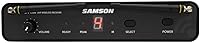
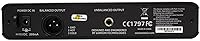
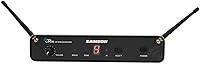
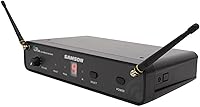
  • Receiver Form Factor: The receiver uses a half-rack design and ships with a rackmount kit, supporting semi-permanent installations in studios, gyms, or AV racks.
  • Driver Type: The headset uses a dynamic audio driver in an over-ear configuration, optimized for voice clarity rather than full-spectrum music reproduction.
  • Water Resistance: The headset is rated water resistant, making it suitable for high-sweat activities such as aerobics, spin classes, and group fitness instruction.
  • Power Source: The transmitter runs on a single AA alkaline battery, which is included in the box and widely available for quick replacement.
  • Weight: The total system weighs approximately 7.04 ounces, keeping the headset comfortable for extended wear during full-length fitness classes or presentations.
  • Materials: The headset is constructed from plastic, rubber, and silicone, with skin-contact areas using softer materials suited to prolonged wear.
  • Connectivity: The system is entirely wireless with no cable required between the headset transmitter and the receiver unit.
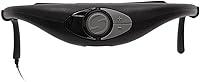
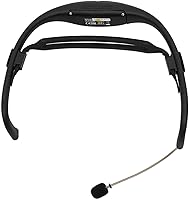
  • Earpiece Style: The headset uses an over-ear fit designed to stay secure during dynamic physical movement without requiring additional clips or attachments.
  • Included Components: The package includes one wireless headset transmitter, one half-rack receiver, a rackmount kit, and one AA alkaline battery.
  • Product Dimensions: The packaged unit measures 12 x 3 x 10 inches, reflecting the combined size of the headset and receiver components.
  • First Available: The product was first listed in July 2016 and has not been discontinued by the manufacturer as of the most recent listing data.
  • Model Number: The official model designation is SWC88AH8 D, with the D suffix identifying the specific frequency band variant of the Airline 88 system.

Related Reviews

Plantronics Savi 740 Wireless Headset System
84%
91%
Multi-Device Connectivity
88%
Comfort and Fit
85%
Sound Quality
78%
Battery Life
94%
Ease of Setup
More
Plantronics PL-CS520 Wireless Headset System
84%
94%
Wireless Range
89%
Comfort and Ergonomics
84%
Sound Quality
75%
Noise Cancellation
87%
Battery Life
More
SYNCO XTALK X5 Wireless Intercom Headset System
85%
91%
Battery Life
88%
Communication Range
87%
Audio Quality
94%
Ease of Setup
85%
Noise Cancellation
More
SYNCO XTALK X2 Wireless Intercom Headset System
82%
88%
Audio Clarity
74%
Wireless Range & Stability
91%
Battery Life
93%
Ease of Setup
83%
Noise Reduction Performance
More
Hollyland Solidcom SE Wireless Intercom Headset System
87%
88%
Performance in Noisy Environments
91%
Battery Life
93%
Noise Cancellation
89%
Build Quality
90%
Comfort for Extended Use
More
HearSound Gold Wireless TV Headset System
78%
83%
Audio Clarity & Volume
88%
Wireless Range & Reliability
74%
Ease of Setup
71%
Wearing Comfort
78%
Value for Money
More
Hollyland Solidcom C1 PRO 9-User Wireless Headset System
86%
94%
Performance in Noisy Environments
88%
Setup and Installation Ease
91%
Sound Quality and Noise Cancellation
85%
Battery Life and Power Options
92%
Range and Communication Clarity
More
Hollyland Solidcom SE PRO 1.9GHz Wireless Intercom Headset System
86%
91%
Range & Stability
89%
Audio Quality & Noise Cancellation
87%
Ease of Use & Comfort
92%
Battery Life
90%
Build Quality & Durability
More
Cisco Headset 561 Wireless On-Ear DECT Headset
75%
91%
Wireless Range & Reliability
84%
Call Audio Clarity
93%
Cisco Ecosystem Integration
82%
Battery Life
67%
Comfort During Extended Wear
More
JLab Fit Sport 3 Wireless Fitness Earbuds
83%
85%
Sound Quality
91%
Fit & Comfort
75%
Battery Life
88%
Durability
80%
Water Resistance
More

FAQ

It is not Bluetooth. The Samson Airline 88 Wireless Fitness Headset System uses UHF radio frequency transmission, which is a different technology entirely. UHF wireless is more stable in environments dense with Wi-Fi and Bluetooth devices, which is exactly what you encounter in a gym or busy studio. The Bluetooth reference in the product listing appears to be a data entry error and does not reflect how the system actually works.
Samson does not publish a specific range figure for this system in the available product data, but UHF systems of this class typically perform reliably across a standard fitness studio or small-to-mid-size room. For large venues or spaces with thick walls and heavy RF traffic, you may want to test the system in your environment before committing to it for critical use.

Yes, the system supports up to eight simultaneous units operating on the same frequency band. This makes it a workable option for facilities where multiple instructors teach at the same time, though you will need to select different channels for each unit to avoid overlap.

Pairing is handled through IR sync, which is a straightforward process. You point the transmitter toward the receiver, activate the sync function, and the two units match frequencies wirelessly in a few seconds. Most users find this considerably faster and less fiddly than manual frequency matching.

The headset is rated water resistant, so routine sweat from aerobics or spin classes should not be an issue. It is not designed for submersion or heavy rain, but for the sweat exposure typical of group fitness instruction, the materials — rubber and silicone at the contact points — are chosen with exactly that use case in mind.

It uses a single standard AA alkaline battery, which is included in the box. User reports on battery life are somewhat mixed — most find it adequate for a standard session, but a few have noted inconsistency. Keeping a spare AA on hand before a class or event is a sensible precaution.

The receiver has a half-rack form factor and ships with a rackmount kit, so it is ready to drop into a standard AV rack without any additional hardware. If you are not rack-mounting it, it can also sit on a flat surface — the rackmount kit is included but not mandatory.

Honestly, no. This fitness mic system is built around voice clarity and wireless transmission for amplification purposes. The dynamic driver is tuned for speech, not music playback, and it does not connect to a phone or audio source the way a consumer headset would. If you need both a workout headphone and a mic, this is not the right tool.

The over-ear design wraps around the ear to stay in place during movement, and the lightweight build — just over 7 ounces — helps it sit comfortably without pulling. Some users who teach very dynamic classes have noted that the headset band fit feels secure, though a few raised concerns about the band's long-term durability with heavy daily use.

That depends on your priorities. The core UHF wireless technology it uses is not outdated — the fundamentals of frequency-agile UHF systems have not changed dramatically — but you will not find modern refinements like digital encryption, rechargeable batteries, or companion apps. If you need a straightforward, no-frills wireless headset system for voice amplification in a fitness or presentation context, the age of the hardware is not necessarily a dealbreaker. If you want current technology with active manufacturer support, it is worth comparing it against newer alternatives before purchasing.

Where to Buy