Overview

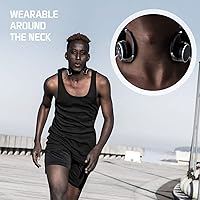
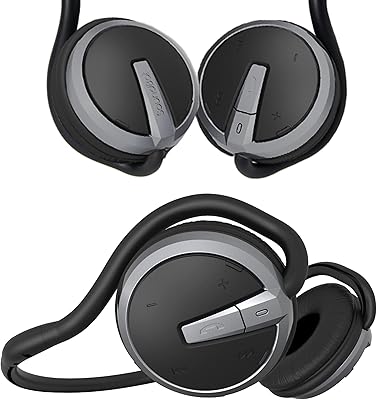
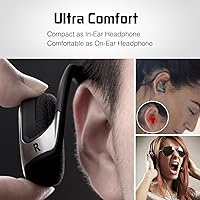
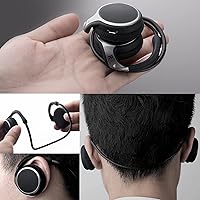
The RTUSIA Marathon Wireless Sport Headphones take a different approach than most workout audio gear — instead of pushing into your ear canal, they clip over the outer ear and rest behind your neck. That behind-the-neck design is the whole point. At just 4.2 oz, these sport headphones are light enough that you genuinely forget they are there mid-run, and the foldable build means they disappear into a jacket pocket or gym bag without fuss. They have been around since mid-2021 and accumulated over 5,600 ratings at a 4.1-star average — not a fluke for a budget-tier wireless headset.
Features & Benefits

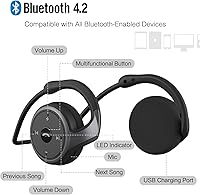
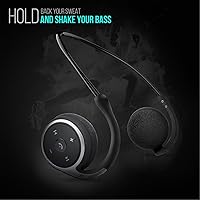
Four control buttons on the right earpiece handle everything — volume up and down, track skipping, and call answering — which is more physical control than most in-ear alternatives offer. The Bluetooth 5.0 connection paired quickly in testing and held steady without drops during movement. Call quality through the built-in mic is genuinely solid; people on the other end rarely noticed a difference from a standard phone call. Battery life is rated at 12 hours, and real-world use suggests you can stretch several days of moderate listening before needing a charge. The foldable hinges keep overall bulk minimal.

Best For

This behind-the-neck headset was clearly built with outdoor runners in mind, and that shows. Because the ear cups sit on the outer ear rather than sealing around it, ambient sound passes through freely — you can hear approaching cyclists or cars without removing the headphones. That same openness makes them a natural fit for glasses wearers, who often struggle with temple pressure from traditional over-ear cans. Commuters and travelers will appreciate how flat they fold for bag storage. If you find earbuds uncomfortable or fatiguing during long sessions, these sport headphones are worth a serious look.

User Feedback

Across thousands of reviews, comfort is the word that comes up most. Long-wear sessions during commutes or gym hours rarely produce the soreness in-ear buds cause, and glasses users specifically mention how much better the fit feels compared to bulkier over-ear headphones. Battery performance is another consistent highlight — many buyers report it outlasting the advertised figure with lighter daily use. On the critical side, the button layout takes a few sessions to memorize by touch alone. Sound isolation is essentially nonexistent, which works well outdoors but frustrates indoor listeners. Fit can also feel loose for those with smaller ears during intense activity.

Pros

  • Open-ear design lets outdoor runners hear traffic and trail hazards without removing the headset.
  • Glasses wearers consistently report a more comfortable fit than any earbud or over-ear alternative.
  • At 4.2 oz, these sport headphones are light enough to forget you are wearing them mid-run.
  • Battery life of 12 hours holds up in real use, often stretching across a full week of moderate daily listening.
  • Ships pre-charged and pairs in under a minute — no app, no setup friction.
  • Four physical control buttons give more hands-free control than most in-ear competitors offer.
  • Call quality through the built-in mic consistently impresses, with clear two-way audio on both ends.
  • Folds flat enough to slip into a jacket pocket or the side pouch of a gym bag without a case.
  • Bluetooth 5.0 maintains a stable connection even when the phone is stashed in a locker across the room.
  • Strong value for first-time wireless buyers upgrading from wired earbuds on a limited budget.

Cons

  • No water resistance rating is a meaningful oversight for a headset positioned as a sport product.
  • Sound isolation is essentially zero — noisy indoor environments force uncomfortable volume levels to compensate.
  • The plastic hinge point shows wear and occasional cracking with months of heavy daily folding.
  • Button layout takes several sessions to memorize by touch alone, which is frustrating mid-workout early on.
  • Users with smaller ears report clip fit becoming unreliable during high-intensity or high-impact exercise.
  • No battery level indicator beyond a low-battery audio alert makes it hard to plan around charging.
  • Audio quality is functional but flat — bass-heavy or detail-oriented listeners will be underwhelmed.
  • No carry pouch included, which feels like a missed addition given the foldable form factor.
  • Thin neck cable raises durability concerns for users who frequently coil and store the headset.
  • Wind noise affects microphone clarity during outdoor calls on breezy days.

Ratings

The scores below for the RTUSIA Marathon Wireless Sport Headphones were generated by AI after systematically analyzing thousands of verified global buyer reviews, with spam, bot activity, and incentivized feedback actively filtered out. Every category reflects what real users consistently praised or complained about — nothing is smoothed over. Strengths and genuine pain points are weighted equally so you can make a fully informed decision.
Wearing Comfort
88%
Long wear sessions stand out as a genuine strength here. Runners and commuters regularly report wearing these sport headphones for two or three hours without the ear canal soreness that plagues in-ear buds. The lightweight build at 4.2 oz means most users simply stop noticing them after a few minutes.
People with smaller ears occasionally find the clip fit less secure, especially during high-intensity movements like sprint intervals or jump rope. The plastic earpieces can feel slightly firm on the outer ear after extended sessions in warm conditions.
Glasses Compatibility
91%
This is one of the clearest wins for the behind-the-neck headset format. Glasses wearers consistently report that the lack of a headband and the minimal over-ear pressure make these far more comfortable than padded over-ear cans during a full gym session or long commute.
Thicker or heavier eyeglass frames can create minor pressure points where the earpiece clips around the back of the ear. A small number of users with wrap-style sports glasses noted the two pieces compete for the same real estate behind the ear.
Stability During Exercise
74%
26%
For moderate-intensity workouts — treadmill runs, cycling, elliptical sessions — the clip design holds up well and most users report zero readjustment needed. The behind-the-neck cord keeps the unit anchored even when leaning forward.
High-intensity movements like box jumps or aggressive trail running expose the limits of the clip-on fit. Users with narrower ear shapes specifically flag that one or both earpieces shift during rapid head movement, which becomes genuinely distracting mid-workout.
Battery Life
87%
The 12-hour rating holds up credibly in real-world use. Many buyers describe charging once at the start of the week and getting through daily gym sessions and commutes without needing to plug in again. The unit also ships pre-charged, so it is ready immediately out of the box.
Heavy users streaming at higher volumes report dropping below the rated 12 hours, landing closer to 9 or 10 hours. There is no battery indicator beyond a low-battery audio alert, so you cannot easily gauge remaining charge mid-session.
Sound Quality
67%
33%
For a budget-tier sport headset, the audio output is functional and pleasant enough for workout listening. Bass response has enough presence to keep music motivating during runs, and clarity at mid-range volumes is adequate for podcasts and calls during daily commutes.
These are not headphones for anyone who cares about audio fidelity. Soundstage is flat, high frequencies can sound slightly harsh at maximum volume, and the open-ear design means music competes directly with ambient noise — a real limitation in louder gym environments.
Noise Isolation
41%
59%
The open-ear format is intentionally designed to let environmental sound through, which is a genuine safety advantage for outdoor runners sharing trails or roads with traffic and cyclists. Many users actively prefer this awareness during solo outdoor workouts.
Indoors, the lack of any passive isolation is a real drawback. In a noisy gym or on a busy subway car, outside sound bleeds in constantly and forces listeners to push volume higher to compensate — which is both fatiguing and potentially damaging over time.
Call Quality
82%
18%
The built-in microphone performs noticeably better than expected at this price point. Multiple reviewers describe call recipients commenting that they sounded clear and natural, with stereo audio that closely resembles holding a phone. Hands-free calling during commutes is a genuinely useful capability.
Wind noise can affect call clarity during outdoor runs on breezy days, which is a structural limitation of an exposed microphone on a sport headset. In very loud environments like busy streets, the mic occasionally struggles to isolate the speaker's voice cleanly.
Bluetooth Connectivity
83%
Bluetooth 5.0 pairing is fast and reliable across standard devices. Users report consistent connections at typical gym distances — moving between equipment or stepping away from a phone in a locker rarely causes dropout. Initial pairing is straightforward with no app required.
A handful of users report occasional brief audio stutters when the connected device is in a pocket on the opposite side from the headset, suggesting the body-blocking effect is slightly more pronounced than with over-ear designs that sit higher on the head.
Control Usability
71%
29%
Having four dedicated physical buttons rather than the two found on most in-ear competitors is a genuine functional advantage. Once the layout is memorized, controlling volume and skipping tracks without touching your phone during a run becomes second nature.
The learning curve is real and slightly annoying in the first week. The buttons are differentiated by a small raised dot rather than distinct shapes, which makes navigating by feel during exercise take longer to master than it should for a sport-first device.
Portability & Packability
86%
The foldable hinge design compresses the headset to a compact flat profile that genuinely fits in a jacket pocket or the inner pocket of a gym bag. Travelers appreciate not needing a dedicated case, and the small package dimensions make it an easy daily carry item.
The plastic hinge mechanism feels less robust than the rest of the build, and a small number of buyers mention early cracking or loosening at that fold point after several months of regular folding and unfolding. A carry pouch is not included, which feels like a missed opportunity.
Build Quality
63%
37%
For the price tier, the materials feel adequate and the overall construction is solid enough for regular gym and commute use. The plastic housing resists sweat contact reasonably well in practice, and nothing about the build feels dangerously flimsy out of the box.
It is clearly budget plastic throughout, and that impression does not fade over time. The connecting neck cable feels thin, hinge points show wear faster than the earpieces themselves, and the overall tactile experience does not inspire confidence for heavy daily use over a year or more.
Value for Money
89%
At the budget price point, the combination of reliable Bluetooth, 12-hour battery, four-button control, and a genuinely comfortable open-ear fit for glasses wearers represents strong value. Most buyers feel they received more utility than the price implied, especially as a first wireless upgrade from wired earbuds.
The value equation weakens slightly if you are a serious athlete or audio enthusiast. The trade-offs in sound isolation, build longevity, and audio quality are acceptable at this price but become more noticeable if you have experience with mid-range or premium sport headphones.
Sweat & Weather Resistance
58%
42%
Casual gym users and light outdoor runners report no issues with sweat exposure during standard sessions. The open construction actually allows some passive airflow around the earpieces, which reduces heat buildup compared to sealed over-ear headphones during warm-weather exercise.
There is no official water resistance rating on this headset, which is a meaningful gap for a sport-positioned product. Heavy sweaters and runners who train in rain or high humidity report concern about long-term moisture exposure to internal components near the earpieces.
Setup & Ease of Use
85%
Pairing takes under a minute and the headset ships pre-charged, so the out-of-box experience is smooth. There is no companion app to download or firmware to update, which suits buyers who want a simple plug-and-play wireless audio solution without any technical overhead.
The instruction manual is minimal and the button functions are not printed anywhere on the device itself, so new users have to reference the manual repeatedly during the first few days. The single-color, single-material design makes left-right orientation slightly slower to confirm quickly.

Suitable for:

The RTUSIA Marathon Wireless Sport Headphones were built around a very specific kind of listener, and if you fit that profile, they deliver real value. Outdoor runners are the clearest match — the open-ear design means you can hear approaching traffic, cyclists, or trail hazards without removing the headset, which is a genuine safety advantage that sealed headphones simply cannot offer. Glasses wearers who have bounced between uncomfortable over-ear cans and painful in-ear buds will find the behind-the-neck clip format a relief; there is no headband pressing down on frames and no earbud competing for space in the ear canal. Commuters and gym-goers who want a lightweight, foldable headset that handles calls as capably as it handles music will get solid daily mileage out of these sport headphones. If you are making your first jump from wired earbuds to wireless and want something uncomplicated — no app, no complicated pairing ritual, just power on and go — this behind-the-neck headset is a sensible, low-risk starting point.
Not suitable for:

There is a clear category of buyers who will likely be disappointed by the RTUSIA Marathon Wireless Sport Headphones, and it starts with anyone who prioritizes audio quality. The open-ear format and budget construction mean these are not the right tool for critical listening, studio work, or even casual home listening where you want immersive sound. Indoor gym users who rely on music to block out ambient noise — the clang of weights, loud trainers, background music — will find the near-zero isolation genuinely frustrating rather than a design philosophy they can adapt to. Athletes doing high-intensity training like HIIT circuits, parkour, or aggressive trail running may find the clip fit shifts enough to break their focus, particularly if they have smaller ears. Anyone expecting the build to hold up like a mid-range or premium sport headset will be let down over time; the plastic construction and hinge mechanism show their limits with heavy daily use across many months. Finally, buyers who exercise in rain or sweat heavily should note there is no water resistance rating — that is a real gap for a product marketed specifically at sports use.

Specifications

  • Bluetooth Version: Uses Bluetooth 5.0 for fast, stable wireless pairing with any Bluetooth-enabled device.
  • Battery Life: Rated at 12 hours of continuous playback on a single charge under standard listening conditions.
  • Weight: Weighs 4.2 oz (0.12 kg), making it one of the lighter options in the behind-the-neck sport headset category.
  • Form Factor: Behind-the-neck over-ear clip design that rests on the outer ear without inserting into the ear canal.
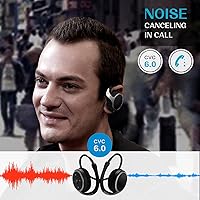
  • Microphone: Built-in microphone supports stereo call quality suitable for hands-free phone calls during workouts or commutes.
  • Controls: Four push-button controls on the right earpiece manage volume up and down, track navigation, and call answering.
  • Foldable: Hinged earpieces fold flat for compact storage in a pocket, purse, or gym bag without a dedicated case.
  • Material: Constructed primarily from plastic, including the earpiece housing, hinge mechanisms, and the connecting neck cable.
  • Package Dimensions: Ships in a box measuring 4.53 x 3.5 x 1.34 inches, compact enough to fit inside most mail slots.
  • Connectivity: Wireless only via Bluetooth — no 3.5mm audio jack is included or supported on this model.
  • Charging: Charges via USB and arrives pre-charged from the factory, ready to use immediately out of the box.
  • Earpiece Shape: Rounded earpiece profile designed to sit comfortably over the outer ear without creating pressure points.
  • Noise Control: Listed as featuring Active Noise Cancellation, though the open-ear design inherently allows significant ambient sound through.
  • Compatible Devices: Works with any device that supports Bluetooth connectivity, including smartphones, tablets, and laptops.
  • Ear Placement: Over-ear placement with no canal insertion — audio is delivered from outside the ear rather than inside it.
  • Included Components: Package includes the headset unit and a USB charging cable; no carrying pouch or additional accessories are included.
  • Battery Type: Powered by a built-in rechargeable Lithium Polymer battery that is not user-replaceable.
  • Item Model: Listed under model name Marathon with item model number r-black for the black colorway variant.

Related Reviews
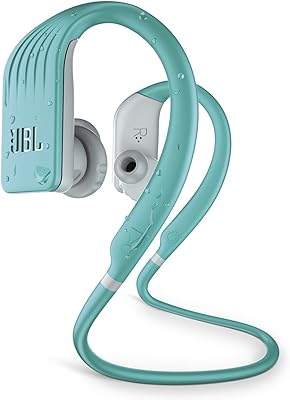
JBL Endurance Jump Wireless Sports Headphones
84%
89%
Comfort and Fit
82%
Sound Quality
88%
Battery Life
93%
Waterproofing and Durability
86%
Ease of Use (Controls)
More
Sony WI-SP500 Wireless Sports Headphones
83%
88%
Comfort and Fit
82%
Sound Quality for Sports
92%
Battery Life
85%
Build Quality and Durability
81%
Ease of Use and Controls
More
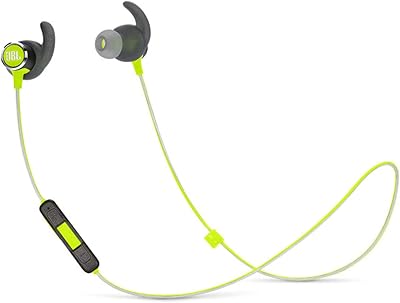
JBL Reflect Contour 2.0 Wireless Sport Headphones
86%
92%
Battery Life
88%
Comfort and Fit
90%
Stability During Exercise
72%
Sound Quality at Higher Volumes
85%
Ease of Use (Controls)
More
JBL Reflect Mini 2.0 Wireless Sport Headphones
86%
84%
Sound Quality
90%
Fit & Comfort
91%
Battery Life
78%
Bluetooth Connectivity
85%
Build Quality & Durability
More
Soundbot SB221
Soundbot SB221
75%
91%
Battery Life
84%
Comfort & Fit
67%
Sound Quality
72%
Build Quality
78%
Sweat & Water Resistance
More
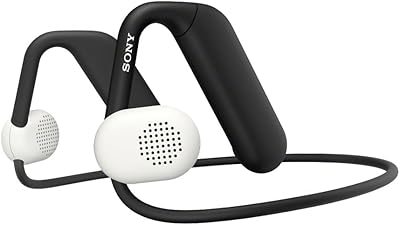
Sony Float Run Open-Ear Bluetooth Wireless Sport Headphones
86%
89%
Comfort and Fit
81%
Sound Quality
87%
Battery Life
92%
Water Resistance
74%
Bluetooth Connectivity
More
Joanbro IR Wireless Headphones for uConnect VES, 2 Channel Car DVD Headphones
86%
88%
Audio Quality
90%
Comfort & Fit
85%
Battery Life
91%
Ease of Setup
87%
Portability & Storage
More
Yoto Wireless Headphones
87%
89%
Comfort and Fit
91%
Battery Life
85%
Sound Quality
94%
Portability
92%
Safety Features
More
Hearprotek SE02 Wireless Headphones
88%
93%
Comfort for Side Sleepers
91%
Battery Life
89%
Sound Isolation
74%
Bluetooth Connectivity
86%
Build Quality
More
Skullcandy Crusher Wireless
75%
93%
Bass Performance
84%
Battery Life
67%
Comfort & Fit
63%
Build Quality & Durability
71%
Sound Quality (Overall)
More

FAQ

For most runners doing steady-pace or moderate-intensity workouts, the clip-on design holds well throughout a session. The behind-the-neck cord helps anchor the unit, so it does not bounce the way earbuds sometimes do. That said, users with smaller ears or those doing high-impact movements like sprints or jump training report occasional shifting, so fit can vary depending on ear shape.

This is actually one of the strongest use cases for this behind-the-neck headset. Because there is no headband pressing down on your frames and no earbud competing inside your ear, glasses wearers consistently report a noticeably better experience than with traditional over-ear or in-ear designs. Thicker frames may create very minor pressure where the earpiece clips, but most glasses users find the fit comfortable even during long sessions.

The audio is solid for casual workout listening — enough bass to keep music motivating and decent mid-range clarity for podcasts or calls. That said, these are not headphones for critical listening or anyone who values detailed, immersive sound. The open-ear design means music competes with whatever ambient noise surrounds you, which noticeably affects perceived audio quality in louder environments.

Yes, the built-in mic handles calls well for a sport headset at this price tier. People on the other end of calls consistently describe the audio as clear and natural. Wind can affect mic quality during outdoor runs on breezy days, but in most everyday conditions — commuting, gym sessions, walking — call quality is genuinely reliable.

There is no official water resistance or IP rating listed for this headset, which is a notable gap given its sport positioning. Light sweat during moderate workouts has not caused issues for most users, but heavy sweating or caught-in-the-rain scenarios carry real risk of moisture damage over time. If you train outdoors regularly in wet conditions or sweat heavily, it is worth factoring that in before buying.

There is a short but real learning curve. The four buttons are distinguished by a small raised dot rather than obviously different shapes, so navigating them by feel during exercise takes a few sessions to get comfortable. Most users report that after three or four workouts, the layout becomes second nature and controlling music or calls without looking becomes easy.

Bluetooth 5.0 is backward compatible, so these sport headphones will pair with older Bluetooth 4.x and even 3.x devices without any issues. Pairing is straightforward and requires no companion app — just power on, activate pairing mode, and select from your device's Bluetooth menu.

The headset gives an audio alert when the battery is running low, but there is no percentage readout or LED indicator to check at a glance. You cannot easily tell how much charge is remaining during a session, so the practical approach most users take is charging on a set schedule — for example, plugging in every Sunday evening — rather than waiting for the warning tone.

The fold is functional and genuinely useful for portability, but the hinge is the most vulnerable part of the build. It is plastic throughout, and with repeated daily folding over several months, some users report the mechanism loosening or developing stress marks. It holds up fine for typical use, but it is not something you would want to fold and unfold dozens of times a day long-term.

At Bluetooth 5.0, latency is lower than older Bluetooth versions, but some minor audio-to-video sync delay is possible depending on the source device and app. For workout music and calls, this is completely irrelevant. For video content like YouTube or streaming shows, most users do not notice a problem in casual use, though sensitive viewers may catch occasional slight lip-sync offset depending on the playback app.