Overview

The ROVE R3 3-Channel Dash Cam is built for drivers who want complete vehicle coverage — front, cabin, and rear — from a single, self-contained unit. What sets it apart at this price point is the 3-inch IPS touch screen and a supercapacitor power design that skips the internal battery entirely. Setup is straightforward out of the box, though one thing to know upfront: no memory card is included, and you'll need a Class 10 U3 microSD to get started. Customer support is US-based out of Chicago, and the one-year warranty adds a layer of confidence. This is a capable mid-range device — well-rounded, but not aimed at professional or fleet use.
Features & Benefits

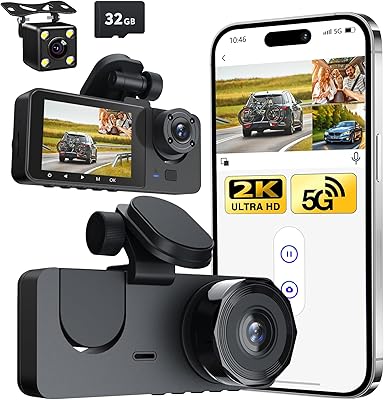
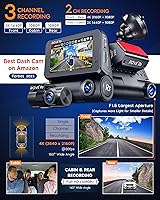
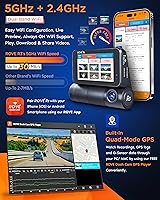
The front camera records at 1440p resolution, while the cabin and rear cameras each capture 1080p — sharp enough to read plates and document interior activity clearly. Offloading footage doesn't require pulling the card; the dual-band WiFi (5GHz and 2.4GHz) pushes files to your phone at up to 30MB/s through the ROVE app, which is genuinely fast for wireless transfer. The built-in GPS logs speed, direction, and location on every clip, which proves useful if you ever need to dispute a claim. Four IR LEDs handle cabin recording in low light without projecting a distracting glow. H.265 compression keeps files lean enough to make the most of cards up to 512GB.

Best For

This cabin-and-road recorder is a natural fit for rideshare and delivery drivers who need documented proof of what happens inside and outside the car on every trip. Parents of new drivers will appreciate having three angles covered without buying and mounting separate cameras. It also makes sense for commuters in busy urban areas where GPS-timestamped footage can settle an insurance dispute quickly. That said, the ROVE app is central to the experience — if you prefer pulling a card and plugging it into a laptop, the workflow here may feel unnecessarily app-dependent. Drivers in regions with extreme heat or cold will benefit from the supercapacitor design, which handles temperature swings far better than battery-based alternatives.

User Feedback

Owners consistently point to the touch screen responsiveness and the ROVE app as highlights — reviewing and transferring clips wirelessly is genuinely convenient once the setup clicks. The cabin IR night vision earns specific praise; the front camera in low light is solid but not exceptional compared to higher-end units. On the downside, parking mode requires a hardwire kit that doesn't come in the box, which catches buyers off guard. Running the rear camera cable through the headliner takes time, though the included 6-meter length fits most vehicles. A handful of users have hit occasional WiFi connectivity drops between the camera and the app, though ROVE has pushed firmware updates that appear to reduce the frequency.

Pros

  • Front camera records at 1440p — sharp enough to capture plate numbers and road signs in typical driving conditions.
  • Cabin IR night vision works in complete darkness without distracting passengers, a genuine advantage for rideshare drivers.
  • Built-in GPS logs speed and location on every clip, adding context that actually matters in insurance situations.
  • Supercapacitor design handles extreme heat and cold far better than battery-based dash cams commonly sold in this range.
  • Dual-band WiFi pushes footage to your phone in seconds — no card-pulling, no adapters, no waiting.
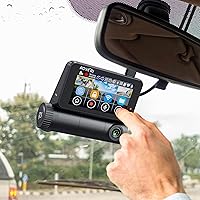
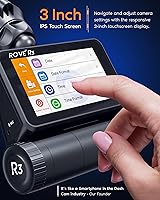
  • The 3-inch IPS touch screen makes adjusting settings quick and intuitive without opening the app.
  • H.265 compression keeps file sizes manageable, so a large microSD card lasts significantly longer before looping.
  • Over-the-air firmware updates mean the ROVE R3 can improve after purchase without any manual effort.
  • The included accessory kit is unusually complete, with cable clips, cleaning pads, and a wire-tuck tool all in the box.
  • US-based customer support in Chicago is a real differentiator in a category flooded with overseas-only service options.

Cons

  • Memory card is not included — a Class 10 U3 microSD is required and adds to the real purchase cost.
  • Parking mode requires a separate hardwire kit that does not come in the box, which catches many buyers off guard.
  • App-to-camera WiFi drops intermittently on some devices, making wireless footage review less reliable than it should be.
  • Rear camera installation through headliner trim can take well over an hour for someone doing it the first time.
  • The app is central to the full experience — buyers who dislike smartphone-dependent workflows will find it limiting.
  • Front camera low-light performance is decent but not exceptional compared to more specialized single-lens competitors.
  • The suction cup windshield mount can loosen over time, particularly in vehicles that experience strong temperature swings.
  • Audio recording picks up significant road and wind noise at highway speeds, limiting its usefulness for verbal documentation.

Ratings

The ROVE R3 3-Channel Dash Cam scores below reflect AI-synthesized analysis of verified global buyer reviews, with spam, bot-generated, and incentivized feedback actively filtered out before scoring. Ratings are calibrated to surface both what this cabin-and-road recorder genuinely does well and where real-world frustrations consistently emerge. Nothing is glossed over — the scores are designed to help you make a confident, informed decision.
Video Quality
83%
The 1440p front camera captures license plates and road signage with enough clarity to hold up in an insurance dispute. Daytime footage from all three channels is sharp and well-exposed, and the f/1.5 aperture handles bright-to-shadow transitions better than most units at this price tier.
Front camera low-light performance is competent but not a standout — fine for suburban streets and well-lit highways, but buyers expecting exceptional clarity on unlit rural roads may be underwhelmed. The rear camera at 1080p can look soft when reviewed on a larger screen.
Cabin Night Vision
88%
The four built-in IR LEDs illuminate the interior without projecting visible red light that distracts passengers, which rideshare drivers specifically appreciate. Faces and in-cabin activity are identifiable even in complete darkness, making it genuinely useful for late-night driving shifts.
The IR coverage has limits — the outer edges of a wide cabin or a large van interior can fall into shadow. It works well in standard sedans and SUVs but is not a substitute for a dedicated security camera in low-light conditions.
Three-Channel Coverage
91%
Having front, cabin, and rear recording from a single device eliminates the cable clutter and mounting headaches that come with running two separate cameras. For Uber and Lyft drivers, the ability to document both road events and passenger interactions in one clip is a practical advantage that real users highlight repeatedly.
The cabin camera angle is fixed, so drivers with unusually deep rear seats or sliding minivan configurations may find coverage incomplete. There is no side-camera option, which limits usefulness for commercial vehicles needing full perimeter documentation.
WiFi & App Experience
79%
21%
The 5GHz WiFi connection transfers footage to a smartphone noticeably faster than older single-band dash cams — pulling a two-minute clip wirelessly takes seconds rather than minutes. The ROVE app interface is clean, and over-the-air firmware updates mean the device improves without needing a laptop.
A recurring frustration among users is intermittent WiFi disconnections between the camera and the app, requiring a manual reconnect. Buyers who are not comfortable troubleshooting smartphone app behavior will find the workflow less intuitive than simply ejecting an SD card.
GPS Performance
86%
The quad-mode GPS locks on reliably and embeds speed, heading, and coordinates directly into footage metadata, which is exactly what you need when submitting a clip to an insurer or attorney. Daily commuters appreciate being able to review a route timeline alongside the video.
Cold-start GPS lock can take a minute or two in covered parking structures, meaning the first portion of a trip occasionally lacks location data. The GPS data is most accessible through the app — reviewing it on the device screen alone is a less refined experience.
Build Quality & Design
81%
19%
The unit feels solid in hand, with a clean industrial finish that does not look cheap mounted on a windshield. The 3-inch IPS touch screen is a genuine differentiator — it responds accurately and reduces the need to dig into menus or rely solely on the app for basic adjustments.
The touch screen, while responsive, picks up fingerprints quickly and can be difficult to read in direct sunlight. Some users have noted the windshield suction mount feels slightly less secure over time compared to adhesive-style mounts common on higher-end competitors.
Installation & Setup
72%
28%
The included accessory kit is genuinely comprehensive — cable clips, sticky tapes, cleaning pads, and a crowbar tool for tucking wires are all in the box. Most drivers report getting the front unit mounted and recording within 20 to 30 minutes.
Routing the 6-meter rear camera cable cleanly through headliner trim and door seals is time-consuming and can take an hour or more for first-timers. The cabin camera placement also requires careful positioning to avoid obstructing the rearview mirror while still covering the interior effectively.
Parking Mode
58%
42%
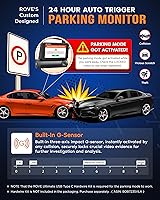
The 24-hour auto-trigger parking monitor works as advertised when properly connected, activating on motion or impact and timestamping clips accurately. Drivers who park in high-traffic lots find the peace of mind worthwhile once the system is fully set up.
The hardwire kit required to enable parking mode is sold separately, and this is a consistent source of buyer frustration — it is not clearly flagged at purchase. Without it, the camera powers off with the ignition, leaving a gap in coverage that undermines the feature entirely.
Temperature Reliability
89%
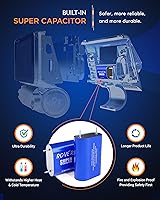
The supercapacitor design is a genuine engineering advantage over battery-based dash cams, particularly for drivers in climates like the American Southwest or upper Midwest. Users in Phoenix-level summer heat and sub-zero winters report no swelling, shutdown, or performance degradation that commonly plagues lithium battery units.
The supercapacitor does not store enough charge to save a clip after power loss the way a larger battery might — it is built for safe shutdown, not extended recording. Drivers expecting battery-style backup recording after the engine cuts off will need to manage expectations.
Storage & File Management
77%
23%
H.265 compression keeps individual clip sizes lean without visibly sacrificing quality, which means a 256GB card goes meaningfully further here than on older H.264-only cameras. Support for cards up to 512GB gives heavy users and rideshare drivers ample headroom before loop recording overwrites older footage.
No memory card is included, and this surprises a notable portion of buyers who assume one is bundled at this price. Class 10 U3 is required for stable 3-channel recording — budget or older cards can cause dropped frames or recording errors.
Value for Money
84%
Compared to buying a front dash cam and a separate rear camera at equivalent quality, this three-channel system offers a genuinely favorable cost-per-feature ratio. The touch screen, dual-band WiFi, GPS, and supercapacitor together represent a feature density that is hard to match in this price range.
Once you factor in the cost of a quality microSD card and the hardwire kit for parking mode, the total out-of-pocket spend is meaningfully higher than the device price alone. Buyers on a tight budget should plan for these add-on costs before committing.
Audio Recording
68%
32%
Built-in microphone audio is functional and captures in-cabin conversation clearly enough for documentation purposes. Rideshare drivers who need a verbal record of passenger interactions find it adequate for the use case.
Wind noise and road vibration bleed into recordings at highway speeds, reducing audio clarity. There is no external microphone input, so the audio quality ceiling is fixed — users wanting cleaner sound for dispute documentation will find it occasionally falls short.
Customer Support & Warranty
78%
22%
Having a US-based support team in Chicago is a real differentiator in a product category dominated by brands with overseas-only support. Users report responsive email exchanges and willingness to troubleshoot firmware and connectivity issues directly.
The 1-year warranty is standard rather than generous for a device mounted in a vehicle exposed to heat, vibration, and daily use. A subset of users noted slower response times during peak periods, and warranty claims requiring physical returns added friction to an otherwise decent support experience.
App Connectivity Stability
63%
37%
When the connection holds, the ROVE app delivers a fast and intuitive experience — live preview, clip download, and settings adjustment all work well. Firmware updates pushed over the air have measurably addressed some of the earlier disconnection issues reported by buyers.
App-to-camera WiFi drops remain the most frequently cited technical frustration in user reviews, particularly on certain Android configurations. Buyers who rely on the app as their primary way to review footage will hit this issue often enough that it affects the overall ownership experience.

Suitable for:

The ROVE R3 3-Channel Dash Cam is purpose-built for drivers who need documented coverage of the road ahead, the cabin interior, and what's happening behind them — all from one device. Rideshare and delivery drivers are the most obvious fit: having timestamped, GPS-tagged footage of every passenger interaction is a real safeguard against false complaints or liability claims. Families with teenage or newly licensed drivers will also find the three-angle setup genuinely reassuring, since a parent can review any trip after the fact without relying on the driver's account alone. Commuters in dense, high-claim urban environments benefit from the built-in GPS logging, which adds location and speed context to footage that insurers and attorneys actually care about. The supercapacitor power design makes this cabin-and-road recorder a smart pick for anyone living in a climate where summer heat or winter cold has killed a battery-based dash cam before. And if you are the type of driver who likes to review footage directly from your phone without pulling a card, the fast WiFi transfer and app experience will fit naturally into your routine.
Not suitable for:

The ROVE R3 3-Channel Dash Cam is not the right tool for every buyer, and it is worth being direct about where it falls short. If your workflow revolves around ejecting the SD card and reviewing footage on a laptop, the device is heavily optimized around its app — that friction will get old quickly. Drivers who want to enable parking mode should know upfront that the required hardwire kit is not in the box, and adding it increases both the cost and installation complexity considerably. Front-camera night vision is adequate but not a standout, so if low-light image quality is your primary concern — say, for a rural night driver — there are more specialized options worth considering. Professional fleet operators or commercial vehicle owners who need formal video management software, multi-camera synchronization, or cloud upload integration will find this three-channel system underpowered for those demands. Finally, buyers on a truly tight budget should account for the mandatory microSD card purchase on top of the device price, as the total outlay is meaningfully higher than the sticker price alone suggests.
Specifications

  • Front Resolution: The front camera records at 1440p (2560×1440) at 30 frames per second, providing enough detail to read license plates and road signs in typical daylight conditions.
  • Cabin & Rear Resolution: Both the cabin and rear cameras record at 1080p (1920×1080) at 30 frames per second, delivering clear interior and following-distance footage.
  • Display: A 3-inch IPS touch screen is built into the main unit, allowing direct on-device menu navigation and settings adjustment without requiring the app.
  • WiFi: Dual-band WiFi supports both 5GHz and 2.4GHz connections, with wireless transfer speeds reaching up to 30MB/s when paired with the ROVE mobile app.
  • GPS: A built-in quad-mode GPS module continuously logs vehicle speed, compass heading, and geographic coordinates, embedding this data into recorded footage.
  • Power Source: The unit uses a supercapacitor rather than a lithium battery, enabling safe shutdown across a wide operating temperature range without the degradation risks associated with internal batteries.
  • Night Vision: Four infrared LEDs are integrated into the cabin camera, enabling interior recording in complete darkness without emitting visible light that would disturb passengers.
  • Lens Aperture: The front camera features an f/1.5 aperture, allowing more ambient light into the sensor compared to the f/2.0 lenses common on budget-tier dash cams.
  • Field of View: The front camera covers a 150-degree horizontal field of view, capturing multiple lanes of traffic and roadside details in a single wide frame.
  • Video Compression: Footage is encoded using H.265 (HEVC) with H.264 compatibility, keeping file sizes meaningfully smaller than older-generation compression formats at equivalent quality.
  • Max Storage: The device supports microSD cards up to 512GB capacity; a Class 10 U3-rated card is required for stable three-channel recording, and no card is included in the box.
  • Rear Cable Length: The included rear camera extension cable measures 6 meters, which is sufficient for most sedans, SUVs, and minivans when routed through headliner trim.
  • Parking Mode: A 24-hour auto-trigger parking monitor is supported, but continuous power via a separately purchased hardwire kit is required to activate this feature.
  • Connectivity: The main unit uses USB-C ports for both power and data; a dual-port USB fast car charger is included in the box.
  • App Compatibility: The ROVE app is available for both iOS and Android and supports live preview, wireless clip download, settings configuration, and over-the-air firmware updates.
  • Mounting Options: The package includes both a windshield suction mount and a magnetic mount, giving users flexibility in how and where the main unit is positioned.
  • Video Stabilization: Built-in digital image stabilization is applied to footage to reduce the visual impact of road vibration and minor camera movement during recording.
  • Warranty: The device is covered by a 1-year manufacturer warranty, backed by a customer support team based in Chicago, Illinois.
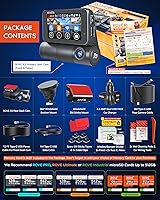
  • Package Contents: The box includes the main dash cam unit, rear camera, cabin camera, 12-foot power cable, 6-meter rear extension cable, dual USB charger, suction mount, magnetic mount, USB-C data cable, cable clips, crowbar tool, sticky tapes, electrostatic films, cleaning pads, and documentation.
  • Item Weight: The main unit weighs 6.4 ounces, making it light enough that the windshield suction mount handles the load without requiring adhesive backing under normal conditions.

Related Reviews

Zengest 3 Channel Dash Cam
86%
88%
Video Quality
85%
Ease of Installation
92%
Night Vision Performance
72%
App Control Experience
90%
Parking Mode Reliability
More
WOLFBOX i07 3-Channel Dash Cam
75%
84%
Front Video Quality
71%
Interior Camera Quality
73%
Rear Camera Quality
66%
Night Vision Performance
88%
GPS Accuracy
More
Kussla X30 3-Channel Dash Cam
84%
88%
Video Quality
92%
Night Vision Performance
90%
Ease of Setup
75%
Parking Mode Functionality
84%
Build Quality
More
Veqotya S16 3-Channel Dash Cam
82%
91%
Video Quality (Resolution)
89%
Field of View
88%
Night Vision Performance
85%
Ease of Use (App Connectivity)
80%
Installation Process
More
Rexing M3 3-Channel Mirror Dash Cam
75%
83%
Video Clarity (Daytime)
61%
Night Vision Performance
88%
Screen Quality
58%
GPS Accuracy
86%
Cabin Camera Utility
More
BAEASU J07 3-Channel Dash Cam
73%
83%
Video Clarity (Front Camera)
71%
Night Vision Performance
88%
Interior Cabin Recording
74%
Rear Camera Quality
86%
Ease of Installation
More
Vantrue N4S 3-Channel Dash Cam
77%
88%
Front Camera Video Quality
91%
Night Vision Performance
86%
Cabin IR Recording
83%
Rear Camera Quality & Weatherproofing
71%
Parking Mode Reliability
More
SUVCON J06 3-Channel Dash Cam
76%
89%
Value for Money
91%
Ease of Installation
74%
Video Quality (Daytime)
86%
Night Vision (Cabin Camera)
67%
Night Vision (Front & Rear Cameras)
More
Vantrue N4 3 Channel Dash Cam
83%
94%
Video Quality
62%
Ease of Installation
89%
Night Vision Performance
91%
Parking Mode Reliability
85%
Build Quality
More
ZKCAMSPY 3-Channel 1080P Dash Cam
81%
88%
Video Quality
92%
Value for Money
91%
Ease of Installation
74%
Night Vision Performance
80%
Durability
More

FAQ

No memory card is included. You will need to purchase a microSD card separately — make sure it is rated Class 10 U3, as slower cards can cause dropped frames or recording errors when all three cameras are running simultaneously. Cards up to 512GB are supported.

Yes. The 24-hour parking monitor requires a constant power source, which means you need a hardwire kit connected directly to your vehicle's fuse box. That kit is sold separately and is not included in the box, so factor that into your budget if parking surveillance is important to you.

No home network needed. The ROVE R3 3-Channel Dash Cam creates its own WiFi hotspot, and you connect your phone directly to it using the ROVE app. Once connected, you can browse clips and download them at speeds up to 30MB/s — it is a direct camera-to-phone connection, completely independent of any external network.
Yes, the cabin camera has four built-in infrared LEDs that activate in low light, so it can record the interior clearly even with no ambient light at all. The IR light is not visible to the human eye, so passengers will not notice it or be disturbed by it.

It takes patience more than skill. The 6-meter cable is long enough for most vehicles, but routing it cleanly through the headliner, down the door frame, and to the rear window can take anywhere from 45 minutes to a couple of hours if you want a tidy result. The included crowbar tool helps pry trim panels open without scratching them. If this sounds daunting, any car audio shop can install it quickly.

Yes, you can eject the microSD card and read it on any device with a card reader. The app is not required for basic recording or card-based playback. That said, the app is clearly where most of the convenience features live, including wireless transfer, live preview, and firmware updates — so if you plan to avoid it entirely, you will miss a significant part of what this system offers.

GPS performance in dense urban areas is generally solid, though signal acquisition right after startup in a covered parking garage can take a minute or two before it locks on. Once you are moving on open streets, it tracks reliably. The quad-mode designation means it pulls from multiple satellite networks, which helps in partially obstructed environments.

This is actually one of the stronger cases for choosing this unit over battery-powered alternatives. The supercapacitor does not degrade from heat cycles the way lithium batteries do, so leaving it parked in a hot car all day will not cause swelling, failure, or reduced capacity over time. It is a genuine advantage for drivers in warm climates.

It performs well enough for typical nighttime driving on lit roads and highways — the f/1.5 aperture pulls in more light than most cameras in this price range, and wide dynamic range processing helps with headlight glare. That said, front-facing night performance is good but not exceptional. If capturing fine detail on completely unlit rural roads is your top priority, you may want to compare it against more specialized single-lens options.

For most users on reasonably current iOS and Android devices, the app works well. The main issue reported by a subset of users is intermittent WiFi disconnections between the camera and the phone, which requires a manual reconnect. ROVE does push over-the-air firmware updates that have addressed some of these issues over time. On very old smartphones with outdated operating systems, compatibility can be inconsistent, so it is worth checking the app store listing for supported OS versions before buying.