Overview

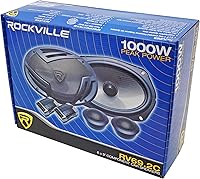
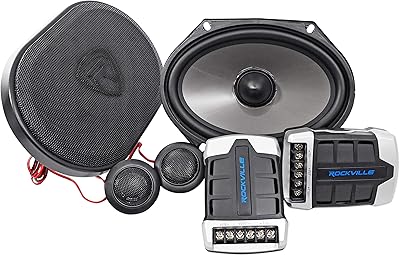
The Rockville RV69.2C 6x9″ Component Car Speakers sit in an interesting spot: priced for budget-conscious buyers, yet built with genuine component architecture rather than a basic coaxial design. The 6x9-inch format fits a wide range of vehicles — rear decks, rear doors, and many front door positions — so compatibility is rarely a hurdle. Rockville competes in the same general space as Kenwood and Pioneer, though openly at a lower price tier. Worth saying upfront: these aren't for audiophiles chasing flat response curves. What they are is a complete ready-to-install kit, bundling crossovers, tweeters, grilles, and speaker wire — everything needed to replace tired factory speakers without a separate parts run.
Features & Benefits

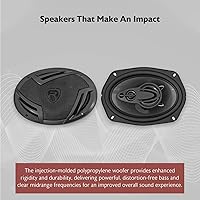
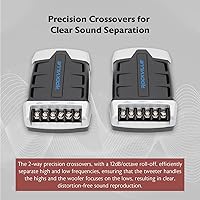
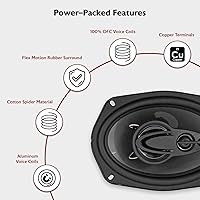
Where the RV69.2C set earns its keep is in the hardware choices made at this price point. The woofer uses an injection-molded polypropylene cone — stiffer than paper and lighter than most composites, which contributes to tighter, more controlled bass. The 1.2-inch PEI dome tweeter benefits from ferro-fluid cooling, a detail you don't always find at this tier; it helps dissipate heat during sustained high-volume use and extends tweeter life. A 2-way crossover splits at 3.5kHz, keeping low frequencies with the woofer and directing highs to the tweeter where they belong. The butyl rubber surround outlasts foam in the temperature swings of a car environment. One genuine differentiator: the kit is CEA compliant, so the power ratings aren't inflated numbers.

Best For

This 6x9-inch speaker kit is the right call for drivers done tolerating blown or tinny OEM speakers who want a real upgrade without committing to a high-budget build. It drops into vehicles that already have standard 6x9-inch cutouts — no custom fabrication needed in most cases. Pairing these with an aftermarket head unit or a modest amplifier in the 50–100W RMS range is the sweet spot; a powerhouse amp isn't required to get solid performance. The all-in-one hardware package suits DIY installers who'd rather not make multiple parts-store runs. Listeners who prioritize bass punch and volume over reference-grade precision will get the most out of what this set delivers.

User Feedback

Owners of these Rockville component speakers consistently describe the jump from stock speakers as immediately obvious — more volume, stronger low-end presence, and a noticeably wider soundstage. Installation is generally smooth, with most buyers finding the included hardware adequate, though a handful note the crossover mounting can feel fiddly depending on the workspace in the vehicle. On the critical side, the tweeters can get a touch edgy at high listening volumes, and mid-range detail isn't the set's strongest quality. The grilles and mounting plastics feel exactly as budget-grade as the price suggests. Despite those caveats, value perception among buyers is broadly positive — most feel the performance outpaces what the asking price implied.

Pros

  • Immediate, noticeable improvement over worn-out or thin-sounding factory speakers.
  • Complete kit with crossovers, tweeters, grilles, and wire reduces extra shopping trips.
  • Butyl rubber surround holds up better than foam in the heat and cold swings of a car interior.
  • CEA-compliant power ratings mean the specs are honest, not inflated marketing numbers.
  • Ferro-fluid tweeter cooling adds practical longevity that is uncommon at this price tier.
  • Flush and surface tweeter mounting options give real flexibility across different vehicle interiors.
  • Polypropylene woofer cone delivers tighter, more controlled bass than paper-cone alternatives.
  • Strong bass presence and volume output make these well-suited for everyday casual listening.
  • 4-ohm impedance pairs easily with most aftermarket head units without needing a separate amp.
  • The 2-way crossover is pre-tuned, removing the guesswork for buyers new to component systems.

Cons

  • Tweeters can take on a harsh, edgy quality when pushed to high volumes for extended periods.
  • Mid-range clarity and vocal definition are average at best, falling behind similarly priced rivals from Kenwood or Pioneer.
  • Grilles and plastic mounting components feel noticeably cheap and can look out of place in nicer interiors.
  • Crossover housings are bulky and a few owners have found them awkward to secure cleanly inside door panels.
  • Not waterproof in any capacity, making installation in vehicles with moisture exposure a genuine concern.
  • Peak wattage figures dominate the marketing, which can mislead buyers about real-world power needs.
  • Mid-bass punch can feel loose or overemphasized on certain music genres, particularly acoustic or classical.
  • The limited warranty offers minimal protection and Rockville's customer support has drawn mixed feedback.
  • At 9 pounds total, the set is on the heavier side and may require reinforcement in thinner door panels.
  • Buyers upgrading from a quality mid-range coaxial setup may find the improvement less dramatic than expected.

Ratings

The scores below reflect AI analysis of verified global buyer reviews for the Rockville RV69.2C 6x9″ Component Car Speakers, with spam, bot-generated, and incentivized feedback actively filtered out before scoring. Each category captures both the genuine strengths that keep buyers recommending this kit and the recurring frustrations that temper those endorsements. Nothing here is softened — where the set underperforms, the scores say so.

Value for Money
88%
The overwhelming consensus among buyers is that the RV69.2C set delivers more than its price tag suggests — particularly compared to similarly priced coaxial options. Getting a complete component system with crossovers, tweeters, and mounting hardware in one box is genuinely rare at this tier.
A small but consistent group of reviewers felt the value equation weakens if any single component fails, since replacing individual parts through Rockville can be inconsistent in availability. Buyers comparing this kit to discounted mid-range Pioneer or Kenwood sets on sale occasionally find the gap narrower than expected.
Bass Performance
83%
Low-end output is where these speakers earn the most enthusiastic feedback. Daily commuters playing hip-hop, R&B, or EDM consistently describe the bass as full and punchy for 6x9-inch drivers — a clear step up from the anemic low end of most factory setups.
The bass tuning leans toward emphasis rather than accuracy, which can make certain genres like acoustic or jazz sound slightly bloated or heavy. Without a dedicated subwoofer in the system, sub-bass below 50Hz drops off noticeably, as expected from any full-range driver of this size.
Treble Clarity
67%
33%
At moderate listening volumes, the 1.2-inch PEI dome tweeters handle everyday music reasonably well, providing decent separation between vocals and instrumentation that most factory setups simply cannot achieve. The ferro-fluid cooling helps sustain that performance over extended listening sessions.
Pushed toward higher volumes, the tweeters develop a noticeable brightness that several buyers describe as harsh or fatiguing, particularly on tracks with dense high-frequency content like cymbals or synthesizers. Positioning the tweeters at an angle rather than directly on-axis toward the listener helps, but does not fully resolve the issue.
Mid-Range Detail
61%
39%
For casual listening across a wide range of genres, the mids are functional and present — vocals are intelligible and guitars have reasonable body during normal driving conditions. Buyers upgrading from truly worn-out or paper-cone factory speakers report a clear qualitative improvement in vocal presence.
Mid-range accuracy is the most consistently cited limitation in critical user feedback. Compared to similarly priced sets from Kenwood or Pioneer, the RV69.2C set lacks the textural detail that makes instruments sound distinct from one another, which becomes more apparent on acoustic recordings or podcasts at low volume.
Build Quality
69%
31%
The core speaker drivers — particularly the woofer basket and butyl rubber surround — feel solidly constructed relative to the price and have held up well in long-term ownership reports spanning two or more years. The rubber surround in particular shows meaningful durability advantages over the foam found in cheaper alternatives.
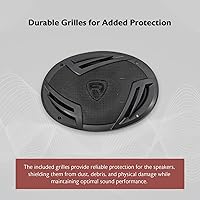
The grilles, tweeter housings, and crossover enclosures are an obvious weak point; the plastic feels thin and several buyers snapped mounting tabs during installation. This does not affect the sound, but it does create a budget impression that sits awkwardly in vehicles with higher-quality interiors.
Installation Experience
77%
23%
Most buyers who have done basic car audio work before describe the installation as manageable in a single afternoon. Having crossovers, speaker wire, and both flush and surface tweeter brackets in the box means fewer last-minute hardware runs, which DIYers consistently call out as a genuine convenience.
The crossover housings are bulky and finding a clean place to secure them behind door panels or under rear decks can be genuinely fiddly in tighter vehicles. A handful of buyers also noted that the included wire is on the shorter side for installations where the crossover needs to sit farther from the driver.
Soundstage & Imaging
72%
28%
The component design — with the tweeter placed independently from the woofer — gives buyers flexibility in positioning that coaxial speakers cannot offer. When the tweeters are mounted near the A-pillar or upper door, listeners report a noticeably wider and more front-focused soundstage than factory setups produce.
Imaging precision is good by budget-component standards but falls short of what properly set-up mid-range alternatives from established audio brands achieve. Buyers with experience in dedicated car audio builds may find the stage width satisfying but the depth and layering underwhelming.
Volume & Loudness
84%
These speakers get genuinely loud with even a modest amplifier or a quality aftermarket head unit. Drivers who listen at higher volumes during highway commutes appreciate that the set maintains reasonable composure well above normal listening levels without immediately breaking up.
At sustained maximum volumes, the tweeters show the most strain, and the overall sound becomes less controlled. Sensitivity is rated acceptably for this class, but buyers expecting the same headroom as higher-impedance or higher-sensitivity alternatives may find the ceiling lower than anticipated.
Compatibility
91%
The 6x9-inch footprint and 4-ohm impedance cover an exceptionally wide range of vehicles and source units. Buyers across sedans, trucks, SUVs, and minivans consistently report straightforward fitment in factory-cut openings without the need for adapter rings in the majority of cases.
Mounting depth can catch some buyers off guard in vehicles with limited clearance behind the speaker location, particularly in certain door panel configurations. The lack of any water resistance also eliminates compatibility with convertibles, boats, or utility vehicles that see significant outdoor exposure.
Crossover Performance
74%
26%
Including a pre-tuned passive crossover for each channel is a genuine advantage over budget coaxial designs, and the 3.5kHz split point is well-chosen for drivers and tweeters of this size. Buyers who previously ran coaxial speakers note that the improved frequency separation alone makes a meaningful difference in perceived clarity.
The crossover components are functional rather than refined — audiophiles familiar with higher-grade passive networks will notice the transitions are not as smooth as those found in premium component kits. The crossover enclosures are also physically larger than competitors, complicating hidden installation.
Durability Over Time
76%
24%
Long-term owners — those who have had the set installed for two or more years — generally report the drivers holding up without notable degradation in performance. The butyl rubber surround shows no cracking or separation in the heat cycles typical of a parked car in warm climates.
Some owners report tweeter failures in the 18-to-24-month range, particularly in installations where the tweeters were driven harder than the RMS rating consistently allows. Warranty service through Rockville has received mixed reviews, with response times and resolution quality varying considerably by case.
CEA Compliance & Honest Ratings
82%
18%
Being CEA-2031 compliant is a meaningful credential that separates this kit from many competitors at a similar price point who publish inflated or unverified power figures. Buyers who understand what this certification means treat it as a trust signal and appreciate that the RMS figure reflects actual sustained capacity.
The front-of-box peak wattage figure still dominates the marketing and misleads buyers unfamiliar with the difference between peak and RMS. A few reviewers admitted to pairing these with amplifiers sized for the peak number, resulting in either underpowered or overpowered configurations.
Packaging & Unboxing
71%
29%
Buyers generally find the packaging practical and organized, with components separated clearly enough to make the unboxing process intuitive. The all-in-one approach means everything needed for a standard installation is present without digging through separate bags of hardware.
The packaging itself is utilitarian at best — protective foam inserts are minimal and a small number of buyers reported minor cosmetic damage to grilles or plastic components upon arrival. For a kit being shipped as a single unit, better cushioning for the smaller accessories would reduce this risk.

Suitable for:

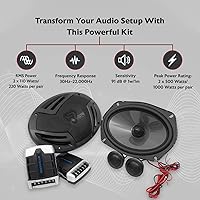
The Rockville RV69.2C 6x9″ Component Car Speakers are a practical choice for everyday drivers who are tired of the thin, lifeless sound coming from their factory speakers and want a meaningful upgrade without spending a lot. If your vehicle already has standard 6x9-inch cutouts in the rear deck or doors, installation is largely straightforward and the included hardware means you won't need a separate trip to the parts store. These work especially well paired with an aftermarket head unit or a modest amplifier — something in the 50 to 100W RMS range is plenty to get good results. DIY-minded buyers will appreciate that the kit includes crossovers, tweeters, grilles, mounting hardware, and speaker wire, covering most of what you need to complete the job. Casual listeners who enjoy bass-forward music like hip-hop, EDM, or rock and want noticeably more presence and volume than stock will find this set punches well above its price.
Not suitable for:

Buyers with serious audio expectations should look elsewhere before committing to the Rockville RV69.2C 6x9″ Component Car Speakers. If you're building a dedicated car audio system with a high-powered amplifier, a subwoofer, and an emphasis on accurate, balanced sound reproduction across all frequencies, this set won't satisfy — the mid-range detail and high-volume tweeter behavior fall short of what a true audiophile setup demands. Vehicles that don't have standard 6x9-inch mounting openings may require custom fabrication work that adds cost and complexity beyond what this kit is designed for. Anyone expecting weatherproof or moisture-resistant performance should also take note: these speakers are not rated for exposure to water, so open-air vehicles or installations near windows with chronic leaks are a risk. If you've already invested in a quality amplifier producing significantly more than 100W RMS per channel, you may find the RV69.2C set the limiting factor in your system rather than a capable partner.

Specifications

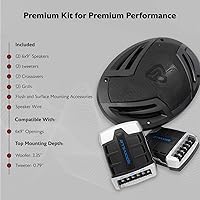
  • Speaker Size: Each woofer measures 6x9 inches, fitting standard factory cutouts found in most rear decks and door panels.
  • Peak Power: The pair is rated at 1000W peak total, a figure that reflects momentary capacity rather than sustained listening output.
  • RMS Power: Continuous power handling is 220W RMS per pair, which is the practically relevant figure when matching these to an amplifier or head unit.
  • Impedance: Both woofers are rated at 4 ohms, making them compatible with virtually all aftermarket head units and standard car amplifiers.
  • Woofer Material: The woofer cone is injection-molded polypropylene, a material chosen for its balance of light weight and structural rigidity.
  • Surround Material: A butyl rubber surround (marketed as Flex Motion) replaces the foam typically found on budget speakers, offering better resistance to heat and humidity over time.
  • Tweeter Size: Each channel includes a 1.2-inch PEI dome tweeter responsible for reproducing high-frequency audio above the crossover point.
  • Tweeter Cooling: Ferro-fluid is used to cool the tweeter voice coil, helping dissipate heat during high-power use and extending the tweeter's operational lifespan.
  • Voice Coil: Aluminum voice coils are used in both the woofer and tweeter, providing lightweight conductivity and efficient heat transfer.
  • Crossover Type: A 2-way passive crossover is included with each channel, set at a 3.5kHz crossover point to direct frequencies appropriately between the tweeter and woofer.
  • CEA Compliance: These speakers are CEA-2031 compliant, meaning the published power ratings conform to an industry standard rather than being self-reported marketing estimates.
  • Tweeter Mounting: Both flush-mount and surface-mount tweeter brackets are included, allowing installation flexibility across different vehicle interior configurations.
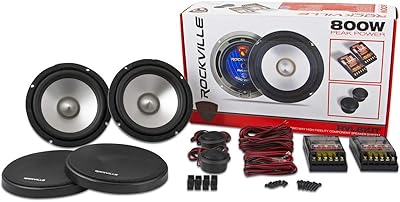
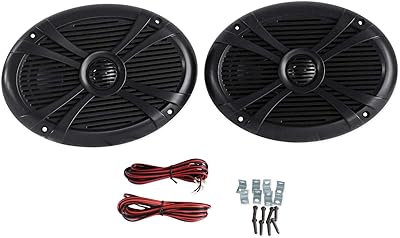
  • Included Items: Each kit contains two 6x9-inch woofers, two tweeters, two crossovers, two grilles, flush and surface tweeter mounts, and a length of speaker wire.
  • Waterproofing: These speakers carry no water resistance rating and are not suitable for installations where exposure to moisture or rain is likely.
  • Item Weight: The complete package weighs 9 pounds, accounting for both speakers, hardware, crossovers, and packaging materials.
  • Warranty: Rockville provides a limited warranty with this product; buyers should confirm current terms directly with the manufacturer or retailer at time of purchase.
  • Mounting Type: This is a component speaker system, meaning the tweeter and woofer are separate units connected via a passive crossover rather than integrated into a single frame.
  • Power Source: These are passive speakers driven by a corded power connection from a head unit or amplifier; they have no built-in amplification.

Related Reviews

Rockville RV68.2C 6x8″ Component Car Speakers
75%
81%
Sound Clarity
67%
Bass Response
72%
Tweeter Performance
78%
Soundstage & Imaging
74%
Power Handling
More
Rockville RVL6KIT 6.5″ Component Car Speakers
84%
88%
Sound Clarity
80%
Bass Performance
94%
Ease of Installation
86%
Build Quality
92%
Value for Money
More
CT Sounds BIO-6X9-COX 6×9 Coaxial Car Speakers
76%
88%
Value for Money
83%
Sound Clarity
54%
Bass Response
91%
Ease of Installation
79%
Tweeter Performance
More
OnlyFactoryDirect TR69 6x9 Sealed Speaker Enclosures
74%
83%
Build Quality
78%
Bass Accuracy
67%
Speaker Compatibility
88%
Ease of Installation
84%
Value for Money
More
NVX VSP69KIT2F 6x9 2-Way Component Speakers
74%
88%
Sound Clarity
84%
Stereo Imaging
81%
Power Handling
58%
Bass Response
83%
High-Frequency Quality
More
Rockville RMSTS69B 1000W 6x9 Marine Speakers
87%
88%
Sound Quality
91%
Bass Response
85%
Build Quality
90%
Waterproof Performance
92%
Ease of Installation
More
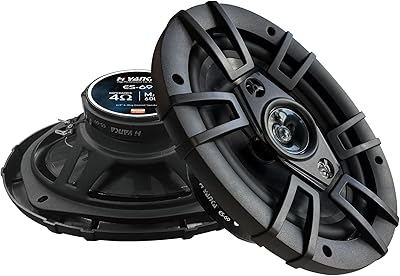
H YANKA ES-69 6x9 Car Speakers
71%
74%
Sound Quality
57%
Bass Performance
79%
High-Frequency Clarity
83%
Value for Money
72%
Build Quality
More
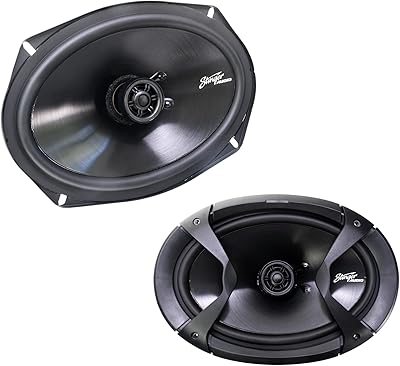
STINGER HC-69 6x9 Coaxial Car Speakers
83%
89%
Sound Clarity
87%
Bass Performance
91%
Installation Ease
92%
Overall Value
84%
Build Quality
More
JBL GX9628 6x9 Coaxial Car Speakers
79%
83%
Sound Quality
88%
Power Handling
61%
Impedance Compatibility
91%
Ease of Installation
79%
Build Quality
More
Rockville RV68.3A 6x8″ 3-Way Car Speakers
76%
78%
Sound Quality
71%
Bass Response
73%
High-Frequency Clarity
86%
Value for Money
67%
Build Quality
More

FAQ

Your factory head unit will technically power these, but you won't get the best out of them that way. Most OEM head units put out around 15 to 18W RMS per channel, which is well below what these speakers are designed to handle. An aftermarket head unit rated at 20 to 22W RMS per channel is a solid minimum, and a modest external amp in the 50 to 100W RMS per channel range will really let them perform as intended.

If your vehicle has standard 6x9-inch speaker openings in the rear deck or doors, these should drop in without cutting or custom fabrication. That said, mounting depth can be a variable — check the depth clearance in your specific location before buying, as some door panels have limited room behind the speaker basket. Most vehicles manufactured in the last 20 years with 6x9-inch slots are fine.

Coaxial speakers put the tweeter on top of the woofer in a single unit, which is simple but means both drivers share the same physical position. Component speakers like the RV69.2C set separate the tweeter from the woofer, letting you place the tweeter at a better angle for soundstage and highs. The crossover also handles frequency splitting externally, which generally gives cleaner separation. For most casual listeners the difference is noticeable but not dramatic; for anyone who listens critically, components are the better design.

Most DIYers with basic tools and some patience can handle this install in a few hours. The woofers go in like any other 6x9-inch replacement speaker. The tweeters need a mounting location — the included surface-mount brackets make this easier if you don't want to cut a flush hole. The crossovers need to be secured somewhere nearby, usually behind a panel, which is where some people find it a bit fiddly depending on how tight the space is. Plenty of vehicle-specific installation guides are available online.

No, and this is worth understanding before you buy. The peak figure is a momentary maximum under ideal lab conditions, not a target for everyday use. What actually matters is the 220W RMS rating for the pair — roughly 110W RMS per channel — which reflects the power these speakers can comfortably handle during sustained listening. Running them at 50 to 100W RMS per channel from a quality amplifier is a realistic and perfectly effective operating range.

Yes, this is actually where the RV69.2C set tends to shine. The polypropylene woofer and the tuning favor low-end presence and output, so genres that lean on kick drums and bass lines tend to sound full and punchy with these. They are not a substitute for a dedicated subwoofer if you want deep sub-bass, but for door or deck speakers they produce noticeably strong low-end response relative to their size and price.

The speakers themselves — the drivers and surround in particular — tend to hold up well over time. The butyl rubber surround resists the temperature cycling that cracks foam surrounds in cheaper speakers. The grilles and plastic mounting hardware are a different story; they feel noticeably budget-grade and a few owners have reported clips or tabs breaking during installation or adjustment. For the speakers themselves, durability feedback is generally positive.

These are not rated for water or moisture exposure, so marine or off-road applications where water contact is likely are not a good fit. The Rockville RV69.2C 6x9″ Component Car Speakers are designed for standard enclosed vehicle cabins. If you need speakers for a boat, ATV, or any open-air or high-humidity environment, look specifically for marine-rated speakers with IP or weather-resistance certifications.
This is a legitimate complaint from a portion of owners. The PEI dome tweeters can take on a slightly edgy or bright character when pushed hard for long periods. At moderate to moderately high volumes the sound is generally fine for casual listening, but if you regularly listen at near-maximum volume, the treble can become fatiguing. Positioning the tweeters so they are not aimed directly at ear level can help soften this effect.

Rockville does sell individual components and accessories through their website and some retailers, so getting a replacement tweeter or crossover is possible, though availability can vary. The limited warranty covers manufacturing defects, so if something fails early without misuse, contacting Rockville directly is the first step. Keep your purchase receipt and packaging details handy, as warranty claims typically require proof of purchase and the model number.

Where to Buy