Overview

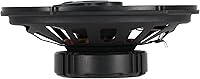
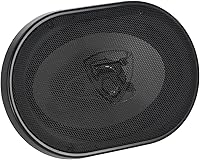
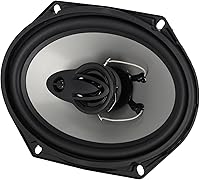
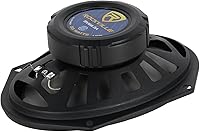
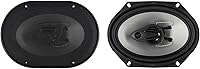
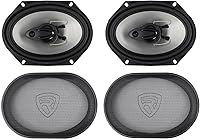
The Rockville RV68.3A 6x8″ 3-Way Car Speakers have carved out a steady niche in the budget coaxial market since their debut in 2017 — and that staying power says something. Unlike a lot of cheap aftermarket options that throw out wildly exaggerated power claims, these 3-way coaxials carry CEA-compliant ratings, meaning the numbers on the box actually reflect real-world performance. You get a polypropylene woofer paired with a PEI dome tweeter and a super tweeter, all in a complete package that includes grilles, mounting hardware, and speaker wire. For a straightforward factory replacement, the value proposition is hard to argue with.
Features & Benefits

With 91dB sensitivity, these Rockville 6x8″ speakers get loud on a standard head unit without needing an external amplifier. The 170W RMS rating also gives you real headroom if you decide to add an amp down the road. The butyl rubber surround is a practical win — it handles heat and moisture far better than foam surrounds found on cheaper builds, which tend to crack or crumble over time. A 2.52-inch mounting depth keeps installation accessible in shallow door panels, and the steel basket paired with aluminum voice coils helps keep distortion in check even when you push the volume.

Best For

The RV68.3A pair makes the most sense for drivers who are done tolerating the thin, lifeless sound of aging stock speakers. If your car has 6x8-inch openings — many Fords, Mazdas, and older Dodges do — the fit is typically straightforward with the included hardware. This is also a strong pick for anyone doing a DIY door swap without wanting to source mounting rings or trim adapters separately. That said, keep expectations calibrated. These are not built to impress audiophiles, and they will not compete with mid-range or premium coaxials. As a daily driver upgrade that genuinely outperforms stock, though, they are a logical, no-fuss choice.

User Feedback

Owners replacing worn factory speakers with these 3-way coaxials frequently note a clear improvement in bass body and vocal clarity, especially at moderate listening volumes. Installation tends to go smoothly for most, though a handful of buyers flag that the included grilles fit loosely and the bundled wire gauge is on the thin side. Build quality perceptions are honestly mixed — some find the overall feel solid for this price tier, while others expected more substance given the spec sheet. Long-term durability reports lean positive, but this is a budget product, and setting realistic expectations from the start makes for a noticeably more satisfying ownership experience.

Pros

  • CEA-compliant power ratings give you honest numbers you can actually plan around, unlike many budget rivals.
  • The butyl rubber surround holds up to heat and humidity far better than foam alternatives found at this price point.
  • At 91dB sensitivity, these 3-way coaxials get genuinely loud straight off a head unit with no amp required.
  • The 2.52-inch mounting depth makes fitting them into shallow factory door panels much less of a headache.
  • Everything you need for a basic install — grilles, wire, and mounting hardware — comes in the box.
  • The jump in bass body and vocal clarity over worn factory speakers is immediately noticeable to most drivers.
  • Steel basket and aluminum voice coils add thermal stability that helps maintain sound quality over longer listening sessions.
  • The 35Hz–20kHz frequency range means you are not sacrificing either low-end warmth or high-frequency crispness.
  • A long production history since 2017 means real-world durability feedback exists — this is not an untested new release.
  • The RV68.3A pair represents one of the more complete out-of-the-box packages in the budget 6x8-inch category.

Cons

  • The included speaker wire is on the thin side and worth replacing if you plan to push any real volume.
  • Grilles have a reputation for fitting loosely, which can lead to rattling on rougher roads.
  • Build quality feels modest in hand — some buyers expect more substance given the spec sheet numbers.
  • Not suitable for any wet or exposed installation environment since there is zero water resistance.
  • Long-term durability at sustained high volumes remains a question mark, particularly for buyers running an amplifier.
  • Terminal connections are basic and may require extra attention to ensure a solid, rattle-free fit during install.
  • Sound staging and stereo separation are average at best — do not expect anything approaching a component speaker setup.
  • Peak power figures look impressive on paper but have limited real-world meaning for everyday listening scenarios.

Ratings

The scores below reflect an AI-driven analysis of verified buyer reviews for the Rockville RV68.3A 6x8″ 3-Way Car Speakers, collected from global marketplaces and filtered to exclude incentivized, bot-generated, and duplicate submissions. Each category captures what real owners actually experienced — strengths and frustrations alike — so you get an honest picture before you buy.

Sound Quality
78%
22%
Most drivers coming from worn or entry-level factory speakers notice an immediate jump in midrange clarity and bass presence, particularly at moderate highway listening volumes. Vocals and acoustic instruments come through with noticeably more definition than stock alternatives in the same vehicle.
At higher volumes, some listeners pick up on compression in the upper midrange and a slight harshness from the tweeter that more refined coaxials at a higher price point avoid. Soundstage depth is limited, and the overall presentation favors loudness over nuance.
Bass Response
71%
29%
For a coaxial speaker at this tier, the low-end extension is respectable — daily drivers report satisfying body in bass-heavy genres like hip-hop and rock without needing a subwoofer for casual listening. The polypropylene cone handles moderate bass demands without the muddiness common in cheaper builds.
Deep sub-bass below 50Hz is largely absent, which is expected from a coaxial but still disappointing for listeners who enjoy bass-forward music. Those expecting thumping low end without a separate subwoofer will find these 3-way coaxials fall noticeably short of that expectation.
High-Frequency Clarity
73%
27%
The dual-tweeter setup — combining a 1.5″ PEI dome and a 0.6″ super tweeter — delivers crisp highs that handle cymbal hits and string detail better than single-tweeter budget alternatives. Listeners streaming higher-bitrate audio tend to appreciate the added airiness in the upper register.
At elevated volumes, the tweeters can tip into sibilance on certain recordings, particularly with poorly mastered tracks. A handful of users also find the high-frequency output slightly fatiguing over longer drives, which suggests the crossover tuning leans toward brightness.
Value for Money
86%
The RV68.3A pair punches above its weight when you factor in what is included — grilles, wire, hardware, and CEA-compliant ratings that hold up under scrutiny. For a budget replacement that genuinely improves on factory sound, most buyers feel the purchase is well justified.
The value equation weakens if you compare these directly to mid-range coaxials in the next price bracket, where materials and tuning are noticeably more refined. Buyers who stretch their budget slightly often report wishing they had done so from the start.
Build Quality
67%
33%
The steel basket and butyl rubber surround give these speakers a more durable foundation than most foam-surround alternatives at this price, and several long-term owners report no structural issues after extended use in hot climates. Aluminum voice coils also add a layer of thermal resilience that cheaper builds typically skip.
Handling the speakers out of the box, some buyers find the overall feel underwhelming — plastic components have a lightweight quality that does not inspire confidence. The grilles in particular feel thin and prone to flex, and a noticeable number of users report them sitting loosely after installation.
Installation Ease
83%
The 2.52-inch mounting depth fits cleanly into the shallow door cavities of many popular vehicles without requiring adapter rings or custom mounting solutions. First-time installers consistently describe the process as straightforward, and the included hardware covers the basics well enough for a standard swap.
The included speaker wire is noticeably thin and a common complaint among buyers doing a permanent install — most experienced installers replace it immediately. Terminal connections can also feel imprecise, occasionally requiring extra effort to seat properly during wiring.
Grille Fit & Finish
54%
46%
The grilles do their job of protecting the cone and tweeter from minor debris, and for buyers who care more about function than aesthetics, they are adequate. Some owners appreciate having them included rather than needing to source covers separately.
Loose grille fitment is one of the most repeated complaints across user reviews, with many reporting a subtle rattle on uneven roads after just a few weeks of use. The plastic construction looks noticeably budget at close range and does not complement higher-end interior trim particularly well.
Durability Over Time
69%
31%
Buyers who have run these Rockville 6x8″ speakers for two or more years without amplification report generally stable performance, with the butyl surround showing no signs of cracking or separation even in warmer climates. The steel basket resists the flex-related fatigue that affects cheaper stamped-plastic alternatives.
When pushed hard with an amplifier over extended periods, a subset of users report a gradual decline in output or tweeter degradation within the first year. At sustained high volumes, the thermal limits of the design become more apparent than the specs might suggest.
Sensitivity & Efficiency
84%
At 91dB, these speakers genuinely hold their own powered solely by a standard head unit, which is a practical advantage for anyone not planning to add amplification. During highway driving, most users achieve satisfying loudness without pushing the head unit past two-thirds of its output range.
While efficiency is strong at moderate volumes, the speakers can start to sound strained when a head unit is maxed out without amp support. The gap between their comfortable listening range and their actual ceiling is narrower than the sensitivity spec alone implies.
CEA Compliance & Rating Honesty
88%
The CEA-compliant power ratings are a genuine differentiator in a market flooded with inflated peak figures that bear no relationship to real performance. Buyers who understand what this means consistently cite it as a key reason they chose the RV68.3A pair over similarly priced alternatives.
For buyers who are not already familiar with CEA standards, the significance of this rating is easy to miss and often goes unappreciated until they research it post-purchase. Rockville could do a better job explaining why this matters in plain language on the product listing itself.
Compatibility
81%
19%
The 4 Ohm impedance plays nicely with almost every aftermarket and factory head unit on the market, reducing the risk of mismatched pairing that affects some competing models. Owners across a wide range of Ford, Mazda, and Dodge vehicles report clean plug-and-play fitment without modification.
Vehicles with non-standard factory openings or integrated speaker grille surrounds may require additional adapter hardware not included in the box. Compatibility should always be confirmed through a vehicle-specific fit guide before purchasing, as assumptions based on approximate size alone can lead to a frustrating return.
Packaging & Included Accessories
76%
24%
Everything a basic installer needs — hardware, grilles, wire, and a warranty card — arrives in one box, which is more complete than several competing options at a similar price. The thoughtful packaging generally results in speakers arriving undamaged, with no widespread reports of shipping-related cone or tweeter damage.
The quality of included accessories, particularly the wire, lags behind the speakers themselves and feels like a cost-cutting measure. Serious installers tend to discard the bundled wire immediately and use their own, which raises questions about why a thicker gauge is not offered as standard.
Midrange Performance
74%
26%
Vocals, guitars, and spoken-word content reproduce with clarity that makes a genuine difference during long commutes — a step up from the honky, resonant midrange typical of aging factory speakers. At moderate volumes, the polypropylene cone handles these frequencies without obvious coloration.
When the volume climbs, the midrange can sound slightly congested, particularly during complex musical passages with layered instruments. The single woofer handling both bass and mids is a fundamental coaxial limitation that these speakers do not fully overcome.
Heat & Climate Resistance
79%
21%
Butyl rubber surrounds are a meaningful advantage in regions with hot summers or high humidity, where foam alternatives typically start degrading within a few years. Multiple owners in southern US states and tropical climates report no surround deterioration after extended ownership.
The speakers carry no official waterproof or moisture-resistance rating, so any exposure to condensation from open windows or A/C leaks is a real risk to the internal components. These are strictly designed for sealed interior environments, and installation in any exposed or semi-open location is inadvisable.

Suitable for:

The Rockville RV68.3A 6x8″ 3-Way Car Speakers are built squarely for the practical upgrader — someone who is tired of the flat, compressed sound coming out of factory speakers and wants a meaningful improvement without committing to a full audio overhaul. They are a natural fit for owners of Fords, Mazdas, and older Dodge models where the 6x8-inch opening is standard, since the 2.52-inch mounting depth and included hardware make for a clean, no-adapter-needed install in most cases. If you are running a decent aftermarket head unit but no external amplifier, the 91dB sensitivity rating means these 3-way coaxials will still fill the cabin with clear, balanced sound. DIY installers who want everything ready to go in one box — grilles, wire, and mounting hardware included — will appreciate not having to make a separate run to the parts store. This is also a smart pick for secondary vehicles, commuter cars, or any situation where you want a real audible upgrade over stock without spending a lot.
Not suitable for:

The Rockville RV68.3A 6x8″ 3-Way Car Speakers are not the right tool for anyone chasing a truly refined listening experience. Audiophiles or buyers who want precise imaging, tight low-end control, or the kind of detail retrieval you get from premium component systems should look elsewhere and budget accordingly — these will not satisfy at that level. If your vehicle has unusually shallow door cavities tighter than 2.52 inches, fitment may be a problem worth investigating before purchasing. These are also not waterproof, so installations near open-air exposure or in marine environments are off the table. Buyers who tend to judge a product by how it feels in hand may find the overall build impression underwhelming compared to mid-range rivals, and anyone planning to run a high-powered dedicated amplifier will quickly outgrow what these coaxials can cleanly handle.
Specifications

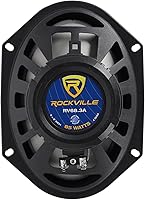
  • Speaker Size: Each speaker measures 6x8″, fitting the standard oval opening found in many factory door and rear deck locations.
  • Configuration: 3-way coaxial design combines a woofer, a 1.5″ PEI dome tweeter, and a 0.6″ super tweeter in a single integrated unit.
  • Peak Power: Rated at 900W peak per pair under CEA-compliant test conditions, reflecting honest rather than inflated output figures.
  • RMS Power: Continuous RMS output is 170W per pair, which represents the sustained power level the speakers can reliably handle during normal listening.
  • Impedance: 4 Ohm nominal impedance, compatible with the vast majority of aftermarket and factory head units as well as external amplifiers.
  • Sensitivity: Sensitivity is rated at 91dB, meaning these speakers produce strong output volume even when driven by a modest, low-wattage source unit.
  • Frequency Range: Covers 35Hz to 20kHz, spanning the full audible spectrum from low bass frequencies through the upper limits of human hearing.
  • Woofer Material: The main woofer cone is constructed from polypropylene, a material chosen for its resistance to moisture-related warping and its consistent acoustic properties.
  • Surround Material: Butyl rubber surrounds are used in place of foam, offering superior resistance to heat, UV exposure, and humidity over the speaker's lifespan.
  • Voice Coil: Aluminum voice coils help dissipate heat efficiently during high-volume playback, reducing the risk of thermal distortion or premature failure.
  • Basket Material: The speaker basket is stamped steel, providing a rigid structural foundation that minimizes unwanted flex and resonance during use.
  • Mounting Depth: A 2.52″ mounting depth allows installation in shallow door cavities commonly found in older domestic and imported vehicles.
  • CEA Compliance: Power ratings are CEA-2031 compliant, meaning they follow an industry-standard testing methodology rather than manufacturer-inflated peak figures.
  • Waterproofing: These speakers carry no waterproof or water-resistant rating and are intended strictly for enclosed, interior vehicle installations.
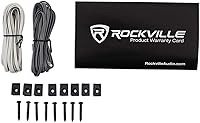
  • Included Items: Each package includes two speakers, a set of grilles, mounting hardware, speaker wire, and a warranty card.
  • Product Dimensions: Overall packaged dimensions are approximately 13.31″ in length, 9.57″ in width, and 3.54″ in depth, with a combined shipping weight of 5 pounds.
  • Warranty: Rockville includes a manufacturer warranty card in the box; buyers should verify the specific duration and coverage terms directly with the seller at time of purchase.
  • Availability: Originally released in August 2017, the RV68.3A has remained in continuous production and is not listed as discontinued by the manufacturer.

Related Reviews
Rockville RV46.3A 4x6″ 3-Way Car Speakers
76%
83%
Sound Clarity
61%
Bass Performance
78%
Build Quality
91%
Installation Ease
88%
Value for Money
More
Rockville RV4.3A 4″ 3-Way Car Speakers
83%
85%
Sound Quality
88%
Ease of Installation
82%
Bass Performance
87%
Build Quality
80%
Treble Clarity
More
Rockville RV68.2C 6x8″ Component Car Speakers
75%
81%
Sound Clarity
67%
Bass Response
72%
Tweeter Performance
78%
Soundstage & Imaging
74%
Power Handling
More
Orion CB683 6x8″ 3-Way Coaxial Car Speakers
73%
74%
Sound Quality
71%
Bass Performance
62%
Treble Clarity
66%
Midrange Definition
69%
Build Quality
More
Clarion SRG6833C 6x8-Inch 3-Way Car Speakers
78%
83%
Sound Clarity
61%
Bass Response
88%
Fit & Compatibility
86%
Installation Ease
67%
Power Handling
More
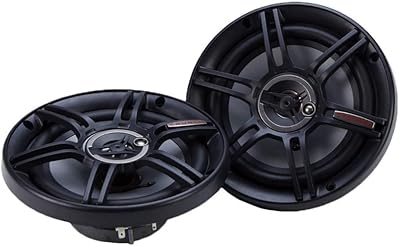
Alphasonik NS683 6x8 3-Way Car Speakers
74%
78%
Sound Clarity
54%
Bass Response
81%
High-Frequency Performance
83%
Installation Ease
67%
Build Quality
More
Alphasonik NS693 6x9 3-Way Car Speakers
76%
88%
Value for Money
76%
Sound Clarity
61%
Bass Response
91%
Ease of Installation
79%
High-Frequency Performance
More
Pyle PL53BL 5.25” 3-Way Car Speakers
83%
84%
Sound Quality
92%
Value for Money
88%
Ease of Installation
89%
Durability
75%
Bass Performance
More
JBL GX8628 6×8″ Coaxial Car Speakers
78%
83%
Sound Clarity
57%
Bass Performance
78%
Treble & High-Frequency Detail
89%
Value for Money
81%
Build Quality
More
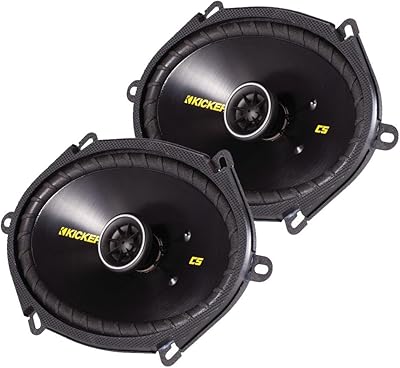
Kicker 40CS684 6x8-inch Car Coaxial Speakers
77%
83%
Sound Clarity
57%
Bass Response
89%
Installation Ease
81%
Value for Money
74%
Build Quality
More

FAQ

That depends on your vehicle. The 6x8-inch oval opening is standard in many Fords, Mazdas, and certain Dodge models, so if your car already has that size cutout, you should be good to go with the included hardware. Always double-check your specific year, make, and model against a speaker fit guide before ordering — even within the same brand, door cavity dimensions can vary by trim level.

You can run them straight off a head unit without any issue. The 91dB sensitivity rating means these 3-way coaxials are fairly efficient, so a standard aftermarket head unit putting out 18 to 22 watts RMS per channel will drive them to comfortable listening volumes. If you add an amplifier later, you have meaningful headroom to work with, but it is not a requirement out of the box.

For most drivers, the difference is obvious almost immediately, especially in the midrange and bass. Factory speakers in older vehicles tend to sound thin and distort easily at moderate volumes, so the step up in clarity and low-end presence is usually apparent within the first few songs. That said, if your factory speakers are relatively modern or part of a premium OEM audio package, the gap will be smaller.

For most vehicles with standard 6x8-inch openings, yes. The 2.52-inch mounting depth is specifically one of the reasons these coaxials work well in older domestic cars where door cavity space is limited. If you have a particularly tight panel or a vehicle known for shallow mounting clearance, it is worth measuring your available depth before installing to avoid any surprises.

Peak and RMS power are two very different measurements. The 900W figure refers to the absolute maximum instantaneous power the speakers can handle for a brief moment without failing, while the 170W RMS reflects the continuous, sustained power level they can handle during normal use. Because these speakers are CEA compliant, both figures are tested to an actual industry standard rather than being marketing numbers pulled from thin air — which is more than you can say for a lot of budget competitors.

They are functional, but feedback from real buyers is mixed. Some find they fit and look fine, while others report that the grilles sit loosely and can develop a rattle over time on rough roads. If rattling bothers you, you might prefer to leave them off or pick up a separate set of grilles that clip more firmly to your door trim.

These are genuinely DIY-friendly for anyone comfortable with basic car audio work. The package includes mounting hardware and speaker wire, so you are not hunting for extra parts. If you have replaced car speakers before, this should be a familiar process. If it is your first time, there are plenty of vehicle-specific install guides and YouTube walkthroughs that make it manageable even for a first-timer.

Butyl rubber holds up significantly better over time, particularly in environments with temperature swings and humidity — which describes the inside of most cars. Foam surrounds tend to dry out, crack, and crumble within several years, especially in hot climates. The rubber surround on these 3-way coaxials should outlast a foam alternative by a considerable margin under normal conditions.

No. These speakers carry no water resistance or waterproof rating, so they are not appropriate for marine, open-air, or any environment where moisture exposure is likely. Using them outside a sealed vehicle interior risks premature failure. For boat or outdoor use, you would need to look at speakers specifically rated for that environment.

The included wire will technically work for a basic install, but it is on the thinner side. If you are just testing fitment or doing a temporary setup, it is fine. For a permanent install — especially if you plan to pair these with an amplifier — it is worth picking up a proper 16 or 14-gauge speaker wire separately. It is a small extra cost that makes a real difference in signal quality and long-term reliability.

Where to Buy