Overview

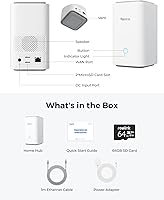
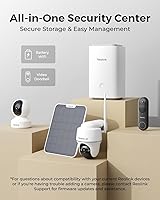
The REOLINK Home Hub Security Camera Hub launched in late 2024 as a straightforward answer to a growing frustration: paying monthly fees just to access your own security footage. It functions as a centralized local recorder exclusively within the Reolink ecosystem — and that last word matters. If you own cameras from other brands, stop here, because this camera hub simply will not work with them. For everyone already invested in Reolink battery or Wi-Fi cameras, the box includes the hub itself, a 64GB microSD card, a power adapter, and a network cable. It hit the top three in its Amazon category fast, which says something.
Features & Benefits

At its core, this home hub pulls together up to eight Reolink battery cameras or doorbells into one app, replacing the chaos of managing each device individually. Offline recording is arguably the standout feature — when your internet drops, footage keeps saving locally, which cloud-only setups simply cannot offer. Storage starts at 64GB and can be expanded up to 1TB, so you are not forced into a subscription to keep months of footage. The built-in siren hits 115dB, loud enough to genuinely startle anyone on your property. Wi-Fi 6 support on both bands helps maintain stable camera connections, and encryption keeps stored footage locked down even if the hub itself is taken.

Best For

This camera hub makes the most sense for existing Reolink owners who want one central place to manage recordings without paying monthly. It suits families who want real security without needing to configure a proper NVR or deal with complicated networking. If your home internet is unreliable, the local storage angle becomes even more compelling. Privacy-focused buyers who are uncomfortable with footage sitting on third-party servers will appreciate that everything stays on-site. Renters and DIY types also fit well here — the wireless camera ecosystem means no drilling, and the hub ties it all together cleanly through an app or basic voice commands.

User Feedback

Across roughly 200 ratings, this home hub sits at four stars — cautiously positive, not a landslide. Buyers consistently praise how painlessly it integrates with the Reolink app and how reassuring it feels to have recordings survive an outage. The no-subscription angle earns genuine goodwill. That said, the Reolink-only limitation catches people off guard who assumed broader compatibility, and frustration shows in the lower ratings. A handful of users ran into pairing hiccups on the 5GHz band. A few also found eight cameras insufficient for larger homes. Firmware updates from Reolink have resolved some issues for certain buyers, though others found support slower than expected.

Pros

  • No monthly subscription fees — footage stays yours, stored locally at home.
  • Offline recording keeps saving even when your internet goes down.
  • Expandable storage up to 1TB removes long-term capacity concerns.
  • Centralizes up to 8 Reolink cameras into one clean app interface.
  • Built-in 115dB siren adds active deterrence, not just passive recording.
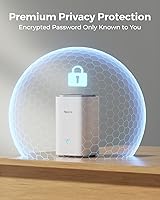
  • Encrypted local storage means footage stays inaccessible even if the hub is stolen.
  • Weekly and monthly event summaries make it easy to stay informed without hours of playback.
  • Wi-Fi 6 support keeps camera connections stable across both 2.4GHz and 5GHz bands.
  • Compact, discreet design fits on a shelf without dominating the space.
  • Everything needed to get started is included in the box.

Cons

  • Works only with Reolink battery and Wi-Fi devices — no exceptions, no workarounds.
  • The 8-camera hard limit will feel restrictive for larger homes or commercial use.
  • 5GHz band pairing can be unreliable, sometimes forcing users to fall back to 2.4GHz.
  • The included 64GB card fills quickly when multiple cameras record at high resolution.
  • Remote viewing while away from home still requires a working internet connection.
  • App interface feels unpolished compared to more established competitors.
  • Customer support response times have been inconsistent based on real user reports.
  • No Google Home or Apple HomeKit support limits smart home integration options.
  • Firmware bugs at launch suggest the product shipped before fully reaching maturity.
  • No adjustable siren volume — 115dB is the only setting, which can cause nuisance alerts.

Ratings

The REOLINK Home Hub Security Camera Hub earns a cautiously optimistic overall reception based on AI analysis of verified global user reviews, with spam, bot-generated, and incentivized feedback actively filtered out before scoring. Strengths in local storage reliability and subscription-free operation come through clearly, but real pain points around ecosystem lock-in and camera limits are reflected just as honestly in the numbers below.
Ease of Setup
83%
Most buyers report getting the hub online and cameras connected within 15 to 20 minutes using the Reolink app, with no router configuration or port forwarding required. For a household that just wants things to work without calling a tech-savvy friend, the guided in-app pairing process is genuinely straightforward.
A subset of users ran into trouble when attempting to connect cameras over the 5GHz band, sometimes requiring multiple pairing attempts or a temporary switch to 2.4GHz to complete setup. The process assumes familiarity with the Reolink app, which can feel opaque to first-time users.
Local Storage Reliability
91%
The offline recording capability is where this hub earns its strongest marks. Buyers in areas prone to internet outages specifically call out how footage continued saving without interruption, something no cloud-dependent system can replicate. The included 64GB card handles days of multi-camera footage before cycling.
The 64GB card included in the box will fill faster than expected if multiple cameras are recording at high resolution around the clock. Users who did not proactively expand storage found themselves with shorter retention windows than anticipated, which required purchasing an additional card.
Ecosystem Compatibility
44%
56%
For households already running several Reolink battery or Wi-Fi cameras, the hub delivers exactly what it promises — a single point of management. Owners of three to six Reolink cameras describe the consolidation as a meaningful improvement over juggling individual camera settings.
This is the sharpest criticism across reviews: the hub works only with Reolink battery and Wi-Fi devices, full stop. Buyers who owned even one camera from Arlo, Eufy, or Ring discovered the limitation after purchase, and the frustration in those reviews is hard to miss. No workarounds exist.
Value for Money
78%
22%
The no-subscription model is a genuine long-term saving for families who would otherwise pay monthly cloud fees indefinitely. Framed over 12 to 24 months of use, the hub pays for itself relatively quickly compared to subscription-based alternatives at a similar upfront cost.
The value calculation only holds if you are already all-in on Reolink cameras. Buyers who need to purchase new cameras alongside the hub face a steeper combined investment, and the 8-camera ceiling means larger homes may outgrow the system sooner than expected.
Privacy & Data Security
88%
Knowing that footage never leaves the home network resonates strongly with privacy-conscious users, particularly those skeptical of cloud platforms storing sensitive home recordings on third-party servers. The encryption layer means a stolen hub does not automatically mean stolen footage.
The security model depends entirely on physical security of the hub itself and proper home network hygiene. Users who have not secured their local network or set a strong app password are still exposed to risks that the hardware encryption alone cannot address.
App Experience
71%
29%
The Reolink app handles the core tasks — live view, playback, event history, and siren control — without major friction. The daily and weekly summary digests are a practical touch that lets busy homeowners catch up on activity without scrubbing through hours of footage.
Several reviewers note the app interface feels somewhat unpolished compared to competitors, with occasional lag when loading playback from the hub's local storage. Notification management and fine-tuning motion sensitivity zones takes more steps than it probably should.
Wi-Fi Connectivity Stability
69%
31%
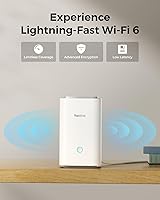
Wi-Fi 6 support gives the hub a solid technical foundation for handling multiple camera streams simultaneously without the bandwidth bottlenecks that older hub designs can suffer. Users with modern routers generally report stable, consistent connections once the initial setup is complete.
The 5GHz band pairing issues mentioned across multiple reviews suggest the implementation is not fully bulletproof, especially in homes with thick walls or long distances between cameras and the hub. A handful of users settled for 2.4GHz permanently after repeated 5GHz drop-offs.
Build Quality & Design
74%
26%
The compact cylindrical form factor fits discreetly on a shelf or router cabinet without drawing attention. At roughly the size of a tall coffee mug, it does not dominate a space the way bulkier NVR units do, and the white finish blends into most home environments reasonably well.
The plastic casing feels adequate rather than premium for the price. A few users noted the unit runs warmer than expected during continuous operation, and there is no active cooling, which raises minor long-term durability questions for units stored in enclosed cabinets.
Camera Capacity (8-Camera Limit)
58%
42%
Eight cameras is a realistic ceiling for the average apartment, townhouse, or mid-sized home — covering front door, back yard, garage, and a couple of interior points without issue. For that core audience, the limit never becomes a real-world constraint.
Owners of larger properties or those who want comprehensive coverage with dedicated cameras per zone will hit the 8-device wall quickly. Unlike some competing NVR systems that offer expandable channel counts, there is no upgrade path here — the limit is fixed by hardware.
Offline Performance
87%
The hub continues recording and storing footage entirely independently of the internet, which is more than a marketing claim based on user reports. Families who experienced router outages or ISP downtime confirmed cameras kept logging events throughout, with footage accessible on the local network immediately after.
Remote access — viewing footage from a phone while away from home — obviously requires an internet connection. Some users misunderstood offline recording as meaning full remote access during outages, leading to disappointment when they could not check in while travelling.
Siren & Alert System
76%
24%
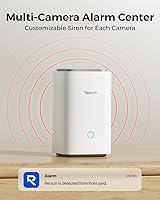
The 115dB built-in siren is genuinely loud by real-world standards — comparable to a car alarm — and users who tested it confirm it is disruptive enough to deter casual intruders and alert neighbors. Motion-triggered automatic activation adds a layer of active response beyond passive recording.
False-positive siren triggers from pets, passing cars, or tree movement have frustrated a portion of users. Fine-tuning the motion sensitivity to avoid nuisance activations requires patience, and the siren cannot be set to a lower decibel level for situations where a softer alert would suffice.
Customer Support & Firmware Updates
62%
38%
There are verified cases where Reolink issued firmware updates that resolved specific pairing and connectivity issues raised by buyers, which suggests the company does monitor feedback and push fixes. Some users credit a support interaction with getting their hub fully functional after initial struggles.
Response times and the quality of support interactions vary considerably across reviews. A meaningful number of buyers report waiting longer than expected for resolutions, and the need for firmware updates to fix out-of-box issues raises questions about the maturity of the product at launch.
Storage Expandability
82%
18%
The ability to push local storage up to 1TB via additional microSD cards removes the ceiling that makes many compact hub products feel restrictive long-term. Buyers planning to run four or more cameras at 1080p or higher appreciate having room to grow without switching platforms.
The expandability requires purchasing additional storage cards separately, which adds to the overall cost that is not obvious at the point of purchase. Compatibility with specific high-capacity microSD cards is not exhaustively documented, leaving some buyers to test through trial and error.
Voice Assistant Integration
66%
34%
Alexa compatibility allows basic voice commands for camera checks and hub control, which fits naturally into households already built around Amazon smart home devices. For users who rely on voice control as part of a broader smart home routine, the integration works adequately.
The voice integration covers only basic functions and does not extend to granular controls like adjusting recording schedules or reviewing event summaries by voice. Google Home and Apple HomeKit are absent entirely, which limits the hub's usefulness in non-Amazon smart home setups.

Suitable for:

The REOLINK Home Hub Security Camera Hub is purpose-built for households that have already committed to the Reolink ecosystem and want to stop paying recurring cloud fees without sacrificing organized, reliable footage storage. If you have two to eight Reolink battery or Wi-Fi cameras scattered around your property, this hub pulls everything into one app and one local storage point — a genuinely practical upgrade over managing each camera in isolation. Families in areas with spotty internet will appreciate that recordings keep saving even when the connection drops, which is a real advantage over cloud-only setups that go blind during outages. Privacy-focused buyers who are uncomfortable with footage living on third-party servers will find the fully local storage model reassuring. Renters and DIY-minded homeowners also fit naturally here, since the entire Reolink wireless ecosystem avoids drilling and complex wiring, and the hub ties it all together through a single app without requiring any networking expertise.
Not suitable for:

Anyone who owns cameras from Arlo, Eufy, Ring, Wyze, or any brand other than Reolink should stop considering the REOLINK Home Hub Security Camera Hub immediately — it does not support third-party devices, and there is no workaround. Buyers monitoring large properties with more than eight camera positions will also hit a hard ceiling, since the hub cannot be expanded beyond that count. If remote access while travelling is a priority, keep in mind that cloud storage still has a practical edge: local-only systems require your home internet to be up for you to view footage remotely, which is a real trade-off worth acknowledging. Tech users who want integration with Google Home or Apple HomeKit will find the Alexa-only voice support frustratingly limited. Finally, anyone expecting enterprise-grade support response times or a polished, mature app experience may find the current state of the product — still relatively new as of late 2024 — falls short of that bar.
Specifications

  • Compatible Devices: Works exclusively with Reolink battery-powered Wi-Fi cameras and doorbells; no third-party device support of any kind.
  • Max Cameras: Supports up to 8 Reolink battery or Wi-Fi cameras and doorbells connected simultaneously.
  • Included Storage: Ships with a 64GB microSD card pre-installed, ready to record from first setup.
  • Max Storage: Storage is expandable up to 1TB via additional microSD cards slotted into the available expansion bays.
  • Encryption: Footage is protected with AES-128 encryption combined with proprietary Reolink security algorithms, keeping recordings inaccessible even after a factory reset or physical theft.
  • Wi-Fi Standard: Supports Wi-Fi 6 on both 2.4GHz and 5GHz bands for stable, high-throughput connections to paired cameras.
  • Wired Connectivity: Connects to the home network via Ethernet using the included 1-meter network cable for a reliable wired backbone.
  • Built-in Siren: Integrated siren reaches a maximum output of 115dB and can trigger automatically in response to motion-detection events.
  • Dimensions: The hub measures 95 x 95 x 161.8mm (approximately 3.75 x 3.75 x 6.38 inches), with a compact cylindrical form factor.
  • Weight: Unit weighs 441g (1.63 lbs), making it light enough to place on a shelf or router cabinet without dedicated mounting hardware.
  • Control Methods: Can be managed via the Reolink mobile app, a remote control, or voice commands through Amazon Alexa.
  • Subscription Model: Requires no monthly or annual subscription fee; all footage is stored and accessed locally at no recurring cost.
  • Offline Recording: Continues recording to local storage during internet outages, with no dependency on cloud connectivity to save footage.
  • Event Summaries: Generates automated daily, weekly, and monthly security event summaries accessible through the Reolink app.
  • In-Box Contents: Package includes the hub unit, one 64GB microSD card, a power adapter, and a 1-meter Ethernet network cable.
  • Availability Date: First made available for purchase in November 2024, reaching a top-3 bestseller rank in its Amazon category shortly after launch.
  • Voice Assistant: Compatible with Amazon Alexa for voice-based control; Google Home and Apple HomeKit are not supported.
  • Power Source: Powered via the included AC power adapter; no battery operation or PoE power delivery is supported.

Related Reviews

REOLINK Home Hub Pro 2TB Security Hub
76%
83%
Value for Money
61%
Ecosystem Compatibility
88%
Storage Reliability
74%
App Experience
81%
Setup & Installation
More
XISRU 64GB Home Security Camera
85%
91%
Battery Life
88%
Motion Detection Performance
85%
Video Quality (1080p)
84%
Night Vision Effectiveness
93%
Ease of Setup
More
Reolink CX820 4K PoE Security Camera
79%
93%
Color Night Vision Quality
88%
Image Clarity & Resolution
79%
AI Detection Accuracy
84%
Low-Light Sensitivity (Passive)
81%
Build Quality & Weather Resistance
More
Petcube Cam Indoor Home Security Camera
85%
92%
Video Quality
87%
Night Vision Performance
90%
Ease of Setup
68%
Motion Detection Accuracy
91%
Two-Way Audio Functionality
More
LAIFUCAM Mini 4K Home Security Camera
83%
92%
Video Quality
88%
Ease of Setup
91%
Battery Life
89%
Motion Detection Accuracy
68%
App Experience
More
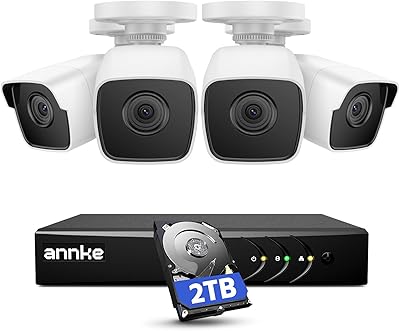
ANNKE 8CH 5MP Security Camera System
73%
88%
Image Quality
84%
Night Vision
76%
AI Detection Accuracy
41%
Installation Experience
58%
Remote Access & App
More
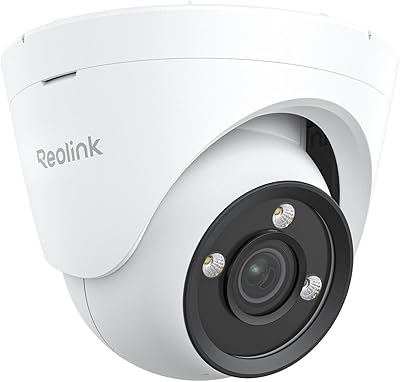
Reolink RLC-820A 4K PoE Dome Security Camera
81%
93%
Image Clarity
78%
Night Vision Performance
74%
Smart Detection Accuracy
82%
Installation Experience
88%
Build Quality & Durability
More
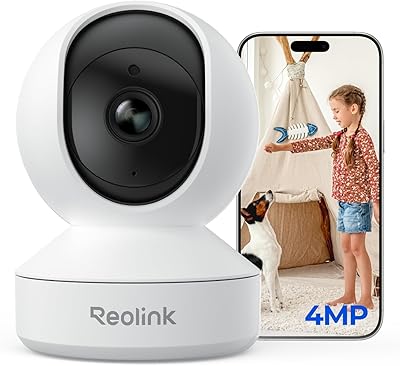
Reolink E1 Indoor Pan-Tilt Security Camera
77%
88%
Image Quality
83%
Night Vision
76%
Pan & Auto-Tracking
81%
Setup & App Experience
61%
WiFi Connectivity
More
Reolink RLC-810WA 4K Outdoor Security Camera
78%
91%
Video Quality
86%
Night Vision Performance
83%
Smart Detection Accuracy
74%
Wi-Fi Connectivity & Stability
88%
Build Quality & Weatherproofing
More
Reolink FE-W 6MP 360° Fisheye Security Camera
77%
83%
Image Clarity
91%
360° Coverage
78%
WiFi Stability
74%
Person Detection Accuracy
67%
Night Vision Performance
More

FAQ

No, it will not. The REOLINK Home Hub Security Camera Hub is strictly limited to Reolink battery and Wi-Fi cameras and doorbells. If you own cameras from any other brand, this hub simply will not recognize or connect to them — there is no compatibility layer or workaround available.
Your footage keeps saving without interruption. The hub records directly to its local microSD card regardless of whether your internet connection is up, which is one of its most practical advantages over cloud-only systems. You can access those recordings on your local network as soon as connectivity is restored.

It depends on how many cameras you have running and at what resolution. For two or three cameras recording on motion-trigger only, 64GB can hold several days of footage before it starts overwriting the oldest clips. If you are running five or more cameras at high resolution continuously, you will want to add a higher-capacity card fairly quickly.

None at all. Local storage and all core features work without any subscription. Keep in mind that cloud storage, while an added cost, does offer one thing local storage cannot: off-site backup in case the hub itself is damaged or stolen. Whether that trade-off matters depends on your situation.

Yes, but only when your home internet connection is active. The hub stores footage locally, but remote viewing through the Reolink app still routes through your home network. If your internet is down at home while you are travelling, remote access will not be available until it comes back up.

Most users get up and running within 20 minutes using the Reolink app, which walks you through adding the hub and pairing cameras step by step. The main thing to watch out for is 5GHz band pairing — some users have found it more reliable to start on 2.4GHz if a camera does not pair on the first attempt.

Unfortunately, no. The 8-camera limit is a hard hardware ceiling and cannot be bypassed through firmware updates or accessories. If you anticipate needing coverage for more than 8 points, you would need to look at a different solution such as a full NVR system.

The AES-128 encryption means that even if someone physically takes the hub and attempts to access the microSD card, the footage remains locked and unreadable without the proper credentials. A factory reset does not bypass this protection, which is a meaningful safeguard for sensitive home footage.

No, voice assistant support is limited to Amazon Alexa. If your smart home is built around Google Assistant or Siri and HomeKit, the Reolink hub will not integrate into those ecosystems. Basic app and remote control work fine regardless, but voice control is Alexa-exclusive.

The siren maxes out at 115dB, which is roughly as loud as a car alarm and more than enough to startle someone and alert neighbors. However, there is no volume adjustment — it is all or nothing. If you live in an apartment or close-quarters neighborhood, you may want to test how your setup responds to motion before leaving automatic siren activation enabled.

Where to Buy