Overview

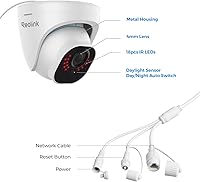
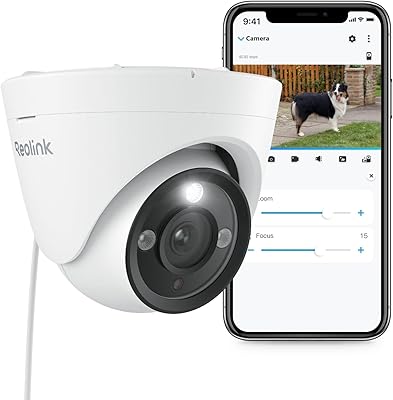
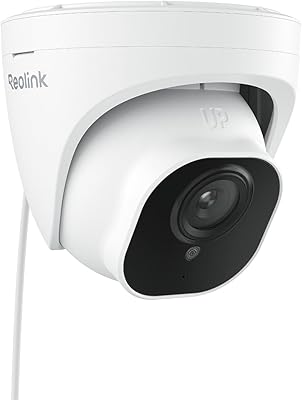
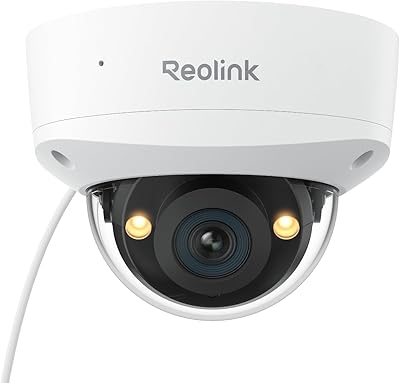
The Reolink RLC-820A 4K PoE Dome Security Camera has quietly held its ground in the mid-range outdoor surveillance market since 2019, and for good reason. Rather than chasing wireless trends, this PoE dome camera takes a wired-first approach — one Ethernet cable handles both power and video data simultaneously, keeping the installation clean and the connection rock-solid. It works as a standalone unit with a microSD card or slots into a Reolink NVR system for centralized management across multiple cameras. Consistent firmware updates have kept it relevant well past its launch date, which says something about the brand's long-term support commitment.
Features & Benefits

The jump from 1080p to true 4K is genuinely noticeable — fine details like license plates or door numbers at the edge of the frame hold up in ways lower-resolution cameras simply cannot match. The RLC-820A runs its human and vehicle detection directly on the camera rather than relying on cloud processing, which keeps alerts faster and more relevant. Infrared night vision reaches a solid 100 feet, and the IR-cut filter prevents the washed-out glow that plagues cheaper units after dark. H.265 compression means storage lasts considerably longer than older formats would allow, and the IP67-rated aluminum shell shrugs off rain and cold without complaint.

Best For

This Reolink outdoor camera makes the most sense for anyone already committed to a wired network setup — or willing to build one. You will need a PoE switch or NVR to power it; this is the most common oversight buyers mention, so it is worth flagging upfront. That said, the payoff is a connection that never drops because a neighbor's router is congested. It suits driveways, parking spots, and building entrances particularly well, where vehicle detection earns its keep daily. There is no subscription required for local recording, which is a genuine advantage for anyone tired of recurring cloud fees eating into a home security budget.

User Feedback

Owners consistently praise image clarity during the day — the 4K footage holds up well when scrubbing back through recordings, and app notifications arrive promptly. Night performance is solid, though a few users note it falls slightly short of the spec sheet's optimistic 100-foot claim in conditions with minimal ambient light. The smart detection works better than most at this price point, but getting the detection zones properly configured takes some trial and error early on. A handful of longer-term owners have flagged occasional firmware hiccups, though Reolink has generally pushed fixes within reasonable timeframes. Overall, verified buyer sentiment skews positive, with most complaints centering on setup complexity rather than hardware quality.

Pros

  • 4K resolution makes license plates and faces genuinely identifiable, not just visible.
  • Single Ethernet cable handles both power and data — installation is cleaner than most wired setups.
  • On-device human and vehicle detection meaningfully cuts down on pointless alert notifications.
  • No cloud subscription required for local recording to microSD or NVR.
  • IP67-rated aluminum housing survives freezing winters, heavy rain, and hot summers without issue.
  • H.265 compression stretches storage considerably further than older-format cameras at the same resolution.
  • Works as a standalone camera or integrates into a multi-camera Reolink NVR system with no friction.
  • Wired connection eliminates the dropped-signal and interference issues that plague wireless cameras.
  • Reolink has continued pushing firmware updates years after launch, improving detection and compatibility over time.
  • App notifications arrive promptly and reliably on both iOS and Android after initial setup.

Cons

  • A PoE switch or NVR is required to power the camera — this is not included and often overlooked at purchase.
  • Detection zone configuration is unintuitive and takes real trial and error to dial in properly.
  • Night vision range overpromises — useful detail drops off noticeably beyond 60 to 70 feet in dark conditions.
  • No microSD card included, and 4K continuous recording fills even large cards faster than buyers expect.
  • The 87-degree fixed lens cannot be adjusted, so placement decisions are more consequential than with zoom cameras.
  • Built-in microphone is heavily affected by wind outdoors and captures unclear audio beyond a few feet.
  • Some firmware updates have reset custom settings without warning, requiring users to reconfigure detection preferences.
  • Bright backlit scenes cause highlight clipping — cameras pointed toward sunrise or reflective surfaces struggle with dynamic range.
  • Customer support response times for firmware-related issues have been inconsistent according to long-term owners.
  • Total cost of ownership climbs quickly once PoE infrastructure, storage, and installation are factored in.

Ratings

The scores below were generated by AI after analyzing thousands of verified buyer reviews for the Reolink RLC-820A 4K PoE Dome Security Camera worldwide, with spam, incentivized, and bot-flagged submissions actively filtered out before scoring. Each category reflects what real owners experienced after installation — the genuine strengths as well as the friction points that showed up repeatedly across long-term users. Nothing has been softened to flatter the product.
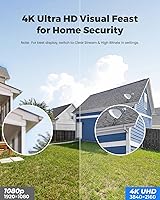
Image Clarity
93%
Owners who switched from 1080p cameras frequently describe the jump in detail as immediately obvious — license plates at the end of a driveway, faces near a front door, even fine text on packages become legible in ways older cameras could not manage. Daytime footage in particular draws consistent praise for color accuracy and sharpness.
A small but vocal group of buyers note that in very bright backlit conditions, such as a camera pointing toward a sunrise or a reflective garage door, dynamic range struggles and highlights blow out. This is a sensor limitation rather than a firmware issue, so it is unlikely to improve.
Night Vision Performance
78%
22%
In typical residential environments with some ambient light from streetlamps or porch lights, the infrared night vision holds up well out to roughly 60 to 70 feet. The IR-cut filter does its job cleanly, and footage avoids the overexposed, washed-out look that cheaper cameras produce around reflective surfaces.
The advertised 100-foot range is optimistic in genuinely dark conditions — users monitoring rural driveways or unlit lots report that useful detail fades noticeably beyond 70 feet. A few owners also flag that the IR illuminators can create a slight halo effect on close-up subjects directly in front of the dome.
Smart Detection Accuracy
74%
26%
Running detection directly on the camera rather than in the cloud means alerts arrive quickly, and the human versus vehicle classification genuinely reduces the flood of irrelevant notifications that plague motion-only cameras. Most users monitoring driveways or walkways report a meaningful drop in false alarms once the system is properly tuned.
Getting there takes patience. Detection zone configuration is not intuitive, and out of the box the sensitivity defaults often trigger on passing car headlights or shifting shadows at night. Several long-term owners note it took multiple evenings of adjustment before the alerts became reliably useful rather than annoying.
Installation Experience
82%
18%
For anyone already comfortable running Ethernet cable, the single-cable PoE setup is genuinely straightforward — power and video over one line removes a real headache. The included mounting template and hardware are practical, and the Reolink app walks through initial configuration without demanding technical knowledge.
The critical catch that trips up a surprising number of buyers: this camera requires a PoE switch or NVR to function — it does not include one, and it is easy to miss in the product listing. First-time PoE buyers who overlook this face an unexpected additional purchase before the camera works at all.
Build Quality & Durability
88%
The metal aluminum dome housing feels meaningfully more solid than the plastic shells found on similarly priced competitors. Owners in climates with heavy rain, freezing winters, and hot humid summers consistently report no degradation in performance or appearance after a year or more of outdoor exposure.
The dome cover can accumulate water spots and fine dust that are difficult to clean without removing the camera entirely. A handful of users in coastal or high-humidity environments noted minor surface oxidation on the mounting bracket after extended exposure, though the camera electronics remained unaffected.
App & Remote Access
71%
29%
Live view loads reliably on both iOS and Android, and push notifications for detected events reach phones promptly. Reviewing recorded clips remotely works well on a decent mobile connection, and the desktop client on Windows and macOS gives users more granular control over recording schedules and detection settings.
The app interface has a learning curve that frustrates less technical users, particularly around multi-camera management and setting up motion zones. Several reviewers also noted that app updates occasionally reset custom notification preferences, requiring users to reconfigure settings they had already dialed in.
Storage Flexibility
84%
The ability to record locally to a microSD card, push footage to a Reolink NVR, or back up to an FTP server gives buyers genuine options depending on their setup. No cloud subscription is required for any of these — a point owners who have migrated away from subscription-dependent brands mention repeatedly as a deciding factor.
The microSD card is not included, and at 4K with 24/7 recording enabled, even a 256GB card fills faster than some buyers anticipate. Users who want continuous recording without gaps need to either invest in a large card or pair the camera with an NVR, adding cost that is not always obvious from the product page.
Video Compression Efficiency
86%
H.265 encoding makes a tangible difference in how long recordings last on a given storage volume — owners report getting roughly twice the footage versus H.264 cameras at comparable quality. For anyone running 24/7 continuous recording, this directly translates to fewer interruptions and less frequent card management.
H.265 playback requires a reasonably modern device and media player, and a few users on older computers reported choppy playback when scrubbing through footage locally. This is a compatibility issue on the playback side rather than a flaw in the camera, but it catches some buyers off guard.
Weather & Environmental Resistance
91%
The IP67 rating holds up in practice. Owners in the Pacific Northwest, the Gulf Coast, and northern climates with hard freezes all report consistent operation through extended bad weather. Rain, snow, and high summer temperatures have not produced hardware failures in the majority of long-term user reports.
Direct prolonged sun exposure on the dome lens can cause subtle image quality shifts in very high temperatures, with a small number of users in Arizona and similar climates noting occasional fogging inside the dome after extreme heat cycles. This appears to be uncommon but worth noting for desert-climate buyers.
Value for Money
87%
For a wired 4K camera with on-device AI detection, no subscription requirement, and solid build quality, the RLC-820A sits at a price point that is hard to argue with. Buyers who have compared it against name-brand alternatives at higher prices frequently conclude that the image quality and feature set justify the purchase without hesitation.
The total cost of ownership rises once you factor in the required PoE switch or NVR, a microSD card, and potentially professional cable installation. Buyers entering PoE for the first time can find that the all-in cost is noticeably higher than the camera price alone suggests.
Firmware & Long-Term Support
73%
27%
Reolink has maintained firmware updates for the RLC-820A well beyond the typical support window for mid-range cameras, adding features like refined detection sensitivity controls and NVR compatibility improvements after launch. Long-term owners who have stayed current on updates generally report a more polished experience than early buyers encountered.
Firmware update history is not without friction — a portion of owners report that certain updates introduced new bugs or changed default settings without clear changelogs. Customer support responsiveness for firmware-related issues has been inconsistent, with some users waiting weeks for meaningful technical assistance.
Field of View
76%
24%
The 87-degree horizontal field of view covers a typical driveway width or single-entry doorway comfortably without excessive fisheye distortion at the edges. For fixed-point monitoring of a specific zone — a gate, a side door, a parking bay — the framing feels well-matched to real-world use cases.
Users hoping to cover a wide open area like a large backyard or a full parking lot with a single camera will find the 87-degree view limiting. There is no optical zoom, and the fixed 4mm lens cannot be adjusted, so placement decisions are more critical than with cameras that offer variable focal length.
Wired Reliability
94%
The absence of Wi-Fi dependency is a genuine operational advantage. Owners who previously dealt with wireless cameras dropping connection during storms, during router reboots, or when the signal was degraded by construction or neighbors report that switching to a wired setup like the RLC-820A eliminated that category of problem entirely.
The obvious trade-off is installation permanence — running Ethernet cable through walls, attics, or exterior conduit is a commitment that wireless cameras do not require. Renters, those in multi-story homes with difficult cable runs, or buyers who want to reposition cameras seasonally will find the wired-only design a real constraint.
Audio Recording
62%
38%
The built-in microphone does capture ambient sound and is useful for confirming what was happening during a recorded event — voices, vehicles, or other contextual audio that pure video footage misses. For basic situational awareness, it adds a layer of useful information without requiring any additional setup.
Audio quality is decidedly utilitarian. Wind noise is a persistent issue outdoors, and voices beyond a few feet become difficult to understand clearly. Owners who need audio evidence for insurance or legal purposes should not rely on this camera's microphone as a primary source — it supplements video rather than standing on its own.

Suitable for:

The Reolink RLC-820A 4K PoE Dome Security Camera is a strong match for homeowners and small business owners who are ready to commit to a wired surveillance setup and want genuinely useful footage — not just a camera that checks a box. If you are monitoring a driveway, a parking area, a side gate, or a storefront entrance where being able to identify faces or read a license plate actually matters, the 4K resolution earns its place in a way that cheaper 1080p cameras simply cannot. It works particularly well for buyers building out a multi-camera Reolink NVR system, since everything integrates cleanly under one app without subscription fees or third-party cloud dependency. People who have been burned by wireless cameras dropping connection during storms or router reboots will appreciate that a wired connection removes that entire category of frustration. If you want local control over your footage, no monthly bills, and hardware that holds up through genuine outdoor conditions year-round, this PoE dome camera delivers consistently.

Not suitable for:

The Reolink RLC-820A 4K PoE Dome Security Camera is the wrong choice for anyone expecting a true plug-and-play experience without additional hardware — you will need a PoE switch or a compatible NVR to power it, and that cost is separate. Renters, or anyone who cannot run Ethernet cable through walls or ceilings, should look elsewhere, since the wired-only design is a permanent installation commitment that wireless cameras simply do not require. If your priority is wide-area coverage of a large backyard or open lot, the fixed 87-degree lens and lack of optical zoom mean one camera will not be enough, and you will need multiple units. Buyers hoping for crisp, reliable footage in completely unlit environments at distances beyond 70 feet may also find the real-world night vision performance falls short of expectations. Anyone wanting a camera that works independently without any supporting network infrastructure, or who needs audio evidence of broadcast quality, should reconsider before purchasing.
Specifications

  • Resolution: Records at 3840x2160 (8MP 4K) at 25 frames per second for sharp, detailed footage.
  • Image Sensor: Uses a 1/2.49-inch CMOS sensor with an IR-cut filter for accurate color reproduction in daylight.
  • Lens: Fixed 4.0mm lens with an f/2.0 aperture provides an 87-degree horizontal field of view without distortion.
  • Night Vision: Infrared night vision reaches up to 100ft, switching automatically between color and monochrome based on ambient light.
  • Video Compression: H.265 encoding reduces file size by roughly half compared to H.264 without a visible drop in image quality.
  • Smart Detection: On-device AI classifies motion events as human or vehicle, filtering out irrelevant triggers like animals or blowing leaves.
  • Power Input: Powered via IEEE 802.3af Power over Ethernet at 48V — no separate power adapter or outlet is required.
  • Connectivity: Single RJ45 Ethernet port supporting 10M/100Mbps wired connection handles both power delivery and video transmission.
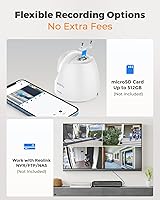
  • Storage Options: Supports local recording to a microSD card up to 256GB (not included), a compatible Reolink NVR, or an FTP server.
  • Weather Rating: IP67-rated housing is fully dustproof and withstands water immersion, making it suitable for year-round outdoor use.
  • Housing Material: Constructed from metal aluminum for impact resistance and long-term durability in exposed outdoor environments.
  • Dimensions: Measures 5.51 x 5.51 x 5.51 inches, making it a compact dome unit suited for ceiling or soffit mounting.
  • Weight: Weighs 1.25 pounds including the dome housing, which is manageable for single-person ceiling installation.
  • Mounting Type: Designed for ceiling or overhead screw-in installation using the included mounting template and hardware pack.
  • OS Support: Compatible with Windows and macOS via the Reolink Client desktop app, and iOS and Android via the Reolink mobile app.
  • Recording Modes: Supports continuous 24/7 recording, motion-triggered recording, and scheduled recording based on user-defined time windows.
  • NVR Compatibility: Works with select Reolink NVR models running the latest firmware, including the N7MB01, N6MB01, N5MB01, H3MB18, and N3MB01.
  • In the Box: Package includes the camera unit, a 1-meter network cable, mounting template, screw pack, waterproof lid, surveillance sticker, and quick start guide.

Related Reviews

Reolink RLC-833A 4K PoE Security Camera
83%
93%
Image Quality
89%
Optical Zoom Performance
91%
Night Vision & Spotlight
74%
Smart Detection Accuracy
88%
Build Quality & Weatherproofing
More
Reolink RLC-811A 4K PoE Security Camera
78%
91%
Image Clarity & Resolution
86%
Optical Zoom Performance
78%
Night Vision & Spotlight Quality
74%
AI Detection Accuracy
83%
Installation & PoE Setup
More
Reolink RLC-81PA PoE Bullet Security Camera
79%
92%
Daytime Image Quality
74%
Night Vision Performance
67%
Auto Tracking Reliability
78%
Smart Detection Accuracy
61%
Installation Experience
More
Reolink RLC-840A 4K PoE IP Security Camera
85%
91%
Video Quality
88%
Night Vision Performance
87%
Setup and Installation
85%
Smart Detection Accuracy
93%
Durability (Weatherproof/Vandalproof)
More
Reolink RLC-520A PoE Dome Security Camera
79%
88%
Image Clarity
82%
Night Vision Performance
74%
Smart Detection Accuracy
91%
Installation Experience
63%
Field of View Coverage
More
Reolink RLC-810WA 4K Outdoor Security Camera
78%
91%
Video Quality
86%
Night Vision Performance
83%
Smart Detection Accuracy
74%
Wi-Fi Connectivity & Stability
88%
Build Quality & Weatherproofing
More
Reolink CX820 4K PoE Security Camera
79%
93%
Color Night Vision Quality
88%
Image Clarity & Resolution
79%
AI Detection Accuracy
84%
Low-Light Sensitivity (Passive)
81%
Build Quality & Weather Resistance
More
Reolink RLC-823S1W PTZ Security Camera
76%
92%
Image Quality
88%
Night Vision Performance
86%
PTZ Mechanics
78%
Auto-Tracking
89%
Optical Zoom & 3D Zoom
More
Reolink RLC-1240A 12MP Vandalproof PoE Security Camera
79%
93%
Image Clarity
81%
Night Vision Performance
58%
Frame Rate
91%
Vandal & Weather Resistance
77%
Smart Detection Accuracy
More
Reolink RLC-823S2 PTZ Security Camera
79%
93%
Optical Zoom Quality
91%
Image & Video Clarity
88%
Night Vision Performance
79%
Pan, Tilt & Auto-Tracking
74%
Smart Detection Accuracy
More

FAQ

You will need a PoE switch or a compatible Reolink NVR to power the camera — neither is included. Think of a PoE switch like a powered router for cameras: it sends both electricity and data through a single Ethernet cable to the camera. You will also want a microSD card if you plan to record locally, as that is not included either.

It works perfectly as a standalone camera connected to any standard PoE switch. You can record directly to a microSD card inserted into the camera itself, or back up to an FTP server if you have one set up. The Reolink NVR is optional and mainly useful if you want centralized management across several cameras.

It is genuinely useful but not flawless out of the box. Most owners find it significantly reduces junk alerts compared to basic motion detection, but you will likely spend some time in the first week tuning the detection zones and sensitivity to match your specific environment. A camera pointed at a busy street, for example, needs more careful zone setup than one aimed at a private driveway.

At close to medium range — roughly 30 to 50 feet — yes, under typical conditions with some ambient light. In truly pitch-black environments, reliable plate or face detail starts to fade beyond about 60 to 70 feet, despite the 100-foot spec. If nighttime identification at longer distances is critical for your setup, you may want to add a supplementary light source near the camera.

The Reolink RLC-820A 4K PoE Dome Security Camera uses the RTSP protocol, which means it can technically be added to third-party NVR systems and platforms like Synology Surveillance Station that support RTSP streams. That said, smart detection features and some advanced settings may only function fully within the Reolink app or NVR ecosystem, so third-party integration is possible but not guaranteed to be feature-complete.

That depends heavily on your recording mode and how much motion activity the camera sees. With continuous 24/7 recording at 4K, a 256GB card typically lasts around four to six days before looping. If you switch to motion-triggered recording only, you can stretch that considerably — some users report two to three weeks on a quiet residential driveway.

The metal construction is meaningfully more durable than plastic dome cameras, and it holds up well against incidental impact and weather abuse. It is not rated for deliberate vandal resistance in the way that IK10-certified cameras are, however, so if physical tampering is a serious concern for your location, you may want to pair it with tamper-alert settings in the app and consider mounting height carefully.

No subscription is required for any of the core features, including motion detection, smart detection alerts, and local recording to a microSD card or NVR. Cloud storage is an optional paid feature if you want off-site backup, but the camera is fully functional without it — which is one of the more compelling reasons buyers choose this Reolink outdoor camera over subscription-dependent brands.

Yes, remote access works through the Reolink app on iOS and Android, as well as the desktop client on Windows and macOS. As long as your camera is connected to the internet via your home network, you can view live streams, receive motion alerts, and review recorded clips from anywhere. Most users find remote access reliable, though playback speed over a cellular connection depends on your phone signal quality.

The camera itself is straightforward to mount — the included template and screws are practical, and the dome is light enough to handle alone. The trickier part for non-technical buyers is running the Ethernet cable from the camera location back to a PoE switch or NVR, which may involve drilling through walls or routing through a ceiling. If you are comfortable with basic DIY tasks, it is manageable; if not, a one-time handyman visit to run the cable is a reasonable option.

Where to Buy