Overview

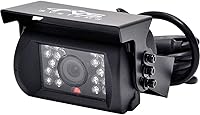
The Rear View Safety RVS-771 Backup Camera has been on the market since 2009 — a notably long run for any piece of vehicle electronics, and a quiet indicator that it holds up where cheaper options fail. Designed specifically for large commercial vehicles rather than passenger cars, this commercial backup camera sits in a mid-to-premium price range that reflects its professional-grade build. It is not the cheapest option available, and it does not try to be. With a 4.0-star average across 51 ratings, the consensus is generally positive — enough satisfied buyers to trust it, but a sample size too small to call it universally flawless.
Features & Benefits

The 1/3-inch CCD sensor is a meaningful differentiator here. Most budget cameras rely on CMOS sensors that struggle with contrast and low-light conditions. With 620 TV lines, the image from this rear-view safety camera is noticeably sharper — useful when judging the gap between your bumper and a loading dock or another vehicle. The 130-degree wide-angle lens covers a broad rear zone without constant repositioning, which matters on wide commercial trailers. The 18 infrared LEDs activate automatically in darkness, removing any manual fuss at night. An IP69K waterproof rating means it handles pressure washing, road spray, and constant vibration. The included 66-foot RCA cable reaches the front cab of most large vehicles without splicing.

Best For

This rear-view safety camera is a natural fit for RV owners and full-timers who need rear visibility they can actually rely on, rather than a camera that technically works. Fleet managers equipping commercial trucks, charter buses, or delivery vehicles will appreciate the rugged build and the fact that one unit can survive years of daily use. It also makes strong sense for anyone towing a large trailer, where a narrow rearward view is not just inconvenient but genuinely dangerous. If you already have a monitor with RCA inputs installed, the RVS-771 connects directly without additional adapters. It is equally a solid choice for anyone who has burned through a cheap camera and wants something built for durability.

User Feedback

Among buyers who have left reviews, image clarity draws the most consistent praise — especially from those upgrading from cheaper units who noticed an immediate difference. Night vision gets positive mentions too, though IR range has real limits: close-range obstacles show up well, but do not expect it to illuminate a pitch-dark scene at distance. Installation feedback is mixed on the hardware side; the 66-foot cable is appreciated for long vehicles, but a few buyers found the mounting bracket less sturdy than expected. The RCA connector has not caused widespread compatibility issues, though it is an older interface standard that rules out HDMI-only displays. Long-term durability reports are encouraging and broadly match the IP69K rating claims.

Pros

  • CCD sensor delivers noticeably sharper images than most CMOS-based cameras at this price tier.
  • The 130-degree lens covers the full rear width of trailers and wide commercial vehicles.
  • IP69K waterproof housing survives pressure washing, heavy rain, and constant road vibration.
  • Infrared LEDs activate automatically in low light, removing any manual switching at night.
  • Included 66-foot cable reaches the front cab of most large vehicles without custom wiring.
  • Has been commercially available since 2009, indicating a product that has proven its reliability over time.
  • Surface-mount design installs cleanly on the flat rear panels of buses, box trucks, and trailers.
  • Buyers upgrading from budget cameras consistently report a clear and immediate improvement in image quality.
  • Direct RCA plug-and-play connection works with a wide range of existing commercial monitors.
  • Solid long-term durability reports from buyers align with the camera's professional-grade build claims.

Cons

  • The RCA connector is an older interface standard that will not work with modern HDMI-only or digital-input displays.
  • Mounting bracket hardware has been flagged by some buyers as less robust than the camera body itself.
  • Night vision range is limited to close-range obstacles; distant objects in complete darkness remain hard to see.
  • At 2 pounds and 4 x 4 x 3 inches, it is bulkier than compact passenger-car backup cameras.
  • With only 51 total ratings, the review pool is too small to draw firm conclusions about long-term failure rates.
  • No wireless option is available, requiring cable routing through the full vehicle length.
  • Priced at a level that is hard to justify for light-duty or occasional personal use.
  • No built-in display is included; buyers must source a compatible monitor separately.
  • The auto-IR activation, while convenient, cannot be manually overridden for daytime use in shadowed areas.

Ratings

Our AI-generated scores for the Rear View Safety RVS-771 Backup Camera were built by analyzing verified buyer reviews from multiple global sources, with spam, incentivized, and bot-flagged submissions actively filtered out before scoring. Each category reflects the honest distribution of real user experiences — strengths are credited where they are earned, and recurring pain points are weighted fairly rather than buried. The result is a transparent, balanced picture of where this commercial backup camera genuinely delivers and where it falls short.

Image Clarity
83%
Buyers who switched from budget CMOS cameras consistently described the CCD sensor as a clear step up, particularly when backing into tight spots or reading distance cues on a loading dock. The 620 TV-line output holds up well in daylight and well-lit conditions.
A small segment of users felt the image softened in overcast or heavily shadowed conditions. While strong relative to cheap alternatives, it does not approach the sharpness of higher-resolution digital camera systems entering the market.
Night Vision Performance
71%
29%
For close-range reversing — backing into a campsite, aligning with a dock, or clearing a curb at night — the 18 auto-activating IR LEDs give drivers a usable picture without any manual input. That automatic activation earned specific praise from RV users who valued the convenience.
Distance is the consistent limitation: objects beyond roughly 15 to 20 feet in complete darkness lose meaningful detail. Buyers expecting the infrared system to illuminate a wide, open lot were often disappointed, and a few felt the IR range was overstated relative to real-world conditions.
Build & Weather Resistance
91%
The IP69K rating is not just a number here — buyers operating in demanding environments, including fleet vehicles that get pressure washed regularly, reported the housing holding up without moisture intrusion or deterioration over extended periods. The overall body feels substantial and purpose-built.
The mounting bracket is the one weak point in an otherwise solid build. Several users flagged it as noticeably less rugged than the camera unit itself, and a few replaced it with heavier-duty aftermarket hardware for permanent commercial installation.
Viewing Angle
86%
The 130-degree wide-angle lens was one of the most consistently praised aspects, especially among drivers of wide trailers and buses who noted that it eliminated the narrow rear blind zones that made maneuvering in tight spaces genuinely stressful. Coverage feels appropriately broad for commercial use.
Some users noted the wide angle introduces the expected edge distortion common to lenses in this range, which can make distance judgment at the periphery slightly misleading. It is a known trade-off of wide-angle optics rather than a defect, but new users should factor it in.
Installation Experience
74%
26%
The 66-foot RCA cable was widely appreciated, with most full-size RV and truck owners confirming it reached from rear to front cab without splicing or extensions. The surface-mount design is straightforward for anyone with basic wiring experience and standard tools.
First-time installers without prior automotive wiring experience found the process more involved than expected, particularly routing the cable cleanly through a cab interior. Instructions included in the box were described by multiple buyers as minimal, requiring supplemental guidance from online resources.
Connector Compatibility
62%
38%
For buyers with RCA-input monitors already installed — which describes a large portion of the commercial fleet and RV market — the connection is entirely plug-and-play with no adapters or configuration required. That simplicity has real value for fleet operators standardizing across multiple vehicles.
RCA is aging technology, and a growing share of buyers discovered their newer monitors only accept HDMI or proprietary digital inputs after the camera arrived. There is no built-in adapter or conversion option included, which creates friction for anyone upgrading both camera and display simultaneously.
Cable Quality
68%
32%
The included 66-foot cable covers the length requirements of most large commercial vehicles without needing a third-party purchase, which reviewers acknowledged as a genuine convenience that budget cameras rarely offer. For straightforward installs, it performs adequately.
A handful of users reported connector corrosion or signal degradation over time, particularly in high-humidity environments. The cable itself is functional but not shielded at the premium level some commercial operators expected given the overall price point of the system.
Mounting Hardware
58%
42%
The surface-mount bracket works as intended for basic flat-panel installation on trailers, box trucks, and bus rear panels. For a clean, permanent single-vehicle install, most users got it fitted without complications using the included fasteners.
The bracket material drew repeated criticism as the most underspecified component in the package. Commercial operators running vehicles in rough conditions reported flex and loosening over time, and several replaced the stock hardware with stainless steel alternatives to match the durability standard of the camera itself.
Value for Money
76%
24%
Buyers who understood they were purchasing a commercial-grade CCD camera with genuine IP69K protection consistently felt the price was justified. Relative to OEM replacement cameras for RVs or the cost of professional installation with a lesser unit, the overall package holds up well on a cost-per-year basis.
For buyers who primarily need occasional backup visibility on a personal vehicle, the price is difficult to justify against capable consumer-grade alternatives available at a fraction of the cost. The value equation depends almost entirely on the severity of the use case.
Long-Term Durability
81%
19%
The product has been on the market since 2009 without being discontinued, and longer-term reviewers — those writing a year or more after purchase — generally reported the camera still functioning without housing failure or image degradation. That track record carries weight in a safety-critical category.
The sample of verified long-term reviews is limited given the total review count of 51, which means durability confidence is directionally positive but statistically thin. A small number of buyers reported unit failures inside the first year, though these were not the dominant pattern.
Night Vision Activation
78%
22%
Automatic IR activation was consistently described as one of the more practical design decisions in the RVS-771. Drivers do not need to touch a switch when conditions shift — the camera reads available light and adjusts on its own, which reduces cognitive load during reversing.
The automatic threshold cannot be manually overridden, which became a frustration for users backing under covered structures or deeply shaded areas during daylight hours where forced IR mode would have been helpful. A manual override option would make the system more versatile.
Vehicle Compatibility
84%
The 12V surface-mount design covers an extremely wide range of commercial vehicle types — Class A motorhomes, semi-trucks, charter buses, and enclosed trailers all fall within its intended scope. Buyers across all these categories reported functional, clean installs without modification.
Vehicles running 24V electrical systems require a step-down converter that is not included and adds to the total cost. Passenger car owners who purchased the camera without fully checking fitment often found it physically oversized and awkwardly positioned on smaller rear panels.
Setup Documentation
51%
49%
For buyers with prior automotive electronics experience, the physical setup is intuitive enough that documentation gaps do not create real problems. The RCA connection standard is universally understood, and the mounting pattern is conventional.
For less experienced buyers, the thin documentation was a recurring complaint. Several reviewers noted they had to search for third-party video guides to complete the install confidently, which is a meaningful gap for a product sold at this price tier to commercial operators who may not have specialist technicians on hand.

Suitable for:

The Rear View Safety RVS-771 Backup Camera was built with a specific kind of driver in mind: someone operating a large, wide vehicle where a bad reverse maneuver has real consequences. Full-time RV travelers and seasonal road-trippers benefit immediately from the wide rear coverage and automatic night vision, especially when backing into campsites with uneven terrain and poor lighting. Fleet managers running commercial trucks, charter buses, or delivery vans will find the rugged IP69K-rated housing holds up to daily punishment, including pressure washing during routine vehicle maintenance. Drivers who regularly tow large trailers — horse trailers, enclosed cargo, boat trailers — gain a meaningful safety advantage from the 130-degree field of view that covers blind zones a standard mirror simply cannot reach. If you already have a monitor with RCA inputs installed in your cab, this camera slots in without any extra hardware, making it an especially efficient upgrade for those replacing an older or failed unit.

Not suitable for:

The Rear View Safety RVS-771 Backup Camera is not the right call for every buyer, and being clear about that matters more than making a sale. Drivers of standard passenger cars or compact SUVs will find the camera physically oversized, priced beyond what the use case justifies, and unnecessarily complex for a vehicle that likely has factory camera options available. Anyone with a modern display that only accepts HDMI or digital inputs will run into a compatibility wall immediately, since the RCA connector has no workaround without additional signal converters. Buyers expecting wide-area night vision — the kind that illuminates a large dark lot or a full parking area — will likely be disappointed; the infrared system works well at close range but has genuine limits at distance. Those on a tight budget who need only occasional rear visibility for light-duty use will likely find better value in simpler, lower-cost alternatives designed for casual rather than commercial use.

Specifications

  • Brand: Manufactured by Rear View Safety, a company specializing in commercial vehicle visibility systems.
  • Model: The model number is RVS-771, used for identification and compatibility reference.
  • Sensor Type: Uses a 1/3-inch CCD optical sensor, which provides more reliable image quality in varied lighting than comparable CMOS sensors.
  • Resolution: Captures video at 620 TV lines, delivering clear and detailed rear imagery suitable for commercial driving use.
  • Viewing Angle: Equipped with a 130-degree wide-angle lens that provides broad rear coverage across the full width of large vehicles.
  • Night Vision: Features 18 built-in infrared LEDs that activate automatically when ambient light drops, enabling hands-free low-light visibility.
  • Waterproof Rating: Rated IP69K, the highest available ingress protection rating, meaning it withstands high-pressure water jets, heavy rain, and vibration.
  • Cable Length: Includes a 66-foot RCA cable in the box, sufficient to run from the rear of most full-size commercial vehicles to the front cab.
  • Connector Type: Connects via RCA interface, compatible with any monitor or display unit that accepts a standard RCA video input.
  • Mounting Style: Designed for surface mounting, suitable for flat or near-flat rear panels on trailers, buses, box trucks, and RVs.
  • Operating Voltage: Operates on 12V DC power, standard across most commercial trucks, RVs, trailers, and large passenger vehicles.
  • Dimensions: The camera body measures 4 x 4 x 3 inches, making it a physically substantial unit intended for permanent external installation.
  • Weight: Weighs 2 pounds, reflecting the durable housing construction rather than lightweight consumer-grade materials.
  • Color: Available in black, suited for unobtrusive installation on the rear exterior of most commercial vehicle types.
  • Compatible Vehicles: Officially compatible with RVs, semi-trucks, trailers, buses, and other large commercial or recreational vehicles.
  • Availability: First listed in August 2009 and has remained continuously available, indicating an actively supported product line.

Related Reviews
Auto-Vox T1400AW 4.3″ Wireless Mirror Backup Camera
79%
91%
Ease of Installation
88%
Signal Stability
71%
Night Vision Performance
59%
Image Resolution
82%
Display Quality
More
Pyle PLCM7700 7″ Backup Camera System
69%
81%
Value for Money
78%
Installation Ease
62%
Camera Image Quality
54%
Night Vision Performance
61%
Monitor Display Quality
More
AUTO-VOX T9 9.35″ Rear View Mirror Camera
79%
88%
Image Clarity
83%
Night Vision Performance
91%
Display Size & Usability
58%
Installation Experience
79%
Build Quality & Finish
More
AUTO-VOX V5PRO 9.35″ Mirror Dash Cam
77%
88%
Image Quality
74%
Night Vision Performance
58%
Installation Experience
86%
Display & Touch Screen
83%
Build Quality & Fit
More
KOUENOM P12 4K Mirror Dash Cam
76%
83%
Video Quality (Daytime)
67%
Night Recording Performance
88%
Screen & Display
79%
CarPlay & Android Auto Integration
91%
Ease of Installation
More
QOZ V969 Mirror Dual Dash Camera
74%
83%
Video Clarity – Front
74%
Video Clarity – Rear
81%
Night Vision & Low-Light Performance
86%
Touchscreen Usability
62%
ADAS & Driver Assistance Accuracy
More
Boscamplus RC04 4K Mirror Dash Cam
76%
83%
Image Quality (Front Camera)
71%
Image Quality (Rear Camera)
76%
Wireless CarPlay & Android Auto
81%
Touchscreen Responsiveness
88%
Installation & Setup
More
PARKVISION BK-436 Bicycle Rear View Camera
86%
96%
Installation Ease
91%
Image Clarity (1080p)
88%
Night Vision Performance
89%
Battery Life
86%
Durability (Waterproof & Build Quality)
More
YEOIZO Wireless Magnetic Backup Camera
74%
93%
Ease of Installation
71%
Wireless Connectivity & Stability
74%
Image Quality
78%
Night Vision Performance
62%
Battery Life
More
Pelsee P10 Plus 4K Mirror Dash Cam
75%
88%
Daytime Video Quality
67%
Night Vision Performance
78%
ADAS Safety Alerts
73%
Blind Spot Detection
84%
Display & Touchscreen
More

FAQ

It works with any monitor or screen that has a standard RCA video input. If your display only has HDMI or proprietary digital inputs, you would need a separate signal converter, which adds cost and complexity. For anyone with an existing RCA-compatible monitor already in the cab, it is a direct connection with no adapters required.

For most full-size setups it is sufficient, but it depends on your specific vehicle length and routing path. A typical Class A motorhome or standard semi-truck cab-to-rear run is usually well within 66 feet. If you are running cable through interior conduits or along a longer trailer, measure your route first before assuming the included cable will reach.

The 18 infrared LEDs do a solid job illuminating close-range obstacles — vehicles, curbs, loading docks, and people within roughly 15 to 20 feet show up clearly. Beyond that range in complete darkness, detail starts to fade. It is genuinely useful for backing into campsites or docking at night, but it is not a floodlight replacement for large unlit areas.

The camera is rated for 12V DC operation only. If your vehicle runs a 24V electrical system, as some heavy-duty European trucks do, you would need a step-down voltage converter to use it safely without risking damage to the unit.

It uses a surface-mount bracket design intended for flat rear panels. Basic mounting hardware is included, though some buyers have noted the bracket feels less heavy-duty than the camera body itself. For permanent commercial installation, you may want to supplement with higher-grade fasteners depending on the surface material.

Yes, the IP69K rating is specifically designed for high-pressure, high-temperature water exposure, which is the same standard used in food-industry and heavy equipment applications. Regular pressure washing should not affect the camera housing or internal components, assuming connections are properly sealed during installation.

It activates automatically based on ambient light levels — there is no manual switch involved. When it gets dark enough, the IR LEDs engage on their own. This is convenient for drivers who do not want to manage extra controls, though it does mean you cannot force IR mode on during shaded daytime backing situations.

If your existing monitor has an RCA input, yes — it is a straightforward connection using the included cable. There is no pairing process or configuration required on the camera side. Just run the cable, connect to power, and the feed should display whenever the camera is active.

The main practical differences come down to image sharpness and build quality. The CCD sensor used here produces noticeably better contrast and clarity than the CMOS sensors common in budget units, especially in mixed or low light. The IP69K housing is also a step above the IP67 or IP68 ratings typical of less expensive options. Whether that gap justifies the price difference depends on how hard your environment is and how long you need the camera to last.

Rear View Safety offers product support and has been selling commercial camera systems for many years, which suggests an established support infrastructure. For specific warranty terms and duration, it is best to check directly with the manufacturer or the retailer at the time of purchase, as warranty coverage can vary by channel.