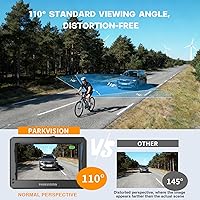
Overview

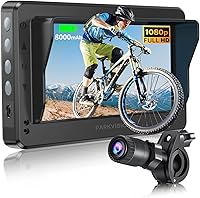
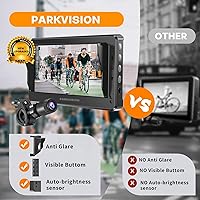
The PARKVISION BK-436 Bike Rear View Camera enters a market where cyclists are increasingly looking for real safety tools rather than just mirrors. Launched in early 2024, it takes a wired approach — no Bluetooth pairing, no smartphone dependency, just a dedicated monitor mounted to your bars and a camera clipped to your seatpost. What sets it apart from a crowded field is its patented sunshade over the monitor, a practical detail most competitors skip entirely. One thing to be clear about upfront: this is a live-view-only device. There is no SD card slot, no recording, no footage to review after a ride. If you want a cycling dashcam, look elsewhere.

Features & Benefits

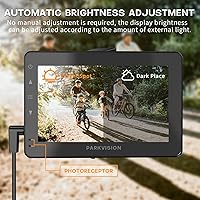
The image quality is legitimately impressive for a bike camera. The wide-angle lens covers enough peripheral ground that you can spot a car pulling up from a full lane over, not just directly behind you. The sunshade deserves real credit — riding into afternoon sun, the screen stays readable where a bare monitor would wash out completely. The auto-brightness adjustment handles shade-to-sunlight transitions without you touching anything. At dusk or under a bridge, the night vision helps you maintain awareness, though it won't produce bright, detail-rich images — think of it as keeping the picture usable rather than spectacular. Battery life is genuinely generous; a full weekend of day rides won't drain it.

Best For

This cycling camera is a strong fit for e-bike commuters who ride fast enough that a quick mirror glance isn't sufficient, or for mountain bikers navigating mixed-use trails where knowing what's behind you prevents collisions. Touring cyclists will appreciate the all-day battery life more than most — no need to hunt for an outlet mid-trip. It also suits anyone who's fed up with phone-mount solutions that require app setup or drain their mobile battery. Urban riders will like that the detachable monitor pops off the bracket in seconds, so you're not leaving an expensive screen on a locked bike. It works across a wide range of frame sizes, fitting most standard setups without adapters.

User Feedback

Buyers generally praise the image sharpness and specifically call out the sunshade as something that actually works — a meaningful validation given how many bike monitors are unusable in direct sun. Installation feedback is mixed: some riders genuinely do get it done in a few minutes, but others with unusual frame geometries report spending more time routing the wire cleanly. Cable management is the most common frustration — on a tidy build, running the cable cleanly from seatpost to handlebar takes real patience. Battery performance in real use tracks reasonably close to the claimed figure. Monitor readability at speed gets positive marks, though riders on particularly rough terrain note occasional vibration affecting the image. Durability reports are promising so far.

Pros

  • The sunshade over the monitor is a genuinely useful feature that keeps the screen readable in direct afternoon sunlight.
  • Image clarity is strong for a bike camera — the wide-angle coverage catches vehicles approaching from a full lane over.
  • Battery life holds up well across a full day of riding without needing a top-up.
  • Tool-free installation is quick for most standard bike setups, with no cables to splice or wiring to modify.
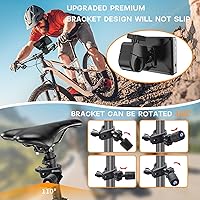
  • The 360-degree ball joint makes camera angle adjustment easy, even mid-ride if needed.
  • Auto-brightness adjustment works smoothly when moving between shaded trails and open roads.
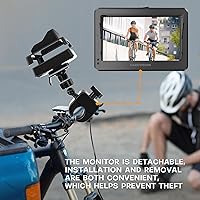
  • The detachable monitor pops off the bracket in seconds — practical when locking up in public spaces.
  • Low-light performance at dusk or in tunnels keeps the image usable rather than going dark or grainy.
  • Wide seatpost and handlebar compatibility means it fits most bikes without needing adapters.
  • No phone or app required — the system works independently, which keeps setup simple and reliable.

Cons

  • There is no recording function at all — this cycling camera cannot capture footage of incidents or close calls.
  • Cable routing from seatpost to handlebar can be time-consuming on bikes with tight or complex frame designs.
  • The wire length may fall short on larger frame sizes, forcing riders to source an extension.
  • Night vision is usable but not impressive — do not expect clear, well-lit images in true darkness.
  • At 1.48 pounds total, the combined weight of camera and monitor is noticeable on lighter road bike setups.
  • The monitor adds bulk to the handlebar area, which some riders find intrusive on narrow cockpit configurations.
  • Wired connections are more durable than wireless but create a vulnerability if the cable snags on trail debris.
  • No waterproof rating is specified, which raises questions about performance during heavy rain or wet commutes.
  • The 3-minute installation claim is realistic only on straightforward setups — expect longer on full-suspension or unconventional frames.

Ratings

The PARKVISION BK-436 Bike Rear View Camera has been evaluated by our AI rating engine after analyzing verified buyer reviews from global markets, with spam, incentivized, and bot-generated feedback actively filtered out. Scores reflect the full spectrum of real rider experiences — from daily urban commuters to weekend tourers — and both standout strengths and recurring frustrations are weighted equally. Where this cycling camera earns trust and where it falls short are both represented transparently below.

Image Clarity
88%
Riders consistently report that the live feed is sharp enough to read a car's position and gauge closing speed in real traffic — not just detect that something is there. The AHD signal transmission keeps the picture stable even on vibrating roads, which cheaper cameras often fail at.
A small portion of reviewers noted that the image can look slightly soft at the edges of the wide-angle field, particularly when viewing at a glance while riding at speed. It is not a dealbreaker, but pixel-peepers expecting DSLR-level sharpness at the periphery will find minor room for complaint.
Sunshade Effectiveness
91%
This is the feature that generates the most unsolicited praise in buyer reviews. Riders who have tried other bike monitors specifically call out how unusable bare screens are in afternoon sun, and how the physical hood on this system changes that entirely. On bright summer days, the screen remains genuinely readable without shielding it with your hand.
The sunshade adds a small amount of bulk to the monitor housing, and a handful of riders with very compact cockpit setups found the overall profile slightly intrusive. It is a minor aesthetic trade-off rather than a functional one, but worth noting for minimalist build preferences.
Battery Performance
83%
For touring cyclists and long-distance commuters, the battery capacity is a genuine differentiator — most riders report getting through a full day of riding without a low-battery warning. Weekend trips requiring two or three consecutive ride days are manageable without access to a charger each night.
Cold-weather riders report a noticeable drop in effective runtime during winter commutes, which is expected for lithium-ion chemistry but worth knowing. A small number of reviewers also noted that the battery indicator is not granular enough to give precise remaining-time estimates, making it harder to plan longer stages.
Installation Ease
76%
24%
On a standard road or hardtail bike with a conventional cockpit, the mounting hardware clicks into place quickly and the overall setup is intuitive without consulting instructions. The tool-free design is legitimate — nothing requires a hex key or screwdriver for a basic install.
The 3-minute claim holds up only on the most straightforward setups. Riders with full-suspension frames, internally routed cables, or crowded handlebars frequently reported spending significantly longer on cable management alone. Getting the wire to sit cleanly without looking improvised takes patience on anything but a simple build.
Cable Management
61%
39%
The cable itself is adequately long for most standard frame sizes, and the included mounting accessories give you enough clips to route it reasonably tidily on a typical build. Riders on simple, externally-cabled bikes reported no real frustration here.
This is the most consistently cited pain point across the review base. On larger frames, the cable length can fall just short, and on complex builds the routing requires improvisation. Several riders noted that the cable is stiff enough to resist clean bends around tight frame junctions, making a truly neat installation genuinely difficult.
Night Vision
69%
31%
At dawn, dusk, and under urban street lighting, the low-light sensitivity keeps the image usable when a standard camera would produce a murky or near-black feed. Commuters riding in the early morning hours specifically mentioned that it helps them maintain rear awareness in conditions where mirrors are nearly useless.
In true darkness with no ambient light source, the image quality drops to a level that is functional but not reassuring. It is better described as low-light tolerant rather than a true night vision system — riders who regularly ride unlit rural roads at night should not expect a bright, detailed picture.
Monitor Readability
81%
19%
The 4.3-inch screen is large enough to register meaningful information at a glance without requiring the rider to stare at it. Most buyers found they could adapt to quick peripheral checks within a few rides, which is the practical test that matters for real cycling use.
On particularly rough terrain — loose gravel, cobblestones, or rooted singletrack — the image vibrates enough to reduce readability during the roughest sections. It is not a constant problem, but it does mean the camera is more reliable as a tool for road and path riding than for aggressive off-road use.
Anti-Theft Design
84%
The detachable monitor is a well-thought-out practical feature for urban cyclists. It pops off in a few seconds without removing any cables, which means the habit of pocketing it when locking up is low-friction enough that riders actually do it consistently.
The camera unit on the seatpost is not quickly removable, so in very high-theft environments it remains a target. The cable itself, if left routed and visible, could also attract tampering. The anti-theft protection is partial rather than comprehensive.
Build Quality
77%
23%
The hardware feels solid for the price tier — the clamps grip firmly without creaking, and the ball joint holds its set angle reliably during normal road riding. Buyers who have owned the system through a full season of commuting reported no structural failures or mounting failures.
The monitor housing has a plastic construction that feels adequate but not premium. Some reviewers noted minor flex in the bracket under hard cornering or trail use, and there is no IP waterproof rating provided, which creates uncertainty about long-term durability for riders in consistently wet climates.
Viewing Angle
86%
The 110-degree field of view is wide enough to cover a full lane on either side when a vehicle is approaching, giving commuters a meaningful heads-up rather than just confirming something is directly behind them. Gravel riders on narrow shared paths found it particularly effective for spotting overtaking cyclists early.
At the far edges of the viewing angle, some barrel distortion is visible, which can make distance estimation slightly unreliable for objects at the extreme periphery. This is a common optical trade-off with wide-angle lenses and not unique to this camera, but it is worth being aware of.
Compatibility
82%
18%
The wide range of supported seatpost and handlebar diameters means this cycling camera fits the vast majority of road, gravel, mountain, and e-bike setups without needing any additional adapters. Buyers with multiple bikes reported successfully swapping it between different builds.
A small subset of riders with non-standard or oversize components — particularly on cargo e-bikes with extra-wide bars — found the upper limit of the bracket range just barely insufficient. It is an edge case, but worth measuring your specific components before purchasing.
Value for Money
78%
22%
For a dedicated, self-contained bike rearview system with a decent-sized monitor, the price lands reasonably relative to the feature set. Buyers who previously spent comparable amounts on phone-based mirror solutions and found them unreliable tend to feel this system represents a clear improvement in value.
Buyers who assumed the price implied recording capability were disappointed to discover the live-view-only limitation after purchase — a mismatch of expectations that reflects poorly on perceived value for that segment. For those who knew what they were buying, satisfaction is much higher.
Ease of Use
87%
Once installed, the day-to-day operation is genuinely simple — power it on, and it works. No pairing process, no app updates, no connectivity issues to troubleshoot mid-ride. Riders who switched from Bluetooth-dependent systems specifically praised the reliability of just pressing a button and having it function.
The control buttons on the housing are functional but not particularly intuitive for first-time users, and the labeling is small. Adjusting settings like brightness manually — when not relying on auto mode — takes a few rides to get comfortable with.
Weight & Portability
72%
28%
The detachable monitor makes the system genuinely portable — you can drop it in a jersey pocket or small bag without much thought. For riders who share a bike or swap between bikes seasonally, the overall form factor is manageable.
At just under 1.5 pounds combined, the total system weight is noticeable on lightweight road bikes where grams matter. Weight-conscious riders building up a performance road setup will likely find it too heavy, even if the functionality is otherwise appealing.

Suitable for:

The PARKVISION BK-436 Bike Rear View Camera is a well-matched choice for cyclists who want a dedicated, self-contained safety device without the hassle of phone mounts or app dependencies. E-bike commuters benefit most, since higher speeds make a wide-angle live feed far more useful than a quick shoulder check in traffic. Gravel and mountain bikers on mixed-use trails will appreciate the situational awareness it adds, especially on blind corners or shared paths where pedestrians appear suddenly. Touring riders get particular value from the generous battery life — a full day of riding typically won't exhaust it, so it's reliable across multi-day trips without hunting for charging spots overnight. Urban cyclists who lock up in public will also find the detachable monitor a smart, practical anti-theft measure. If your priority is simply knowing what's behind you — clearly and reliably — this cycling camera delivers on that in a way most mirrors and phone-based alternatives do not.

Not suitable for:

The PARKVISION BK-436 Bike Rear View Camera is not the right tool for anyone expecting dashcam functionality — there is no storage, no SD card slot, and no way to review footage after a ride. Riders who want to capture incidents or near-misses for insurance or legal purposes need to look at dedicated cycling dashcam systems instead. The wired connection, while stable, is also a genuine consideration for riders with complex frame geometries or full-suspension mountain bikes where cable routing is already crowded and tricky. If you are a minimalist builder who has spent time getting a clean cockpit setup, threading a new cable from seatpost to handlebar without zip ties showing may test your patience. Cyclists who ride primarily in pitch-dark conditions should also temper expectations — the low-light performance helps at dusk and under dim lighting, but it does not produce bright, detailed images the way a camera with active lighting would. Finally, this is not a wireless system, so anyone specifically seeking a cable-free setup should look at wireless alternatives, accepting the trade-offs in signal stability those often carry.

Specifications

  • Brand & Model: Manufactured by PARKVISION under the model designation BK-436.
  • Monitor Size: The dedicated handlebar-mounted display measures 4.3 inches diagonally.
  • Video Resolution: Camera captures and transmits at 1920x1080 pixels using AHD signal format for stable, interference-resistant video.
  • Viewing Angle: The rear-facing lens covers a 110-degree horizontal field of view, reducing blind spots on both sides.
  • Night Vision: Equipped with starlight night vision rated at 0.01 Lux minimum illumination, supporting usable image quality in low-light conditions.
  • Battery Capacity: An integrated 8000mAh lithium-ion battery powers both the camera and monitor without any external power source.
  • Battery Life: Rated for up to 10 hours of continuous use on a single full charge under typical operating conditions.
  • Connection Type: Camera and monitor communicate via a physical AHD signal cable, providing stable transmission without wireless interference.
  • Camera Mount Fit: The seatpost clamp is compatible with post diameters ranging from 17mm to 38mm, covering most standard bike frames.
  • Monitor Mount Fit: The handlebar bracket accommodates bar diameters from 18mm to 42mm, fitting road, mountain, and e-bike cockpits.
  • Camera Joint: A 360-degree rotatable ball joint allows the camera angle to be adjusted freely and locked in position without tools.
  • Sunshade: A patented physical sunshade hood is integrated into the monitor housing to reduce screen glare in direct sunlight.
  • Auto Brightness: The monitor includes automatic brightness adjustment that responds to ambient light changes without manual intervention.
  • Installation: The full system installs tool-free in approximately 3 minutes on compatible standard bike configurations.
  • Monitor Detach: The monitor separates from its handlebar bracket quickly without removing any wiring, allowing it to be pocketed when parked.
  • Storage Function: This device has no onboard storage, memory card slot, or video recording capability — it is a live-view-only system.
  • Weight: The combined system weighs approximately 1.48 pounds including both the camera unit and monitor.
  • Dimensions: The monitor unit measures 3.7 x 2.2 x 0.8 inches, keeping the handlebar footprint reasonably compact.
  • Power Source: One lithium-ion battery is built into the unit and included; no separate batteries or external power cables are required.
  • Availability: The BK-436 was first made available for purchase in January 2024 and is sold under the PARKVISION brand.

Related Reviews
Boscamplus RC04 4K Mirror Dash Cam
76%
83%
Image Quality (Front Camera)
71%
Image Quality (Rear Camera)
76%
Wireless CarPlay & Android Auto
81%
Touchscreen Responsiveness
88%
Installation & Setup
More
QOZ V969 Mirror Dual Dash Camera
74%
83%
Video Clarity – Front
74%
Video Clarity – Rear
81%
Night Vision & Low-Light Performance
86%
Touchscreen Usability
62%
ADAS & Driver Assistance Accuracy
More
AUTO-VOX V5PRO 9.35″ Mirror Dash Cam
77%
88%
Image Quality
74%
Night Vision Performance
58%
Installation Experience
86%
Display & Touch Screen
83%
Build Quality & Fit
More
KOUENOM P12 4K Mirror Dash Cam
76%
83%
Video Quality (Daytime)
67%
Night Recording Performance
88%
Screen & Display
79%
CarPlay & Android Auto Integration
91%
Ease of Installation
More
Pelsee P10 Plus 4K Mirror Dash Cam
75%
88%
Daytime Video Quality
67%
Night Vision Performance
78%
ADAS Safety Alerts
73%
Blind Spot Detection
84%
Display & Touchscreen
More
Rear View Safety RVS-771 Backup Camera
74%
83%
Image Clarity
71%
Night Vision Performance
91%
Build & Weather Resistance
86%
Viewing Angle
74%
Installation Experience
More
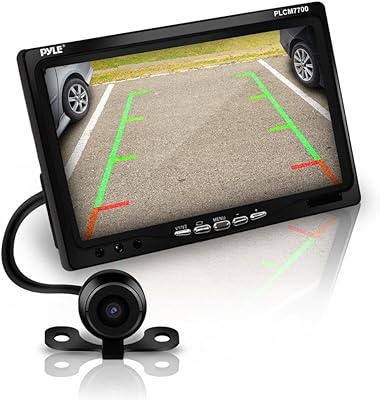
Pyle PLCM7700 7″ Backup Camera System
69%
81%
Value for Money
78%
Installation Ease
62%
Camera Image Quality
54%
Night Vision Performance
61%
Monitor Display Quality
More
Auto-Vox T1400AW 4.3″ Wireless Mirror Backup Camera
79%
91%
Ease of Installation
88%
Signal Stability
71%
Night Vision Performance
59%
Image Resolution
82%
Display Quality
More
AUTO-VOX T2 Rear View Mirror Backup Camera
77%
61%
Image Quality
83%
Night Vision
76%
Installation Ease
78%
Build Quality
88%
Waterproofing
More
AKEEYO NV-X 12″ Mirror Dash Cam
75%
84%
Night Vision Performance
61%
Screen Visibility & Glare
67%
Blind Spot Detection (BSD)
76%
Rear Camera Quality
72%
GPS Accuracy & Data Logging
More

FAQ

It is strictly a live-view system — there is no SD card slot, no internal storage, and no way to save or review footage. If capturing ride incidents is important to you, you will need a separate cycling dashcam. The PARKVISION BK-436 Bike Rear View Camera is designed purely to show you what is behind you in real time, not to document it.

On a standard road or hardtail mountain bike, most riders get the cable routed tidily in under 10 minutes using the included zip ties. That said, full-suspension frames, internally routed bikes, or setups with already-crowded handlebars can make it more involved. Plan for some extra time if your build is anything other than straightforward, and consider picking up a few additional cable clips for a cleaner finish.

Most e-bikes fall well within the supported ranges — the camera clamp fits seatposts from 17mm to 38mm, and the monitor bracket handles handlebars from 18mm to 42mm. Oversized e-bike bars on some cargo or commuter models can occasionally exceed that upper limit, so it is worth measuring your specific bar diameter before purchasing.

At dawn, dusk, or under streetlit roads, the low-light sensitivity keeps the image recognizable and useful — you can identify vehicles and obstacles without straining. In true darkness with no ambient light at all, the image gets noticeably noisier and less detailed. Think of it as enhancing existing light rather than replacing it; it is not a floodlit image in the dark.

Real-world feedback suggests the battery life tracks reasonably close to the rated figure under normal riding conditions. A typical 4 to 6 hour day ride will not exhaust it. Very cold temperatures can reduce effective runtime, as with any lithium-ion battery, so winter commuters may notice a modest drop in endurance.

This is one area where the rearview system genuinely stands out. The physical sunshade hood blocks overhead and angled glare effectively, and the auto-brightness function adjusts the backlight to compensate for changing light. Riders who have tried bare-screen bike monitors in afternoon sun tend to notice the difference immediately.

The camera unit itself is secured to the seatpost and is not designed to be swapped on and off quickly. The monitor, however, detaches from its bracket in seconds without any tools or wiring changes, so you can pocket it while leaving the camera and cable in place. For high-theft areas, that is a sensible routine to get into.

The unit charges via USB, so you can plug it in without removing it from the bike as long as your cable reaches a power source. Charging overnight before a big ride is the most straightforward approach, and the battery capacity means you will not need to do it daily for typical use.

The ball joint locks down firmly once adjusted and holds its angle well on most surfaces. Extremely rough trails with repeated sharp impacts can occasionally cause minor creep over time, but the fix is simply to re-tighten the joint. Most riders set the angle once and do not need to revisit it for regular rides.

No specific IP or waterproof rating is provided for this cycling camera, which is worth factoring in if you regularly ride in heavy rain or wet conditions. Light splashing and drizzle appear to be tolerated based on user reports, but riding through downpours or submerging the unit is not advised. If you commute year-round in a wet climate, this is a genuine limitation to weigh before buying.