PSIER SP10 Real-Time Translator Earbuds


PSIER SP10 Real-Time Translator Earbuds — image 1

PSIER SP10 Real-Time Translator Earbuds — image 2

PSIER SP10 Real-Time Translator Earbuds — image 3
PSIER SP10 Real-Time Translator Earbuds — image 4
PSIER SP10 Real-Time Translator Earbuds — image 5
PSIER SP10 Real-Time Translator Earbuds — image 6
PSIER SP10 Real-Time Translator Earbuds — image 7
73%
27%

Overview

The PSIER SP10 Real-Time Translator Earbuds enter a surprisingly busy corner of the budget tech market — one where bold claims and underwhelming performance often go hand in hand. Launched in August 2025, these open-ear earbuds run on Bluetooth 5.4, which is a genuinely modern spec for something priced this low. PSIER positions the SP10 as a three-in-one device covering translation, music, and phone calls. That is an ambitious pitch. Worth noting upfront: this is a brand-new product with a limited real-world track record, so early impressions should be weighed accordingly. For the target audience — travelers, language students, and international workers on a budget — the premise is at least worth examining closely.

Features & Benefits

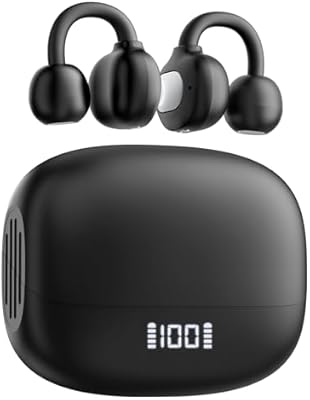
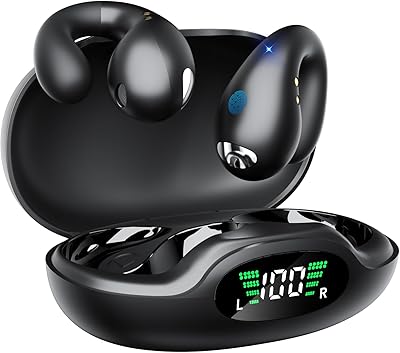
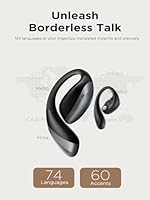
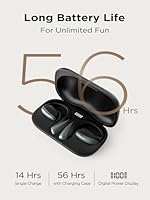
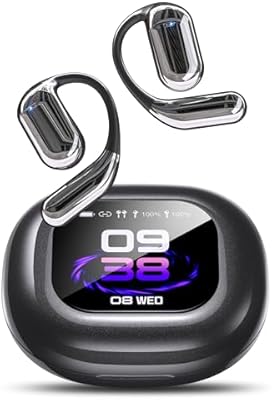
The SP10's headline feature is 134-language translation powered by online AI, with PSIER claiming up to 98% accuracy. Real-world performance will vary considerably depending on the language pair and ambient noise — that figure is best treated as an ideal-condition benchmark rather than a guarantee. Three distinct conversation modes add genuine practical value: hands-free Free Talk for fluid exchanges, a single-earbud handoff mode for quick interactions with strangers, and a standard headphone mode for calls or music. The 56-hour total battery life — 14 hours per earbud plus the case — is a strong number for travel. The LED battery display on the case is a small but useful detail. Music quality is functional, not impressive; the open-ear design prioritizes situational awareness over audio isolation.

Best For

These translator earbuds make the most sense for casual international travelers — people who need to navigate airports, hotels, or local markets without fluency in the local language. Service workers or retail staff who regularly handle quick cross-language exchanges at a counter would find the single-earbud handoff mode particularly useful. Language learners doing immersion-style study can benefit from real-time audio support without staring at a phone screen. One important reality check: the SP10 requires an active internet connection to translate, so it offers little help in rural areas or during flights without Wi-Fi. This translation headset also works as a reasonable first step for budget-conscious buyers curious about the technology before committing to a pricier device.

User Feedback

Since the SP10 only launched in mid-2025, the pool of long-term user feedback is still shallow — worth keeping in mind when reading reviews. Early buyers tend to praise the straightforward app setup and appreciate the absence of ongoing subscription costs. The earbud handoff feature in Translation Machine Mode draws positive reactions for in-person interactions. On the other side, some users flag translation lag in noisier environments, and a few note that accuracy drops noticeably for less common language pairs. Build quality concerns surface occasionally, as expected at this price point. No substantial comparisons with higher-end alternatives dominate early feedback, but buyers generally acknowledge they are getting what the price suggests — a capable entry-level tool with real, honest limitations.

Pros

  • No subscription fees — the companion app is free to download and use on both iOS and Android.
  • Three conversation modes give practical flexibility for different real-world translation scenarios.
  • 56-hour total battery life is genuinely strong for a device at this price point.
  • The LED battery percentage display on the case removes the guesswork before long travel days.
  • Open-ear design keeps you aware of your surroundings, which matters in busy airports or streets.
  • Bluetooth 5.4 is a notably modern connectivity spec for a budget translator earbud.
  • The single-earbud handoff mode makes quick interactions with strangers or service staff feel natural.
  • 134 language and accent options covers a broad range of common travel destinations.
  • Compact case fits easily in a pocket without adding noticeable bulk to a travel bag.
  • QR-code pairing via the app makes initial setup accessible even for less tech-savvy users.

Cons

  • Translation only works with an active internet connection — useless in dead zones or during offline flights.
  • Real-world accuracy for less common language pairs can fall well short of the advertised benchmark.
  • Translation lag in noisy environments has been flagged by early users as a frustrating issue.
  • Build quality feels consistent with the budget price tier, raising questions about long-term durability.
  • Music listening experience is mediocre — the open-ear format simply does not deliver strong audio immersion.
  • The product is too new to have meaningful long-term reliability data from real-world users.
  • High-nuance conversations — medical, legal, or complex business discussions — carry real risk of mistranslation.
  • The app experience, while free, adds a dependency layer that some users may find inconvenient to manage.

Ratings

The scores below for the PSIER SP10 Real-Time Translator Earbuds were generated by our AI after analyzing verified buyer reviews from global markets, with spam, bot-submitted, and incentivized feedback actively filtered out before scoring. Each category reflects the honest distribution of real user experiences — not a sanitized average — so both the genuine strengths and the frustrating limitations are represented transparently.

Translation Accuracy
67%
33%
For common, high-traffic language pairs like Spanish-English or French-English, users report impressively natural-sounding output that holds up well in casual conversation. Travelers navigating tourist environments generally find the accuracy sufficient for practical, low-stakes exchanges.
Accuracy drops noticeably with regional dialects, less common languages, and heavy background noise — situations that real travelers encounter constantly. The advertised 98% figure sets expectations that real-world performance does not reliably meet outside ideal conditions.
Translation Speed
71%
29%
In quiet environments with a strong internet connection, the response latency feels close to natural conversation pace, which users appreciate during one-on-one exchanges in hotels or restaurants. Most early adopters describe the lag as acceptable for relaxed settings.
In crowded or noisy environments — markets, transport hubs, busy offices — translation lag becomes more pronounced and disrupts conversational flow. Users on slower mobile data connections report frustrating delays that make real-time interaction feel stilted.
Ease of Setup
88%
The QR-code pairing system is one of the most consistently praised aspects; users across age groups describe getting up and running within minutes of unboxing. The app interface is clean and approachable, even for buyers who are not particularly tech-savvy.
A small number of users encountered connectivity hiccups during initial Bluetooth pairing that required restarting the app or the earbuds. The reliance on the app means setup is not possible without a compatible smartphone, which is worth noting for older users or those with basic handsets.
Battery Life
86%
Fourteen hours per earbud is a strong number for a budget device, and the 56-hour combined capacity with the case means most travelers can get through a full international trip without hunting for a charger. The LED battery percentage display on the case is a small but genuinely appreciated feature.
The 56-hour total figure requires disciplined use of the charging case between sessions, and actual translation-active usage may draw power faster than standard audio mode. No independent lab verification of battery claims exists for this product yet given its recent launch.
Build Quality
58%
42%
The earbuds feel reasonably solid for the price tier, and the compact charging case has a satisfying snap closure that does not feel cheap. For occasional travel use, the construction appears adequate in early user reports.
Several buyers flag that the plastic finish shows scuffs quickly and the overall feel does not inspire confidence for daily long-term use. Since the product only launched in mid-2025, there is insufficient data to assess how the hardware holds up beyond the first few months of ownership.
Comfort & Fit
74%
26%
The open-ear design works well for extended wear during light activities, and users who dislike the pressure of in-ear or over-ear designs appreciate not having something shoved deep into their ear canal. Fit is generally described as stable for walking and casual use.
During more active movement — jogging, bustling through an airport, or reaching overhead — the earbuds can shift or feel less secure without a canal seal to anchor them. Ear shape varies significantly between individuals, and a small portion of users report the fit feeling loose straight out of the box.
Conversation Modes
79%
21%
The three-mode system is genuinely thoughtful for the intended use cases, and the single-earbud handoff feature draws consistent praise from users who tested it with shop assistants, taxi drivers, or hotel staff. Switching between modes is intuitive enough that most users figure it out without consulting the manual.
Free Talk Mode requires both parties to speak clearly and take turns, which can feel unnatural in fast-moving conversations. A few users report that handing one earbud to a stranger feels socially awkward in practice, even if the feature itself functions correctly.
App Experience
76%
24%
The PSIER app is free, straightforward to navigate, and does not bombard users with upsell prompts or hidden paywalls, which stands out positively compared to some competitors in this category. Language selection and mode switching within the app are quick to access.
The app has a limited review history given the product's recent launch, and long-term stability across OS updates is an unknown. A small number of users report occasional app crashes or lost settings after a phone restart, suggesting the software still has room to mature.
Audio Quality
53%
47%
For phone calls in reasonably quiet environments, the microphone and driver combination performs adequately — voices come through clearly enough to hold a conversation without repeating yourself. The open-ear design does allow ambient sound awareness, which is a practical safety benefit.
Music listening is genuinely underwhelming; the absence of any acoustic seal means bass is thin and audio feels distant. Users who expected a capable music earbud alongside the translation function tend to be disappointed once they test audio playback in a real environment.
Internet Dependency
44%
56%
For users who consistently have reliable mobile data or Wi-Fi access during their travels, the cloud-based approach does deliver more natural and up-to-date translations than older offline systems. Urban travelers and conference attendees with strong connectivity rarely flag this as a problem.
The complete absence of any offline mode is a significant and recurring complaint, particularly among travelers heading to rural destinations, remote areas, or long-haul flights without in-flight Wi-Fi. This single dependency limits the SP10 to connectivity-rich environments, which is a real constraint for the travel use case it targets.
Value for Money
82%
18%
Relative to the feature set offered — multi-mode translation, solid battery life, and a no-subscription model — the SP10 delivers a reasonable return on a modest investment for casual users. Budget travelers who need a low-commitment entry point into translation tech consistently rate the value positively.
Buyers who compare the SP10 to mid-range alternatives after purchase sometimes feel the accuracy and build trade-offs are more significant than the price gap suggested. The value proposition weakens if the product does not hold up past the first year, which remains an open question.
Portability
87%
The charging case is genuinely pocket-sized and one of the more compact form factors in the budget translation earbud category. Frequent travelers repeatedly note that it slips into a jacket pocket or small bag without adding any noticeable bulk.
The lightweight construction that aids portability also reinforces the perception of a fragile device. A few users report minor rattling from the case during transit, which does not affect function but does affect first impressions of product quality.
Language Range
78%
22%
Supporting 134 languages and regional accents covers the vast majority of travel destinations most users will realistically encounter, and the inclusion of accent variants for major languages is a thoughtful detail for travelers visiting diverse regions.
Coverage breadth does not equal coverage depth — performance across those 134 languages is highly uneven, and users attempting to translate less-resourced languages report notably lower accuracy and more frequent mistranslations than the headline number implies.

Suitable for:

The PSIER SP10 Real-Time Translator Earbuds are a practical fit for casual international travelers who want a lightweight translation tool without the bulk or cost of a dedicated handheld device. If you regularly navigate airports, local markets, hotels, or tourist areas where quick phrase exchanges are the norm, the SP10 handles that job well enough at this price. Service workers and retail staff who deal with cross-language customer interactions will appreciate the single-earbud handoff mode, which lets another person listen directly without crowding around a phone screen. Language learners doing conversational immersion practice also stand to benefit, since real-time audio feedback keeps the interaction flowing more naturally than typing into a translation app. Budget-conscious buyers who are curious about translation earbud technology but not ready to invest in a premium device will find this a reasonable low-risk entry point.

Not suitable for:

The PSIER SP10 Real-Time Translator Earbuds are a poor choice for anyone who needs reliable translation in areas with weak or no internet connectivity, since the entire translation engine depends on an active online connection — there is no offline fallback. Professionals conducting high-stakes negotiations, medical consultations, or legal discussions should look elsewhere; at this price tier, accuracy inconsistencies and potential lag are real risks where a misunderstood phrase carries serious consequences. Audiophiles or buyers primarily shopping for music earbuds will likely be underwhelmed, as the open-ear design and driver prioritize ambient awareness over audio quality. Anyone wanting long-term durability data should also hold off — this product launched in mid-2025, and there simply is not enough real-world track record yet to assess how the hardware holds up over time. If your language needs extend heavily to rare or regional dialects, translation accuracy may drop significantly from the advertised figures.

Specifications

  • Brand: Manufactured and sold under the PSIER brand, model designation SP10.
  • Connectivity: Uses Bluetooth 5.4 for wireless pairing with smartphones and other compatible devices.
  • Driver Size: Each earbud houses a 14.2mm titanium-coated diaphragm driver for audio playback and calls.
  • Ear Placement: Open-ear form factor, meaning the earbuds sit at the ear canal opening without creating an acoustic seal.
  • Languages: Supports real-time translation across 134 languages and regional accents via online AI processing.
  • Translation Mode: All translation functions require an active internet connection; no offline translation capability is available.
  • Conversation Modes: Three modes are available: Free Talk, Translation Machine with single-earbud handoff, and Headphones plus Phone Mode.
  • Earbud Battery: Each individual earbud provides up to 14 hours of use on a single charge.
  • Total Battery: Combined with the charging case, total playback and translation time reaches up to 56 hours.
  • Case Display: The charging case features an LED percentage indicator showing the remaining battery level numerically.
  • Companion App: The free PSIER app is available for both iOS and Android and is required for full feature access.
  • Pairing Method: Initial device pairing is completed by scanning a QR code found in the included quick-start guide.
  • Subscription Fees: No ongoing subscription or service fees are required to use the translation features via the app.
  • Package Weight: The complete package, including earbuds and case, weighs approximately 0.17 kg (about 5.9 oz).
  • Package Dimensions: The retail box measures 5.71 x 4.09 x 1.65 inches, keeping the overall footprint compact and travel-friendly.
  • Included Items: The package includes the SP10 earbuds, charging case, and a printed user manual.
  • Release Date: The SP10 was first made available for purchase on August 22, 2025.
  • ASIN: The Amazon Standard Identification Number for this product is B0FNC751QL.

Related Reviews
PSIER EP20 Open Ear Bluetooth Earbuds
86%
85%
Sound Quality
92%
Comfort & Fit
90%
Battery Life
88%
Waterproof Performance
86%
Bluetooth Connectivity
More
EUQQ M96 AI Translation Earbuds
70%
71%
Translation Accuracy
58%
App Setup & Usability
74%
Audio Quality
69%
Call Quality
66%
Comfort & Fit
More
YLYHHFY YYK-S19 Wireless Earbuds with AI Translation
82%
87%
Translation Accuracy
91%
Comfort & Fit
72%
Connectivity & Bluetooth Performance
88%
Battery Life
80%
Sound Quality
More
Microsoft Surface Earbuds
84%
88%
Sound Quality
92%
Comfort & Fit
89%
Battery Life
72%
Active Noise Cancellation
68%
Bluetooth Connectivity
More
Avantree E171 Earbuds
80%
88%
Comfort and Fit
83%
Sound Quality
84%
Ease of Use
80%
Build Durability
85%
Call Quality
More
Sony MDRE9LP Earbuds
79%
83%
Sound Quality
78%
Comfort & Fit
80%
Build Quality
75%
Microphone Performance
88%
Portability
More
realme T110 Wireless Earbuds
85%
94%
Battery Life
87%
Sound Quality
90%
Call Clarity (AI ENC)
83%
Comfort & Fit
79%
Bluetooth Connectivity
More
occiam T9 Wireless Sport Earbuds
75%
86%
Fit & Stability
83%
Battery Life
61%
ANC Performance
71%
Audio Quality
74%
Call Quality
More
Bose Ultra Open Wireless Earbuds
77%
91%
Wearing Comfort
83%
Sound Quality
94%
Situational Awareness
67%
Fit Security
71%
Battery Life
More
TOZO T18 Wireless Earbuds
79%
91%
Value for Money
88%
Battery Life
86%
Waterproofing
74%
Call Quality
71%
Sound Quality
More

FAQ

No, they do not. The SP10 relies entirely on cloud-based AI to process translations, so an active Wi-Fi or mobile data connection is required every time you use the translation feature. If you are heading somewhere with poor coverage — a rural area, a remote hiking trail, or a long-haul flight without Wi-Fi — the translation function simply will not work.

Setup is straightforward. Download the free PSIER app from the App Store or Google Play, then open the quick-start guide included in the box and scan the QR code with your phone. The app walks you through pairing from there, and most users report getting up and running within a few minutes.

Yes, that is exactly what the Translation Machine Mode is designed for. You keep one earbud in your ear and hand the other to the person you are speaking with. Each person speaks into their respective earbud, and the translation plays back in the listener's ear. It works well for short, practical exchanges like ordering food or asking for directions.

PSIER claims up to 98% accuracy, but that figure reflects ideal conditions with a clear microphone signal and widely-spoken language pairs. In noisy environments like busy markets or train stations, accuracy can drop noticeably. Less common languages and regional dialects tend to perform worse than major language pairs like Spanish-English or French-English. Treat the accuracy claim as a ceiling, not a guarantee.

Based on available product information, there are no subscription fees — the PSIER app and its translation features are free to use after purchase. That said, it is worth confirming this in the app itself after setup, as service terms can change over time.

It is functional but not a strong point of the SP10. The open-ear design means there is no noise isolation, so outside sounds mix with whatever you are listening to. For quick phone calls or casual background listening while traveling, it gets the job done. If you care about audio quality for music, these are not the right earbuds for that purpose.

The open-ear design tends to fit a wide range of ear shapes, but comfort during extended wear or physical activity will vary by person. Open-ear buds do not create a seal, so they can be prone to shifting if you are moving around briskly. For seated conversations, transit, or light walking, most users should find them comfortable enough.

Yes. The Headphones plus Phone Mode lets you use the SP10 as a standard wireless headset for calls and audio, completely separate from the translation function. The built-in microphone handles voice pickup for calls.

The charging case has a built-in LED display that shows the remaining battery as a percentage, so you get an exact number rather than a vague set of indicator dots. This is a genuinely useful feature for keeping track of charge before a long trip.

It depends heavily on the stakes of the meeting. For light discussions — a supplier check-in, a casual vendor introduction, or a quick site visit — the SP10 can bridge basic communication gaps effectively. For high-stakes negotiations, contracts, or anything where a mistranslation could cause a real problem, you should use a professional interpreter or a more proven, higher-end translation solution.