Overview

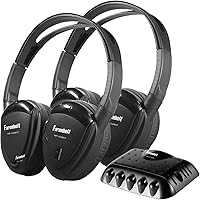
The Power Acoustik HP-22IRT Infrared Wireless Headphones have been around since 2008, which tells you something useful right away — this is a proven, no-frills solution for rear-seat car entertainment, not a flashy new entrant chasing trends. The package includes a transmitter and two headphone sets, built around infrared wireless technology. That matters more than it sounds: IR requires a reasonably clear line of sight between the headphones and transmitter, so passengers who block the signal path will notice dropouts. All headphones share one audio channel, meaning everyone hears the same thing simultaneously. Straightforward by design.
Features & Benefits

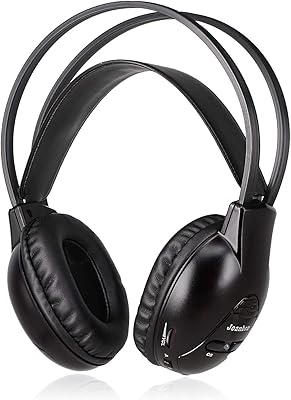
These IR car headphones handle the basics competently. The transmitter connects via a 3.5 mm jack, the over-ear swivel cups adjust to fit both adults and kids, and the foldable build means they tuck neatly into a seat-back pocket without much fuss. An auto power-off function keeps batteries from draining when kids inevitably leave them on, and a dedicated on/off switch lets you cut power manually without waiting for the timer. Audio comes from a dynamic driver tuned adequately for movie dialogue — clear enough for cartoons and action films, but not the kind of sound that rewards critical listening or music playback.

Best For

This in-car wireless headset makes the most sense for families running rear-seat DVD systems in minivans or SUVs, particularly those whose vehicle already outputs an IR signal. If your head unit supports Bluetooth audio, you have better modern options. But if your setup is older or strictly IR-compatible, the HP-22IRT set fills the gap without requiring you to spend significantly more than necessary. It also works well when wired headphones are impractical — tangled cords and long drives are a bad combination. Buyers who prioritize getting the job done over pristine audio fidelity will find this a practical fit.

User Feedback

Owners consistently praise easy pairing with factory vehicle systems — plug in, power on, done. That simplicity earns genuine goodwill in reviews. On the flip side, complaints cluster around the plastic construction, which feels lightweight in a way that makes some buyers uneasy about long-term durability. Audio quality feedback is consistent too: fine for movies, underwhelming for music. Battery life draws mixed responses — the auto-off helps, but heavy daily use still runs through cells faster than some expect. Comfort over extended trips, especially for younger kids, is another recurring concern, with a few parents noting the headband pressure becomes noticeable after an hour or two.

Pros

  • Plug-and-play setup with compatible IR vehicle systems takes just a few minutes, no manual required.
  • Comes with two complete headphone sets and a transmitter in one box — both rear seats covered immediately.
  • Foldable design slips neatly into a seat-back pocket, keeping the back seat organized on trips.
  • Auto power-off helps extend battery life when kids inevitably leave them on between stops.
  • The adjustable headband accommodates both younger children and adults from the same pair.
  • Over-ear cup design passively reduces road noise enough to keep kids engaged at moderate volume.
  • These IR car headphones work reliably with most factory IR-output systems in minivans and SUVs.
  • Lightweight build reduces neck fatigue for younger children during medium-length journeys.

Cons

  • Infrared line-of-sight dependency causes audio dropouts whenever fidgety kids lean or slouch out of alignment.
  • All-plastic construction feels fragile, with headband pivot points prone to cracking after repeated folding.
  • Battery consumption under regular use is higher than many buyers expect, adding ongoing replacement costs.
  • Single-channel design means every headphone in the vehicle receives identical audio — no independent control.
  • Ear pad cushioning is thin, and headband pressure becomes uncomfortable for children after about an hour.
  • Audio quality is underwhelming for music; older kids expecting decent sound will likely complain quickly.
  • The transmitter jack connection can loosen over time, causing intermittent audio tied to the transmitter rather than the headphones.
  • No storage bag or case is included, leaving headphones exposed to damage between trips.

Ratings

The scores below for the Power Acoustik HP-22IRT Infrared Wireless Headphones were generated by our AI system after analyzing verified buyer reviews from multiple global markets, with spam, bot submissions, and incentivized feedback actively filtered out. Ratings reflect the full spectrum of real ownership experiences — from families who swear by these headphones on long road trips to buyers who ran into frustrations around durability and sound quality. Both the genuine strengths and the honest pain points are represented here without softening either side.

Ease of Setup
83%
Most buyers report the initial setup taking just a few minutes — plug the transmitter into the headrest monitor or DVD player, power on the headphones, and the signal locks in quickly. Families on road trips appreciate not needing a manual to get things running before the kids start complaining.
A handful of users noted that the pairing process became less reliable after extended use, requiring repositioning of the transmitter to reestablish a stable connection. Those with non-standard vehicle entertainment setups occasionally struggled to get a clean signal from the start.
Compatibility with Vehicle Systems
78%
22%
These IR car headphones work reliably with most factory-installed rear-seat DVD systems in minivans and SUVs, which is exactly the use case they were built for. Buyers who matched the product to an IR-output vehicle reported smooth, consistent operation with no additional adapters needed.
Compatibility drops off sharply outside of dedicated IR-equipped vehicles. Buyers who attempted to use these with aftermarket setups or non-standard transmitter outputs reported inconsistent audio or no connection at all, which is a real risk if you assume universal compatibility.
Audio Quality
61%
39%
For movie dialogue and cartoon audio on a rear-seat screen, the sound is functional and clear enough to keep kids engaged during long drives. Volume range is adequate for typical road noise levels inside a vehicle cabin without distortion at moderate settings.
Music playback exposes the limits of the dynamic driver quickly — the low end is thin and the overall sound lacks the depth that even mid-range consumer headphones deliver. Buyers who expected general-purpose audio quality were frequently disappointed, especially older kids who use headphones for music.
Build Quality
53%
47%
The headphones are lightweight, which actually helps younger kids wear them for extended periods without neck fatigue. The foldable mechanism works as intended and the swivel ear cups do add a degree of flexibility when fitting different head sizes.
The all-plastic construction feels noticeably budget-grade in hand, and several long-term users reported cracking at the headband pivot points after repeated folding. For a product aimed at active family use with children, the durability ceiling is a legitimate concern that shows up consistently in reviews.
Comfort During Extended Use
64%
36%
The adjustable headband and swivel ear cups do a reasonable job accommodating both adult and child head sizes, and the over-ear design provides passive sound isolation from road noise that light on-ear options cannot match. Short to medium trips generally draw positive comfort feedback.
After roughly 60 to 90 minutes of continuous wear, some users — particularly younger children — reported headband pressure becoming uncomfortable. The ear pads are not especially plush, and on longer drives that discomfort becomes a recurring complaint that parents have to manage.
Infrared Signal Reliability
67%
33%
Within a clear line of sight and the specified 10-degree transmission angle, the signal is stable and dropout-free for most users. Buyers in standard minivan and SUV configurations — where the transmitter and headphones are naturally aligned — report few connection issues during normal use.
Any significant deviation from line of sight, such as a child leaning sideways or slouching below the headrest screen, causes audible dropouts. Unlike Bluetooth, infrared cannot punch through seat materials or around obstructions, so active, fidgety kids tend to trigger signal loss more often than parents expect.
Battery Life
62%
38%
The auto power-off function genuinely helps stretch battery life, especially when headphones are forgotten on between stops. Buyers who use these occasionally on weekend trips find that a set of batteries lasts a reasonable number of sessions before needing replacement.
Daily users and families on multi-day road trips report going through batteries faster than expected. Several reviewers noted that the auto-off delay felt too long, meaning batteries still drained meaningfully when the headphones were left idle but not fully powered down.
Value for Money
72%
28%
For the specific job of providing two wireless headphone sets for a vehicle IR system without spending significantly, these deliver a functional solution at a price point that is genuinely hard to argue with. Buyers who matched expectations to the price came away reasonably satisfied.
The value calculation shifts if you factor in battery replacement costs over time and the likelihood of needing a replacement set within a year or two due to build fragility. A few dollars more upfront on a sturdier alternative can make more financial sense for heavy users.
Foldability & Storage
79%
21%
The foldable design earns consistent quiet praise from parents who appreciate being able to slip both headphone sets into a seat-back pocket or center console without a tangled mess. It is a small but genuinely practical feature for the in-car context.
The fold mechanism on some units became loose after several months of regular use, with the headphones no longer holding their folded position securely. Not a dealbreaker, but it adds to the broader sense that the hinges and joints were not engineered for heavy daily use.
Headband Adjustability
71%
29%
The adjustable headband covers a reasonable range of head sizes, making it plausible for both a six-year-old and an adult to get a functional fit from the same pair. That versatility is genuinely useful in mixed-age families.
The adjustment mechanism lacks fine-tuning increments, so finding a precise fit for smaller children can be hit or miss. Some parents reported the band defaulting back to a larger setting during use, which disrupted the fit mid-trip.
Transmitter Design
68%
32%
The 3.5 mm jack transmitter is plug-and-play, requiring no pairing codes or software. It works immediately when connected to a compatible output, which keeps the experience simple for parents who do not want to troubleshoot technology on a family trip.
The transmitter feels flimsy and the jack connection can loosen over time, particularly in vehicles where the port is in an awkward position. A few users reported intermittent audio tied specifically to a worn transmitter connection rather than the headphones themselves.
Swivel Ear Cup Functionality
69%
31%
The swiveling ear cups help the headphones conform to different head angles, which reduces pressure points during wear. Buyers with kids of varying ages found that the swivel added enough flexibility to make a shared fit more comfortable.
The swivel mechanism on some units felt stiff initially and loosened excessively over time, eventually leaving the cups flopping rather than holding position. Durability of this specific joint is a recurring theme in longer-term ownership reviews.
Noise Isolation
66%
34%
The over-ear cup design provides enough passive isolation to meaningfully reduce highway road noise and sibling chatter in the back seat. Kids watching movies tend to stay engaged without needing maximum volume, which is better for hearing health on long drives.
The ear pads do not form a tight acoustic seal, so isolation is adequate rather than impressive. In louder vehicles or at highway speeds with the windows down, some audio bleed-through remains noticeable and kids tend to compensate by turning the volume higher.
Package Contents
74%
26%
Getting two complete headphone sets plus the transmitter in one box is practical and fair for the price. Families with two rear passengers can equip both seats without a second purchase, which is the right bundling decision for the target use case.
No carrying case or storage bag is included, which means loose headphones in the back seat are the norm. Given that the build quality is already a concern, not having a protective storage option adds unnecessary risk of cosmetic and mechanical damage between trips.

Suitable for:

The Power Acoustik HP-22IRT Infrared Wireless Headphones are a practical match for families who regularly take long drives with kids in tow and rely on a factory-installed or aftermarket rear-seat DVD system that outputs an infrared signal. If you own a minivan or SUV with built-in headrest screens, this is essentially the use case these headphones were engineered for — the transmitter plugs straight in, the two headphones connect without fuss, and everyone in the back seat is watching the same movie quietly within minutes. They also suit parents who are tired of managing tangled wired cables across the back seat and do not need anything more sophisticated than functional, decent-volume audio for cartoons and kids films. Budget-conscious buyers who want a working IR solution without paying a premium will find the value proposition reasonable as long as expectations are calibrated accordingly. Occasional users — think weekend trips or holiday road travel rather than daily commuting — tend to get the most mileage out of these before any durability concerns surface.

Not suitable for:

The Power Acoustik HP-22IRT Infrared Wireless Headphones are the wrong choice if your vehicle does not already have an IR transmitter output, since Bluetooth or wired alternatives will serve you far better in that scenario without the line-of-sight dependency. Buyers looking for general-purpose headphones for music listening at home or during commutes should look elsewhere — the audio performance is tuned for movie dialogue, not musical fidelity, and it shows. Older kids or teenagers who care about sound quality are likely to be vocally unimpressed. The all-plastic build also makes these a poor fit for buyers who need a set that will survive rough daily handling by young children over multiple years; the construction is not engineered for that kind of sustained abuse. Anyone expecting Bluetooth convenience — the freedom to roam, no signal dropout when shifting position — will find infrared technology genuinely limiting compared to what modern wireless headphones offer at similar or slightly higher prices.

Specifications

  • Wireless Technology: These headphones use infrared (IR) wireless transmission, which requires a reasonably clear line of sight between the headphones and the transmitter.
  • Transmission Angle: The IR signal broadcasts effectively up to 10 degrees off-axis from the transmitter, allowing for some positional flexibility but not full freedom of movement.
  • Channel Type: The system operates on a single channel, meaning all connected headphones in the vehicle receive the same audio signal simultaneously.
  • Driver Type: Audio is delivered through a dynamic driver, optimized for clear reproduction of dialogue and general entertainment audio rather than high-fidelity music playback.
  • Ear Style: The headphones feature over-ear swivel cups that rotate to conform to different head angles and sizes, including those of younger passengers.
  • Headband: An adjustable headband allows the fit to be customized across a range of head sizes, from children to adults.
  • Connectivity: The included transmitter connects to a source device via a 3.5 mm audio jack, compatible with standard headphone output ports on vehicle DVD systems and similar entertainment units.
  • Foldable Design: Both headphone sets fold compactly for storage, making them easy to slip into a seat-back pocket or door pocket between uses.
  • Power Management: An auto power-off function activates after a period of inactivity to conserve battery life, supplemented by a dedicated on/off switch for manual control.
  • Mute Function: A built-in mute function allows the audio to be silenced instantly without fully powering down the headphones.
  • Weight: Each headphone unit weighs approximately 1.6 pounds, keeping the set lightweight enough for extended wear without significant neck strain.
  • Dimensions: The packaged product measures 8.2 x 8.5 x 4.2 inches, reflecting the combined footprint of two headphone sets and the transmitter.
  • Compatible Devices: The system is designed for use with in-car DVD players, rear-seat game consoles, and mobile entertainment units that output a standard IR or 3.5 mm audio signal.
  • Water Resistance: These headphones carry no water resistance rating and should be kept away from moisture, rain, and liquids at all times.
  • Package Contents: The box includes two single-channel IR wireless headphone sets and one transmitter unit, providing coverage for both rear passenger seats out of the box.
  • Manufacturer: The HP-22IRT set is manufactured by Power Acoustik, a brand specializing in car audio and vehicle entertainment accessories.
  • Noise Control: Passive sound isolation is provided by the over-ear cup design, which physically blocks some ambient road noise without active noise-cancellation technology.
  • Special Features: Key convenience features include a foldable form factor, swivel ear cups, auto power-off, a mute function, and a manual on/off switch.

Related Reviews
Power Acoustik Farenheit HP-11S
86%
88%
Audio Clarity
85%
Noise Isolation
91%
Comfort & Fit
82%
Build Quality
70%
Wireless Range
More
Joanbro IR1 Wireless IR Car Headphones
74%
74%
Vehicle Compatibility
88%
Ease of Setup
83%
Comfort & Fit
67%
Sound Quality
61%
Battery Life
More
Yoto Wireless Kids Bluetooth Over-Ear Headphones
80%
93%
Hearing Safety
91%
Battery Life
87%
Comfort & Fit
66%
Build Quality
88%
Bluetooth Pairing
More
Philips A4216 Wireless Headphones
88%
88%
Sound Quality
94%
Battery Life
82%
Comfort & Fit
91%
Portability & Storage
87%
Build Quality & Durability
More
iJoy Ultra Wireless Over-Ear Headphones
74%
88%
Value for Money
81%
Comfort & Fit
62%
Sound Quality
71%
Battery Life
54%
Microphone Quality
More
HyperGear Vibe Wireless Headphones
78%
88%
Value for Money
84%
Comfort & Fit
71%
Sound Quality
67%
Noise Isolation
82%
Battery Life
More
Power Acoustik CP-650 6.5″ Car Stereo Receiver
68%
83%
Value for Money
79%
Apple CarPlay Performance
64%
Touchscreen Responsiveness
74%
Bluetooth Reliability
77%
Installation Experience
More
EAORUL H30 Wireless Headphones
77%
91%
Battery Life
86%
Comfort & Fit
67%
Active Noise Cancellation
73%
Sound Quality
69%
Build Quality
More
Power Acoustik PD-710B 7-Inch Single-DIN DVD Receiver
68%
83%
Value for Money
88%
Screen Size & Impact
51%
Bluetooth Performance
58%
Touchscreen Responsiveness
86%
Media Format Compatibility
More
TONEMAC H2 Wireless Headphones
84%
94%
Battery Life
88%
Sound Quality
76%
Comfort
85%
Ease of Use
80%
Build Quality
More

FAQ

You need a vehicle with an IR transmitter output — most commonly found in factory-installed or aftermarket rear-seat DVD systems in minivans and SUVs. If your car does not have an IR output port, these headphones will not function as intended. Bluetooth or wired headphones would be a better fit for non-IR vehicles.

Setup is straightforward. Connect the transmitter to your vehicle entertainment system using the 3.5 mm jack, power on the transmitter, then turn on the headphones. They should lock onto the IR signal within a few seconds. No pairing codes or software are involved.

No — the Power Acoustik HP-22IRT Infrared Wireless Headphones operate on a single channel, so every pair of headphones in use receives the exact same audio simultaneously. There is no way to split or assign separate audio streams to individual headphones with this system.

Because infrared technology depends on line of sight, any significant shift in body position that moves the headphones out of alignment with the transmitter will cause the audio to cut out. This is one of the most common frustrations parents report, especially with younger or more active kids on long trips.

The headphones are battery-powered, though battery type should be confirmed in the included manual as it can vary by production run. Battery life depends heavily on usage — the auto power-off feature helps extend it, but frequent users on multi-hour drives report needing replacements more often than expected. Keeping a spare set in the glove box is a practical habit.

For most children, they are comfortable for the length of a typical movie — around 90 minutes or so. Beyond that, some parents report that the headband pressure becomes noticeable, particularly for younger kids with smaller heads. The swivel cups help, but the ear pad padding is not especially plush.

You can absolutely use just one set. Each headphone has its own on/off switch, so you only power on the units you actually need. The other set can stay folded and stored without affecting anything.

Yes, as long as the portable DVD player has a 3.5 mm audio output, you can connect the transmitter to it directly. The headphones will then receive the IR signal from the transmitter just as they would with a built-in system, provided the transmitter is positioned within a reasonable line of sight of the headphones.

Honestly, wired headphones at the same price point will typically deliver better audio quality, particularly for music. These IR car headphones are optimized for movie dialogue and casual entertainment audio — the sound is clear enough for watching films, but if your kids are music listeners, they may notice the difference and find these underwhelming.

Start by confirming the transmitter is securely plugged into the audio output port and that the source device is actively playing audio. Then check that the headphones are powered on and positioned within line of sight of the transmitter. If the 3.5 mm jack on the transmitter has loosened from repeated use, reseating it firmly often resolves intermittent connection issues. If problems persist, try fresh batteries in the headphones.