Overview

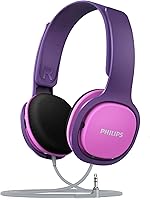
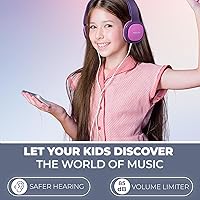
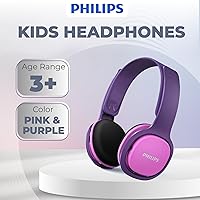
The Philips SHK2000 Kids On-Ear Headphones represent a practical, no-nonsense approach from a brand that has spent decades making audio equipment for every kind of listener. Rather than loading up a child's headphone with wireless features and battery dependency, Philips went the opposite direction — a simple wired design with a 3.5mm jack that plugs straight into a tablet, phone, or Kindle without any setup at all. The build is ultra-lightweight plastic, which matters a lot when the user is a three-year-old who will wear these for twenty minutes and then toss them on the couch. Marketed in pink toward younger girls, these kids headphones are functionally practical for any young child who needs a basic, comfortable listening solution.

Features & Benefits

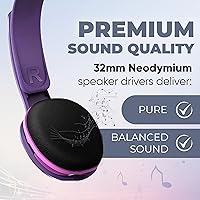
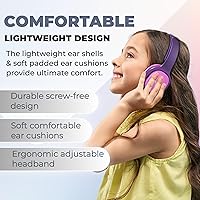
The standout feature here is the 85dB volume limiter, and it is worth being specific about what that means: the cap is enforced at the hardware level inside the headphone itself, not through a software setting a child could accidentally disable. That distinction genuinely matters to parents worried about kids cranking a tablet to maximum volume. Beyond safety, the 32mm neodymium drivers produce clear, balanced audio — nothing spectacular, but more than adequate for cartoons, learning apps, and kids' music. The adjustable headband fits a wide range of head sizes, and the soft cushions provide enough passive noise isolation to cut background noise without the complexity of active cancellation. No batteries, no charging, no pairing. Just plug in and go.

Best For

This wired on-ear set makes the most sense for parents who put hearing safety at the top of their checklist and want something that works without supervision once handed over. It is a natural fit for classroom and school use, where wired connections are often required and a misplaced Bluetooth device would be a real headache. Young children using iPads or Kindles for learning apps will find the plug-and-play setup suits their growing independence — no waiting for a parent to pair or charge anything. The featherlight build also makes it a sensible pick for toddlers and preschoolers who simply cannot tolerate heavy or bulky headwear for more than a few minutes at a stretch.

User Feedback

Across more than 11,000 ratings and a 4.2-star average, the Philips SHK2000 has built a notably loyal following for a kids' accessory. Parents consistently confirm that the volume cap genuinely holds — even when a child pushes device volume to its maximum, output stays within safe limits. Comfort earns positive marks for the toddler and early-elementary set, though some parents of older or larger-headed kids report the fit runs snug. The honest concern worth mentioning is cord durability: a portion of reviewers note the cable shows wear earlier than expected with heavy daily school use, and the headband adjustment can loosen over time. Sound quality gets fair, proportionate marks — clear and functional, but these kids headphones were never meant to compete on audio pedigree.

Pros

  • The 85dB volume limit is hardware-enforced — no app, no settings menu, no way for a child to override it.
  • Completely plug-and-play: no charging, no Bluetooth pairing, no setup that requires a parent's help.
  • Featherlight build makes these genuinely wearable for toddlers who reject anything bulky or heavy.
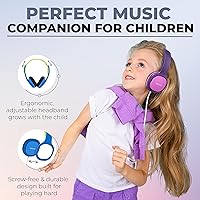
  • The adjustable headband covers multiple years of head growth, reducing the need for frequent replacements.
  • Clear, balanced audio for kids' content — cartoons, audiobooks, and learning apps all come through without muddiness.
  • Soft ear cushions provide enough passive noise isolation to keep children focused in moderately noisy environments.
  • Compatible with virtually every device a young child uses — tablets, Kindles, school Chromebooks, and older phones.
  • Over 11,000 ratings at 4.2 stars signals this is a broadly trusted option, not a niche or untested product.
  • Philips brand credibility offers reassurance that the stated safety spec is engineered, not just a marketing claim.

Cons

  • The cable is the most reported failure point — fraying near the connector is common with daily school use.
  • Only available in pink, which limits appeal for boys or children who want a neutral or different color.
  • The headband adjustment slider can loosen gradually over time, causing the fit to drift during wear.
  • On-ear design creates pressure discomfort for older or larger-headed children during longer sessions.
  • Devices without a 3.5mm jack require a separate adapter, adding cost and a small but real inconvenience.
  • The wired cord catches on car seats, furniture, and backpack straps during active movement.
  • Parents wanting a headphone to last multiple years of heavy use may find themselves replacing these sooner than expected.
  • No inline microphone, which limits usefulness for video calls or online classroom sessions that require two-way audio.

Ratings

The scores below for the Philips SHK2000 Kids On-Ear Headphones were generated by our AI engine after analyzing thousands of verified purchase reviews from global buyers, with spam, incentivized feedback, and bot activity actively filtered out. The result is an honest, balanced picture of where these kids headphones genuinely deliver and where real-world use reveals limitations. Both the strengths parents consistently praise and the pain points that show up repeatedly in negative reviews are reflected transparently in every category.

Hearing Safety
94%
The 85dB volume cap is enforced at the hardware level inside the headphone itself, which parents strongly appreciate — it cannot be overridden by a child pushing tablet volume to maximum. Reviewers frequently describe this as the single deciding factor in their purchase, and the cap is consistently confirmed to hold in real use.
A small number of parents note that 85dB, while within recommended safe exposure guidelines, still feels loud during prolonged sessions. A few buyers wished for an even lower optional cap around 75dB for very young toddlers under age two.
Ease of Use
96%
Plug in and hand over — that is genuinely the entire setup process. There is no pairing, no app, no charging reminder, and no Bluetooth connection to troubleshoot. Parents of young children repeatedly highlight that kids as young as three can independently connect and use these headphones on a tablet without any adult help.
The wired format, while simple, does mean the cord gets caught on armrests, car seat buckles, and furniture during active use. A handful of reviewers note young children tend to yank the cable when moving around, which adds stress to the jack connector over time.
Comfort for Young Children
81%
19%
For toddlers and kids in the preschool to early-elementary range, the lightweight build and soft ear cushions get consistent praise. Children who previously refused other headphones tolerate these during full-length movies and school sessions, which is a meaningful signal for parents who have tried bulkier alternatives.
Older children around age seven and above, or those with larger heads, report the fit running snug and the on-ear cushions creating pressure discomfort after thirty to forty minutes. The headband adjustment range is adequate for small heads but does not extend generously enough for every child in the stated age range.
Build & Durability
62%
38%
The headphone frame itself — the plastic housing and headband — holds up reasonably well to the drops and rough handling typical of young children. Several parents report using the same pair for a full school year across daily use, which speaks to the core construction being adequate for its price tier.
The cord is the clear weak point, and reviewers are consistent about it. With heavy daily school use, the cable shows fraying near the jack or ear cup connection within a few months. The headband adjustment mechanism can also loosen over time, causing the fit to shift during wear.
Sound Quality
74%
26%
For kids' content — cartoons, learning apps, audiobooks, and children's music — the 32mm dynamic drivers produce clear, reasonably balanced audio that serves its purpose well. There is no muddy bass bloat or harsh treble that would fatigue young ears during extended listening sessions.
These are not audiophile headphones and should not be evaluated as such. Adults testing them notice a limited soundstage and compressed dynamics compared to higher-tier options. For children's media this rarely matters, but parents hoping for rich, full sound for music listening will find the output modest.
Fit Adjustability
71%
29%
The sliding headband adjustment covers a practical range for ages three through roughly six or seven, and several parents note using the same pair across two to three years of growth without needing a replacement. The ergonomic arch distributes weight evenly across a small head.
The adjustment mechanism uses a friction-based slider rather than a click-notch system, which means it can creep during active use. Some parents report tightening the fit before each use because the headband had drifted overnight from how it was left.
Passive Noise Isolation
69%
31%
The soft cushions provide a noticeable reduction in ambient noise — enough to help children stay focused on lesson content in moderately noisy classrooms or during travel. Parents using these on flights note that kids stay engaged with tablet content without needing excessive volume.
Isolation is passive and on-ear rather than over-ear, so it is limited in genuinely loud environments like crowded airports or busy cafeterias. Children may still try to raise volume in very noisy settings, which tests the reliability of the 85dB cap under real-world pressure.
Device Compatibility
91%
The standard 3.5mm analog jack connects to virtually every device a child might use — iPad, Android tablet, Kindle, Chromebook, older smartphone, or classroom desktop. At 32 Ohm impedance, the headphones reach adequate volume on low-output devices without any adapter or amplification needed.
Newer iPads and some smartphones have dropped the 3.5mm jack entirely in favor of USB-C or Lightning, which means parents may need a separate adapter. This is a limitation of the format, not the product specifically, but it is a practical friction point worth noting before purchase.
Weight & Portability
88%
These kids headphones are among the lightest on-ear options in their category, which makes a real difference for young children who find even moderate headphone weight uncomfortable. Tossing them in a school bag, travel tote, or tablet case is straightforward given their compact folded size.
The lightweight plastic construction that keeps weight low also contributes to a somewhat fragile feel. Parents who handle them alongside sturdier rubber-reinforced alternatives note they do not feel particularly robust when squeezed or flexed.
Value for Money
83%
At its price point, the Philips SHK2000 delivers the one feature that matters most — a hardware-enforced volume limit — packaged by a credible audio brand with a broad compatibility profile. For parents who need a reliable, safe school headphone without spending significantly more, the value case is straightforward.
Cord durability concerns mean some buyers end up replacing the pair within a school year, which erodes the cost-per-use value over time. Parents who treat this as a long-term investment may find the total cost of replacement units comparable to a more durable, slightly higher-priced alternative.
Cable Quality
54%
46%
The cable length is reasonable for lap-based tablet use and does not pull annoyingly when a child has a device resting on their knees or a desk. The connector fits snugly in standard 3.5mm ports without wobbling or cutting out during normal stationary use.
This is the most consistently flagged weakness across user reviews. The cable is thin and lacks reinforcement at the stress points near the plug and ear cup connectors. Parents using these for daily school commutes or active wear report fraying within three to six months of regular use.
Age-Range Versatility
67%
33%
The Philips SHK2000 fits toddlers as young as three comfortably and remains usable through early elementary school years for most children. The adjustable headband genuinely extends the useful lifespan across what would otherwise be multiple size-based purchases.
By age seven or eight, many children have outgrown both the physical fit and the pink colorway, and parents often find themselves looking for an upgrade to a more mature-looking option with greater adjustment range. The product skews younger than the stated upper range implies.
Design & Aesthetics
77%
23%
The pink colorway is clearly designed for young girls and has strong appeal in that demographic, with many reviewers purchasing specifically as a gift. The compact, rounded shape avoids the aggressive gamer-style aesthetic that looks out of place on a young child.
The single color option limits appeal for parents of boys or children who dislike pink. There is no neutral or alternative colorway in this specific model, which is a meaningful gap given how strongly some children feel about the aesthetics of items they use publicly at school.

Suitable for:

The Philips SHK2000 Kids On-Ear Headphones are the right call for parents whose top priority is protecting their child's hearing without negotiating with software settings or app permissions — the 85dB cap is baked into the hardware, full stop. They work especially well for families with toddlers and preschoolers who need something featherlight that won't frustrate a three-year-old trying to plug in independently. School and classroom settings are a natural fit too, since many educators and IT coordinators still require wired connections, and there is nothing to charge, pair, or troubleshoot before first period. If your child primarily uses a tablet, Kindle, or older iPad for learning apps, reading programs, or streaming kids' content, this wired on-ear set covers all of those use cases reliably without adapters in most cases. Families who have burned through cheap, unbranded kids' headphones and want a recognizable audio brand behind the product will find the Philips name adds a layer of confidence that off-brand alternatives simply do not offer.

Not suitable for:

The Philips SHK2000 Kids On-Ear Headphones are not the right fit for older children — roughly ages seven and up — who have larger heads, longer listening sessions, or a preference for something that does not look designed for a preschooler. The on-ear fit, while comfortable for small heads, creates noticeable pressure for children who have grown beyond the core target age range, and the pink colorway will be a hard pass for many kids who care about aesthetics at school. Parents buying for a child who is rough on gear and expects a headphone to survive a full academic year of daily backpack commutes should go in with realistic expectations, because the cable is genuinely the weak link and has a track record of fraying under heavy use. Anyone whose primary device has dropped the 3.5mm headphone jack — many recent iPad Pro models and current flagship phones — will need a separate adapter, which adds cost and one more thing to lose. And if you are hoping for rich, immersive sound that makes music genuinely enjoyable for an older listener, these kids headphones were never built for that; the audio is functional and clear, but it stops well short of satisfying anyone with developed musical taste.

Specifications

  • Driver Size: 32mm neodymium dynamic drivers deliver balanced stereo audio suited to children's music, video, and learning content.
  • Impedance: 32 Ohm impedance ensures reliable volume output across low-powered devices like tablets and Kindles without requiring external amplification.
  • Volume Limit: Maximum output is hardware-capped at 85dB, a limit enforced at the headphone level independently of device software settings.
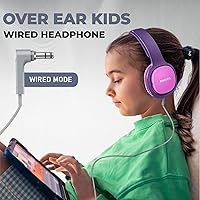
  • Connection Type: Standard 3.5mm analog audio jack provides universal compatibility with tablets, phones, laptops, TVs, and dedicated reading devices.
  • Ear Placement: On-ear (supra-aural) design positions the cushioned ear cups against the outer ear rather than fully enclosing it.
  • Headband: Adjustable ergonomic headband with a sliding mechanism accommodates a range of head sizes from toddler through early elementary age.
  • Noise Control: Passive noise isolation is achieved through the soft cushioned ear cups pressing against the ear, with no active noise-cancellation circuitry.
  • Wireless: Fully wired analog design with no Bluetooth, Wi-Fi, or any wireless connectivity component included.
  • Battery: No battery is required for operation; the headphones draw no power independently and function entirely through the wired audio connection.
  • Material: Plastic frame construction with soft fabric-covered foam ear cushions designed to reduce pressure on small ears during extended wear.
  • Dimensions: Overall folded dimensions measure approximately 5.1 x 6.1 x 2.8 inches, compact enough to fit in a standard school bag or tablet case.
  • Weight: Extremely lightweight construction makes these among the lightest on-ear headphones available in the children's category.
  • Age Range: Recommended for children aged 3 years and up, covering toddlers through the early school years based on headband fit and comfort design.
  • Compatible Devices: Confirmed compatible with tablets, iPads, Kindle e-readers, Android phones, Chromebooks, televisions, and any device with a 3.5mm audio output.
  • Color: Available in pink; no alternate colorways are offered for this specific model variant.
  • Model Number: Official model number is SHK2000PK/00, manufactured and distributed under the Philips Audio brand.
  • Inline Controls: No inline remote or microphone is included on the cable; the headphones are audio-output only with no call or playback control functionality.
  • Cable Feature: Cable is listed with a retractable feature designation in product specs, though primary use is as a standard fixed-length wired connection.

Related Reviews
PHILIPS K4206 Kids Wireless On-Ear Headphones
86%
91%
Battery Life
89%
Comfort & Fit
88%
Parental Controls
74%
Sound Quality
85%
Build Quality
More
Philips TAH4205 On-Ear Wireless Headphones
77%
91%
Battery Life
88%
Value for Money
74%
Sound Quality
71%
BASS Boost Feature
63%
Comfort & Fit
More
Philips H8506 Over-Ear Wireless Headphones
84%
92%
Battery Life
88%
Noise Cancellation
85%
Sound Quality
80%
Comfort & Fit
78%
Bluetooth Connectivity
More
Philips Fidelio X2HR Over-Ear Headphones
84%
94%
Sound Quality
91%
Comfort for Extended Use
87%
Build Quality
78%
Bass Response
65%
Portability
More
Philips H2005BK/00 Over-Ear Stereo Headphones
80%
88%
Comfort for Extended Use
85%
Sound Quality
83%
Noise Isolation
80%
Build Quality
92%
Value for Money
More
JBL JR 310
JBL JR 310
79%
93%
Hearing Safety
76%
Sound Quality
67%
Build Quality & Durability
78%
Comfort & Fit
72%
Microphone Quality
More
iClever BTH13 Cat Ear Kids Bluetooth Headphones
87%
94%
Battery Life
91%
Volume Limiter Effectiveness
88%
Build Quality
85%
Comfort & Fit
92%
Design Appeal
More
JLab JBuddies Studio Wireless On-Ear Kids Headphones
86%
90%
Comfort for Long Listening
78%
Sound Quality
96%
Volume Limiter Effectiveness
85%
Build Quality
92%
Battery Life
More
JBL Junior 470NC Wireless Over-Ear Kids Headphones
86%
82%
Sound Quality
89%
Comfort for Extended Use
75%
Noise Cancellation Effectiveness
94%
Battery Life
84%
Build Quality
More
Philips UpBeat UH202 Wireless On-Ear Headphones
77%
88%
Battery Life
91%
Value for Money
71%
Sound Quality
66%
Comfort & Fit
63%
Build Quality
More

FAQ

The cap is enforced inside the headphone hardware itself — it is not a software setting on the device, and it cannot be overridden by turning up tablet or phone volume. No matter how high the source device is set, audio output through these kids headphones will not exceed 85dB. Parents across thousands of reviews confirm this holds up in real use.

Not directly. Recent iPad Pro and iPad Air models dropped the 3.5mm jack in favor of USB-C, so you would need a USB-C to 3.5mm adapter to use this wired on-ear set. Older iPads with a Lightning port would need a Lightning to 3.5mm adapter. These adapters are inexpensive and widely available, but it is worth factoring in before purchasing.

The headband and ear cups generally hold up well across a school year and beyond with normal use. The cable is the more vulnerable part — with heavy daily use involving a lot of plugging, unplugging, and movement, some parents report fraying near the connector within a few months. Treating the cord with reasonable care extends the lifespan noticeably.

They are specifically designed with young toddlers in mind — the headband adjusts down to a small size, the weight is very low, and the ear cushions are soft rather than firm. Most parents of children ages three to five report their kids wear them without complaints, even for full movie-length sessions. The fit is one of the more consistently praised aspects in buyer feedback.

No, there is no microphone included. The Philips SHK2000 Kids On-Ear Headphones are audio output only, meaning they work for listening but not for speaking. If your child needs to participate in video calls or online school sessions that require a microphone, you would need a separate solution or a different headset model that includes one.

Unfortunately, this specific model only comes in pink. Philips does offer other kids headphone models in different colorways, so it may be worth checking whether an alternative variant is available that suits your child better. The audio and safety features are the same regardless of color across the product family.

Yes — a slightly damp cloth with mild soap works well for wiping down the ear cushions and headband. Avoid soaking the cushions or getting moisture near the cable connections or driver housing. For regular maintenance, a quick wipe after a school week keeps them fresh without causing any damage to the materials.

It depends on the child. The headband adjustment has a reasonable range, and many kids at age seven still fit comfortably. However, children with larger heads or those who wear headphones for longer periods sometimes find the on-ear fit creates pressure at the upper end of the stated age range. If your child is on the larger side for their age, it may be worth considering a step-up option with a wider adjustment range.

The headphones have a compact profile and fit easily into a standard school bag, tablet case, or travel pouch. They do not have a dedicated folding hinge mechanism for ultracompact storage, but the overall size is small enough that packing them is not an issue for most bags kids use daily.

Yes, fully. Most school Chromebooks retain the standard 3.5mm headphone jack, and at 32 Ohm impedance the Philips SHK2000 reaches comfortable listening volume on Chromebook audio output without any adapter or additional hardware. This is one of the most common use cases for this wired on-ear set and it works reliably straight out of the box.