Overview

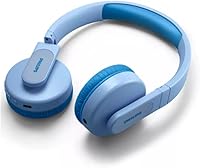
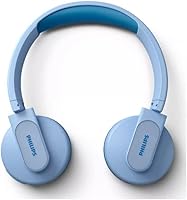
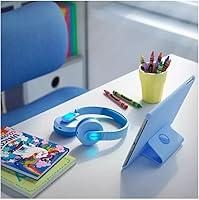
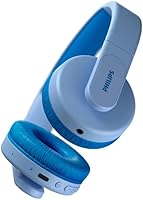
The Philips K4206 Kids Wireless On-Ear Headphones launched in mid-2021 and have quietly earned a dependable spot in the kids audio market — not by overpromising, but by delivering on what parents actually care about: safety and simplicity. These Philips kids headphones sit comfortably in the budget tier, yet carry real audio brand credibility behind them. The on-ear design is a deliberate choice; lighter and less enveloping than over-ear models, it suits younger heads without added bulk. Sound quality is honest and age-appropriate — don't expect audiophile performance, but for cartoons, classroom calls, and playlists, it holds up just fine.
Features & Benefits

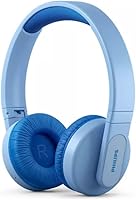
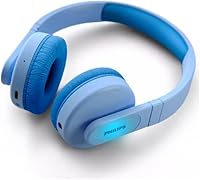
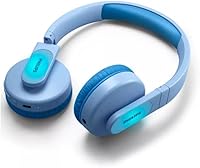
The headline spec is the 85dB volume limit, enforced through 32mm dynamic drivers — a ceiling that aligns with pediatric hearing safety guidelines and makes a real difference for ears still developing. Beyond the hardware cap, the Philips Headphones app lets parents set customized volume ceilings, cap daily listening sessions, and review audio exposure history over time. Worth noting: all of that requires a compatible smartphone and a few minutes of initial setup. Battery life is genuinely impressive at 28 hours, with a quick 15-minute charge adding two more hours in a pinch. Bluetooth 5.0 pairs instantly and remembers the last device, while a 3.5mm jack offers a reliable wired fallback. The light-up ear cups cycle through colors at a button press — kids love it.

Best For

These Philips kids headphones are a strong fit for children roughly between ages 5 and 12 — the adjustable headband and simple button controls scale well across that range without overwhelming younger users. They shine for daily mixed use: online classes, tablet streaming, gaming sessions, and long car rides are all solidly covered by that 28-hour battery. For parents who want meaningful oversight without becoming the volume police every evening, the app-based controls are a practical option. This wireless kids headset is not the right call if your child needs active noise canceling or premium audio fidelity. But for families wanting a safe, reliable daily driver from a recognized brand, it earns its place.

User Feedback

Across verified reviews, the K4206 holds a 4.3-star average — respectable for this category and well-earned in certain areas. Parents consistently highlight easy Bluetooth pairing and battery longevity as standout positives; the headset frequently survives a full week of school use without needing a charge. On the critical side, some reviewers with older or larger-headed children found the ear cups too shallow for comfortable extended wear — worth keeping in mind for tweens near the top of the age range. Sound quality gets a mixed but fair reception: adequate for voices and kids content, not something audiophiles will appreciate. App setup also draws varied comments — some parents found it intuitive, while others hit Bluetooth connectivity hiccups during initial configuration.

Pros

  • The 85dB volume cap provides meaningful, hardware-enforced hearing protection for developing ears.
  • Twenty-eight hours of battery life is exceptional — most families won't need to charge mid-week.
  • Bluetooth 5.0 pairs instantly and remembers the last device, so kids can connect without help.
  • The Philips Headphones app lets parents set volume ceilings and monitor audio exposure over time.
  • A 3.5mm wired jack provides a reliable backup when Bluetooth is not available or battery runs low.
  • Light-up ear cups are a genuine hit with kids and add a fun, personalized element without feeling cheap.
  • The adjustable headband and cushioned ear cups make for a comfortable fit across a wide age range.
  • At its price point, these Philips kids headphones deliver solid build quality and brand reliability.
  • The quick-charge feature adds two hours of playback from just fifteen minutes plugged in.

Cons

  • Ear cup depth is shallow, and older or larger-headed kids may find extended wear uncomfortable.
  • Parental controls require a smartphone app and initial setup — not as plug-and-play as some parents expect.
  • Some users report intermittent Bluetooth connectivity issues during app pairing and configuration.
  • Sound quality is adequate for kids content but lacks the clarity or richness music-focused buyers may want.
  • The plastic build feels light, which may raise durability concerns for rougher handling kids.
  • There is no active noise canceling, making it less effective in genuinely noisy environments.
  • The on-ear design provides only modest passive isolation compared to over-ear alternatives.
  • App functionality may feel limited for parents who want more granular or real-time controls.

Ratings

Our scores for the Philips K4206 Kids Wireless On-Ear Headphones are generated by AI after analyzing thousands of verified global user reviews, with spam, bot activity, and incentivized feedback actively filtered out. Each category reflects the honest consensus of real buyers — parents, caregivers, and gift-givers — with both strengths and recurring frustrations transparently represented. These Philips kids headphones perform well where it matters most for families, but the ratings below also surface the trade-offs worth knowing before you buy.
Hearing Safety
94%
The hardware-enforced 85dB volume cap is the standout feature for most parents, and reviewers consistently trust it. Unlike software-only limits that can sometimes be circumvented, this ceiling holds regardless of what volume level the connected device is set to, giving parents genuine peace of mind during long school sessions or road trips.
A small number of audiophile-minded parents felt the 85dB ceiling, while medically sound, made certain content feel slightly flat or underpowered compared to adult headphones. This is an inherent design constraint rather than a flaw, but it does affect perceived loudness for users who are accustomed to unrestricted output.
Battery Life
91%
Twenty-eight hours of wireless playback is a genuine differentiator in this price tier, and parents repeatedly mention getting through a full school week without needing to charge. The 15-minute quick charge adding two more hours of use is a practical feature that saves the day when a child forgets to plug in overnight.
A small cohort of users reported real-world battery life falling somewhat short of the 28-hour claim, particularly when the light-up ear cups are used frequently. While the variance was not dramatic, it is worth noting that the lights do draw additional power that can incrementally shorten runtime under heavy use.
Parental Controls
78%
22%
For parents who take the time to set up the Philips Headphones app, the controls are meaningfully useful — being able to cap volume below 85dB, schedule listening sessions, and view audio exposure history over time goes well beyond what most competing kids headphones offer at this price point.
App dependency is the recurring friction point in reviews. Setup requires a compatible smartphone, initial Bluetooth pairing through the app, and occasionally some troubleshooting — a process that frustrated users who expected a plug-and-play parental control experience. A handful of reviewers also noted the app felt less polished than expected from a brand like Philips.
Comfort & Fit
72%
28%
For younger children in the 5–9 age range, the soft cushioned ear cups and adjustable flexible headband consistently earn praise for being lightweight and easy to wear through a full school day or movie. The on-ear form factor keeps the design compact and avoids the overheating that fully enclosed over-ear models can cause for kids.
Fit becomes a genuine issue for older or larger-headed children approaching the top of the target age range. Reviewers with kids aged 10–12 frequently describe the ear cups as too shallow, with the cushions barely covering the ear and causing pressure discomfort during sessions longer than an hour.
Sound Quality
67%
33%
For its intended use cases — cartoons, audiobooks, YouTube videos, and virtual classroom audio — the 32mm dynamic drivers produce clear, pleasant sound that children respond well to. Dialogue comes through crisply, which is particularly valued by parents whose kids use these headphones for online learning.
Music lovers will notice the limitations quickly. Bass lacks depth, high-frequency detail is soft, and the overall soundstage is narrow. This is not unexpected at the price and for the age group, but parents who hoped these could double as capable headphones for older teens or for their own occasional use will likely be disappointed.
Bluetooth Connectivity
83%
Bluetooth 5.0 delivers reliable pairing in everyday conditions, and the last-device memory means children can put the headset on and connect without any manual steps — a feature parents specifically appreciate when getting kids ready for class quickly in the morning.
A meaningful minority of reviewers experienced connection drops or initial pairing difficulties, particularly when setting up through the companion app. Range was also occasionally flagged as limited in real-world home environments with walls and interference, performing somewhat below the stated 10-meter spec.
Build Quality
69%
31%
The K4206 handles the predictable wear of daily school use — being stuffed into backpacks, removed and replaced repeatedly, and used across different environments — without issues reported by most reviewers over a reasonable ownership period. The hinges and headband adjustment mechanism feel sturdy enough for regular handling.
The all-plastic construction is apparent when you hold the headset, and reviewers are divided on long-term durability. A notable portion of users who purchased for active or rough-handling children reported cracking or hinge loosening within several months, suggesting the build prioritizes affordability over resilience.
Ease of Use for Kids
88%
Button controls are large, clearly labeled, and simple enough for young children to operate independently after a single demonstration. Kids in the 6–9 range consistently managed volume, playback, and Bluetooth connection on their own, which reduces parental involvement and builds the child's confidence with the device.
The light-up cup button and the power button are physically close together on the ear cup, and several parents mentioned younger children accidentally triggering the wrong function. This is a minor complaint, but it came up consistently enough across reviews to be worth flagging for families with kids under 6.
Microphone Quality
71%
29%
For virtual classes and video calls — the primary use case most parents cite — the built-in microphone captures speech clearly enough that teachers and classmates report no issues understanding the child. It handles quiet indoor environments well, which covers the majority of real-world usage scenarios.
In noisier environments — a busy home, a car, or a classroom with background activity — the microphone picks up ambient sound in a way that can muddy the audio for the other party. It is functional but not impressive, and parents using it for anything beyond basic calls should set expectations accordingly.
Value for Money
86%
At its price point, the combination of a genuine 85dB safety limit, 28-hour battery, Bluetooth 5.0, app-based parental controls, and a recognized audio brand behind the product is genuinely competitive. Most parents who factor in hearing safety as a priority consider this wireless kids headset a smart buy for everyday family use.
Buyers expecting premium materials, exceptional sound, or a polished app experience may feel the value proposition is thinner than the specs suggest. If hearing protection is not a top priority, there are competing options at a similar price that offer better audio quality or a sturdier build.
Light-Up Feature
82%
18%
The color-cycling ear cup lights land well with the target age group — children in the 5–10 range reliably react with enthusiasm, and multiple reviewers noted their kids specifically requested the headphones because of the lights. It doubles as a fun visual indicator that the headset is powered on and in use.
The light colors available are fixed and cannot be customized beyond cycling through the preset sequence, which is a minor disappointment for older kids who wanted more personalization. Parents of children who are sensitive to visual stimulation also noted they wished there was a more prominent way to disable the feature permanently without turning the headset off.
Portability
79%
21%
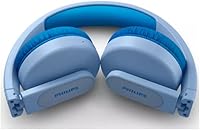
At 8.8 oz and with a slim folded profile, these Philips kids headphones travel easily in standard school backpacks and carry-on bags without taking up significant space. The lack of cables in wireless mode also reduces the tangling complaints that plague wired alternatives during travel.
No carrying case is included, which is a notable omission given that the target users are children who may not be careful about how they pack or store electronics. Without a protective pouch or case, the ear cups are exposed to scratching and pressure damage inside a crowded backpack.
Setup & Onboarding
74%
26%
Out-of-box Bluetooth pairing without the app is quick and painless for most users — the headset is discoverable immediately and connects to tablets, phones, and laptops without complication. Families who skip the app entirely often describe setup as one of the simplest they have experienced with kids tech.
The experience changes meaningfully when app-based parental controls are involved. Multiple reviewers flagged that the app connection process required several attempts, and a subset of Android users encountered persistent pairing failures that took significant troubleshooting to resolve. The gap between the app-free and app-enabled setup experiences is wider than it should be.

Suitable for:

The Philips K4206 Kids Wireless On-Ear Headphones were built with a clear audience in mind: parents of school-age children who want genuine hearing protection without sacrificing the convenience of wireless. If your child is somewhere in the 5–12 age window and regularly uses headphones for online classes, streaming videos on a tablet, or long car rides, these Philips kids headphones cover all of those scenarios on a single charge — often for several days running. The app-based parental controls are a real draw for households where kids have unsupervised screen time and parents want a passive safeguard rather than a constant argument about volume. Families on a budget who still want a recognizable, safety-conscious brand will find the value proposition genuinely compelling here. The lighter on-ear form factor also makes this wireless kids headset a better physical fit for younger children than bulkier over-ear alternatives.
Not suitable for:

The Philips K4206 Kids Wireless On-Ear Headphones are not the right pick for every family, and it is worth being honest about where the trade-offs start to show. If your child is older — say, 11 or 12 with a larger head — there is a real chance the ear cups will feel shallow and uncomfortable during longer sessions, based on consistent feedback from users in that age group. Audiophile-minded parents or kids who are genuinely passionate about music fidelity will be underwhelmed; the sound is functional and age-appropriate, but it is not detailed or rich by any stretch. The parental controls are entirely app-dependent, which means a compatible smartphone and a willingness to troubleshoot occasional Bluetooth pairing hiccups during setup — not ideal for anyone who wants a plug-and-play experience with zero configuration. And if noise isolation or active noise canceling is a priority — for a loud classroom or a busy flight — the K4206 simply does not offer that.
Specifications

  • Driver Size: Each ear cup uses a 32mm dynamic driver tuned for clear, balanced audio at safe listening levels.
  • Volume Limit: Maximum output is hardware-capped at 85dB to protect developing ears during extended listening sessions.
  • Battery Life: A full charge delivers up to 28 hours of continuous wireless playback under typical conditions.
  • Charge Time: The battery charges fully in approximately 2 hours via the included USB charging cable.
  • Quick Charge: A 15-minute top-up charge provides an additional 2 hours of playback for situations where time is limited.
  • Bluetooth Version: Bluetooth 5.0 is used for wireless connectivity, offering stable pairing and a range of up to 10 meters.
  • Wired Option: A 3.5mm audio jack allows wired connection as a backup when Bluetooth is unavailable or the battery is depleted.
  • Impedance: The headphones have an impedance rating of 32 Ohm, appropriate for direct use with smartphones, tablets, and computers.
  • Ear Form Factor: The on-ear design rests on the outer ear rather than enclosing it, keeping the overall profile lighter and less bulky.
  • Dimensions: The headphones measure 7.8 x 7.9 x 2.1 inches when unfolded, fitting into most standard kids backpack pockets.
  • Weight: At 8.8 oz, these headphones are light enough for children to wear comfortably during extended school or travel sessions.
  • Materials: The frame is constructed from plastic with cushioned fabric ear cup pads designed for comfort against smaller ears.
  • Parental Controls: The Philips Headphones companion app allows parents to set volume limits, schedule playtime caps, and track audio exposure history.
  • Special Features: Light-up ear cups cycle through multiple colors at the press of a button, and the headset remembers the last paired Bluetooth device.
  • Built-in Mic: A built-in microphone supports hands-free calling and virtual classroom participation without requiring an additional device.
  • Age Target: Designed for children, with sizing, controls, and safety features calibrated for the approximately 5–12 age range.
  • Connectivity: Supports both Bluetooth 5.0 wireless and 3.5mm wired audio input, with instant pairing when Bluetooth is enabled on the source device.
  • Battery Type: Powered by a built-in lithium polymer rechargeable battery, included and pre-installed at the time of purchase.

Related Reviews
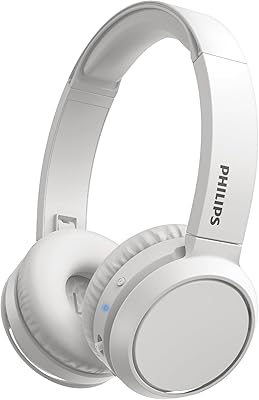
Philips H8506 Over-Ear Wireless Headphones
76%
93%
Battery Life
78%
Active Noise Cancellation
74%
Sound Quality
81%
Comfort & Fit
86%
Portability & Design
More
Philips TAH4205 On-Ear Wireless Headphones
77%
91%
Battery Life
88%
Value for Money
74%
Sound Quality
71%
BASS Boost Feature
63%
Comfort & Fit
More
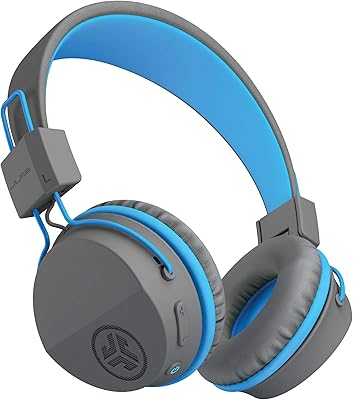
JLab JBuddies Studio Wireless Kids Headphones
80%
94%
Volume Safety
88%
Battery Life
83%
Comfort & Fit
91%
Value for Money
72%
Build Quality
More
JBL Junior 470NC Kids Over-Ear Headphones
81%
94%
Hearing Safety
86%
Parental Controls
96%
Battery Life
81%
Sound Quality
72%
Active Noise Cancellation
More
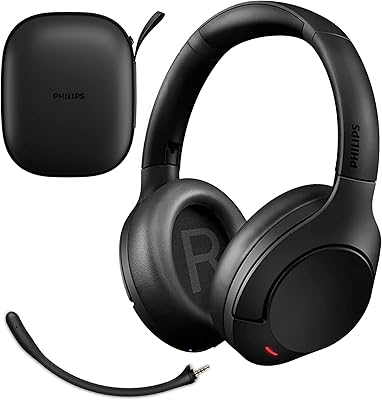
Philips UpBeat UH202 Wireless On-Ear Headphones
77%
88%
Battery Life
91%
Value for Money
71%
Sound Quality
66%
Comfort & Fit
63%
Build Quality
More
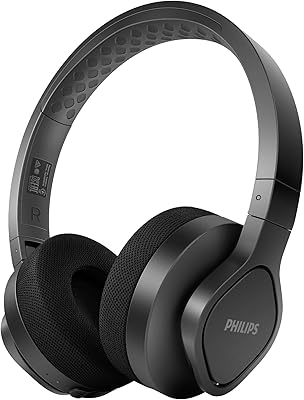
Philips Over-Ear Wireless Headphones with Noise Cancelling and Removable Mic
84%
88%
Audio Performance
78%
Noise Cancellation
94%
Battery Life
90%
Comfort and Fit
72%
Touch Control Sensitivity
More
Philips H5209 Wireless Headphones
83%
94%
Battery Life
88%
Sound Quality
85%
Comfort
91%
Call Clarity
87%
Bluetooth Connectivity
More
Philips TAH3209
Philips TAH3209
73%
74%
Sound Quality
91%
Battery Life
86%
Fast Charging
68%
Comfort & Fit
66%
Build Quality & Durability
More
Philips A4216 Wireless Headphones
88%
88%
Sound Quality
94%
Battery Life
82%
Comfort & Fit
91%
Portability & Storage
87%
Build Quality & Durability
More
Beats Solo3 Wireless On-Ear Headphones
76%
94%
Battery Life
89%
Wireless Connectivity
67%
Sound Quality
61%
Comfort & Fit
63%
Build Quality
More

FAQ

The 85dB cap is enforced at the hardware level through the drivers themselves, so it cannot be bypassed by adjusting the volume on the connected device. No matter how high a child pushes the volume on their tablet or phone, the headphones will not exceed that ceiling. The app adds a second layer of software control on top of that.

The headphones work perfectly fine straight out of the box without the app — the 85dB hardware limit is always active regardless. The Philips Headphones app is optional but unlocks the parental controls, including custom volume ceilings below 85dB, playtime scheduling, and audio exposure tracking. If you want those extra oversight features, you will need a compatible smartphone to set them up.

Most children between roughly 5 and 12 years old will get a comfortable fit from the adjustable headband. Younger kids in the 5–8 range tend to fit very well given the lighter on-ear design. For older children approaching 12, particularly those with larger heads, it is worth noting that some parents have found the ear cups a bit shallow for longer wear sessions.

Pairing is designed to be straightforward. The headset uses Bluetooth 5.0 and connects automatically to the last paired device whenever Bluetooth is switched on, so children typically do not need to go through a pairing process after the first setup. First-time pairing is standard: hold the button, find the headset in your device's Bluetooth settings, and connect.

Yes, the built-in microphone handles voice transmission well enough for virtual classes and video calls. The audio quality on the mic is functional and clear for speech, which is really all that matters for classroom use. Several parents specifically mention online learning as their primary reason for buying the K4206.

The plastic frame is reasonably sturdy for everyday use, but these are not ruggedized headphones — they are not waterproof or drop-tested to any specific standard. They should handle the typical wear of school bags, car rides, and casual handling well, but they would likely not survive being sat on repeatedly or dropped from significant heights without showing damage over time.

The box includes the headphones themselves with the built-in battery pre-installed, a USB charging cable, and a user manual. There is no hard carrying case included, so if portability and protection during travel are priorities, you may want to pick up a compatible case separately.

They will work with any Bluetooth-enabled device, including Android tablets, iPads, iPhones, Amazon Fire tablets, and most laptops. The 3.5mm jack provides a wired fallback for older devices or situations where Bluetooth is restricted. The Philips app for parental controls requires a compatible iOS or Android smartphone.

The ear cup lights are activated by pressing a dedicated button and cycle through a set of colors with each press. They can also be turned off entirely if preferred. The lights do consume a small amount of extra power, though the impact on the 28-hour battery life is minimal under typical use.

Yes, the 3.5mm audio jack means your child can plug in and keep listening even if the battery is completely flat — a genuinely useful backup on long flights or road trips. You would just need a standard 3.5mm aux cable, which is not included in the box but is inexpensive and widely available.

Where to Buy