Overview

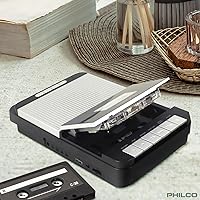
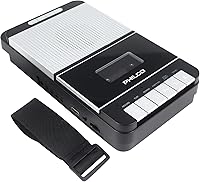
The Philco PDR2200 Portable Cassette Recorder is a no-frills, budget-minded device that bridges the gap between analog nostalgia and modern digital convenience. Philco has been around long enough to carry some name recognition, and this unit slots firmly into the entry-level tier — which sets the tone for what you should realistically expect. It plays tapes, records audio, and converts cassettes to digital files via USB, all in one compact package. The build feels light and plastic-heavy, as you would expect at this price point. If you are a casual user hoping to rescue old mixtapes or preserve a box of home recordings without spending much, this cassette recorder makes a straightforward case for itself.
Features & Benefits

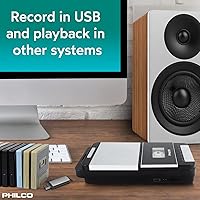
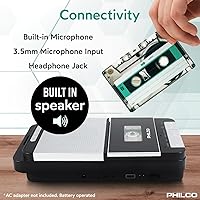
This tape-to-digital converter covers three core functions in a single handheld unit: it plays back cassettes, records live audio through a built-in microphone, and transfers tape content directly to your computer or phone via USB connection. Plug it in, open your preferred audio software, and the conversion process is about as uncomplicated as it gets. The 3.5mm headphone jack lets you monitor playback privately, which is handy when sorting through old recordings before committing them to digital. You get up to 120 minutes of recording time, enough to cover a full standard tape from start to finish. Controls are minimal and labeled clearly — no manual required.

Best For

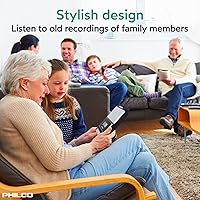
This cassette recorder is squarely aimed at people who have a stack of old tapes gathering dust and want a simple, affordable way to digitize them — think family voice recordings, childhood mixtapes, or old band rehearsals. It also works for students or journalists who occasionally need a quick analog recording backup without carrying bulky equipment. Older adults reconnecting with cassette collections will appreciate that there is no complicated setup involved. That said, anyone expecting professional-grade results will want to look elsewhere. This is a casual-use device, and it performs best when that is exactly what you need — a low-cost, low-friction path from tape to digital file.

User Feedback

Buyers consistently praise how quickly the Philco unit gets up and running — most report being ready to convert within minutes of unboxing. The USB-direct workflow earns particular appreciation from users who expected a far more complicated process. On the downside, mono-only recording is a real and recurring complaint; anyone hoping to capture music with even basic stereo separation will be disappointed. A handful of reviewers also note that tape transport speed can feel inconsistent after extended sessions, leading to slightly warped playback on longer tapes. Audio quality is described as adequate for personal listening but firmly below what any dedicated deck would produce. Packaging and presentation are generally considered a bright spot.

Pros

  • Gets up and running in minutes with no driver installation or complex software required.
  • USB-direct conversion means no extra hardware sitting between your tape and your computer.
  • Three functions in one device — playback, recording, and digitization — keeps things simple.
  • Up to 120 minutes of recording time covers a full standard cassette without interruption.
  • Compact and light enough to carry to a relative's house for an afternoon of tape digitization.
  • Controls are clearly labeled and intuitive, making it accessible for less tech-savvy users.
  • Compatible with PCs, smartphones, and MP3 players without platform-specific headaches.
  • The 3.5mm headphone jack lets you monitor audio privately during both playback and recording.
  • Packaging is tidy and protective — the unit typically arrives in good condition.
  • Priced low enough that casual users are not overcommitting for occasional tape rescue work.

Cons

  • Mono-only microphone makes stereo music recording completely impractical.
  • Tape transport speed can drift on longer cassettes after extended use sessions.
  • Converted audio quality falls noticeably short of what a dedicated audio interface produces.
  • Included documentation is minimal — troubleshooting requires outside research.
  • No independent volume control, leaving quietly recorded tapes underpowered through earbuds.
  • The all-plastic build raises real questions about longevity under regular use.
  • Microphone sensitivity drops sharply with distance, limiting group recording scenarios.
  • Some users on recent macOS versions or certain Android devices experience USB recognition issues.
  • No carrying case or protective sleeve included despite the portable form factor.
  • Background hiss is present during recordings, which becomes noticeable in quieter source material.

Ratings

The scores below reflect our AI-driven analysis of verified global buyer reviews for the Philco PDR2200 Portable Cassette Recorder, with spam, bot-submitted, and incentivized feedback actively filtered out before scoring. Each category is weighted against real-world usage patterns reported by actual owners, from casual tape listeners to people digitizing decades-old family recordings. Strengths and frustrations are represented equally — nothing is glossed over.

Ease of Setup
88%
Most buyers report being operational within a few minutes of opening the box — plug into USB, launch an audio app, and the device is recognized without driver headaches. For older users or those with limited tech comfort, this frictionless start is genuinely appreciated and frequently called out in reviews.
A small number of users on older operating systems encountered recognition issues that required troubleshooting. The included documentation is minimal, so anyone who runs into a snag has little to fall back on beyond online forums.
Tape-to-Digital Conversion
74%
26%
For casual archiving — recovering old mixtapes, preserving home recordings, or digitizing spoken-word cassettes — the USB conversion workflow gets the job done without requiring any extra hardware or paid software. Users digitizing personal or sentimental content report satisfactory results for that purpose.
The output quality is serviceable but noticeably compressed compared to dedicated audio interfaces. Users who tried to archive music cassettes for serious listening found the converted files lacked the warmth and clarity they expected, particularly in the higher frequency range.
Audio Playback Quality
67%
33%
Casual listeners playing back old tapes through the headphone jack report that the audio is clear enough for everyday enjoyment. For someone just wanting to hear a childhood mixtape or an old recorded conversation, the playback holds up reasonably well in quiet environments.
Audiophiles and anyone with a reference point for quality cassette decks will notice the flatness immediately. Background hiss is present, stereo separation feels narrow, and the output lacks the dynamic range that even a mid-range standalone deck would provide.
Recording Quality
52%
48%
The built-in microphone is adequate for recording spoken-word content like lectures, voice memos, or interview snippets when you just need a rough analog backup. In quiet rooms with a speaker close to the unit, intelligibility is acceptable for practical use.
The mono-only microphone is a hard ceiling on recording quality — music recordings, group conversations, or anything requiring spatial audio come out flat and thin. Several users who bought this hoping to record band rehearsals or ambient audio were notably disappointed, and this limitation comes up repeatedly in critical reviews.
Build Quality & Durability
58%
42%
The compact size makes it easy to toss in a bag for travel, and the layout of controls is clean enough that nothing feels awkwardly placed. For occasional home use, the construction holds together adequately over short-term ownership.
The all-plastic body feels noticeably lightweight in a way that raises questions about longevity. A subset of reviewers flagged that the tape transport mechanism showed signs of inconsistency — slight speed fluctuations on longer tapes — after several weeks of regular use, which is a meaningful concern for archiving work.
Tape Transport Consistency
55%
45%
For short tapes and occasional use, the transport mechanism runs smoothly enough that most users will not notice any issue. Light-use owners who play or record a tape here and there report no major problems over reasonable ownership periods.
Extended use sessions reveal the weak point: some users report subtle wow and flutter that distorts playback pitch on C-90 or C-120 tapes. This is not universal, but it appears often enough in reviews to be considered a real risk, especially for anyone planning to digitize a large collection systematically.
Portability
83%
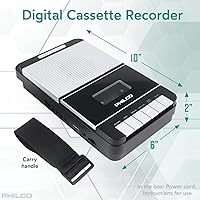
At just over two pounds and with a handheld form factor, this tape-to-digital converter is among the more travel-friendly options in its category. Users who wanted to bring it to a relative's home to digitize tapes in person appreciated not having to haul bulky equipment.
The package dimensions are slightly larger than some competing units, and there is no included carry case or protective sleeve. A few buyers noted the size was a bit awkward to pack neatly alongside other gear without adding some protective wrap of their own.
USB Connectivity & Compatibility
79%
21%
Compatibility across Windows PCs, Macs, and most smartphones is broadly confirmed by buyers. The plug-and-play behavior means no hunting for proprietary software, which is a genuine convenience for users who just want a simple pipe from tape to computer.
Some users on recent macOS versions or certain Android phones reported that the device was not recognized on the first attempt and required switching USB ports or restarting. It works for most, but the edge cases are real and occasionally frustrating.
Value for Money
76%
24%
Buyers who entered with calibrated expectations — basic digitization, casual playback, nothing more — broadly feel the price is fair for what they received. As a low-cost way to rescue a box of old tapes without investing in a proper deck and audio interface, it occupies a practical niche.
Buyers who compared it against slightly pricier alternatives after the fact often felt the gap in quality was larger than the gap in price. If your tape collection is large or musically significant, the savings on the front end may cost more in re-dos or frustration on the back end.
Headphone Listening Experience
71%
29%
The 3.5mm jack delivers enough volume for comfortable private listening in typical indoor environments. Users who used it to casually revisit old spoken-word tapes or lo-fi recordings found the monitoring experience perfectly workable for that purpose.
There is no volume control independent of the source level, which means very quietly recorded tapes can feel underpowered through standard earbuds. The audio character through headphones also reflects the same flatness noted in playback quality — fine for utility, not for pleasure listening.
Microphone Placement & Sensitivity
49%
51%
For recording a single voice close to the unit — say, reading notes aloud for personal reference — the microphone picks up speech with passable clarity. Users who just needed a simple memo-recorder function found it met that narrow requirement.
The sensitivity drops sharply with distance, making any group recording scenario impractical. Even solo recordings in a room with ambient noise show noticeable background pickup, and the mono capsule captures nothing spatially useful — a real drawback for anyone with even modest recording ambitions.
Controls & Usability
84%
Button layout is straightforward and clearly labeled, which matters especially for older users or those who are not gadget-savvy. The learning curve is essentially nonexistent — standard transport controls behave exactly as expected, and the USB mode switches without confusion.
The buttons have a plasticky, shallow click that does not inspire confidence, and a few users reported a control or two feeling loose out of the box. Nothing that prevents use, but the tactile feedback does not match what you might expect from a more considered build.
Packaging & Unboxing
78%
22%
Packaging is clean and functional, with the unit arriving well-protected in most reported cases. Several buyers specifically mentioned being pleasantly surprised by the presentation, which felt a step above typical budget electronics packaging.
Included accessories are minimal — do not expect a USB cable with any generous length or any kind of carrying solution. What is in the box gets you started, but supplementary accessories are likely needed for a complete setup depending on your workflow.

Suitable for:

The Philco PDR2200 Portable Cassette Recorder is a strong fit for anyone sitting on a collection of old tapes they want to preserve without committing serious money or time to the process. If you have a shoebox of family recordings, childhood mixtapes, or spoken-word cassettes that have been gathering dust for years, this tape-to-digital converter offers a practical, low-friction path to rescuing that audio before it degrades further. Older adults who want to revisit their cassette libraries without setting up a complicated stereo system will appreciate how little the device demands from them — plug in, press play, done. Students and journalists who occasionally need a reliable analog backup for recorded interviews will also find it covers that narrow use-case without fuss. It works equally well as a thoughtful gift for a music-loving friend or family member who still has tapes around but no way to play them.
Not suitable for:

Anyone with serious audio preservation goals or a large music collection worth archiving should look carefully before committing to the Philco PDR2200 Portable Cassette Recorder. The mono microphone is a firm ceiling — if you need to record a band rehearsal, a live performance, or any stereo source, the output will disappoint regardless of how you position the device. Audiophiles or even enthusiastic casual listeners who care about faithful sound reproduction will likely find the playback and conversion quality noticeably below their expectations. The tape transport mechanism has also drawn enough criticism for speed inconsistency over extended use that anyone planning to digitize a large collection in long sessions should factor in that risk. And if durability is a priority — for frequent travel or daily heavy use — the all-plastic construction is not built to absorb that kind of wear over the long term.

Specifications

  • Brand: Manufactured and distributed by PHC Americas, LLC under the Philco brand.
  • Model Number: The unit is identified by model number PDR2200-BK.
  • Core Functions: Supports cassette playback, live audio recording via built-in microphone, and cassette-to-digital conversion via USB.
  • Microphone: Built-in mono microphone is included for live recording directly onto cassette or into digital format.
  • Headphone Output: A standard 3.5mm headphone jack allows private monitoring during both playback and recording sessions.
  • Digital Interface: USB connectivity enables direct audio transfer to a PC, smartphone, or MP3 player without requiring an external audio interface.
  • Recording Time: Supports up to 120 minutes of continuous digital recording, enough to cover a full C-120 cassette from start to finish.
  • Compatible Devices: Works with personal computers, MP3 players, and smartphones across major operating systems.
  • Form Factor: Portable handheld design intended for personal, on-the-go, or home use rather than fixed installation.
  • Package Dimensions: The complete package measures 14.8 x 7.48 x 3.5 inches as shipped.
  • Item Weight: The unit weighs 2.03 pounds, keeping it light enough for transport in a bag or tote.
  • Tape Compatibility: Designed to work with standard compact cassette tapes, including common C-60, C-90, and C-120 lengths.
  • Availability Date: This model was first made available to consumers in June 2023.
  • ASIN: The Amazon Standard Identification Number for this product is B0C48LWXK2.
  • UPC: The registered Universal Product Code for this unit is 850041387338.

Related Reviews

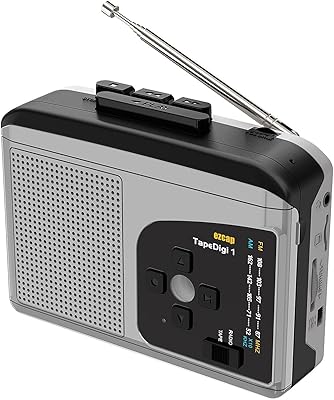
Ezcap Ezcap234 AM/FM Cassette Player
70%
88%
Ease of Setup
79%
Tape-to-MP3 Conversion
73%
AM/FM Reception
61%
Audio Quality
63%
Built-in Speaker
More
FIOLEES Portable Cassette Recorder Player
71%
88%
Portability & Size
83%
AM/FM Radio Reception
61%
Tape Playback Quality
54%
Recording Capability
69%
Speaker Performance
More
Gracioso Portable Cassette Recorder Player
73%
91%
Ease of Use
84%
Value for Money
61%
Audio Playback Quality
53%
Build Quality
76%
AM/FM Reception
More
Riptunes RCS210 Portable Cassette Player Recorder
73%
88%
Ease of Use
61%
Audio Playback Quality
57%
Recording Quality
53%
Built-in Speaker Volume
67%
Build Quality & Durability
More
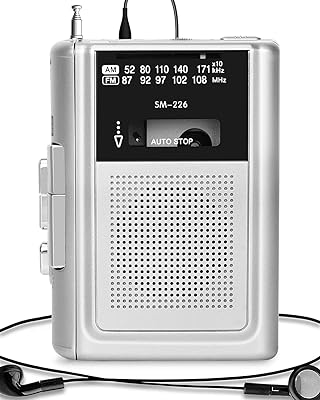
SEMIER SM-226 Portable Cassette Player
70%
84%
Value for Money
81%
Radio Reception
88%
Ease of Use
86%
Portability
63%
Recording Quality
More
Reshow 235A Portable Cassette Player
74%
84%
Digital Conversion Ease
78%
Audio Quality (Headphones)
48%
Audio Quality (Built-in Speaker)
88%
USB-C Connectivity
73%
Battery Life
More
GPO CC1 Portable Cassette Player Recorder
71%
61%
Sound Quality
58%
Build Quality
66%
FM Radio Performance
74%
Value for Money
83%
Ease of Use
More
Studebaker SB2130CS Portable Cassette Player/Recorder
69%
88%
Ease of Use
61%
Audio Playback Quality
83%
Recording Versatility
58%
Build Quality
54%
Speaker Volume & Output
More
Tyler TCP-01 Portable Cassette Player
73%
88%
Ease of Use
63%
Sound Quality (Playback)
58%
Recording Quality
61%
Build Quality
52%
Tape Speed Consistency
More
Jensen MCR-100
Jensen MCR-100
71%
91%
Ease of Use
63%
Recording Quality
78%
Playback Performance
61%
Build Quality
57%
Battery Life
More

FAQ

No dedicated software is required to get started — the device connects via USB and is recognized by most computers as a standard audio input. That said, you will need a free audio recording application such as Audacity to actually capture and save the audio as a file. Most users find the whole setup takes under ten minutes.

It is compatible with both Windows and Mac computers in most cases. A small number of users on recent macOS versions have reported needing to switch USB ports or restart the device to get it recognized, but the majority of Mac owners report no issues with standard plug-and-play use.

The built-in microphone records in mono only, which is a genuine limitation worth knowing before you buy. If you are recording voice memos, interviews, or spoken-word content, mono is typically fine. For music or anything where you want left-right channel separation, this cassette recorder will not deliver that — you would need a device with a stereo microphone or a dedicated audio interface.

The device streams audio to your computer via USB, and the file format depends entirely on the recording software you use on your end. Audacity, for example, can save in WAV, MP3, FLAC, and other formats depending on your settings. The unit itself does not have onboard storage or a fixed output format.

The product listing does not specify battery operation, and the device is primarily designed for USB-powered use when digitizing. For standalone cassette playback away from a computer, check the included documentation for power requirements — some users rely on USB power banks for portable playback use.

It is acceptable for casual, everyday listening — if you just want to hear an old tape and enjoy the nostalgia, the playback quality does the job. However, if you have a reference point for what a proper tape deck sounds like, you will notice the output is flatter and slightly less detailed. It is fine for personal enjoyment, less so for critical listening.

It can handle it, but go in with realistic expectations. A handful of reviewers have noted that the tape transport mechanism can show some speed inconsistency during longer or more intensive sessions, which can affect playback pitch on individual tapes. For a project that size, plan to work in shorter sessions and monitor quality as you go rather than running it for hours at a stretch.

Yes, the Philco PDR2200 Portable Cassette Recorder lists smartphone compatibility, and USB connection to a phone is supported in principle. In practice, you may need an appropriate USB adapter depending on your phone's port type, and a mobile audio recording app to capture the input. Results can vary more on mobile than on a computer, so testing with one tape first is a good idea.
For the right person, yes — it is a thoughtful and practical gift that solves a real problem without asking much from the recipient. The controls are simple enough that someone who is not especially tech-oriented can figure it out without help. Just set expectations appropriately: it is a budget device, not a high-fidelity one.

Honest answer: it feels like what it is — a lightweight, budget-tier plastic device. It is fine for occasional home use and will hold up if treated gently. If you are planning to carry it around daily or use it heavily over a long period, the construction may not inspire confidence. Think of it as a practical tool for a defined task rather than a long-term piece of equipment.