Overview

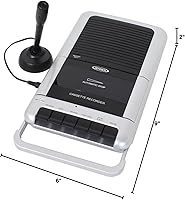
The Jensen MCR-100 is a no-nonsense portable cassette player and recorder that has quietly held its ground in a niche market since 2015. Running on either a 120V AC adapter or four C batteries, it covers both desk-bound and on-the-go use without demanding much from the buyer. It measures 12 x 6 x 2.5 inches and weighs under 2 ounces — small enough to tuck into a shelf or a bag. With nearly 7,000 ratings and a #4 rank in its category, this cassette recorder clearly serves a real and ongoing need, not just nostalgia.

Features & Benefits

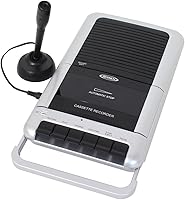
Recording is where this portable tape deck earns its keep. Hit the 1-Touch Recording button and the built-in condenser microphone starts capturing audio automatically — no fiddling with input levels thanks to Automatic Level Control. For better-quality capture, there's an external mic input with a stand included. The auxiliary jack is worth noting too: it lets you feed audio directly from a phone or MP3 player in mono, which is handy when dubbing digital tracks to tape. Fast forward, rewind, a standard 3.5mm headphone jack, and a basic volume dial round out a set of controls that anyone can figure out in under a minute.

Best For

This cassette recorder hits a sweet spot for a few specific types of buyers. If you have a box of old tapes you've been meaning to revisit — or transfer to digital — this portable tape deck makes that task approachable without requiring expensive equipment. Students or journalists who want a dead-simple voice recorder will also find it practical, especially given the AC power option for desk use. Seniors who grew up with cassettes will feel right at home with the controls. If you need stereo recording or studio-grade sound, this isn't it — but for low-budget everyday use, it does exactly what it promises.

User Feedback

With a 4.1-star average across close to 7,000 reviews, the Jensen player lands solidly in the middle-positive range — appreciated but not universally loved. Ease of use and reliable playback come up consistently as positives, with buyers noting that setup takes minutes and the machine just works. On the flip side, the mono-only recording is the most frequently cited limitation — it matters if you're capturing music rather than voice. Some users also report that the stated 8-hour battery life can fall short in real-world use, which is worth factoring in given that C batteries add up in cost. Durability over extended use appears mixed.

Pros

  • One-touch recording with automatic level control makes capturing audio genuinely effortless.
  • Works straight out of the box — no software, apps, or complicated setup required.
  • Dual power options give real flexibility between desk use and occasional portable sessions.
  • The auxiliary input lets you dub audio from a phone or MP3 player directly to tape.
  • External mic input with stand included adds recording flexibility beyond the built-in condenser.
  • Compact and lightweight enough to store in a drawer and pull out only when needed.
  • Nearly 7,000 Amazon ratings with a 4.1-star average reflects consistent buyer satisfaction over years.
  • At its price, this cassette recorder delivers solid value for light, occasional use.
  • Universal 3.5mm headphone jack means no adapters needed for modern earbuds or headphones.

Cons

  • Mono-only recording is a hard limitation that affects music playback and archiving quality noticeably.
  • Battery life falls short of the stated 8 hours, and C batteries add up in cost quickly.
  • Built-in microphone picks up motor noise in quiet environments, muddying soft recordings.
  • Plastic build shows wear sooner than expected under frequent or daily use.
  • The tape door hinge has been cited as a recurring failure point in longer-term reviews.
  • Auxiliary input port can feel loose after repeated use, raising reliability concerns over time.
  • Mic sensitivity drops off sharply at distance, limiting usefulness beyond close-range voice capture.
  • The instruction manual is vague on auxiliary input setup, leaving some users to figure it out themselves.

Ratings

The Jensen MCR-100 has been scored by our AI system after analyzing thousands of verified global buyer reviews, with spam, bot submissions, and incentivized feedback actively filtered out. Sitting at 4.1 stars across nearly 7,000 ratings, this portable tape deck earns genuine praise in some areas while drawing consistent criticism in others — and both sides are reflected honestly below.

Ease of Use
91%
Buyers across all age groups — particularly seniors revisiting old tape collections — repeatedly call out how little time it takes to get started. The one-touch recording button and clearly labeled controls mean there is almost no learning curve, even for people who have never used a cassette recorder before.
A small number of users found the button travel on fast forward and rewind to be stiffer than expected, requiring a firm press. Nothing that disrupts basic operation, but worth noting for users with limited hand strength.
Recording Quality
63%
37%
For voice memos, interviews, and basic audio capture, the built-in condenser mic does a reasonable job at short distances. The Automatic Level Control keeps recordings from peaking or dropping out, which is genuinely useful when you cannot monitor levels in real time.
The mono-only format is the single most consistent complaint across negative reviews. Users recording music — even casually — notice the flatness immediately. Mic sensitivity also drops off sharply beyond a few feet, making room recordings thin and unreliable.
Playback Performance
78%
22%
Most buyers report clean, stable playback on tapes in reasonable condition. The volume range is wide enough for both headphone listening and playing back recordings to check quality, and the 3.5mm jack is compatible with virtually any modern earbuds.
Some users note a faint motor hum during quiet passages, particularly on older tapes. A handful of reviews mention slight speed inconsistency after prolonged use, though this appears to be the exception rather than a widespread pattern.
Build Quality
61%
39%
The unit feels solid enough for light home use, and the chassis does not creak or flex under normal handling. Several users who bought it specifically for occasional digitizing sessions say it has held up fine over a year or more of intermittent use.
The plastic construction becomes a concern for users who handle it daily. Tape door hinges and the external mic port have been cited as weak points in a meaningful number of reviews, with a few buyers reporting breakage within the first few months.
Battery Life
57%
43%
The option to run on four C batteries gives real flexibility when an outlet is not available — useful for bringing to a garage, storage unit, or anywhere you need to sort through old tapes without dragging a power strip along.
The stated 8-hour battery claim is optimistic in practice. Multiple reviewers report noticeably shorter run times, and C batteries are bulky and relatively expensive to replace often. For regular use, the AC adapter is almost always the better choice.
Value for Money
82%
18%
At its price point, the Jensen player covers the core use case — playback and basic recording — without asking buyers to invest in equipment they may only use a handful of times. For digitizing a box of old tapes, the cost-per-use ratio is genuinely favorable.
Buyers expecting even entry-level audio quality for music recording may feel the price does not justify the mono limitation. If stereo or higher fidelity is needed, spending more elsewhere makes more sense than hoping this unit will stretch to meet those needs.
AC Power Reliability
86%
The included AC adapter works consistently and eliminates the battery cost concern for home users entirely. Most buyers who primarily use this at a desk report zero power issues across extended sessions, making it a dependable setup for a dedicated digitizing station.
The adapter cord length was flagged by a few users as shorter than ideal, limiting where the unit can be positioned relative to a wall outlet. No widespread electrical or overheating complaints were found, which is a positive signal for long-term reliability.
Auxiliary Input Functionality
67%
33%
The auxiliary jack works as described for routing audio from a phone or MP3 player directly to tape, which is a genuinely useful feature for buyers who want to create mixtapes or preserve digital audio in analog form. Setup is plug-and-play with a standard 3.5mm cable.
The mono output means any stereo source will be downmixed, which frustrates users who did not read the specs carefully before buying. A few reviewers also reported the aux input feeling loose after repeated use, raising minor durability concerns for that specific port.
Microphone Versatility
59%
41%
Having both a built-in mic and an external mic input with a stand gives more flexibility than most competitors at this price. Journalists and students who need to record interviews at a desk found the external mic option useful for cleaner, more focused voice capture.
The included external mic is basic at best, and several users upgraded to a third-party mic fairly quickly. The built-in condenser struggles in any environment with ambient noise — even a household fan in the background can muddy a recording noticeably.
Portability
74%
26%
At under 2 ounces and with battery support, this cassette recorder is genuinely portable in the sense that it is not tethered to a desk. It fits comfortably in a bag, and the compact footprint means it does not take up meaningful space in a workspace or storage shelf.
The C battery requirement works against true on-the-go use — those cells add noticeable bulk and weight compared to a device running on AA or rechargeable batteries. It is more portable than a full-size tape deck, but not as grab-and-go as the small chassis suggests.
Setup & First Use
88%
Out of the box, there is almost nothing to configure. Plug in the adapter, load a tape, and press play or record. Multiple reviewers specifically mentioned gifting this to elderly relatives and being able to walk them through the setup in a single short phone call.
The instruction manual is minimal and somewhat vague about the auxiliary input configuration. A small number of users had to search online to understand how to properly connect an external source, which should not be necessary for a device marketed for broad accessibility.
Noise & Motor Sound
53%
47%
Under normal listening conditions with the volume at a moderate level, the motor noise is inaudible through headphones. For spoken word playback or voice recording review, most buyers will not find it disruptive in a quiet room.
The motor hum is audible during recording if the built-in mic is in use and the room is quiet. Several users flagged this in recordings of soft speech, where the background mechanical noise was picked up clearly enough to be distracting on playback.
Compatibility
81%
19%
The standard 3.5mm headphone and auxiliary jacks mean virtually any modern device or headphone works with this tape deck without adapters. That universality is a quiet but meaningful win — no proprietary connectors or format confusion to deal with.
It is strictly a mono device, which limits compatibility with stereo workflows. Users who hoped to feed the output into a computer for digitizing via a stereo interface may need a mono-to-stereo adapter to avoid recording on only one channel of their audio software.
Durability Over Time
58%
42%
Units used lightly — a few sessions per month for tape archiving — have held up well for many buyers over two or more years. The mechanism seems well-suited to intermittent use rather than daily heavy operation, which matches the intended use case for most buyers.
Buyers who use this cassette recorder daily or who have put it through heavy recording sessions report wear signs more quickly. The tape door and fast forward mechanism are the most commonly cited failure points, and replacement parts are not readily available.

Suitable for:

The Jensen MCR-100 is a strong fit for anyone with a box of old cassette tapes gathering dust and a practical need to revisit or archive them without spending a lot of money. Seniors who grew up with the format will find the controls immediately familiar — no apps, no Bluetooth pairing, no menus to navigate. Students and journalists on a tight budget who need a reliable, low-stakes voice recorder for interviews or class notes will also get real mileage out of this cassette recorder. If you primarily plan to use it at a desk plugged into the wall, the included AC adapter makes the setup stable and cost-free to run. It also works well as a secondary recorder for anyone who wants a physical tape backup of audio that already lives on a phone or MP3 player, thanks to the auxiliary input.

Not suitable for:

Buyers expecting stereo sound — whether for music playback, music recording, or digitizing tapes with a full, rich audio profile — will be genuinely disappointed with the Jensen MCR-100, and no setting or workaround changes that. This portable tape deck records in mono only, which is a hard ceiling that affects everyone from hobbyist musicians to people archiving concert recordings. Anyone planning to use it heavily on battery power should also think twice: C batteries are expensive, bulky, and will drain faster than the advertised estimate under real-world conditions. If durability is a priority — say, for a classroom, a shared workspace, or daily professional use — the plastic construction and reported wear on the tape door and fast forward mechanism are legitimate concerns. For buyers who need higher fidelity or stereo capability, a dedicated tape-to-digital converter or a higher-tier portable deck will serve them far better.

Specifications

  • Model Number: The manufacturer model number for this unit is MCR-100.
  • Manufacturer: This cassette recorder is manufactured by MaxiAids, distributed under the Jensen brand.
  • Dimensions: The unit measures 12 x 6 x 2.5 inches, making it compact enough for a desk shelf or storage bag.
  • Weight: The Jensen player weighs 1.92 ounces without batteries or tape loaded.
  • Power Source: Powered by either an included 120V AC adapter or four C batteries, which are not included.
  • Battery Life: On battery power, the manufacturer rates operation at up to 8 hours, though real-world results may vary.
  • Battery Type: Requires four C-size batteries for cordless operation; no rechargeable battery pack is built in.
  • Recording Format: Records in mono only; stereo recording is not supported on this portable tape deck.
  • Microphone: Features a built-in condenser microphone plus an external microphone input jack with a stand included.
  • Recording Mode: Equipped with 1-Touch Recording and Automatic Level Control to simplify audio capture without manual adjustments.
  • Headphone Jack: Standard 3.5mm headphone output jack is compatible with most modern earbuds and headphones.
  • Auxiliary Input: Includes a 3.5mm auxiliary input jack for mono recording from MP3 players, smartphones, or other audio sources.
  • Tape Controls: Offers Play, Record, Stop, Fast Forward, and Rewind controls for full tape navigation.
  • Volume Control: Manual volume dial allows basic adjustment of playback output level.
  • Tape Compatibility: Compatible with standard compact audio cassettes; tape type or brand is not restricted by the manufacturer.
  • First Available: This model has been available for purchase since June 2015 and remains in active production.
  • Amazon Rating: Holds a 4.1 out of 5 star average rating based on approximately 6,960 verified customer ratings.
  • Category Rank: Ranked #4 in the Portable Cassette Players and Recorders category on Amazon at time of review.

Related Reviews
Jensen MCR-1500 Portable Stereo CD Player and Dual-Deck Cassette Player/Recorder
79%
82%
Sound Quality
88%
Portability
85%
Ease of Use
61%
Cassette Deck Reliability
90%
Radio Reception
More
BTYMS 100/180 Grit Nail Files (100 Pcs)
87%
92%
Value for Money
89%
Durability
85%
Ease of Use
88%
Effectiveness on Acrylic Nails
87%
Performance on Gel Nails
More
AWOL VISION MW-100 100-inch Projector Screen
86%
94%
Image Quality
91%
Viewing Angle
88%
Setup Ease
85%
Build Quality
90%
Compatibility
More
Clean Skin Club Clean Towels XL, 100% Biobased Face Towels, 100 Count
89%
93%
Softness & Texture
89%
Effectiveness in Makeup Removal
92%
Eco-Friendly Features
90%
Skin Sensitivity & Irritation
87%
Convenience for On-the-Go Use
More
Jensen MPR2121
Jensen MPR2121
74%
95%
Value for Money
92%
Ease of Installation
87%
Bluetooth Stability
73%
Audio Output Quality
89%
USB & Aux Connectivity
More
Sonos Era 100
Sonos Era 100
76%
91%
Sound Quality
87%
Trueplay Room Calibration
58%
App Experience & Setup
93%
Multi-Room Integration
84%
Connectivity & Compatibility
More
Jensen CD555 Bluetooth Boombox
84%
85%
Sound Quality
90%
Portability
88%
Ease of Use
80%
Bluetooth Connectivity
79%
FM Radio Performance
More
Jensen BUCAM100J Backup Camera
87%
94%
Ease of Installation
89%
Image Quality
91%
Build Quality
90%
Waterproof Performance
87%
Wide Viewing Angle
More
Jensen JCR311 Car Stereo Radio
82%
81%
Sound Quality
89%
Bluetooth Connectivity
93%
Ease of Installation
72%
Display Visibility
84%
FM/AM Reception
More
Jensen JWM62A Bluetooth Wallmount Stereo
86%
89%
Value for Money
94%
Ease of Installation
88%
Bluetooth Range
76%
Audio Performance
90%
App Control Functionality
More

FAQ

It records in mono only. If you are archiving old mixtapes or music recordings, you will notice that the stereo separation is lost. For voice memos, interviews, or spoken word recordings, mono is perfectly adequate and most buyers do not find it limiting for those purposes.

Yes, you can. The auxiliary input jack accepts a standard 3.5mm cable, so you can route audio from your phone directly to the tape deck for recording. Keep in mind the output will be mono, so any stereo content from your phone will be downmixed. A basic 3.5mm male-to-male audio cable is all you need — it is not included.

In a quiet room, there is a faint mechanical hum from the tape drive that the built-in microphone can pick up during soft recordings. It is most noticeable when recording low-volume speech or near-silence. For louder voices or environments with any ambient sound, it is generally not a practical problem.

The 120V AC adapter is included in the box, so you can use it right away without any additional purchase. The four C batteries needed for cordless operation are not included, so if you plan to use it away from a power outlet, grab those before you start.

The manufacturer lists up to 8 hours, but real-world use tends to fall short of that, especially during recording sessions which draw more power than playback. Many users find that having a spare set of C batteries on hand is a good idea if they plan extended sessions away from an outlet. For regular home use, sticking to the AC adapter is the more economical approach.

Not directly — the Jensen MCR-100 does not have a USB output. To transfer tapes to your computer, you would need to connect the headphone output jack to your computer's audio input using a 3.5mm cable, then use free recording software like Audacity to capture the audio. It takes a few extra steps, but it works reliably for basic tape archiving.

It is a basic condenser mic that does the job for close-range voice recording, but it is not a high-quality unit by any measure. Many users who do regular recording end up replacing it with an inexpensive third-party microphone for better clarity and sensitivity. For casual use, though, it gets the job done.

It is one of the simpler devices in its category. There are no menus, no settings screens, and no wireless pairing to deal with. You load a tape, plug it in, and press a button. Multiple buyers have mentioned setting this up for elderly relatives over the phone without any trouble, which says a lot about how intuitive the controls are.

Replacement parts for this unit are not widely available through standard retail channels, and manufacturer repair support is limited. If the tape door or another mechanical component fails outside of any warranty window, repair is generally not practical. Given the price point, most buyers in that situation would replace the unit rather than attempt a repair.

You need to flip the tape manually to play the other side — this portable tape deck does not have an auto-reverse function. That is standard for devices in this price range, so it is not a surprise, but it is worth knowing if you are used to decks that switch sides automatically.