Overview

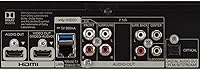
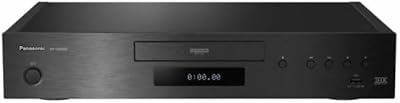
The Panasonic DP-UB820-K 4K Blu-ray Player sits firmly in the premium tier of dedicated disc players — built for people who take their home theater seriously, not for casual viewers happy with a smart TV's built-in apps. Panasonic has decades of credibility in audio and video engineering, and this player reflects that heritage in hardware decisions most competitors skip. The most telling example is the dual HDMI output, which lets you route video and audio independently — a feature audiophiles genuinely appreciate. Streaming support is included, but make no mistake: this disc player was designed to make physical media shine first.
Features & Benefits

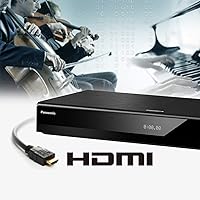
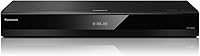
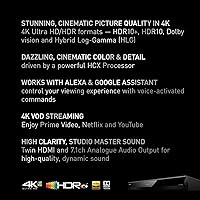
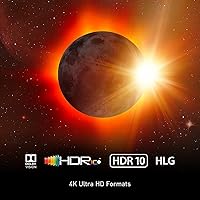
At the heart of the UB820 is Panasonic's HCX image processor, which handles color and chroma detail with a precision that genuinely shows on a calibrated display. HDR coverage is unusually broad — Dolby Vision, HDR10+, HDR10, and HLG are all supported, meaning whatever format your disc or stream throws at it, this Panasonic 4K player handles it without compromise. The twin HDMI configuration deserves a clear explanation: one port handles video to your TV, the other sends audio to your receiver, keeping both signal chains pure. Add in Hi-Res Audio formats like FLAC, DSD, and WAV, plus built-in Wi-Fi for Netflix, Prime Video, and YouTube, and you have a thorough feature set built around quality rather than convenience shortcuts.

Best For

The UB820 makes the most sense for disc collection owners — people who have invested in 4K UHD or standard Blu-ray libraries and want a player that does justice to that content. It is also a strong fit for audiophiles who run a dedicated AV receiver and want to pass high-resolution audio formats through without compromise. If your TV supports HDR but you have been unsure which HDR format you will encounter, this disc player removes that uncertainty entirely. It is less compelling for anyone whose viewing is mostly streaming-based; paying a premium for a device you rarely use for physical media does not make much practical sense. Upgrading from an older 1080p player? The picture quality difference on a 4K HDR screen is stark and immediately noticeable.

User Feedback

Among verified buyers, picture quality and HDR tone mapping draw the most consistent praise — owners with calibrated 4K displays frequently note how accurate and natural the image looks on both disc and streamed content. The twin HDMI setup earns appreciation from AV enthusiasts, though several reviewers mention it took real setup effort to understand. On the downside, the streaming app interface feels dated compared to dedicated streaming sticks; if you are used to Roku or Fire TV, the navigation here will feel clunky. The remote is functional but not intuitive. Long-term owners report the hardware holds up well, and Panasonic has issued firmware updates over time. Buyers focused on disc playback are broadly satisfied; those expecting a polished smart TV experience are less so.

Pros

  • Widest HDR format support in its class — Dolby Vision, HDR10+, HDR10, and HLG all covered natively.
  • The HCX image processor produces noticeably accurate colors and natural textures on well-mastered 4K discs.
  • Dual HDMI outputs allow a clean, separate audio-video signal path that audiophiles specifically seek out.
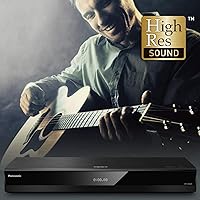
  • Hi-Res Audio formats including FLAC, DSD, and WAV are supported for genuinely high-fidelity sound.
  • Long-term owners report stable, reliable hardware performance with no significant failure patterns.
  • Panasonic has continued issuing firmware updates since the 2019 launch, signaling ongoing manufacturer support.
  • Netflix, Prime Video, and YouTube built-in reduce the need for an additional streaming device in most setups.
  • The UB820 handles standard Blu-ray and DVD upscaling alongside native 4K, making existing disc collections still relevant.
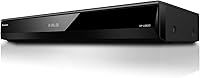
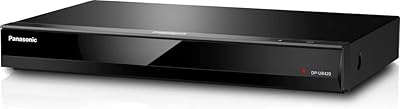
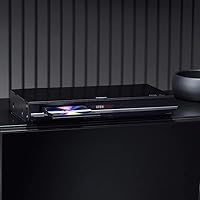
  • Build quality feels solid and understated — fits cleanly into a proper AV rack without bulk or visual noise.

Cons

  • Streaming app interface feels slow and dated compared to Roku, Apple TV, or Fire TV sticks.
  • The dual HDMI setup confuses many first-time buyers; the included manual does not explain it clearly enough.
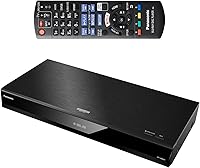
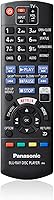
  • Remote control layout is dense and unintuitive — a learning curve that should not exist at this price point.
  • No meaningful expansion of the streaming app library since launch; the software side has largely stalled.
  • App switching and cold-launch times for streaming services are noticeably sluggish in normal use.
  • Premium pricing makes it a poor fit if your disc collection is small or rarely used.
  • Standard DVD upscaling, while decent, does not reach the quality ceiling that native 4K content achieves.
  • Wi-Fi performance can be inconsistent in larger homes; wired ethernet is more reliable but less convenient.

Ratings

The Panasonic DP-UB820-K 4K Blu-ray Player has been scored across multiple performance and usability categories by our AI system, which analyzed thousands of verified global buyer reviews while actively filtering out incentivized, bot-generated, and spam submissions. The result is an honest, weighted picture of where this disc player genuinely excels and where real owners have run into friction. Both the standout strengths and the recurring frustrations are reflected transparently in every score below.
Picture Quality
94%
Owners with 4K HDR displays consistently describe the image as the best they have seen from a standalone player — colors are accurate, shadow detail is preserved, and there is none of the aggressive sharpening that cheaper players apply. The HCX processor makes a visible difference on well-mastered 4K discs.
A small number of users note that upscaled standard Blu-ray content, while good, does not always match the performance of native 4K material. On older or poorly mastered DVDs, the quality ceiling is more apparent.
HDR Format Coverage
92%
Supporting Dolby Vision, HDR10+, HDR10, and HLG simultaneously is genuinely rare at any price point, and buyers with premium OLED or QLED TVs report that tone mapping across all four formats feels consistent and well-tuned rather than hit-or-miss.
A few users with older HDR10-only displays feel they are paying for format support they cannot actually use. There is also occasional confusion about which HDR mode is active during playback, as the on-screen indicators are not always obvious.
Audio Performance
91%
For users feeding signal into a dedicated AV receiver, the UB820 delivers Hi-Res Audio formats — FLAC, DSD, WAV — with a clarity that audiophiles specifically call out in reviews. The dual HDMI configuration keeps the audio chain completely separate from the video path, which matters for signal purity.
Casual users who run audio through their TV speakers rather than a receiver will not hear any meaningful difference from this setup compared to far cheaper players. The audio advantages are real but require the right supporting equipment to fully realize.
Dual HDMI Setup
78%
22%
AV enthusiasts who understand the purpose of twin HDMI outputs praise the implementation — separating the video and audio paths removes potential interference and is a hardware decision that reflects genuine engineering intent rather than a spec box tick.
A recurring complaint in reviews is that the dual HDMI design confuses buyers who expect a single cable to do everything. Several owners report spending significant time troubleshooting before understanding the intended configuration, and the manual does not explain it particularly well.
Streaming App Experience
58%
42%
Netflix, Amazon Prime Video, and YouTube are all present and functional, which covers the core streaming needs for most households. Having physical media and streaming in one box does reduce the number of inputs and remotes needed.
The streaming interface feels noticeably behind dedicated streaming sticks in terms of responsiveness and visual design. Users accustomed to Roku, Apple TV, or Fire TV frequently describe the app navigation as sluggish and dated — this is clearly not where the UB820 was designed to compete.
Build Quality & Design
83%
The chassis feels solid and appropriately weighted at 5.3 pounds — it does not shift around on a shelf and has a clean, understated look that fits into most AV rack setups without drawing attention. Panasonic has clearly built this to last rather than cut corners on the enclosure.
The aesthetic is functional but uninspiring — there are no premium touches like a brushed aluminum front panel that some competitors offer at a similar price. A few reviewers also note the disc tray feels slightly plasticky relative to the overall build.
Remote Control
61%
39%
The remote covers all necessary functions and the button layout is logically organized for someone who takes time to learn it. Voice assistant support adds a hands-free option that some users genuinely adopt over time.
The most common complaint is that the remote is not intuitive out of the box — button labeling is small, the layout is dense, and new users frequently hit the wrong key. Several reviewers suggest a third-party universal remote as a practical upgrade.
Setup & Installation
69%
31%
Connecting the player to a Wi-Fi network and getting streaming apps running is straightforward, and disc playback starts quickly once the physical connections are sorted. For single-HDMI setups, most users are up and running within minutes.
The dual HDMI configuration significantly raises the setup complexity for anyone without prior AV experience. Without clear guidance, it is easy to connect only one HDMI and wonder why audio or video is not performing as expected.
Loading & Response Speed
77%
23%
Disc loading times are competitive for the category — 4K UHD titles spin up reasonably quickly, and menu navigation during playback is responsive. Most users do not flag speed as an issue during normal disc-based use.
App loading within the streaming interface can lag noticeably, and switching between apps takes longer than on a dedicated streaming device. The performance gap versus standalone streamers is especially noticeable when launching Netflix cold.
Wi-Fi & Connectivity Stability
74%
26%
Built-in Wi-Fi handles streaming reliably for most users in typical home network conditions, and the inclusion of HDCP 2.2 on both HDMI outputs ensures compatibility with current 4K displays and receivers without signal handshake problems.
A subset of users in larger homes or with congested networks report occasional Wi-Fi dropouts during streaming sessions. Wired ethernet is the more stable option, but that requires running a cable to the entertainment unit, which is not always practical.
Value for Money
71%
29%
For a buyer who actively uses a 4K disc library and owns a quality AV receiver, the UB820 delivers a combination of features — HDR breadth, Hi-Res Audio, dual HDMI — that justifies its premium positioning relative to budget alternatives.
For anyone whose disc collection is small or who primarily streams, the price is difficult to justify. At this tier, you are paying for engineering depth that only reveals itself in specific, well-equipped home theater contexts — a poor fit for casual or mixed-use buyers.
Long-Term Reliability
86%
Older reviews from buyers who have owned the player for two or more years consistently report stable, trouble-free operation. Panasonic has issued firmware updates over the product's lifespan, which owners view as a sign of continued manufacturer support.
There are occasional reports of disc read errors appearing after extended use, though these appear to be isolated rather than systemic. As with any optical drive mechanism, wear over years of heavy use is a realistic consideration.
HDR Tone Mapping Accuracy
89%
Buyers who have compared tone mapping across multiple players specifically call out the UB820 as one of the most accurate in rendering highlight detail without blowing out bright areas — particularly noticeable in high-contrast scenes on Dolby Vision discs.
On some TVs, the default tone mapping settings produce results that are slightly cooler or more conservative than some viewers prefer. Getting optimal results can require manual calibration adjustments, which not all buyers are comfortable making.
App & Firmware Updates
67%
33%
Panasonic has pushed firmware updates to the UB820 since its 2019 launch, addressing compatibility and adding minor improvements. Buyers who purchased early note that the player has not been abandoned by the manufacturer post-sale.
Update frequency has slowed in recent years, and the streaming app selection has not meaningfully expanded since launch. Users hoping for new app additions or a refreshed interface are likely to be disappointed — the software side is largely static at this point.

Suitable for:

The Panasonic DP-UB820-K 4K Blu-ray Player is built for a specific kind of buyer, and it delivers best when that buyer shows up with the right setup. If you have accumulated a library of 4K UHD or standard Blu-ray discs and want to do them genuine justice on a modern HDR display, this is one of the most capable players available at any price. It is also a strong match for audiophiles who run a dedicated AV receiver — the dual HDMI configuration lets you keep your audio and video chains completely independent, which produces a cleaner signal than a single-cable setup. Buyers with HDR-capable televisions will particularly benefit from the breadth of format support; whether your TV handles Dolby Vision, HDR10+, or standard HDR10, the UB820 covers all of it without requiring you to check compatibility charts before buying a disc. Those upgrading from a first-generation 4K player or an older 1080p unit will notice a real and immediate improvement in both picture accuracy and audio resolution on well-mastered content.
Not suitable for:

If your viewing habits are primarily streaming-based and you rarely reach for a physical disc, the Panasonic DP-UB820-K 4K Blu-ray Player is a difficult spend to justify. The streaming app interface — while functional — lags well behind dedicated streamers in terms of responsiveness and app selection, so using it as your primary Netflix or Prime Video device will likely frustrate you within weeks. Buyers without an external AV receiver will also find that many of the audio engineering advantages simply do not surface through a TV's built-in speakers. The dual HDMI setup, which is a genuine strength for experienced AV users, can be genuinely confusing during initial installation if you have never worked with split audio-video signal routing before. And if your budget is tight or you are looking for a casual, all-purpose media device for a secondary room, there are far more cost-effective options that will cover the basics without the premium overhead this player carries.
Specifications

  • Model: The unit carries the official model designation DP-UB820-K, manufactured by Panasonic and first made available in June 2019.
  • Dimensions: The player measures 16.9 × 8.06 × 2.5 inches, designed to fit standard AV rack shelving without occupying excessive vertical space.
  • Weight: At 5.3 pounds, the chassis is substantial enough to feel well-built without being cumbersome to position or reposition in a media cabinet.
  • Resolution: Native 4K UHD playback is supported at 3840 × 2160 pixels, with full downscaling compatibility for 1080p and lower-resolution displays.
  • HDR Formats: The player supports four HDR standards: Dolby Vision, HDR10+, HDR10, and Hybrid Log-Gamma (HLG), covering the full range of current consumer HDR formats.
  • Image Processor: Panasonic's proprietary HCX (Hollywood Cinema Experience) processor handles chroma processing and color mapping to maximize accuracy on 4K HDR content.
  • HDMI Outputs: Two separate HDMI outputs are included, both HDCP 2.2 compliant, enabling independent routing of video to a display and audio to an AV receiver.
  • Audio Formats: Hi-Res Audio playback is supported, including lossless and high-resolution formats such as FLAC, WAV, and DSD for bit-accurate reproduction through a compatible receiver.
  • Disc Compatibility: The player handles 4K UHD Blu-ray, standard Blu-ray (including Full HD 3D), DVD, and CD formats from a single disc tray mechanism.
  • Streaming Apps: Built-in apps include Netflix, Amazon Prime Video, and YouTube, accessible via the onboard interface without requiring an external streaming device.
  • Wireless: Wi-Fi is built in, allowing network connectivity and streaming without a wired ethernet connection, though a wired connection remains an option for improved stability.
  • Screen Mirroring: Screen mirroring is supported, allowing compatible smartphones and tablets to cast content directly to the connected display through the player.
  • Voice Control: Voice assistant compatibility is included, enabling hands-free control of playback functions through supported smart home voice platforms.
  • Connectivity: Beyond dual HDMI, the player includes USB ports for local media playback and standard network connectivity options for both wired and wireless setups.
  • Color & Finish: The unit ships in a matte black finish designed to blend into standard home theater and AV rack environments without visual distraction.
  • Operating Temp: Panasonic specifies an operating temperature range of +5°C to +35°C (+41°F to +95°F) for reliable performance.
  • Manufacturer: Designed and manufactured by Panasonic, a Japanese electronics company with decades of heritage in audio and video engineering.

Related Reviews
Panasonic DP-UB150-K 4K Blu-Ray Player
83%
94%
Video Quality
91%
Audio Quality
89%
Ease of Setup
87%
Value for Money
90%
HDR Performance
More
Panasonic DP-UB420-K 4K Ultra HD Blu-ray Player
84%
92%
Picture Quality
89%
Audio Performance
82%
Build Quality
88%
Ease of Use
85%
Streaming Performance
More
Panasonic DP-UB450 4K Blu-ray Player
78%
93%
UHD Disc Picture Quality
91%
HDR Format Coverage
88%
Audio Performance
86%
Dual HDMI Output Design
82%
Build Quality & Design
More
Panasonic DP-UB9000 4K Blu-ray Player

78%
96%
Video Picture Quality
93%
HDR Format Coverage
94%
Audio Performance
92%
Build Quality & Chassis
88%
4K Upscaling of Standard Discs
More
Panasonic DMP-BD84P-K Blu-ray Player
72%
83%
Picture Quality
79%
Audio Performance
88%
USB & Multi-Format Playback
93%
Ease of Setup
67%
Build Quality & Materials
More
Panasonic DMP-BD85-K Blu-ray Disc Player
84%
90%
Value for Money
88%
Ease of Setup
91%
Full HD Upscaling
85%
Design & Size
87%
Audio/Video Performance
More
LG UBK80 4K Blu-ray Player
77%
89%
4K Picture Quality
83%
DVD & Blu-ray Upscaling
91%
Ease of Setup
74%
Value for Money
51%
Remote Control Quality
More
Sony UBP-X800M2 4K UHD Blu-ray Player
77%
93%
Picture Quality
89%
Audio Performance
86%
Build Quality
61%
Streaming Experience
58%
Loading & Boot Speed
More
Sony BDP-S6700 Multi-System Blu-ray Player
79%
93%
Multi-Region Playback
84%
4K Upscaling Quality
89%
Audio Performance
88%
Ease of Setup
58%
Streaming App Ecosystem
More
Sony X800 Region Free 4K Blu-ray Player

79%
94%
Region-Free Reliability
88%
4K Picture Quality
91%
Audio Performance
79%
Region-Free Modification Quality
83%
Build Quality
More

FAQ

You can use a single HDMI cable and the player will work fine — video and basic audio will pass through together. The second HDMI output is specifically for sending audio separately to an AV receiver, which keeps the audio signal independent and cleaner. If you do not own an external receiver, one cable is all you need.

Yes, the UB820 can pass Dolby Atmos and DTS:X bitstreams through its HDMI output to a compatible AV receiver for decoding. This is how most AV setups handle object-based audio — the player passes the raw signal and the receiver does the processing. Make sure your receiver supports these formats to take full advantage.

Honestly, no — not for most people. The built-in apps cover Netflix, Prime Video, and YouTube, which handles the basics, but the interface is noticeably slower and less polished than a dedicated streaming device. If streaming is a big part of how you watch content, keeping a separate streaming stick connected is a practical solution rather than relying solely on the player's interface.

Yes, the player upscales standard DVDs to near-4K resolution, and the results are respectable for well-produced discs. The HCX processor helps, but the quality of the original DVD master matters a lot — a poorly encoded disc will still show its age regardless of the upscaling. For a large existing DVD library, the improvement over no upscaling is meaningful but not transformative.

By default, the player is region-locked for both Blu-ray (Region A) and DVD (Region 1 for North American units). It will not natively play discs from other regions without modification, which would void the warranty. If international disc compatibility matters to you, it is worth checking this carefully before purchasing.

In most standard home environments the Wi-Fi works reliably for 4K streaming, but users in larger homes or with congested networks occasionally report dropouts. A wired ethernet connection is always more stable if you can run a cable to your entertainment unit. For disc playback, of course, your network speed is irrelevant.

It is functional, but it has a learning curve that feels unnecessary for the price. The buttons are small, closely spaced, and not particularly intuitive on first use. Many owners end up programming a universal remote or using voice control once they get used to the setup, which helps significantly.

Yes, full HD 3D Blu-ray playback is supported. If you have a 3D-capable display and a collection of 3D discs, the UB820 handles them without any additional configuration needed.

Firmware updates are delivered over the internet connection — the player will notify you when an update is available, and installation takes just a few minutes. Panasonic has pushed updates since the player launched in 2019, and the process is generally painless for users comfortable with basic menu navigation.

If you own a 4K HDR television, the upgrade is genuinely noticeable — better color accuracy, improved contrast on HDR content, and access to the 4K UHD Blu-ray format that your current player cannot read at all. The improvement is most dramatic on newer 4K discs watched on a quality display. If your TV is still 1080p, the upgrade is much harder to justify.

Where to Buy