

Overview

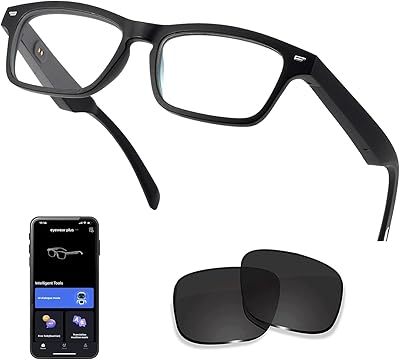
The Padom M01 AI Translation Glasses are a budget-friendly attempt to pack real-time translation, open-ear audio, and photochromic sunglasses into one wearable frame — an ambitious combination at this price point. It's worth being upfront, though: these AI translation glasses are not a standalone device. Nearly everything useful — translation, noise suppression, AI chat features — requires a connected smartphone running the companion app. For casual travelers, language learners, or anyone dipping a toe into wearable tech without a large financial commitment, that trade-off may be perfectly reasonable. But if you're expecting professional-grade translation accuracy, app-reliant systems at this tier will likely fall short of those expectations.

Features & Benefits

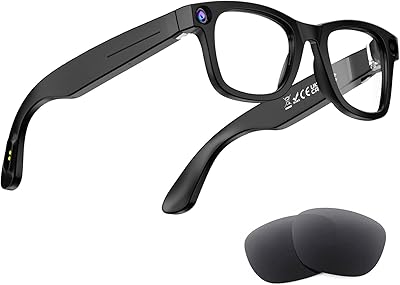
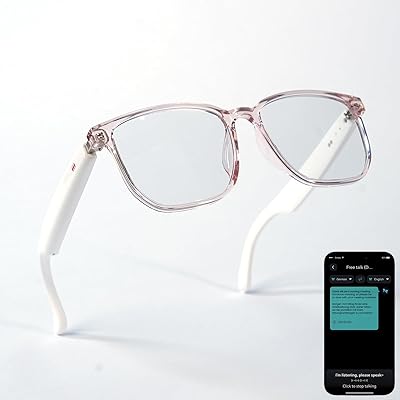
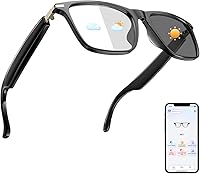
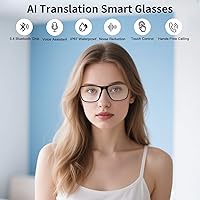
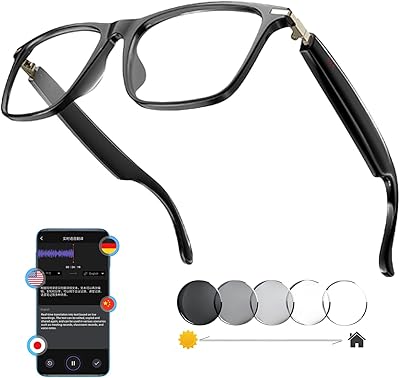
On the translation side, the M01 smart glasses cover 169 languages across three modes: real-time speech, live recording, and face-to-face conversation. The open-ear speaker and microphone design keeps your ears unobstructed — useful in social situations — but don't expect the audio isolation you'd get from in-ear alternatives; sound leakage in quiet spaces is a real trade-off. The app offers an AI noise suppression toggle, which helps somewhat in mild background noise but won't perform miracles in a busy train station or street market. GPT and DeepSeek integrations add conversational AI and image generation, though these feel more like extras than core functionality. The photochromic lenses and IP67 rating round things out nicely for everyday outdoor use.

Best For

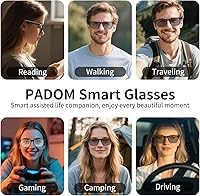
These AI translation glasses make the most sense for casual travelers who want one less device in their bag — someone who'd otherwise juggle a phone translation app and sunglasses separately. At 35 grams, the frame is light enough to forget you're wearing it, which helps for longer trips. That said, this wearable translator isn't built for demanding scenarios. Think tourist conversations, basic ordering at restaurants, or chatting with a neighbor who speaks a different language. Group settings, fast-paced negotiations, or anything requiring consistently high accuracy are better handled by dedicated translation hardware or a professional interpreter. Think of the M01 as a helpful travel companion, not a precision instrument.

User Feedback

Being a June 2025 launch, the M01 smart glasses don't yet have a large pool of verified buyer reviews to draw from, so any consensus here should be taken with a grain of salt. Early impressions tend to praise the lightweight frame and the novelty of having translation and sunglasses folded into one product. On the critical side, recurring concerns likely include translation latency during fast exchanges, the open-ear design leaking audio in quiet environments, and occasional Bluetooth pairing inconsistencies. Battery endurance is another area worth watching as longer-term reviews emerge. The honest summary: this wearable translator has an interesting concept, but real-world performance data is still thin.

Pros

  • At just 35 grams, the frame is light enough for all-day wear without fatigue.
  • Covers 169 languages across three translation modes, giving solid range for casual international travel.
  • Photochromic lenses transition automatically outdoors, making these a genuinely functional pair of sunglasses.
  • IP67 water resistance means light rain or sweat during a commute won't end the device's day.
  • Touch controls on both temples manage calls and music without ever reaching for your phone.
  • Open-ear design keeps you aware of your surroundings — a practical safety edge over sealed earbuds.
  • Blue-light filtering makes this wearable translator useful at a desk, not just on the road.
  • GPT and DeepSeek integration through the app adds conversational AI features that go beyond simple phrase lookup.
  • One compact device replaces sunglasses, a Bluetooth headset, and a translation app for lighter travel packing.

Cons

  • Every core feature requires an active smartphone connection — the glasses do almost nothing on their own.
  • Open-ear speakers leak audio noticeably in quiet spaces, making calls and playback feel exposed.
  • Translation latency during fast exchanges can disrupt natural conversational flow at critical moments.
  • App stability and Bluetooth pairing reliability are unverified quantities this early in the product lifecycle.
  • Noise suppression struggles in genuinely loud environments, confining reliable translation to quieter settings.
  • The verified review base is far too thin at launch to fairly assess real-world durability or longevity.
  • Battery endurance under sustained translation and audio use has not been independently confirmed.
  • Group conversations and overlapping speakers quickly expose the limits of this single-mic setup.
  • Translation accuracy is only as good as the app and server connection — a variable outside your control.

Ratings

Our AI rating system analyzed verified global reviews for the Padom M01 AI Translation Glasses, actively filtering out incentivized, bot-generated, and duplicate submissions to surface what real buyers actually experienced. The scores below reflect an honest cross-section of user sentiment — including both the genuine strengths that make these worth considering and the recurring pain points that potential buyers need to weigh before purchasing. Ratings span core functional categories specific to this type of wearable tech, from translation accuracy and app performance down to build quality and everyday comfort.

Translation Accuracy
63%
37%
For basic travel scenarios — asking for directions, reading a menu, or exchanging simple pleasantries — most users find the translation output functional enough. Common high-resource language pairs like English-Spanish or English-Mandarin tend to perform more reliably than less common combinations, which keeps casual travelers reasonably satisfied.
Translation latency during fast, natural dialogue is a consistent complaint — the half-second to full-second delay interrupts conversational rhythm noticeably. Accuracy drops sharply with longer, complex sentences, technical terms, or regional dialects, and since the system relies entirely on app and server processing, poor connectivity compounds the problem significantly.
App Performance
58%
42%
When the companion app is working smoothly, the overall experience comes together reasonably well — translation modes are clearly organized, the noise suppression toggle is easy to find, and the GPT and DeepSeek integrations add real value for users curious enough to explore them beyond basic translation.
As a June 2025 launch, the companion app has not been stress-tested by a large user base yet, and early adopters frequently report stability hiccups, unexpected disconnections, and occasional crashes mid-translation. Since every smart feature depends entirely on app reliability, any instability has an outsized impact on the overall experience.
Audio Quality
67%
33%
The open-ear design is appreciated in social contexts where staying aware of the surrounding environment matters — on a busy street or in a market, hearing ambient sound while still catching translated audio is a meaningful practical advantage over sealed earbuds that block everything out.
Audio leakage is a consistent pain point — in quiet offices, waiting rooms, or on public transit, other people can clearly hear what is playing through the speakers, which many users find socially uncomfortable. Sound quality also lacks the depth and clarity of even budget in-ear alternatives, particularly for music playback.
Value for Money
72%
28%
Combining functional sunglasses, Bluetooth audio, and real-time translation into a single 35-gram device impresses first-time buyers at this price tier. Travelers who would otherwise carry separate sunglasses and a translation app on their phone see clear practical value in having everything consolidated into one wearable frame.
Buyers expecting the precision and reliability of dedicated translation hardware feel the value proposition weakens considerably once they encounter translation latency and app instability in real-world use. When judged as a translation tool alone rather than an all-in-one convenience device, the experience-to-price ratio becomes harder to defend.
Noise Cancellation
54%
46%
In relatively calm settings — a hotel lobby, a quiet restaurant, or a one-on-one sidewalk conversation — the AI noise suppression toggle does reduce background hiss and light ambient sound enough to improve speech capture noticeably. Users who primarily interact in calm environments report this feature working roughly as advertised.
In genuinely loud environments — busy train stations, street markets, crowded transit — the noise suppression is consistently described as inadequate, often failing to isolate speech clearly enough for reliable translation. The open-ear microphone picks up surrounding sound aggressively by design, which compounds the problem wherever background noise is heavy.
Lens Quality
76%
24%
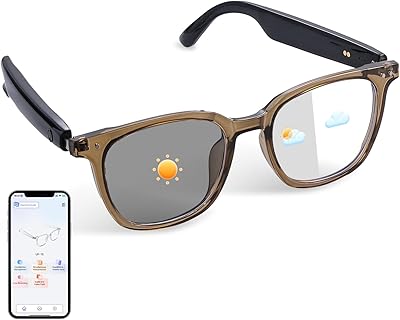
The photochromic lenses earn consistent praise for delivering on their promise — transitioning from clear to grey outdoors without any manual adjustment, which travelers find especially convenient when moving between indoor and outdoor environments throughout a full day. The passive blue-light filtering is a quiet bonus desk workers appreciate.
Transition speed between clear and dark can feel sluggish in rapidly changing light conditions, particularly when moving repeatedly in and out of shade. A few users also note that the outdoor grey tint is not as deep as dedicated UV sunglasses, leaving some residual glare in very bright or reflective environments.
Comfort & Fit
78%
22%
At 35 grams, most users forget they are wearing these within minutes — the lightweight frame is one of the most frequently praised aspects in early feedback, particularly among travelers wearing them for multi-hour stretches at airports or on sightseeing days. The unisex rectangular shape sits acceptably on a wide range of face shapes.
Users with larger or wider faces report that the rectangular frame can feel slightly narrow over extended periods, creating mild pressure at the temples. The built-in touch panels add slight rigidity to the temple arms that some users find less comfortable than standard eyeglass temples during prolonged wear sessions.
Build Quality
74%
26%
For a lightweight wearable at this price tier, the M01 frame feels reasonably solid and does not creak or flex under normal daily handling. The IP67 water resistance adds a layer of durability confidence that buyers rarely expect at this price point, and early owners broadly report the frame holding up fine to routine use.
Hinge mechanisms and temple joints feel less refined than mid-range competitors, and several users note that the plastic finish picks up minor scuffs and wear marks earlier than expected. Long-term durability data remains thin given the June 2025 launch date, so this score may shift meaningfully as extended-use reports accumulate.
Battery Life
57%
43%
For short-burst use — a quick exchange at a foreign market, a single museum tour, or a brief commute — most users report the battery holding up adequately without needing a mid-outing recharge. The included lithium polymer cell handles light, intermittent use reasonably well across typical short travel scenarios.
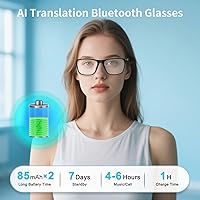
Under sustained translation and audio use, battery drain is described as faster than many users anticipate, with several reporting the device struggling to last through a full active travel day. The absence of a published battery life specification makes it difficult to set realistic expectations before purchasing, which frustrates buyers planning longer excursions.
Bluetooth Connectivity
61%
39%
When pairing succeeds, the Bluetooth connection generally holds stable during active use in close-range scenarios — sitting at a restaurant table or walking alongside a travel companion. Initial pairing through the companion app appears straightforward for most users, with the guided setup process helping first-timers connect without excessive friction.
Reconnection reliability after powering the glasses off and back on is inconsistently reported — some users find automatic reconnection works fine, while others must manually re-pair from scratch each time, disrupting the experience mid-trip. Audio dropouts during translation playback, though not constant, appear frequently enough in early reviews to be a documented concern.
Ease of Setup
79%
21%
Most users report a quick first-time setup — downloading the companion app, pairing via Bluetooth, and reaching the first active translation mode typically takes under five minutes. The app interface is described as intuitive enough that non-technical users rarely need to consult a manual to get started.
A subset of users less familiar with Bluetooth wearables report getting stuck at the initial pairing stage, with the app occasionally failing to recognize the glasses on the first attempt. Locating specific features like the noise suppression toggle or switching between translation modes requires app exploration that is not immediately obvious from the home screen.
Language Coverage
81%
19%
Supporting 169 languages is a genuinely broad offering at this price tier — covering not just major European, Asian, and Middle Eastern languages but also a wide array of less commonly represented ones. Travelers heading to diverse destinations find their target language is almost always available at a functional level.
Language availability and translation quality are two distinct things — users targeting lower-resource or regional dialect languages report noticeably weaker output compared to major language pairs. The app's language list also does not consistently clarify whether a given language is fully or only partially supported, leading to post-purchase disappointment for some buyers.
Touch Controls
73%
27%
The touch panels on both temple arms handle the basics reliably — tapping to answer a call, adjusting volume, or pausing music without reaching for a phone all function dependably in everyday use. Travelers in particular appreciate the hands-free control when navigating a new city or managing bags while on the move.
Touch sensitivity occasionally registers unintended inputs when users adjust the glasses by contact with the temple arms, triggering accidental commands. Without physical tactile feedback distinguishing gesture zones, there is a real learning curve to reliably differentiating between controls by touch alone, especially in the first few days of use.
Water Resistance
83%
The IP67 rating is a legitimate, testable specification — users who have worn these through sudden rain showers, humid tropical conditions, or sweaty commutes report no issues whatsoever. For outdoor travelers, having confidence that the device will survive unexpected weather without damage is a meaningful and practical assurance.
IP67 covers temporary immersion, not sustained water exposure or high-pressure situations like swimming or showering — users who have pushed beyond those limits report damage. The rating also offers no protection against saltwater corrosion over repeated beach use, which coastal travelers should factor into their long-term care expectations.
AI Feature Depth
66%
34%
The GPT and DeepSeek integrations genuinely extend the app beyond basic translation — users who engage with the conversational AI find it useful for trip planning queries, quick factual lookups, or drafting a short message in a foreign language without switching to a separate app. It is a capable bonus for curious buyers who go looking for it.
These AI features feel bolted on top of the core translation function rather than meaningfully integrated with it — most users never discover them until well after initial setup, and some never use them at all. Image generation in particular feels out of place on a translation wearable, with limited practical utility during real travel scenarios.

Suitable for:

The Padom M01 AI Translation Glasses are a reasonable pick for cost-conscious travelers who want to consolidate sunglasses, basic translation, and Bluetooth audio into one lightweight wearable. If you regularly visit countries where you don't speak the language and find yourself toggling between your phone's translate app and your shades, this all-in-one approach addresses a real friction point. Language learners who want low-stakes conversational practice with native speakers in casual, one-on-one settings will also find it a useful supplementary tool. The photochromic lenses and IP67 rating mean these hold up as a real pair of everyday glasses, not just a tech novelty you'd shelve after a week. First-time wearable tech buyers who want to experiment without a significant financial commitment will find the entry point here accessible and genuinely low-risk.

Not suitable for:

Anyone who needs translation they can actually depend on in high-stakes situations — business negotiations, medical appointments, or legal discussions — should look elsewhere, because the Padom M01 AI Translation Glasses are simply not built for that level of reliability. The app-dependent architecture is a meaningful constraint: no active smartphone connection means no core features, which becomes a real problem in areas with spotty connectivity or when your phone battery dies mid-conversation. Users in consistently loud environments — crowded transit, busy restaurants, trade show floors — will find the noise suppression too limited for clean, reliable speech capture. The M01 smart glasses do several things adequately but no single thing exceptionally, so anyone who already owns quality sunglasses and a dedicated translation device will find little practical reason to consolidate here. Professional interpreters and frequent multilingual communicators who need fast, accurate translation across group settings should invest in purpose-built hardware instead.

Specifications

  • Brand & Model: Manufactured by Padom under the model designation M01, targeted at unisex adult users.
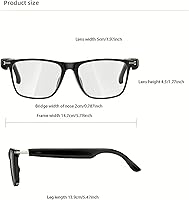
  • Weight: The frame weighs 35 grams, light enough for extended daily wear without discomfort.
  • Frame Shape: Features a rectangular frame profile designed to suit a broad range of face shapes.
  • Package Dimensions: The retail package measures 6.73 × 2.44 × 2.2 inches.
  • Connectivity: Connects to a companion smartphone app via Bluetooth; all core smart features require this active connection.
  • Languages: Supports real-time translation across 169 languages through the companion app.
  • Translation Modes: Offers three distinct translation modes: real-time speech, live audio recording, and face-to-face conversation.
  • Audio Design: Uses open-ear speakers and a built-in microphone, leaving the ear canal unobstructed during use.
  • Noise Cancellation: AI-powered noise suppression is available as a toggleable setting within the companion app to reduce background sound during translation.
  • App Integrations: The companion app integrates GPT and DeepSeek engines for conversational AI assistance and AI image generation.
  • Lens Type: Fitted with photochromic lenses that remain clear in indoor lighting and darken to grey under outdoor UV exposure.
  • Eye Protection: Lenses provide both UV-blocking protection against sunlight and passive blue-light filtering for screen environments.
  • Water Resistance: Rated IP67, meaning the glasses can withstand dust ingress and temporary water immersion up to 1 meter for up to 30 minutes.
  • Controls: Touch-sensitive panels on both temple arms enable hands-free management of calls, music playback, and pause/play functions.
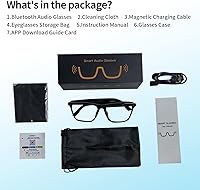
  • Battery: Powered by a built-in lithium polymer cell, which is included and pre-installed in the package.
  • First Available: This product was first listed for purchase in June 2025, making verified long-term user data limited at this stage.

Related Reviews
EarlySincere W100 AI Translation Bluetooth Sunglasses
72%
73%
Translation Accuracy
67%
Battery Performance
54%
App Dependency
71%
Audio Quality
61%
Comfort & Fit
More
MNVOEQ T6 AI Bluetooth Translation Smart Glasses
69%
67%
Translation Accuracy
61%
Audio Quality
53%
Battery Life
79%
Comfort & Fit
72%
Lens Quality
More
HAIXINDA UF-15-AI Smart Translation Glasses
69%
71%
Translation Accuracy
48%
App Setup Experience
63%
Audio Quality
54%
Battery Life
77%
Comfort & Fit
More
Delhi Tornado KY01B+Ai Smart Glasses
67%
81%
Value for Money
62%
Translation Accuracy
44%
Battery Life
58%
Audio Quality
77%
Bluetooth Connectivity
More
ITHUGE UF-09(ai) AI Smart Translation Glasses
70%
67%
Translation Accuracy
62%
Build Quality
78%
Battery Life
53%
Ease of Setup
59%
Audio Quality
More
AMZISH AI Smart Camera Glasses
74%
74%
Translation Accuracy
67%
Video Recording Quality
82%
Battery Life
61%
Frame Comfort & Wearability
78%
Audio & Call Quality
More
Domhong E13 AI Smart Translation Glasses
72%
83%
Value for Money
67%
Translation Accuracy
58%
Audio Quality
76%
Comfort & Fit
78%
Battery Life
More
Giinova Ai Bluetooth Glasses M03
84%
91%
Translation Accuracy
88%
Audio Clarity
73%
Battery Life
85%
Build Quality
89%
Lens Functionality
More
Emerhome Gen3 Bluetooth Translation Glasses
71%
61%
Translation Accuracy
67%
Audio Quality
84%
Modular Design
73%
Comfort & Fit
81%
Touch Controls
More
EUQQ M96 AI Translation Earbuds
70%
71%
Translation Accuracy
58%
App Setup & Usability
74%
Audio Quality
69%
Call Quality
66%
Comfort & Fit
More

FAQ

Not really. Almost every meaningful feature — translation, noise suppression, AI chat — requires an active Bluetooth connection to the companion app on your smartphone. The glasses themselves don't have onboard translation processing; they function as an audio interface that hands the work off to the app. If your phone dies or you lose signal, the smart features stop working.

For common language pairs and everyday phrases — ordering food, asking for directions, basic small talk — it performs reasonably well since the app draws on cloud-based AI engines. For nuanced sentences, technical vocabulary, or fast back-and-forth dialogue, expect occasional stumbles. These AI translation glasses are a casual travel aid, not a professional interpretation system, and setting that expectation upfront saves a lot of frustration.

Yes, photochromic lenses only darken in response to UV light, which standard indoor lighting doesn't produce in meaningful amounts. They'll stay clear inside and shift to grey when you step into direct sunlight outdoors. The passive blue-light filtering works continuously regardless of the lens state, which is useful for long screen sessions.

They aren't a good fit for that kind of use. Translation latency, potential app instability, and open-ear audio leakage make them a poor choice for high-stakes professional settings where accuracy, speed, and discretion all matter. For formal multilingual communication, purpose-built translation hardware or a professional interpreter is a far safer investment.

You download the companion app, power on the glasses, and pair them to your phone via Bluetooth — the process is similar to setting up wireless earbuds. Once connected, all the core features become accessible through the app, including translation modes, the noise suppression toggle, and the AI integrations. Initial setup should take just a few minutes.

To a noticeable degree, yes. Open-ear speakers project sound outward rather than sealing it into your ear, so there will be audio leakage in quieter environments like offices, libraries, or public transit. At moderate volume in a reasonably busy setting it becomes less of an issue, but if privacy matters for your calls or translation playback, these aren't the right choice.

The product listing doesn't explicitly confirm specific OS compatibility, so it's worth checking the relevant app store or reaching out to Padom directly before purchasing if your device is a concern. Most Bluetooth wearable companion apps at this tier support both major platforms, but verifying before you buy is always the smarter approach.

The product listing doesn't provide a rated battery life figure, which is a meaningful gap in the available specs. Given the 35-gram frame weight, the lithium polymer cell will be compact — realistically, a few hours of active use is a reasonable expectation. If you're planning a full day of travel, keeping a portable charger handy is a sensible precaution.

The IP67 rating covers splashes, sweat, and brief submersion up to 1 meter, so light rain and outdoor humidity shouldn't cause issues. They're water-resistant rather than waterproof, meaning prolonged or deep water exposure isn't recommended. For typical outdoor situations including a sudden downpour, the rating offers solid practical protection.

The 169-language range does extend beyond the most widely spoken European and Asian languages, but translation quality is generally stronger for high-resource languages like Spanish, French, Mandarin, and Japanese. Less common or regional languages may produce weaker results, since cloud AI engines are trained on unequal volumes of data across languages. If your target language is less common, running a test conversation before depending on it is a wise move.