Overview

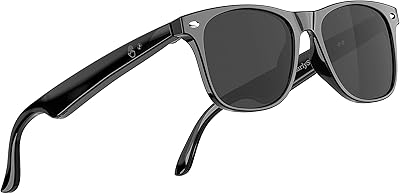
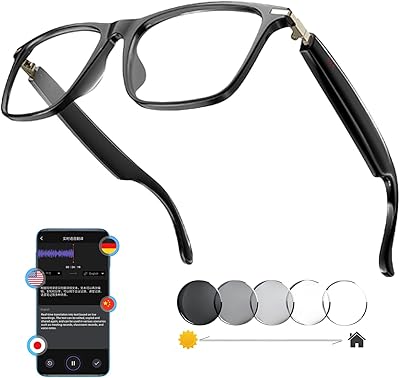
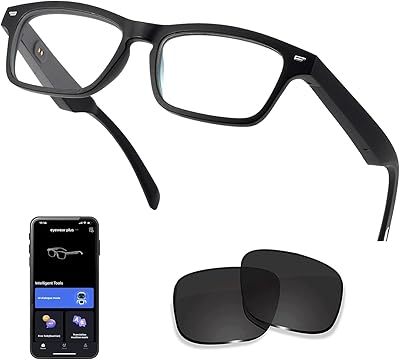
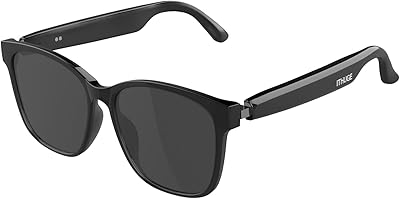
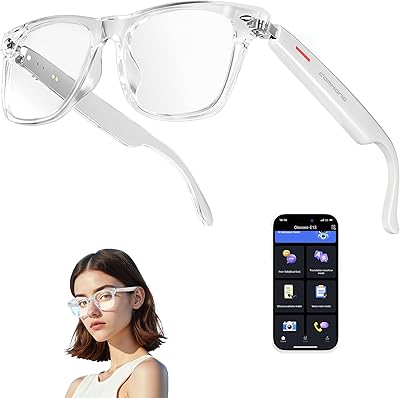
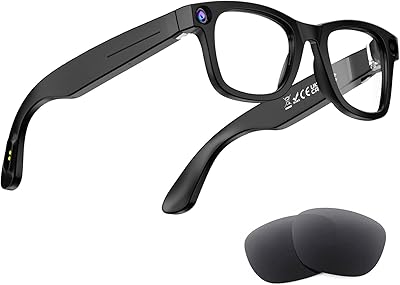
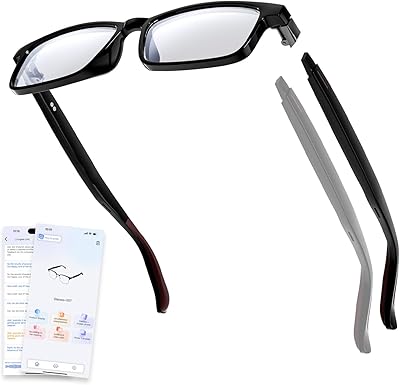
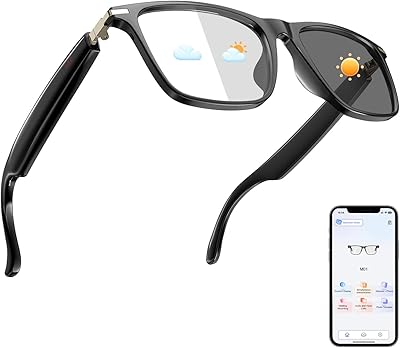
The HAIXINDA UF-15-AI Smart Translation Glasses are a budget entry into the wearable AI space, arriving in April 2025 from a brand most tech buyers won't recognize yet. At just 27 grams, the rectangular unisex frame sits comfortably on most faces, and the photochromic lenses handle transitions from indoor to outdoor without any manual adjustment. Translation runs through a companion app powered by ChatGPT — but before any of that works, you'll need to scan an activation QR code, so the out-of-box experience isn't quite plug-and-play. Worth knowing upfront.
Features & Benefits

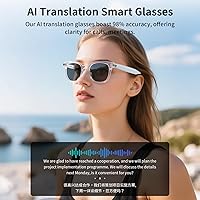
These AI translation glasses support 160+ languages in real time, pulling accuracy from ChatGPT rather than a static phrase database — a meaningful difference when you're mid-conversation and need more than a literal word swap. The open-ear speaker design is genuinely practical: you stay aware of traffic, announcements, or anything happening around you, which earbuds simply can't offer. Bluetooth 5.4 keeps the connection stable, and touch controls on the temples let you manage calls or volume without reaching for your phone. Battery life is rated at 4 to 6 hours of active use, though the tiny 55mAh cell does raise some eyebrows against that claim.

Best For

These wearable translation glasses make the most sense for a fairly specific kind of person. Frequent international travelers are the obvious fit — someone navigating a market in Tokyo or checking into a hotel in Lisbon benefits most from instant, hands-free translation. Remote workers handling multilingual video calls will also appreciate not needing a separate app open on a second screen. Commuters who want background audio without tuning out the world around them are another solid match. For the budget-minded tech enthusiast simply curious about wearable AI, the entry-level price makes it a low-risk experiment rather than a serious commitment.

User Feedback

Early buyers of the HAIXINDA smart glasses tend to split fairly evenly between pleased and frustrated. On the positive side, people genuinely like the lightweight, comfortable fit and appreciate that the photochromic lenses perform as described. The app setup, however, is a recurring complaint — the QR activation step catches buyers off guard, and the instructions aren't always clear. Audio quality in quiet environments gets decent marks, but noisy surroundings expose the open-ear design's limits. A few users also report inconsistent Bluetooth pairing on iOS. Overall, it reads as a capable niche gadget when everything works, but setup friction and brand unfamiliarity leave some buyers feeling uncertain.

Pros

  • Real-time translation across 160+ languages makes these genuinely useful in everyday multilingual situations.
  • ChatGPT-powered translation goes beyond basic word matching, handling context better than older translation tools.
  • At just 27 grams, the frame is light enough to wear for hours without noticeable fatigue.
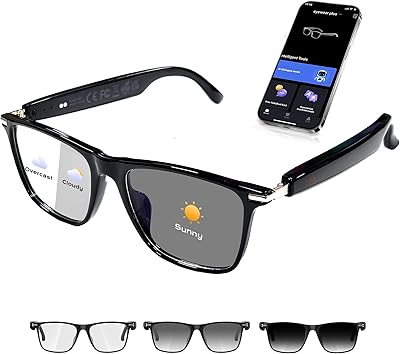
  • Photochromic lenses adapt to sunlight automatically, so you don't need to swap glasses when heading outside.
  • Bluetooth 5.4 provides a stable, reliable connection that holds up well during calls and audio playback.
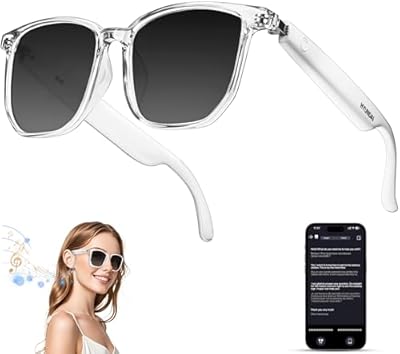
  • Open-ear speakers let you stay aware of your surroundings — a real advantage over isolating earbuds.
  • Temple touch controls make it easy to manage calls and volume without pulling out your phone.
  • Seven-day standby time means you don't need to charge every night just to keep it ready.
  • The entry-level price makes it a reasonable experiment for anyone curious about wearable AI technology.

Cons

  • Translation features require both the companion app and an active internet connection — no offline fallback.
  • The QR code activation setup is unintuitive and has frustrated a number of early buyers.
  • A 55mAh battery capacity is unusually small and makes the claimed 4 to 6 hour runtime hard to verify.
  • Open-ear audio performs poorly in noisy environments, limiting call clarity in busy public spaces.
  • Bluetooth pairing has been reported as inconsistent, particularly on iOS devices.
  • HAIXINDA is a largely unknown brand with minimal public history, which makes long-term reliability hard to assess.
  • The companion app quality and update frequency are unproven, adding uncertainty to the ownership experience.
  • Using only a 5V/1A charger is a strict requirement that could be inconvenient for travelers with multi-port adapters.

Ratings

Our AI rating system analyzed verified global user reviews for the HAIXINDA UF-15-AI Smart Translation Glasses, actively filtering out incentivized, bot-generated, and duplicate submissions to surface what real buyers actually experienced. The scores below reflect a transparent balance of genuine strengths and recurring frustrations — nothing is glossed over. Where this wearable delivers, the data shows it clearly; where it falls short, we call that out just as directly.

Translation Accuracy
71%
29%
For a budget wearable, the ChatGPT-backed translation noticeably outperforms older phrase-matching approaches. Users handling routine travel conversations — ordering food, asking for directions, checking into hotels — reported that responses were contextually reasonable and not just literal word swaps.
In faster, more nuanced conversations or technical discussions, accuracy drops and lag becomes noticeable. Users relying on these in business or medical settings reported enough mistranslations to erode confidence, and any drop in internet signal makes the feature completely unusable.
App Setup Experience
48%
52%
Once fully configured, the app runs in the background without demanding constant attention, and pairing reconnects automatically on most Android devices. Users who pushed through the initial setup generally reported a smoother day-to-day experience afterward.
The QR code activation step is the single most complained-about aspect across early reviews. Instructions are vague, the activation flow is not intuitive, and several buyers reported needing multiple attempts or external help before getting the translation feature working at all.
Audio Quality
63%
37%
In quiet environments — a home office, a calm café, or a morning walk — the open-ear speakers deliver clear enough audio for calls and podcasts without needing anything in your ears. Users commuting in low-noise settings appreciated the situational awareness this design provides.
Noisy environments expose the open-ear format's real weakness: road noise, transit stations, and crowded spaces swallow the audio. Call clarity suffers on the receiving end too, with some contacts reporting that the microphone picks up too much ambient sound.
Battery Life
54%
46%
For short trips or half-day use, the battery holds up well enough. Users who wore these mainly for a commute or a few hours of translated conversation reported getting through their use case without needing a mid-day charge.
The 55mAh cell is unusually small, and heavy users consistently find the 4 to 6 hour claim optimistic. Those combining active translation, Bluetooth audio, and touch controls simultaneously reported the battery draining noticeably faster than the rated figures suggest.
Comfort & Fit
77%
23%
At just 27 grams, these wearable translation glasses sit surprisingly lightly on the face, and most users report no significant discomfort during multi-hour wear. The unisex rectangular frame fits a wide range of face shapes without feeling bulky or awkward.
A few users with narrower faces noted that the nose bridge fit was slightly loose, causing the glasses to slip during physical movement. The temple arms, which house the electronics, feel slightly thicker than standard glasses and can become noticeable during very long wear sessions.
Bluetooth Reliability
67%
33%
Bluetooth 5.4 provides a noticeably stable connection compared to older standards, and most Android users reported clean pairing and consistent audio without stuttering during typical daily use situations like walking or commuting.
iOS users encountered more friction, with several reporting that the glasses occasionally fail to reconnect automatically after the phone screen locks or after switching apps. A manual re-pair was sometimes needed, which is annoying mid-commute or mid-call.
Photochromic Lenses
72%
28%
The lenses genuinely do transition between clear and gray, which users found useful during mixed indoor-outdoor days without needing to carry a second pair of sunglasses. Glare reduction during sunny commutes was a commonly praised benefit.
The transition speed is slow — typical for the technology but still a friction point for users expecting instant adjustment. On overcast days the lenses sometimes partially darken unpredictably, and a few users noted the gray tint is not dark enough for bright midday sun.
Build Quality
69%
31%
The frame feels solid enough for everyday use and does not flex excessively when handled. For a product at this price tier, the physical construction is better than many buyers expected, with no reports of hinge failures or loose components in early use.
The overall material finish feels plasticky under close inspection, and the brown colorway in particular shows smudges and minor scratches over time. It does not feel like something built to last years of daily abuse, though for occasional use it should hold up reasonably well.
Touch Controls
74%
26%
The temple touch controls work reliably for basic actions — answering calls, adjusting volume, waking the voice assistant — and users appreciated being able to manage audio without pulling out their phone during a commute or walk.
The gesture sensitivity is occasionally over-eager, registering unintended taps when adjusting the glasses on the face. There is no haptic feedback, so it can be hard to confirm whether a command registered, which leads to accidental double-taps.
Value for Money
76%
24%
Given everything packed into the frame — translation, photochromic lenses, open-ear audio, Bluetooth 5.4, touch controls — the asking price is genuinely competitive. For a first foray into wearable AI, buyers consistently acknowledged they got more features than the price implied.
The value perception shifts if the app setup frustrates you or if you are a heavy user who drains the battery quickly. Buyers who encountered consistent translation lag or iOS pairing issues felt the product did not deliver on its core promise, regardless of the price.
Multilingual Range
82%
18%
Supporting 160-plus languages is a real breadth advantage, and users traveling across Southeast Asia, Europe, and Latin America found coverage for the languages they needed without gaps. The ChatGPT backbone handles less common language pairs better than most standalone translation apps.
Coverage breadth does not guarantee depth — minority languages and regional dialects within supported language families are hit or miss. Users trying to translate between closely related languages or regional variants reported more errors than with major language pairs.
Open-Ear Design
73%
27%
Staying aware of surroundings while listening to audio is a genuine safety benefit that earphone users sacrifice. Commuters and walkers in urban environments particularly appreciated hearing street noise, transit announcements, and ambient sounds without removing the glasses.
Audio privacy is basically nonexistent at higher volumes, which limits use in quiet shared spaces like offices or libraries. The open design also means bass response is weak, so music listeners accustomed to sealed earbuds will find the sound noticeably thin.
Charging Convenience
58%
42%
The magnetic charging cable snaps on easily and holds securely, which makes plugging in at the end of the day quick and fuss-free. The 7-day standby time means infrequent users will not need to charge more than once a week.
The strict 5V/1A adapter requirement is a real inconvenience for travelers who carry a single multi-port charging hub. The proprietary magnetic connector also means a lost cable leaves you without a charging option until a replacement arrives.
Portability
81%
19%
The compact package dimensions and sub-30-gram weight make these easy to toss into a bag or jacket pocket without adding meaningful bulk. Travelers found them significantly more packable than carrying both regular glasses and a separate translation device.
The glasses do not come with a hard case, which is a notable omission for a product aimed at travelers. Tossing them loosely into a bag risks lens scratches and frame stress, so buyers may want to source a protective case separately.

Suitable for:

The HAIXINDA UF-15-AI Smart Translation Glasses are best suited for people who regularly cross language barriers and want a lightweight, wearable solution that doesn't demand constant phone interaction. Frequent travelers — the kind who book solo trips, navigate unfamiliar transit systems, or haggle in local markets — will get the most practical value here. Remote workers who sit through multilingual video calls and want something more discreet than a phone propped up on a stand will also find these useful. Commuters who want background audio without the isolation of in-ear headphones are a natural fit too, since the open-ear design keeps you aware of announcements and street noise. At this price point, it also works as a low-stakes introduction to wearable AI for tech-curious buyers who want to experiment without a significant financial commitment.

Not suitable for:

The HAIXINDA UF-15-AI Smart Translation Glasses are not the right choice for anyone expecting a polished, premium experience straight out of the box. The translation function depends entirely on a working internet connection and a companion app that requires QR code activation — if you're somewhere with unreliable data coverage, the core feature simply won't work. Buyers who need consistently accurate translation in high-stakes settings, like business negotiations or medical conversations, should look at more established solutions with proven accuracy records. The 55mAh battery is unusually small, and while the rated 4 to 6 hours of use sounds reasonable, heavy users may find it falls short during a full travel day. Anyone bothered by open-ear audio bleed in quiet environments, or who wants proper noise isolation for calls, will likely find the speaker design frustrating. This is also not ideal for someone deeply skeptical of unknown brands, as HAIXINDA has very little public track record to draw on.

Specifications

  • Brand: Manufactured and sold by HAIXINDA, a relatively new entrant in the wearable tech space.
  • Model: The specific model identifier for this unit is UF-15-AI, available in a brown colorway.
  • Weight: The frame weighs 27 grams, making it lighter than most traditional eyeglasses with added electronics.
  • Frame Shape: Rectangular lens shape with a unisex design intended to suit a broad range of face shapes.
  • Lens Type: Photochromic lenses transition gradually from clear to gray in response to UV exposure from sunlight.
  • Battery: Built-in 55mAh Lithium Polymer rechargeable battery with a rated active use time of 4 to 6 hours.
  • Standby Time: The battery supports approximately 7 days of standby time when not in active use.
  • Charging: Charges via an included magnetic cable; requires a standard 5V/1A adapter — multi-port chargers are not recommended.
  • Bluetooth: Equipped with Bluetooth 5.4 for stable wireless audio transmission and device pairing.
  • Touch Controls: Capacitive touch controls are built into the temple arms for managing calls, volume, and voice assistant activation.
  • Audio Design: Open-ear speakers are positioned near the ears without inserting into or sealing the ear canal.
  • Languages: The companion app supports real-time translation across 160 or more languages via ChatGPT integration.
  • Connectivity: Bluetooth only — no Wi-Fi, GPS, or NFC connectivity is included in this model.
  • Operating System: Runs on Android Wear 2.9 as the underlying platform for the device firmware.
  • App Required: A companion smartphone app is mandatory; the translation function cannot be activated without completing an in-app QR code scan.
  • Package Size: The retail package measures 6.73 x 2.44 x 1.85 inches and includes the glasses and magnetic charging cable.
  • UV Protection: The lenses provide UV protection in addition to their photochromic light-adaptive properties.
  • Release Date: This product was first listed for sale on Amazon in April 2025.

Related Reviews

EarlySincere W100 AI Smart Translation Glasses
87%
96%
Translation Accuracy
92%
Battery Life
89%
Ease of Use
90%
Bluetooth Connectivity
88%
Audio Quality
More
MNVOEQ T6 AI Bluetooth Translation Smart Glasses
69%
67%
Translation Accuracy
61%
Audio Quality
53%
Battery Life
79%
Comfort & Fit
72%
Lens Quality
More
Delhi Tornado KY01B Smart Glasses with AI Translation and Bluetooth Audio
81%
88%
Translation Accuracy
84%
Audio Quality
72%
Bluetooth Connectivity
79%
Battery Life
85%
Build Quality
More
ITHUGE UF-09(ai) AI Smart Translation Glasses
70%
67%
Translation Accuracy
62%
Build Quality
78%
Battery Life
53%
Ease of Setup
59%
Audio Quality
More
AMZISH AI Smart Glasses with Camera
85%
89%
Video Recording Quality
91%
AI Translation Performance
83%
Audio Quality (Calls & Media)
80%
Battery Life
88%
Build Quality & Durability
More
Emerhome Gen3 Bluetooth Translation Glasses
71%
61%
Translation Accuracy
67%
Audio Quality
84%
Modular Design
73%
Comfort & Fit
81%
Touch Controls
More
Domhong E13 AI Smart Translation Glasses
72%
83%
Value for Money
67%
Translation Accuracy
58%
Audio Quality
76%
Comfort & Fit
78%
Battery Life
More
Padom M01 AI Translation Glasses
85%
88%
Translation Accuracy
85%
Noise Cancellation Performance
65%
Battery Life
90%
Build Quality
91%
Ease of Use
More
Kvsju AI Smart Glasses with Chat GPT
85%
94%
Real-Time Translation Accuracy
78%
Audio Quality
85%
Battery Life
91%
Ease of Use
88%
Comfort and Fit
More
xunmirusu M01 AI Smart Glasses
67%
74%
Translation Accuracy
41%
Battery Life
62%
AI Chat Usefulness
66%
Audio Quality
69%
Lens Performance
More

FAQ

Yes, an active internet connection is required every time you want to use live translation. The glasses rely on ChatGPT through the companion app to process language in real time, so there is no offline translation mode. If your data signal drops, the translation function will stop working until connectivity is restored.

You'll need to download the companion app on your smartphone, connect the glasses via Bluetooth, and then scan an activation QR code inside the app to unlock the translation function. It's a one-time setup, but some users find the instructions unclear, so it's worth reading the manual carefully before you start. If you get stuck, the app should have a help or activation section to guide you through it.

They are designed to work with both platforms, though a small number of users have reported occasional Bluetooth pairing inconsistencies on iOS. For most users, connecting to either Android or iPhone works without issue, but it may take an extra attempt or two on some iOS devices.

The rated playtime is 4 to 6 hours, but it is worth noting that the built-in battery is a 55mAh cell, which is quite small for a wearable device. Light use — mostly music or occasional translation — may get you toward the higher end of that range, while heavy translation or call use will likely land you closer to 4 hours or under. Charging via the magnetic cable is straightforward, but you will want to carry the cable if you are out for a full day.

The companion app supports translation during video calls in addition to face-to-face conversations and general audio. As long as your phone is connected and the app is running, the glasses can process spoken language from a call. That said, audio clarity and background noise can affect how accurately speech is picked up, so quieter environments will give you better results.

Absolutely. The HAIXINDA UF-15-AI Smart Translation Glasses function as standard Bluetooth audio glasses even if you never use the translation app. You can pair them with your phone and use them for music, podcasts, or hands-free calls through the open-ear speakers, with touch controls on the temples managing playback and volume.

Photochromic lenses in this category typically take 20 to 60 seconds to darken when moving from indoors to a bright outdoor environment, and a bit longer to fully clear again when returning inside. The lenses here follow that general behavior. They are good for reducing glare during a commute or outdoor walk, but they are not instant — do not expect them to react the moment you step outside.

At moderate to high volume, open-ear designs do allow some sound to escape, so people sitting close to you in a quiet setting may hear what you are listening to. In noisy public environments this is less of a concern, but in a library, quiet office, or meeting room it could be disruptive. The design is best suited for outdoor or semi-private use.

The manufacturer specifically advises against using multi-port charging cables and recommends a standard 5V/1A single-port adapter. Using higher-wattage chargers or shared multi-port hubs could potentially affect battery performance or safety. The included magnetic cable is the right tool for the job, so it is worth keeping it handy rather than substituting a different cable.

They can be, as long as you go in with realistic expectations. The setup requires a few steps including app download and QR activation, which may feel fiddly at first. Once configured, the day-to-day experience is fairly simple: wear them, connect Bluetooth, and use touch controls for audio. The brand is not well established yet, so there is some element of trial involved, but the accessible price makes that risk easier to accept for a first wearable experiment.