
Overview

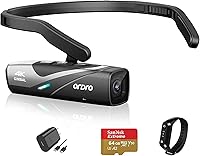
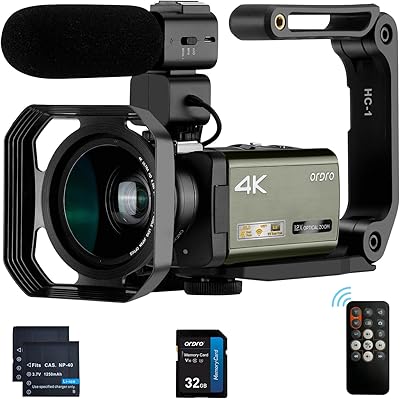
The ORDRO EP8 Head-Mounted 4K Camcorder is built for people who want steady, hands-free footage without wrestling a camera while cycling, hiking, or running. It sits on your head like a chunky headband — there is a 2.8-inch screen on the unit itself, and the whole rig weighs just under a pound. Compared to the EP7, the headline upgrade is the Sony STARVIS sensor, which brings meaningfully better low-light performance. At its price point, this is a mid-range wearable camera — capable and well-equipped, but not aimed at professional productions. Out of the box you get a remote control, a 64GB micro card, and Type-C fast charging, which is a genuinely practical starting package.

Features & Benefits

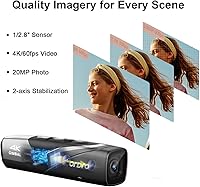
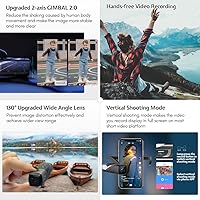
The 2-axis gimbal stabilizer is what sets the EP8 apart from cheaper head cams that rely on software smoothing alone. When you are mountain biking on a rough trail or jogging on uneven pavement, the difference shows up immediately in your footage — no jarring cuts, no blurry frames. The Sony STARVIS sensor is a 1/2.8-inch chip, smaller than the 1-inch sensors found in premium action cameras, but it handles shadowy forest paths and dim indoor venues noticeably better than the previous model. Shooting at 4K 60fps keeps fast motion crisp, while the 130-degree wide-angle lens captures a genuinely immersive field of view, with an optional distortion correction mode for those who prefer a cleaner, less warped look.

Best For

This head-mounted camcorder is a natural fit for outdoor adventurers — think trail runners, skiers, and cyclists who want POV footage without strapping a separate action cam to their chest or helmet. Cooking instructors, fitness coaches, and tradespeople who need viewers to see exactly what their hands are doing will also find the first-person perspective genuinely useful. Travelers wanting to share short clips directly to social media, using the Wi-Fi app workflow without sitting down at a computer, will appreciate how frictionless that process can be. What it is not built for is professional filmmaking — there are no interchangeable lenses, no RAW recording, and no log color profiles. Know what you need it for, and it delivers.

User Feedback

People who have used the EP8 for a while tend to land in similar places. The gimbal smoothness gets consistent praise — buyers coming from older head cams notice the difference right away, and the low-light step up from the EP7 is frequently called out as real, not just a spec bump. On the other side, wind noise in audio is a common frustration for anyone shooting outdoors, and the head strap can become uncomfortable after an hour or two of wear. The companion app has had stability issues on some Android devices. Battery runtime is enough for short sessions but divides opinion for longer outings. ORDRO's firmware update responsiveness gets mixed marks — some owners report timely fixes, others less so.

Pros

  • The 2-axis gimbal stabilizer produces noticeably smoother footage than electronic-only stabilization, especially during fast or bumpy activity.
  • 4K 60fps recording keeps fast-moving subjects sharp and gives you usable slow-motion in post.
  • The Sony STARVIS sensor handles dim environments better than most cameras in this class, reducing grain in low-light shots.
  • Type-C fast charging gets you back to a full battery in roughly 70 minutes, a real convenience upgrade over older micro-USB wearables.
  • The 64GB micro card and remote control are included out of the box, so you are ready to shoot without extra purchases.
  • A 130-degree wide-angle lens captures an immersive field of view, and the distortion calibration toggle lets you dial back the fish-eye effect when you want a cleaner look.
  • The Wi-Fi app lets you preview, control, and transfer footage directly to your phone without connecting to a computer.
  • Vertical 1920p 60fps mode is a practical addition for creators who shoot content formatted for mobile-first platforms.
  • The head-mounted form factor genuinely frees up both hands, which no chest mount or selfie stick can fully replicate for true POV shooting.

Cons

  • Wind noise is a consistent problem in outdoor audio — usable sound in breezy conditions will likely require an external mic solution.
  • The head strap becomes uncomfortable during sessions longer than an hour or two, particularly for users with larger head sizes.
  • The companion app has documented stability issues on certain Android versions, which can interrupt the wireless workflow at inconvenient moments.
  • Battery life is enough for short sessions but divides opinion for all-day outings — carrying a spare is advisable for longer shoots.
  • At nearly a pound worn on your head, fatigue adds up faster than it would with a lighter action camera mounted to a helmet.
  • The 1/2.8-inch sensor, while improved, cannot match the dynamic range or depth-of-field control of cameras with larger sensors at higher price points.
  • Firmware and app updates from ORDRO have been inconsistent according to long-term owners, leaving some bugs unresolved for extended periods.
  • There is no RAW video or log color profile, which limits how much latitude you have when color grading footage in post-production.
  • The wide-angle distortion calibration is an either-or toggle rather than a graduated adjustment, so fine-tuning the look between the two extremes is not possible.

Ratings

Our AI scoring system analyzed thousands of verified global reviews for the ORDRO EP8 Head-Mounted 4K Camcorder, actively filtering out incentivized, duplicate, and bot-generated submissions to surface what real buyers actually experience over time. The scores below reflect both the genuine strengths that keep buyers recommending this wearable camera and the recurring pain points that show up consistently across long-term ownership reports. Nothing has been smoothed over — where users struggled, the scores show it.

Video Stabilization
88%
The 2-axis gimbal is the single feature buyers mention most positively, and for good reason — when you are running a trail or cycling over rough ground, the footage holds together in a way that pure electronic stabilization simply cannot match. Users upgrading from basic POV cameras consistently describe the difference as immediately visible.
At very high speeds or during sharp lateral jolts — think aggressive mountain biking on technical terrain — some residual shake still makes it into the footage. The gimbal handles predictable, rhythmic motion best; sudden impacts are where its limits show.
Image Quality
76%
24%
In daylight and well-lit indoor environments, 4K 60fps footage looks genuinely sharp and detailed for a camera at this price tier, and the wide-angle glass lens holds up well at the edges. Most recreational creators and vloggers find the output more than sufficient for YouTube and social media publishing.
Color accuracy can feel slightly oversaturated out of the camera, and the lack of any log profile means what you shoot is largely what you get — there is limited headroom for color grading in post. At very high contrast scenes, highlight detail tends to clip earlier than buyers expect.
Low-Light Performance
71%
29%
The Sony STARVIS sensor brings a real and noticeable improvement over the EP7 in dim conditions — shooting inside a workshop, under forest canopy, or in an indoor gym produces cleaner results than most competing cameras in this category. Buyers who regularly shoot in mixed lighting describe the upgrade as worthwhile.
The 1/2.8-inch sensor size is a genuine physical constraint, and once lighting drops below a certain threshold the footage gets grainy and loses fine detail. Anyone expecting low-light performance comparable to cameras with 1-inch or larger sensors will be disappointed — this is solid for the class, not class-leading.
Build Quality
74%
26%
The EP8 feels reasonably solid in hand, with a construction quality that reads as mid-range rather than budget — buttons have a satisfying click, and the overall fit and finish is tighter than what older ORDRO models offered. Most buyers report no structural issues after months of regular outdoor use.
The plastic housing is susceptible to visible scuffs after contact with rough surfaces like rock or tree bark, and the head strap mount points feel like the weakest structural area of the unit. There is no waterproofing of any kind, which limits how confidently you can use it in unpredictable outdoor conditions.
Head Strap Comfort
58%
42%
For short recording sessions of under an hour, most users find the strap acceptable and the weight distribution manageable enough that it does not interrupt the activity they are filming. Initial setup and head size adjustment is straightforward and does not require tools.
Extended wear is where the EP8 consistently draws criticism — at just under a pound, pressure builds up across the forehead and crown after 60 to 90 minutes, and users with larger head circumferences report the adjustment range feeling restrictive. This is a recurring and unresolved complaint across long-term ownership reviews.
App & Wi-Fi Experience
61%
39%
When the app works well, the wireless workflow is genuinely convenient — live preview on your phone, remote shutter triggering, and direct transfer to your camera roll without plugging in a cable are all features that save real time for travel creators and social media users.
App stability on Android devices is the most reliably frustrating aspect of owning the EP8, with crashes, pairing failures, and connection drops appearing frequently in user feedback across multiple Android versions. iOS users report a more stable experience, but even there, app updates have sometimes introduced new bugs.
Battery Life
63%
37%
For a targeted single session — a 45-minute hike, a gym workout, a cooking tutorial — the battery runtime is generally adequate, and the USB-C fast charging means a full recharge during lunch or between takes is genuinely quick at around 70 minutes.
Full-day shooters consistently flag battery endurance as a limiting factor, with runtime estimates ranging widely depending on whether Wi-Fi is active and which resolution mode is in use. Carrying a spare battery is essentially a requirement for anyone planning to use the camera across multiple hours without access to a charger.
Audio Quality
54%
46%
In calm indoor environments or during low-activity shooting, the built-in microphone captures clear enough voice audio that basic instructional content or tutorial narration is usable without post-processing. For controlled conditions, it performs adequately for the format.
Wind noise is severe enough outdoors to render audio unusable in anything beyond a light breeze, and there is no wind reduction accessory included in the box. The absence of an external microphone port means buyers who need reliable outdoor audio have no hardware workaround available on the device itself.
Ease of Setup
83%
First-time setup from unboxing to recording takes most users under 15 minutes, and the menu layout on the 2.8-inch screen is logical enough that experienced camera users can navigate it without consulting the manual. The included 64GB card and remote mean you are genuinely ready to shoot out of the box.
The app pairing process can be unintuitive on first connection, particularly on Android, and a few buyers report needing multiple attempts before a stable Wi-Fi link is established. The manual is serviceable but thin on detail for troubleshooting connectivity issues.
Wide-Angle Lens
79%
21%
The 130-degree field of view captures an immersive, genuinely cinematic POV perspective that works extremely well for outdoor adventure content, and the ability to dial it back to 90 degrees gives useful flexibility for instructional close-up work. The glass lens holds sharpness well toward the center of frame.
Edge sharpness drops off noticeably at the full 130-degree setting, and the distortion calibration toggle corrects the fish-eye effect but also crops into the frame and cannot be fine-tuned — it is an all-or-nothing switch rather than a graduated adjustment.
Value for Money
73%
27%
When you factor in the included 64GB card, remote control, and the physical gimbal stabilizer at this price point, the out-of-box package is genuinely competitive against similarly priced head-mounted cameras that ship with fewer accessories and inferior stabilization.
Buyers who encounter persistent app issues or find the audio limitations frustrating tend to feel the value proposition weakens considerably, since those are difficult problems to work around without additional spending. The price sits in a tier where expectations are reasonably high, and the EP8 does not clear every bar.
Remote Control
81%
19%
The included wrist-worn remote is a practical, well-appreciated accessory — being able to start and stop recording without reaching up to the camera is genuinely useful when your hands are occupied during cycling, skiing, or climbing.
The remote connection range is limited and can drop in environments with wireless interference, and a few buyers report the button feel becoming less responsive after several months of regular outdoor use. It is a useful inclusion but not a precision tool.
Software & Firmware Support
56%
44%
ORDRO has released firmware updates for the EP8 since launch, and some buyers have noted that specific app connectivity issues were addressed in subsequent updates — a sign that the product is not entirely abandoned post-sale.
The pace and responsiveness of firmware and app updates is one of the most divisive topics in long-term EP8 ownership feedback. Many buyers report bugs persisting across multiple update cycles without resolution, and the gap between reported issues and released fixes has frustrated users who rely on the app workflow daily.
Vertical Video Mode
77%
23%
The dedicated 1920p 60fps vertical recording mode is a thoughtful addition for creators who primarily publish to TikTok, Instagram Reels, or YouTube Shorts, saving the time and quality loss that comes from cropping a horizontal clip in post.
At 1920p rather than full 4K in vertical mode, the resolution step-down is noticeable if you later want to repurpose the footage for horizontal publishing or larger screen playback. It is purpose-built for mobile-first distribution and not ideal for creators who need format flexibility.

Suitable for:

The ORDRO EP8 Head-Mounted 4K Camcorder was built for people who need their hands completely free while they shoot, and that shapes exactly who gets the most out of it. If you are a mountain biker navigating a technical trail, a skier carving down a slope, or a hiker who wants to document a summit without stopping to pull out a camera, this wearable fits naturally into your workflow. Cooking instructors and tradespeople who need viewers to follow their hands step by step will find the first-person perspective far more practical than any tripod setup. Vloggers and travel creators who want a secondary hands-free angle to complement their main camera, or who want to push clips straight to social media via the app without sitting at a computer, will also find genuine value here. If your sessions are relatively short and your content goals are recreational or semi-professional, this head-mounted camcorder hits a practical sweet spot.

Not suitable for:

The ORDRO EP8 Head-Mounted 4K Camcorder is not the right tool if your work demands professional-grade image quality, interchangeable lenses, or any form of RAW video output. The Sony STARVIS sensor is a 1/2.8-inch chip — a real improvement over older generations, but considerably smaller than the 1-inch or larger sensors found in high-end action cameras and cinema rigs, so dynamic range and low-light performance have a ceiling. Anyone planning full-day shoots should be cautious too, since battery runtime draws mixed reactions from long-term users and you may need backup power on extended outings. If you are someone who records outdoors in windy conditions and cares deeply about clean audio, the built-in microphone will frustrate you without additional accessories. The companion app has also shown reliability issues on certain Android devices, so if a smooth mobile workflow is critical to how you work, that is a real risk to weigh before buying.

Specifications

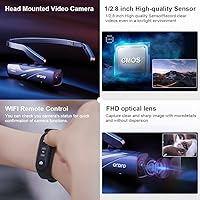
  • Image Sensor: Uses a Sony STARVIS 1/2.8-inch CMOS sensor, which improves light sensitivity and reduces grain compared to the previous EP7 generation.
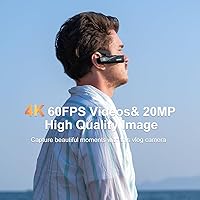
  • Max Resolution: Records up to 4K at 60fps (3840x2160), delivering sharp, smooth footage during fast-moving activities.
  • Vertical Video: Supports vertical recording at 1920p 60fps, a practical mode for mobile-first content creators.
  • Photo Resolution: Captures still images at up to 20MP, suitable for grabbing high-detail frames alongside video.
  • Stabilization: Equipped with a built-in 2-axis gimbal stabilizer that physically compensates for movement, going beyond software-only smoothing.
  • Lens: Features a 130-degree wide-angle glass lens, adjustable down to 90 degrees, with an on-device distortion calibration toggle.
  • Display: Includes a 2.8-inch built-in screen on the unit for playback and menu navigation without needing a phone.
  • Connectivity: Connects to smartphones via Wi-Fi, enabling live preview, remote shutter control, and direct file transfer through the ORDRO app.
  • Charging: Charges via USB-C and reaches a full charge in approximately 70 minutes, which is notably faster than devices still using micro-USB.
  • Storage: Records to Micro SD cards and ships with a 64GB card included, which is sufficient for several hours of 4K footage.
  • Video Format: Saves footage in MP4 format, which is broadly compatible with editing software and social media upload tools.
  • Audio Format: Records audio in AAC format using the built-in microphone; no external microphone port is specified in the product documentation.
  • Weight: The unit weighs 15.5 oz (approximately 440g), which is worth considering for comfort during extended head-mounted sessions.
  • Dimensions: Measures 6.1 x 6.14 x 2.24 inches, making it a noticeably bulkier form factor than compact action cameras.
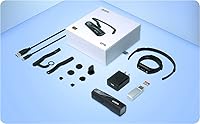
  • In the Box: Package includes the camera unit, a remote control, a 64GB Micro SD card, and a Type-C charging cable.

Related Reviews
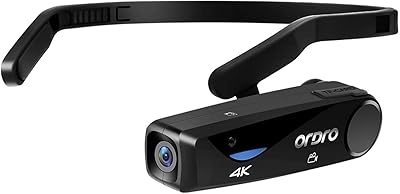
ORDRO EP6 Head-Mounted Camcorder
69%
83%
Value for Money
61%
Video Quality
76%
Wearability & Comfort
54%
Wi-Fi & App Performance
58%
Battery Life
More
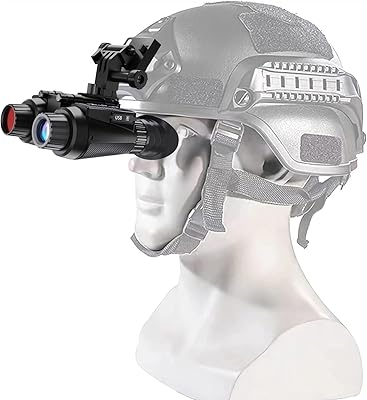
GOYOJO 4K Head-Mounted Night Vision Goggles
71%
73%
Night Vision Clarity
78%
Infrared Performance
58%
Digital Zoom Usability
54%
Field of View
67%
Build Quality
More
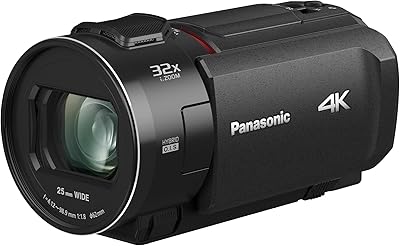
Panasonic HC-VX3 4K Camcorder
75%
88%
Video Quality (Daylight)
61%
Low-Light Performance
91%
Image Stabilization
84%
Zoom Versatility
86%
Ergonomics & Handling
More
LUKPOW 4K Camcorder DV112
80%
88%
Video Quality
91%
Ease of Use
80%
Battery Life
85%
Screen Versatility
78%
Night Vision Performance
More
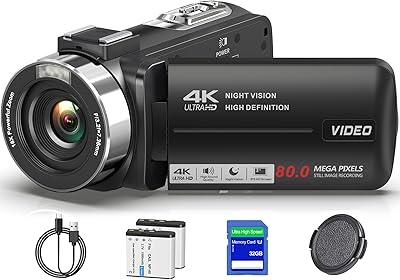
ZIMOCE HDV900PRO 4K Camcorder
81%
92%
Value for Money
88%
Video Quality
76%
Zoom Performance
83%
Build Quality
90%
Ease of Use
More
ORDRO AX65 4K Video Camera
83%
92%
Value for Money
88%
Ease of Use
85%
Image Stabilization
90%
Video Quality
80%
Zoom Performance
More
Hojocojo NDV2000 4K Night Vision Camcorder
72%
83%
Value for Money
76%
Night Vision Performance
67%
Video Quality (Daytime)
71%
Audio Quality
86%
Ease of Use
More
Sony FDR-AX43 4K Camcorder
80%
93%
Image Stabilization
88%
Autofocus Performance
84%
Video Quality (4K)
61%
Low-Light Performance
89%
Optical Zoom Range
More
Peryoua V108 4K Camcorder
69%
83%
Value for Money
61%
Video Quality
88%
Ease of Use
91%
Bundle Completeness
67%
Battery Performance
More
OIEXI UHD 4K Video Camera Camcorder
83%
88%
Video Quality
84%
Ease of Use
87%
Portability
91%
Battery Life
62%
Audio Quality
More

FAQ

No waterproof or water-resistance rating is listed for this camera, so you should treat it as a dry-conditions device. Shooting in light drizzle carries real risk, and submerging it would almost certainly cause damage. If you plan to use it in wet environments, you would need a protective housing, which is not included.

Battery runtime varies depending on resolution and whether Wi-Fi is active, but most users report somewhere between 60 and 90 minutes of continuous recording. For short hikes or single sessions that is usually fine, but for all-day outings you will likely want a spare battery or a portable charger. The good news is the USB-C fast charging gets you back to full in about 70 minutes.

The 2-axis gimbal is a physical stabilizer, not just software smoothing, and buyers who have come from older head cams consistently say the difference is real and visible. You will still get some shake during very aggressive movement, but for running, cycling, or hiking the footage is dramatically steadier than it would be without it.

The app is available for both iOS and Android. iOS compatibility tends to be more consistent based on user reports, while some Android users have experienced connectivity drops or crashes, particularly on older Android versions. If a smooth app experience is critical to your workflow, it is worth checking recent app store reviews for your specific phone model before purchasing.

The camera accepts Micro SD cards, and while the included card is 64GB, most users report compatibility with cards up to 128GB or 256GB. That said, always use a high-speed card rated for 4K recording — a slow card can cause dropped frames or recording errors regardless of its storage capacity.

Comfort is one of the more common complaints from buyers who use the EP8 for extended periods. At just under a pound, the weight adds up after an hour or two, and some users with larger heads find the strap adjustment range limited. For short bursts of activity it is generally fine, but if you plan on wearing it for hours, some discomfort is likely.

The Sony STARVIS sensor does give it a genuine edge in low light over cameras using more basic sensors, and the improvement from the EP7 to the EP8 is real. That said, the 1/2.8-inch sensor is considerably smaller than the 1-inch sensors found in premium action cameras, so do not expect miracles in very dark environments — it handles dim forests and indoor venues reasonably well, but it is not a night-shooting specialist.

Yes, the EP8 has a dedicated vertical recording mode that shoots at 1920p 60fps, so you do not need to crop a horizontal video afterward. This is a practical feature if mobile-first content is a regular part of your workflow.

The 130-degree wide-angle lens naturally produces some fish-eye curvature at the edges of the frame. Turning on distortion calibration corrects that curve to give a flatter, more natural-looking image — but it slightly crops the field of view in the process. Whether to use it depends on your taste: some people love the immersive wide look and leave it off, while others prefer cleaner lines and keep it on.

The two meaningful upgrades are the Sony STARVIS sensor, which brings better low-light performance, and the addition of 60fps in both 4K and vertical modes. If low-light shooting or smoother high-frame-rate footage is important to you, the upgrade is worth considering. If you mostly shoot outdoors in good daylight and are satisfied with your existing footage, the EP7 will continue to do the job.

Where to Buy