Overview

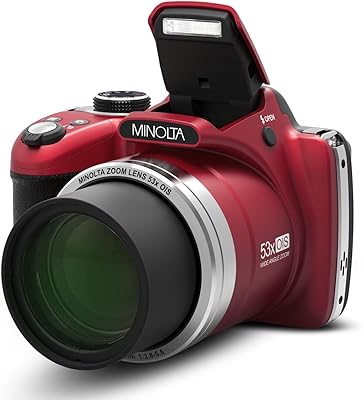
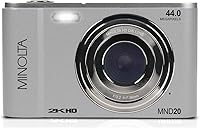
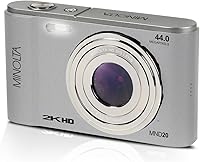
The Minolta MND20 Compact Digital Camera is a budget-friendly point-and-shoot built for casual shooters who want something more intentional than a phone camera without the bulk of a serious rig. Weighing just 8 ounces, it slips easily into a jacket pocket or day bag — a real plus for travel. Minolta carries name recognition from its film-era legacy, though today's version operates firmly in the entry-level space. One thing worth knowing upfront: both the zoom and stabilization here are software-based, not optical. That distinction matters. The MND20 sits at a 3.6-star average across hundreds of ratings, which tells you it works well for some buyers but carries genuine limitations worth understanding before purchasing.

Features & Benefits

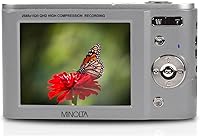
The MND20 advertises a 44MP sensor, but it is worth understanding what that actually means in practice. The chip is a 1/2.3-inch CMOS — the same small format found in most budget cameras — and the megapixel count is interpolated, so real-world sharpness will not rival what a larger sensor produces. That said, in good daylight, shots come out with pleasing detail. Video tops out at 2.7K and exports as MP4, easy to share and edit. The 16X digital zoom sounds impressive, but expect soft, pixelated results past the midrange. The articulating LCD screen is genuinely handy for overhead shots or selfies, and the time-lapse mode adds a creative touch on a hike or city walk.

Best For

This point-and-shoot makes the most sense for people who are not trying to become photographers — they just want to capture moments without fumbling through a phone menu. It is a strong match for first-time camera buyers, kids getting their first dedicated device, or parents wanting something simple enough to hand a grandparent at a birthday party. Travelers doing day trips will appreciate how little space it takes up in a bag. If you already shoot with a mirrorless or DSLR, the MND20 will not replace it — but as a lightweight backup for casual outings, family gatherings, or school events, it fills that role without asking much of the user.

User Feedback

Buyers who are happy with this compact Minolta tend to share a common theme: it does exactly what they expected for the price, no more and no less. Out-of-the-box setup gets consistent praise, and the compact size draws genuine compliments. Where things get complicated is image quality. Low-light performance is a recurring sticking point, with reviewers noting that indoor or evening shots often come out grainy and flat. The gap between the advertised resolution and actual output sharpness catches some buyers off guard. On the brighter side, battery life and the included accessories earn positive marks. The overall rating reflects a product that works reliably within its limits — as long as those limits are understood going in.

Pros

  • At just 8 ounces, the MND20 fits easily into a pocket or small bag without adding noticeable weight.
  • Out-of-the-box setup is immediate — no complicated configuration required before shooting.
  • In good daylight, photos deliver solid color reproduction and pleasing detail for the price tier.
  • The articulating 2.9-inch LCD makes selfies and overhead angles easy to frame without guesswork.
  • Built-in Wi-Fi and USB output keep photo transfers simple and cable-friendly.
  • Time-lapse mode is a genuinely fun creative addition that beginners rarely find at this price point.
  • 2.7K video records in MP4 format, making clips easy to edit and share across most devices.
  • Battery and accessories are included in the box, so there are no immediate extra purchases required.
  • SD card support up to 128GB gives room to grow long after the included card fills up.
  • Face detection and scene presets help new shooters get better-looking results without touching manual controls.

Cons

  • Low-light performance drops off quickly — indoor and evening shots frequently come out grainy and flat.
  • The 44MP figure is heavily interpolated; real-world output sharpness is noticeably lower than the spec suggests.
  • Digital zoom degrades image quality fast, producing blurry, soft results well before hitting the 16X ceiling.
  • A fixed-focus lens makes it impossible to isolate subjects or get consistently sharp close-up shots.
  • No optical stabilization means even minor hand movement can cause blur in anything less than bright light.
  • There is zero weather sealing, which makes outdoor use in rain or dusty conditions a genuine risk.
  • The F/3.2 aperture on such a small sensor limits shooting conditions almost entirely to strong natural light.
  • Some users report a noticeable shutter lag that makes capturing fast-moving subjects — kids, pets, sports — unreliable.
  • Discrepancy between the advertised resolution and actual image quality can feel misleading to buyers who notice it.

Ratings

Our scores for the Minolta MND20 Compact Digital Camera were generated by our AI engine after analyzing hundreds of verified global user reviews, with spam, bot-generated, and incentivized feedback actively filtered out before any score was calculated. The result is a transparent, balanced picture of real buyer experience — covering where this point-and-shoot genuinely delivers and where it consistently falls short of what buyers hope for.

Daylight Image Quality
71%
29%
In good outdoor light — a sunny hiking trail, a backyard gathering, or a beach outing — this point-and-shoot produces photos with solid color saturation and enough clarity to look appealing on screen and in social media posts. Most buyers shooting in favorable conditions are genuinely satisfied with what comes out.
The 1/2.3-inch sensor puts a firm ceiling on resolved detail, and the interpolated 44MP spec masks that reality. Pixel-peeping at full resolution or attempting large prints reveals softer output than competing options at a similar budget, particularly when subjects have fine texture or complex backgrounds.
Low-Light Performance
38%
62%
The built-in automatic flash provides some help at close range — adequate for a quick snapshot across a dinner table — and the camera does attempt noise reduction in darker conditions, which keeps photos passable at small screen sizes when nothing else is available.
Indoor and evening shooting is the MND20's clearest weakness by a wide margin. Shots at birthday parties, dimly lit restaurants, or living rooms routinely come out grainy, flat, and lacking color accuracy. The F/3.2 fixed aperture and small sensor simply cannot collect enough light to produce usable results when conditions get challenging.
Video Quality
67%
33%
Outdoor 2.7K footage is a genuine step above what standard 1080p cameras in this price range produce, with decent sharpness and accurate colors in well-lit situations. The MP4 output is convenient for editing on a laptop or sharing directly from a phone without format conversion.
Video quality drops off considerably the moment light becomes scarce, with noise and softness becoming difficult to overlook in indoor or evening recordings. The absence of optical stabilization also means handheld footage can look noticeably shaky during movement, limiting usefulness beyond static, well-lit shooting scenarios.
Ease of Use
88%
This is where the MND20 earns its strongest and most consistent user praise. Buyers report the camera is ready to shoot almost immediately out of the box, with a physical button layout that keeps common controls reachable without menu-diving. Grandparents and total beginners frequently describe it as the least intimidating camera they have owned.
The simplicity that makes this point-and-shoot accessible also means experienced photographers hit its ceiling quickly — there are no manual exposure controls, and the automatic modes do not always make smart decisions in tricky lighting or unusual compositions. It is genuinely built for one audience and not designed to grow with a developing shooter.
Build & Design
74%
26%
The compact body feels well-proportioned and genuinely pocketable, which is a meaningful advantage over bulkier options in the same category. The overall construction feels solid enough for everyday casual handling at family events and day trips, and the profile is slim enough to forget it is in your bag.
The body is primarily plastic, and the finish picks up fingerprints and minor surface scratches more readily than rubberized alternatives. There are no weather seals or meaningful grip surfaces, which makes the camera feel less secure in hand during extended shooting sessions or when conditions shift unexpectedly outdoors.
Zoom Performance
43%
57%
At low magnification levels — roughly 2X to 3X — the digital zoom produces acceptable results for casual use. Having any zoom capability at all helps pull a distant subject slightly closer at outdoor events or during travel without requiring the photographer to reposition entirely.
Digital zoom is fundamentally a software crop, not true magnification, and results past 4X or 5X become visibly soft and pixelated. Reaching the headline 16X figure produces images that are nearly unusable — blurry, degraded, and lacking subject detail — making the advertised zoom range genuinely misleading for practical shooting situations.
Battery Life
76%
24%
Battery performance draws consistently positive feedback, with most buyers reporting a full charge comfortably covers a day trip, a family outing, or a few hours of mixed photo and video shooting without interruption. The included lithium-ion battery also means no additional purchase is needed right out of the box.
No official shot count is published by Minolta, making direct comparisons to competitors harder than it should be. Heavy 2.7K video recording drains the battery meaningfully faster than still photography, and users who shoot primarily video report needing to recharge mid-day during longer excursions or full-day events.
Value for Money
69%
31%
For buyers who clearly understand what they are purchasing — a simple, lightweight point-and-shoot for casual daylight use — this compact Minolta delivers a reasonable return. The included accessories and starter SD card reduce immediate out-of-pocket extras, which makes the overall package feel fair for its intended audience.
Buyers who enter expecting the 44MP spec to compete with higher-end cameras or current flagship smartphones inevitably feel underwhelmed by the real-world image quality. A modest increase in budget opens access to cameras with optical zoom and larger sensors that make a meaningful and visible difference in output consistency.
Portability
91%
At 8 ounces, this compact Minolta is genuinely pocketable in a way that most dedicated cameras simply are not. It slides into a jacket pocket without strain, fits in a small travel bag without displacing other essentials, and is light enough to carry all day without noticing it is there.
The compact dimensions do come with trade-offs — the small body offers limited grip surface, and users with larger hands may find sustained shooting sessions physically uncomfortable. There is also no optical viewfinder, meaning you are entirely dependent on the LCD screen, which can be difficult to read clearly in direct sunlight.
Display & Screen
77%
23%
The articulating 2.9-inch LCD is a genuinely useful feature that separates this point-and-shoot from many fixed-screen competitors at the same price. Flipping the screen for selfies or angling it overhead at a crowded event makes framing noticeably easier and more intuitive without requiring awkward body positioning.
Screen visibility in direct sunlight is a recurring frustration — the display washes out in bright outdoor conditions, making it genuinely difficult to judge framing or check exposure on the fly. LCD resolution is also limited, meaning fine detail in the live preview does not always accurately represent the saved photo.
Connectivity
72%
28%
Having both Wi-Fi and USB connectivity in a camera at this price point is a practical convenience that casual users genuinely appreciate. Wireless photo transfer works reliably for moving a reasonable batch of images to a laptop or smartphone without needing to locate a cable mid-trip.
Wi-Fi transfer speeds are slow by current standards, making it tedious to move large collections of high-resolution files wirelessly after a long shooting day. There is no Bluetooth or NFC, and no dedicated smartphone companion app, which makes the wireless pairing experience feel dated compared to even modest competing cameras.
Shooting Modes
73%
27%
The range of built-in modes — panorama, burst, time-lapse, face detection, and multiple scene presets — gives casual photographers more creative options than the price point might suggest. Time-lapse in particular earns positive mentions from users who enjoy capturing sunsets or busy street scenes compressed into short clips.
Most scene presets and creative modes are fully automatic with no manual override available for fine-tuning results. Face detection works inconsistently in busy group shots or backlit conditions, and burst mode generates large volumes of near-identical frames that require significant sorting time after a shooting session.
Stabilization
47%
53%
Digital stabilization provides a marginal benefit in very bright outdoor conditions where shutter speeds are naturally fast — handheld shots in direct sunlight tend to come out reasonably sharp. For static subjects at low zoom levels on a calm day, the feature adds a small but real measure of consistency.
Software-based stabilization cannot compensate for camera shake the way optical or sensor-shift systems do, and the gap is noticeable in real shooting. Any zoom beyond the lowest levels amplifies hand movement significantly, and in dimmer light — where stabilization matters most — the digital-only approach proves clearly insufficient.
Out-of-Box Experience
86%
The setup experience is one of the MND20's genuine strengths, with multiple buyers noting they were actively taking photos within minutes of opening the package. The included battery, starter SD card, and charging cable mean almost nothing additional is needed to start shooting on day one.
The included 4GB card fills up quickly — especially when recording 2.7K video — which means unprepared buyers face an interruption early in their experience. The printed quick-start documentation is minimal, and some users find a handful of on-screen menu options ambiguous enough to require online research to resolve.

Suitable for:

The Minolta MND20 Compact Digital Camera is a practical pick for anyone who wants a real camera experience without the weight, complexity, or cost of more advanced gear. First-time buyers stepping up from smartphone snapshots will find it approachable — the button-forward layout means there is almost no learning curve, and most people are taking photos within minutes of opening the box. Parents shopping for a curious kid or teen who wants to learn basic photography will appreciate that it is simple enough to start with but includes enough creative modes to stay interesting. Older users, including grandparents photographing family gatherings, will find the large articulating LCD and automatic shooting modes far less intimidating than a DSLR. Casual travelers who want a dedicated camera that genuinely fits in a jacket pocket will also get real value from this compact Minolta, particularly on day trips where packing light is the priority.

Not suitable for:

Anyone who takes image quality seriously beyond casual, well-lit snapshots should think carefully before buying the Minolta MND20 Compact Digital Camera. The 1/2.3-inch sensor is a small chip by any measure, and in low-light situations — think indoor birthday parties, evening events, or overcast days — results get grainy and flat fast. Buyers expecting optical zoom performance will be disappointed; that 16X figure is entirely digital, which means real magnification is not happening, just cropping and quality loss. If you are comparing this point-and-shoot to a modern mirrorless camera or even a recent flagship smartphone for sharpness and dynamic range, it will lose that comparison clearly. Anyone planning to shoot outdoors in unpredictable weather should also note there is zero weather resistance on the MND20, and the fixed-focus lens rules out any meaningful depth-of-field control or sharp close-up work.

Specifications

  • Sensor: The camera uses a 1/2.3-inch CMOS sensor with an interpolated resolution of 44MP, which is standard for the entry-level compact camera category.
  • Video: Maximum video resolution is 2.7K, with 1080p Full HD also supported; all footage is recorded and saved in MP4 format.
  • Digital Zoom: The lens provides up to 16X digital zoom with no optical zoom capability, built around a fixed focal length of 7.36mm.
  • Aperture: The fixed lens has a maximum aperture of F/3.2, which limits available light intake, particularly on the camera's small sensor.
  • Stabilization: Image stabilization is entirely software-based (digital), with no optical or sensor-shift stabilization mechanism present in the hardware.
  • Display: A 2.9-inch articulating LCD screen is mounted on the rear of the body, allowing flexible composition from multiple angles including selfies.
  • Weight: The camera body weighs approximately 8 ounces, placing it among the lightest options available in the entry-level point-and-shoot segment.
  • Battery: A rechargeable lithium-ion battery is included in the box, and the camera recharges via its USB connection.
  • Storage: A single SD card slot supports cards up to 128GB in capacity, and a 4GB starter card is included with the camera.
  • Connectivity: Built-in Wi-Fi enables wireless photo transfers, and a USB port supports wired connection to a computer for file management.
  • Flash: A built-in automatic flash is integrated into the camera body, with no hot shoe available for attaching an external flash unit.
  • Shooting Modes: Available modes include panorama, burst, time-lapse, multiple scene presets, face detection, and smile capture for varied shooting situations.
  • Image Format: Still photos are saved exclusively as JPEG files at up to 44MP interpolated resolution; no RAW format capture is supported.
  • Continuous Shooting: The camera supports burst shooting at up to 30 frames per second, useful for capturing moving subjects across a rapid sequence of shots.
  • Self-Timer: A built-in self-timer with a 10-second delay is available for hands-free shooting, group photos, and stable long-exposure setups.
  • Water Resistance: The camera carries no water resistance rating or weather sealing of any kind and should be protected from rain, splashes, and sand.
  • Warranty: Minolta provides a one-year limited manufacturer warranty covering defects in materials and workmanship from the original date of purchase.

Related Reviews
Minolta MND50 48MP Digital Camera
70%
72%
Image Quality
78%
Video Performance
88%
Ease of Use
83%
Value for Money
44%
Zoom Capability
More
Minolta MN30WP Waterproof Digital Camera
70%
84%
Waterproof Performance
62%
Image Quality
67%
Video Quality
88%
Ease of Use
71%
Build Quality
More
Minolta MN67Z 67x Zoom Digital Camera
75%
93%
Zoom Range & Reach
78%
Image Quality in Good Light
54%
Low-Light Performance
82%
Optical Image Stabilization
63%
Autofocus Speed & Accuracy
More
Minolta MN40WP Waterproof Digital Camera
69%
73%
Waterproof Reliability
61%
Image Quality
67%
Video Performance
82%
Dual Screen Usability
44%
Zoom Capability
More
Minolta MN53Z Bridge Camera
72%
88%
Zoom Range & Reach
71%
Image Quality
52%
Low-Light Performance
83%
Ease of Use
76%
Value for Money
More
myFirst Camera 3 Kids Digital Camera
72%
76%
Image Quality (Daylight)
51%
Low-Light Performance
74%
Video Quality
83%
Macro Lens
81%
Ease of Use
More
AOREGRE 5K Digital Camera WiFi Autofocus Vlogging Camera
83%
92%
Value for Money
89%
Image Quality
87%
Ease of Use
90%
Video Quality (5K)
85%
Portability & Size
More
ROQIOO A9
ROQIOO A9
67%
83%
Value for Money
61%
Image Quality
58%
Video Quality
81%
Flip Screen Usability
54%
Build Quality & Durability
More
Yatao YT01 64MP Digital Camera
72%
83%
Value for Money
67%
Image Quality
61%
Video Performance
53%
Autofocus
88%
Ease of Use
More
MOREXIMI D70 Digital Camera
83%
86%
Waterproof Performance
90%
Video Quality (4K)
88%
Ease of Use
80%
Build Quality
72%
Zoom Clarity
More

FAQ

The 44MP figure refers to interpolated resolution, meaning the camera software upscales the image rather than capturing native 44MP data straight from the sensor. The 1/2.3-inch chip is a small sensor, and real-world sharpness reflects that reality. Photos look solid in good daylight conditions, but do not expect detail that competes with a modern flagship smartphone or a camera built around a larger sensor.

There is almost no learning curve here. Most users are taking photos within minutes of opening the box — the automatic mode handles exposure, focus, and flash without any manual input. The menu layout is simple and the physical buttons keep the most common functions within easy reach, so it is a genuinely approachable camera for anyone who finds technology intimidating.

In bright outdoor light, the 2.7K video looks noticeably sharper than standard HD and the MP4 format makes clips easy to edit or share right away. Indoors or in dim light, quality drops considerably — expect visible noise and softness in the footage. If most of your video shooting happens outside during daylight hours, results will be more than acceptable for casual and family use.

Low-light performance is this point-and-shoot's most significant limitation. The small sensor and F/3.2 fixed aperture struggle when natural light fades, and the built-in flash only helps at close range. Indoor shots at evening events or in dim rooms tend to come out grainy and flat. If a significant portion of your shooting happens in challenging light, this camera will likely disappoint.

The camera uses a standard SD card and supports capacities up to 128GB. A 4GB card comes included in the box, which is enough for a quick test but fills up fast when shooting 2.7K video. A 32GB or 64GB UHS-I SD card is an inexpensive and practical upgrade that will give you far more room before needing to transfer files.

Yes — the built-in Wi-Fi lets you transfer photos wirelessly without needing a cable, and the USB port is there for a direct wired connection when you prefer it. The Wi-Fi setup is simple enough for casual users, though transfer speeds are not fast by current standards. It works well for occasional transfers but becomes tedious if you are moving large batches of high-resolution images regularly.

It is genuinely well-suited for both. The camera is light enough for kids to hold comfortably, simple enough for a complete beginner to navigate without help, and the automatic modes do most of the heavy lifting. For older users who want to photograph grandchildren at birthday parties or family gatherings without wrestling with complicated settings, the button-forward layout makes it refreshingly straightforward.

There is no officially rated shot count, but based on user feedback the battery holds up well enough for a full day of casual shooting — think a day trip, a family outing, or a few hours at an event. Charging the battery the night before any important occasion is always the safest approach, and carrying a small USB power bank as a backup is an easy precaution.

At lower zoom levels — roughly 2X to 4X — results are still reasonably sharp and usable for everyday shots. Beyond that point, image quality deteriorates noticeably, and at the full 16X maximum expect soft, pixelated output that is not worth printing or sharing. Digital zoom works by cropping and upscaling the image rather than capturing additional optical detail, so its practical ceiling is much lower than the headline number implies.

It is not safe to do so without extra protection. This compact Minolta has no weather sealing or water resistance rating of any kind, which means sand, sea spray, and even light rain pose a real risk of permanent damage. For beach trips, keep it in a protective pouch or dry bag when not actively shooting, and keep it well clear of the water.

Where to Buy