Overview

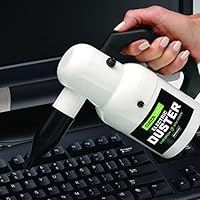
The Metro ED500 DataVac Electric Duster is essentially what happens when professional cleaning equipment meets the everyday desk setup. Originally built for industrial use, this corded air blower has found a loyal following among home users who got tired of shaking half-empty cans of compressed air. One thing to get straight before anything else: this is a blower, not a vacuum. It pushes air out — forcefully — rather than sucking dust in. That distinction matters. The corded, bagless design means no cartridges to replace, no batteries to charge, and no mid-session pressure drops that leave you frustrated mid-clean.
Features & Benefits

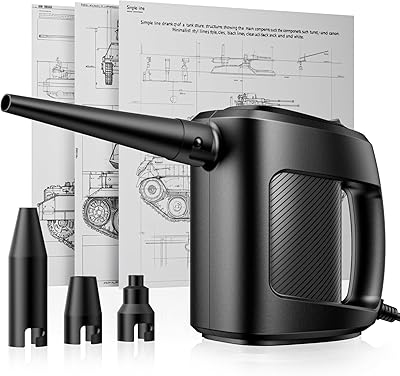
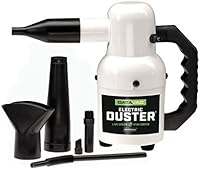
The motor inside this electric duster runs at 500 watts — roughly the equivalent of a small kitchen appliance — and pushes air at a rate that makes a standard canned air canister look anemic. At 70 CFM, it clears dust from heatsinks, keyboards, and vents in seconds rather than minutes. The all-steel housing sets it apart from cheaper plastic blowers that rattle or crack over time. It also ships with a solid accessory kit: a pin-pointer for tight spots, a concentrator nozzle for focused bursts, a flare nozzle for wider coverage, and a micro-cleaning tool set. Corded operation means the power stays consistent whether it's your first use or your five-hundredth.

Best For

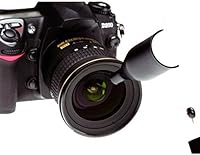
The DataVac blower earns its keep for anyone who touches electronics regularly. PC builders and enthusiasts are the obvious audience — cleaning out a dusty case with this thing takes a fraction of the time it would with a can. Photographers who need to clear sensors or lens elements without risking chemical residue from aerosols will appreciate the clean, dry airflow. It's also a practical fit for small repair shops that need a reliable, low-maintenance tool they can reach for dozens of times a day. And honestly, if you've ever been mid-cleaning session when a can of compressed air runs dry or goes cold, switching to this removes that frustration entirely.

User Feedback

Long-term owners of this corded air blower tend to be vocal about one thing: it lasts. Reports of five, seven, even ten years of regular use without issues are common, which speaks to the quality of the motor and steel build. The power compared to canned air gets consistent praise — people are often surprised by how much dust a single pass dislodges. That said, the motor noise is a genuine trade-off. This isn't a quiet tool; some users describe it as noticeably loud in a home office setting. A few also mention cord length as a limitation in larger workspaces. And after extended continuous use, the unit can get warm — normal for any motor under sustained load, but worth knowing.

Pros

  • Replaces disposable canned air entirely, cutting recurring costs over time.
  • The all-steel build feels genuinely durable — not a tool you expect to replace anytime soon.
  • Consistent airflow from start to finish, with no pressure drop or cold spray mid-use.
  • Included nozzle kit covers a range of tasks, from tight PCB corners to wide keyboard surfaces.
  • 70 CFM of airflow clears heatsinks and fans noticeably faster than standard aerosol cans.
  • No batteries to charge or replace — plug in and it works every time.
  • Compact enough to store in a desk drawer or on a shelf without taking up much space.
  • Eliminates the environmental waste of buying and discarding dozens of aerosol cans annually.
  • Has been in production since 2005, with a long track record of buyer satisfaction to back it up.
  • Works cleanly with camera gear and sensitive electronics where aerosol residue is a concern.

Cons

  • The motor produces significant noise — not ideal for quiet home offices or shared workspaces.
  • Standard cord length frustrates users with larger desks or workstations far from an outlet.
  • The unit can get noticeably warm during extended, continuous-use sessions.
  • Higher upfront cost compared to grabbing a few cans of compressed air from a hardware store.
  • Blows dust outward rather than collecting it — requires a well-ventilated area or follow-up wiping.
  • Not compatible with 220V or 230V outlets, limiting usability outside North America without extra hardware.
  • No variable airflow control — it runs at full power, which may be more than needed for delicate tasks.
  • Bulkier and heavier than a can of air, making it impractical to pack for travel or field use.

Ratings

The Metro ED500 DataVac Electric Duster has been scored by our AI system after processing thousands of verified global buyer reviews, with spam, bot-generated, and incentivized submissions actively filtered out before analysis. The scores below reflect the full picture — what this electric duster genuinely excels at and where real buyers have run into friction. Both strengths and trade-offs are represented transparently across every category.
Airflow Performance
93%
Users consistently report that the airflow force is in a different league compared to anything aerosol-based. Heatsinks that took multiple cans to clear are fully clean in a single short pass, and fans spin visibly from the output alone — something buyers rarely expected before trying it.
Because the airflow is fixed at full power with no variable control, it can feel excessive for lighter tasks like dusting a keyboard or cleaning delicate cable connectors. A few users noted they had to hold the nozzle further back than expected to avoid displacing small components.
Build Quality
91%
The all-steel housing gives this corded air blower a solidity that plastic competitors simply cannot match. Buyers who have dropped it, stored it carelessly, or used it in workshop environments report no cracking, warping, or structural deterioration even after years of use.
The steel construction does add some weight compared to lighter plastic blowers, which some users find tiring during longer cleaning sessions. The finish can also show surface scuffs over time, though this is purely cosmetic and does not affect function.
Longevity & Durability
96%
This is where the DataVac blower earns its most passionate praise. Owners routinely report five to ten or more years of daily or regular use without motor failure or performance decline — a track record that is genuinely rare in this product category.
A small number of buyers have reported motor issues emerging after very heavy continuous use over many years, though these cases appear to be outliers. Replacement parts and repair options are not widely publicized, which can be a concern if something does eventually go wrong.
Value for Money
84%
The upfront cost is noticeably higher than a few cans of compressed air, but buyers who clean their electronics regularly find the math tips in this electric duster's favor within months. Eliminating recurring aerosol purchases adds up fast, and the decade-plus lifespan makes the per-use cost extremely low.
For someone who cleans their setup once or twice a year, the investment is harder to justify against simply buying a can as needed. The higher entry price also means buyer regret hits harder if the unit turns out not to suit the user's specific workflow.
Noise Level
51%
49%
The motor noise is not random or alarming — it has a consistent, steady pitch that some users find easier to tolerate than intermittent sounds. In a garage workshop or dedicated office space, the noise level is rarely flagged as a serious problem.
This is the most frequently cited complaint across buyer reviews. The motor runs loud enough to be disruptive in quiet home offices, open-plan workspaces, or shared living environments. Users who expected something as quiet as a can of compressed air are often genuinely surprised by the volume.
Accessory Kit
78%
22%
The included nozzles — particularly the concentrator and pin-pointer — are well-suited to the most common cleaning scenarios: tight PCB corners, keyboard rows, and dense heatsink fins. Most buyers find these attachments cover the bulk of their needs right out of the box.
The nozzle attachments fit snugly but are not always the most intuitive to swap during a cleaning session. A few users mentioned that they wished additional nozzle lengths were included for reaching deep inside full-tower PC cases without repositioning the unit repeatedly.
Cord Length
58%
42%
For standard compact desk setups with an outlet nearby, the cord length is adequate and does not create obvious workflow friction. Users in smaller rooms or apartment office setups rarely raise it as an issue.
A consistent thread in user feedback is frustration with the cord length when working around larger desks, server racks, or multi-station workbenches. Needing an extension cord as a workaround feels like an oversight on a tool otherwise designed for heavy regular use.
Ease of Use
88%
There is essentially no learning curve — plug it in and it works. The nozzle attachments click on without tools, and switching between them mid-session takes only a few seconds. Buyers with no technical background find it just as accessible as anyone else.
Because there is only one power setting, users occasionally feel they lack precision for more sensitive cleaning tasks. The on/off trigger also lacks any soft-start feature, meaning the full airflow engages immediately, which can scatter loose items on a desk if users are not prepared.
Heat Management
69%
31%
For typical cleaning sessions lasting a few minutes at a time, the unit stays at a comfortable operating temperature without any concerning heat buildup. The steel housing dissipates warmth reasonably well under normal use conditions.
During extended continuous operation — say, cleaning out multiple machines back to back — the body of this corded air blower becomes noticeably warm to the touch. While this is within normal operating parameters for a 500-watt motor, it can be unexpected and slightly uncomfortable for users who grip the unit throughout.
Environmental Impact
89%
Buyers who switched from disposable canned air specifically for environmental reasons are consistently satisfied. Eliminating dozens of pressurized aerosol cans from their annual waste output is a meaningful and tangible benefit that long-term users frequently highlight in their feedback.
The unit is manufactured from steel and plastic components that are not easily recyclable at end of life through standard consumer channels. The lack of a published take-back or recycling program means disposal eventually carries its own environmental footprint.
Portability
47%
53%
Within a fixed workspace, the compact dimensions make it easy to move from one desk area to another without much effort. Storing it between uses is simple given its small footprint.
The corded design and relatively dense steel construction make this electric duster impractical for any use case that requires portability — field technicians, traveling photographers, or anyone cleaning equipment away from a fixed outlet will find it genuinely limiting compared to battery-powered or aerosol alternatives.
Compatibility
82%
18%
The tool works across a wide range of electronics cleaning tasks — desktop PCs, laptops, audio gear, DSLR bodies, mechanical keyboards, and more. The range of included nozzle types means it adapts reasonably well to both broad and narrow cleaning targets.
Its 120V-only design is a hard limitation for international users or those who frequently travel abroad with their equipment. There is also no cordless mode, so any cleaning in a location without an accessible power outlet is simply not possible.
Setup & Unboxing
86%
Out of the box, the unit is ready to use almost immediately. The accessories are clearly labeled, and the overall unboxing experience reflects the utilitarian, no-nonsense character of the product — straightforward and functional from the first moment.
The instruction documentation included in the box is minimal, which is fine for most users but may leave first-time buyers uncertain about optimal nozzle selection for specific tasks. A simple quick-reference guide for different cleaning scenarios would be a practical addition.

Suitable for:

The Metro ED500 DataVac Electric Duster is a natural fit for anyone who cleans electronics on a regular basis and has grown frustrated with the limitations of disposable canned air. PC builders and enthusiasts are the clearest match — if you're pulling side panels off your tower every few months to clear out dust bunnies from fans and heatsinks, this corded air blower pays for itself relatively quickly compared to buying cans repeatedly. Photographers dealing with sensor dust or grime inside lens barrels will also find it useful, since it delivers clean, dry air without the moisture risk or chemical residue that some aerosol products carry. Gamers and content creators with dense, heavily ventilated setups — multiple case fans, capture cards, audio gear — will appreciate having a tool that doesn't run cold or lose pressure mid-session. Small repair shops or hobbyist workbenches are another strong use case, where this electric duster can handle repeated daily use without wear.
Not suitable for:

The Metro ED500 DataVac Electric Duster is not the right tool for every situation, and being clear about that upfront saves buyers real disappointment. First and most importantly, this is strictly a blower — it pushes air outward with force, which means it displaces dust rather than capturing it. If you clean in an enclosed space without good ventilation, you're just redistributing the dust cloud around the room. People looking for a quiet, unobtrusive tool should also look elsewhere; the motor is audible enough to be noticeable in a shared living space or open-plan office. The standard cord length can be limiting if your workstation is far from an outlet, and the 120-volt requirement means it's not usable internationally without a converter. Anyone who only cleans their keyboard once a year probably doesn't need this level of investment when an occasional can of compressed air would do the job just fine.
Specifications

  • Motor Power: The unit is driven by a 500-watt motor, which delivers significantly more sustained force than any disposable aerosol can.
  • Horsepower: Motor output is rated at 0.75 HP, placing it firmly in the range of light-duty professional blower equipment.
  • Airflow Rate: Air is expelled at 70 CFM (cubic feet per minute), enough to clear packed dust from heatsinks and vents in a single pass.
  • Amperage: The blower draws 4.5 amps during operation, which is well within the capacity of any standard household circuit.
  • Voltage: Designed exclusively for 120V outlets as used in North America; it is not compatible with 220V or 230V electrical systems without a separate converter.
  • Housing Material: The outer body is constructed from all-steel, which contributes to its durability and distinguishes it from budget plastic alternatives.
  • Operation Type: This is a corded, bagless electric blower — there are no filters to replace, no batteries to charge, and no canisters to refill.
  • Dimensions: The unit measures approximately 10.7 × 5.8 × 4.3 inches, compact enough to sit on a shelf or store in a desk drawer.
  • Function: This device functions exclusively as an air blower — it expels pressurized air outward and does not have any suction or vacuum capability.
  • Included Accessories: The kit ships with an air pin-pointer, an air concentrator nozzle, an air flare nozzle, and a micro-cleaning tool set for detailed work.
  • Primary Color: The standard retail version is finished in white, though the internal components and some trim elements appear in black.
  • Brand: Manufactured by Metro Vacuum, a US-based company with a long history of producing professional-grade cleaning and blower equipment.
  • Model Number: The official manufacturer model number is ED500, which is useful when searching for compatible accessories or warranty support.
  • Year Introduced: This product has been commercially available since 2005, giving it over two decades of real-world use and user feedback to draw from.
  • Item Weight: The unit is lightweight enough for comfortable one-handed use during typical cleaning sessions around a desk or workstation.

Related Reviews

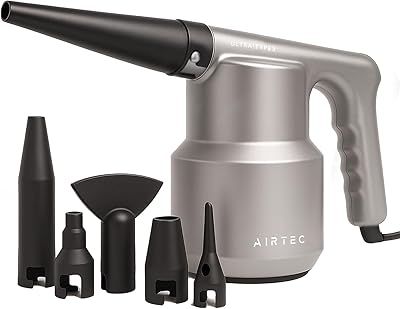
IT Dusters AirTec Type 3 Electric Duster
78%
83%
Airflow Performance
54%
Noise Level
71%
Nozzle Variety & Attachment Quality
78%
Build Quality & Durability
91%
Ease of Use
More
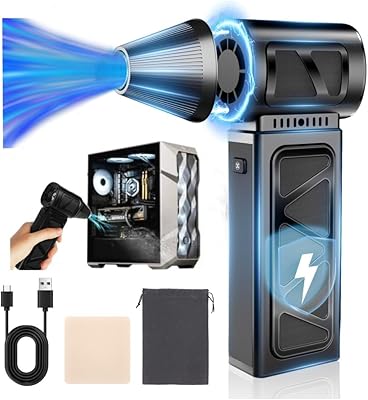
YUHUO 360000RPM Cordless Electric Air Duster
75%
88%
Airflow Power
79%
Battery Life
54%
Noise Level
84%
Charging Speed
63%
Build Quality
More
Goweto Go-AD08PL Electric Air Duster
84%
88%
Airflow Power & Cleaning Performance
92%
Ergonomics & Comfort
64%
Power Source & Convenience
86%
Versatility & Attachments
89%
Value & Cost Savings
More
RapAir B02 Electric Air Duster
76%
83%
Blowing Performance
61%
Suction Capability
78%
Battery Life
86%
Charging Speed & Convenience
69%
Build Quality & Durability
More
TRANSWARRIOR C3 Electric Air Duster
86%
92%
Airflow Power
78%
Battery Life
94%
Portability & Size
61%
Noise Level
88%
Speed Control & Usability
More
FREETIM J02-B Electric Air Duster
77%
78%
Blowing Power
62%
Battery Life & Runtime
91%
Portability & Form Factor
86%
Nozzle Variety & Adaptability
67%
Vacuum Mode Functionality
More
AFMAT AD19BK Electric Air Duster
80%
91%
Airflow Power
54%
Noise Level
88%
Value for Money
74%
Build Quality
86%
Cord Length & Usability
More
ATEngeus TAD07 Electric Air Duster
77%
83%
Airflow Power
61%
Battery Life & Runtime
84%
Charging Speed
78%
Speed Control & Usability
91%
Portability & Form Factor
More
SDFM X3 Electric Air Duster
76%
88%
Airflow Power
76%
Battery Life
84%
Charging Speed
58%
Noise Level
73%
Build Quality
More
innhom 600W Electric Air Duster
87%
87%
Cleaning Performance
92%
Build Quality
88%
Ergonomics and Design
90%
Ease of Use
65%
Noise Level at High Speeds
More

FAQ

It only blows air outward — it has no suction whatsoever. The Metro ED500 DataVac Electric Duster is designed purely as a blower, which means it pushes dust away from surfaces rather than collecting it. You will want to use it in a well-ventilated space or outdoors if you are dealing with a heavily dust-clogged machine.
Noticeably loud — that is one of the most consistent pieces of feedback from long-term users. It is not deafeningly loud, but it is comparable to a hair dryer running at full speed. If you work in a shared space or have noise-sensitive neighbors nearby, that is worth factoring into your decision.

No, not without an additional step-down voltage converter. This blower is built specifically for 120V North American outlets, and plugging it into a 220V or 230V system without a proper converter would damage the motor. If you travel internationally, it is not a practical take-along tool.

The motor can warm up during extended continuous use, which is completely normal behavior for any corded electric motor running at this power level. For typical cleaning sessions — a few minutes at a time — heat is not an issue. If you are using it heavily in one sitting, giving it a short rest between passes is a reasonable habit.

It includes four accessories out of the box: a pin-pointer for getting into very tight spots, a concentrator nozzle for a focused high-velocity stream, a flare nozzle for broader coverage, and a micro-cleaning tool kit for detailed component work. Most buyers find these cover the majority of cleaning scenarios without needing extras.

The difference in power is real and noticeable. A standard aerosol can delivers inconsistent pressure that drops as the can empties, goes cold with extended use, and runs out entirely. This corded air blower maintains steady, full-strength airflow for as long as you need it. For clearing a packed CPU cooler or dusty case fans, there is no comparison.

For external lens surfaces and body interiors, yes — it delivers clean, dry air with no aerosol propellants or chemical residue. That said, for direct sensor cleaning, most photographers prefer a dedicated hand-pump blower with a softer airflow, since this unit moves air at a force that could be too aggressive for delicate optical coatings at close range.

Based on widespread user reports, this electric duster holds up exceptionally well over time — reviews from buyers who have used the same unit for five, seven, or even ten-plus years are common. The all-steel housing resists the cracking and warping that tends to shorten the life of cheaper plastic blowers.

For most standard desk setups, it is workable, but some users with larger workstations or desks positioned away from wall outlets have found it limiting. If your workspace is on the larger side, having an extension cord nearby is a sensible backup plan.

Very little. There are no filters to clean, no bags to empty, and no consumables to replace. An occasional wipe-down of the exterior is all most users ever do. The simplicity of the corded, bagless design is a large part of why these units tend to last so long with so few issues.

Where to Buy