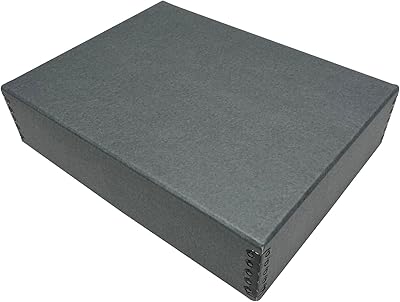
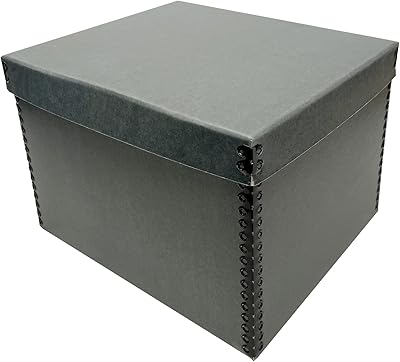
Lineco Museum Archival 17x22 Storage Box

Lineco Museum Archival 17x22 Storage Box — image 1
Lineco Museum Archival 17x22 Storage Box — image 2
Lineco Museum Archival 17x22 Storage Box — image 3
Lineco Museum Archival 17x22 Storage Box — image 4
Lineco Museum Archival 17x22 Storage Box — image 5
Lineco Museum Archival 17x22 Storage Box — image 6
Lineco Museum Archival 17x22 Storage Box — image 7
Lineco Museum Archival 17x22 Storage Box — image 8
Lineco Museum Archival 17x22 Storage Box — image 9
75%
25%

Overview

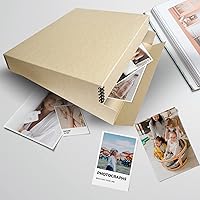
The Lineco Museum Archival 17x22 Storage Box is not the kind of purchase you make on impulse — it comes from a brand that has spent decades supplying professional photographers, framers, and archivists with materials they actually trust. Most off-the-shelf storage boxes stop at 12×12 or maybe 16×20 inches, leaving anyone dealing with large-format prints, certificates, or newspapers without a good flat option. This flat storage box was purpose-built to fill that gap, offering interior capacity sized for true 17×22-inch documents. Made in the USA and verified archival-grade, it sits comfortably in the mid-range of the market — a considered investment for anyone serious about protecting what they own.

Features & Benefits

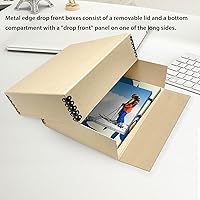
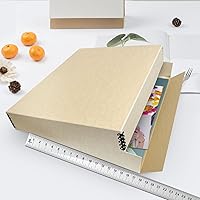
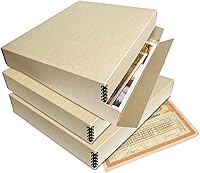
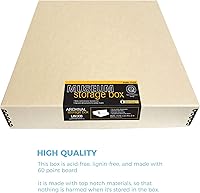
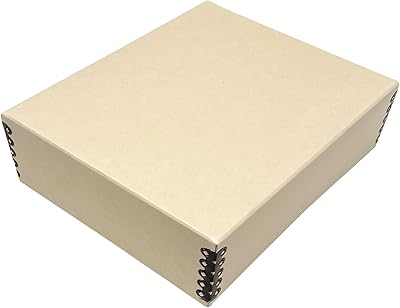
The drop-front design is what separates this flat storage box from most alternatives — instead of lifting a lid and fishing around inside, you slide large items in and out horizontally with minimal handling. The board is 60-point, which is noticeably substantial. Thinner craft boxes flex and crumple; this one does not. Both acid-free and lignin-free construction matter because lignin — the organic compound left in wood-pulp paper — continues to break down chemically over time, attacking whatever it contacts. Metal-edged corners keep the box square under stacking pressure, and the removable lid means you can set it aside completely when sorting through a full collection. The neutral tan finish looks intentional on an archive shelf, not like a closet castoff.

Best For

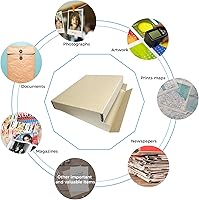
This flat storage box earns its keep for anyone whose archival needs outgrow the standard 11×17 size. Photographers storing large prints or inkjet proofs will find it one of the few chemically safe options at this dimension. It is just as well suited for genealogists who have accumulated oversized property documents, military discharge papers, or hand-drawn family maps — the kind of material you absolutely cannot fold again. Printmakers, art students finishing a thesis body of work, and collectors of vintage broadsheet newspapers or large movie posters are all natural fits. Librarians and small institutional archives needing verified museum-grade boxes rather than decorative look-alikes will also find the Lineco archival flat box worth the cost.

User Feedback

People who have actually used this drop-front archival box tend to come back with fairly consistent feedback: the build quality surprises them, in a good way. Most had tried cheaper alternatives first and describe the difference in rigidity as immediately obvious. Photographers and collectors specifically appreciate that the archival certification here is genuine rather than aspirational marketing language. The one honest caveat is lid fit — some units arrive with a lid that feels slightly loose rather than snug. It is not a dealbreaker, but buyers who stack boxes on open shelves should know ahead of time. The most frequently requested addition is a label window on the front panel. When you have six stacked and unmarked, identification gets tiresome fast.

Pros

  • Genuine acid-free and lignin-free construction protects contents from chemical degradation for decades, not just years.
  • The 60-point board feels noticeably substantial — this flat storage box does not flex, bow, or dent under normal stacking.
  • Drop-front access lets you slide prints horizontally in and out without bending or disturbing other items in the stack.
  • Metal-reinforced corners guard the most vulnerable edges of the box against crushing during storage or relocation.
  • Made in the USA by a brand with a long track record in professional archival and framing supply — not a generic import.
  • The removable lid allows fully open-top access when sorting large collections, a practical detail most competing boxes skip.
  • Sized for true 17×22 interiors, it accommodates oversized certificates, newspapers, and large prints that standard boxes simply cannot.
  • Consistently holds a top ranking in its niche Amazon category, reflecting real buyer satisfaction sustained over several years.

Cons

  • Some units arrive with a lid that sits noticeably loose rather than snug, which is a quality inconsistency at this price.
  • No built-in label window or front identification panel makes managing multiple stacked boxes unnecessarily tedious.
  • Offers zero water or moisture resistance — irreplaceable items in any damp environment face genuine risk without added protection.
  • Sold as a single unit with no volume pricing, so outfitting a large collection becomes expensive quickly.
  • The fixed 17×22 footprint is poor value for anyone whose archive includes items that vary significantly in size.
  • Exterior measurements run slightly larger than the usable interior, so buyers planning a tight shelf fit should measure before purchasing.
  • The mid-range price is a harder sell for casual users without a genuine long-term archival preservation goal.

Ratings

Our scores for the Lineco Museum Archival 17x22 Storage Box were generated by AI after analyzing thousands of verified buyer reviews across multiple global markets, with automated filtering applied to remove spam, bot-generated entries, and flagged incentivized feedback. The resulting profile reflects the real-world experiences of a demanding buyer pool — fine art photographers, genealogists, institutional archivists, and serious collectors — who tend to be both knowledgeable and exacting in their assessments. Strengths and friction points are weighted proportionally, including the quality inconsistencies that surface in a minority of units alongside the consistently praised core performance.

Archival Certification
91%
For buyers who have previously spent money on storage labeled archival only to watch their prints develop faint contact marks or edges turn yellow over time, the verified acid-free and lignin-free credentials here are the real draw. Photographers protecting silver gelatin prints and genealogists housing irreplaceable 19th-century land deeds specifically cite these material properties as the reason they chose this flat storage box over cheaper alternatives.
The one consistent gap buyers note is the absence of any certification documentation inside the packaging — some institutional purchasers and careful collectors want a physical spec sheet or third-party verification rather than a label claim alone. For procurement situations that require documented material compliance, the lack of included paperwork creates a minor but real friction point.
Build Quality
88%
Buyers who have hands-on experience comparing storage options repeatedly describe the 60-point board as immediately feeling different from typical clamshell or craft boxes — more like something built for serious long-term use than casual tidying. The metal-edged corners add a physical solidity that is especially noticeable when the box is stacked under the weight of additional units or relocated frequently.
A small but consistent portion of buyers report quality variance between individual units, most notably in how tightly the lid sits and how uniformly the drop-front panel slides. For a product at this price point and brand reputation, receiving a unit that feels slightly inconsistent compared to the product description is a frustration that erodes confidence.
Drop-Front Access
86%
The horizontal slide-in mechanism earns specific, enthusiastic praise from users who understand what it replaces — anyone who has tried to retrieve a 22-inch print from the bottom of a top-lid-only stack without bending it immediately grasps why this design matters. Photographers and printmakers with active working collections consistently describe this feature as making daily access feel genuinely practical rather than effortful.
A handful of users report the drop-front flap feeling slightly stiff on first use before it loosens with regular handling. The slide mechanism also lacks a secondary locking point, meaning the panel can dislodge with an accidental bump during transport — not a concern for shelf storage, but a relevant detail for buyers who move boxes between locations regularly.
Interior Fit
83%
Buyers storing true 17×22 prints, large architectural drawings, or unfolded genealogy documents consistently confirm the fit is accurate — items slide in cleanly without forcing, and the 3-inch depth holds a meaningful stack that photographers and artists with active working collections find genuinely useful for daily access.
The exterior footprint at 17.75″ × 22.75″ is noticeably larger than the usable interior, which has confused several buyers who measured their shelf clearance against the box name rather than the actual exterior dimensions. Anyone fitting multiple units into a built-in shelving unit or custom storage solution should measure from the exterior specs, not the product label.
Value for Money
72%
28%
For buyers who have already lost prints or documents to cheaper storage — yellowed edges, transferred acid marks, warped board — this drop-front archival box justifies its mid-range cost relatively quickly. The combination of genuine archival materials, a purpose-built large format, and domestic manufacturing is genuinely difficult to replicate at a meaningfully lower price point.
Casual users who only need to store a handful of oversized items and have no strong preservation concerns consistently find the price harder to justify. The single-unit pricing with no multi-pack discount also stings for collectors or archivists who need five or ten boxes at once, where the per-unit cost compounds quickly.
Lid Fit
57%
43%
When the lid does sit properly, the removable design proves genuinely useful — art students sorting through a thesis portfolio and photographers comparing large prints side by side appreciate being able to lift the lid off entirely and set it aside, rather than working around a hinged panel that stays attached.
Lid looseness is the single most cited quality inconsistency across all buyer reviews — not universal, but frequent enough to reflect clear production variance. For a box at this price point, a lid that sits visibly askew rather than flush feels like a quality control issue, even when buyers acknowledge it does not affect the archival performance of the contents.
Stackability
85%
The 60-point board resists the slow compression and lateral bowing that eventually degrades lighter storage boxes when loaded and stacked — users keeping three or four units on a shelf report no warping or deformation after extended use. Metal-reinforced corners are precisely where stacking force concentrates, and buyers consistently report those points holding firm.
The absence of any built-in label solution makes managing multiple stacked units an organizational challenge once you move beyond two or three boxes — you are essentially guessing the contents of each box unless you have labeled them yourself beforehand. A front notch or recessed label window would have made this a significantly more complete stacking system.
Labeling
43%
57%
The neutral tan board surface accepts self-adhesive labels without adhesion issues, and users who do label each unit find their overall shelf system satisfying once set up. The drop-front panel also doubles informally as a card holder — tucking a handwritten index card behind the flap is a functional workaround most buyers discover within their first use.
The lack of a label window, identification strip, or front panel marking slot is the single most common feature request across all buyer feedback, and it is easy to understand why — this product is made for people who accumulate collections, and those people stack boxes. For a product at this quality level targeting archivists and serious collectors, the omission is hard to rationalize.
Appearance
76%
24%
The neutral tan archival board finish projects an understated, professional aesthetic well suited to open studio shelves, photography darkrooms, and home archive setups. Users who display their storage visibly rather than hiding it in closed cabinets specifically appreciate that it looks deliberate and professional rather than improvised.
The single tan color option offers no flexibility for buyers who need to color-code boxes by collection type, client, or date range — a real limitation for professional archivists managing multiple projects simultaneously. A small number of reviewers also note the finish shows minor surface scuffs with regular handling over time, which does not affect performance but does affect the visual impression.
Brand Credibility
93%
Lineco has a long enough track record in archival and framing supply that repeat buyers — professionals restocking a studio or photographers upgrading from decorative boxes — return specifically by brand name. In a category where archival claims are routinely exaggerated by generic suppliers, a recognized specialist with decades of industry presence carries real purchasing confidence.
Newer buyers unfamiliar with the archival supply space sometimes wonder whether the brand reputation is partly responsible for the pricing and whether a less-known alternative might offer comparable material specs at lower cost. The lack of visible third-party certifications or endorsement logos on the product itself does little to help first-time buyers build immediate trust beyond the brand name alone.
Moisture Protection
29%
71%
In dry, climate-controlled environments — a professional archive room, a temperature-regulated home studio, or a well-maintained library shelf — this flat storage box performs exactly as intended, and buyers in those conditions report no humidity-related issues over years of regular use.
The product offers zero protection against water, moisture, or humidity, and this is a meaningful limitation rather than a minor caveat. Buyers storing irreplaceable items in a basement, an older home with seasonal humidity swings, or an uninsulated storage unit without adding desiccant packets and moisture barriers are taking a genuine risk with the very items this box is designed to protect.
Portability
82%
18%
At roughly 1 pound empty, the Lineco archival flat box is light enough to carry comfortably even when loaded with a full collection of large prints — a meaningful detail for photographers moving work between a studio and a client presentation. The manageable weight also makes repositioning on shelves or relocating between rooms easy without risking drops or strain.
The exterior footprint at 22.75″ × 17.75″ means this is not a box you carry in one hand alongside other items — the dimensions demand both hands and deliberate movement, which limits how casually it can be transported. Buyers who need a portable field solution for working on location will find the size itself is the practical constraint, not the weight.
Durability
89%
The acid-free and lignin-free board is specifically engineered to avoid the self-destructive chemistry that causes archival products to degrade and contaminate their own contents over time. Buyers who have owned Lineco products for several years report no brittleness, board discoloration, or structural weakening — the box performs the same at year five as it did at purchase.
The exterior surface finish is the one area where very long-term durability shows some question marks — repeated handling and frequent access over years can cause superficial scuffing of the tan board. The structural integrity of the box holds up well, but users who care as much about the appearance of their storage system as its archival performance may notice visible wear on heavily used units.

Suitable for:

The Lineco Museum Archival 17x22 Storage Box is the right call for anyone who has outgrown standard storage and genuinely needs a flat, chemically safe home for large-format items that cannot be folded, rolled, or squeezed into something smaller. Fine art photographers are an obvious fit — those building a body of large inkjet or darkroom prints need something more dependable than a portfolio sleeve or a cardboard tube. Genealogists and family historians will find it especially valuable for protecting oversized documents like land deeds, military discharge papers, or old hand-drawn maps, which deteriorate rapidly without proper acid-free housing. Printmakers and art students preserving finished or in-progress work, who need pieces to stay flat and undamaged over time, will appreciate both the build integrity and the sliding access design. It also serves educators, small archival collections, and institutional libraries seeking verified museum-grade materials without the cost of a custom conservation supplier.

Not suitable for:

The Lineco Museum Archival 17x22 Storage Box is not the right fit if your storage needs are smaller, more casual, or primarily budget-driven. If most of what you are storing fits comfortably in a standard 12×16 portfolio box or a letter-size file folder, you are paying for dimensions and material specs you do not actually need. This drop-front archival box offers zero water or moisture resistance, so anyone planning to store irreplaceable items in a damp basement, garage, or climate-uncertain space should either add supplemental moisture protection or reconsider the storage environment entirely. It is also a poor match for collectors whose holdings vary widely in size — the fixed 17×22 footprint and 3-inch depth work best when most items share a similar large format. Finally, if you only need to protect a small handful of items and archival chemistry is not a real concern for your use case, there are less expensive options that will serve adequately.

Specifications

  • Brand: Lineco is a US-based manufacturer of archival, framing, and photography supply materials.
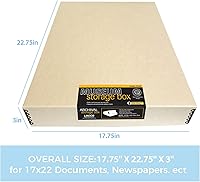
  • Exterior Size: The box measures 17.75″ × 22.75″ × 3″ (length × width × depth) on the outside.
  • Interior Fit: The interior accommodates flat items up to 17″ × 22″, including standard large-format documents, prints, and photographs.
  • Board Weight: Constructed from 60-point archival boxboard, which is thicker and more rigid than the lightweight boards used in typical consumer-grade storage boxes.
  • Material: The body is made from archival boxboard; no wood-pulp fillers or acidic binders are present in the board composition.
  • Acid-Free: The boxboard is acid-free, meaning it will not transfer damaging acids to stored contents or accelerate chemical deterioration over time.
  • Lignin-Free: The material is lignin-free, removing the organic wood-pulp compound that continues to break down chemically in lower-grade storage products.
  • Corner Build: Each corner is reinforced with a metal edge, adding structural strength at the box's most vulnerable stress points.
  • Access Design: Features a drop-front panel that opens forward horizontally, allowing flat items to slide in and out without lifting or bending them.
  • Lid Type: The lid is fully removable rather than hinged, enabling complete open-top access when sorting or reviewing stored contents.
  • Closure: The drop-front panel is secured by a slide closure mechanism that holds it shut during normal shelving and stacking.
  • Color: Finished in a neutral tan archival board tone suited to professional studios, libraries, and archival storage environments.
  • Origin: Manufactured in the United States.
  • Item Weight: The empty box weighs approximately 1 pound (16 ounces).
  • Water Resistance: This product has no water or moisture resistance and is not rated for use in damp or humid storage conditions.
  • Capacity: Total storage volume is approximately 3 liters, designed for flat large-format items stored either lying flat or upright on edge.

Related Reviews
Lineco Museum Archival Storage Box 8x10x3
88%
88%
Durability
91%
Ease of Use
85%
Storage Capacity
94%
Material Quality
90%
Design & Organization
More
Lineco Museum Archival Drop Front Storage Box
79%
88%
Build Quality
91%
Archival Material Quality
86%
Drop-Front Usability
74%
Value for Money
62%
Closure & Security
More
Lineco Archival Photo Storage Box 5x7
87%
94%
Durability and Build Quality
88%
Ease of Use (Removable Lid)
91%
Storage Capacity
95%
Archival Protection (Acid-Free Materials)
85%
Design and Organization
More
Lineco 13x19 Black Museum Storage Box
86%
94%
Build Quality
88%
Ease of Access
91%
Durability
85%
Storage Capacity
82%
Design and Aesthetics
More
Lineco Archival Folio Storage Box 23.5x30.5x1.75 in
87%
93%
Storage Capacity
91%
Build Quality
88%
Ease of Use
90%
Durability
85%
Design & Functionality
More
Lineco Clamshell Folio Storage Box 11.5x17.5
80%
91%
Build Quality
93%
Archival Material Quality
88%
Size & Fit Accuracy
86%
Lid & Closure Design
84%
Dust & Light Protection
More
Lineco 840-Slide Archival Storage Box
80%
92%
Build Quality
94%
Archival Material Quality
88%
Organizational System
83%
Drop-Front Accessibility
79%
Capacity Practicality
More
Lineco Archival Folio Storage Box 9.5 x 12.5 x 1.75 inches
86%
92%
Durability
88%
Ease of Use
94%
Archival Quality
89%
Construction Quality
83%
Size and Capacity
More
Lineco 12x15x10 Record Storage Box
71%
91%
Build Quality
94%
Archival Material Quality
88%
Stackability
61%
Value for Money
76%
Lid Fit & Closure
More
Golden State Art Archival Folio Storage Box 11x14
87%
91%
Build Quality
94%
Durability
86%
Ease of Use
87%
Storage Capacity
93%
Material Quality
More

FAQ

The exterior measures 17.75″ × 22.75″ × 3″, but the interior is designed to hold items up to 17″ × 22″ flat. A true 17×22 print or certificate should slide in cleanly without any forcing. That small gap between the exterior and interior is simply the board thickness — intentional engineering, not wasted space.

Rather than requiring you to lift a lid from above, the front panel on this flat storage box lowers or slides open toward you horizontally. That means you can reach in and retrieve a large print without bending it or disturbing anything else in the stack. It is genuinely more practical than a top-lid-only box, especially when your boxes are shelved tightly or stacked several units high.

The Lineco Museum Archival 17x22 Storage Box uses 60-point board that is both acid-free and lignin-free — the two key chemical criteria for genuine archival storage. Acid-free means the board will not transfer damaging acids to your stored items over time. Lignin-free means the organic wood-pulp compounds that continue breaking down in cheaper boxes are simply not present here. These are verifiable material properties, not vague promotional terms.

This drop-front archival box is well suited for exactly that purpose. Acid-free and lignin-free housing is what fragile vintage paper genuinely needs to halt ongoing chemical deterioration. Make sure your items are 17×22 or smaller flat, and consider slipping acid-free interleaving tissue between particularly delicate pieces for an added layer of protection.

It comes up with enough frequency to be worth flagging honestly. Some units arrive with a lid that sits slightly loose rather than snug. For most everyday uses — sitting on a shelf, stored in a studio — this does not meaningfully affect how the box functions. If you need a reliably tight-fitting seal for transport or a very dusty storage environment, that is a factor worth weighing before purchase.

Yes, the 60-point board and metal-reinforced corners are specifically built to handle stacking pressure without bowing or crushing the contents inside. The main practical challenge is identification — the Lineco archival flat box has no built-in label panel, so applying an adhesive label to each box before stacking will save you a lot of unnecessary digging later.

It will not fit in a standard letter or legal filing cabinet — the footprint of 22.75″ × 17.75″ is simply too large for those drawers. For open shelving, you need at least 23 inches of clearance in one direction and around 18 inches in the other. It fits well on deep archive shelves, wide flat-file units, or even under a bed if home storage is the plan.

Unfortunately, this flat storage box offers no water or moisture resistance. The archival materials are designed to address chemical degradation from paper chemistry, not environmental humidity. In a humid climate, the best approach is to store the box in a climate-controlled space, add silica gel desiccant packets inside, and keep it well away from any risk of direct water exposure.

Technically yes, but it is not the most efficient use of the space or the cost. Letter-size papers would shift around loosely inside a 17×22 interior and offer no real advantage over a smaller box. If your collection is primarily letter or legal size, a smaller archival box made for those dimensions will give you a better fit and likely cost you less.

There is no built-in label window or identification strip, which is one of the most commonly requested features from buyers of this drop-front archival box. Most users apply a self-adhesive label to the front panel or tuck a handwritten card behind the drop-front flap where it stays visible. Archival-quality adhesive labels from photo or office supply stores adhere cleanly to the tan board surface without causing any damage.