Overview

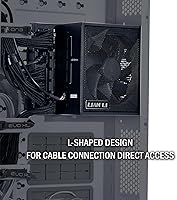
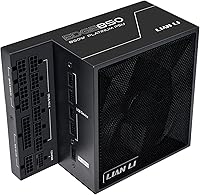
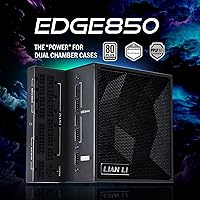
The Lian Li Edge 850W Modular Power Supply is Lian Li’s answer to a real problem: fitting a capable, fully modular PSU into dual-chamber and compact high-end cases without the cable chaos that typically comes with the territory. The L-shape form factor is not a styling choice — it physically redirects cables away from the main chamber, which changes how a build actually looks when finished. At 850W, it covers virtually any current-gen GPU pairing without headroom anxiety. The 80 Plus Platinum certification means roughly 90% or better efficiency at typical loads, translating to less heat waste and a real reduction in electricity draw compared to Gold-tier units.
Features & Benefits

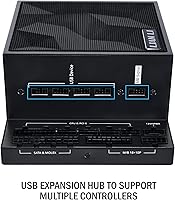
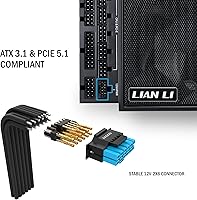
The native 12V-2x6 connector is probably the most forward-thinking aspect of this modular PSU — ATX 3.1 and PCIe 5.1 ready out of the box, with alloy copper-soldered terminals that handle sustained high-current delivery without the connector heat issues that have plagued older adapter-based setups. The L-shape cable exit pairs especially well with cases like the O11 series, keeping CPU and 24-pin runs short and tidy. Less obvious but genuinely handy: a built-in 4-port internal USB 2.0 hub means one motherboard header handles four devices simultaneously. The 120mm FDB fan uses fluid dynamic bearings, which outlast sleeve-bearing alternatives under prolonged load and stay quieter over the unit’s lifespan.

Best For

The Edge 850W makes the most sense for builders using dual-chamber cases — particularly the O11 Dynamic or similar designs — where the L-shape cable routing actually pays off in shorter runs and a cleaner chamber split. It is a natural fit for anyone pairing it with RTX 50-series or RX 9000-series cards, since native PCIe 5.1 support removes any compatibility guesswork. The USB hub is a genuine bonus for builds with limited header access. That said, if you are building in a standard tower, the form factor advantage largely disappears, and the 400mm case height restriction can create a real fit problem worth verifying before you commit to a purchase.

User Feedback

Hands-on impressions from builders who have installed Lian Li’s Edge unit in O11-style cases are consistently positive — particularly around how much easier cable management becomes when you are not fighting stiff 24-pin and CPU cables into tight corners. Build quality and connector feel earn frequent praise. Where feedback gets more nuanced is fan noise: at light loads the unit runs nearly silent, but some users report a noticeable spin-up under sustained full load. A few builders in standard ATX towers have flagged cable length limitations, especially on the CPU run in deeper cases. The USB hub earns genuine appreciation. Against competing Platinum-rated rivals at a similar price, overall satisfaction holds up well.

Pros

  • The L-shape cable design delivers genuinely cleaner builds in dual-chamber cases, not just a marginal improvement.
  • Native PCIe 5.1 support with a 12V-2x6 connector means no sketchy adapters between your PSU and a high-draw GPU.
  • Alloy copper-soldered terminals handle sustained current loads better than standard connectors, reducing heat at the GPU end.
  • The built-in 4-port USB 2.0 hub is a practical feature that frees up a scarce motherboard header without buying extra hardware.
  • 80 Plus Platinum efficiency translates to real-world electricity savings over months and years compared to Bronze or Gold units.
  • The 120mm FDB fan has a longer service life than sleeve-bearing alternatives and runs quietly at light-to-moderate loads.
  • Fully modular cabling means unused cables stay in the bag, keeping the interior clean without any creative tucking.
  • ATX 3.1 compliance future-proofs the unit against the power delivery demands of upcoming GPU generations.
  • Build quality and connector feel are consistently praised by hands-on builders, not just spec-sheet readers.

Cons

  • The L-shape form factor provides almost no benefit in a standard single-chamber tower, making it a niche-specific design.
  • Non-dual-chamber cases taller than 400mm may face cable length issues, particularly on the CPU run — always measure first.
  • Fan noise noticeably increases under sustained full load, which matters in quiet or open-bench setups.
  • Builders outside the Lian Li ecosystem may find the cable lengths less optimized for their specific case geometry.
  • The integrated USB hub adds cost to the unit regardless of whether your build actually needs it.
  • Premium pricing over conventional 850W Platinum units is hard to justify if the L-shape routing advantage does not apply to your case.
  • Limited color options may not suit builders with specific aesthetic builds beyond an all-black scheme.
  • The 400mm case height compatibility restriction for non-dual-chamber installs is easy to overlook and not prominently communicated.

Ratings

The scores assigned to the Lian Li Edge 850W Modular Power Supply reflect an AI-driven analysis of verified buyer feedback gathered across global markets, with systematic filtering applied to remove bot activity, incentivized reviews, and spam submissions. Every category is scored to represent the honest distribution of real builder experiences, not a curated highlight reel. Both the genuine strengths that dual-chamber enthusiasts celebrate and the compatibility frustrations raised by standard tower users are weighted proportionally in each score.
Build Quality
89%
Builders consistently praise the solid feel of the housing and the quality of individual cable connectors, noting that nothing feels cheap or fragile during installation. The overall fit and finish holds up well to repeated cable swaps, which matters for builders who regularly tweak or upgrade their systems.
A portion of users noted that the cable sleeves, while functional, feel marginally less premium than those on some competing high-end modular units at a similar price point. It is a minor complaint, but builders with particularly high aesthetic expectations for every component may notice it.
Cable Management
93%
For dual-chamber builds, this is the feature that makes the Edge 850W stand apart from a field of otherwise similar Platinum units. Builders using O11-style cases consistently report that the L-shape cable exit turns a normally tedious routing job into something genuinely clean, with noticeably shorter runs and no extension cables required.
Outside of a dual-chamber or partitioned case setup, the L-shape exit provides virtually no routing advantage over a standard PSU cable exit. Builders in conventional towers effectively pay for engineering they cannot benefit from, which is a fair criticism when comparable competing units do not carry the same case-specific design premium.
PCIe 5.1 Support
94%
The native 12V-2x6 connector with copper-soldered terminals is exactly what current-gen GPU builders need, and users pairing this unit with RTX 50-series and RX 9000-series cards report a plug-and-play experience with zero adapter anxiety. Specific praise has also come from builders who previously dealt with connector heat problems on adapter-based setups.
For builders still running older GPUs on 8-pin connectors, the native 12V-2x6 connector is entirely irrelevant and adds nothing practical to their build. The premium associated with this feature delivers no return for anyone not running a current or next-generation high-draw graphics card.
Value for Money
78%
22%
For builders who specifically need a dual-chamber-optimized, PCIe 5.1 native, Platinum-rated fully modular unit, the pricing holds up reasonably well given the engineering depth. The USB hub inclusion also adds measurable value for those who actually need it, making the overall feature set feel justified for the right buyer profile.
Compared to conventional 850W Platinum competitors available at lower price points, the premium is difficult to rationalize unless the L-shape routing or native 12V-2x6 connector directly serves your build. Builders in standard cases who bypass those features will likely feel the unit is priced above what their use case demands.
Fan Noise
72%
28%
At idle and under moderate gaming loads, the 120mm FDB fan is genuinely quiet, and the fluid dynamic bearing design should maintain that noise profile over years of use rather than progressively worsening the way a sleeve-bearing fan would. Most builders running typical gaming sessions rarely raise fan noise as a concern.
Under heavy, sustained full load, the fan spins up audibly enough that open-bench users and builders running noise-sensitive workstation setups have flagged it as a real limitation. It is not unusually loud for the wattage class, but it does fall short of the near-silent expectations that some premium buyers bring to a unit at this price tier.
Efficiency
91%
Platinum-tier efficiency delivers tangible real-world benefits beyond the certification badge. Builders running systems for long daily sessions report less ambient heat building up inside the case compared to their previous Bronze or Gold units, which translates to a measurable improvement in CPU and GPU thermal headroom during sustained workloads.
The efficiency advantage over a well-made Gold-rated unit is real but incremental, and the difference in electricity cost is unlikely to be perceptible in daily use for builders who do not actively monitor their power draw. Efficiency alone is not a sufficient reason to choose this unit over a lower-priced Gold-rated alternative.
Modular Flexibility
87%
Full modularity means unused cables stay in the bag entirely, keeping cable management cleaner and making the interior significantly easier to work in during upgrades or component swaps. Builders who have lived with semi-modular units consistently appreciate how much easier it is to service a system when the 24-pin and CPU cables can be pulled completely.
The cable selection in the included kit is adequate but not exceptional, and builders with unusual case layouts may find themselves wanting additional length options not included in the box. Third-party aftermarket sleeved cable compatibility has not been widely confirmed, which is a consideration for builders who plan to customize their cable aesthetics.
USB Hub Utility
83%
The integrated 4-port USB 2.0 hub is one of those features that earns consistent appreciation from builders who actually use it. In high-density builds where motherboard USB headers are already claimed by RGB controllers, AIO pump communications, and front-panel connectors, four extra ports sourced directly from the PSU is a practical and unglamorous problem solver.
Builders without header congestion issues will find the USB hub completely idle, contributing to the unit cost without adding anything to their specific setup. The hub also tops out at USB 2.0 speeds, which limits it to lower-bandwidth devices and makes it unsuitable for anything requiring faster data transfer.
Cable Length
67%
33%
For dual-chamber builds, the 550mm CPU cable and 500mm ATX cable are well-proportioned for the routing distance between a separated PSU bay and motherboard compartment. Builders using O11-style cases rarely report needing extension cables, which confirms the lengths reflect genuine design intent rather than a generic one-size compromise.
In standard towers, particularly deeper full-tower enclosures, the CPU cable has been flagged as tighter than comfortable by a meaningful number of non-dual-chamber users. Builders outside the dual-chamber ecosystem should measure their specific routing distance carefully before ordering, since returning a PSU is a significant inconvenience if the cables fall short.
Case Compatibility
61%
39%
Within its intended use case, this modular PSU fits any standard ATX PSU bay in a dual-chamber enclosure regardless of brand, provided the case separates the PSU and motherboard compartments with a cable pass-through divider. Builders who own multiple dual-chamber cases have reported no compatibility surprises when moving the unit between enclosures.
The 400mm case height restriction for non-dual-chamber installs is a legitimate compatibility trap that has caught out a notable number of buyers, and the limitation is not prominently communicated at the point of sale. Standard tower builders are effectively operating outside this unit's intended design envelope, which is a real constraint for a product not always marketed with that specialization clearly stated.
Connector Quality
92%
The alloy copper soldered 12V-2x6 terminals consistently draw positive feedback from builders pairing this unit with high-draw flagship GPUs, with the connector seating feeling secure and confidence-inspiring under load. No verified feedback has surfaced regarding heat damage or deformation at the 12V-2x6 connection point, which was a legitimate concern with earlier adapter-based power configurations.
The broader cable connectors, while functional and well-made, do not feel dramatically superior to those found on competing Corsair or Seasonic units in the same wattage tier. Connector quality here represents a solid and reassuring baseline rather than a standout differentiator that would alone tip a purchasing decision in its favor.
Installation Experience
81%
19%
Builders who install this unit in a compatible dual-chamber case describe the process as notably more intuitive than a standard PSU install, with the L-shape cable exit making it easier to feed cables through the divider pass-through cleanly on the first attempt. Full modularity further simplifies the process by letting you route only the cables you need from the outset.
For first-time builders unfamiliar with dual-chamber case layouts, the L-shape cable orientation can be momentarily disorienting until the routing logic becomes clear. The included documentation could also be more visual for builders who prefer step-by-step diagrams over text-heavy instructions, particularly when setting up the USB hub headers.
Long-term Reliability
86%
FDB fan technology provides a meaningful longevity advantage over sleeve-bearing alternatives, and Lian Li's in-house approach to the 12V-2x6 terminal soldering reflects a considered investment in component durability. Early feedback from builders who have run the unit across multiple months of continuous daily use has been consistently reassuring.
The unit is relatively new to market, which means long-term reliability data beyond the initial ownership window is still limited compared to established competitors with years of field history. Buyers seeking a decade-long track record of verified durability will not find that evidence base here yet, and the long-term behavior of the USB hub circuitry has not been tested at meaningful scale.

Suitable for:

The Lian Li Edge 850W Modular Power Supply was built with a specific builder in mind, and if you fit that profile, it is difficult to beat at its price point. Enthusiasts running dual-chamber cases — the O11 Dynamic, O11 Vision, or any similar split-layout design — will get the most out of its L-shape cable routing, which genuinely shortens CPU and 24-pin runs rather than forcing cables through awkward paths. Anyone dropping in a current-gen GPU from the RTX 50-series or RX 9000 lineup will appreciate the native PCIe 5.1 connector with copper-soldered terminals, removing any anxiety about adapter heat or compatibility gaps. Builders who have wrestled with USB header congestion on packed motherboards will find the integrated 4-port USB 2.0 hub a practical, unglamorous feature that quietly saves a header. If your priority is long-term reliability and efficiency over the lowest possible upfront cost, the 80 Plus Platinum rating means real savings in electricity over years of use, not just a badge on a spec sheet.
Not suitable for:

If you are building in a standard mid-tower or full-tower ATX case, the Lian Li Edge 850W Modular Power Supply offers limited return on its design-specific premium — the L-shape cable exit provides no meaningful routing advantage in a conventional single-chamber layout. Builders with cases taller than 400mm who are not using a dedicated dual-chamber enclosure may also face a genuine fit issue with cable length, particularly the CPU run, so it is worth measuring before ordering. Budget-conscious builders who just need a dependable 850W unit without the specialty features will find better value in conventional competitors that do not charge for innovations they will never use. Open-bench or near-silent workstation builders should also note that fan spin-up under sustained full load has drawn some attention in feedback, making it less ideal for noise-sensitive environments. Finally, if your case or workflow does not benefit from the integrated USB hub, that feature adds no value, and you are effectively paying for engineering that sits idle.
Specifications

  • Output Wattage: Rated at 850W continuous output, providing comfortable headroom for current-generation flagship single-GPU builds under sustained load.
  • Efficiency Rating: 80 Plus Platinum certified, delivering approximately 90% or better efficiency at 50% load, reducing wasted heat and long-term electricity consumption compared to Gold or Bronze units.
  • ATX Standard: Fully compliant with both ATX 3.0 and ATX 3.1 specifications, meeting the power delivery and transient response requirements of modern motherboards and GPU architectures.
  • GPU Connector: Ships with a native PCIe 5.1 12V-2x6 connector, eliminating the need for any adapter between the PSU and current-generation high-draw graphics cards.
  • Terminal Construction: The 12V-2x6 connector uses alloy copper soldered terminals produced in-house, improving conductivity and thermal resilience under high sustained current loads.
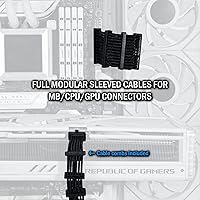
  • Modular Type: Fully modular design allows all cables, including the 24-pin ATX and CPU connectors, to be completely detached when not in use, keeping the interior clean.
  • Cable Design: L-shape cable exit routes power cables laterally rather than straight out from the unit, specifically optimized for dual-chamber cases with a PSU-to-motherboard cable pass-through divider.
  • Cooling Fan: A 120mm fluid dynamic bearing fan provides active cooling, with FDB construction offering a longer service life and lower noise degradation over time compared to sleeve-bearing fans.
  • USB Hub: Includes a built-in internal USB expansion hub with four USB 2.0 headers, compatible with RGB controllers, AIO pump controllers, fan hubs, and front-panel USB devices.
  • CPU Cable Length: The CPU power cable measures 550mm, sized to span the routing distance typical in dual-chamber enclosures where the PSU bay is separated from the motherboard compartment.
  • ATX Cable Length: The 24-pin ATX motherboard cable measures 500mm, again reflecting the longer routing paths found in dual-chamber and partitioned case designs.
  • Case Compatibility: When installed in a non-dual-chamber case, the enclosure’s internal height must not exceed 400mm to ensure cable lengths are sufficient to reach all connectors without strain.
  • Dimensions: The physical unit measures 9.53 x 6.93 x 4.02 inches, conforming to the standard ATX PSU form factor accepted by the vast majority of desktop cases.
  • Weight: The unit weighs 3.86 pounds, consistent with a fully modular 850W PSU that includes additional internal hub circuitry.
  • Form Factor: Standard ATX form factor ensures mechanical compatibility with any case that accepts a conventional ATX power supply, regardless of brand.

Related Reviews
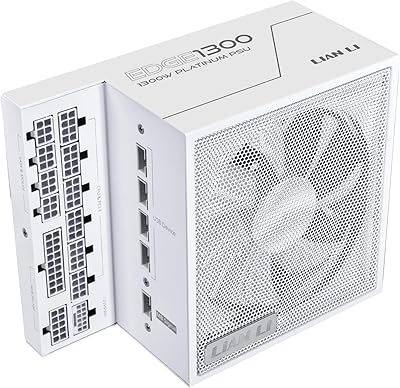
Lian Li EDGE Series EG1300WE.US 1300W Full Modular Power Supply
87%
93%
Power Delivery & Stability
90%
Modular Design & Cable Management
88%
Cooling Performance & Noise Levels
91%
Build Quality & Durability
85%
Compatibility with PC Components
More
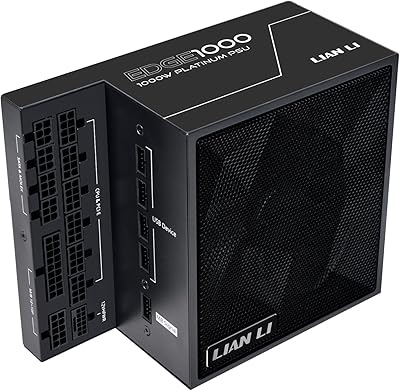
Lian Li Edge 1000W Power Supply
85%
93%
Build Quality
88%
Cable Quality & Flexibility
91%
L-Shape Design Functionality
86%
Noise Level
92%
PCIe 5.1 Connector Implementation
More
Lian Li SP850 850W SFX Power Supply
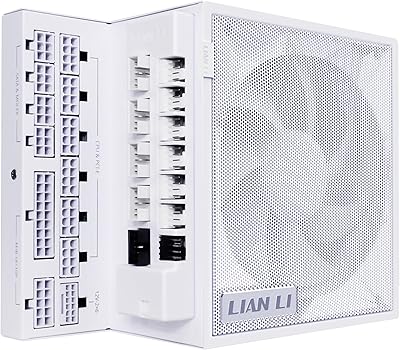
83%
91%
Build Quality
88%
Noise Level
89%
12VHPWR Connector Implementation
86%
Modular Cable Management
72%
Value for Money
More
Lian Li EDGE 1000W ATX Power Supply
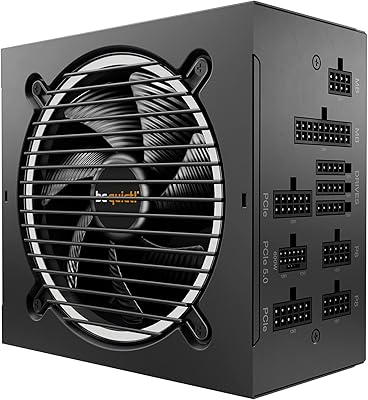
84%
88%
Build Quality
76%
Noise Level
91%
Power Stability
87%
Cable Quality
93%
Modular Design
More
be quiet! Pure Power 12 M 850W Modular Power Supply
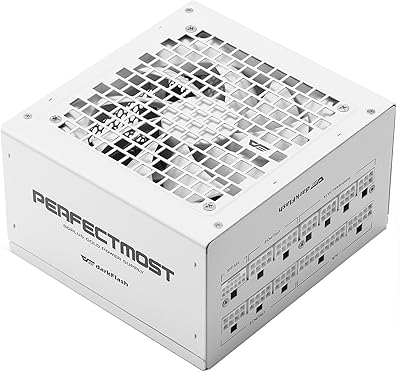
88%
94%
Quiet Operation
88%
Ease of Installation
89%
Build Quality
92%
Power Delivery Stability
90%
Energy Efficiency
More
Lian Li SP750 White SFX Power Supply
84%
92%
Power Efficiency
88%
Noise Level
90%
Build Quality
91%
Modular Cable Management
85%
Compactness for Small Builds
More
darkFlash PMT850 850W Modular Power Supply
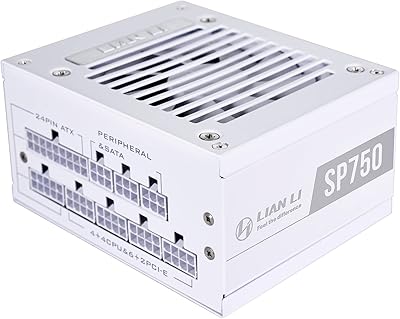
79%
88%
Value for Money
82%
Build Quality
67%
Cable Quality
91%
Modular Design
89%
Connector Compatibility
More
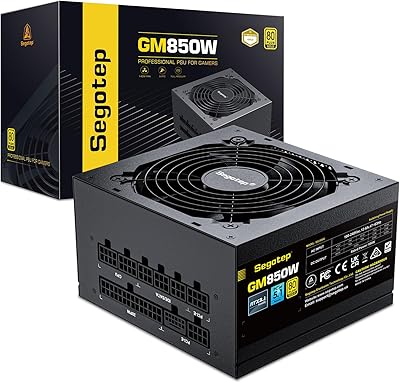
Segotep GM850 850W Power Supply
79%
88%
Value for Money
91%
Cable Management
84%
Power Stability
83%
Efficiency & Heat Output
79%
Noise Level
More
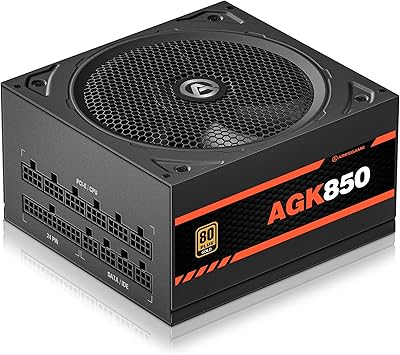
ARESGAME AGK850 850W Fully Modular 80Plus Gold Power Supply
88%
89%
Performance
93%
Value for Money
92%
Noise Level
85%
Build Quality
90%
Ease of Installation
More
Vetroo 850 G5 ATX Power Supply
81%
91%
Value for Money
78%
Build Quality
86%
Noise Level
89%
Modular Cable System
84%
Efficiency & Heat Output
More

FAQ

It will fit mechanically and power your system without issue, but the L-shape cable exit is engineered for dual-chamber cases, so you lose the main routing advantage in a conventional single-chamber tower. More importantly, check that your case’s internal height does not exceed 400mm — the cable lengths are optimized for shorter dual-chamber runs, and builders in deeper standard enclosures have occasionally found the CPU cable tighter than expected.

No adapters needed. The Edge 850W ships with a native 12V-2x6 connector that plugs directly into current-generation high-draw graphics cards under the ATX 3.1 and PCIe 5.1 standards. Avoiding an adapter also eliminates the connector heat concerns that came up with earlier adapter-based workarounds.

In a dual-chamber case, the PSU lives in a compartment separate from the motherboard and GPU, connected by a cable pass-through in the divider panel. A standard PSU exits cables straight back, which can create awkward bends at that divider. The L-shape exit routes cables laterally from the start, so they travel through the pass-through more naturally, reducing the run length needed and keeping the main chamber noticeably tidier without cable extensions.

For most single-GPU builds, yes. An RTX 5090 or RX 9900 XT paired with a Ryzen 9 or Core Ultra 9 processor typically stays well within 850W under real gaming or creative workloads. You would only need to consider stepping up if you plan heavy simultaneous overclocking on both the CPU and GPU, or if future GPU generations push sustained draw meaningfully higher than current flagships.

At idle and light loads, the unit is nearly silent — most users in typical gaming or productivity builds barely notice it. Under sustained full load, the 120mm fan does spin up and becomes audible. It is not unusually loud for an 850W unit, but if you run open-bench setups or want a whisper-quiet workstation that regularly maxes out the PSU, this is worth factoring in.

The four internal USB 2.0 headers can handle RGB lighting controllers, addressable LED hubs, AIO cooler pump communications, front-panel USB ports, or any other internal device that draws data or control signals over USB. In a fully built-out system where motherboard headers fill up fast, having four extra connections sourced from the PSU is a genuinely practical feature, particularly in compact or cable-managed builds.

It translates to real savings over time. A Platinum unit wastes roughly 8 to 10 percent of consumed power as heat at typical loads, versus 14 to 16 percent for a Bronze-rated unit. Run your system several hours a day for a few years and that gap adds up to a meaningful reduction in electricity costs. The secondary benefit is less heat inside your case, which is easier on surrounding components over the long run.

Yes. The unit fits any standard ATX PSU bay and will work in dual-chamber enclosures from other manufacturers, not just Lian Li’s own O11 lineup. The key is that your case genuinely separates the PSU and motherboard chambers with a cable pass-through, which is what the L-shape exit is designed to route through. It is worth checking the PSU bay orientation in your specific case before ordering, since some designs orient the PSU differently.

Fluid dynamic bearings support the fan shaft on a thin pressurized film of oil, which dramatically reduces friction and wear compared to sleeve bearings. Sleeve-bearing fans tend to get louder and can fail after a few years of constant use as the lubricant dries out. FDB fans maintain quieter, more consistent operation over a much longer lifespan, which matters in a PSU that could be running for five or more years.

If you are building in a dual-chamber case and want native PCIe 5.1 support, copper-soldered 12V-2x6 terminals, and a built-in USB hub, the premium is justified by real engineering rather than branding. If you are dropping it into a standard tower where the L-shape exit provides no routing benefit, then a conventional 850W Platinum competitor would likely serve you just as well and cost less.