Overview

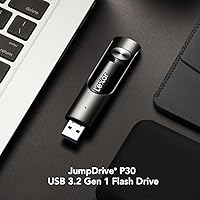
The Lexar JumpDrive P30 512GB USB Flash Drive sits in a different league from the cheap plastic drives cluttering most desk drawers. Built around USB 3.2 Gen 1 technology, it targets professionals who routinely push large files across systems and cannot afford to wait. The all-metal titanium shell signals right away that this is not a throwaway purchase. At its price point, buyers should expect genuinely fast sequential transfers — moving big video exports or photo libraries feels noticeably quicker than on budget alternatives. Just keep expectations grounded: this is a capable flash drive, not a portable SSD, and random small-file performance reflects that distinction honestly.

Features & Benefits

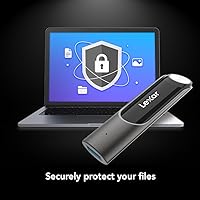
The headline numbers — up to 450MB/s read and 400MB/s write — are impressive on paper, and in practice the JumpDrive P30 holds up well when moving large sequential files like RAW images or high-bitrate video. Expect those peaks on a modern USB 3.2 host port; older USB 3.0 ports will cap the speed somewhat. The bundled 256-bit AES encryption software adds a meaningful layer of security for anyone carrying sensitive client files, though you will need to install and configure it — it is not automatic. Capacity-wise, 512GB comfortably holds a working RAW photo library, multiple video projects, or a full system backup without drama. The lifetime limited warranty rounds things out well.

Best For

This Lexar flash drive makes the most sense in the hands of photographers, videographers, and creative professionals who regularly shuttle large files between machines and need both speed and reliability in a pocketable package. It is also a solid pick for IT staff who want encrypted portable storage without lugging around a full external drive. Frequent travelers will appreciate the tough metal shell — it handles bag life considerably better than plastic alternatives. If you are a casual user copying the occasional document or small folder, the performance advantage here will not mean much in daily use. This is a tool built for people who actually stress a flash drive.

User Feedback

With a 4.0-star average across over 80 ratings, the JumpDrive P30 earns consistent but measured praise. Most buyers highlight the sturdy build and real-world transfer speeds as standout strengths — people upgrading from slower drives tend to be visibly impressed by the difference. The criticisms that surface most often are minor but worth noting: the drive generates noticeable heat during prolonged transfers, the cap-only design makes it easy to misplace the cover, and a handful of users found the encryption software setup less than intuitive. A few buyers felt the asking price was steep compared to competing options. Overall, power users come away satisfied; those with lighter needs sometimes feel the premium was not fully justified.

Pros

  • Real-world sequential read speeds are genuinely fast, making large file transfers feel quick and predictable.
  • The all-metal titanium body feels premium and handles daily wear far better than plastic alternatives.
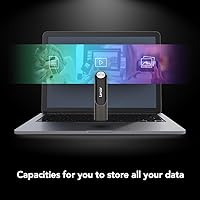
  • 512GB of capacity comfortably holds RAW photo libraries, video projects, or full system backups in one place.
  • Broad USB compatibility means the JumpDrive P30 works across virtually any machine without adapters or fuss.
  • The bundled 256-bit AES encryption software adds meaningful data security for professionals carrying sensitive files.
  • A lifetime limited warranty signals Lexar stands behind the product for the long haul.
  • Compact and pocketable — easy to carry without adding noticeable bulk to a bag or jacket.
  • Write speeds hold up well during large sequential transfers, not just on reads.
  • Works natively on both Windows and Mac without driver installs for basic use.
  • Strong brand track record in storage gives buyers reasonable confidence in long-term reliability.

Cons

  • The drive runs noticeably warm during extended or back-to-back large transfers, which may concern some users.
  • Peak speeds require a USB 3.2 Gen 1 host port — older ports significantly limit real-world performance.
  • The removable cap has no tether, making it easy to misplace during frequent use.
  • Encryption requires manual software installation and setup; it is not plug-and-play out of the box.
  • Small random file transfers are considerably slower than the headline numbers suggest.
  • The price premium is hard to justify for users who only move files occasionally or in small volumes.
  • No retractable or sliding connector design, which some competing drives offer for easier portability.
  • A small pool of ratings makes it harder to gauge long-term durability trends across a wide user base.
  • No included cable or USB-C adapter, which limits direct use with modern laptops that lack Type-A ports.
  • Some buyers feel competing drives at a similar price offer comparable speeds with a more practical form factor.

Ratings

Our AI rating system analyzed verified global buyer reviews for the Lexar JumpDrive P30 512GB USB Flash Drive, actively filtering out incentivized, bot-generated, and low-quality submissions to surface what real users genuinely experienced. Scores reflect a balanced picture — the categories where this drive consistently impressed professionals and the areas where it fell short of expectations. Both the strengths and the friction points are represented honestly across every dimension below.

Transfer Speed
86%
Photographers and video editors transferring large RAW image batches or 4K project folders report a genuinely noticeable speed improvement over standard drives. When connected to a modern USB 3.2 Gen 1 port, the JumpDrive P30 moves multi-gigabyte files at a pace that feels confident and practical rather than painfully slow.
Several buyers noted that speeds drop significantly on older USB 3.0 host ports, and small file transfers — like syncing mixed document folders — reveal the gap between rated and real-world throughput. A handful of users felt the performance ceiling was not consistently reproducible outside of controlled sequential transfer scenarios.
Build Quality
91%
The all-metal titanium shell is the single most praised physical attribute across buyer reviews — commuters and traveling professionals specifically called out how solid it feels compared to the flimsy plastic drives they had used before. It survives bag drops, pocket pressure, and the general chaos of a working kit without showing meaningful wear.
A few users pointed out that the metal body picks up minor surface scratches over time, though none reported structural damage. The weight, while modest, is slightly heavier than ultra-compact plastic alternatives, which some users noticed when carrying it on a keychain.
Cap Design
47%
53%
The cap itself fits snugly and protects the connector effectively during transit, which buyers appreciated when tossing the drive into a crowded bag. When it stays in place, it does the job without any looseness or rattling.
Losing the cap is the single most recurring complaint in buyer feedback — there is no tether, slot, or storage point on the drive body to keep it attached during use. Several buyers resorted to keeping the cap in a dedicated pocket or small pouch, which adds friction to what should be an effortless daily-use item.
Encryption & Security
68%
32%
IT professionals and users handling sensitive client data appreciated that 256-bit AES encryption is available at all on a drive in this form factor — it adds a legitimate layer of protection for anyone carrying confidential files between offices or across borders.
The encryption is software-based and requires manual installation and setup before it does anything, which tripped up buyers who expected it to be ready out of the box. A few users found the bundled software interface dated and slightly confusing, and compatibility with certain operating system versions caused minor friction during initial configuration.
Thermal Management
54%
46%
The metal housing does a reasonable job of conducting heat away from the internal components during short to medium transfer sessions, which is a practical advantage over plastic-bodied drives that trap heat with no path to dissipate it.
During extended back-to-back transfers or sustained write sessions, multiple buyers reported the drive becoming quite warm — warm enough to be noticeable and occasionally concerning. This appears to be a consistent trait rather than an isolated defect, and users doing long archival transfer jobs flagged it as a genuine annoyance.
Storage Capacity
88%
512GB hits a practical sweet spot for working professionals — it comfortably holds tens of thousands of RAW files, hours of high-bitrate video footage, or a complete system backup without requiring careful space management. Buyers upgrading from 128GB or 256GB drives consistently expressed relief at not having to partition their workflow across multiple devices.
Users dealing with very high-volume shoots — multi-day events, 8K raw footage, or large-scale data migration — occasionally found themselves approaching the limit faster than expected. The usable formatted capacity is slightly less than 512GB, which caught a small number of buyers off guard.
Compatibility
83%
Cross-platform buyers running mixed Windows and Mac environments found this metal USB drive worked without any driver installation headaches for basic file transfers, which is exactly what working professionals need when switching between machines quickly.
The Type-A connector is the standard, but it is also becoming a friction point as more modern laptops ship with only USB-C ports — an adapter is required and not included. A small number of users on older USB 2.0 systems also noted the drive was recognized but performed at a fraction of its potential.
Value for Money
67%
33%
For power users who actually max out what this drive offers — fast sequential transfers, large capacity, and daily rugged use — the price-to-performance ratio feels defensible and fair against competing options at the same tier.
Casual users or buyers who only occasionally move a few gigabytes of data consistently felt the premium was hard to justify given more affordable alternatives that cover lighter workloads adequately. A few buyers also noted that competing brands offer similar rated specs at a meaningfully lower price point, making the value case less clear-cut.
Portability
82%
18%
Despite the metal construction, the drive remains genuinely pocketable and unobtrusive — travelers and commuters repeatedly noted they forgot it was in their pocket, which is high praise for a 512GB drive with a solid build.
The drive is slightly bulkier than the most compact flash drives on the market, and the protruding cap adds marginal length when attached. Users who carry drives on keychains found there is no keyring loop or attachment point built into the design.
Write Speed Consistency
73%
27%
For large single-file transfers — video renders, disk images, compressed archives — the write performance holds up well and matches what buyers expected based on the rated 400MB/s figure under the right conditions.
Write speeds showed more variability than read speeds across buyer reports, particularly when writing many smaller files simultaneously or when the drive was near full capacity. A handful of users noted unexpected slowdowns mid-transfer on large batch jobs, which disrupted time-sensitive workflows.
Setup Experience
76%
24%
For basic plug-and-use scenarios without encryption, setup is essentially instantaneous — both Mac and Windows recognized the drive immediately with no configuration required, which is the experience most buyers want.
Once encryption software enters the picture, the setup process introduces friction that a few less technical buyers found unexpectedly complicated. Documentation included in the box is minimal, and some users had to look up external guides to get the security features working correctly.
Durability Over Time
79%
21%
The all-metal chassis and Lexar's reputation for build reliability gave buyers reasonable confidence that this is a drive built to last beyond a single year of heavy use. The lifetime limited warranty reinforces that confidence for professionals making a considered purchase.
With only 83 ratings and a release date of May 2022, long-term failure rate data is still relatively limited compared to more established models. A small number of buyers reported connector wear after extensive daily cycling, though failures were not a dominant theme in the feedback.
Brand Reputation
81%
19%
Lexar carries meaningful credibility in the professional storage space, and many buyers specifically cited brand trust as part of their purchase decision — particularly IT professionals who have used Lexar memory cards and drives in previous roles.
A few buyers noted that Lexar has changed ownership over the years and expressed mild uncertainty about whether current product quality fully matches the brand legacy. This was a minor concern rather than a dealbreaker, but it surfaced often enough to be worth noting.

Suitable for:

The Lexar JumpDrive P30 512GB USB Flash Drive is built for people whose work actually depends on moving large files quickly and reliably. Photographers shooting RAW, videographers working with 4K footage, and creative professionals managing multi-gigabyte project folders will feel the speed advantage immediately, especially when plugged into a modern USB 3.2 host port. IT professionals and sysadmins who need encrypted portable storage for sensitive data will also find the bundled AES protection genuinely useful — provided they are willing to spend a few minutes on the initial software setup. Frequent travelers and commuters benefit from the all-metal shell, which holds up to the kind of daily bag abuse that destroys cheaper plastic drives over time. Anyone stepping up from a slow, bargain-bin flash drive will notice a real, tangible improvement in their day-to-day workflow.
Not suitable for:

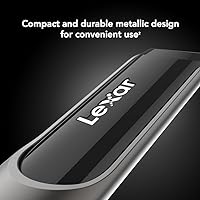
If your typical use case is copying a few documents, transferring a playlist, or occasionally moving files under a couple of gigabytes, the Lexar JumpDrive P30 512GB USB Flash Drive is probably more drive than you need. The performance gap between this and a much cheaper USB drive simply will not show up in casual, low-volume use — you would be paying a noticeable premium for speed headroom you never touch. Users who rely on older USB 2.0 ports exclusively will also be unable to access anywhere near the rated speeds, which largely defeats the purpose. The removable cap design can be frustrating for anyone prone to losing small accessories, as there is no tethered or retractable mechanism to keep the cap attached. Finally, buyers expecting portable SSD-level performance across all file types, including small random reads and writes, should look at an actual external SSD instead — this drive is optimized for sequential transfers, not mixed workloads.
Specifications

  • Brand: Manufactured by Lexar International, a well-established brand in consumer and professional flash storage.
  • Model Number: The official model designation is LJDP030512G-RNQNG.
  • Capacity: Offers 512GB of total storage capacity for files, backups, and media libraries.
  • Read Speed: Rated for sequential read speeds of up to 450MB/s under optimal conditions with a USB 3.2 Gen 1 host port.
  • Write Speed: Rated for sequential write speeds of up to 400MB/s, making it capable of handling large file ingestion quickly.
  • Interface: Uses a USB 3.2 Gen 1 Type-A connector for the primary connection to host devices.
  • Compatibility: Backwards compatible with USB 3.1, USB 3.0, and USB 2.0 ports, and works on both Windows PC and Mac systems.
  • Encryption: Supports 256-bit AES encryption via bundled software that must be installed and configured separately before use.
  • Body Material: Constructed with an all-metal titanium-finish shell designed to resist daily wear, drops, and physical stress better than plastic alternatives.
  • Color: Available in a titanium colorway that matches the metallic finish of the housing.
  • Weight: Weighs 2.68 ounces, keeping it light and pocketable despite the all-metal construction.
  • Warranty: Backed by a lifetime limited warranty, covering manufacturing defects for the lifespan of the product.
  • Platform Support: Compatible with both Mac and Windows-based PC systems without requiring additional drivers for basic file transfer use.
  • Release Date: First made available in May 2022.
  • Flash Memory: Uses USB flash memory as the storage medium, optimized for sequential read and write performance rather than random access.
  • Market Rank: Holds a ranking of #959 in the USB Flash Drives category on Amazon based on recent sales data.
  • User Rating: Carries an average rating of 4.0 out of 5 stars based on 83 customer ratings at time of review.
  • Connector Type: Features a standard USB Type-A plug, which is the most widely supported connector type across laptops, desktops, and hubs.

Related Reviews
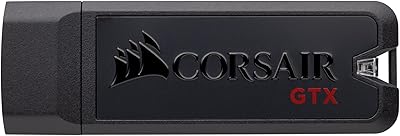
Corsair Flash Voyager GTX 512GB USB 3.1 Flash Drive
88%
94%
Performance
91%
Build Quality
82%
Value for Money
89%
Portability
96%
Transfer Speed
More
AOIRHLA 512GB USB Flash Drive
87%
87%
Performance
89%
Data Transfer Speed
82%
Compatibility
91%
Encryption and Security
95%
Portability and Size
More
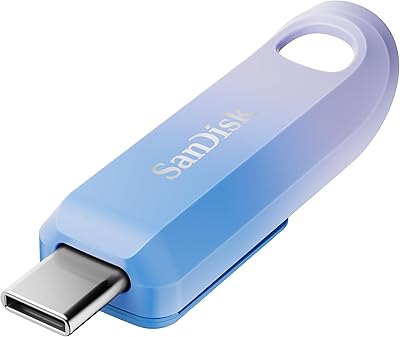
SanDisk Creator 512GB USB-C Flash Drive
81%
88%
Read Speed Performance
51%
Write Speed Performance
94%
Portability
76%
USB-C Compatibility
72%
Value for Money
More
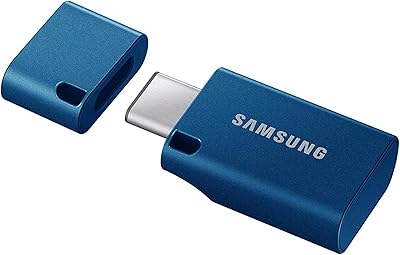
Samsung MUF-512DA 512GB USB-C Flash Drive
82%
91%
Read Speed Performance
63%
Write Speed Performance
88%
Build Quality & Durability
89%
Compatibility
94%
Portability & Form Factor
More
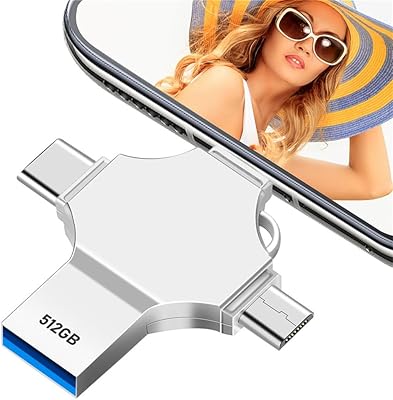
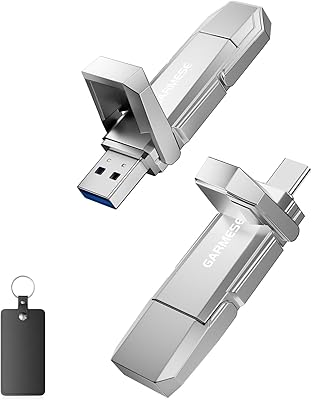
GARMESE U54 512GB USB-C Flash Drive
82%
83%
Transfer Speed
88%
Build Quality
91%
Dual Connector Design
86%
Compatibility
89%
Storage Capacity
More
PNY Elite-X 512GB USB Flash Drive
82%
88%
Read Speed Performance
71%
Write Speed Performance
93%
Build Quality
58%
Cap & Connector Design
79%
Compatibility
More
PNY PRO Elite 512GB USB Flash Drive
81%
88%
Read Speed Performance
71%
Write Speed Performance
91%
Build Quality
87%
Storage Capacity Value
93%
Portability & Form Factor
More
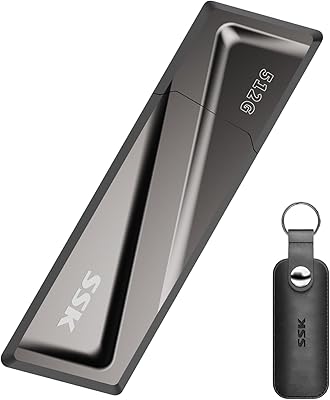
SSK SD300 512GB USB Flash Drive
75%
83%
Transfer Speed
61%
USB-C Adapter Performance
88%
Build Quality
72%
Flip Cap Durability
86%
Compatibility
More
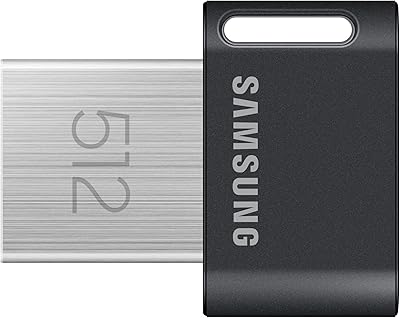
Samsung FIT Plus 512GB USB Flash Drive
81%
93%
Read Transfer Speed
71%
Write Transfer Speed
91%
Build Quality
94%
Form Factor & Design
66%
Value for Money
More
Centon DataStick Pro 512GB USB 3.2 Gen1 Flash Drive
86%
87%
Performance
92%
Transfer Speed
90%
Build Quality
88%
Portability
85%
Compatibility
More

FAQ

Honestly, peak speeds depend heavily on your host port and the type of files you are transferring. Plugged into a true USB 3.2 Gen 1 port and moving large sequential files like video exports or RAW photo archives, you will get close to those rated figures. Smaller files, mixed workloads, or older USB 3.0 ports will bring those numbers down noticeably. It is still much faster than budget drives, but do not expect the maximum spec in every scenario.

You need to set it up yourself. The 256-bit AES encryption comes via bundled software that requires installation on your computer before it is functional. It is not a hardware-level feature that activates the moment you plug the drive in, so factor in a short setup session if data security is a priority for you.

Yes, the JumpDrive P30 works on Mac systems without any special drivers for standard file transfers. Keep in mind that most modern MacBooks use USB-C ports, so you will likely need a USB-A to USB-C adapter to connect it — that adapter is not included in the box.

For large sequential transfers, the gap is smaller than you might expect — this metal USB drive punches well above typical flash drives. That said, a portable SSD will generally outperform it on random file access and sustained mixed workloads, and will run cooler during extended sessions. If you are primarily moving big files from point A to point B, the JumpDrive P30 is a strong and more compact option; if you are running applications or doing constant read-write cycles directly off the drive, an SSD is the better tool.

It does run warm during prolonged or back-to-back large transfers, which is worth knowing before you buy. The metal shell actually helps dissipate heat better than plastic would, but if you are doing a multi-hour continuous transfer session, you may notice the drive becoming quite warm to the touch. For typical burst transfers it is not an issue.

Unfortunately, no — the cap is a standalone removable piece with no tether or attachment point. It is one of the more common complaints from buyers, and if you are someone who tends to misplace small accessories, it is worth being aware of. Some people keep it in a designated pocket or case to avoid losing it.

For most users, yes. A 512GB drive comfortably holds tens of thousands of RAW images or several hours of high-bitrate 4K footage, making it practical for on-location work or transferring a project between edit suites. If you regularly shoot very high-volume events or work with 8K raw footage, you might bump up against the limit faster than expected.

Yes, and it works well in cross-platform setups. For seamless file sharing between Windows and Mac without reformatting, make sure the drive is formatted as exFAT, which both operating systems can read and write natively. If you buy it new, check the format out of the box and reformat if needed before loading it up with files.

The all-metal construction is a real advantage here compared to plastic drives. It handles drops, bag pressure, and pocket wear much better than the cheap alternatives. It is not waterproof or rated for any specific impact standard, but everyday commuting and travel use should not be a concern.

Lexar has a reasonable track record of honoring warranty claims, and a lifetime limited warranty does provide genuine peace of mind for a drive you plan to rely on professionally. The key word is limited — it covers manufacturing defects, not physical damage or data loss caused by user error. Keep that in mind, and consider a backup copy of anything truly critical regardless of warranty coverage.